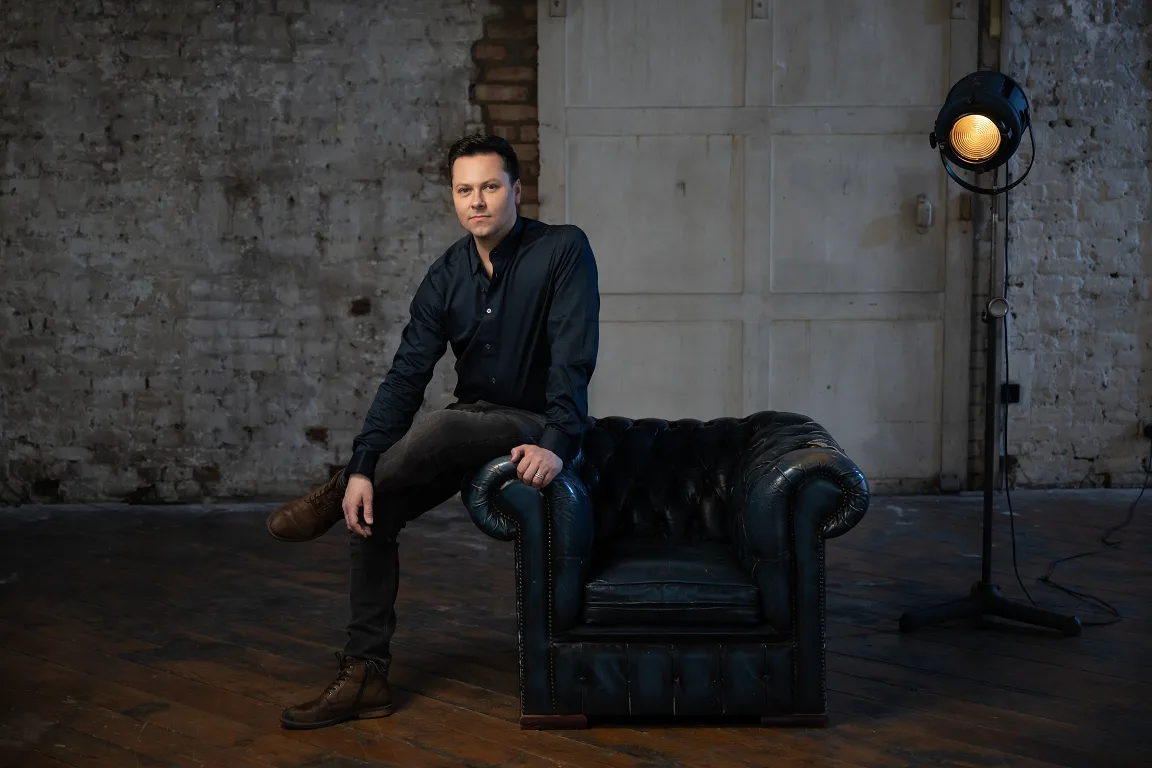
Interview: Christopher Marney, director of London City Ballet

Tonight, London City Ballet heads out on its second international tour, which starts at the Sintra Festival in Portugal, visits many venues around the UK (including London’s Sadler’s Wells from 13-14 September, and the Linbury Theatre 19-20 November) and takes in France, Greece and Spain.
Gramilano has interviewed the company’s artistic director Christopher Marney in October 2023 when the relaunch of London City Ballet was announced; then in August 2024 when the company was in China as part of its first tour, and at the beginning of June the company won a Critics’ Circle National Dance Award for Best Independent Company 2024.
Christopher Marney talked to Paul Arrowsmith before the company left its rehearsal studios in London.
Today’s major touring ballet companies in the UK are a shadow of themselves in the mid-1990s, the time when the original London City Ballet folded. Why resuscitate the company now?
That’s a great reason to do it! There’s a demand now because so few classically based repertoire companies are touring to the beautiful ‘theatres royal’ and playhouses that the UK boasts. Touring is difficult for large scale companies, often stages are deemed too small for large casts or for ballets with large sets.
This is your second season – so your first must have gone well? You’ve won a UK National Dance Award as best independent company…
It was fascinating to get to the end of year one and evaluate our successes and pitfalls. It guided me on how we might approach the next year. Striking the right balance, taking into consideration when we toured, how many shows we danced at each venue, ticket prices, weekdays versus weekends, matinée versus evening performances, what was programmed by the venue around the same period.
The delicacy of getting this formula right is make or break. My mantra for 2024 was taking the rough with the smooth. We had a week of sold-out shows at the Joyce Theater New York and then half-full houses at the Theatre Royal Windsor. It’s important to work out why that happened. I wasn’t satisfied with taking it in my stride and planning on a whim for the next season. I analysed the factors to shape an even more successful tour this year and will keep refining the pattern.
Looking at your venues in the UK, most of these have dropped off the touring schedules of larger companies. What outreach do you do – how difficult is it to build an audience for what essentially are one-night stands?
Where possible, we offer wrap-around activities to engage with audiences in other ways than just performing. At our base, we have run career masterclasses for those wanting to work in the dance industry. We held months of open classes for professionals, students and the community at our Islington studio.
When on tour, we open the company class for audience members to watch the process of preparing for a show, followed by an informal Q&A session with me and the dancers. If the theatre has a studio, we offer workshops for young dancers to work with our team and learn repertoire. I am keen to do more outreach but without financial support we can only do what’s possible with the team we have. Multi-tasking!
You are not Arts Council England funded. Is that a blessing?
With the amount of touring we undertake, it would be a blessing to be included in ACE funding. It would definitely free up opportunities for us to broaden our UK touring circuit, which is an ambition. We have many invitations from venues across the country who would like to programme us, but we can only select a certain number based on the money we have. Unfortunately, touring to smaller capacity theatres means that if there is a profit to be made, it’s significantly less because of ticket selling possibilities.
So where do your financial underpinnings come from?
Private sponsorship from individuals who believe in the resurrection and preservation work we are doing with pieces of forgotten repertoire and those who support our vision of taking dance out of London and the access that it gives to communities around the UK.
Are you a part-time company?
We have a small core team working year-round, then we expand for eight months per year when we are touring.
You have a lengthy tour to France – how did that come about?
Last year we had some exciting offers from international producers and I am pleased we have partnered with an excellent production company, which has opened doors to future exciting tours in Europe.
Tours of this sort must be tough – how do you manage that?
The dancers all know multiple roles within the same ballet so not only are we covered for the large amount of performing we do, but it also provides endless artistic nourishment for dancers to experience new roles and characters in the ballets. I am also very mindful about how the schedule is planned, for example a travel or show day is followed by a rest day and we are not just coach-hopping from one venue to the next.
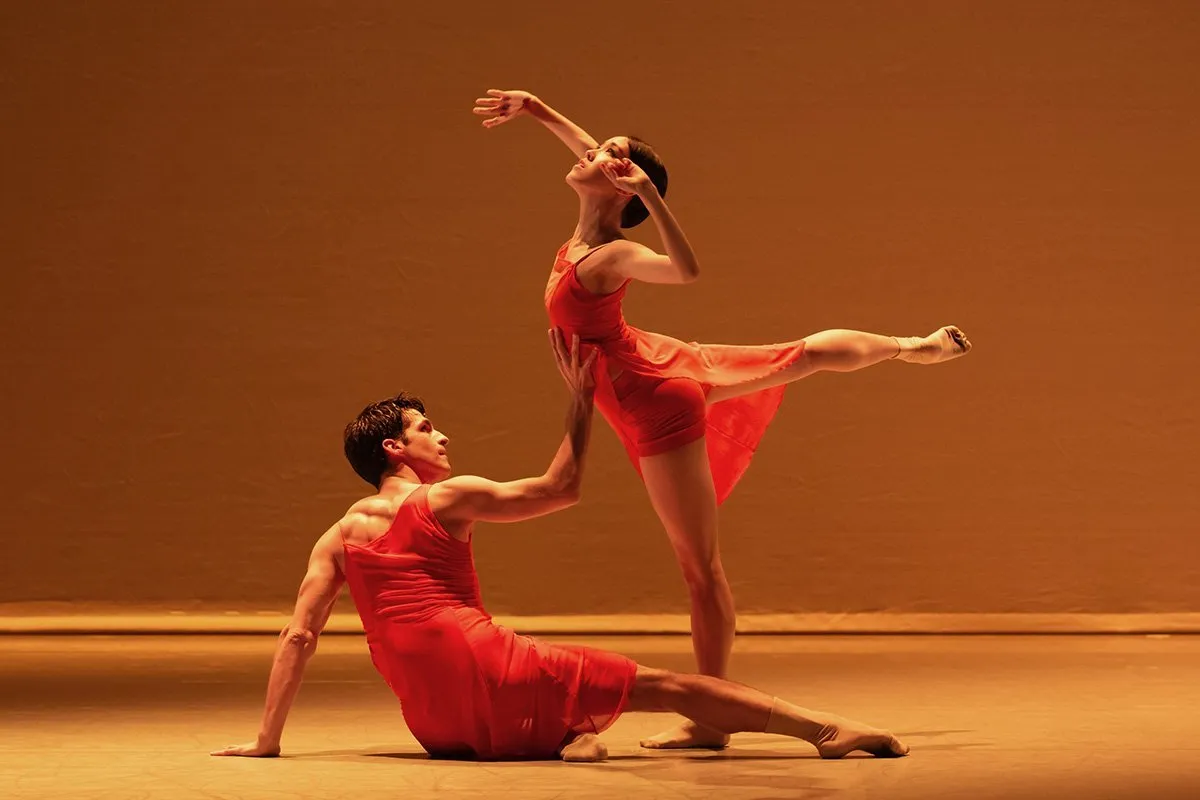
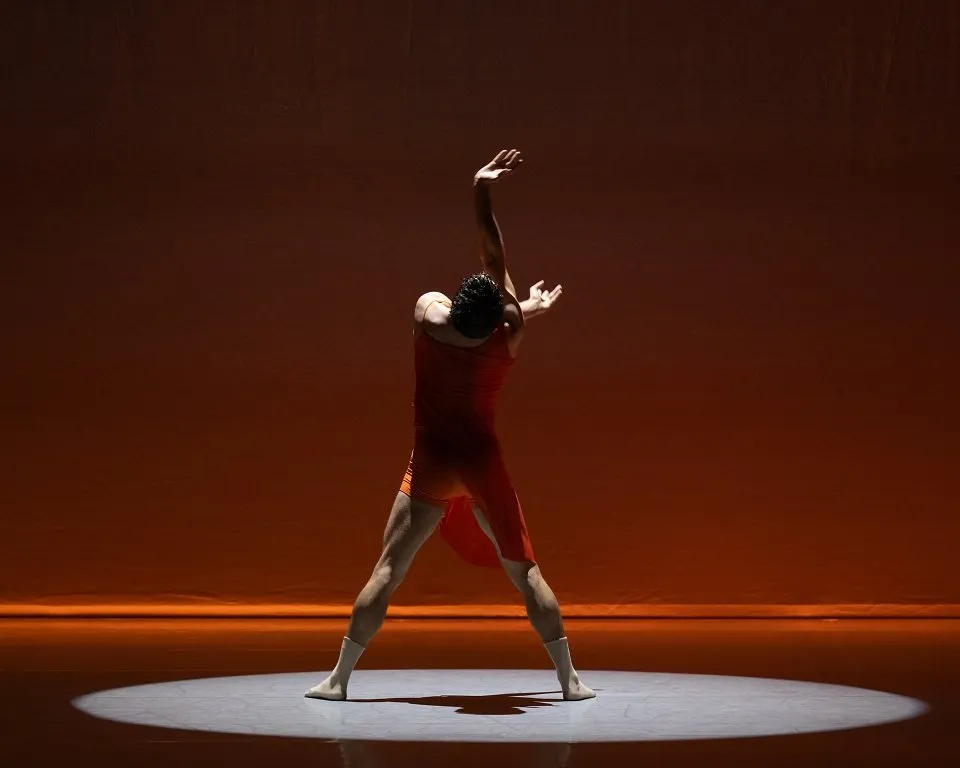
London City Ballet, tour 2024




Tell me about your dancers, the size of the company, how you select and develop them?
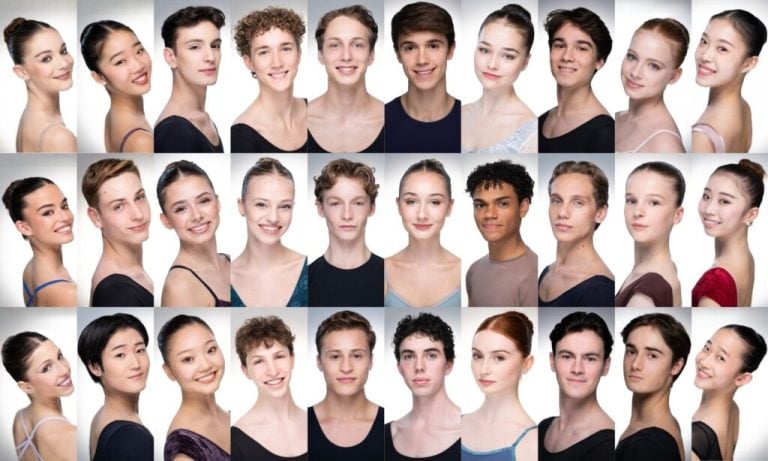
There are 15 dancers and I purposely select a wide range of ages and experience. We have seasoned principal artists mixed with young emerging dancers who are recent graduates. With the type of works I programme, it needs to be a company of soloist-level dancers because everyone has their feature. I think having a broad range of experience only feeds the work and differentiates the characters we have in the ballets.
Talk us through your choice of rep, George Balanchine’s Haieff Divertimento, Alexei Ratmansky’s Pictures at an Exhibition, Liam Scarlett’s Consolations & Liebestraum …
The works I have chosen are largely unseen in the UK but by prolific choreographers, selected especially for more intimate spaces with manageable cast sizes, tailor-made for the touring venues we frequent.
Evidently you don’t believe in cancel culture, in reviving Scarlett’s work …
It is not a case of to cancel or not to cancel. Rather, his is a beautiful work, an asset to the company. It was staged by original cast member Laura Morera who has passed on the detail and intention so eloquently. The company performs it with real theatricality.
Who else is coaching?
One thing we do not do is learn steps from videos! It is important to me to have the right people in the room so that the choreography and direction is the true version of what was originally intended. Of course, this is a challenge when I am programming works by international choreographers, but it is an investment worth making.
Alexei Ratmansky was here in person; he not only worked on his Pictures but the dancers improved in their own journeys through his guidance. I brought Deborah Wingert here from New York from the Balanchine Trust. The style, stories and technical skill she instilled have made Haieff Divertimento full of the speed and excitement it should have.
It is much more than getting the works onstage, to me it’s about showing the versatility of these wonderful dancers and nurturing a work culture where people feel enriched by the atmosphere we can create.
How did you land on a new work by Florent Melac?
I saw a duet that Florent created at International Draft Works at the Linbury in London. His inventive movement vocabulary felt like it had the perfect place in the repertoire I had planned for this year. He is a well-known dancer [a principal with Paris Opera Ballet] but still emerging as a choreographer and I am excited to see what giving this platform will do for his work. The style also gives the dancers wonderful contrast and an ability to showcase how versatile they are as performers.
You have successfully explored forgotten works by Kenneth MacMillan and Ashley Page so far, among others. What other choreographers do you have an eye on?
The next revival is in collaboration with the Baryshnikov Arts Center in New York. They are facilitating us to re-mount a ballet for three men choreographed by Jerome Robbins. When we were in New York last season I invited the Robbins Foundation to see the company dance. Subsequently we discussed what might be a good fit and asked to look at the catalogue of works not performed by other companies. I was very taken by a 1986 work entitled Quiet City. I had access to the rehearsal notes and original films from the studio process with Jerry [Robbins], as well as performance content. We settled on this and we will be at the Arts Center in September with a member of the original cast, Robert La Fosse, who will stage the ballet. We will bring it to the UK, at the Linbury from 19 – 22 November.
My only memory of the original London City Ballet was Matthew Hart’s full-length Cinderella. Can we expect something of comparable ambition?
I am always interested in narrative dance and work that touches the audience through a story, but I want to avoid touring full-length ballet.
So, what comes next?
I like the idea of shorter, lesser-known works, new to the public. I am planning a familiar title for 2026, but this will surprise audiences as although choreographed many years ago by a prolific name in dance, it is relatively unknown… but it is imaginative, theatrical and still speaks to an audience of today.