Review: Dancing with Bob at the Spoleto Festival – the dialogue between Rauschenberg and postmodern dance

Marta Mele sees Dancing with Bob – Trisha Brown and Merce Cunningham and the encounter between dance, visual art, and the legacy of Robert Rauschenberg.
| Title | Dancing with Bob – Rauschenberg Brown & Cunningham Onstage |
| Company | Trisha Brown Dance Company |
| Venue | Teatro Nuovo Gian Carlo Menotti, Spoleto |
| Date | 12 July 2026 |
| Reviewer | Marta Mele |
When, in the late 1950s, critics began speaking of the New Dada, they identified Robert Rauschenberg as one of the artists who had most radically challenged the boundaries of the work of art. “I want to work in the gap between art and life,” he famously declared, embracing an artistic practice capable of absorbing the real world. This vision gave rise to the celebrated Combines, hybrid works in which painting, sculpture, and everyday objects coexist without hierarchy. Materials gathered across New York were removed from their original context and recombined in unexpected ways.
During the same years, as Merce Cunningham was redefining the relationship between movement, music, and theatrical space, a new conception of dance was taking shape. Around the Judson Dance Theater, postmodern dance radically expanded the possibilities of choreography, privileging process over representation, and embracing improvisation, accumulation, and everyday gesture as compositional tools. It is within this cultural landscape that Dancing with Bob, presented at the 69th Festival dei Due Mondi in Spoleto – under the new artistic direction of Daniele Cipriani with the support of Dance Reflections by Van Cleef & Arpels – finds its place. By bringing together Trisha Brown’s Set and Reset and Merce Cunningham’s Travelogue, the programme revisits two iconic works from this extraordinary period of artistic experimentation.
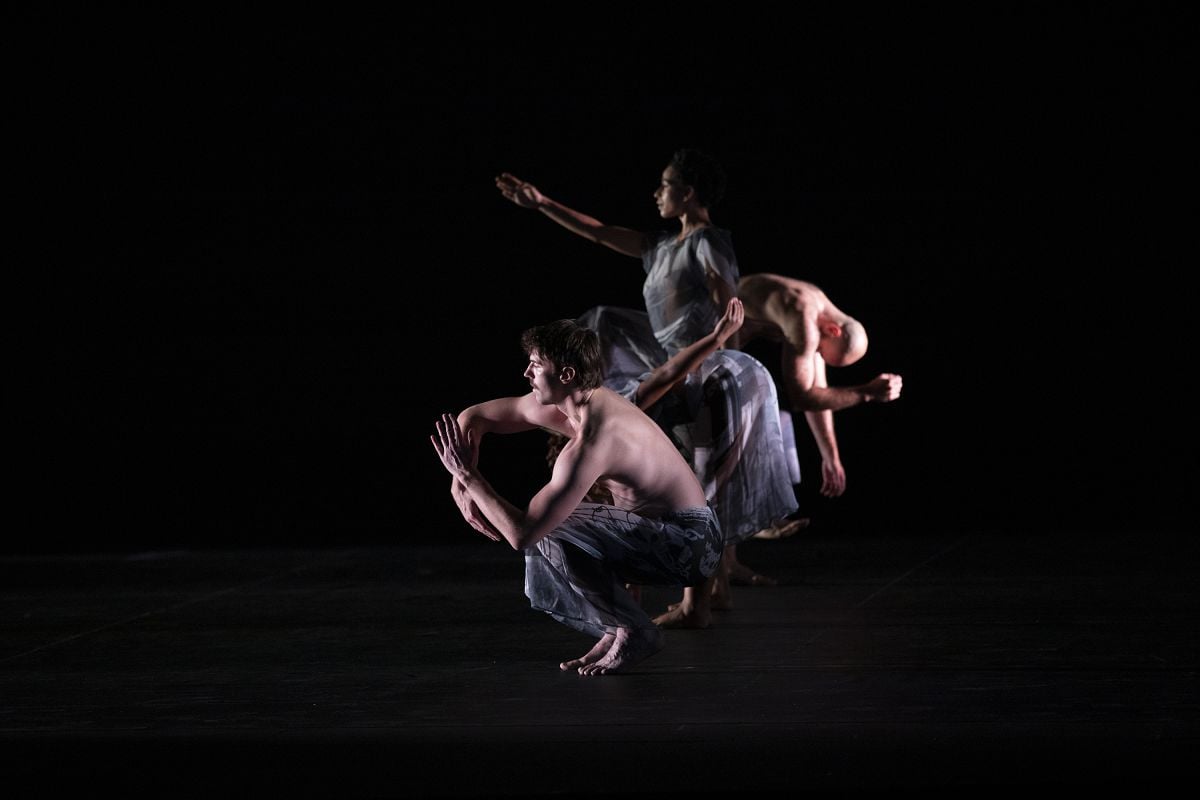
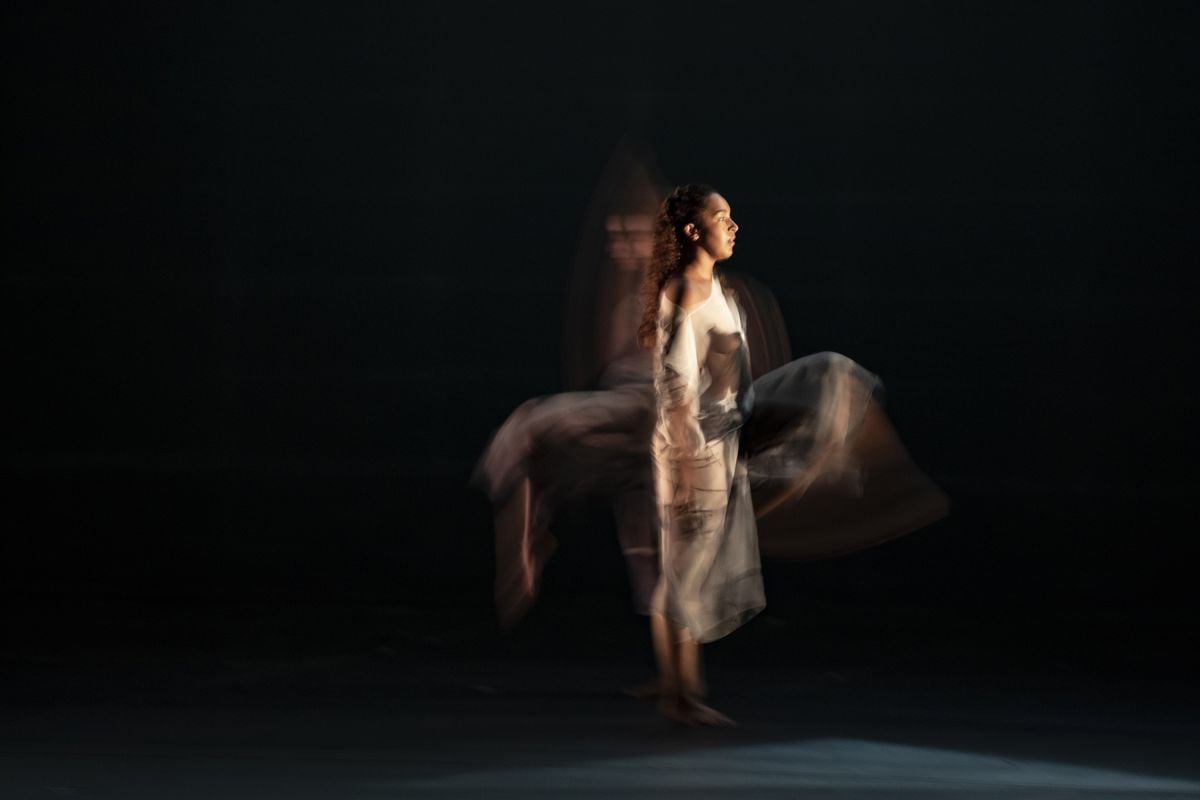
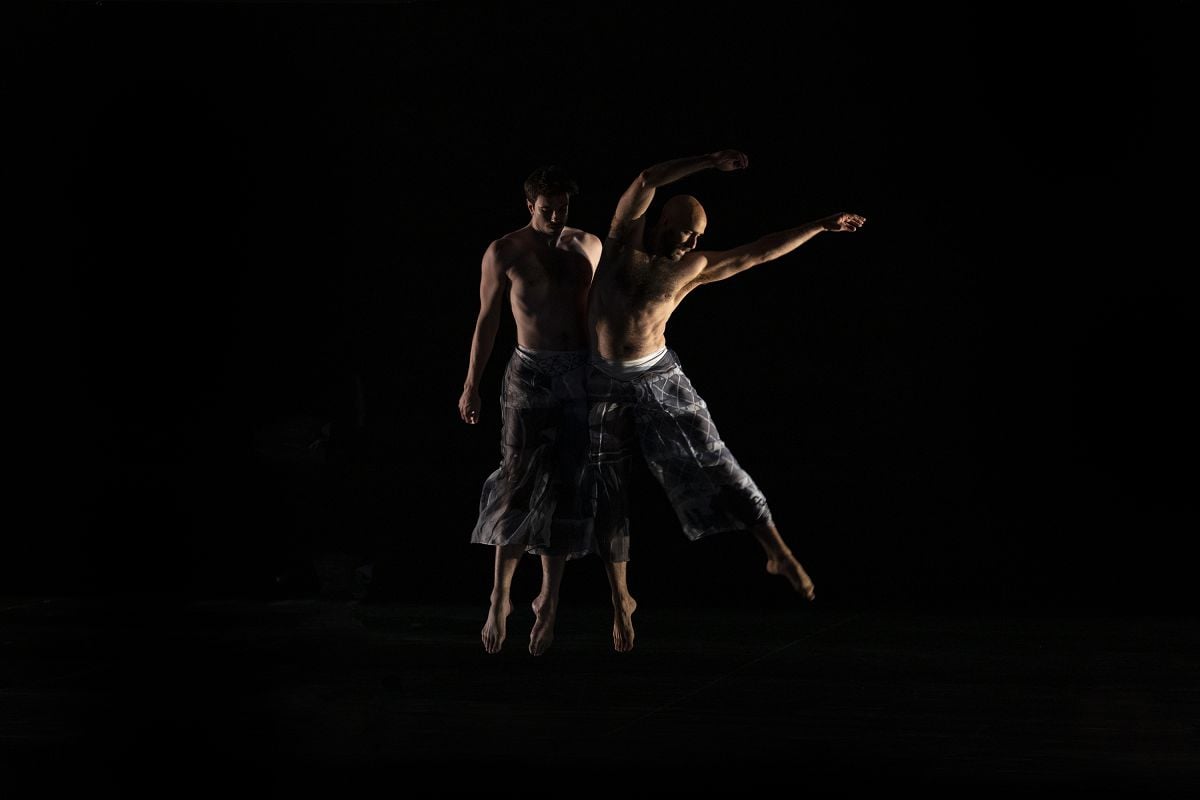
Premiered at the Brooklyn Academy of Music in New York in 1983, Set and Reset stands among the defining achievements of Trisha Brown’s choreographic career. Here Brown brings to the theatrical stage her ongoing exploration of weight, balance, and suspension, first developed in the site-specific performances of the 1970s, such as Walking on the Wall (1971), in which harnessed dancers defied gravity by walking along a vertical wall. For the production, Robert Rauschenberg created Elastic Carrier (Shiner), a stage design composed of translucent panels onto which heterogeneous black-and-white images and film projections are cast, including footage from NASA’s space programme, recalling the artist’s invitation to witness the launch of Apollo 11 in 1969.
The translucent costumes, shaded from pale grey to black and printed with silkscreen images of skyscrapers, allow the dancers to seem almost absorbed into the visual environment. Laurie Anderson’s score, Long Time No See, alternates rhythmic pulses with an insistent ticking reminiscent of railway departure announcements, giving the choreography a sense of continuous propulsion. Equally significant is Brown’s compositional method. Rather than assigning a fixed sequence of steps, she provided the dancers with a set of simple operating principles: favour simplicity; play with visibility and invisibility; align with others when uncertain how to proceed; remain at the outer edge of the stage space; and, ultimately, trust instinct. These instructions encapsulate Brown’s choreographic approach: a rigorously defined structure continuously regenerated through the performers’ decisions in the moment of execution.
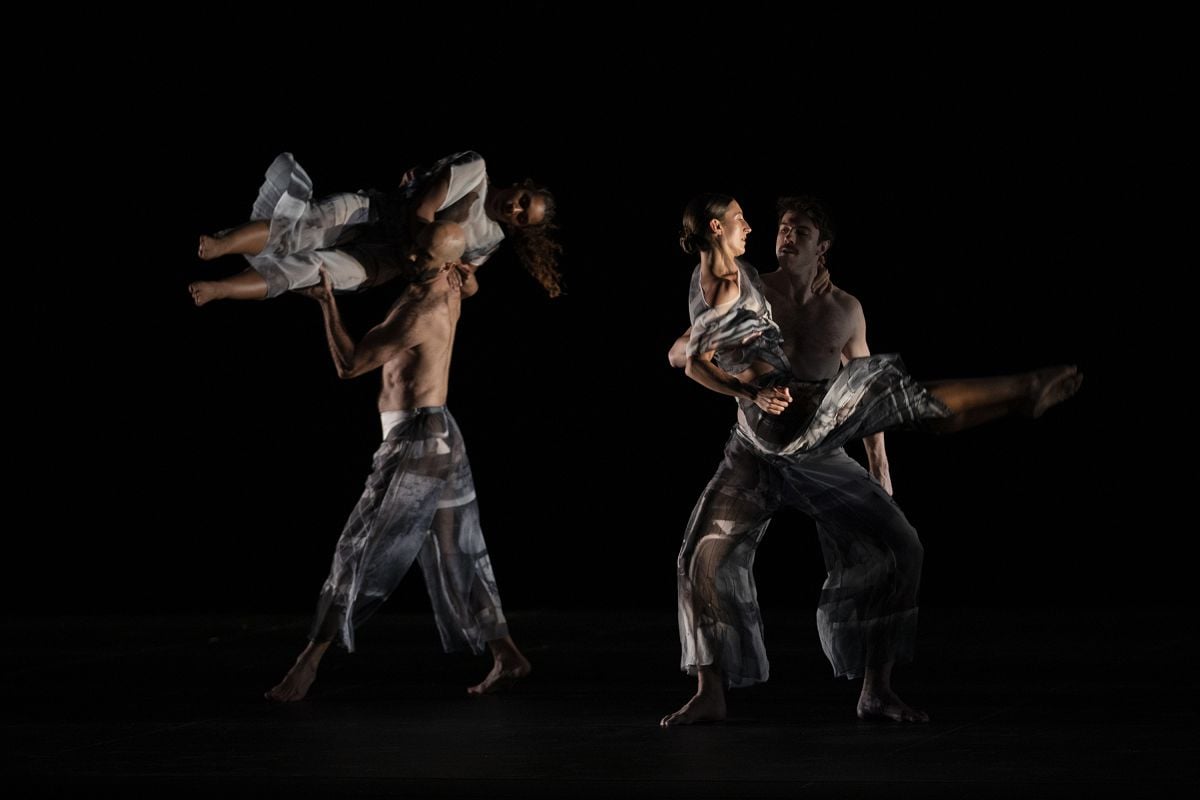
What is most striking about Set and Reset is the uninterrupted flow of movement. From the opening moments, a dancer spins through the air, suspended in the arms of her companions before disappearing behind the black scrims; moments later another abandons her weight to a partner who effortlessly receives it. From there the choreography unfolds as an endless succession of swings, impulses, and sudden changes of direction, each action immediately generating another. Whenever a formation appears to settle, it is instantly transformed: lines dissolve, dancers cross the stage diagonally or converge into new constellations, producing ever-changing spatial configurations. The choreography expands across the entire stage, demanding remarkable precision while remaining effortless and joyful.
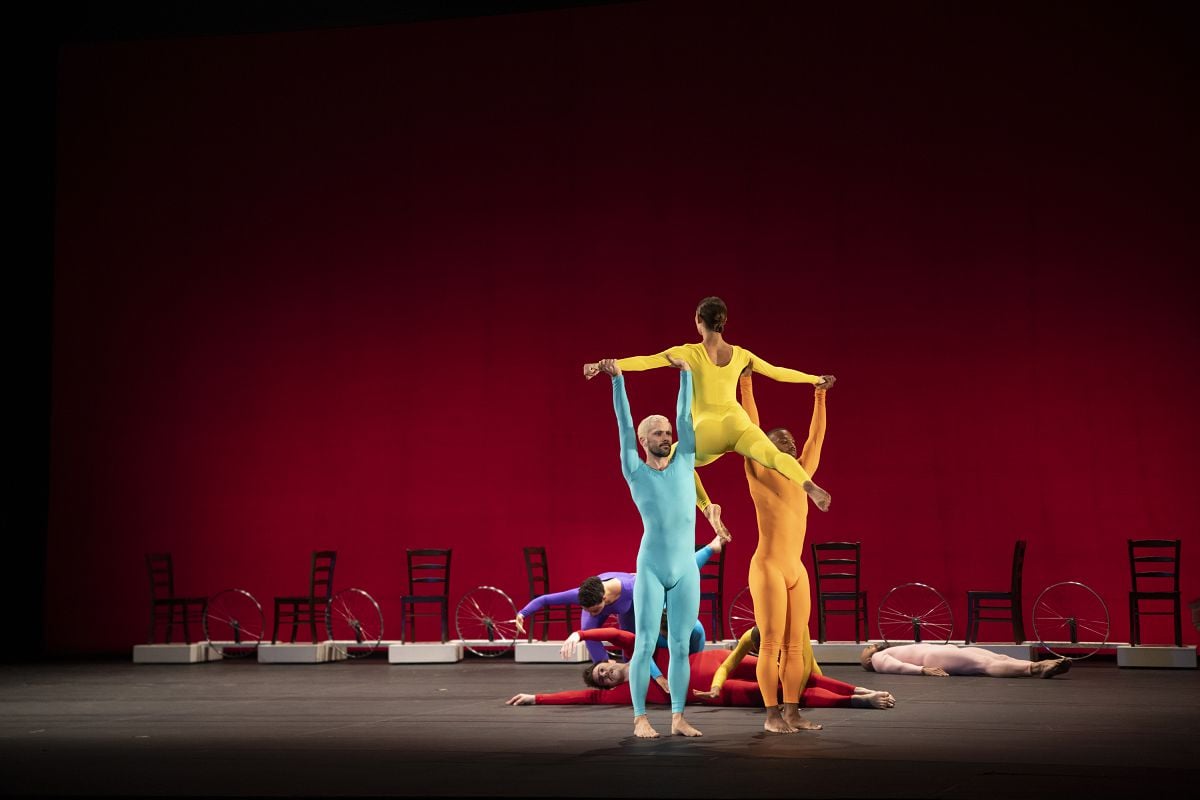
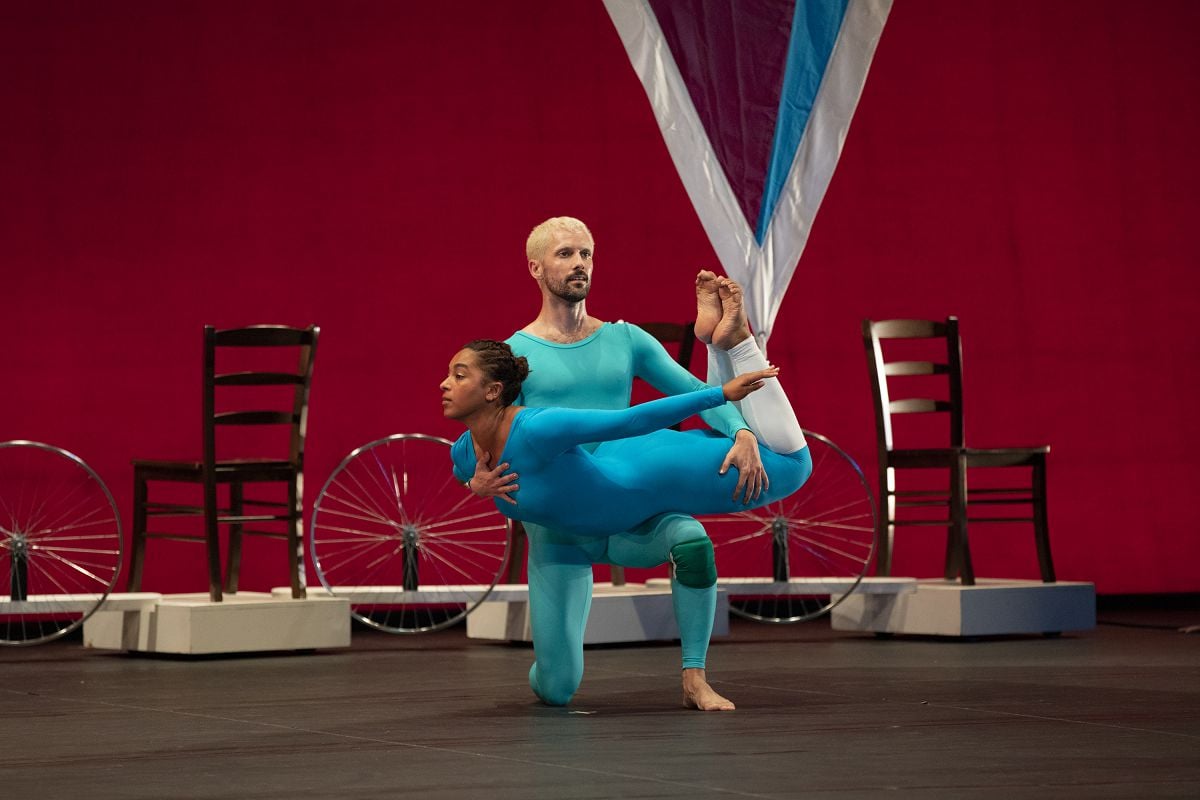
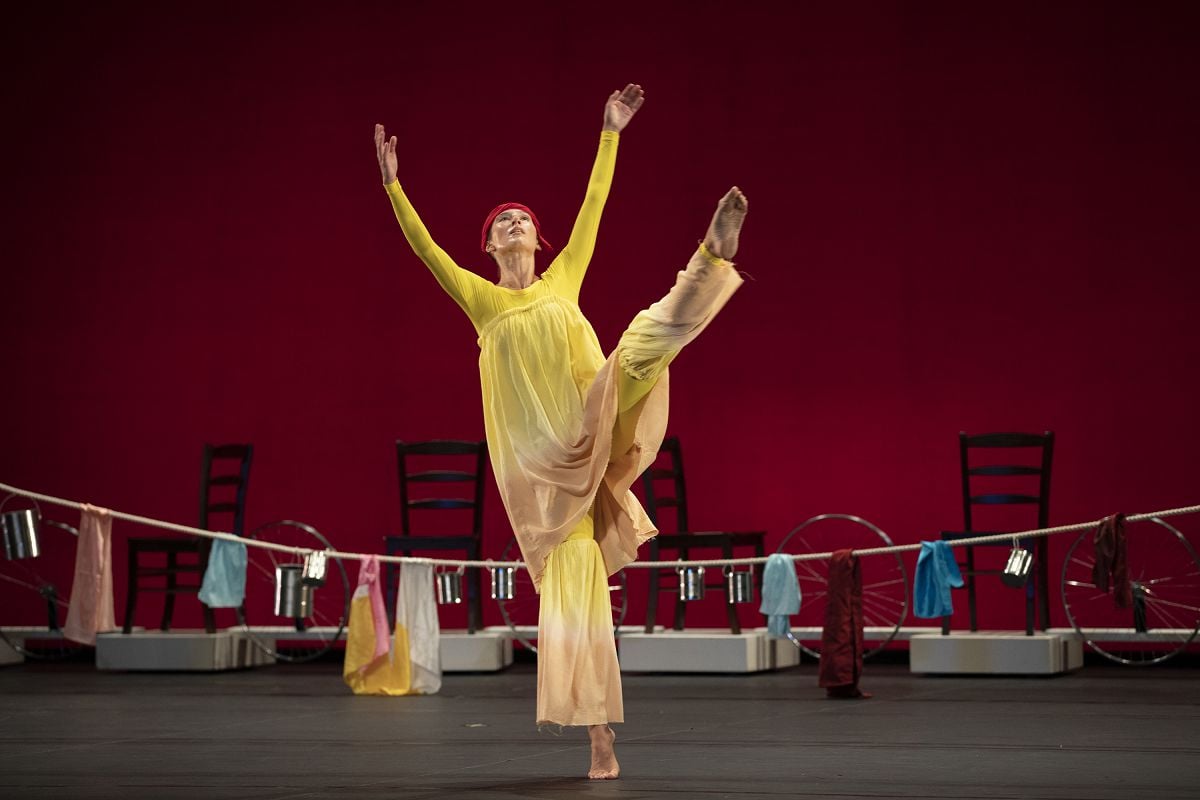
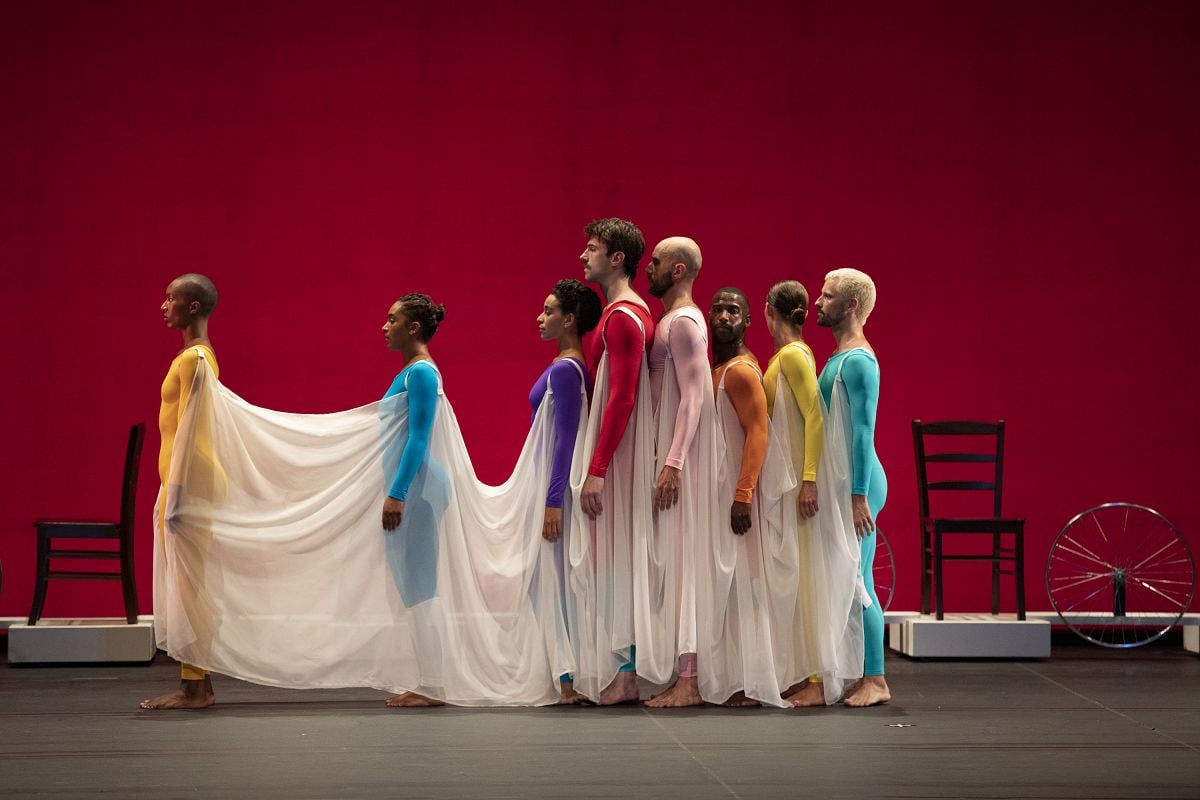
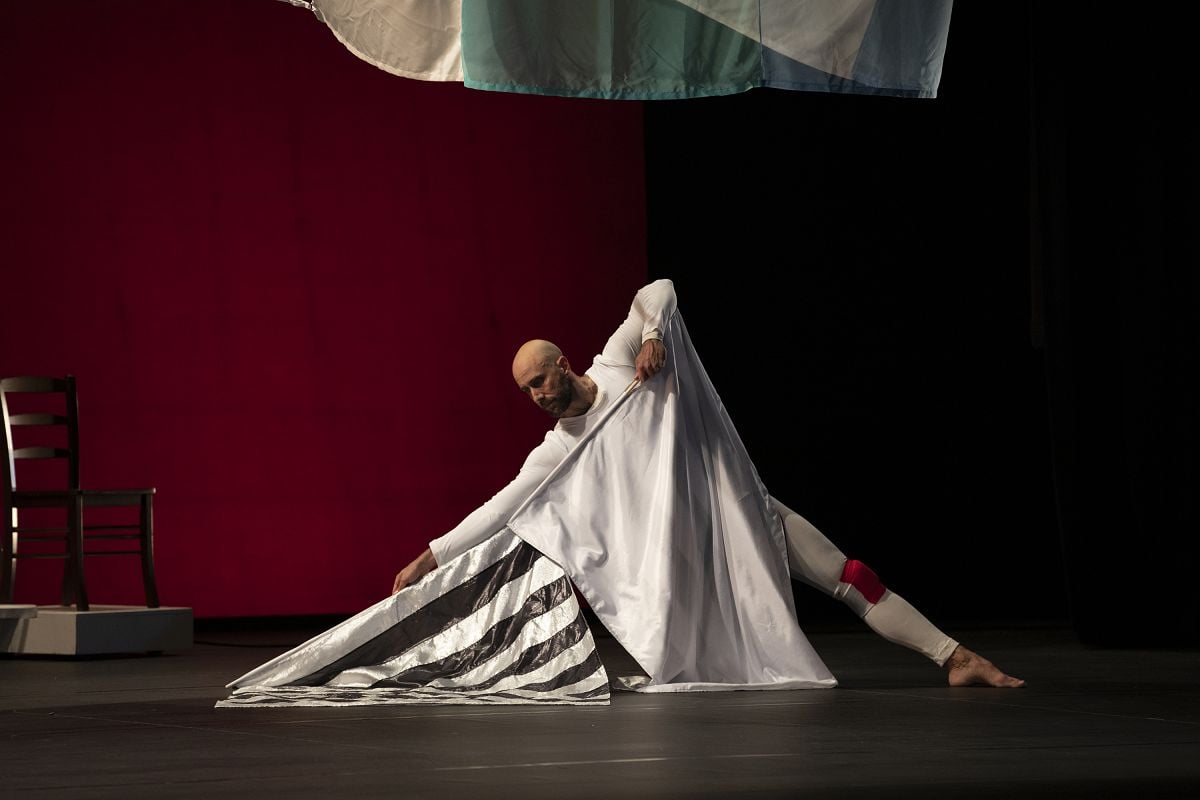
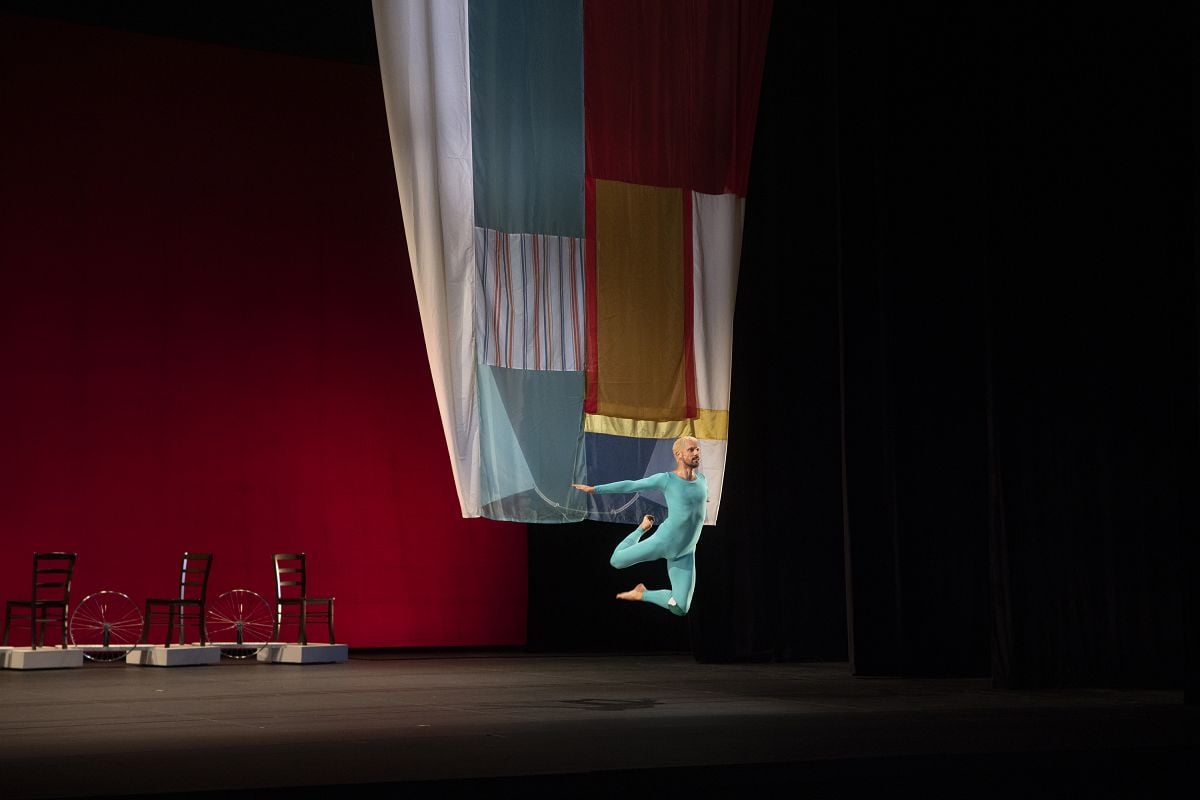
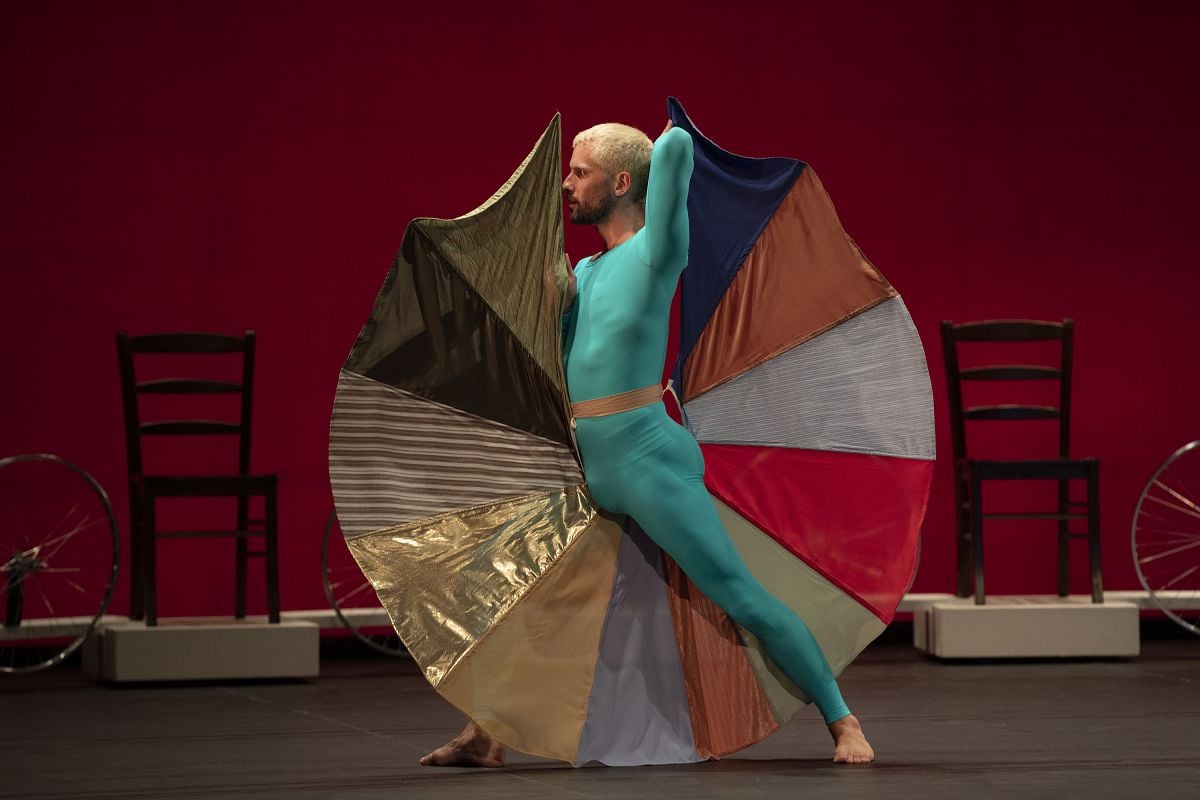
Travelogue, by contrast, premiered at New York’s Minskoff Theatre in January 1977 and marked a temporary artistic reconciliation between Merce Cunningham, John Cage, and Robert Rauschenberg after the break that had interrupted their long collaboration. Having first worked together at Black Mountain College in 1952 and spent more than two decades redefining the relationship between dance, music, and visual art, the three artists reunited in a work whose symbolic significance outweighed its exceptional nature. For the occasion Cage composed Telephones and Birds, a score combining birdsong with telephone conversations and recorded messages, while Rauschenberg conceived Tantric Geography: a row of wooden chairs punctuated by bicycle wheels set against a vivid red backdrop. The costumes likewise contribute to this proliferation of images. Brightly coloured unitards gradually acquire fans, flags, tin cans, banners, and flowing chiffon scarves, creating a constantly shifting visual landscape.
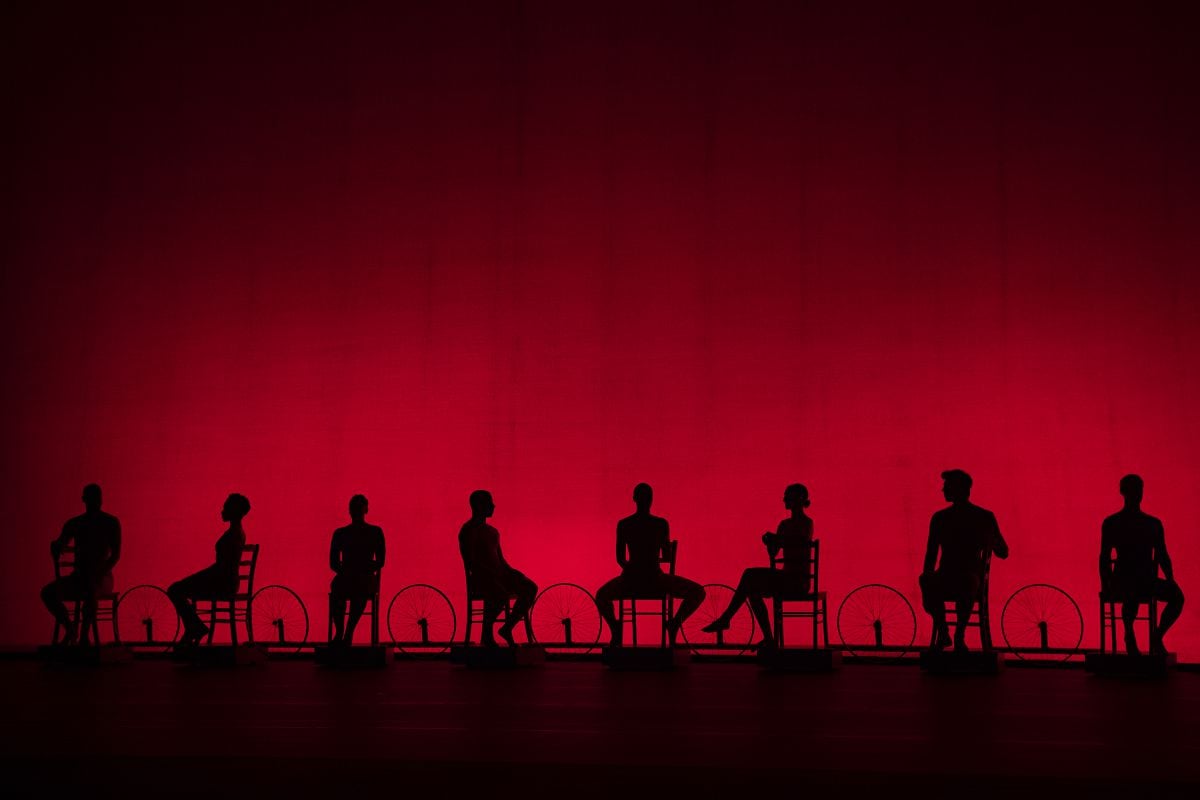
Initially seated on the chairs, the dancers gradually claim the stage. The idea of travel emerges without ever becoming narrative: walks, brief runs, sudden retreats, precarious balances, imaginary climbs, and backward falls unfold as single episodes with no recognisable destination. Classical vocabulary surfaces only to be immediately dismantled into unexpected articulations that generate abstract figures, at times humorous, at others suspended in an almost contemplative stillness.
If Set and Reset is driven by the continuity of movement, Travelogue is governed by juxtaposition. Music, stage design, and choreography follow independent trajectories, constantly unsettling the audience and inviting it to forge its own associations without being directed toward a single interpretation. Within this process, Rauschenberg’s contribution proves indispensable. His vivid colours and exuberant use of everyday objects do not illustrate the dance but expand its evocative potential. Cage’s score functions in much the same way. Its casual conversations – a visit to the Colosseum, a plate of pasta, fragments of ordinary life – renounce any narrative function, simply accompanying the unfolding of images.
By placing Set and Reset alongside Travelogue, Dancing with Bob offers more than a revival of two masterpieces of American postmodern dance. It restores the complexity of a moment in which visual art, music, and choreography ceased to illustrate one another and instead entered into an equal and profoundly transformative dialogue.