Interview: Angela Gheorghiu, betrayed by Pappano and Kaufmann, and still loving Alagna
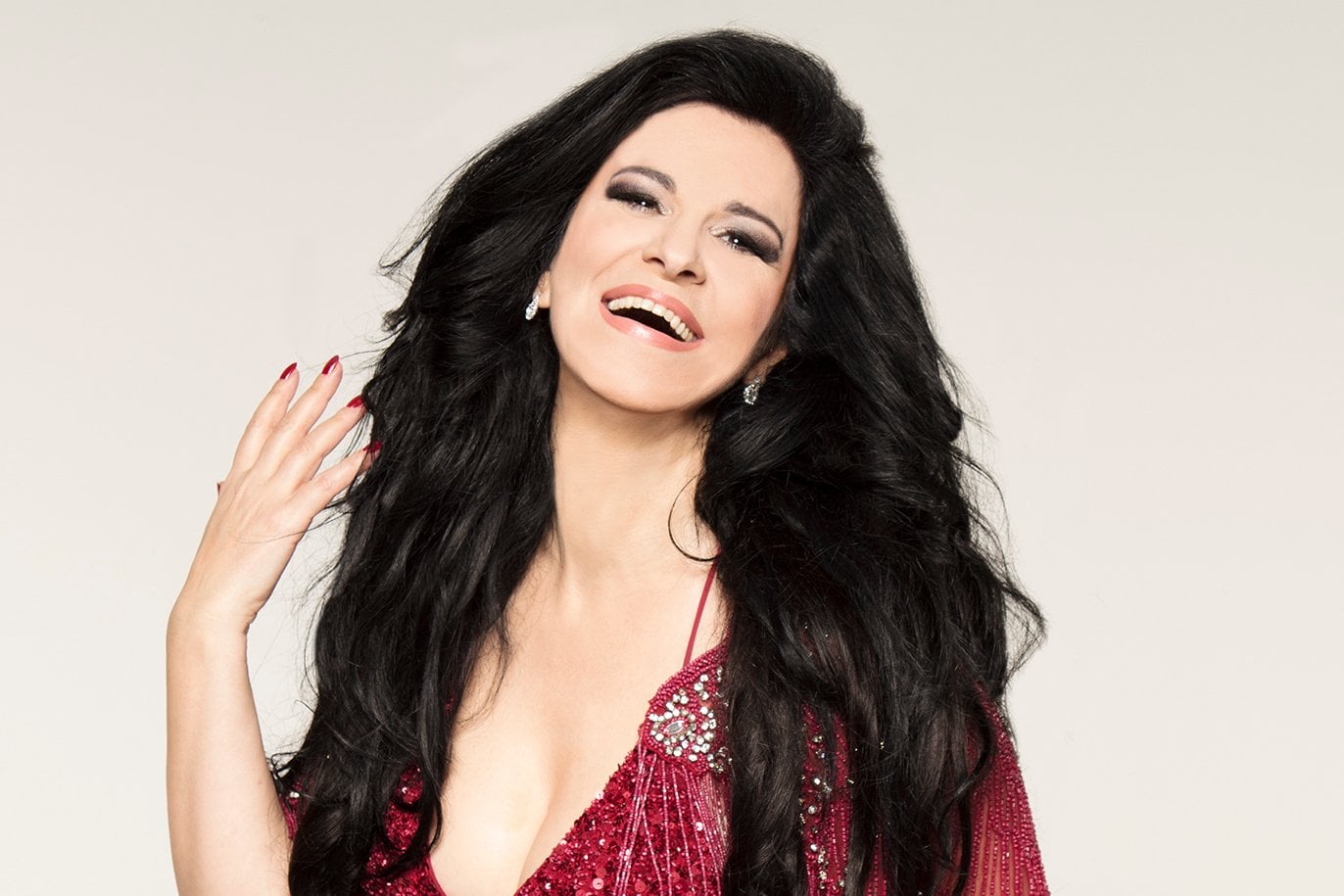
At Verona’s Arena on 30 September, a concert was held remembering Luciano Pavarotti, two weeks shy of what would have been his 90th birthday. Angela Gheorghiu was one of the singers taking part:
[I first met Luciano Pavarotti] when he gave me the Brit Award for my CD of La Rondine. We sang together in concert in Modena, but not in an opera, because he was ending his career as I was starting mine.
On 7 September, I turned 60, and I’m celebrating 35 years of my career. I will continue to sing all the while my vocal and physical capabilities unleash fire and energy. I don’t want people to look at me with pity. I think of Maria Callas‘ last concerts – an artist with a career built on exactitude shouldn’t have accepted that. It is difficult to say ‘enough’, but many, from Renata Tebaldi to Corelli, have done so at the right time.
[The best moments of my career] have been in the new productions created around me, and my filmed and recorded debuts. I remember my first Traviata, from London with Solti on the podium, live on BBC TV.
[The most difficult] have been the betrayals. After I recorded Butterfly to help out the Orchestra di Santa Cecilia and [Antonio] Pappano, the record company told me, “See you for the next opera, Aida.” I learned from the newspapers that the soprano was no longer me. I felt betrayed by Pappano and by Jonas Kaufmann, who played Radames. But I’m not one to hold a grudge, I would also sing with Roberto [Alagna, her ex-husband]… I love him.
[They called us Bonnie and Clyde], but I hadn’t seen the film, so I read the headlines and I didn’t understand. I didn’t rob banks, but my colleagues commented, “Well done, now you’ve made it!” [I was also called Draculina] because I’m Romanian.
In my contracts, I only have my name, the title of the opera and the name of the composer put in it. The real protagonists of opera are the singers; Verdi and Puccini wrote for the characters, the voices, not for the conductors, much less for the directors, who today turn everything upside down. We are the ones who give life to the score.
[I’m a diva] because I’m out of the ordinary on stage, and I’m also out of the ordinary offstage. A personality cannot be divided up. But at home I dress in jeans – I am a modern woman.
I was singing exclusively for Decca, and they asked me if I had anything against having Renée Fleming in the same record company. I said of course not, she has a different style, and my voice doesn’t get worse or better if there are two of us.
Nudity? All the theatres in the world have asked me to do Salome… but it’s best to let them dream.
Also cinema… I sang in 2009 at an event in Washington in front of De Niro, Springsteen and Meryl Streep, who, after my aria, said, “I want to be like you.” Opera and cinema require very different techniques. Maybe today, with AI, I could say, ‘Do what you want with me!’ Among many opera films, they offered me The Queen of Spades, and the character of the old woman was to be played by Tina Turner. The project fell through.
Tosca is the character who most resembles me – she is a singer and a radiant woman. The first Tosca was Hariclea Darclée, a Romanian, and it was she who asked Puccini for a feminine aria, and so ‘Vissi d’arte vissi d’amore’ was born, the sopranos’ anthem.
Since 2013, I’ve been with Mihai Ciortea, a dentist. I met him on stage – he was an avid fan of mine. The first few months were difficult, but I could see that he was the right person for me. With Roberto, it was a battle. It wasn’t about jealousy, but a type of professional rivalry, as he said I had no right to take applause alone, without him. Now I am a happy woman.
Angela Gheorghiu was talking to Valerio Cappelli for the Corriere della Sera