Interview: The look of love – chatting with Nicoletta Manni and Timofej Andrijashenko – Part 2
Read Part One: The look of love – chatting with Nicoletta Manni and Timofej Andrijashenko – Part 1
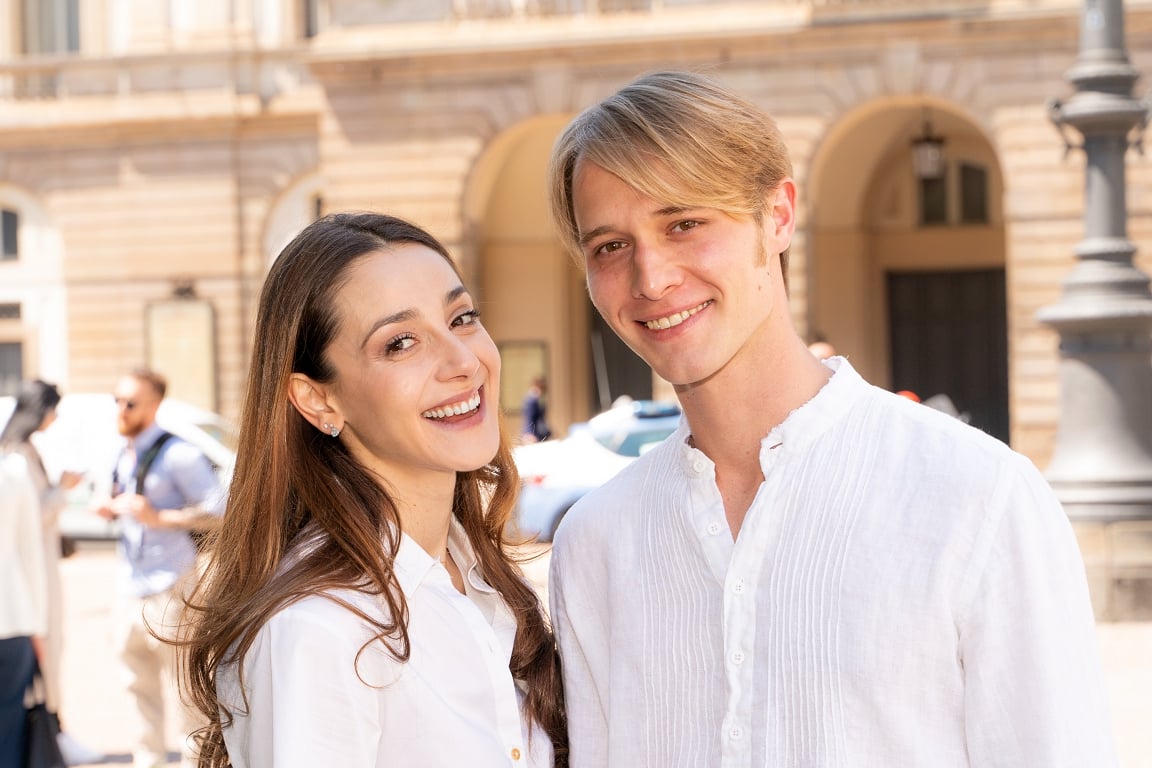
Nicoletta Manni and Timofej Andrijashenko are often invited as a couple when they dance away from La Scala, but they also guest separately. Three years ago, while Manni was at the Bolshoi Theatre dancing in Études, Andrijashenko was playing Romeo with The Royal Ballet on the same day, though she managed to catch his second performance.
“He was great, but we have danced Romeo and Juliet together and so I know exactly…” “Where my risky moments are,” he finishes.
“Because he was a guest at The Royal Ballet for the first time, and I was seated next to the director and Lady MacMillan, I sweated a lot watching him on that occasion.”
“It was a great honour for me to go there,” Andrijashenko continues, “to meet the company, and see how the theatre is structured. I was extremely interested in the incredible physiotherapy department as I had a stress fracture in my tibia at the time.”
When he was dancing Lensky in Onegin in the autumn of 2019, the 24-year-old Andrijashenko had been dancing in pain for almost two years: “I couldn’t do the stairs, let alone a double tour en l’air. Lensky doesn’t have many jumps, but we had started to rehearse Symphony in C and the first movement is all jumps. I watched a video of myself when I did it in 2017 and I was like a grasshopper, so rather than making a fool of myself on stage, and make my injury worse, I decided to press pause.
“I was away for four months but came back even though the tibia hadn’t healed completely. Then, after just two weeks, came the first lockdown. I was extremely lucky. It gave me time to rethink everything: how do I put myself in first position, in fifth? How do I do a tendu? How do I manage my weight on my legs?
“Federico Bonelli, who had a similar injury, gave me some useful advice about how to slowly introduce jumping, and sports doctors created a specific training programme for me. That, and a relaxing summer in Salento, did a world of good!”
Looking back, was it a valuable learning experience? “Oh yes, professionally. I also returned with incredible enthusiasm after two frustrating years when rehearsals had become torture. I can now do whatever I want without fear or pain.”


Manni and Andrijashenko arrived for our interview in one of La Scala’s grand foyers after a rehearsal for Manuel Legris‘ production of Sylvia, originally staged shortly before he became director of the ballet company. “Maestro Legris has inborn coordination and musicality,” says Manni, “and when he demonstrates something you’re always in awe.” Can you give me an example? “Well, he has many details about precise moments,” says Andrijashenko. “In partnering, for instance, he uses his whole body. Just now, he told me, ‘Tima not just with your hands, attach her!’ With a partner in penché, but with both bodies ‘attached’ at the hip, there are three points of support so nothing can knock you down.”
“He gives everything of himself to the dancers,” says Manni, “and is always present for the daily routine, which is important for the company so that we can all grow together.”
In Sylvia, they play lovers once again. If you are actually in love with the other dancer, does that change the feelings you have on stage? “For me it certainly does,” says Andrijashenko. “I can’t look at another dancer in the same way as I look at Nico.”
“When we danced Giselle last week in Bologna,” concludes Manni, “I had to remind myself at the beginning that I’m not yet in love with him. I need to look at him differently. Sometimes they tell us in rehearsal: ‘You’re not in love.’”