Review: London City Ballet with works by Page, Robbins, Chu, and Ratmansky

Graham Watts sees London City Ballet’s mixed bill Rebirth, featuring Alexei Ratmansky’s “masterpiece of witty, inventive choreography” Pictures at an Exhibition.
| Title | Rebirth |
| Company | London City Ballet |
| Venue | Linbury Theatre, Royal Ballet & Opera, London |
| Date | 19 November 2025 |
| Reviewer | Graham Watts |
The nascent London City Ballet continues to grow from strength to strength, as evidenced by this formidable closure to an intense season of performances at 19 venues across Europe: bringing the curtain down, courtesy of a welcome partnership with The Royal Ballet, in the intimacy of the Linbury Theatre, a venue that seems ideal for this punchy little company.
LCB had already treated London to an excellent programme, generically entitled Momentum, at Sadler’s Wells in September, and to their credit Rebirth wasn’t a repeat of the same rep, having three different works occupy the first act (two of which were new to the company and to London). Only Alexei Ratmansky‘s rollercoaster tour through Modest Mussorgsky’s Pictures at an Exhibition survived from the Sadler’s Wells show, and who wouldn’t want to see that masterpiece of witty, inventive choreography again (and again, please)!
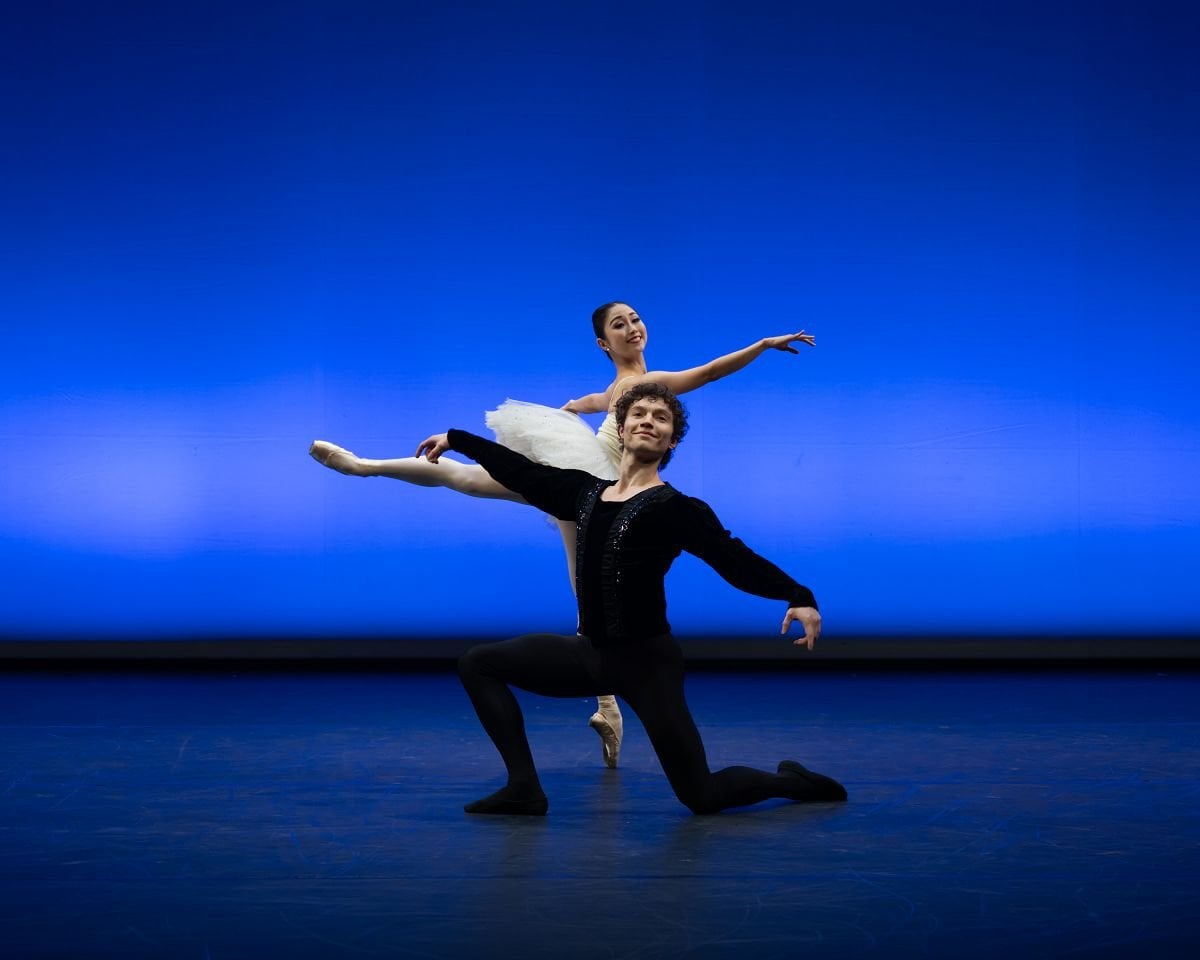
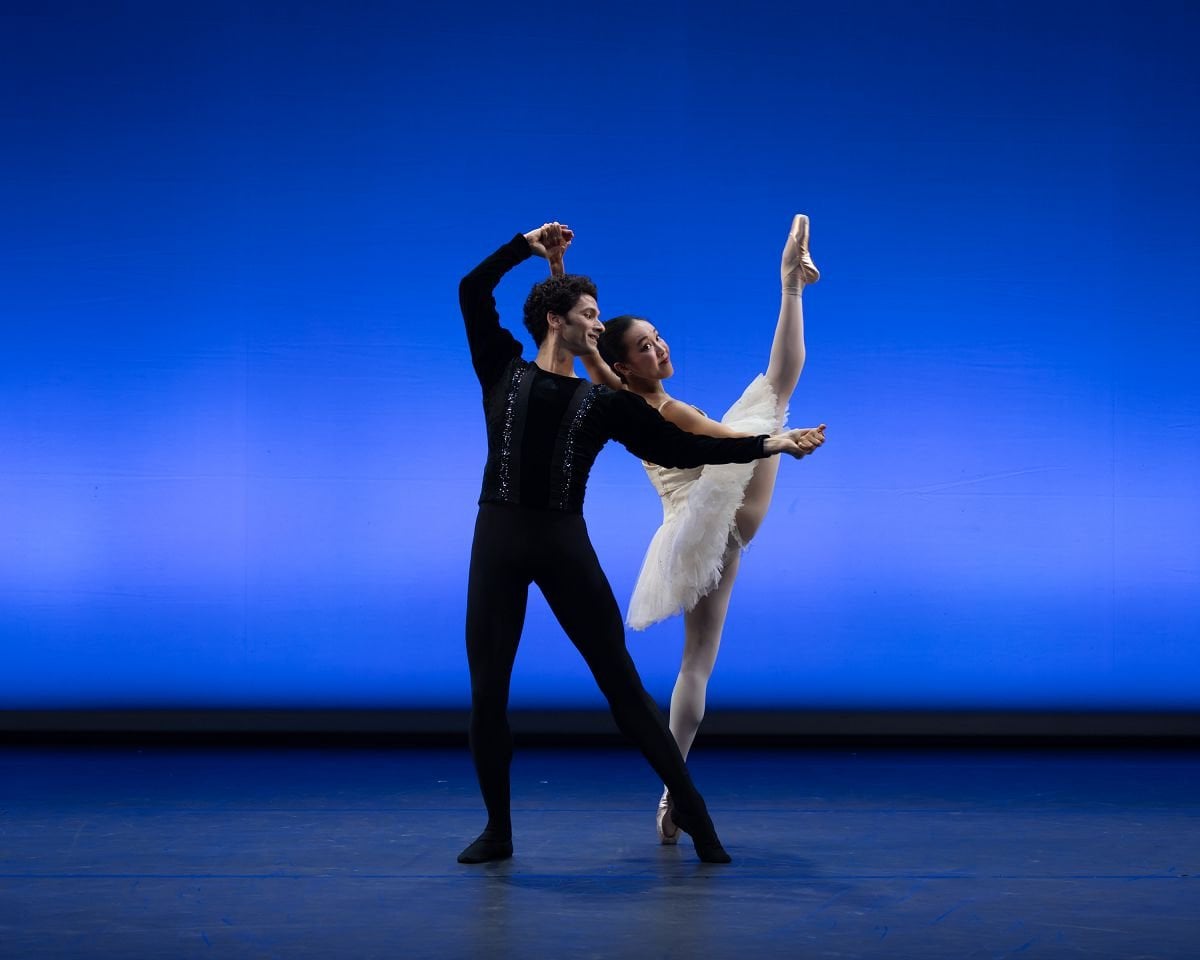

I’m twisting the truth marginally because the opening work, Ashley Page‘s Larina Waltz, was a re-run, although revived from LCB’s debut season, last year. It’s a refreshing 8-minute burst of classicism, delivered through an effervescent display of partnering by five evenly matched couples: a frilly, frothy spectacle, enlivened by the extra fizz in Page’s pacy, momentum-building choreography. It is dance that flows over one’s senses in cascading sequences without leaving any challenging aftertaste.
Artistic director Christopher Marney has promised that each LCB programme will feature the revival of a legacy work that has fallen into disuse and a newly commissioned piece, and true to his word, this programme delivered on that manifesto.


Next up was the UK premiere of a 40-year-old ballet, originally choreographed by the late Jerome Robbins for New York City Ballet to Aaron Copland’s Quiet City, with which Robbins’ ballet shares its name. Created as a memorial to the dancer, Joseph Duell, who died, aged just 30, it has a gloomy, elegiac aura with three apparitions in white – male dancers – bursting into the space occupied by a gathering of the grey that splits into two groups of silent onlookers (many of whom were students borrowed from The Royal Ballet School). At times, the three men in white appeared to be stalks blowing in the wind.
The central doomed character was danced enigmatically by Alejandro Virelles, supported by Joseph Taylor and Arthur Wille, who – at the close of the work – circle and then gently lift Virelles before setting him down softly on the floor in a poignant suggestion of life slipping away. It is an atmospheric piece, made all the more so by Copland’s poignant trumpet solo, that deserved to be resurrected, providing a sensitive vehicle for three male soloists.


This was followed by the world premiere of Tasha Chu’s Soon, which also dealt non-narratively with the issue of grief, or more specifically the emotional anticipation of loss, narratively suggested through a beginning in which a couple appeared to receive information from a third person (a doctor?). Chu chose a version of Gavin Bryars’ hypnotic looped recording of an unknown homeless man singing Jesus’ Blood Never Failed Me Yet, the emotional power of which has been catnip to choreographers, including William Forsythe, Maguy Marin and Lucinda Childs. In Soon, this repeated refrain punctuated a bespoke score by Sam Robinson.
Sahel Flora Pascual and Siméon Sorange-Félicité were the couple anticipating death, in close and tender movement, supported by a quartet of other dancers, all wearing socks of nondescript colour, perhaps representing the friends and family that are needed in this mournful reflection of anticipatory grief. It’s a work that suggests a choreographer with the Midas touch for illustrating emotional power in movement and I’m looking forward to seeing more of Chu’s work.
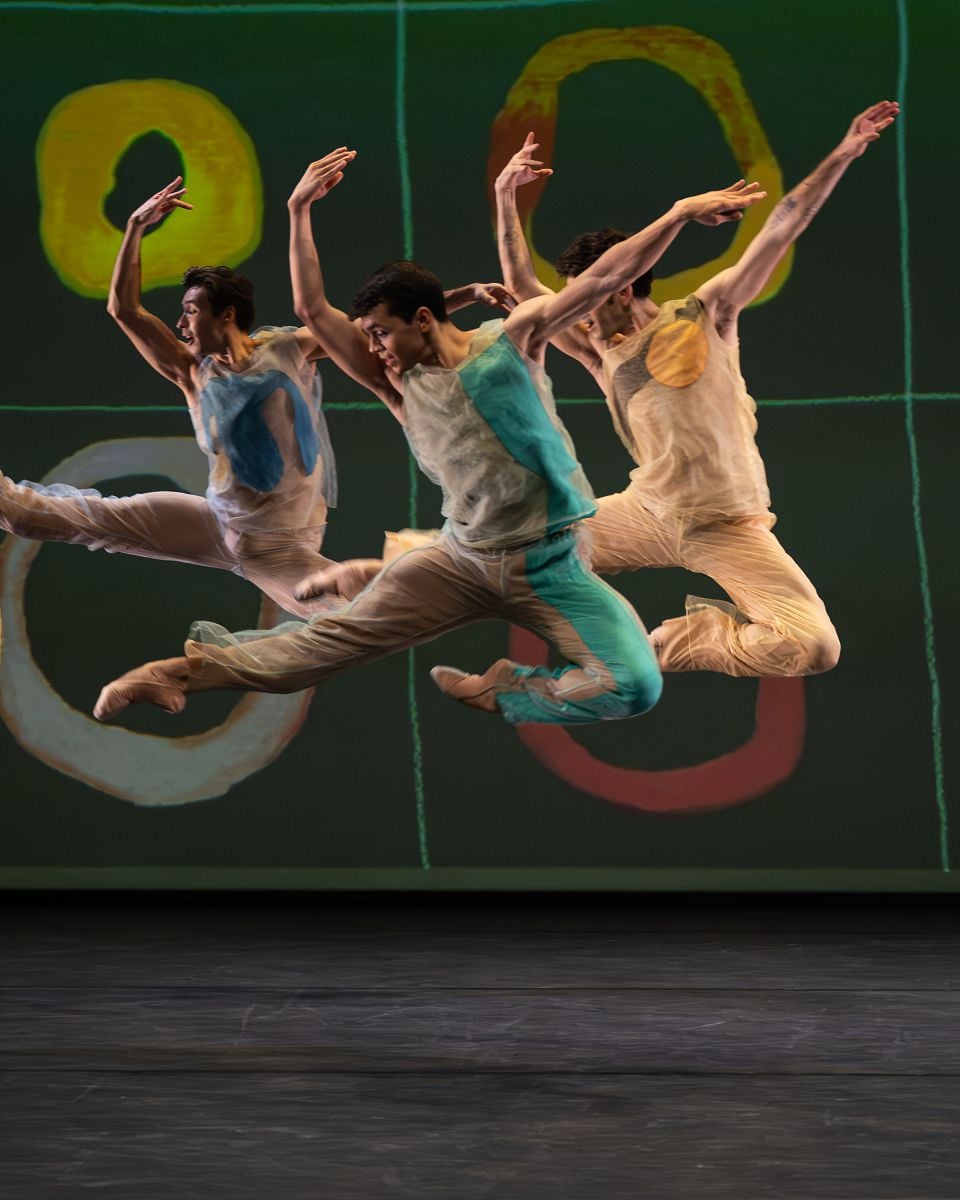
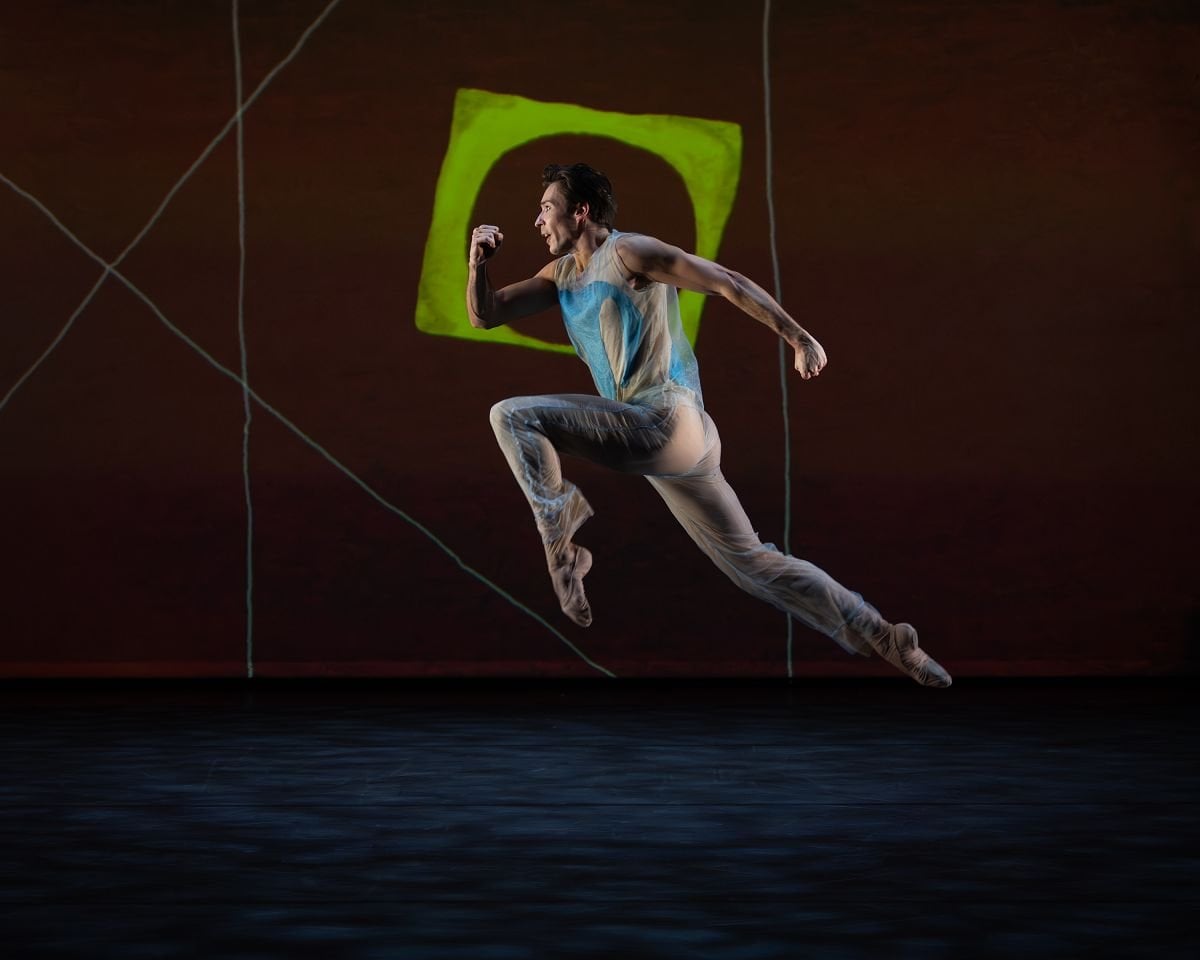
On the subject of which, I can’t get enough Ratmansky in my life! As in September, the whole of the final act was devoted to his choreographic interpretation of Mussorgsky’s Pictures at an Exhibition, the challenging speed and intensity of which is a perfect fit for these ten agile and hard-working dancers, all of whom appeared in three of the works on this energy-sapping programme. Nonetheless, the audacious lifts, quirky diversity, bursts of physical comedy and sharp changes of mood were all caught with unrelenting verve and ebullience throughout the cast. Taylor’s alpha male strength, the enigmatic smoothness of Wille and Jimin Kim and the sharp-edged angularity of Constance Devernay-Laurence provided eye-catching moments.
The real hero of the piece came with the masterclass of sensitive pianism from Reina Okada, excellently delivering the solo piano reduction of Mussorgsky’s classic tour through an exhibition in memory of his dead painter friend, Viktor Hartmann; the pictures being evoked in an animated backdrop of colourful imagery through Wendall K. Harrington’s musings on Wassily Kandinsky’s painting, Color Study, Squares with Concentric Circles. If I have a criticism of the programming, then perhaps three successive elegiac works dealing, in some way, with grief was perhaps too much in the way of morbidity, but I can have no gripe with the outstanding way in which each work was performed. Let’s hope that London City Ballet is here to stay.

Graham Watts is a freelance writer and dance critic. He writes for The Spectator, Tanz, Shinshokan Dance Magazine (Japan), Ballet Magazine (Romania), BachTrack and the Hong Kong International Arts Festival and has previously written for the Sunday Express, Dancing Times, Dance Europe, DanceTabs, London Dance, the Edinburgh International Festival and Pointe magazine (USA). He has also written the biography of Daria Klimentová (The Agony and the Ecstasy) and contributed chapters about the work of Akram Khan to the Oxford Handbook of Contemporary Ballet and on Shobana Jeyasingh for the third edition of Routledge’s Fifty Contemporary Choreographers.
He is Chairman of the Dance Section of The Critics’ Circle and of the UK National Dance Awards and regularly lectures on dance writing and criticism at The Royal Academy of Dance, The Place and (until the war) for Balletristic in Kyiv. He was a nominee for the Dance Writing Award in the 2018 One Dance UK Awards and was appointed OBE in 2008.