
Interview: Alessandra Ferri – we are capable of tapping into things that are higher than ourselves

Having just started as director of the Vienna State Ballet, ballerina Alessandra Ferri talks about where she is now.
Vienna State Ballet
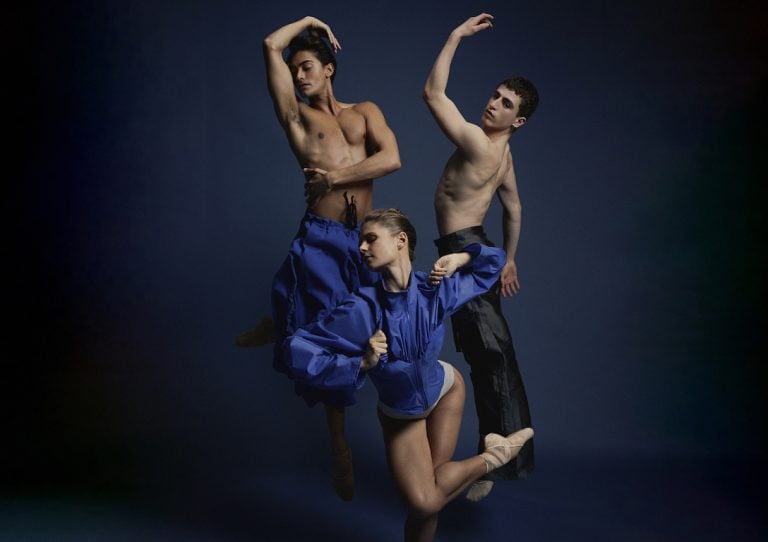
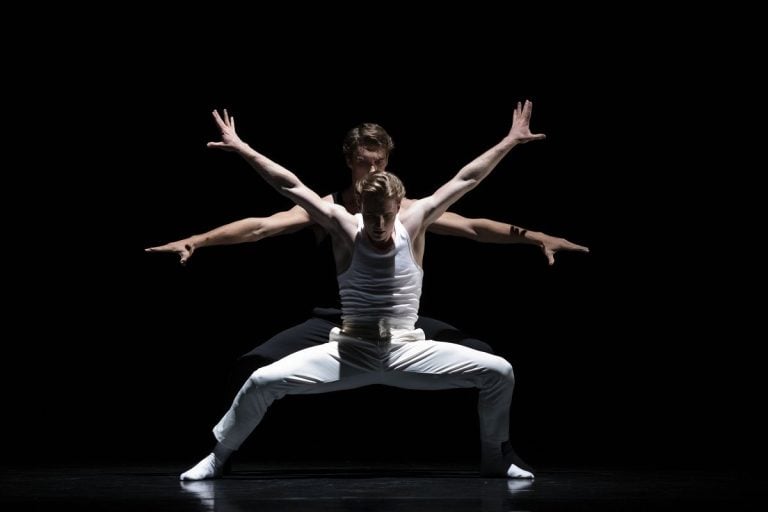
[Just because the company dances traditional repertoire] doesn’t mean excluding contemporary choreographers, and I don’t mean contemporary in the sense of bare feet or wearing socks, but the choreographers of today who have the tools to work with a classical company without distorting its identity.
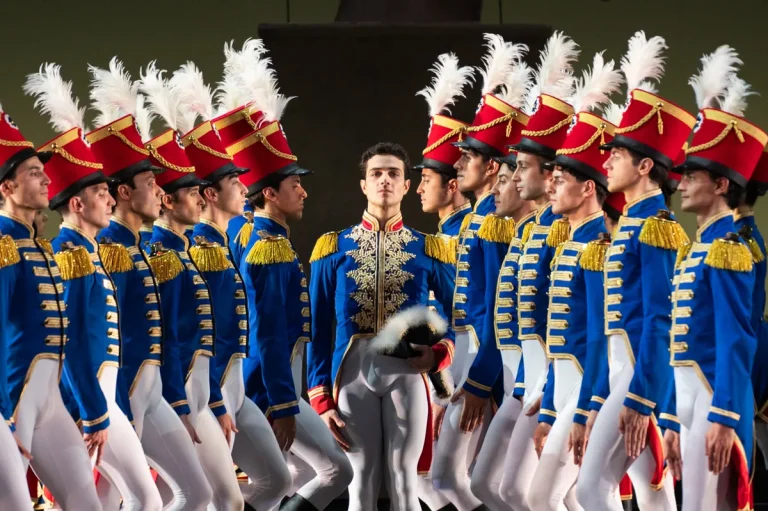
I want to point out that [classics] are certainly not outdated. If you look at a Caravaggio painting and a modern visual artist’s creation, it is not that one is better than the other. Our 2025/2026 programme embraces everything there is to embrace from past masters to creations that are right for us – from Giselle in the version by Elena Tschernischova (who was my coach when I danced it with Mikhail Baryshnikov) to Kallirhoe by Alexei Ratmansky, from La Chauve-souris (The Bat) by Roland Petit and George Balanchine‘s Jewels to Pam Tanowitz, one of the greatest talents of today.
Someone accused me of favouring what I danced [in the programming], but I’m not being sentimental. It would have been difficult the other way round… I danced almost everything! Take La Chauve-souris, for example; it was only natural that it should be in the season, being that it’s the bicentenary of the birth of the Viennese composer Johann Strauss.
On technique
First of all, technique is not about performing 15 pirouettes, but to become such a master of it that, as you dance, you no longer have to worry about it and you are free. However, my approach is to go beyond preparation for the performance – I try to get the dancers to open the window to their heart, to their soul, and I try to give them the courage to go there. When I see someone get to that place (and I notice this because their facial features change), it is an incredible feeling. Priceless.
The new generation of dancers
We live in a social universe, and it seems to me that we always look at ourselves from an outside eye, concerned with how we look instead of living intensely. The effort is to make younger dancers understand that fragility and vulnerability are a strength, not a fault, and you have to use them to get in touch with who you are.
On directing a company
When I am presented with something that I love, something that touches me, I must do it. Maybe the doubt comes later… like moving to Vienna, a city whose language I don’t even speak! Too late, there’s no going back now. A friend of mine told me that I am brave to start again at 62. Instead, I say, “Wow, something I haven’t proved myself with yet. I feel alive!” I have never followed strategies – it’s against my nature. I am happy with this extraordinary role; I am totally immersed in it, and it satisfies me completely. This is a great time: I’ve even become a grandmother thanks to Matilde.
But I don’t think I’ll be dancing again. When I wake up in the morning, I don’t have to do a mental MRI scan to find out if, and where, I’m in pain. I slowly drink a cappuccino on the terrace and do maybe do 40 minutes of exercise, but sometimes not even that.
Transition
Today I am more attentive to others. Dancing is so engrossing that you only care about yourself. I have learnt to see others, to listen to them. First in work and now, automatically, it happens in everyday life.
In my life there has been a transition that is exactly like that of Giselle – from a ‘little’ love, to a ‘need’, to a love that is eternal and universal. It must be age talking!
There is another awareness of ourselves… the realisation that we are capable of tapping into things that are higher than ourselves. Like Giselle, in fact.
Alessandra Ferri was talking to Io Donna magazine.

Graham Spicer, aka ‘Gramilano’, is a writer, director and photographer based in Milan. He was a regular columnist for Opera Now magazine and wrote for the BBC until transferring to Italy. His articles have appeared in various publications from Woman’s Weekly to Gay Times, and he wrote the Danza in Italia column for Dancing Times magazine. Graham was the historical advisor on Codice Carla, the 2023 documentary on Italian ballerina Carla Fracci.
Graham also works as a dance photographer, and his photos have appeared in many books, theatre programmes, and magazines, including Dancing Times, Dance Spirit and Ballet2000, as well as all the major Italian newspapers.
He is a member of the Dance Section of The Critics’ Circle.



Alessandri: Will always love you as a person and a dancer. Live and on tape your R and J pas with Julio is the best and most passionate duet I have ever .seen.
Love, JIM
Thank you for this beautiful article/interview.