Interview: Inside the Prix de Lausanne – Making the Best of the Most Challenging

Christophe Farquet talks to five dancers from the Zurich Dance Academy at the Prix de Lausanne 2026 – William Gyves (1st prize), Dragos Gramada (scholarship), Estefania Guajardo Livas, Goda Budreviciute, and Lisa Ito.
The Prix de Lausanne, which took place in the Swiss city on the shores of Lake Geneva a few days ago, is much more than just a ballet competition. Over the course of a whole week, 78 young dancers, aged 15 to 18, immersed themselves in classes, rehearsals, and performances at the Théâtre de Beaulieu, where the Prix is held. They enjoyed a rich and unique experience. These apprentice dancers spent their days alongside other talented young people of their age from all over the world; they performed in front of an audience of connoisseurs who followed every stage of the process; they met choreographers, teachers, and company directors, who might ultimately determine their future. In this way, the Prix brings together the entire world of ballet in one place and at one time. It is a kind of rite of passage into the profession of dance, culminating for 14 of them in a scholarship that will enable them to join a renowned academy or a major dance company.

This year, the Prix once again highlighted the remarkable dedication of these teenagers to their art. In the eyes of the general public, who turned out in large numbers at Beaulieu, the dancers embodied, through ballet, the opposite of the shortcomings of youth in search of direction. Attentive to the smallest details and listening carefully to each correction, they took advantage of the learning process to present, during the performances at the end of the week, two classical and contemporary variations of a high technical quality and great aesthetic maturity. The comparable level of candidates from Asia, America, and Europe also exemplified the universality of ballet as an art of excellence. This year, an 18-year-old American from North Carolina won first prize. William Gyves stood out with a Grand Pas Classique that combined energy and precision. This young man, who is studying in Switzerland, is a product of the Prix: it was thanks to his first participation in 2023 that he obtained his scholarship to the Zurich Dance Academy, and now, with this victory, he will be able to join a major ballet company.
To better understand the experience of the dancers in Lausanne, we wanted to hear from Gyves and his four classmates from Zurich who participated in the Prix. They talked to us about their feelings during the competition.

Opening an Artistic Future
They are three girls and two boys aged 17-18 from the Zurich Dance Academy, and they all agree on one thing: they came to Lausanne to prepare for the future. The organisation of the Prix, with its numerous scholarships and opportunities for dancers and companies to meet, is designed to ensure that competitors go beyond the simple goal of winning at all costs. The real victory, of course, is launching a professional career. In this respect, participation is important in itself, regardless of the result. Goda Budreviciute, from Lithuania, is reminiscent of Bolshoi dancer Alena Kovaleva with her long legs, but she was not selected among the 21 finalists, perhaps due to a slightly sluggish ending to her Queen of the Dryads. In any case, she confesses that participating in Lausanne was “a dream come true. I saw it as an opportunity to present myself and my work to the ballet community across the world.“ ”Share the work with the professionals” was also the stated goal of Japan’s Lisa Ito, who was among the finalists; her liveliness made up for a mistake in the Italian fouettés from Coppélia in the semi-finals, which she corrected the next day. Winner William Gyves agrees: “I saw the Prix as an opportunity to be seen by companies.”
This is probably why the Zurich dancers were pleasantly surprised by the atmosphere at the Prix de Lausanne. They had expected a nervous environment and fierce competition. Instead, they found gestures of mutual support and camaraderie among their peers. “What surprised me positively was how open the atmosphere was between competitors,” says the elegant Mexican, Estefania Guajardo Livas, who received loud applause from the audience during her unfortunately unsuccessful performances in the semi-finals. “I expected it to be more tense,” she continues, “but instead there was a strong sense of mutual respect.” Her Romanian colleague, the slender Dragos Gramada, who won one of the scholarships, agrees, emphasising the “supportive” atmosphere among the dancers. Far from the stereotypes about ballet competitions, their experience seems more like the rapid staging of a show where everyone feels they are in the same boat.

Learning and Being Exposed
During the week, the students in Zurich also learned a great deal. They took ballet classes with Elisabeth Platel; they were coached by Federico Bonelli; they received advice from some of the choreographers whose works they performed. One such choreographer was Goyo Montero, who was in Lausanne to teach his piece Grinding the Teeth, chosen by Gyves and Gramada for the contemporary variation. The latter dancer described how contact with the choreographer changed his perception of his work: “He emphasised that the piece should actually be simpler and calmer than I initially thought. Because the music is already very intense and aggressive, he explained that we don’t need to add extra force or exaggerated movement on top of it.” During the classes, this idea of focusing on gesture also struck Guajardo Livas, the Mexican dancer, who spoke of “the importance of clarity and intention in every movement. I realised that even small details, like the direction of the eyes or the timing of breath, can completely change how the movement looks on stage.” Lisa Ito, for her part, will keep in mind “to fully complete each movement and not rush.”

Finally, what did our young dancers think of this constant exposure to the jury, the audience, and the cameras, from warm-up to performance, including classes and rehearsals? Did it unsettle them? They all admit that they felt additional pressure. For Gyves, who had already experienced this in Lausanne, it was even the main difficulty: “I prepared to present myself in class the same way I would on stage because that was the hardest part for me in 2023.” But our dancers seem, once again, to have risen to the challenge. “I believe that the cameras helped me and encouraged me to be more presentative in the classes,” says Goda Budreviciute. “Yet the thought that the whole world would be able to see these videos for many more years did put on some extra pressure and stress. But overall, it affected me more positively than negatively.”
Making the best of the most challenging: that seems to be the moral of the story for these five talented dancers at the Prix de Lausanne.
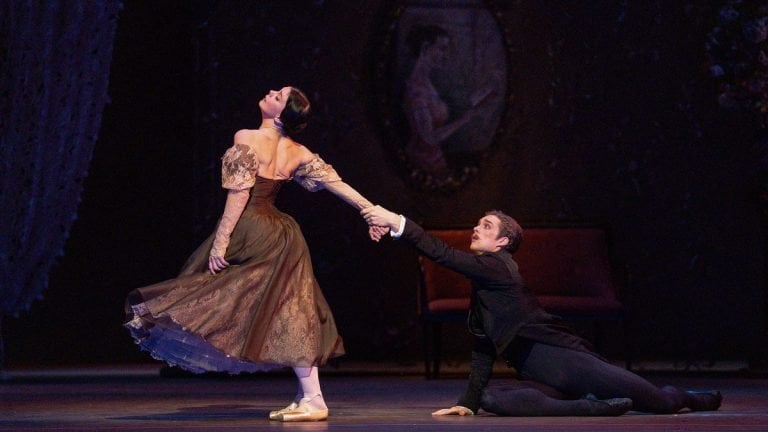
William Gyves at the Prix de Lausanne in 2023


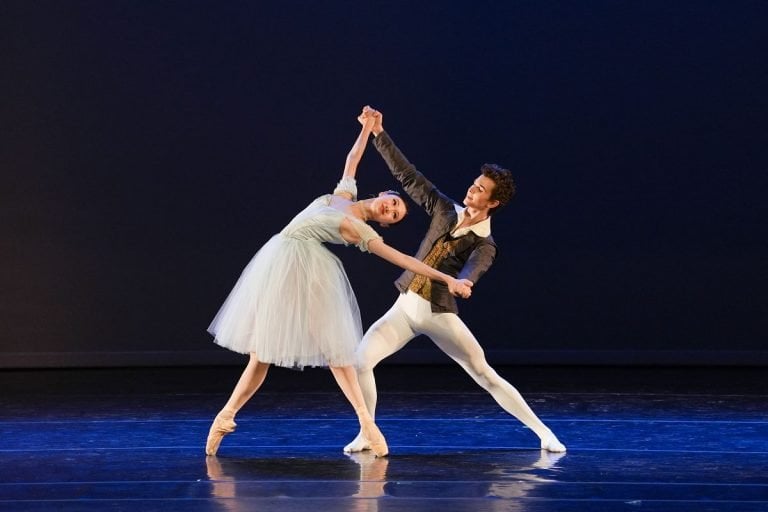
William Gyves at the Prix de Lausanne in 2026


Christophe Farquet is a Swiss author and teacher with a PhD in history. Based in Lausanne, he writes ballet reviews for newspapers and specialised websites. He favours the great masterpieces of the classical ballet repertoire, with a particular affinity for the Russian style of dancing.
He is currently writing a novel in the form of a fictitious autobiography of a ballerina.