Thank you, Luchino Visconti: La Scala marks 50 years since the director’s death
Fifty years after his death, the Milanese director’s eight productions at La Scala – from Callas’s Traviata to the Ring he never lived to stage – are revisited at the Museo Teatrale.
Teatro alla Scala is paying tribute to Luchino Visconti (1906–1976) fifty years after his death, with an exhibition running from 22 September 2026 to 31 March 2027. Curated by Giovanni Agosti, with staging by Margherita Palli, Grazie a Luchino Visconti (Thank you, Luchino Visconti) is on display in the theatre’s museum, Museo Teatrale alla Scala.
It isn’t the first time La Scala has devoted a show to Visconti – an exhibition on his wide-ranging career was staged in the grand foyer back in 1978. This time, though, the focus is squarely on his relationship with Milan’s leading theatre, which was not just about art but also about family reasons.
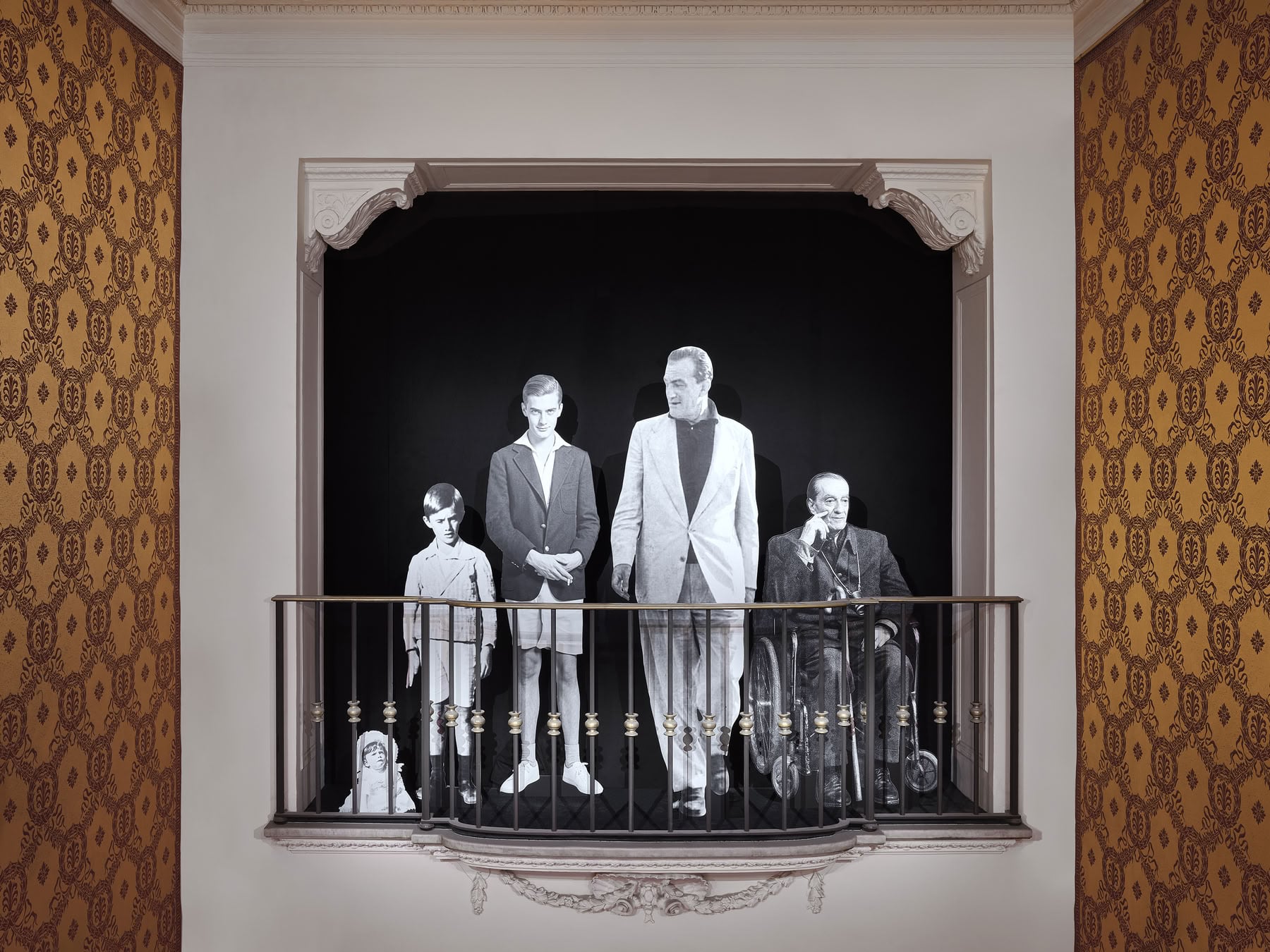
More than a celebration, the exhibition tells the story of a lifelong bond. Visconti had been going to La Scala since childhood, and from 1954 he transformed the way opera was staged there. His Scala career officially began on 7 December 1954 with La vestale, and went on to take in some of the most significant operas and performers of the second half of the twentieth century. But the connection ran deeper still: the Visconti di Modrone family had been institutionally tied to the theatre since 1898, and Luchino grew up watching operas in the family box.
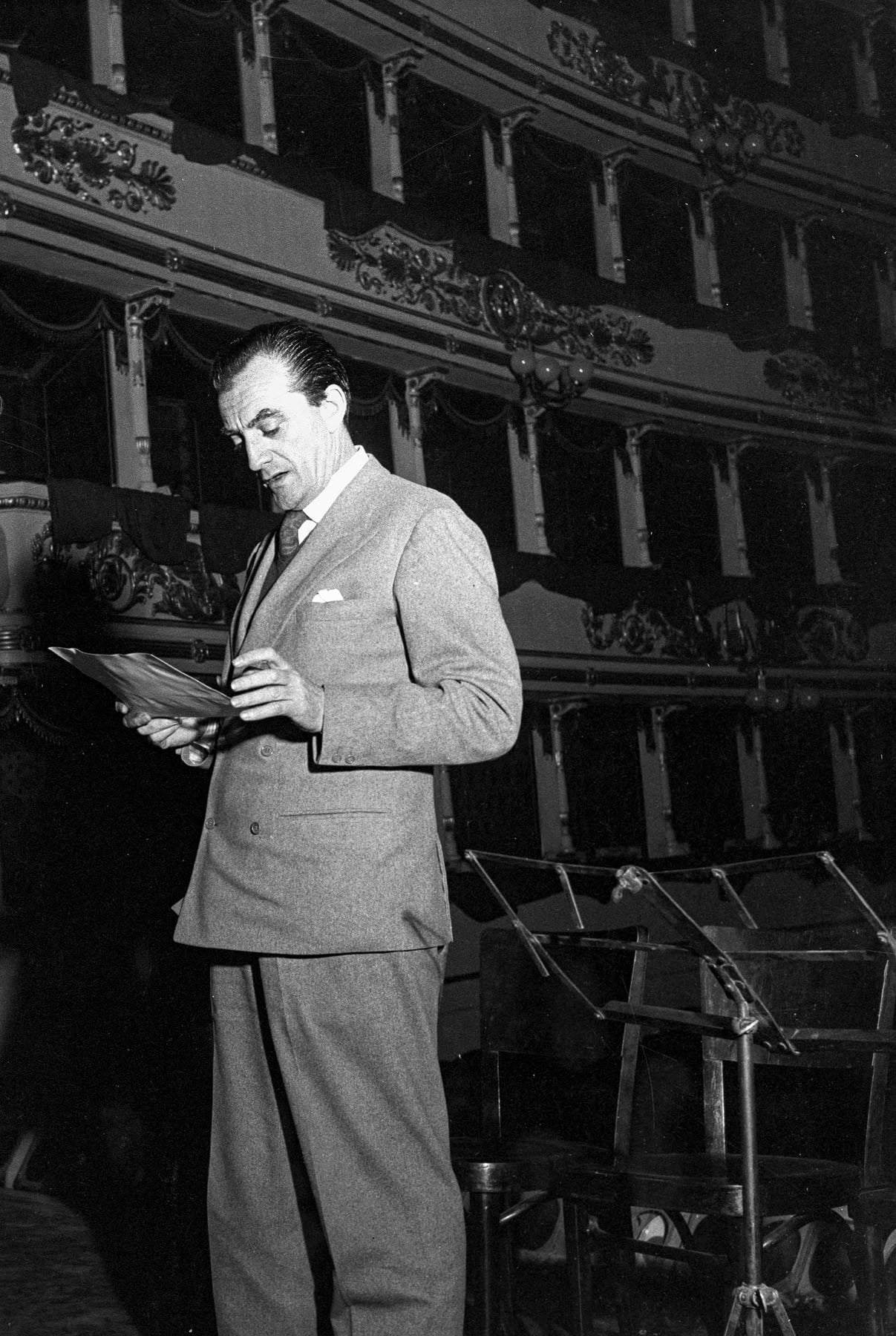
Visconti directed eight productions at La Scala in all, work that left a lasting mark on Italian and international musical theatre. His productions, distinguished by their striking visual force and close attention to the music, helped draw new audiences to opera.
The exhibition continues in the spirit of the Museo’s previous show, La rivoluzione del Ring – Visconti Ronconi Chéreau, and shares much of its approach: books, documents, sketches and costume designs, film footage, props, press cuttings and costumes.
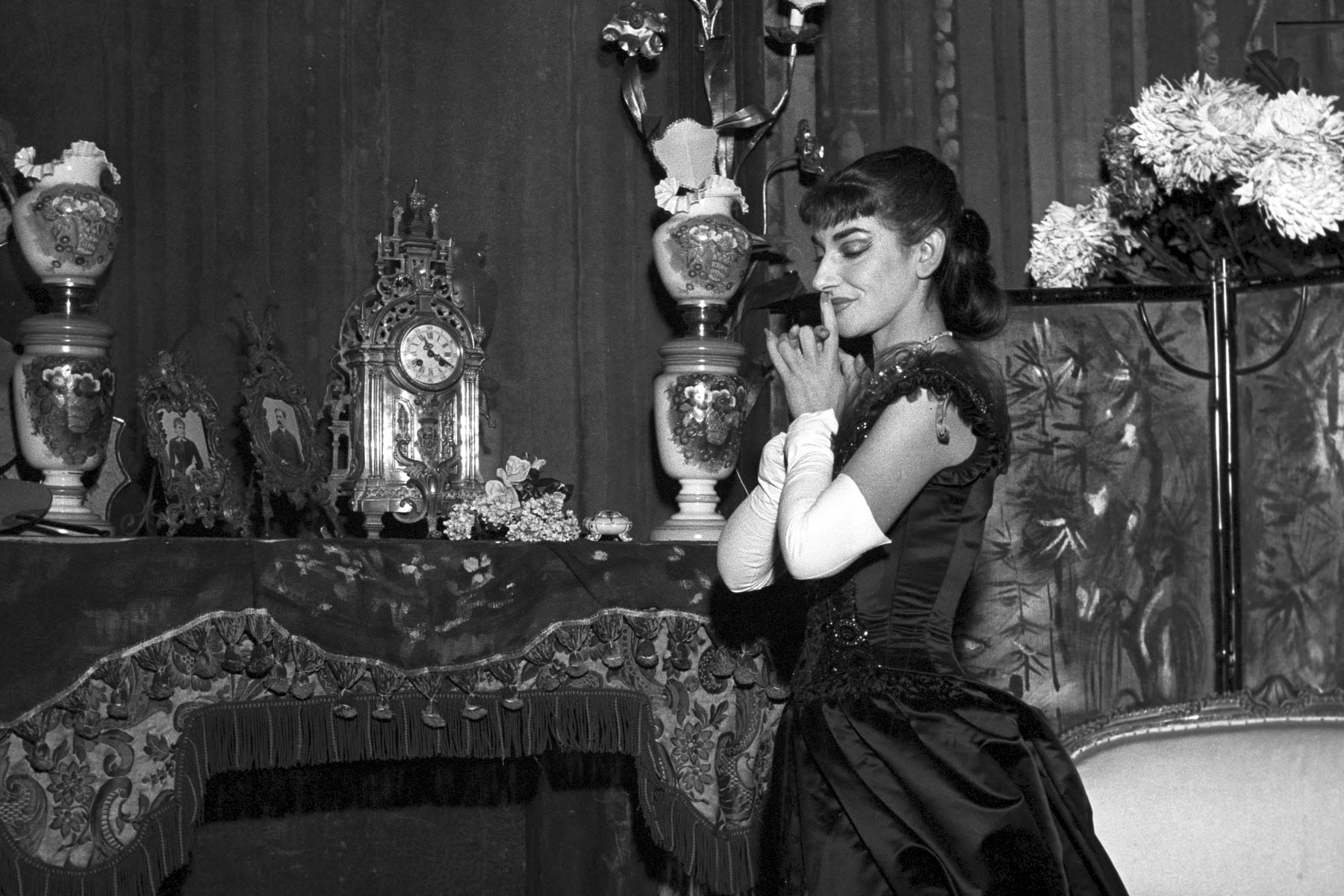
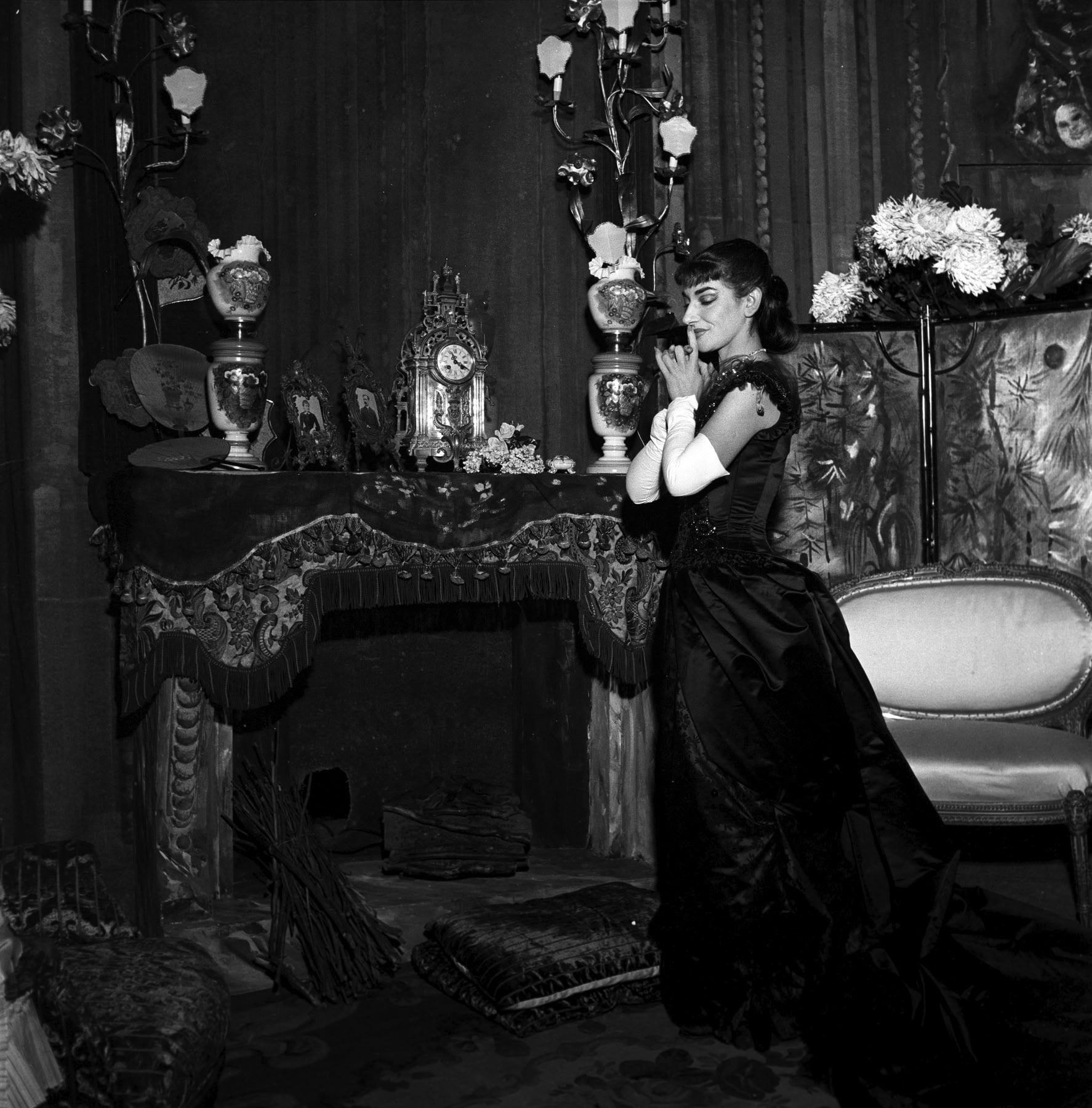
Several landmark productions sit at the heart of the exhibition, beginning with the 1955 La traviata, conducted by Carlo Maria Giulini, designed by Lila De Nobili and starring Maria Callas. That legendary opening night is brought back to life through a recording of the Prelude and the applause that greeted its famous rise of the curtain.
The relationship with Callas has a special place in the exhibition. Her stage costumes, photographs and first-hand accounts document a partnership between two figures who changed the course of opera history – and one with a direct link to the Museo’s own collections, since Visconti coached the soprano in gesture and stage presence by having her study images of great performers of the past, from Eleonora Duse to Sarah Bernhardt.
The show also looks at what never came to be: the Falstaff Toscanini wanted for the opening of the Piccola Scala, a planned Poliuto, and – the exhibition’s emotional turning point, as with the earlier Ring show – the Wagner Ring Visconti was due to direct between 1973 and 1976, a project illness forced him to abandon.
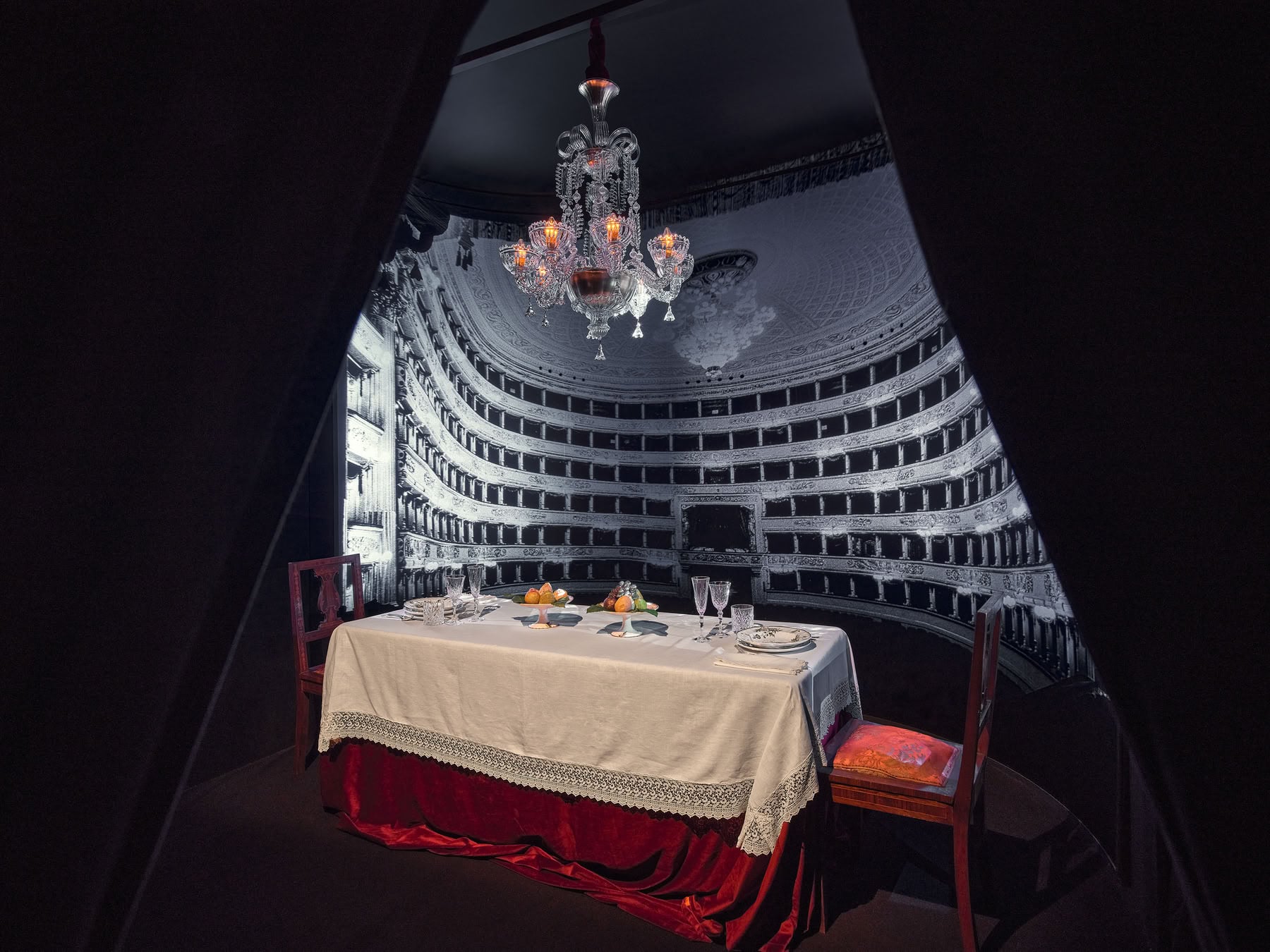
It’s partly through these unrealised projects that the more human side of the artist comes through, in his own words, as he longed for:
…the smell of Milan that no one can give me back… my mother used to walk us along the bastions, I can still feel the sweat of the horses. At dinner time, the light of the chandelier in the dining room would dim and my father would say: ‘They’ve lit up at La Scala.’
Grazie a Luchino Visconti continues the Museo Teatrale’s exploration of an archive still rich with unexplored material to trace the path of an artist for whom opera was, in his own words, “the image that sums up what life is.” Fifty years after his death, La Scala says thank you to Visconti – for turning the stage into a place of vision, rigour and passion, for bringing music, theatre and culture together in a new form, and for leaving a mark on the history of La Scala, and of twentieth-century culture, that is still felt today.
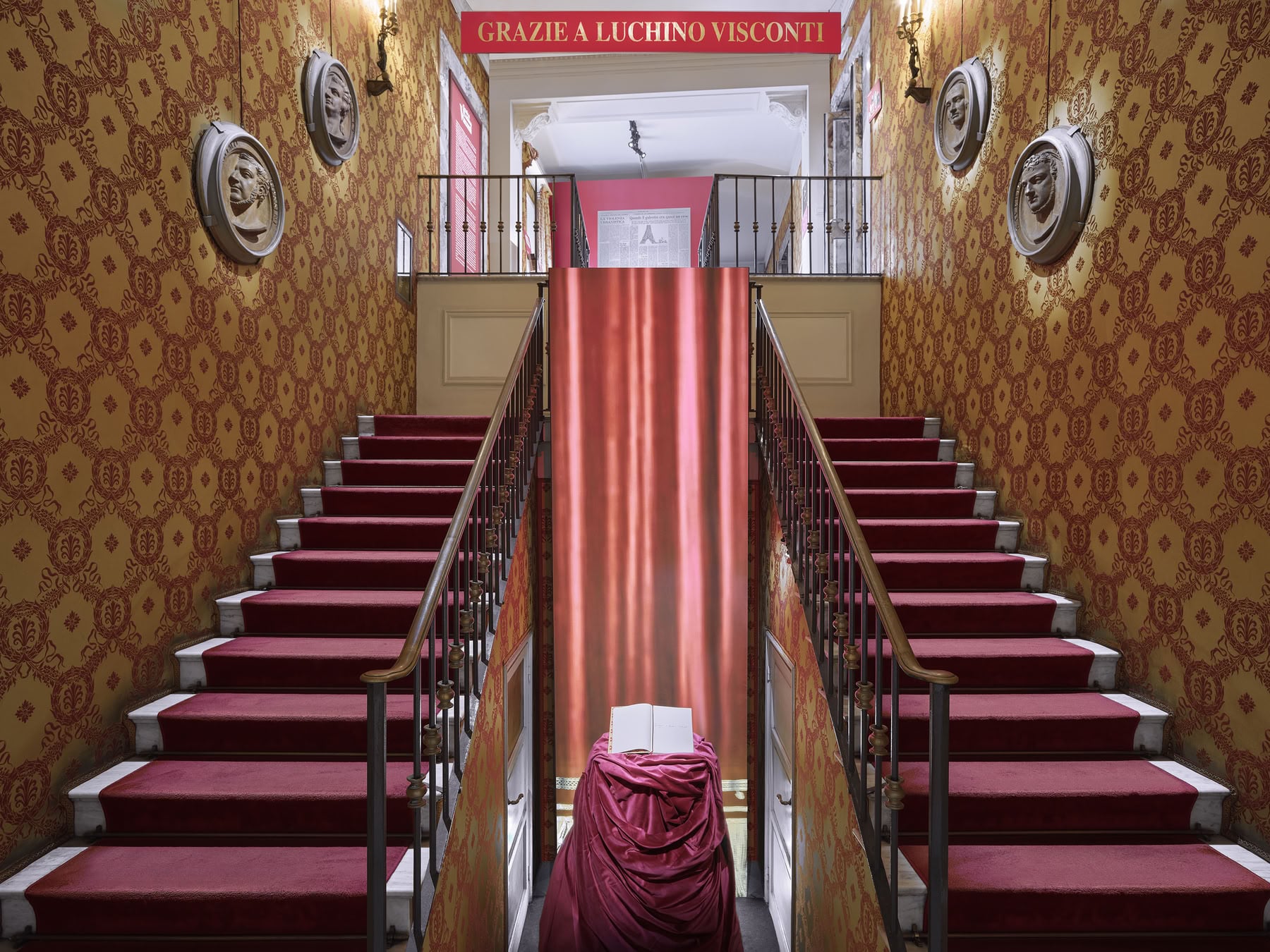
Grazie a Luchino Visconti – the exhibition, room by room:
I. Visconti at La Scala
An introduction to the eight productions Visconti staged at La Scala, and the many projects that were never realised, setting out his vision of opera as a synthesis of life. Rare and familiar archive footage reveals his working methods.
II. La Scala in the Visconti household
Family memories, biographical episodes and box number 4 tell the story of a bond formed in childhood – the Viscontis’ history intertwined with that of a theatre the family helped to support.
III. La vestale and La sonnambula, 1954–1955
Visconti’s operatic directing debut sets the monumental neoclassicism of La vestale against the rarefied Romanticism of La sonnambula, focusing on Maria Callas “and a new unity of singing, acting and image”.
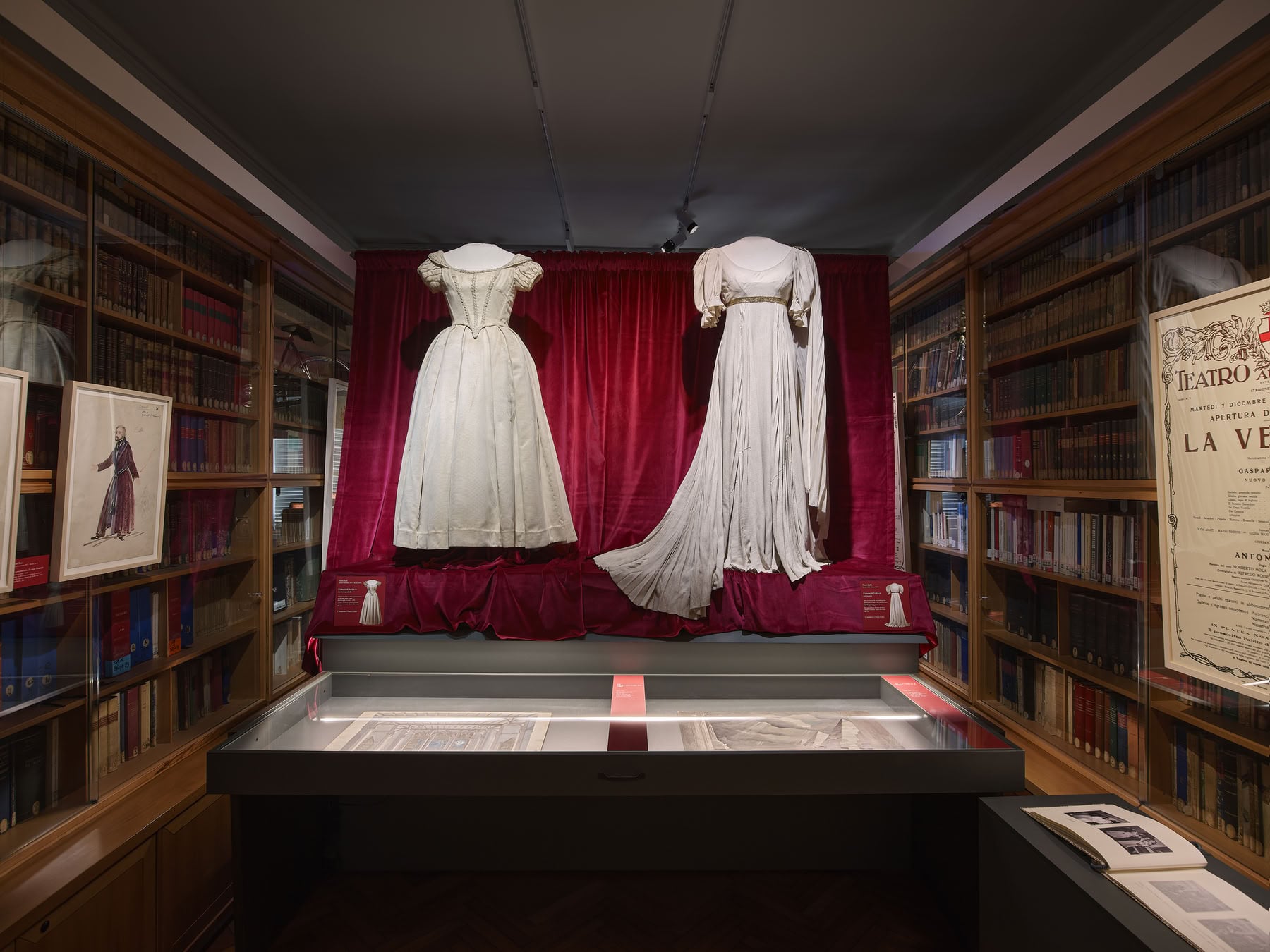
IV. La traviata, 1955
This room revisits the production that has come to symbolise the Visconti–Callas partnership. The Paris of the Impressionists – or perhaps of the young Proust – together with precise gesture and striking visual design, turned Verdi’s opera, originally set in the mid-nineteenth century, into modern, deeply human theatre.
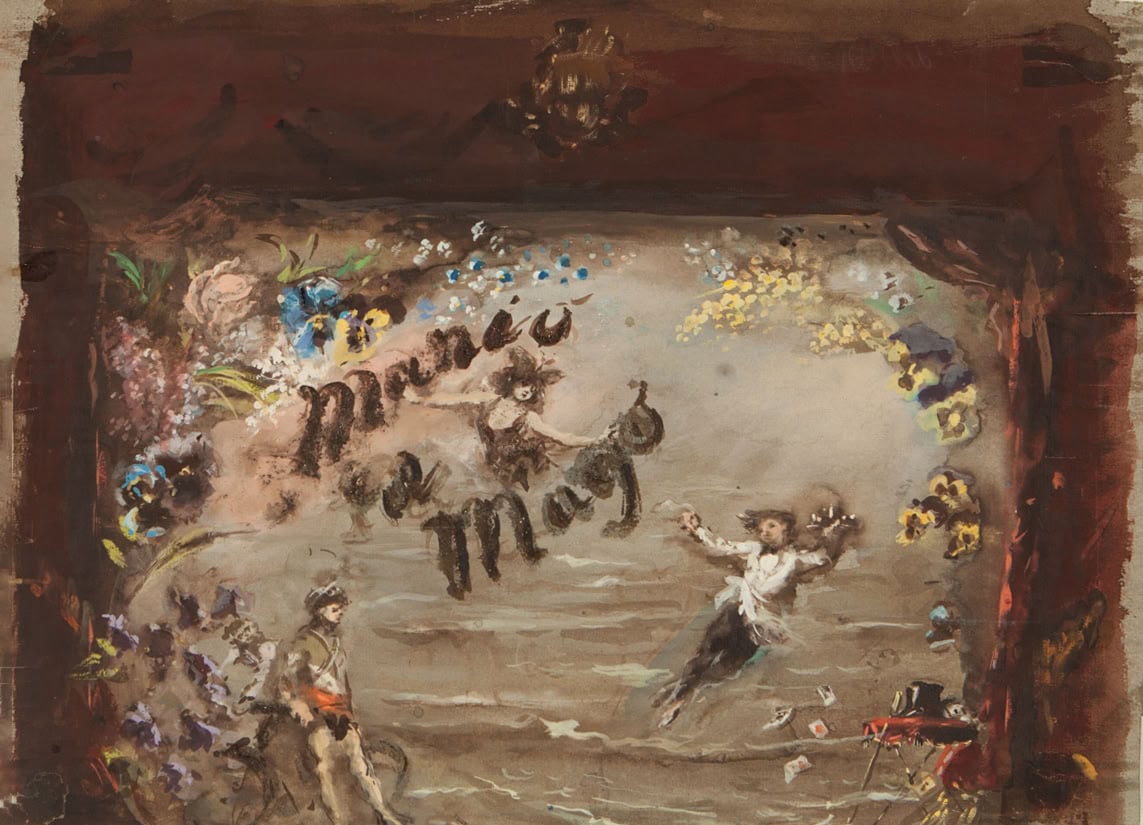
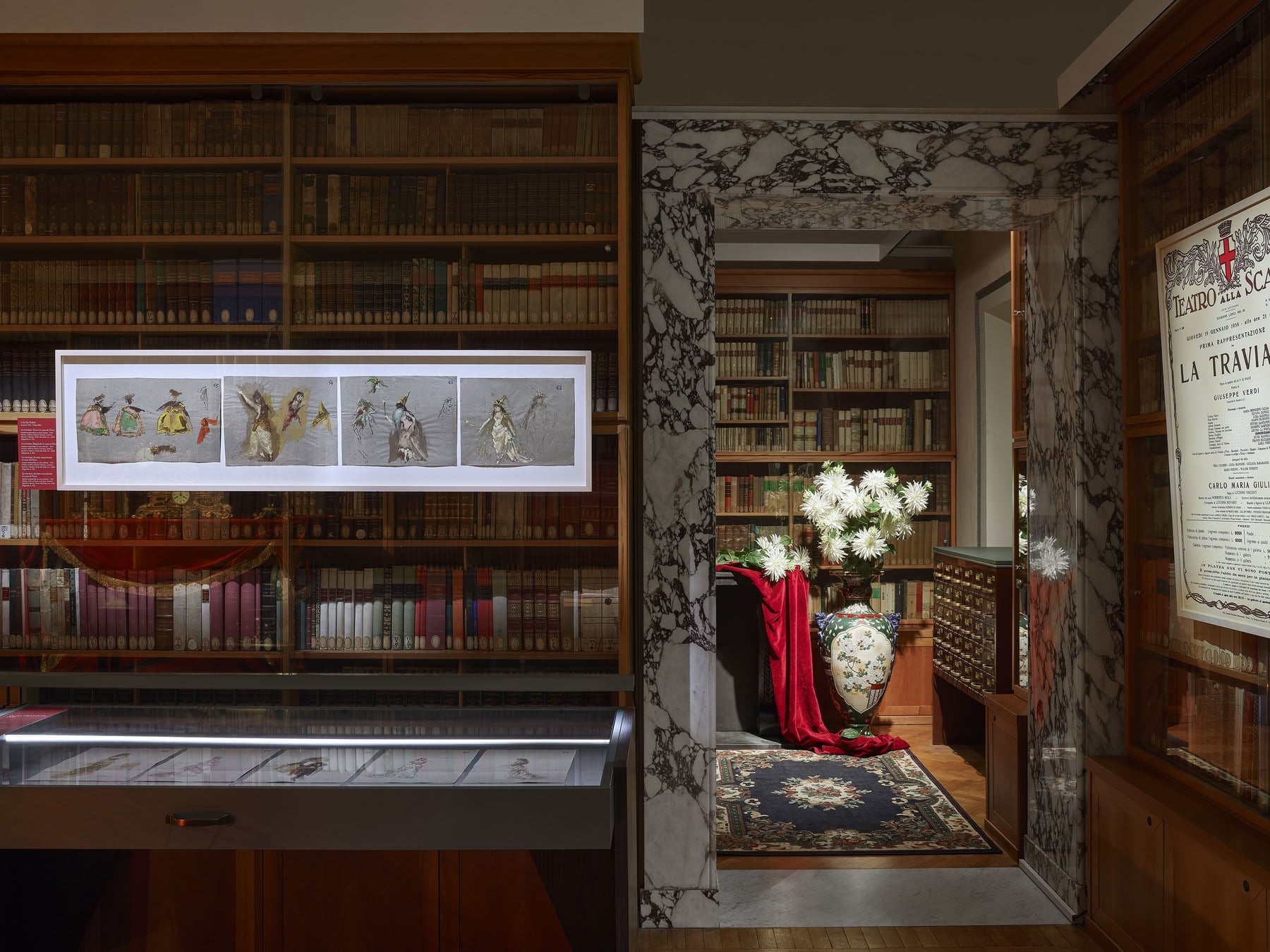
V. Mario e il mago, 1956
This choreographic piece, drawn from a story by Thomas Mann, moves between popular reality and fantasy. Set in 1930s Versilia, music, dance and illusion combine in a parable about power and manipulation.
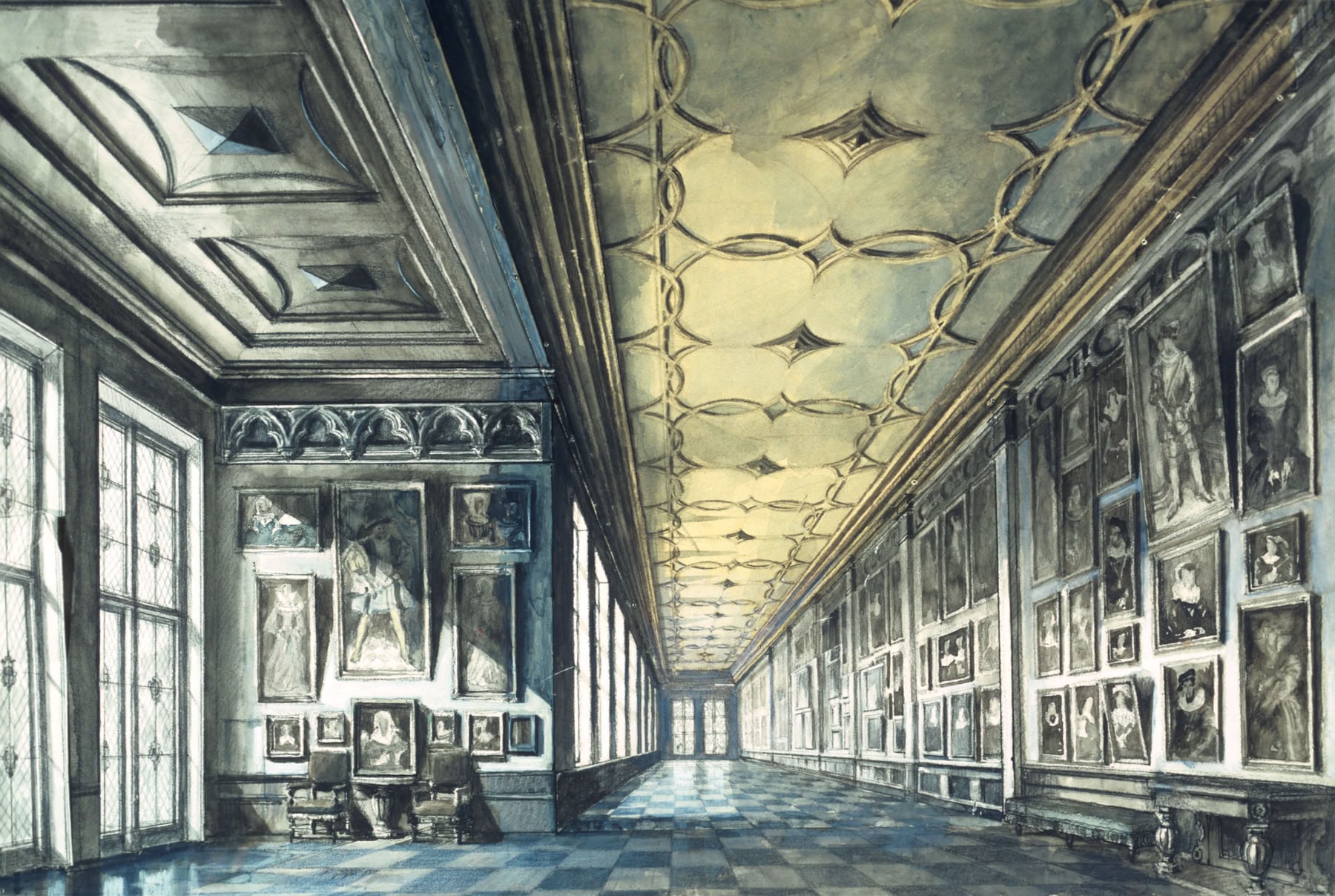
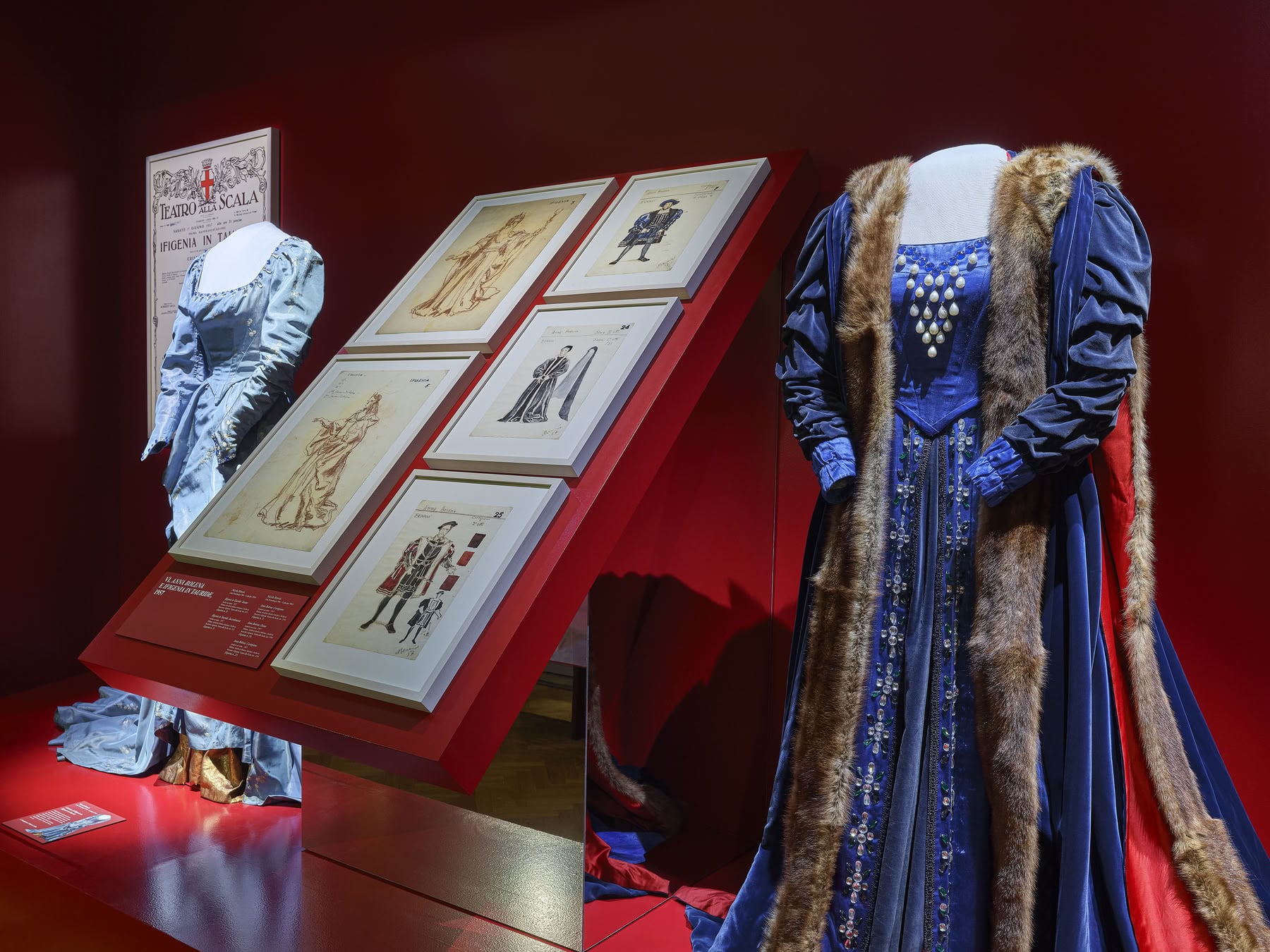
VI. Anna Bolena and Ifigenia in Tauride, 1957
Two radical reinterpretations: sixteenth-century England reimagined through Holbein, and a rococo Ifigenia inspired by Tiepolo, the Bibiena family and Juvarra – iconographic research turned into stagecraft.
VII. From Poliuto to the Ring, 1960–1972
The final room follows Visconti’s later projects, through abandoned plans, censorship, tours and returns to La Scala – from Poliuto to Il trovatore, from Egmont to the Wagnerian Ring, which illness prevented him from ever staging.

Graham Spicer, aka ‘Gramilano’, is a writer, director and photographer based in Milan. He was a regular columnist for Opera Now magazine and wrote for the BBC until transferring to Italy. His articles have appeared in various publications from Woman’s Weekly to Gay Times, and he wrote the Danza in Italia column for Dancing Times magazine. Graham was the historical advisor on Codice Carla, the 2023 documentary on Italian ballerina Carla Fracci.
Graham also works as a dance photographer, and his photos have appeared in many books, theatre programmes, and magazines, including Dancing Times, Dance Spirit and Ballet2000, as well as all the major Italian newspapers.
He is a member of the Dance Section of The Critics’ Circle.