Review: Rome Opera Ballet’s magical performance of La Bayadère

Donatella Bertozzi sees La Bayadère in Rome and has a ‘magical, priceless evening’ with Paris Opera Ballet’s Sae Eu Park and Paul Marque.
| Title | La Bayadère |
| Company | Rome Opera Ballet |
| Venue | Teatro dell’Opera, Rome |
| Date | 5 February 2026 |
| Reviewer | Donatella Bertozzi |
Theatre life is full of magic. In the case of ballet, I dare say, even more so. If you ever found yourself experiencing one of those magical evenings when everything seems to fall into place, and the darkest of tragedies is received by the audience with glee, and then by growing and overwhelming rounds of applause, you know magic is at work, and the experience is priceless.
The (third) performance of La Bayadère on 5 February at the Teatro dell’Opera in Rome was one of those magical, priceless evenings.

Not only was the dancing very good, with an impeccable rendering of Benjamin Pech’s sleek choreography by both the leading characters and the corps de ballet. But the music was magical as well. I don’t remember ever listening to Minkus’ score with such joy and surprise. With six years of service as musical director of the New York City Ballet under his belt, French conductor Fayçal Karoui showed that he knows this work really ‘by heart’. He also demonstrated a superb mastery of the art of communicating with both the musicians in the pit and the dancers on stage. He greatly – I should say crucially – enhanced the dancers’ performance, following them with his gaze step by step, almost dancing with them and finally applauding them at the end of each number – I’ve never witnessed anything like that! All the while, he drew from the orchestra the colours and nuances that Minkus had undoubtedly wanted to infuse into his music, inspired by contemporary composers – distant but perceptible echoes of Verdi and Strauss floated in the air to enrich the usually robust and kinetic structures of the Austrian composer that all balletomanes are familiar with.
The light and flexible Sae Eu Park as Nikija, la bayadère, and the romantic, athletic Paul Marque as Solor, her lover, both étoiles from the Paris Opéra, were guests. Gamzatti, the bayadere’s cruel rival, was the emotionally vivid and technically strong Susanna Salvi, a Rome Opera Ballet étoile. They all danced with faithful closeness to both the music and the choreographic score, projecting the essence of Benjamin Pech’s vision of Petipa’s ballet. When I first saw this production, in 2023, with Olga Smirnova and Jacopo Tissi, both excellent former Bolshoi principals, I didn’t get the same sense of accomplishment that this new team brought to the work.


Since 1928, when the Teatro dell’Opera di Roma was first furnished with a professional dance school and a corps de ballet, virtually all the great titles in the classical repertoire, from the 19th and 20th centuries, have been performed and by prestigious guest companies, including Diaghilev’s Ballets Russes, the Paris Opera Ballet, the American Ballet Theatre, the Royal Ballet and the Bolshoi. One notable exception was La Bayadère, Marius Petipa‘s famous 1877 ballet inspired by an intricate Sanskrit text, Sakuntala, by the great Indian poet and playwright Kalidasa.
The first time Rome had ever seen a complete version of La Bayadère, with its celebrated romantically moonlit scene of Act III, The Kingdom of the Shades, was in the early 21st century – a version of the ballet by the Georgian choreographer Raphael Avnikjan, a pupil of Vachtang Chabukiani, was first staged in 2011. It did not enter the company’s repertoire, though, and was almost instantly dropped.


A second, more consistent attempt to include the ballet in the company’s repertoire was made in 2023 when a new version by Benjamin Pech after Petipa was staged, with décor by the Spanish artist Ignasi Monreal and costumes by the theatre’s resident chief couturière, Anna Biagiotti, who wisely and elegantly elaborated new and old, drawing upon the rich dowry of past theatre productions. This new version by Pech – a former Paris Opéra étoile – was commissioned by the director of the company, Eleonora Abbagnato, herself a former étoile with the Paris Opéra, where she entered the school on the recommendation of Roland Petit and spent almost thirty years of her vastly successful career.
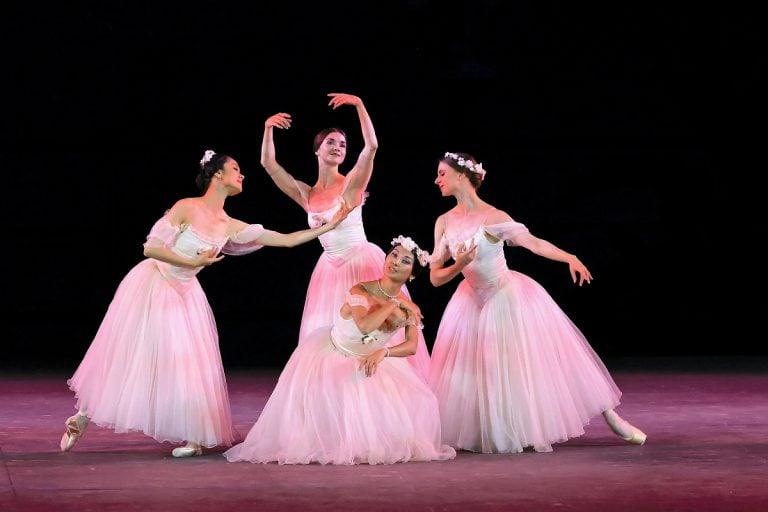
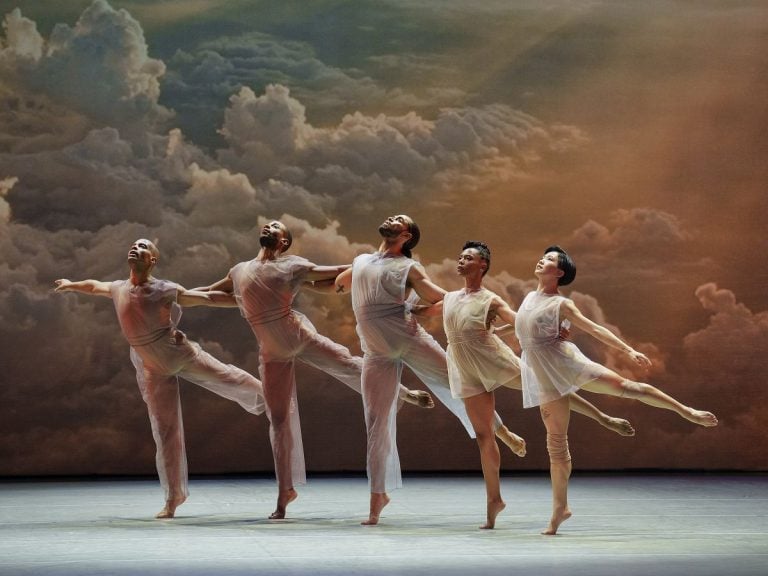
Pech reworked the choreography, streamlining the intricate plot and abandoning the original imaginary Indian set to put the events in an unnamed distant Orient. He has carefully kept what is traditionally considered Petipa’s original choreography for Act III, and one of his masterpieces, but he immersed it not in the traditional translucent romantic moonlight but in a dreamlike atmosphere of opium-induced, almost metaphysical trance. The production was successful, so the title has remained in the repertoire, restaged for the current season.


Not every night is a magical night in theatre life, however. I went back for the second cast the next evening, and the magic did not materialise. Yet the evening had much to offer, nevertheless. Iana Salenko, the well-known and versatile principal dancer with Staatsballet Berlin, played a delightful, minuscule yet strong and passionate Nikija, with perfect command of the technique and the exquisite style needed for the character (although she showed an inclination more towards the Russian sense of style than towards the French taste of Pech’s choreography). Her Solor was Bakhtiyar Adamzhan, a sturdy, muscular principal dancer from the State Opera and Ballet of Astana, capital city of Kazakhstan.
Alas, nothing passed between the two, neither love nor tragedy. And although Salenko’s performance was impressive, the lack of empathy between them and what appeared to be an insufficiently established communication with the conductor (possibly due to lack of rehearsal time) fatally depressed the performance. Gamzatti was a rather colourless Federica Maine. The Kingdom of the Shades scene retained its mysterious, hypnotic, nocturnal éclat, and three more gems appeared as soloist Shades (Carla Manno Zaccarella, Flavia Stocchi and Federica Azzone). Thanks to their exquisite technique and sensitivity, they recaptured the magic… if only fleetingly.


Donatella Bertozzi, dance critic and journalist, has been writing about dance since 1980.
A keen watcher of all sorts of dance performances from an early age, while still completing her professional training as a dancer – studying both classical ballet and modern dance techniques in Rome and London – she began writing dance reviews for various daily newspapers. In 1986 she joined the Performing Arts desk of the Rome daily Il Messaggero as chief dance critic. Besides reviewing national and international dance performances, she was later asked to write a daily dance column covering dance events in Rome which she then went on to compile for twelve years (2002-2014). In 1988 thanks to a British Council scholarship she attended the London Laban Center, studying with Valerie Preston Dunlop, Clement Crisp and Alastair Macaulay.
In over forty years as a dance critic she has contributed to numerous Italian, and some international, magazines, tv and radio programmes and lectured extensively about dance and dance history.