Review: John Neumeier’s Liliom lives anew with The Joffrey Ballet
John Neumeier’s full-length reimagining of Ferenc Molnár’s play, scored by Michel Legrand with a 17-piece jazz band playing live onstage alongside the pit orchestra, steps out from under the shadow of Carousel.
| Title | Liliom |
| Company | The Joffrey Ballet |
| Venue | Lyric Opera House, Chicago |
| Date | 17 September 2026 |
| Reviewer | Scott C Morgan |
Adapting Hungarian playwright Ferenc Molnár’s 1909 play Liliom into a full-length story ballet sounds like a fool’s errand. After all, composer Richard Rodgers and lyricist/book writer Oscar Hammerstein II famously transformed what Molnár billed as “A Legend in Seven Scenes and A Prologue” into their enduring 1945 Broadway hit musical Carousel.
But choreographer and designer John Neumeier defied expectations when he successfully turned Liliom into a big-story ballet. Liliom is finishing up a strong American company debut with the Joffrey Ballet at the Lyric Opera House in Chicago.
Neumeier’s Liliom originally debuted in 2011 for Hamburg Ballett where Neumeier was the company’s principal choreographer and director from 1973 to 2024, and the company has since toured it internationally. Liliom also entered the repertory of Czech National Ballet in 2025 when it was captured on video.
Liliom is a story ballet filled with emotional nuance and impressively staged on a grandiose scale. Yet Liliom doesn’t fully escape Carousel’s long shadow.
Carousel already has a strong dance-storytelling framework thanks to its original choreographer, Agnes de Mille. The musical has subsequently attracted other famed ballet choreographers.
Both Justin Peck and Kenneth MacMillan won Tony Awards for choreographing respective Broadway revivals of Carousel in 2018 and in 1994 (Lincoln Center Theater’s import of the National Theatre’s 1992 London production). Christopher Wheeldon also took inspiration from the musical with Carousel (A Dance), a one-act New York City Ballet commission in 2002 to celebrate the centennial of Richard Rodgers’ birth.
Neumeier confidently joins this prestigious list of choreographers inspired by the source material by deploying his mastery of storytelling through dance to sustain his full-length ballet reimagining of Liliom. Neumeier also makes multiple changes to Molnár’s original to make the title character (Hungarian for “Lily” and the slang term for “a tough”) far more sympathetic. It’s a necessity since Carousel has been heavily criticised in recent decades for coming off as far too forgiving of the leading man’s domestic abuse.
Neumeier takes a page from Rodgers and Hammerstein by also whisking his Liliom away from Budapest to the US, though the ballet’s action has been updated to the Great Depression and beyond. Coincidentally, the Lyric Opera of Chicago’s 2015 co-production of Carousel with Houston Grand Opera was also updated to the 1930s by Tony Award-winning director/choreographer Rob Ashford.
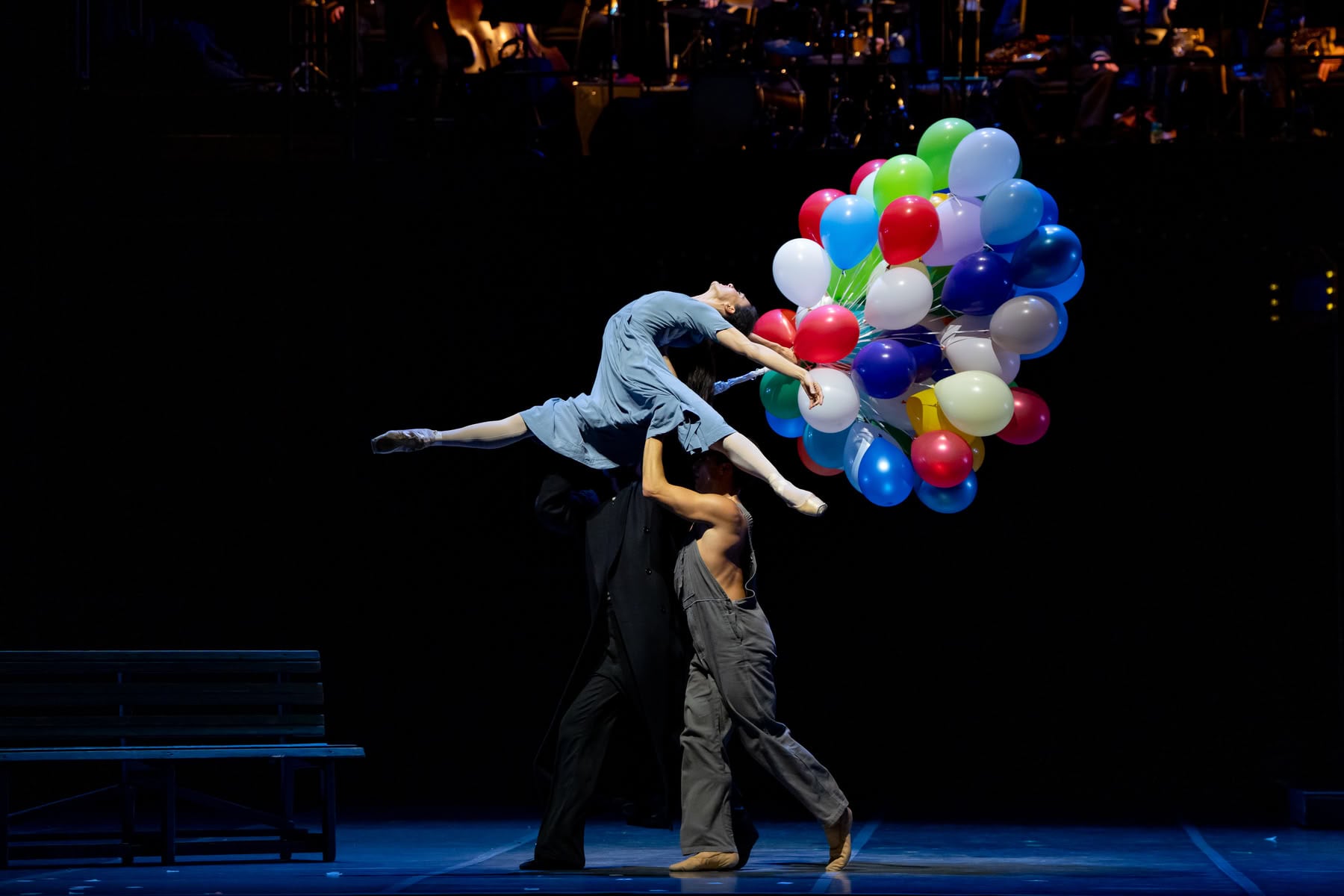
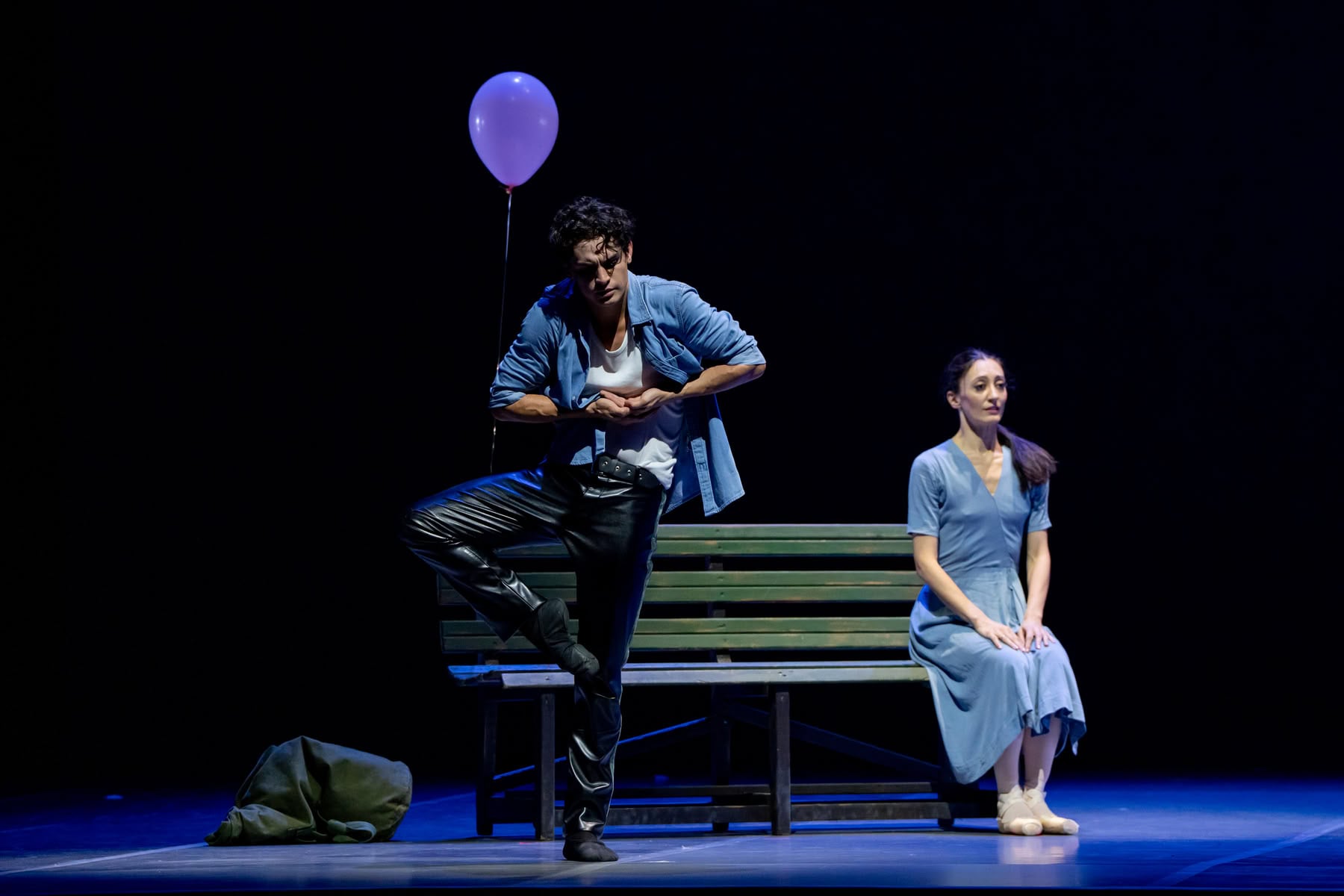
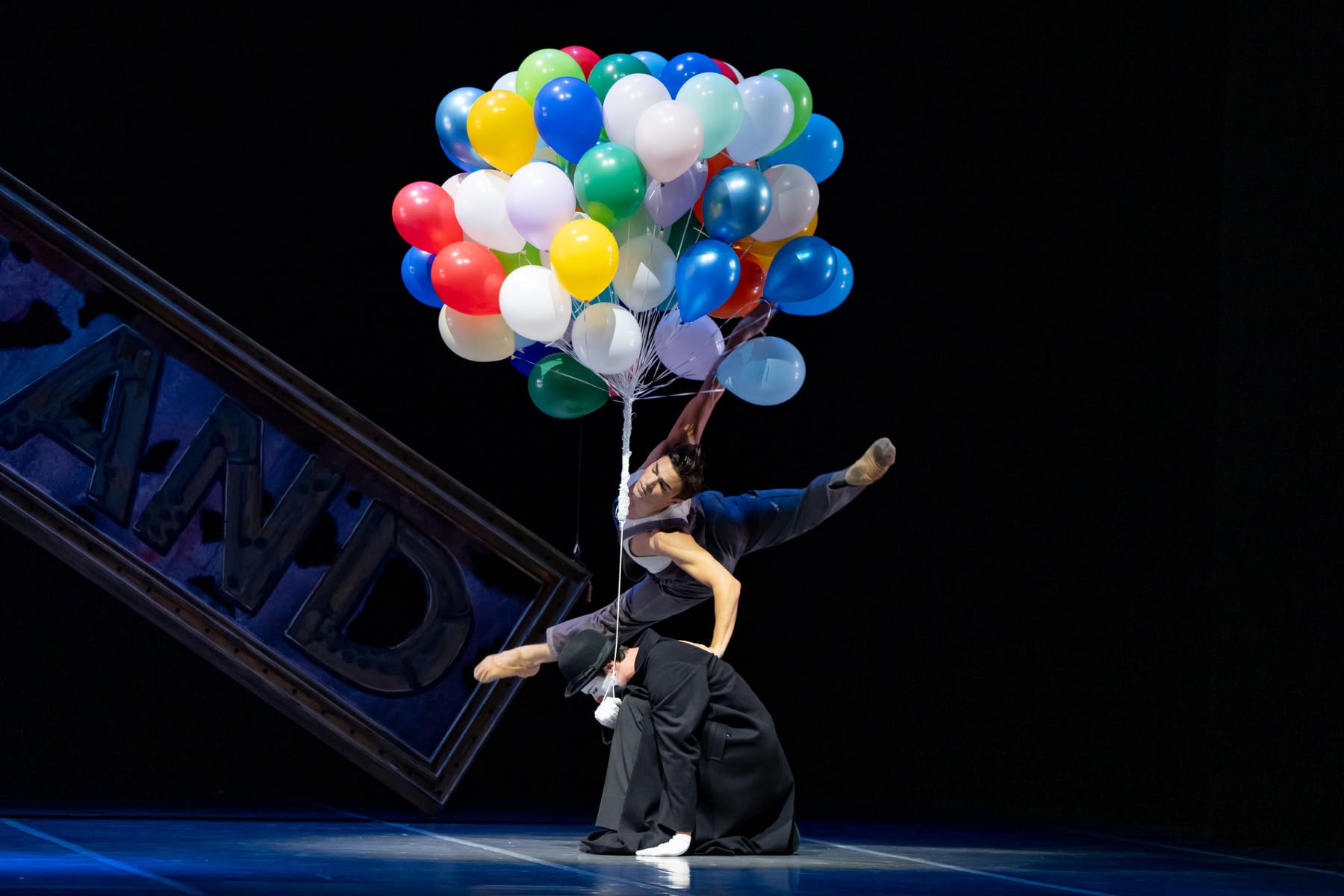
Neumeier’s Liliom upends expectations by starting with the play’s final scene. At a long-shuttered and decaying amusement park called “Playland,” there’s the introduction of The Balloon Man (Evan Boersma on opening night). The Balloon Man is actually a kind of symbolically spiritual conduit for the deceased Liliom (José Pablo Castro Cuevas), who violently fails in his attempt to connect with his troubled teenage son Louis (Reed Henry). This is another Neumeier change, since both the play and Carousel feature a grown daughter named Louise.
Just as Louis reels from being slapped by the departed Liliom, his mother, Julie (Victoria Jaiani), arrives to console him and to share a similar memory. In Benjamin F. Glazer’s 1921 English adaptation of the Molnár original, Julie tells Louise: “It is possible, dear – that someone may beat you and beat you and beat you – and not hurt you at all.”
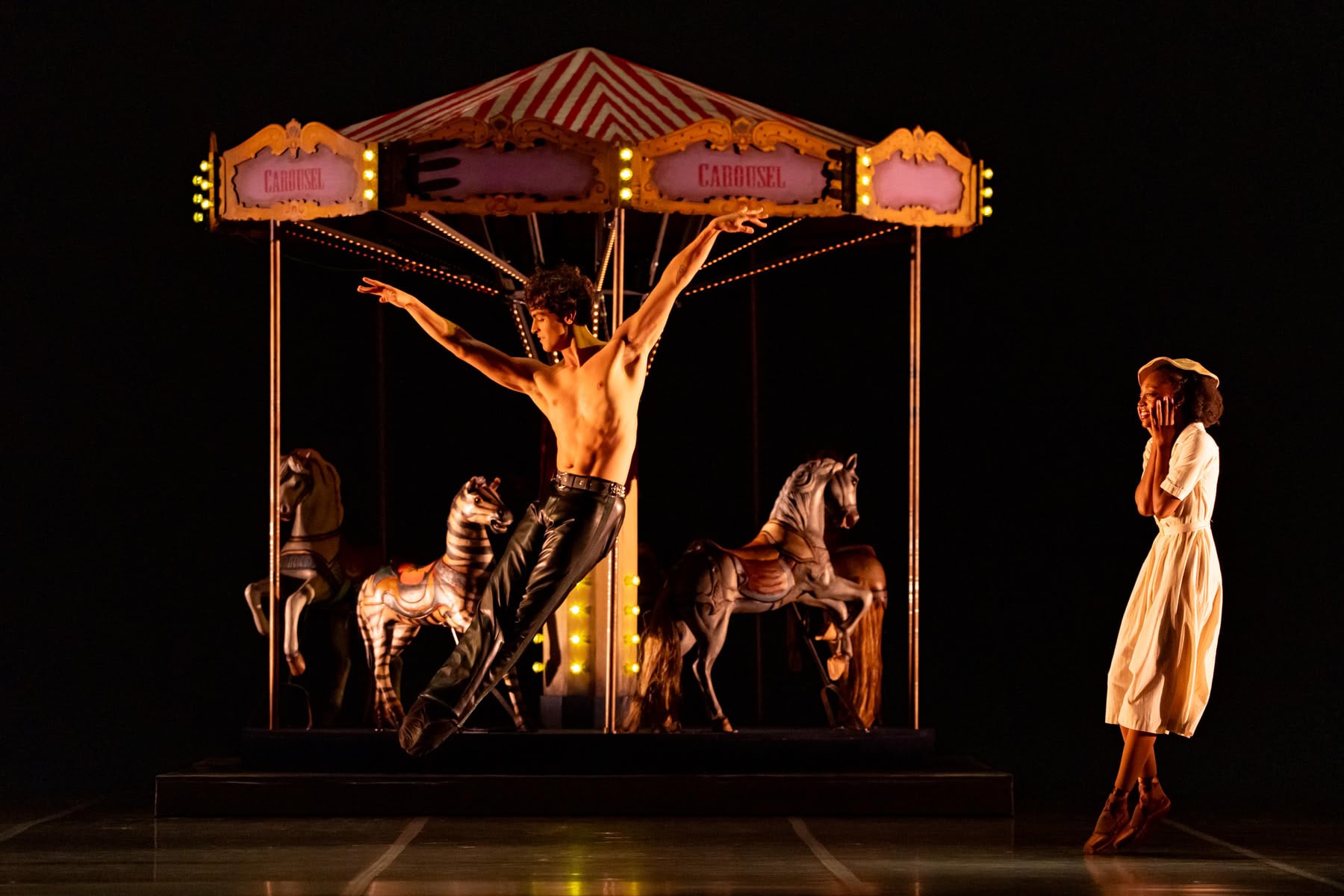
Fortunately, ballet doesn’t require dialogue, so Jaiani’s Julie and Henry’s Louis both touch their cheeks in haunted unison. Then Julie uses this moment to come clean about the true nature of Louis’ absent father as Neumeier fills the stage with frenetic movement, splashy amusement park lighting (co-designed by Jim French and Neumeier) and set designer Ferdinand Wögerbauer’s functioning carousel as we flashback to Playland in its 1930s heyday when she and Liliom first met.
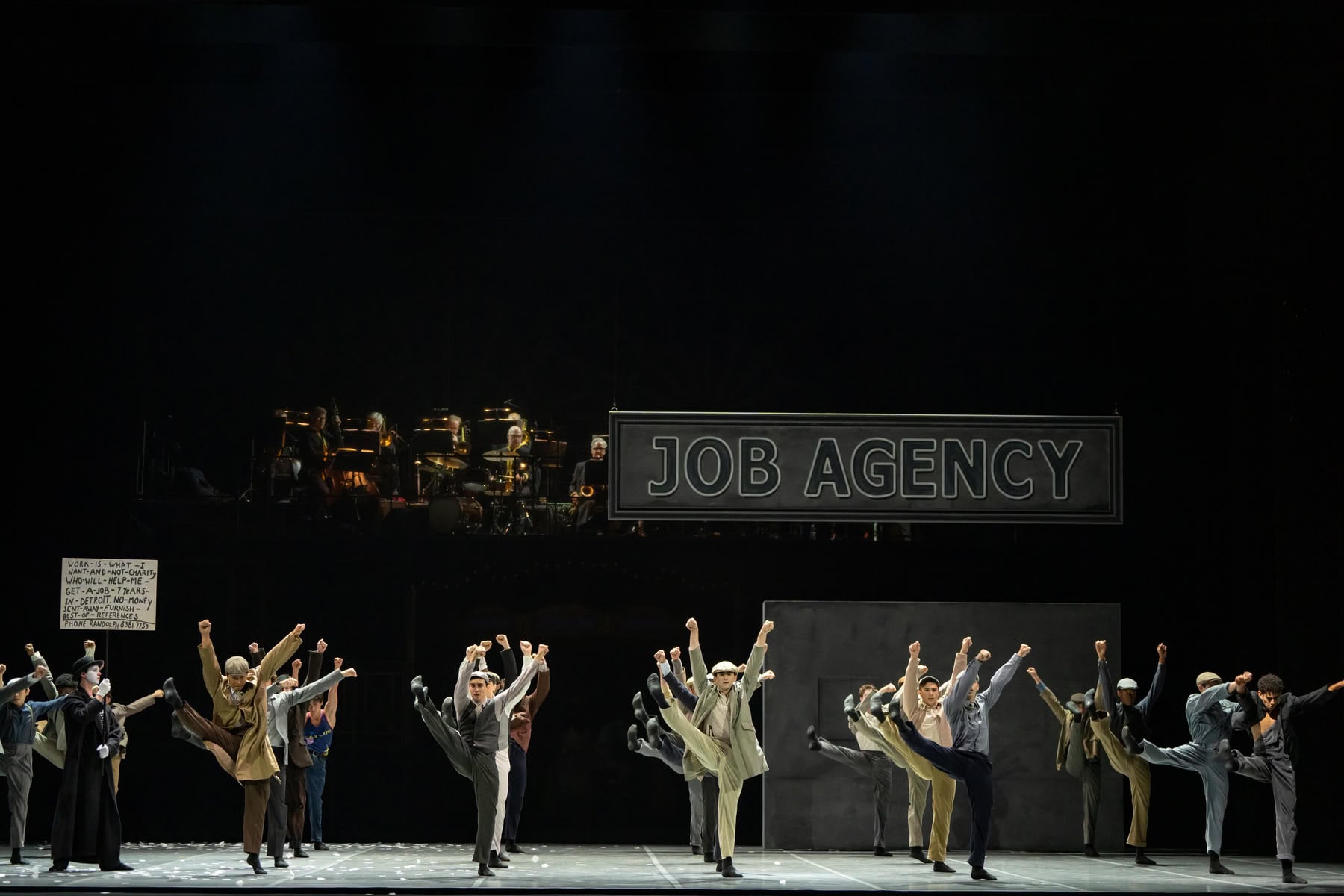
It’s also revealed at this moment that Liliom is musically stacked. In Chicago, Liliom has both the Lyric Opera Orchestra in the pit and the 17-piece Rob Parton Big Band onstage throughout, up on an elevated platform. It’s quite a feat that opening night conductor Nicholas Koo kept both musical forces coordinated to propel the story along.
For his original Liliom ballet score, Academy Award-winning French composer Michel Legrand (Yentl, Les Parapluies de Cherbourg) shows off his love of American jazz with orchestrations that are very rooted in the mid-20th century. And though set in America, Legrand’s score also has very Gallic flourishes thanks to an accordion that perfumes his music at key romantic moments.
On first listen, Legrand’s Liliom ballet score doesn’t possess the same melodic and emotional oomph that Richard Rodgers brought to Carousel. But Legrand’s score never fails in helping to illustrate the many moods of Neumeier’s Liliom.
Legrand’s onstage jazz band particularly exerts itself during some of the ballet’s seedier and sexual plot points – especially for the wealthy character of Mrs Muscat (Amanda Assucena). Instead of just operating a carousel, Mrs Muscat in Neumeier’s ballet is in control of the whole of Playland.
It’s also very clear that Mrs Muscat is employing Liliom not only for his carnival barking skills, but also enjoying sexual favours with him as a kept man.
Initially dressed in just a pair of leather trousers at the start of the flashback, Cuevas as Liliom anachronistically looks like an escapee ensemble member from the still-running 1996 Broadway revival of Chicago. Neumeier is credited as Liliom’s costume designer, so I’m guessing his decision to dress the leading man in this provocative way is to immediately broadcast Liliom’s base sexual magnetism and bad-boy allure to contemporary audiences. It also separates Liliom from the rest of the ensemble in their 1930s period outfits.
Cuevas as Liliom also shows extreme bravery in Neumeier’s ballet adaptation. Liliom gallantly fights off an added knife-wielding drunken sailor (Alberto Velazquez) who has been lurching around the fairgrounds, groping women like Julie and her close friend, Marie (Natali Taht).
Julie and Liliom instantly fall for each other, despite Mrs Muscat’s threats to throw her kept man out onto the street. It’s a touching partnering moment for Jaiani’s Julie and Cuevas’ Liliom as they get to know each other and pledge their hearts to each other.
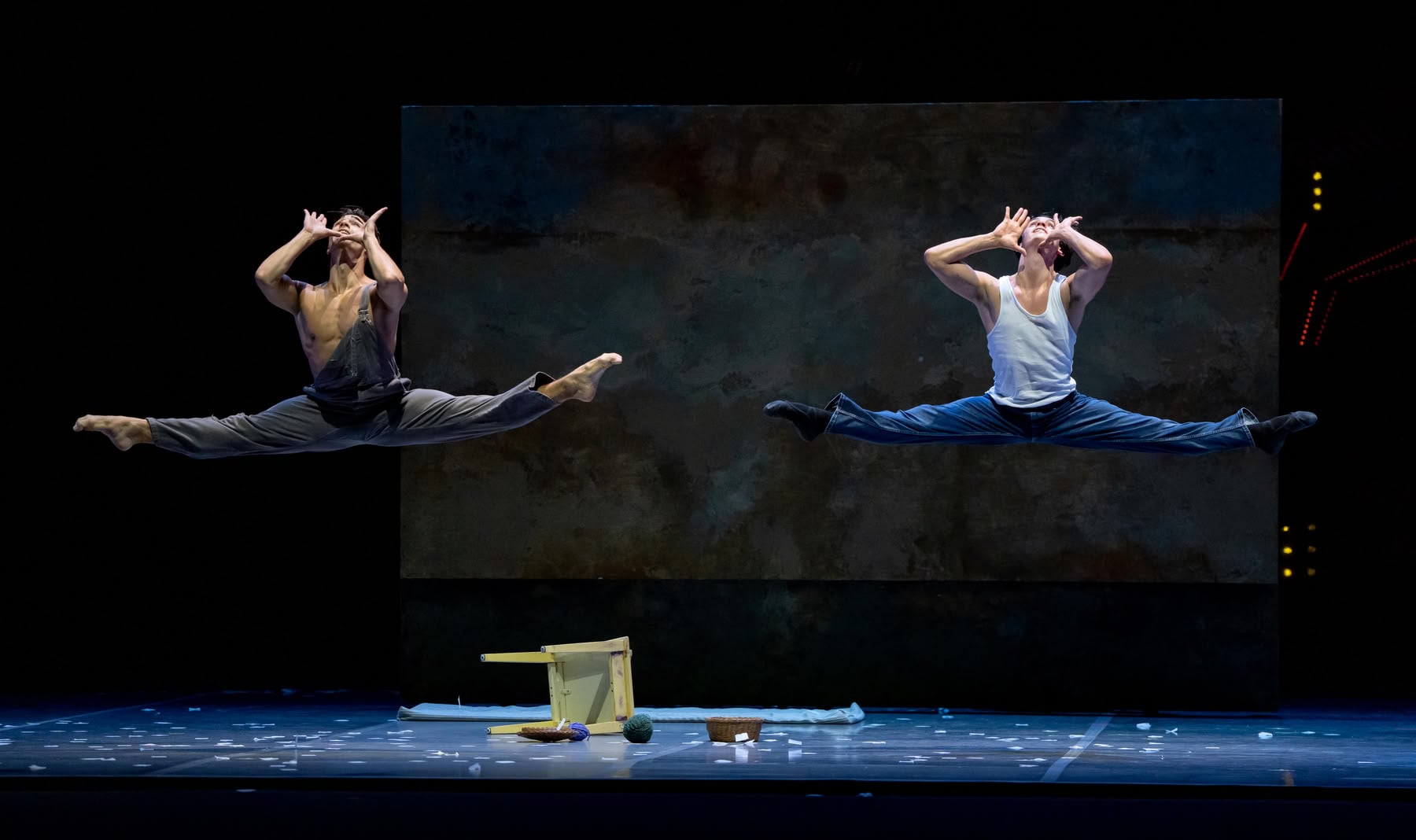
But as we already know, Julie and Liliom’s love is doomed. Yet Neumeier paints his leading man as more of a victim of global economic forces instead of just being a lazy and violent thug as in the Molnár original. This is very apparent in a big sequence outside of a job agency where desperate unemployed men jockey to find work amid the Great Depression. Liliom, dressed in a Playland T-shirt and with no other work experience, clearly doesn’t have a chance.
Liliom’s pressures mount when Julie reveals that she is pregnant with a symbolic plush rabbit toy. Liliom also has to fend off Mrs Muscat’s longing overtures for him to return back to work at Playland (and her bed, too). No wonder that Cuevas’ frustrated Liliom starts entertaining get-rich-quick schemes suggested by the fairground ne’er-do-well Fiscur (Xavier Núñez).
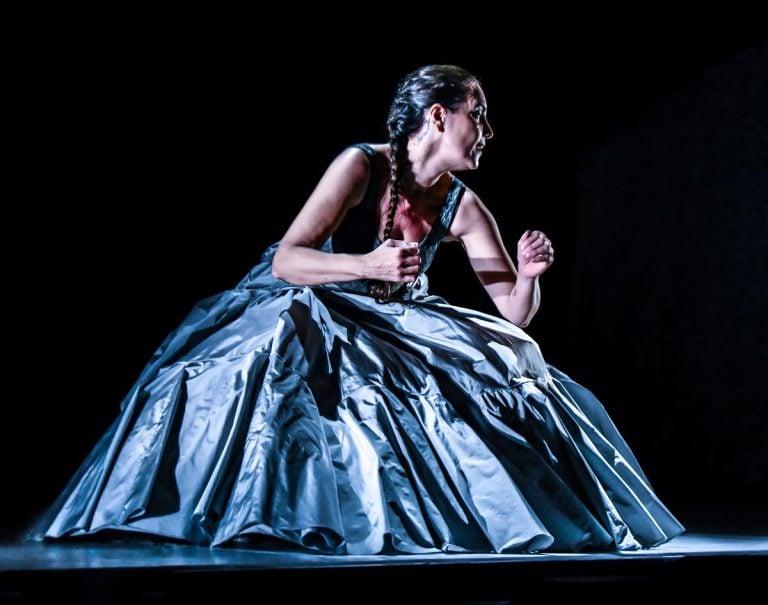
Neumeier ramps up the tension of Act II by depicting the preparations and celebrations of Marie’s wedding to the upstanding porter-turned-businessman Wolf Beifeld (Jonathan Dole). Jaiani palpably shows Julie’s regret of falling for such an unstable man and their unmarried state while she longingly helps Taht’s beaming Marie into her wedding trousseau.
It’s at Marie and Wolf’s wedding reception that Fiscur and Liliom plan to execute a bold robbery of Mrs Muscat. And when it all goes horribly wrong, Liliom commits suicide rather than to face the consequences of capture and prison time.
Reminiscent of the end of Romeo and Juliet, Neumeier gives Julie a regretful and extended pas de deux with Liliom’s corpse as past memories of their troubled relationship come flooding back to her. The Balloon Man, now all in white, returns to lift Liliom up to purgatory. There, Liliom’s life is put on trial by the heavenly Gatekeeper of Dylan Gutierrez and a cadre of red-clad “Devils”.
Meanwhile, back on earth, we see Julie raise her son Louis as an infant, a small child (Sam Farster) and a rebellious teen. In one particularly striking visual moment, Julie and Louis release a pink balloon into the sky that is captured by the spirit of Liliom.
After Henry’s Louis has an especially resentful and defiant encounter with Marie and Wolf’s family in their 1950s finery, Liliom returns to earth, where he tries to gift his grown son a stolen star. The ballet’s opening scene is replayed and expanded at the end of the ballet, though the ultimate violent result of a father striking his son is a foregone conclusion.
Though Liliom and Carousel can be viewed as very problematic through contemporary eyes, its fantastical hope that the dead can try to redeem themselves for their living loved ones back on earth remains a very powerful idea.
The blend of gritty realism and spiritual fantasy in Liliom attracted a number of famed composers who sought to musically adapt Molnár’s play, especially when it became a Broadway hit in 1921 with subsequent New York revivals in 1932 and 1940.
But Molnár notoriously denied Giacomo Puccini, George Gershwin and Kurt Weill the rights to adapt Liliom. Molnár’s professed reasoning for holding tight to his intellectual property was his ultimate fear that any composer’s adaptation would supersede his original work – which is ironic because that is exactly what happened with Carousel.
But as Neumeier and Legrand show with their adaptation of Liliom, Molnár’s original play can continue to inspire great artists to plumb the dramatic storytelling beats of this emotional work. The Joffrey Ballet’s glorious realisation of Liliom is an impressive feat as it depicts a hoped-for, but ultimately futile attempt at love and redemption.

Chicago-based Scott C. Morgan is an avid opera and theatergoer. He is a frequent freelance contributor to the Windy City Times, and previously served as that publication’s freelance theater editor from 2008 to 2018. He also worked primarily as an arts writer for the Daily Herald in suburban Chicago from 2004 to 2022.
He has raised donations as an endurance race runner for AIDS Foundation Chicago via its charity training program Team to End AIDS from 2011 to 2023, and also co-hosted two Opera Tunes fundraisers at Chicago’s famed Sidetrack Video Bar in 2019.