Review: Radačovský’s Maska (Mask) for the National Ballet of Brno
Ivo Kahánek’s live Chopin and Liszt, and João Gomez’s Spirit of the Mask drive Mário Radačovský’s abstract ballet, his last full-length work in Brno before Prague.
| Title | Maska (Mask) |
| Company | National Ballet of Brno |
| Venue | Janáček Theatre, Brno, Czech Republic |
| Date | 25 September 2026 |
| Reviewer | Graham Watts |
In September 2028, Mário Radačovský is due to become the artistic director of Czech National Ballet after what will have been fifteen years at the helm of the National Ballet of Brno (the second-largest Czech city and the historical capital of Moravia). Radačovský is also an accomplished choreographer, and Mask is set to be his final full-length ballet in Brno.
It’s a change from the inspiration of famous lives that has led Radačovský to create works about Warhol (2007), Mata Hari (2013), both made in Slovakia, and two ballets about Beethoven (2015/21) and his excellent life of Coco Chanel (2024).
It isn’t that Mask is non-narrative because there are certainly thematic stories bound into the movement, but it is an abstract work that viewers can make of what they will. I confess that I was apprehensive about a two-act work without a linear storyline, but to the credit of Radačovský and his creative team, their product was never less than compelling.
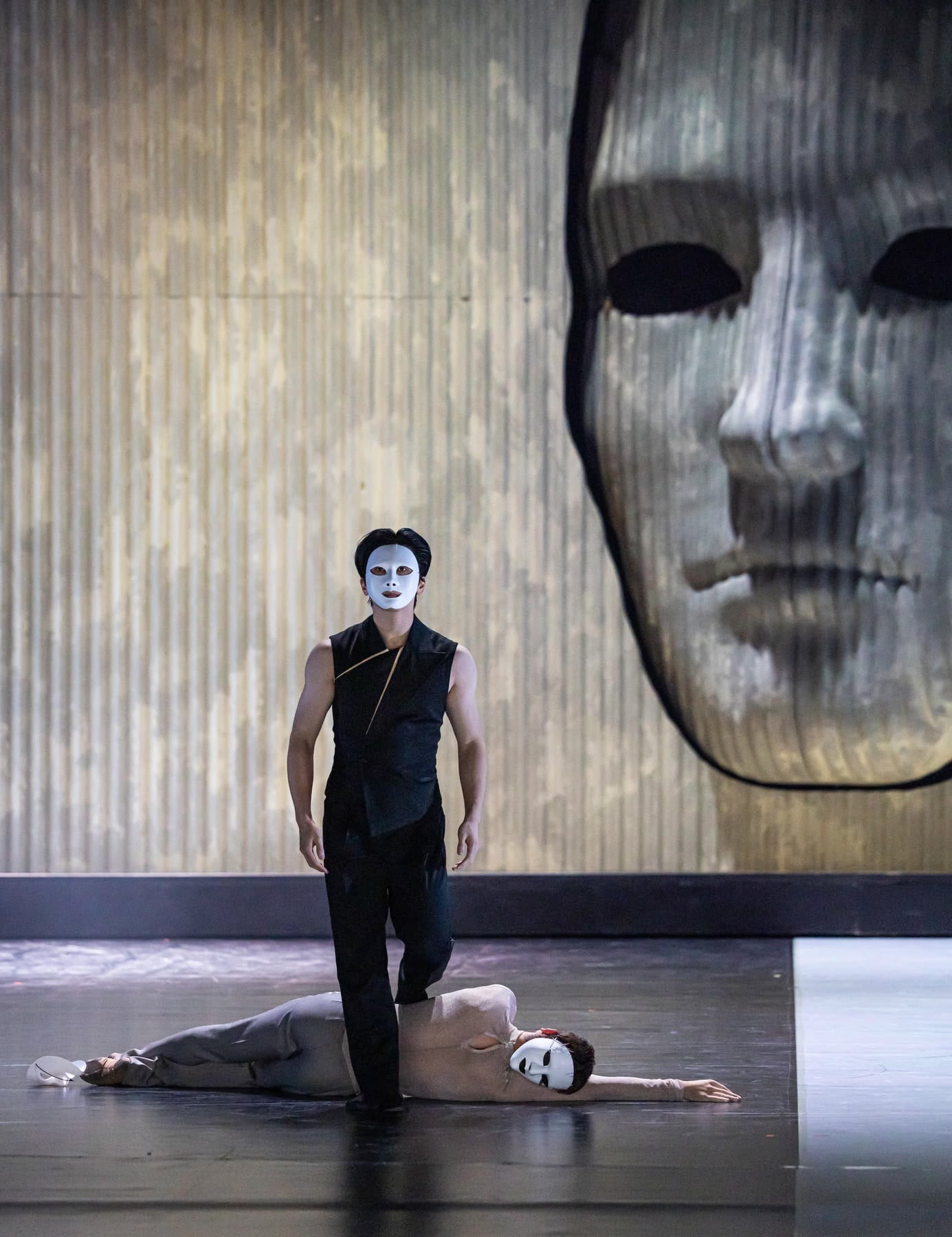
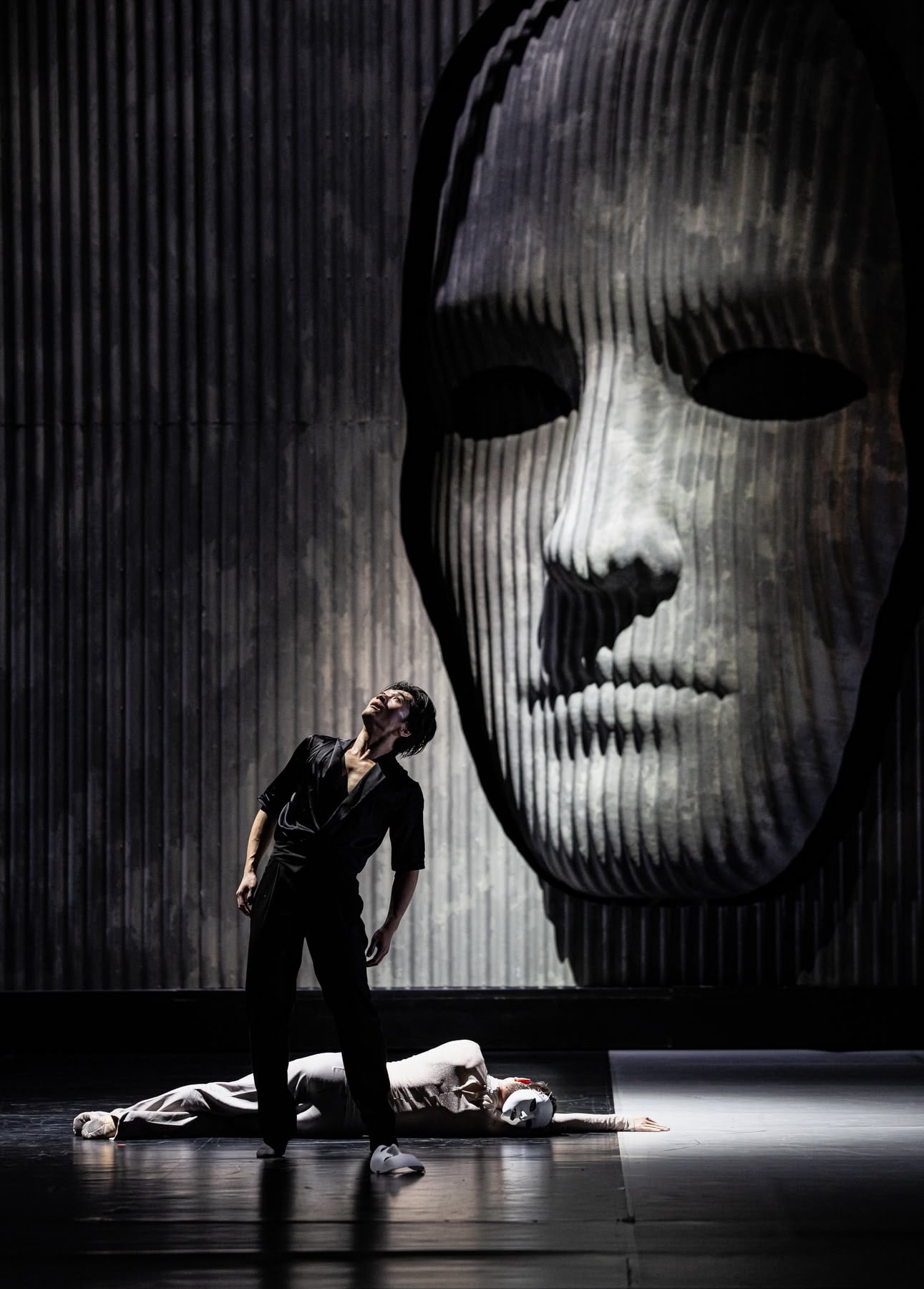
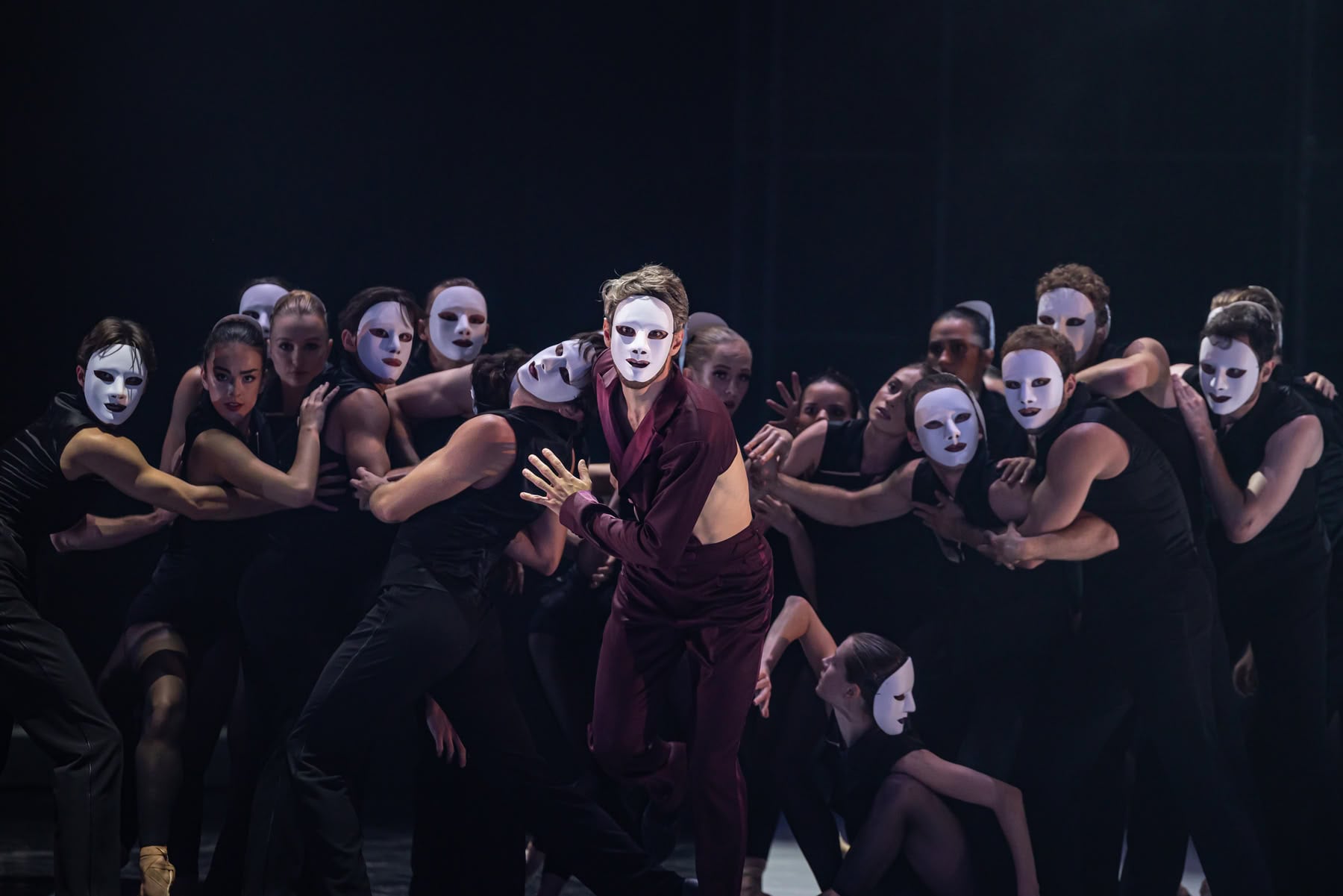
Put simply, Mask is about concealment rather than decoration. It’s about how ruthless people hide their true intent behind a mask of deceit; how lovers and false friends keep their true feelings hidden behind a mask; how the vulnerable in society use a mask for protection. You get the idea.
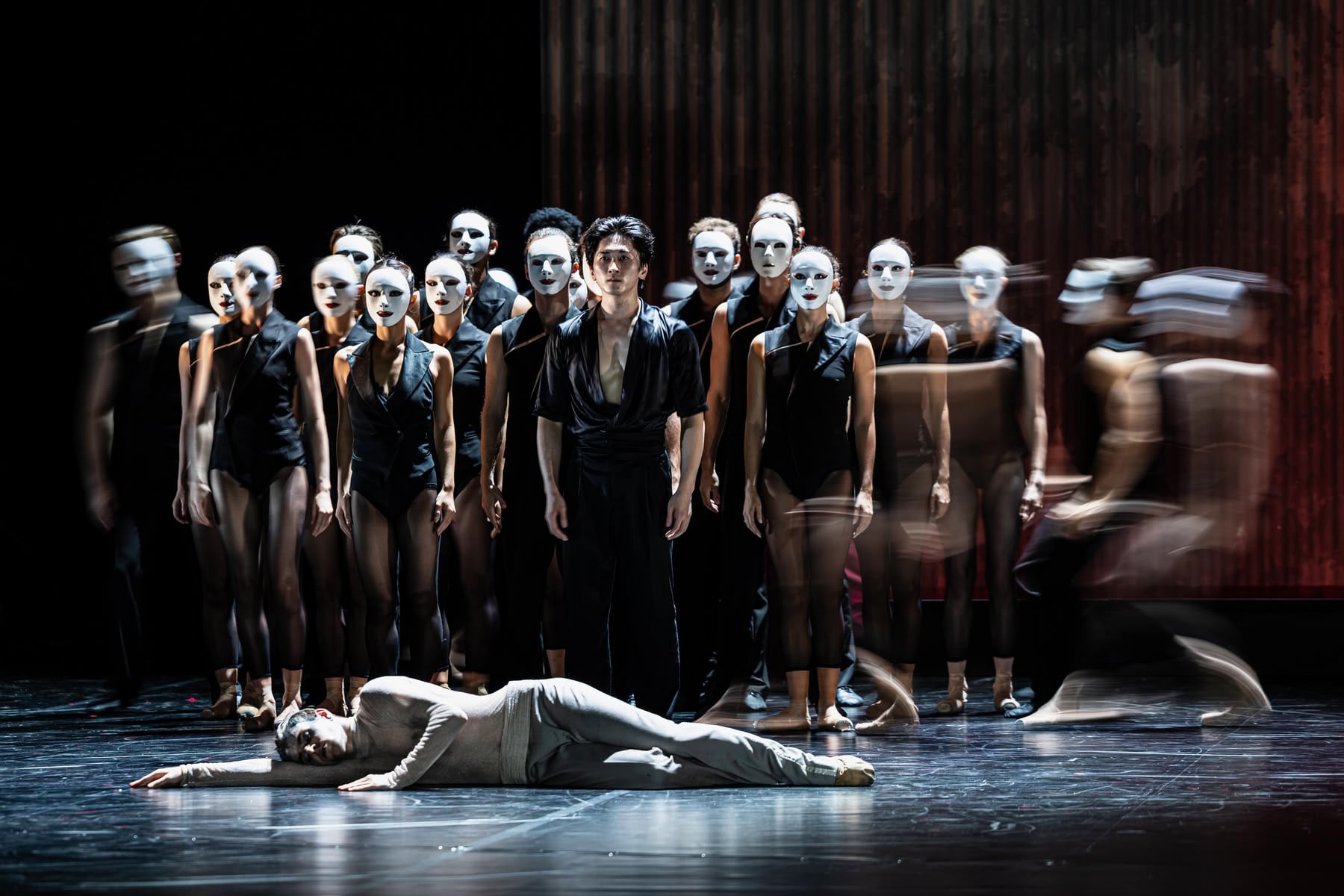
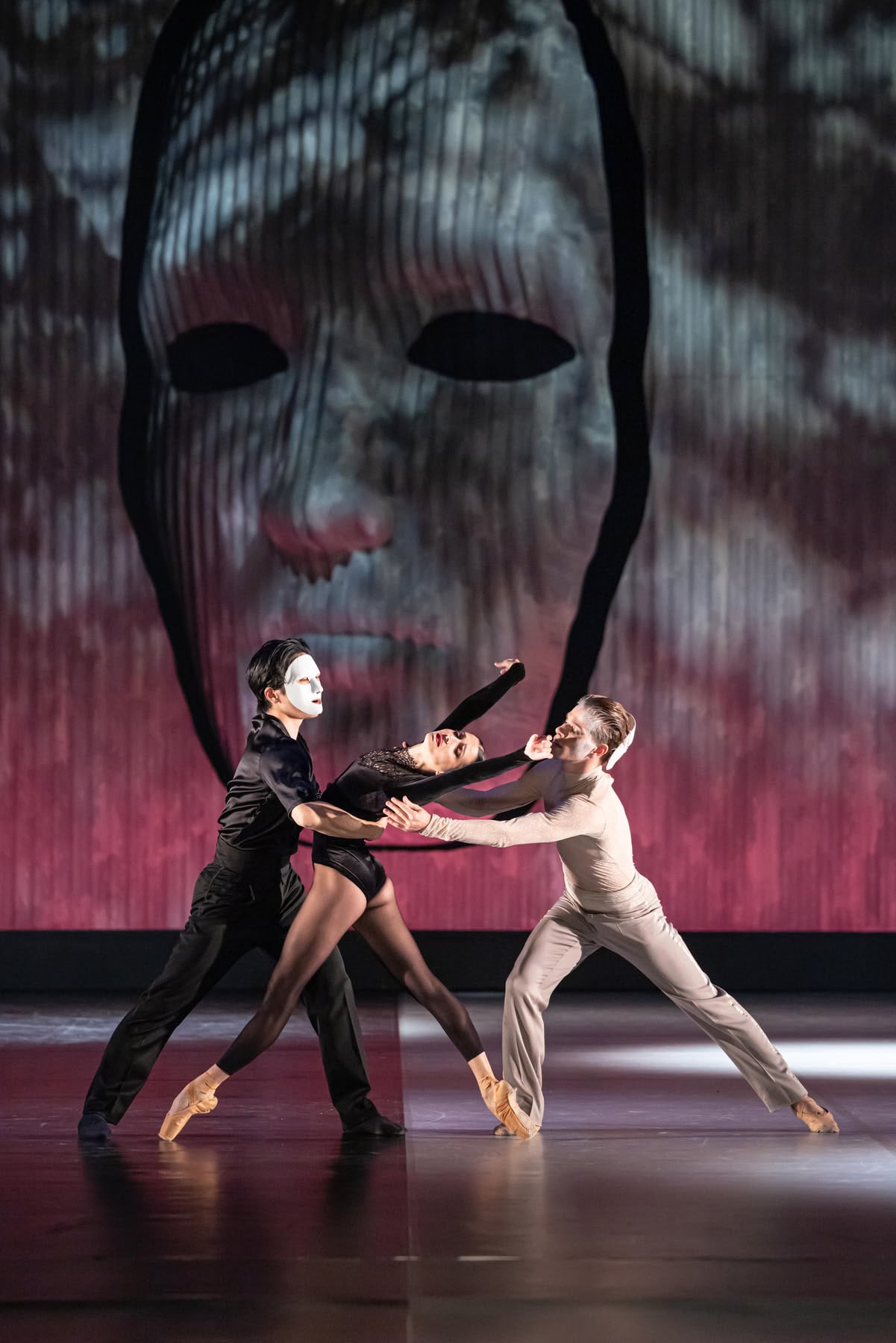
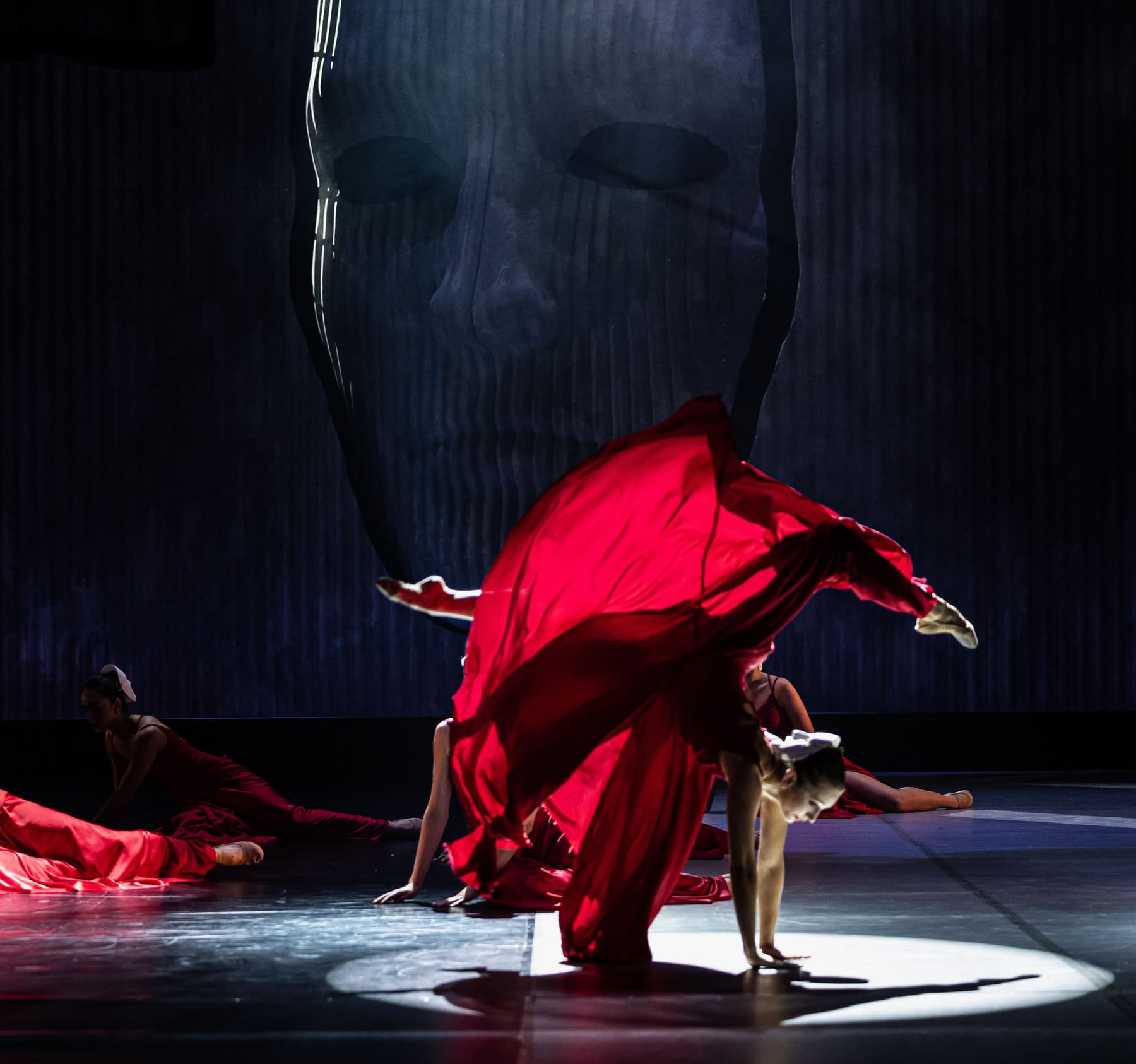
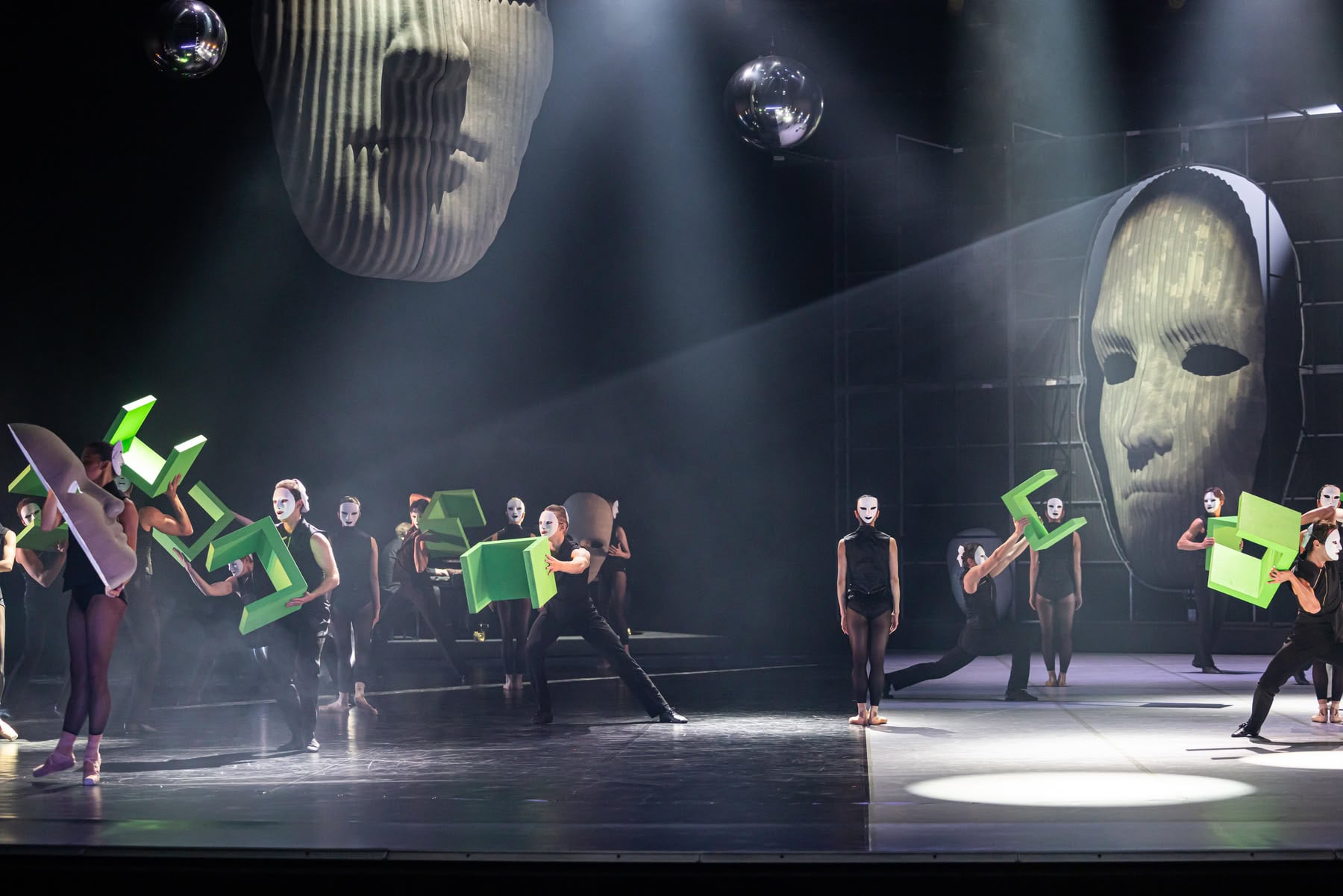
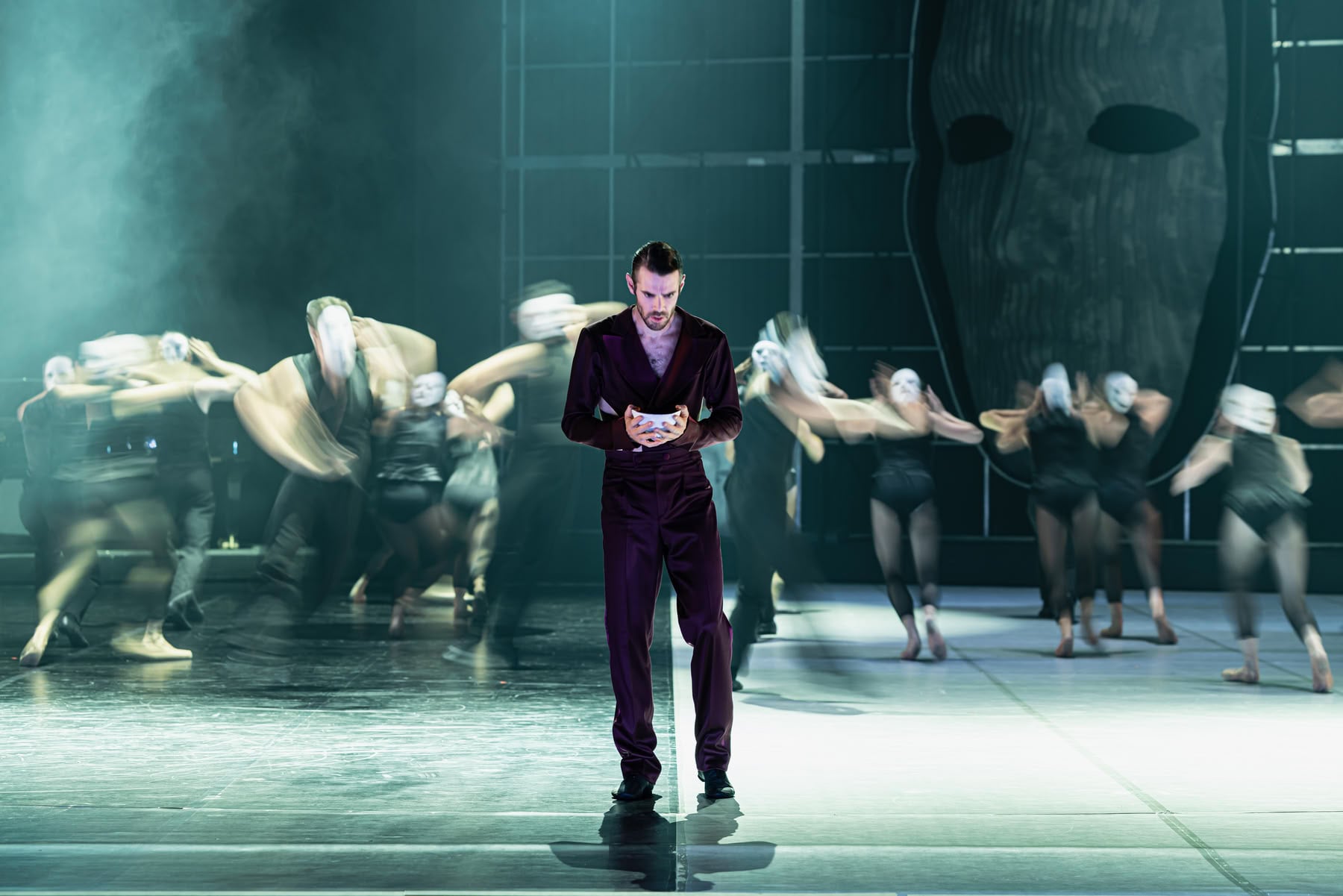
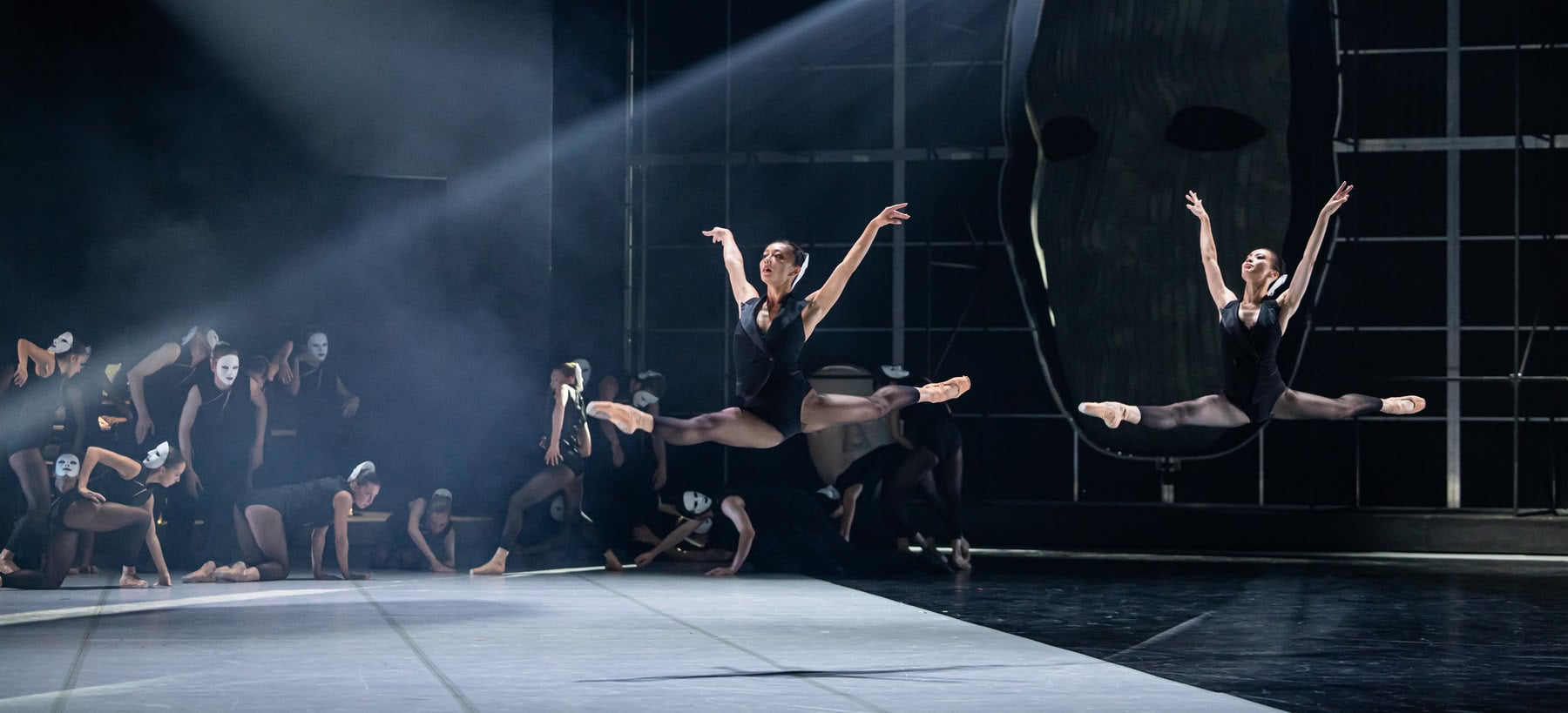
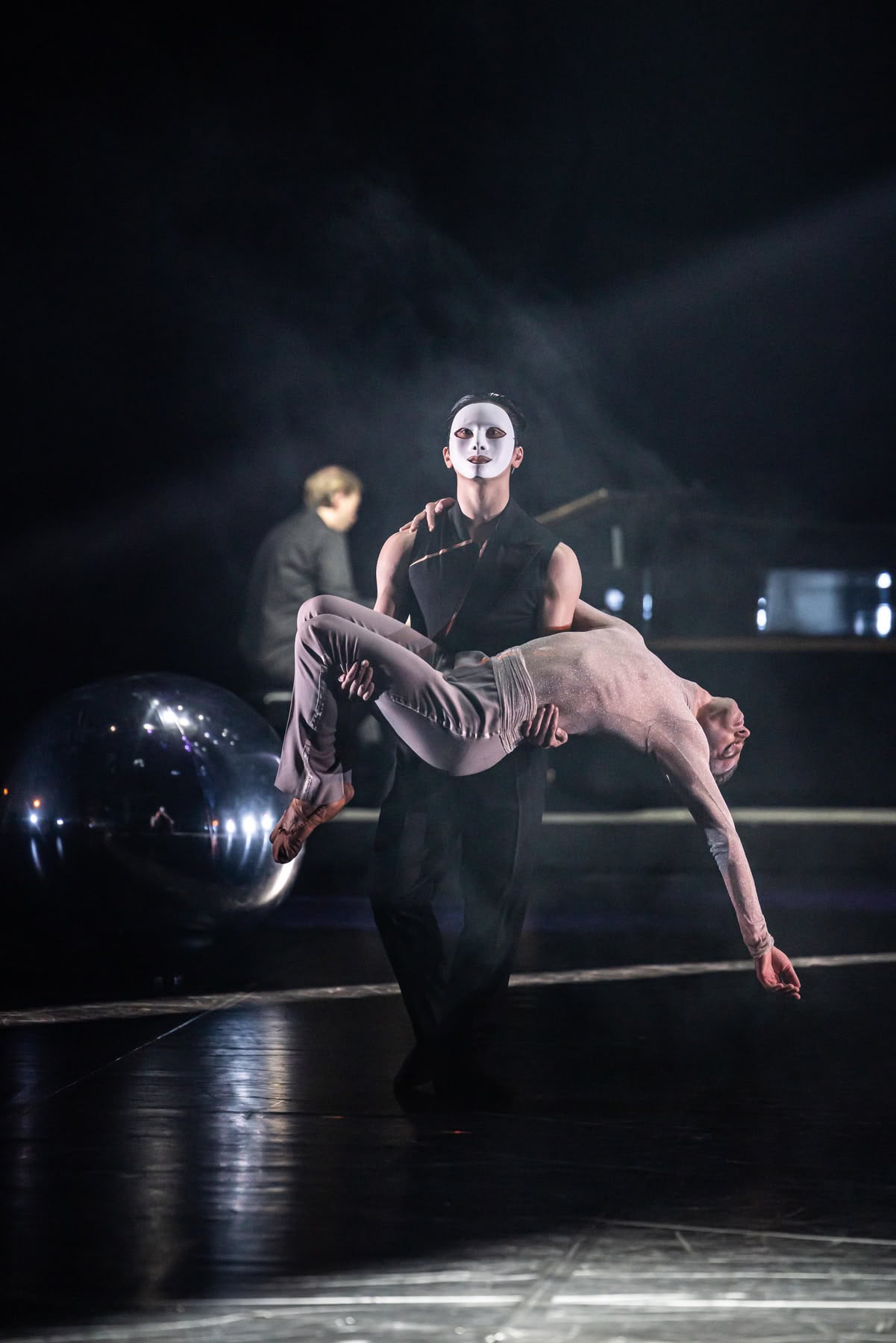
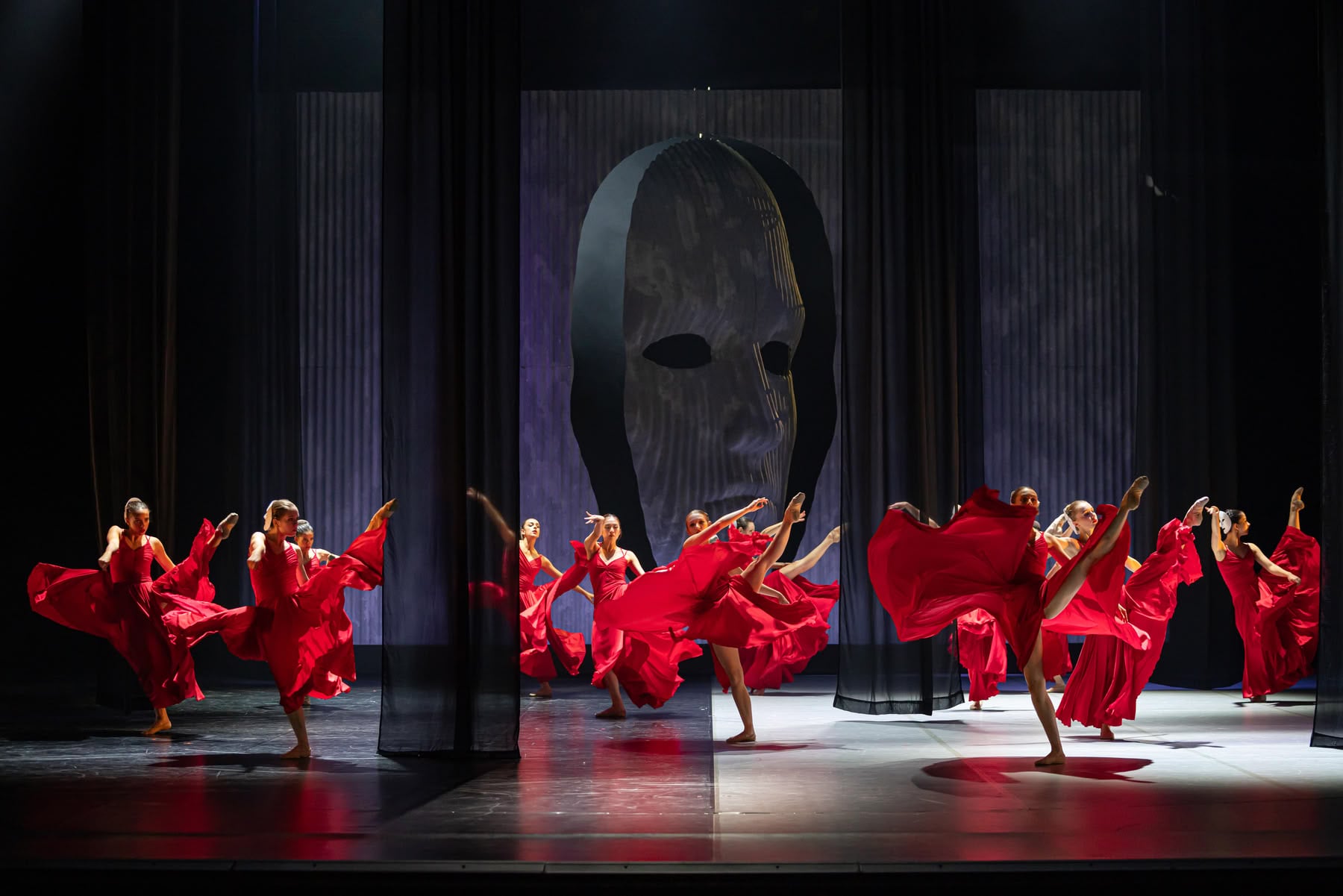
Marek Hollý’s impressive set design is unsurprisingly dominated by two huge masks, one imperceptibly rotating above the stage, another embedded in the backdrop, with other large white masks carried by the ensemble from the wings and the side of the proscenium and left strategically placed. Large silver balls and a rotating stage (revolving with a low throbbing hum) completed the ballet’s spectacular visuals.
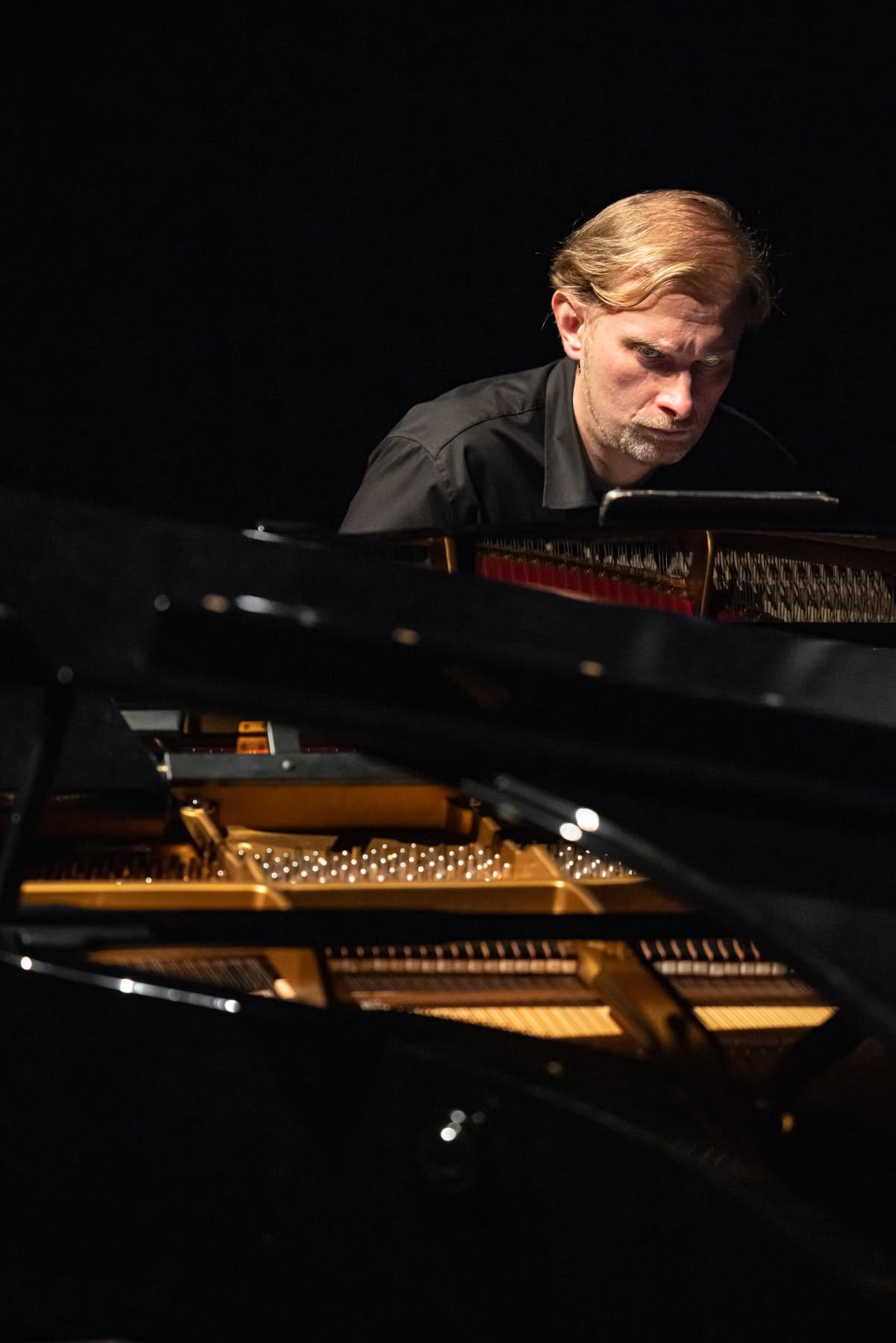
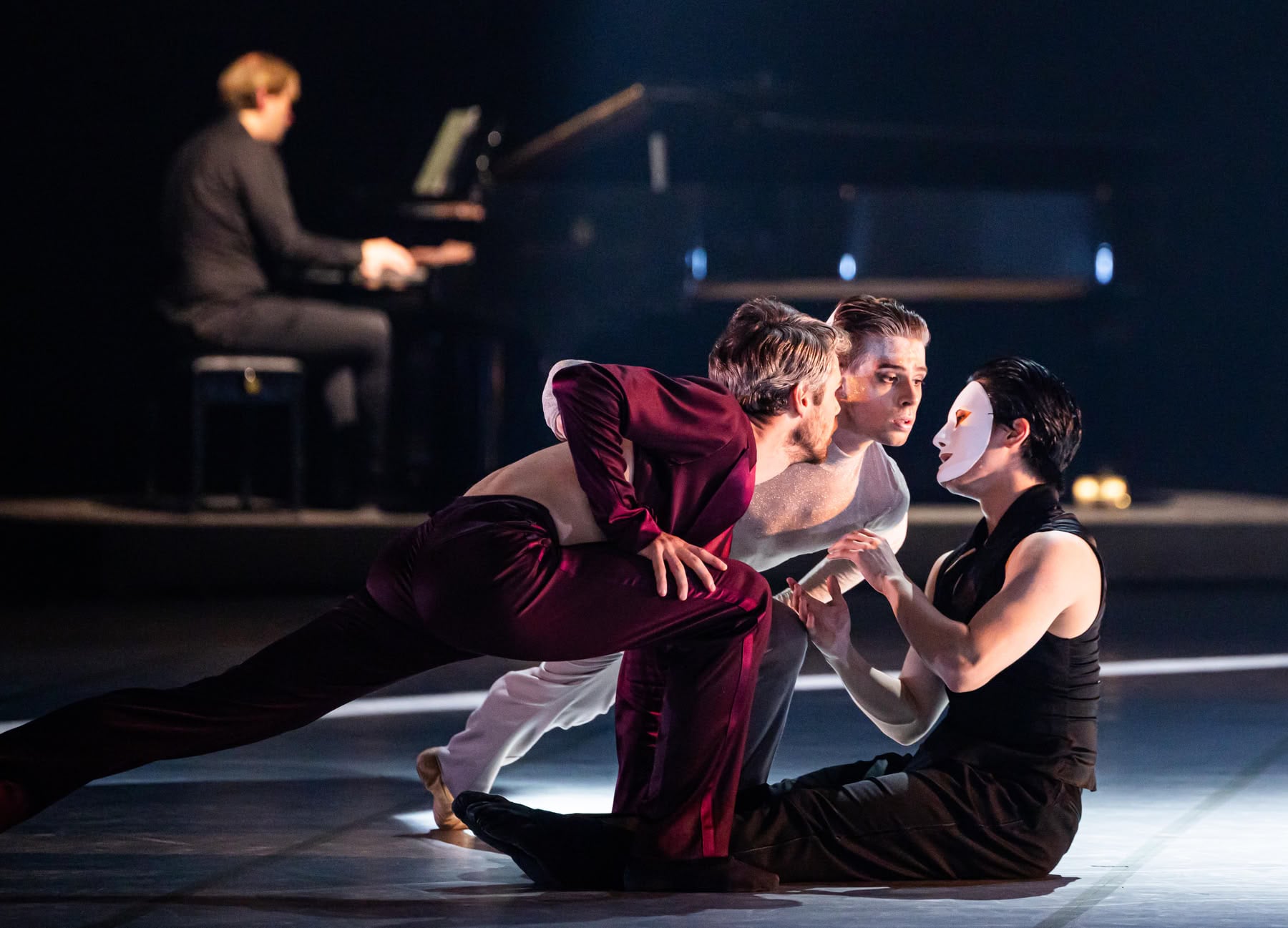
Before any discussion of the choreography or danced performance, it is essential to pay tribute to the impressive virtuoso pianism of Ivo Kahánek, performing a selection of music by Chopin and Liszt, and occasionally backed by the outstanding Janáček String Quartet. Kahánek – who has won many international competitions including Barcelona’s prestigious Maria Canals Award – worked with Radačovský (and musical consultant Petr Duchalik) in the selection of the pieces for the programme.
Chopin and Liszt were born a year apart (1810/11) and their lives followed similar patterns, including in both men’s cases a withdrawal from public concert life, and both died in exile from the countries of their birth. But their styles could not have been more different, with the lyrical musical poetry of Chopin contrasted with the dazzling extravagance of Liszt. The choice of music for the ballet was sublime, and irrespective of the quality of the choreography and danced performances, this was a piano concert of the highest order.
One element of Radačovský’s choreography that has always appealed to me is that he is never averse to thinking outside of the proscenium. In Coco Chanel, his dancers appeared from the orchestra pit, and here, Mask begins with Joāo Gomez (unrecognisable in stunning stage makeup) coming into the orchestra stalls from the foyer, masked by silence, starkly lit and dressed in grey with a white mask at the back of his head. He turns slowly so the audience can see both his actual and masked profiles before gradually making his way up onto the stage.
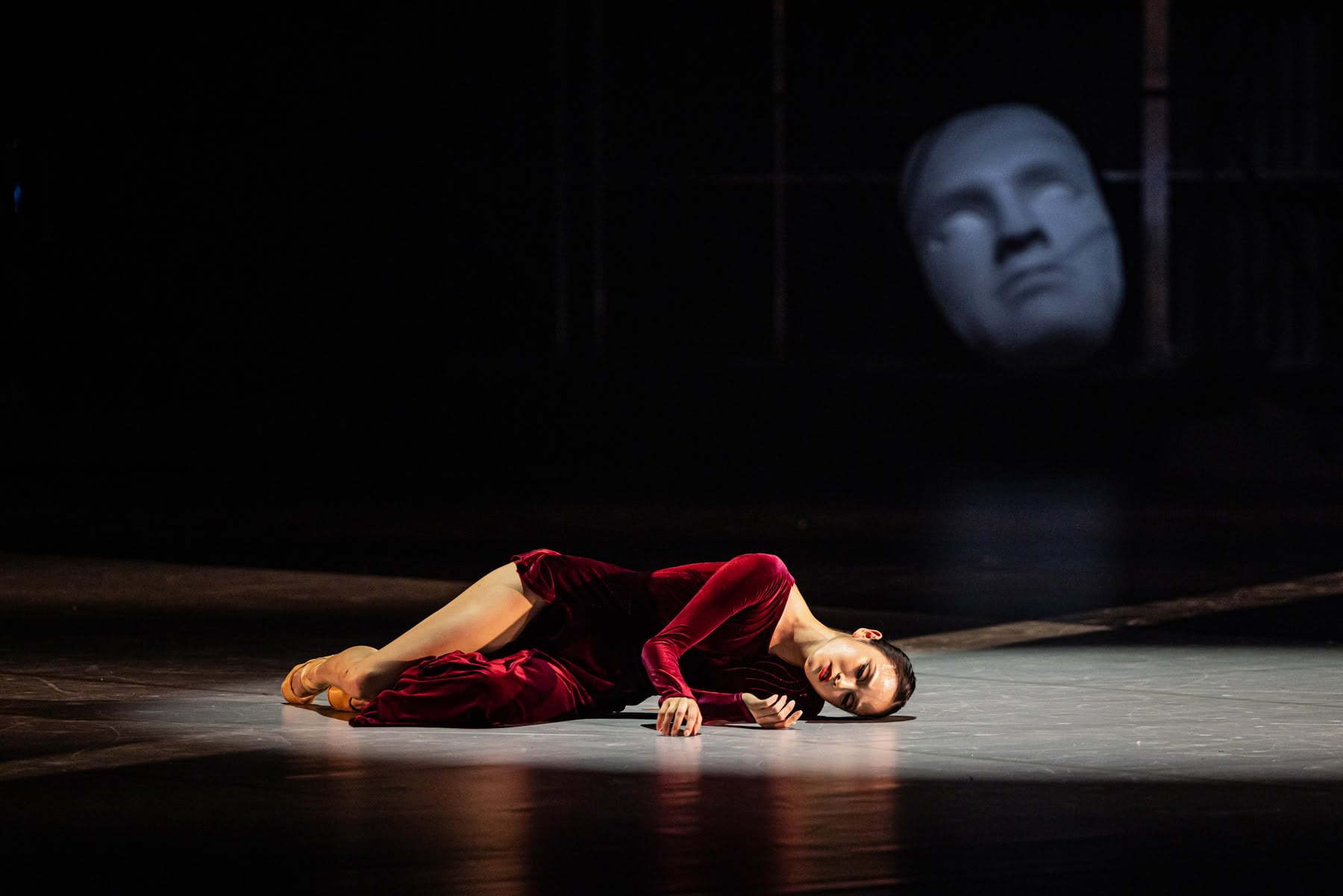
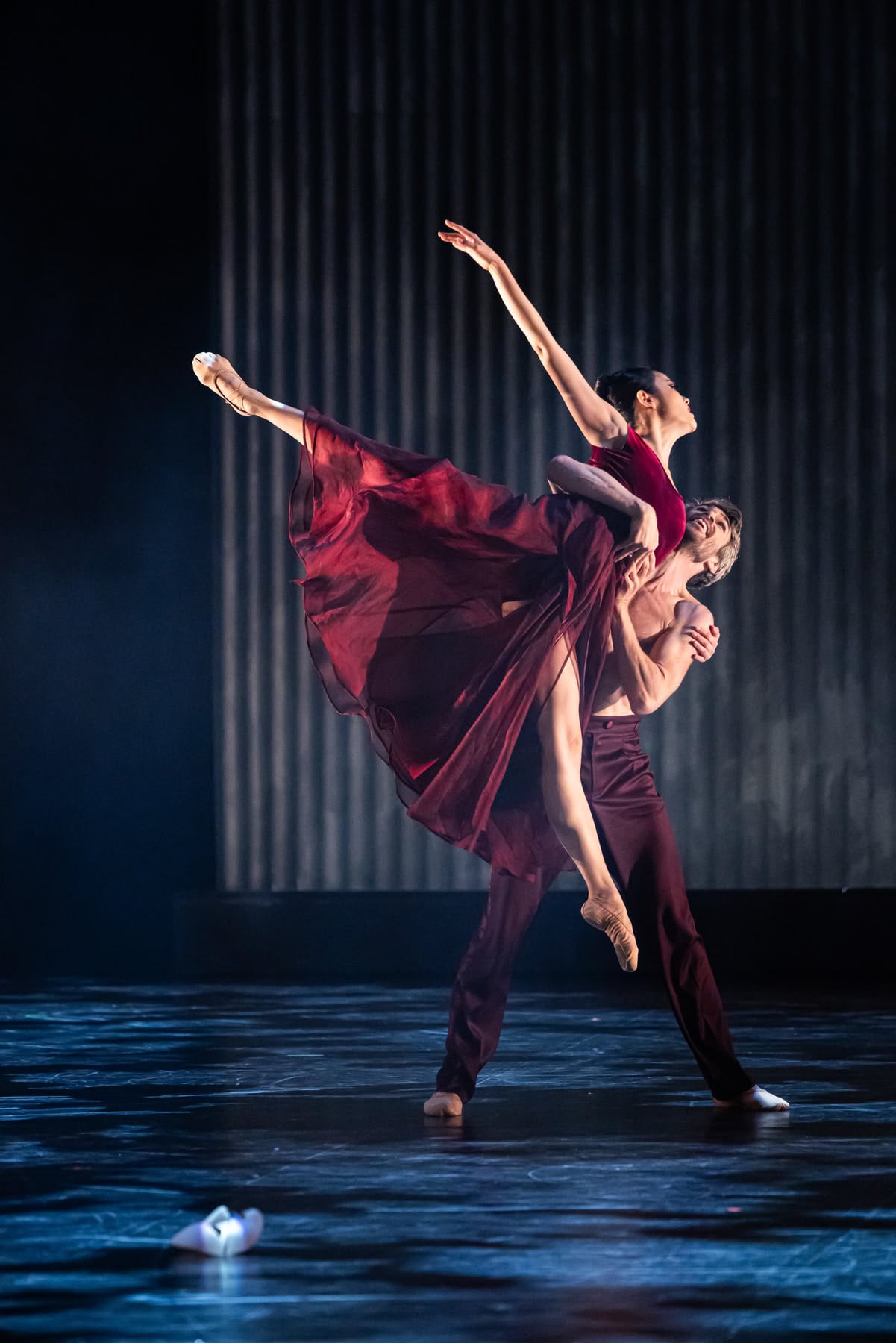
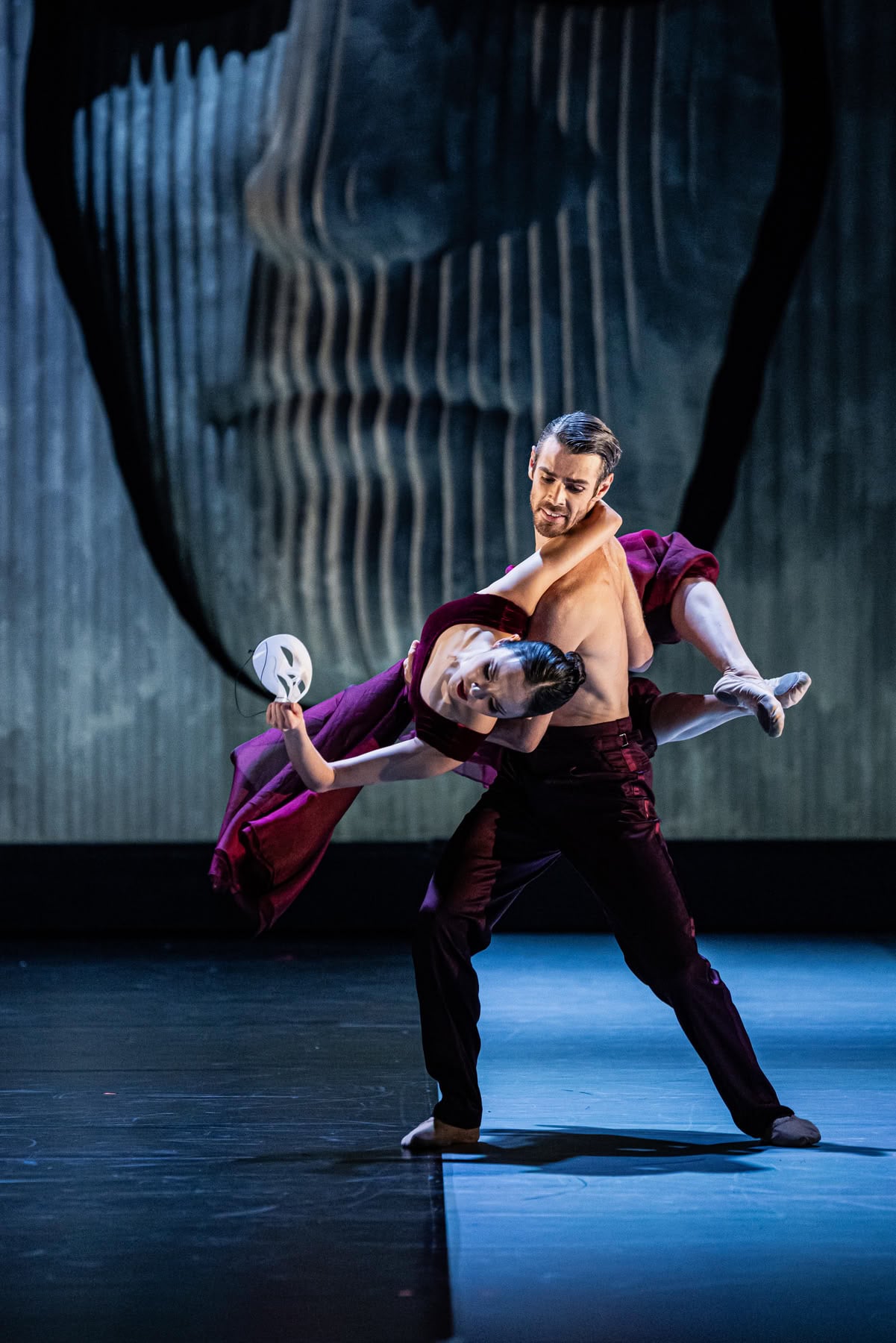
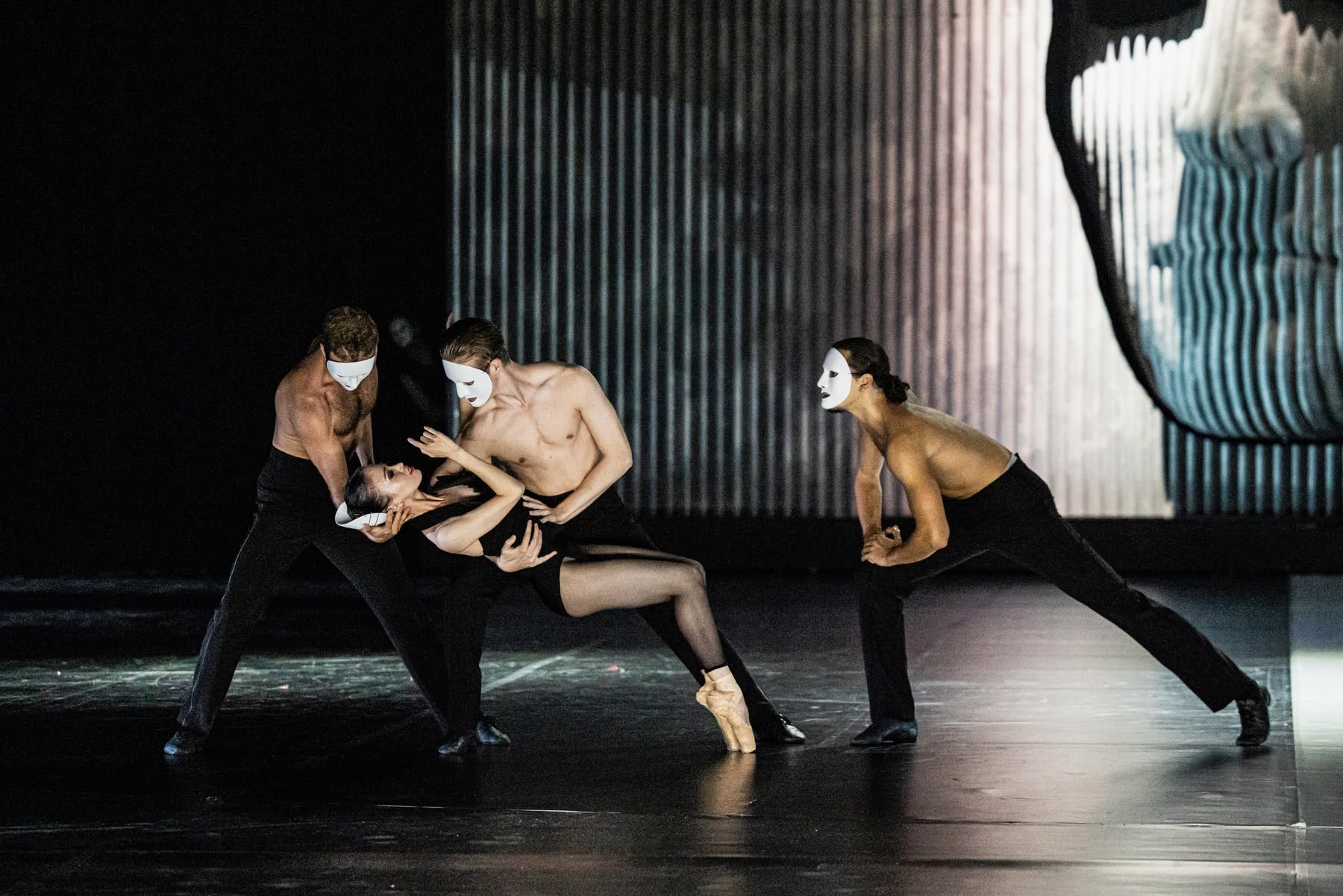
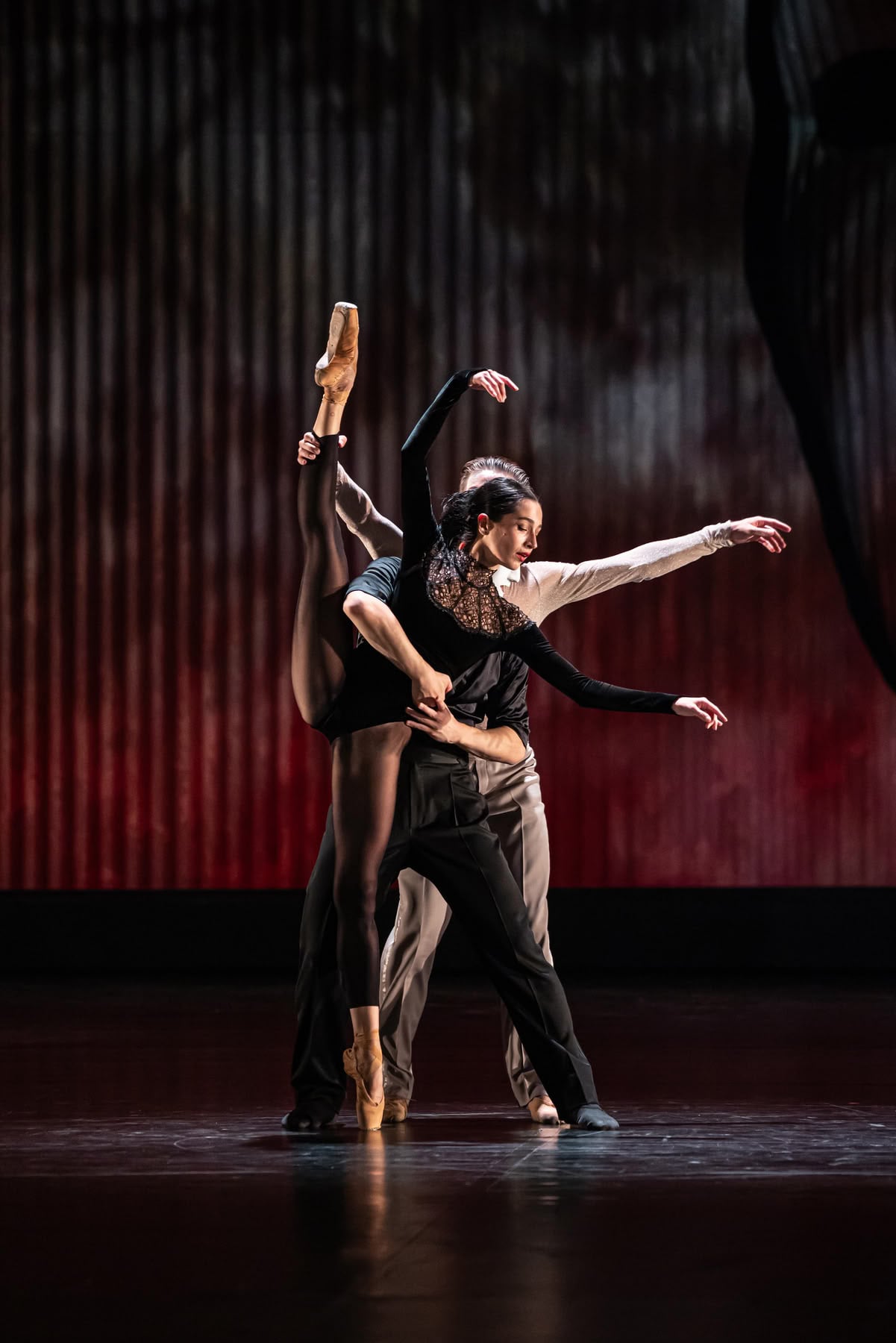
Gomez portrays the Spirit of the Mask (Duch masky), a leitmotif that floats through the work, interacting with the two principal men, credited as the man with the mask (Shoma Ogasawara) and without (Arthur Abram) and the two women, respectively Se Hyun An and Gloria Benaglia. With the exception of Abram and Benaglia, each of these five principals performs together in various pas de deux and trois, the latter invariably with Gomez’ spirit.
Radačovský’s choreography is expansive, seamlessly combining stunning neoclassical lifts and pure classicism with a strong emphasis on challenging pointework. The concluding pas de deux for Abram and Se was exhilarating, danced to Liszt’s coruscating Harmonies du Soir, the same music used for the concluding pas de deux between Crown Prince Rudolf and Mary Vetsera in Kenneth MacMillan’s Mayerling. Radačovský creates a similar emotional intensity with movement and lifts that are certainly MacMillanesque in their explosiveness.
This was not, however, just a choreographic feast for the soloists, excellent though they were. The corps de ballet was employed throughout the piece, silkily dressed in black armless waistcoats, leotards and tights (for the women) and trousers (for the men), forming a kind of silent opera chorus to frame the action from all parts of the stage.
The second act opened with an ensemble dance for a dozen women dressed by costume designer Alexandra Grusková in full-length, drop-waisted, dark carmine red evening dresses with spaghetti straps, with intricate patterning of movement, which led into a foreboding duet for Se and Gomez and a powerful pas de trois for the latter with Benaglia and Ogasawara.
The diversity and expressiveness of the choreography was always arresting, as was the concluding scene where Gomez lay lifeless on the stage while the corps placed their white masks all over his body, leaving a memorable final image to sit alongside that surprising opening.
Although this is a holistic full-length work, the two acts were considerably different in style. In addition to a reorganised set design, still themed by masks, the musicians who had performed from the back of the stage in act one moved to the pit for the second part.
Radačovský still has two seasons to complete in Brno before leaving for Prague, and his successor, the ballet mistress and choreographer Markéta Pimek Habalová, has recently been announced. If, as planned, this is Radačovský’s final full-length work in Brno, then he has certainly signed off in style.

Graham Watts is a freelance writer and dance critic. He writes for The Spectator, Tanz, Shinshokan Dance Magazine (Japan), Ballet Magazine (Romania), BachTrack and the Hong Kong International Arts Festival and has previously written for the Sunday Express, Dancing Times, Dance Europe, DanceTabs, London Dance, the Edinburgh International Festival and Pointe magazine (USA). He has also written the biography of Daria Klimentová (The Agony and the Ecstasy) and contributed chapters about the work of Akram Khan to the Oxford Handbook of Contemporary Ballet and on Shobana Jeyasingh for the third edition of Routledge’s Fifty Contemporary Choreographers.
He is Chairman of the Dance Section of The Critics’ Circle and of the UK National Dance Awards and regularly lectures on dance writing and criticism at The Royal Academy of Dance, The Place and (until the war) for Balletristic in Kyiv. He was a nominee for the Dance Writing Award in the 2018 One Dance UK Awards and was appointed OBE in 2008.