Review: Ballets Jazz Montréal bids adieu to ‘Dance Me, The Music of Leonard Cohen’
Sixteen Cohen songs, three choreographers and a fedora-wearing figure of the poet: the final US performance, on the tenth anniversary of his death, proved a wonderfully cohesive tribute.
| Title | Dance Me: The Music of Leonard Cohen |
| Company | Ballets Jazz Montréal |
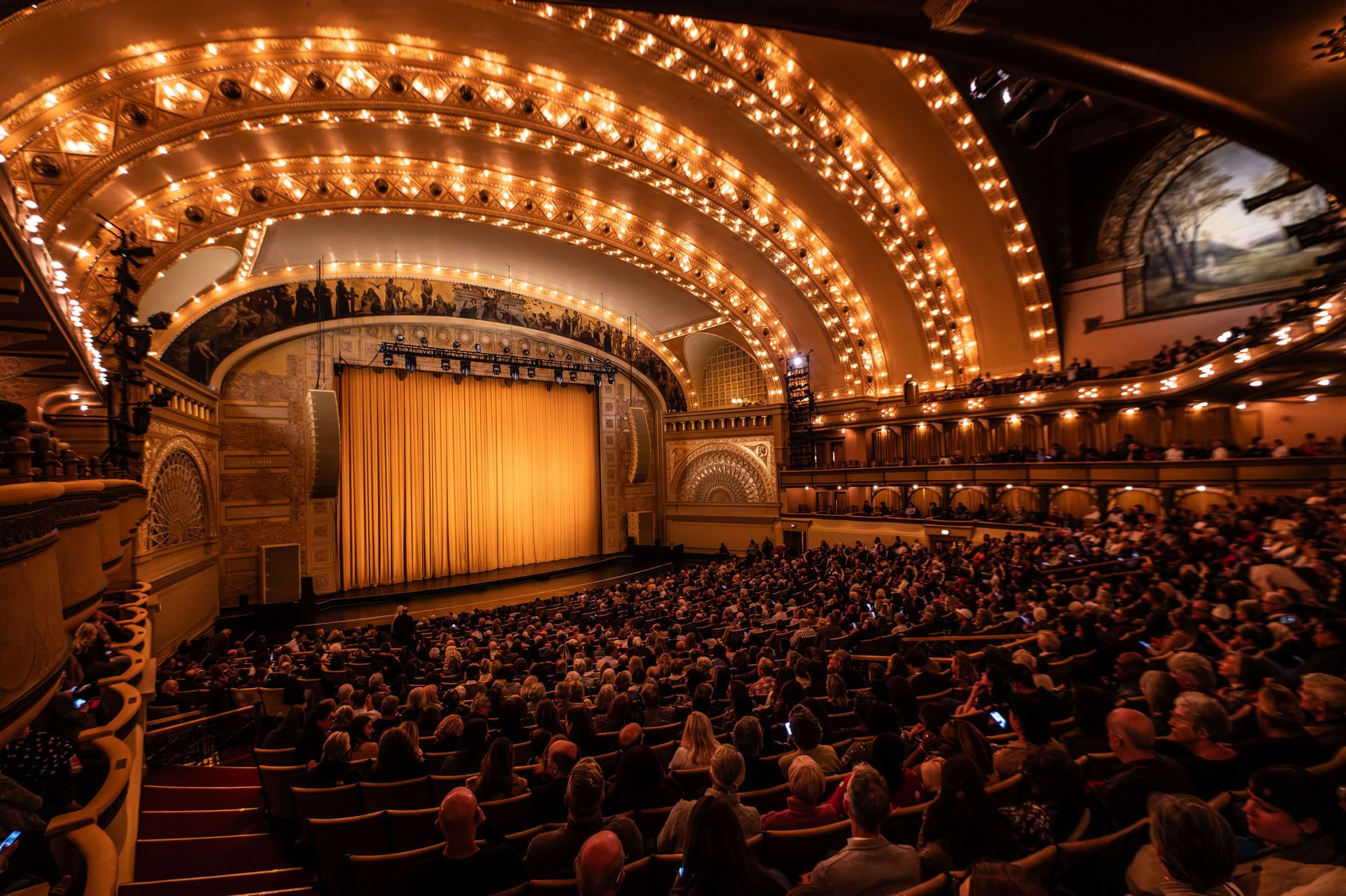
| Venue | The Auditorium, Chicago |
| Date | 7 Nov. 2026 |
| Reviewer | Scott C Morgan |
Die-hard fans of Leonard Cohen may forever kick themselves for not being at the Auditorium Theatre in Chicago on 7 November 2026. That date not only marked the tenth anniversary of the death of the beloved Canadian poet-singer-songwriter, but it was also likely the final US performance of Dance Me: The Music of Leonard Cohen by Ballets Jazz Montréal.
Developed with Cohen’s permission and input while he was still alive, Ballets Jazz Montréal’s Dance Me was unveiled in 2017. It has since gone on to be performed in more than 105 cities in 18 countries around the world.
But Dance Me is up against an expiry date, since Ballets Jazz Montréal contractually only had a decade from Cohen’s death to perform the work. Very few performances of Dance Me remain – all in Cohen’s native Canada.
On paper, Dance Me probably shouldn’t work. There were so many artistic hands stirring the pot of its creation.
Dance Me features no fewer than three different choreographers: Andonis Foniadakis, Annabelle Lopez Ochoa and Ihsan Rustem. Louis Robitaille is credited with the ‘idéation’ of Dance Me and Éric Jean is responsible for the overall stage direction
As for the mostly prerecorded score, Dance Me lists music direction by Martin Léon while musical concept/sound design is by Alexis Dumais. The piece is a collage of 16 Cohen songs or poems that date from the late 1960s up to 2016, all stitched together in non-chronological order.
Each song was assigned to a different choreographer, but they are not credited for their individual work. Yet despite all these disparate creatives, Dance Me is a wonderfully cohesive multimedia work of music and movement that runs with clockwork precision.
Dance Me dispenses with any semblance of a plot. Instead, it serves more as an abstract tribute to Cohen while also visually and physically riffing in response to many aspects of love, passion and creation conjured up in his music and poetry.
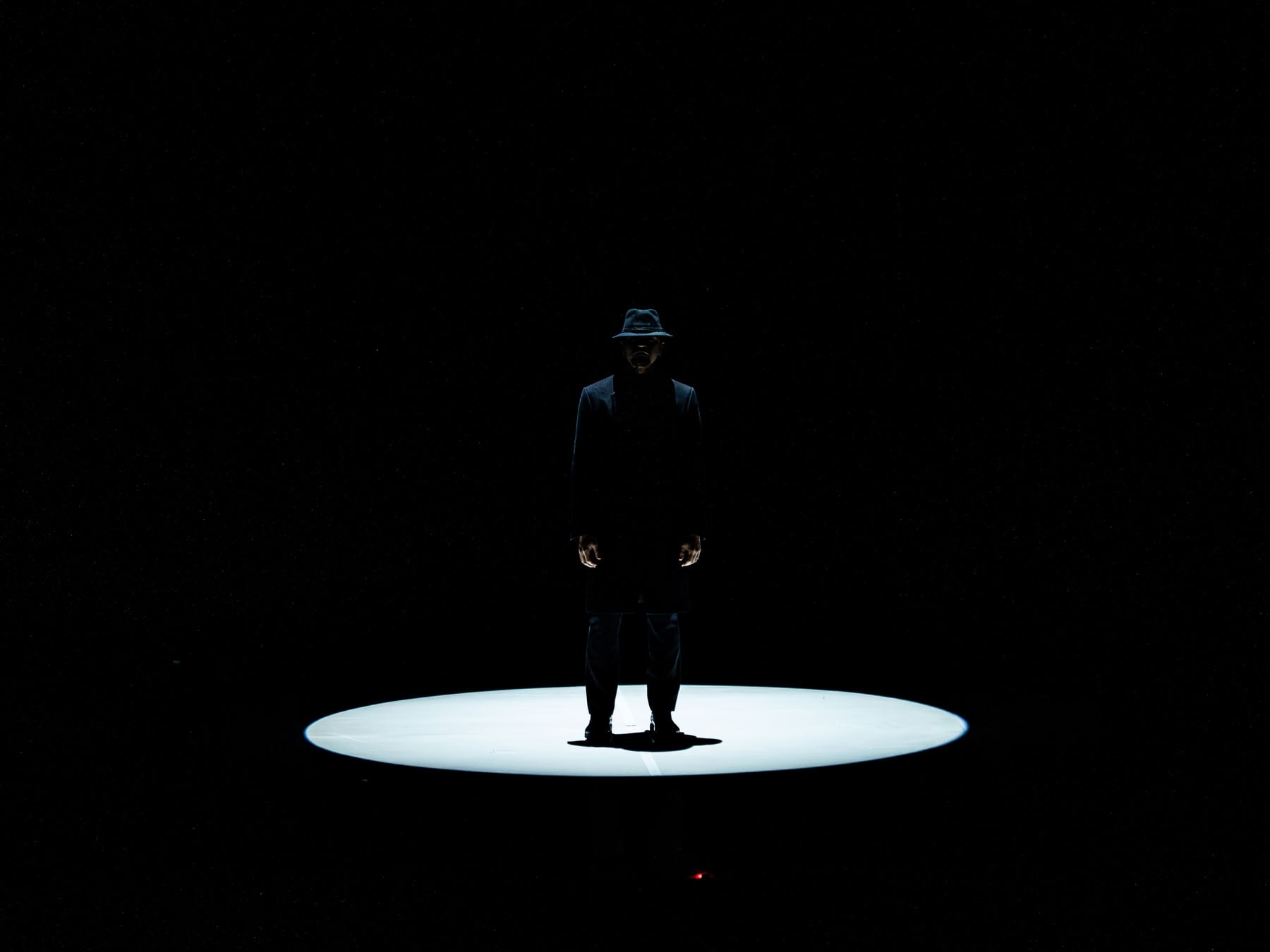
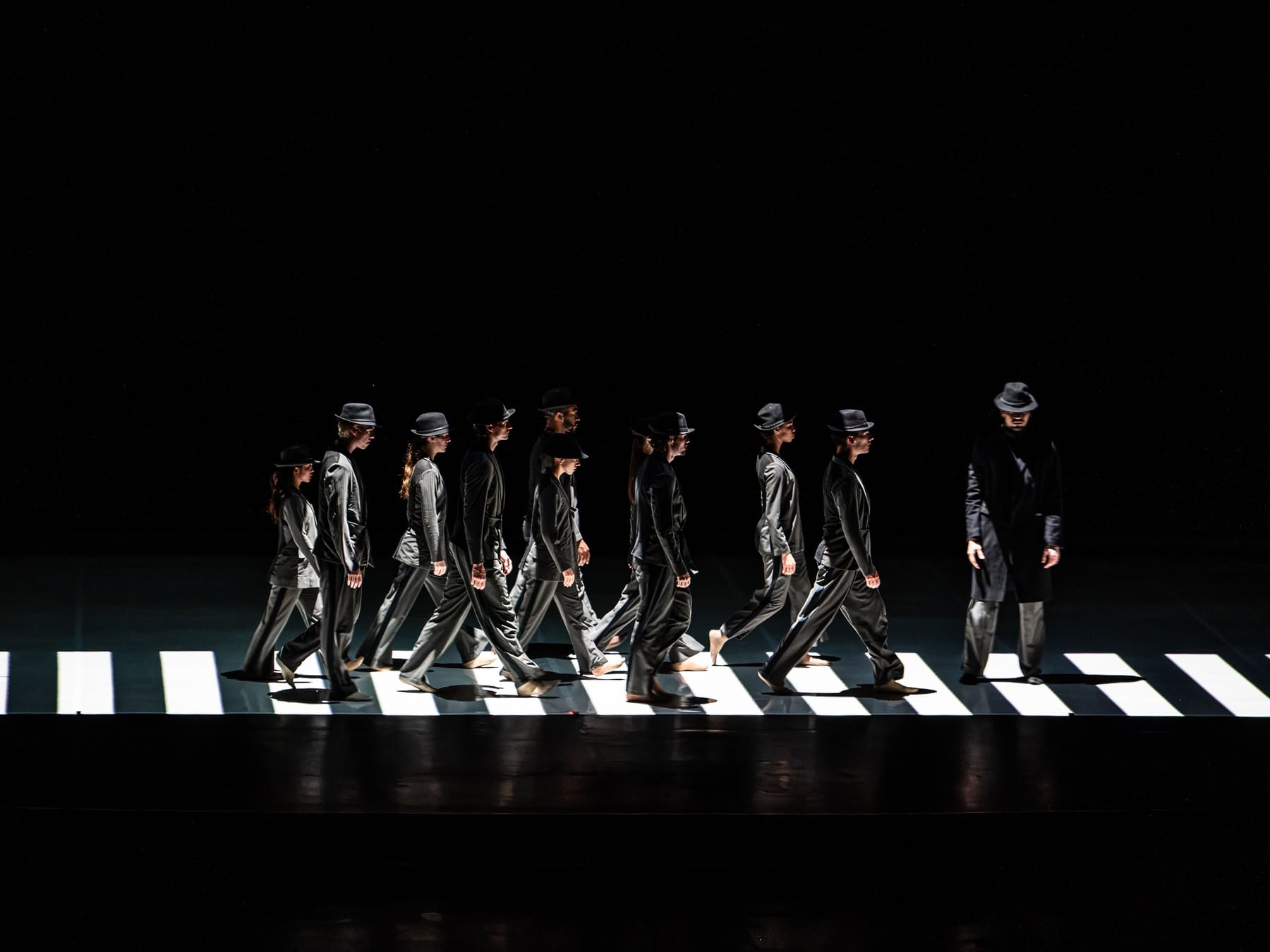
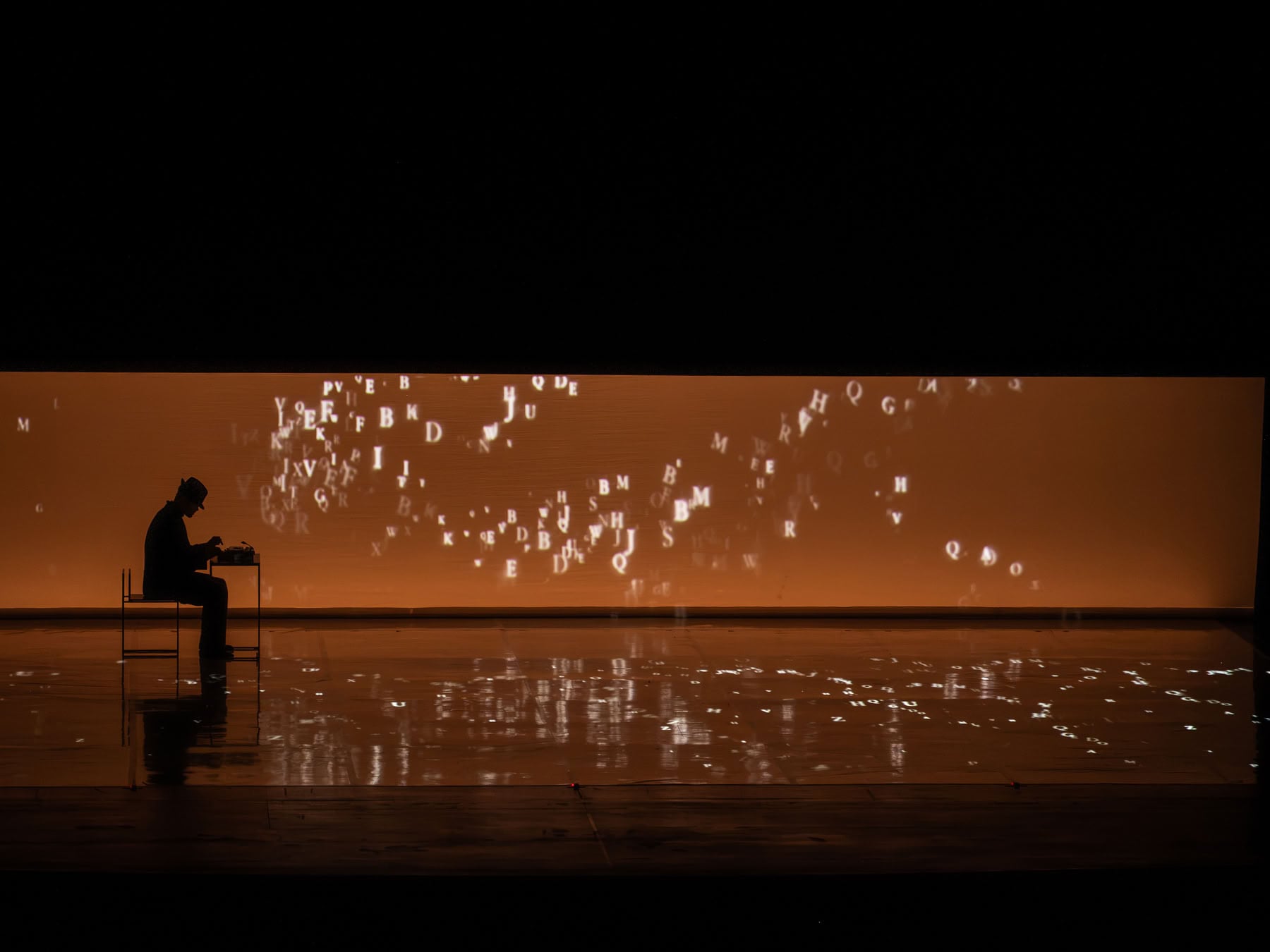
A Cohen-like figure materialises as a man in a fedora (or is it a trilby?) from the top of the show, and then he reappears at key points throughout. Sometimes this figure is pounding out poetry on a typewriter during ‘A Thousand Kisses Deep’. Or during ‘So Long, Marianne’, he’s simply strolling across a street crosswalk that could double for an oversized piano keyboard.
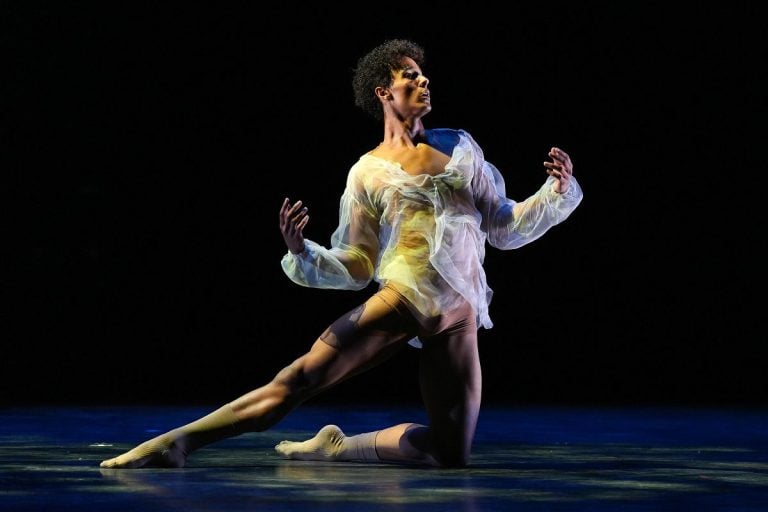
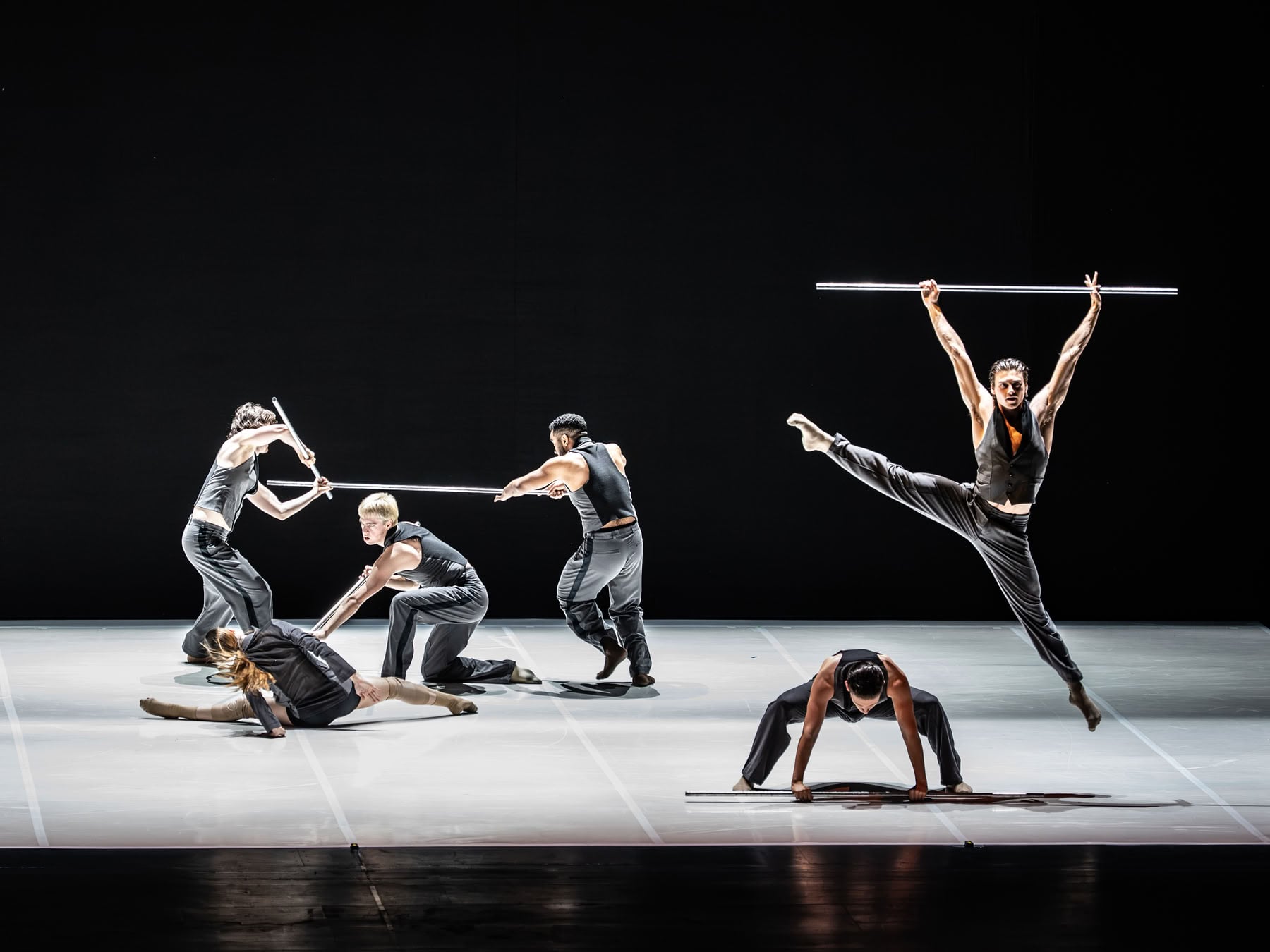
More often than not, there’s loads of sensuality and athleticism to the choreography of ensemble numbers. Multiple dancers might partner with one or two others at a time in numbers like ‘Boogie Street’ or ‘Nevermind’. Meanwhile, the flowing black and white costumes by Philippe Dubuc and Anne-Marie Veevaete are sometimes cut to allow sneaky glimpses of the dancers’ beautifully toned flesh.
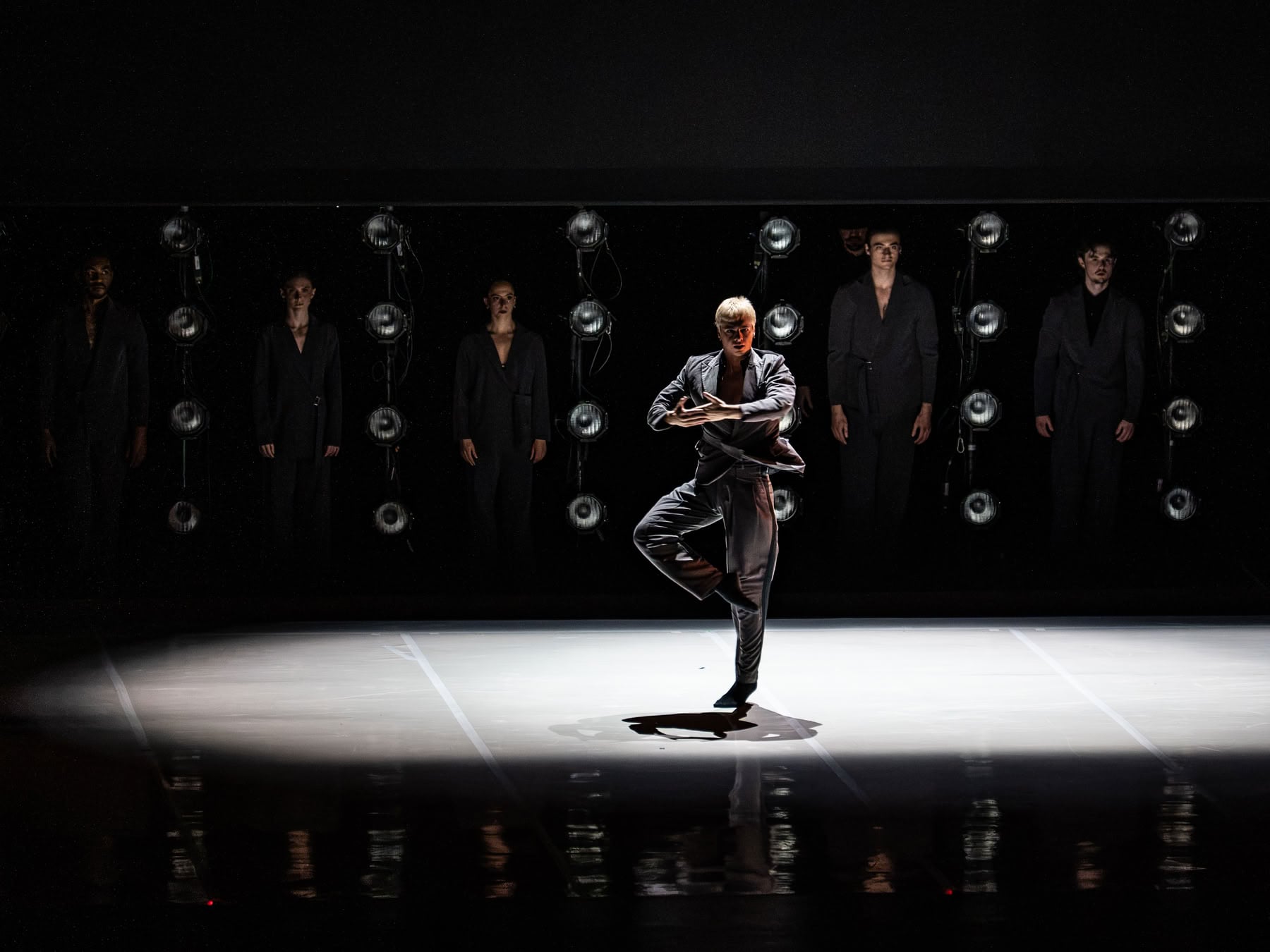
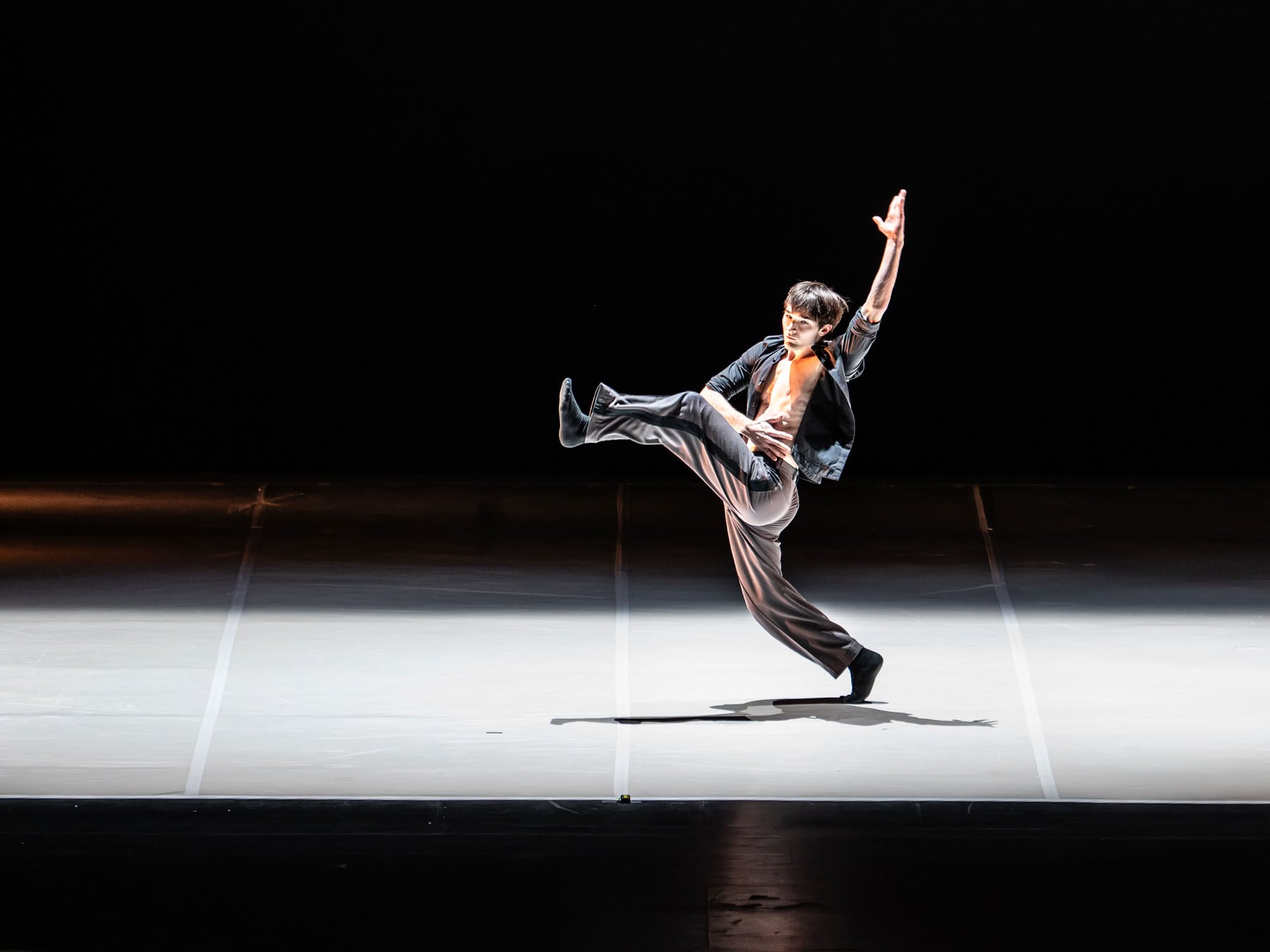
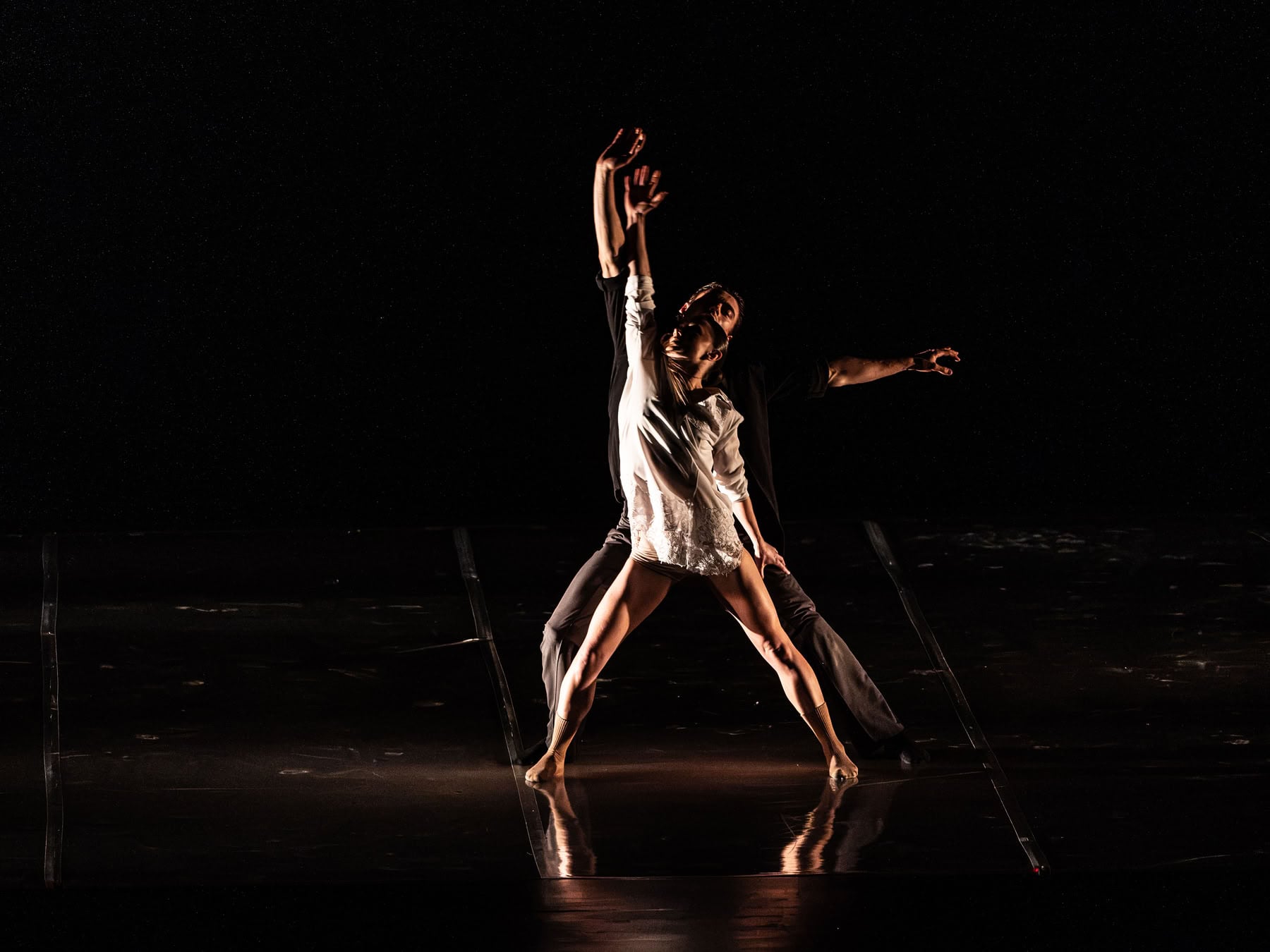
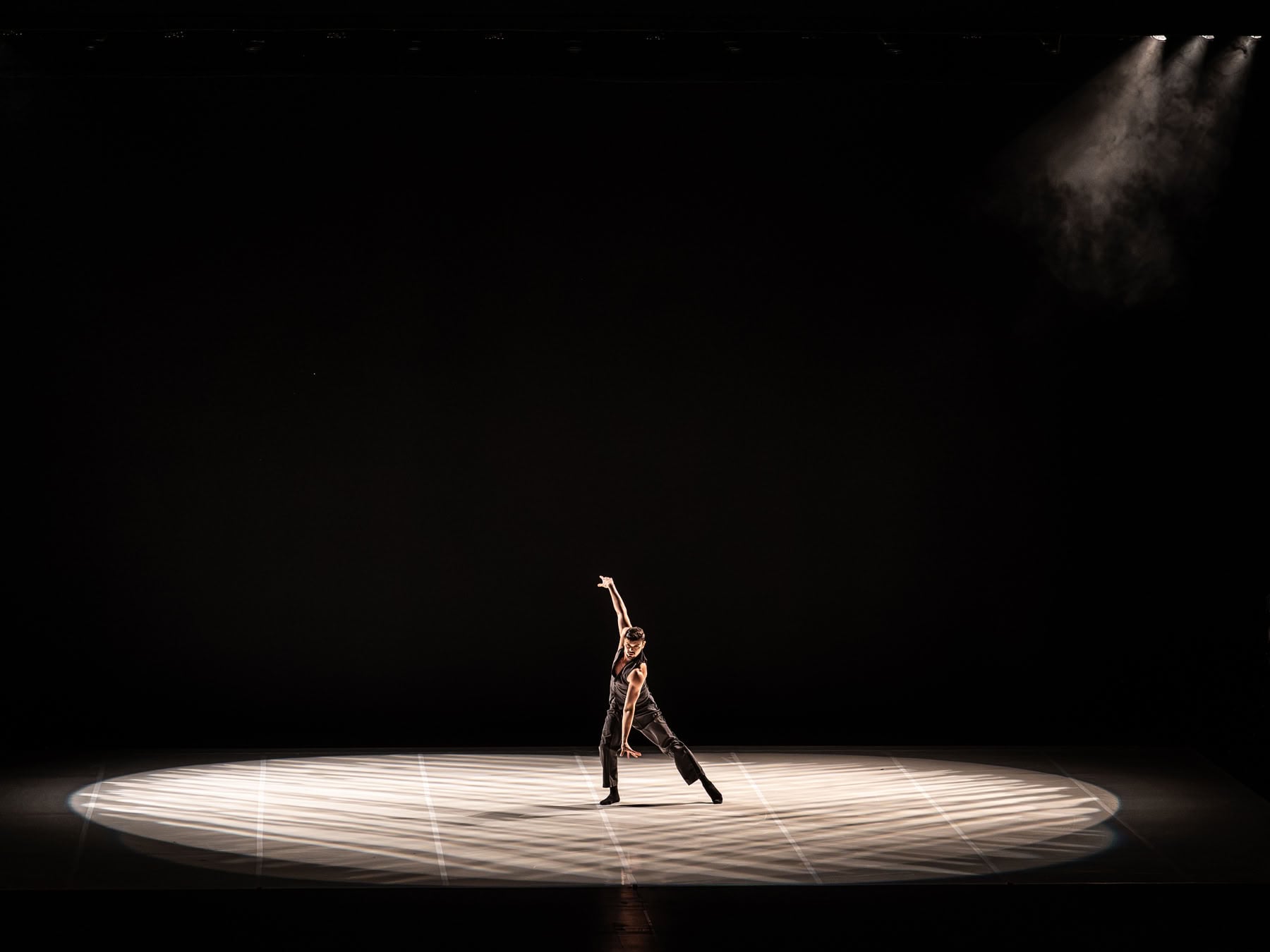
To match Cohen’s smoky vocals, lighting designers Cédric Delorme-Bouchard and Simon Beetschen have created a largely shadowy stage world. At other times everything gets flooded with banks of lights directly facing the audience.
Delorme-Bouchard and Beetschen also play with lighting effects throughout. There’s a nod to Bob Fosse’s Pippin in the opening number ‘Here It Is’ as dancers’ hands are sharply spotlighted as if disembodied beating hearts. And often the company’s 14 dancers are lit from behind to become dynamic silhouettes in heaving group configurations.
Video projections are also selectively deployed by designers Gonzalo Soldi, Thomas Payette and Jérémy Fassio of Hub Studio. Sometimes it’s a simple video effect suggesting falling rain, or it’s a ponderous exploration up into the cosmos.
A great example of dancers mixed with projections is ‘Dance Me to the End of Love’. It features a solo male dancer in black working his way through a series of women all clad in white. When he finishes intimately partnering with one woman, she spins offstage as a back wall video projection shows a woman falling in slow motion like a discarded tissue. But all that womanising catches up to the guy, as a video projection shows him tumbling down alone by the song’s end.
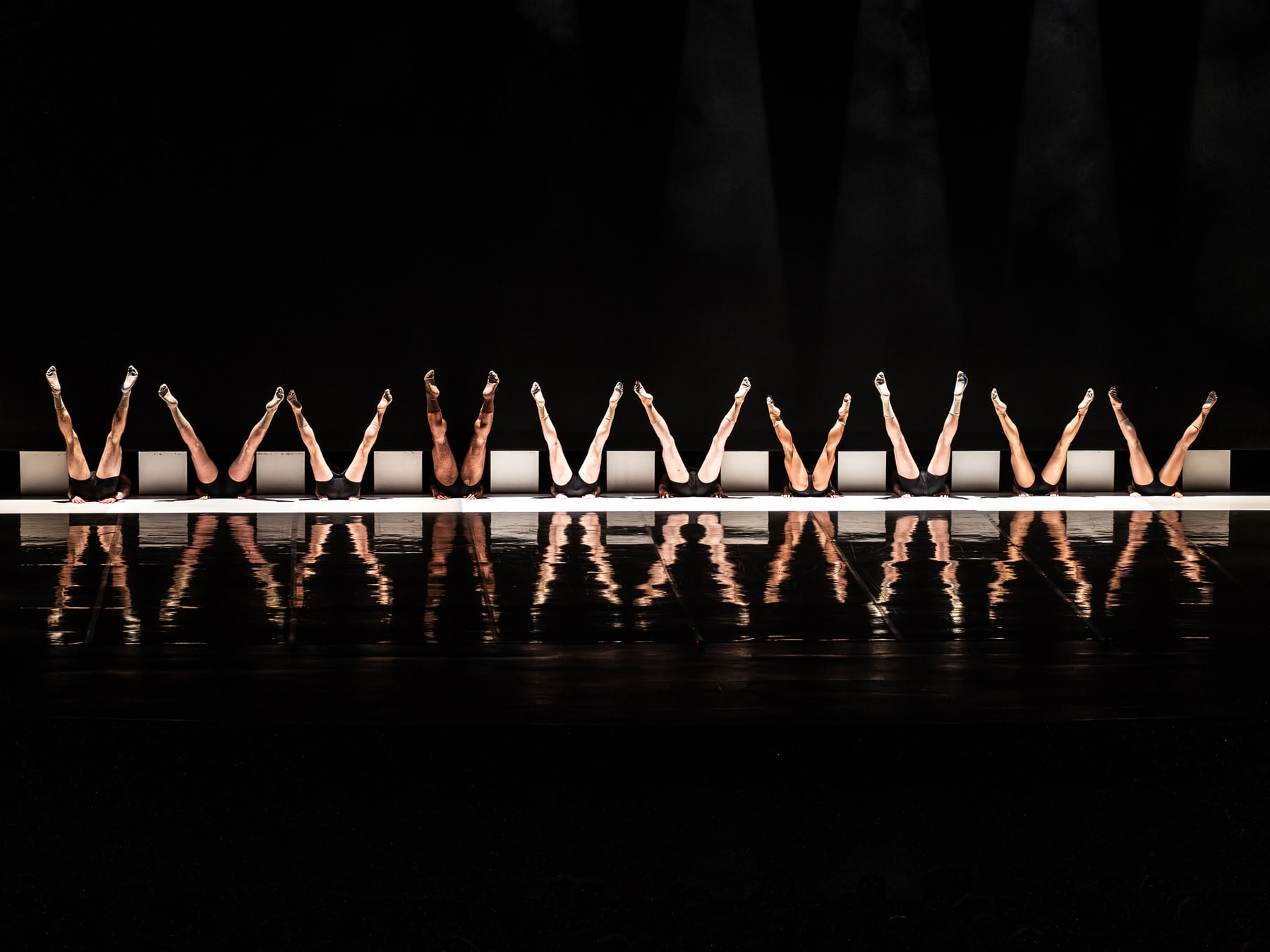
One of the more playful numbers is ‘Tower of Song’, which is full of real typewriters and projections of synchronised red singing lips right out of The Rocky Horror Picture Show or the Rolling Stones’ lips-and-tongue logo. Thanks to the precise lighting, the number comes off as a symbolic nod to artistic and physical creation intermingling, with disembodied legs and loins contorting as if in a geometric number by the 1930s film choreographer Busby Berkeley.
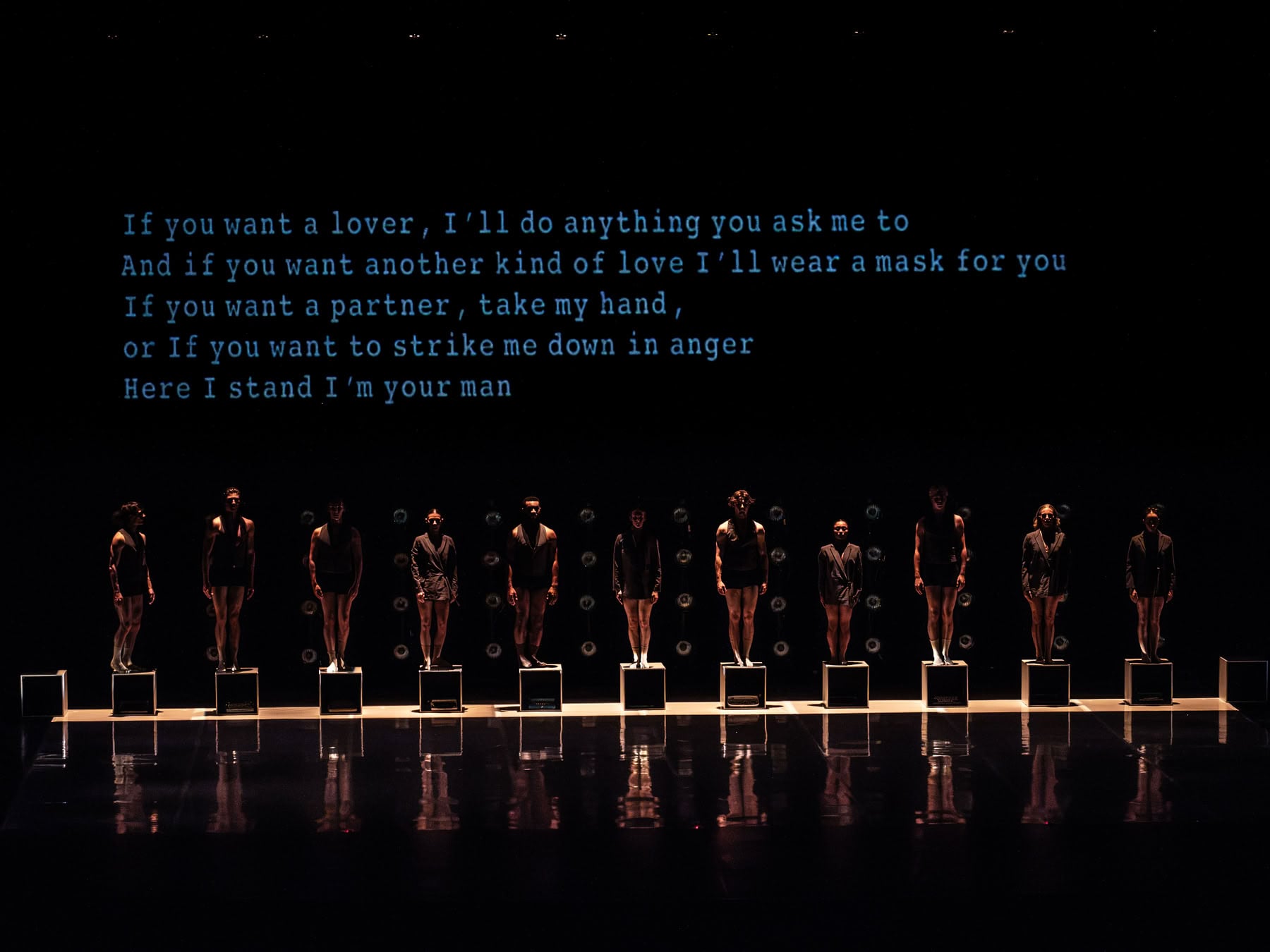
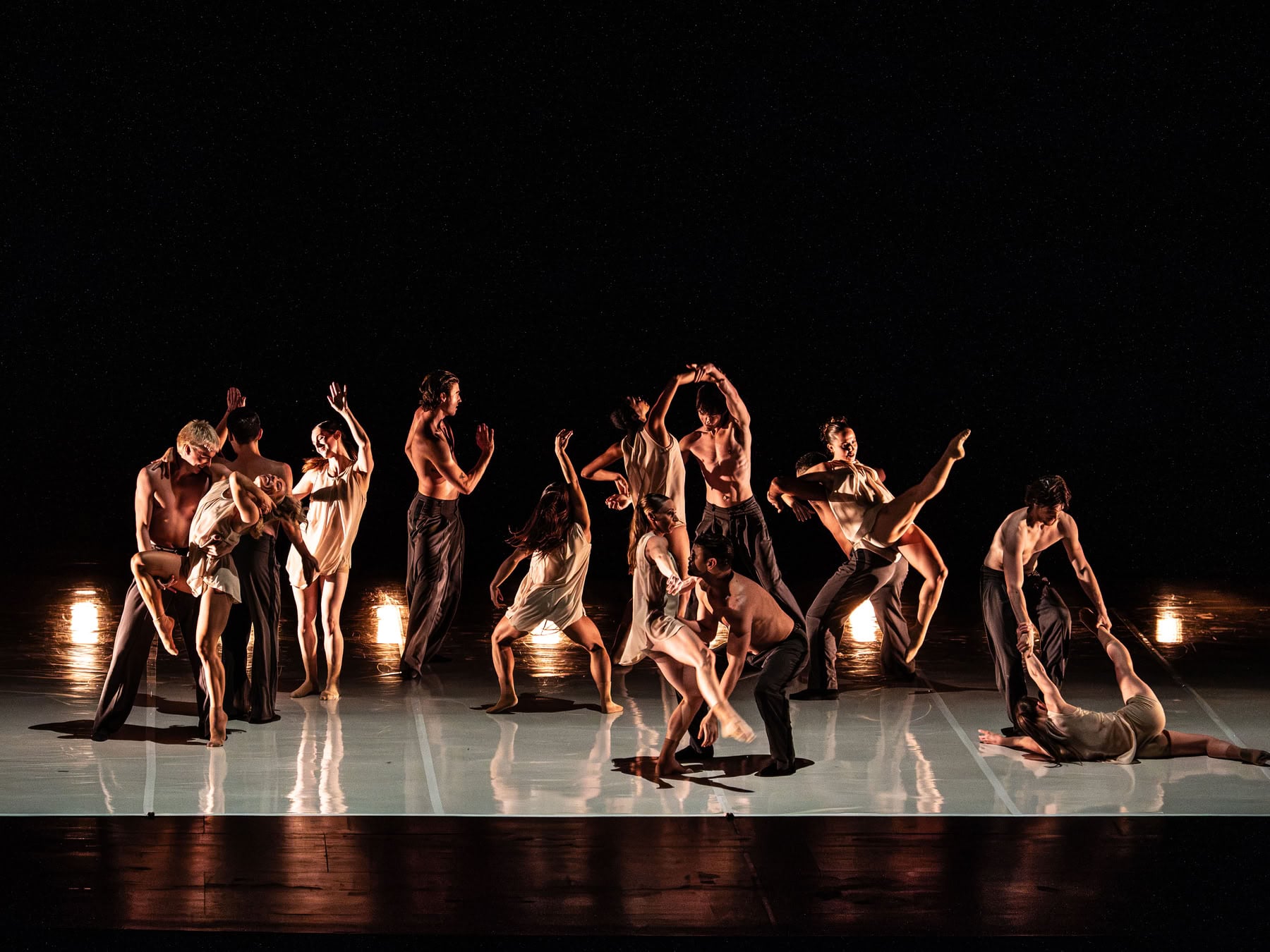
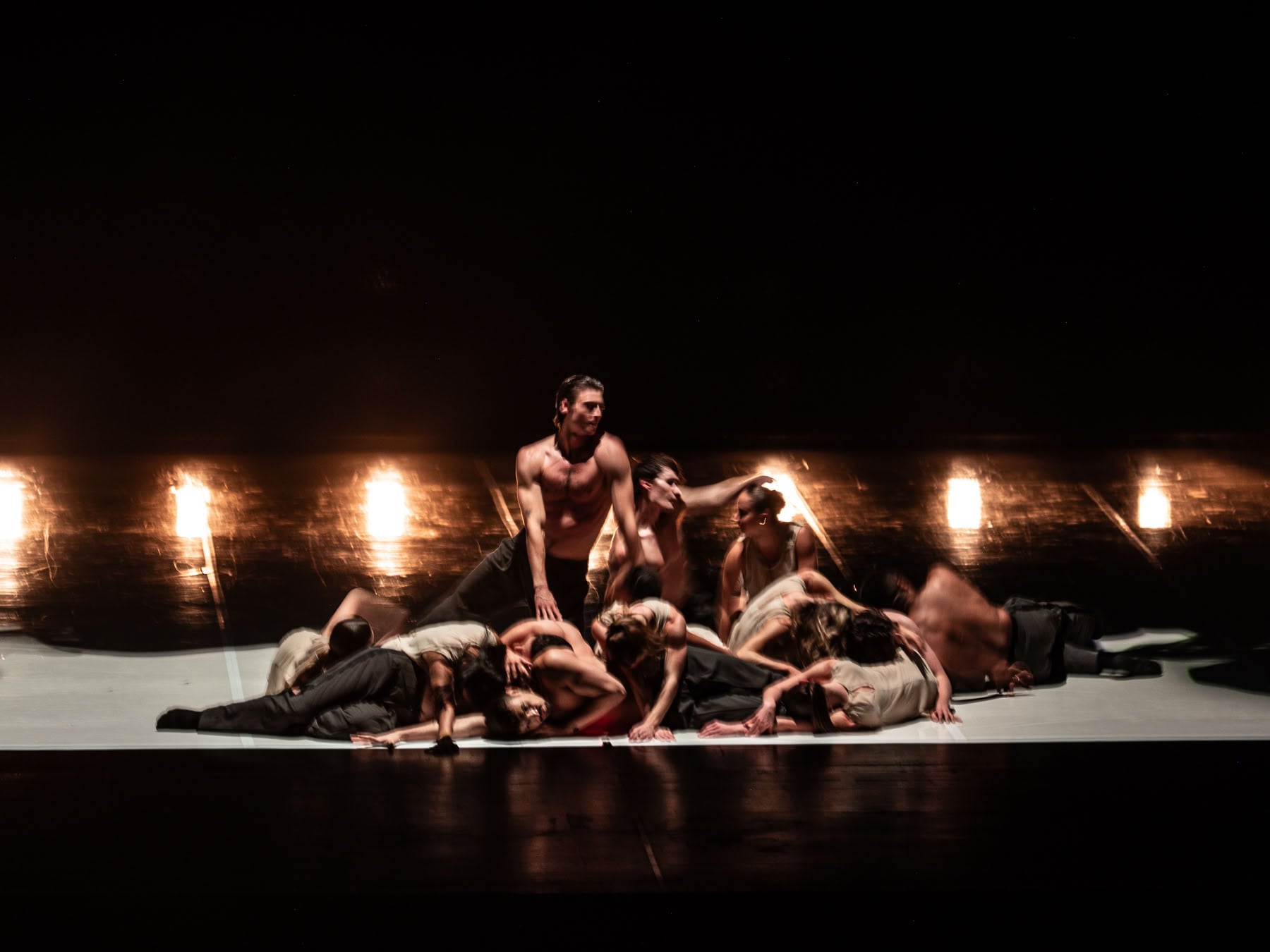
One of Cohen’s biggest hits from 1967, ‘Suzanne’, is prefaced by spoken audio of its creator discussing the song’s true-to-life inspirations and his artistic deviations. The work’s mostly black-white-grey colour scheme is slightly altered as the title woman of fascination appears in an burgundy outfit. She partners with a man who is so entranced that he rethinks his own belief systems to align with hers.
Dance Me also has moments for other singers to shine, so it isn’t Cohen’s vocals all the time. The 2009 Live in London album version of ‘Boogie Street’ is used, which features the singer Sharon Robinson.
And a couple of company dancers are also miked up to capably share their own vocals.Zoey Anderson notably sings ‘So Long, Marianne’ and, with Ryan Sherk, two verses of ‘Hallelujah’, the logical and frankly obligatory finale of Dance Me.
‘Hallelujah’ has become Cohen’s most famous song, thanks to its notorious reputation for being covered by so many other musicians and drunken singers in karaoke bars. So it was probably wise that the show’s choreographers Foniadakis, Lopez Ochoa and Rustem all opted not to set the ubiquitous song to dance and instead let the music and lyrics stand alone as Cohen’s own voice concluded the show in uplifting fashion.
It’s a shame that Dance Me is ending its contractual run, and I worry about what might happen should the rights holders ever allow other artists to try to shoehorn Cohen’s work into some kind of stage jukebox musical. The combination of Cohen’s music and modern dance in Dance Me proved so sleek and seductive.
Despite the many, many artists involved, Ballets Jazz Montréal’s Dance Me wows throughout. It’s a dynamic blend of dance and music that, crucially, feels like one creative whole.
Dance Me: The Music of Leonard Cohen concludes with an eight-performance run from 24 to 29 November presented by Danse Danse at the Théâtre Maisonneuve in Place des Arts, 260 Blvd De Maisonneuve Ouest, Montreal, Quebec.
Performances are at 8pm with 3pm matinees on 28 and 29 November. Tickets are $49–$99. Call 866-842-2112 or visit dansedanse.ca or bjmdanse.ca.