Review: Anna Karenina – Christian Spuck’s Tolstoy ballet, conceived in Ipswich, thrives in Oslo
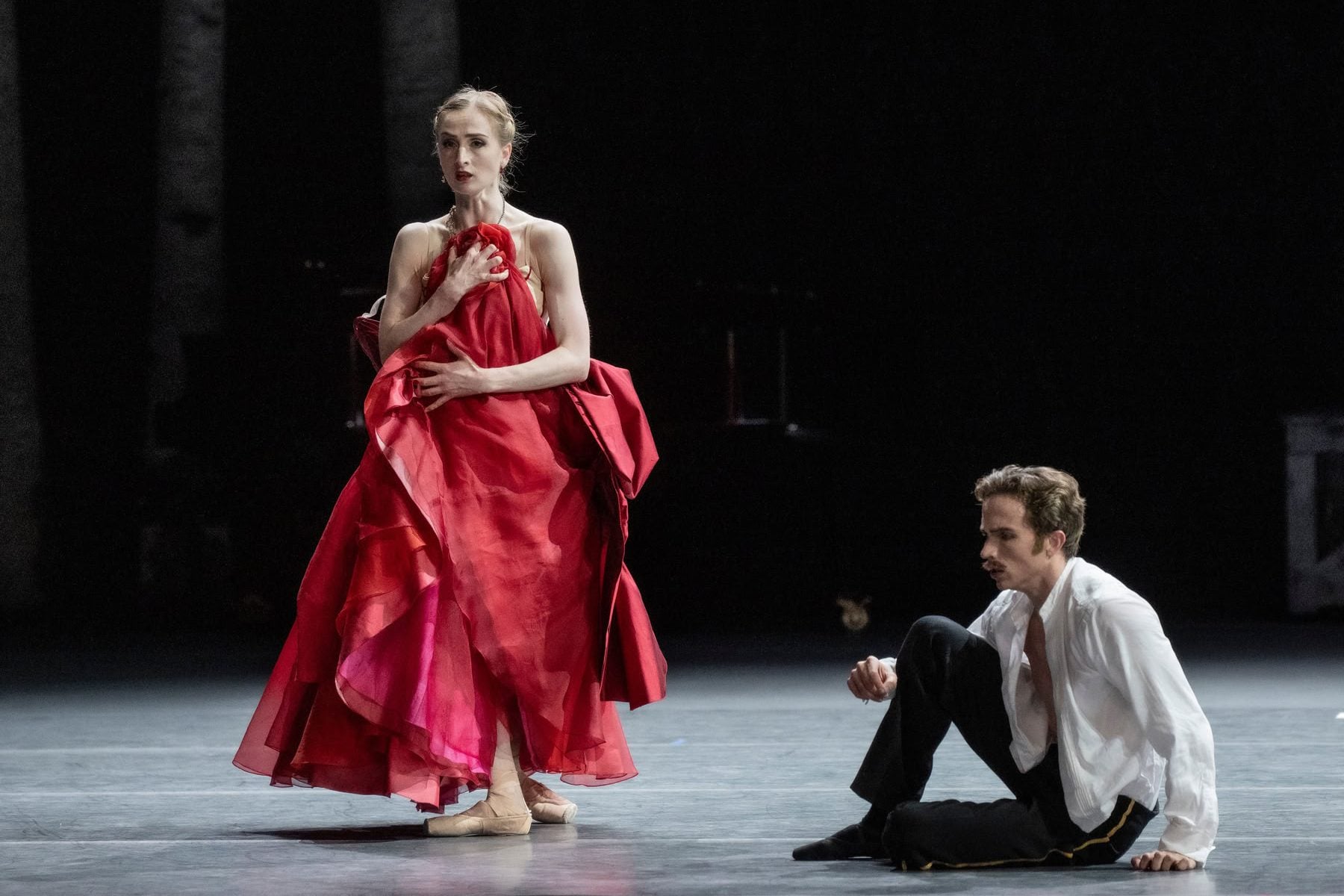
Grete Sofie Borud Nybakken is a triumph in the title role, and her partnership with Douwe Dekkers sizzles, as Spuck’s Tolstoy ballet comes of age in Oslo.
| Title | Anna Karenina |
| Company | Norwegian National Ballet |
| Venue | National Opera House, Oslo |
| Date | 6 November 2026 |
| Reviewer | Graham Watts |
Christian Spuck’s Anna Karenina has never been performed in the UK, but it was conceived in Ipswich!
Back in the days when Dance East hosted international get-togethers of artistic directors, Spuck was taking a break on a walk with Ingrid Lorentzen, then the relatively new artistic director of Norwegian National Ballet and he outlined his concept for a ballet based on Leo Tolstoy’s epic novel. The outcome was this co-production between Spuck’s (then) company, Ballett Zürich – where the ballet premiered in 2014 – and Norwegian National Ballet. It has subsequently been performed by the National Ballet of Canada, Bayerische Staatsballett in Munich and in Moscow, Seoul, Hong Kong and Istanbul.
Even though the ballet is twelve years old, this was my first encounter with Spuck’s interpretation of Tolstoy’s mammoth novel (the Vintage Classics edition in English runs to 964 pages), and his summary does a fine job in encapsulating key characters and themes in a two-act ballet. It would have been easier to cut more content than he has done, and in retaining and presenting fifteen named characters, it does make for a rather cluttered first act, although, to be fair, a rudimentary knowledge of the novel allows a relatively clear understanding of the various relationships.
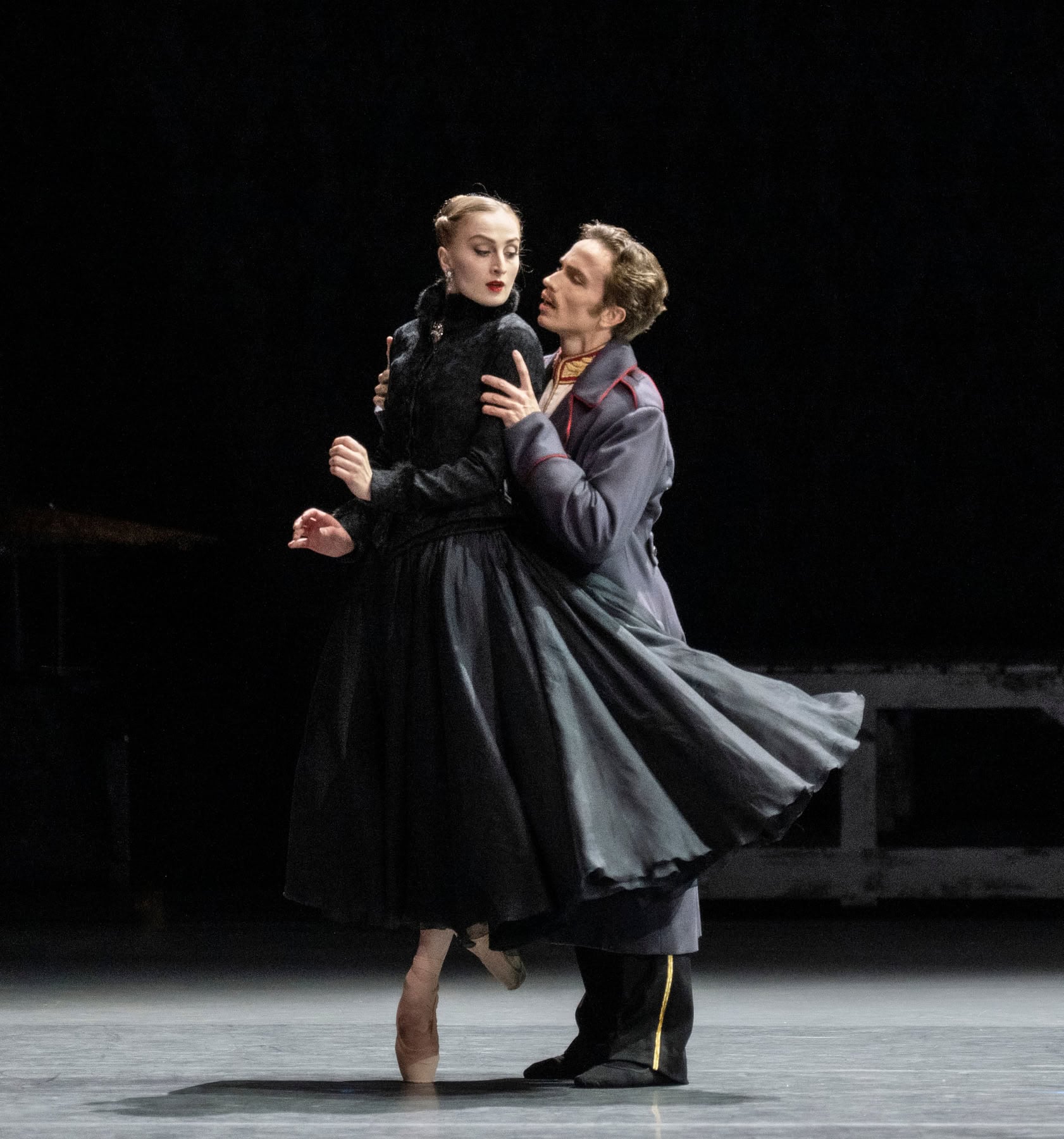
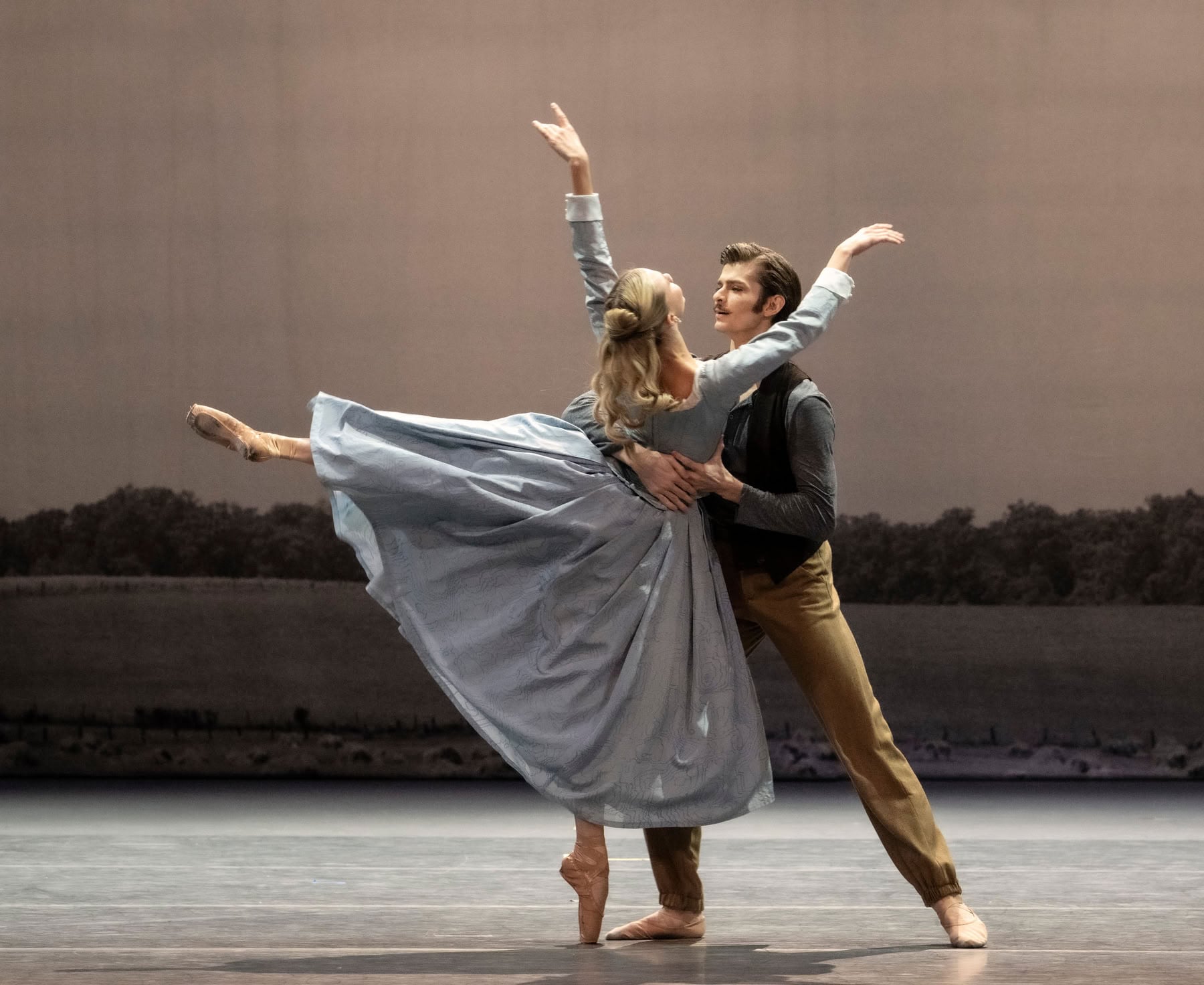
Spuck takes a circular approach to Anna Karenina’s tragic story, beginning and ending with the sound of the train that kills her and a powerful tableau of the main people in her life, many of whom have their backs turned to her lifeless body. For this, of course, is the main issue in the eternal triangle story that describes the straitjacket of Anna’s dull and loveless marriage to the starchy and punctilious Alexei Karenin and her adulterous affair with the adventurous cavalry officer, Count Vronsky. While she is ostracised by society, he remains unaffected by the public outrage against the scarlet woman. Spuck presents this dichotomy starkly, showing the opprobrium of St Petersburg’s high society, notably in an effective horse racing scene, and Karenin turning her young son against his mother.
This opening night in Oslo was a triumph for Grete Sofie Borud Nybakken in the title role, palpably embodying all the diverse emotions of her character from the stultified boredom of upper-class domesticity and patriarchal authority to the romantic idyll of her affair with the dashing Count. The sizzling chemistry between Nybakken and Douwe Dekkers, not least in their bodice-snapping, lustful romp on the floor, was certainly helped by the fact that they are partners in life as well as on stage. Dekkers rose above some of the confusion of the first act, especially in the ball scene, when Vronsky initially flirtatiously courts Kitty (Astrid Lyngstad), who anticipates a proposal of marriage and is badly let down when realising that Vronsky has fallen in love with Anna.
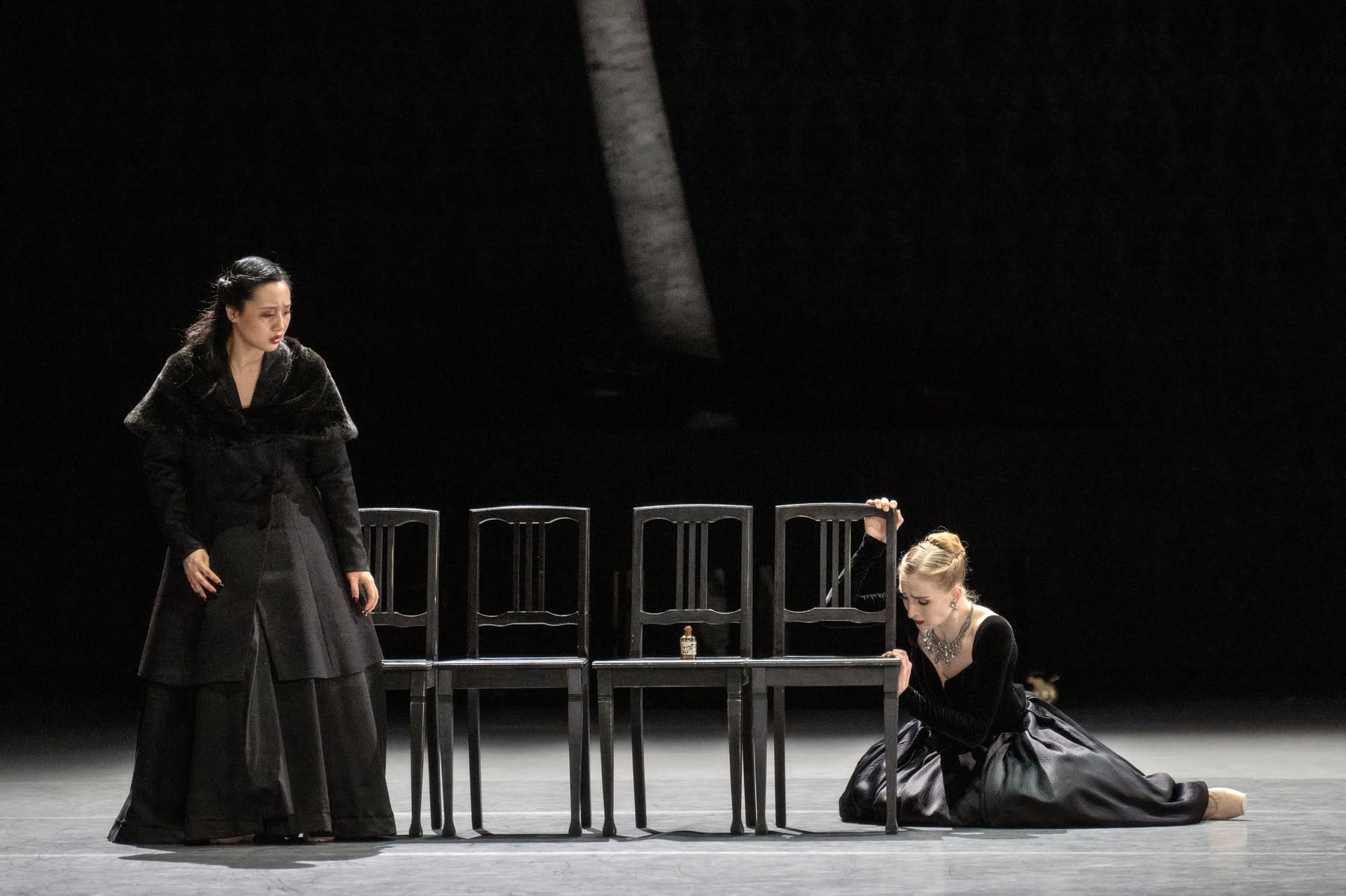
Jonathan Olofsson performed as Karenin with an appropriate stiffness of bearing and character, and a word of praise too for Hjalmar Aase-Bang as the eight-year-old son, Sergei.
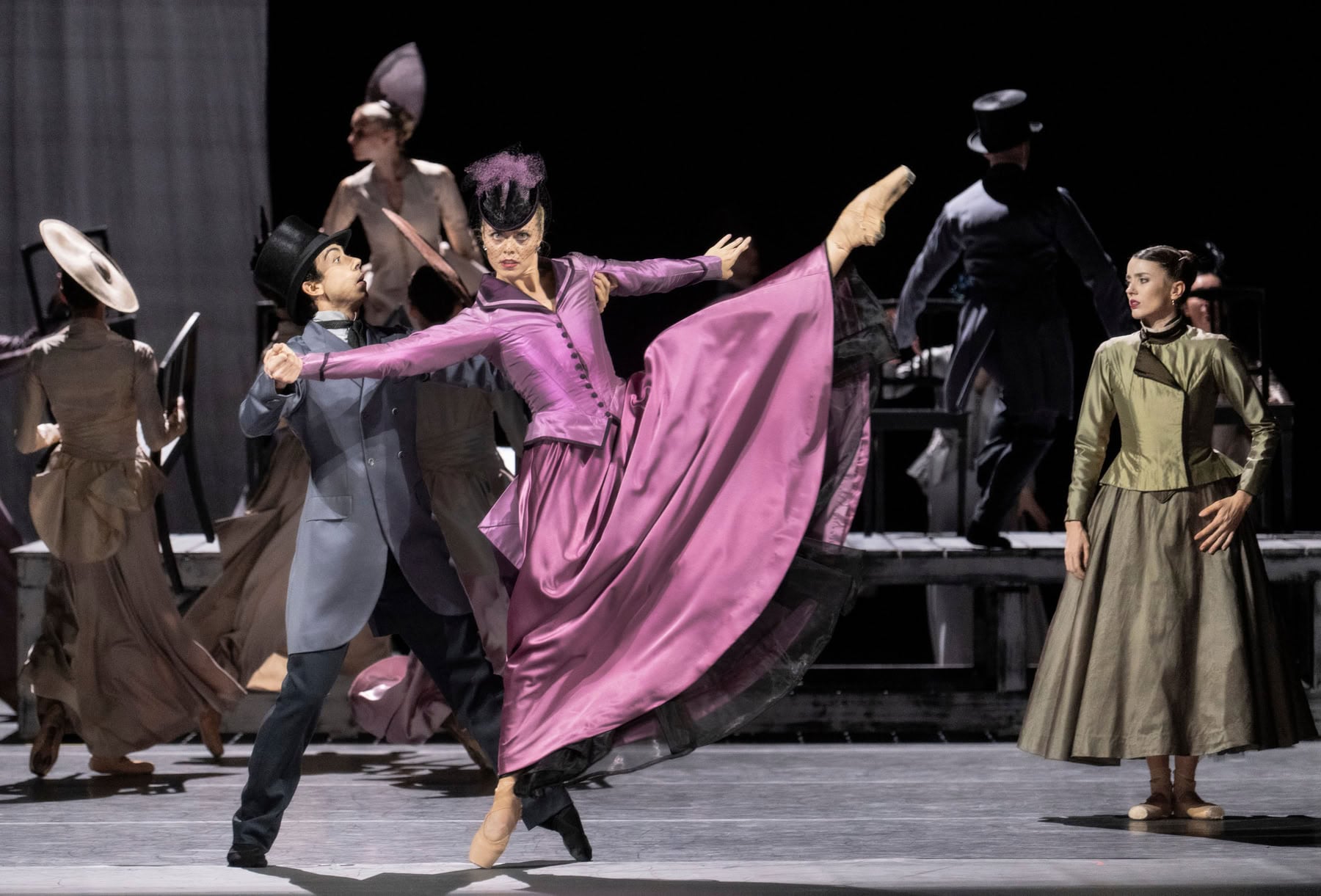
In the large supporting cast, Alex Cuadros Joglar was suitably rakish, especially in his ménage à trois (tastefully conveyed) with two housemaids, as Anna’s brother, Stiva; Anaïs Touret was his long-suffering wife, Dolly; Andrew Coffey was the attentive Kostya, who marries Kitty and serves as a kind of morally superior alternate to both Vronsky and Stiva (some commentators say that Tolstoy based Kostya on himself); and Gina Storm-Jensen – a vision in pink – was an especially skittish and party-loving Betsy, Vronsky’s wealthy cousin. The whole cast pulled together to make silent sense of this literary masterpiece.
Matthew Rowe conducted the orchestra in a score that combines the lavish romantic music of Sergei Rachmaninoff, including both his gorgeous second Piano Concerto – also the main theme to the film Brief Encounter – and Rhapsody on a Theme of Paganini, and the more strident music of the Polish composer, Witold Lutosławski, which represents Anna’s alienation and despair. Incidental music from two Georgian composers, Sulkhan Tsintsadze and Josef Bardanashvili, and sound effects by Spuck’s regular musical collaborator, Martin Donner, complete the score.
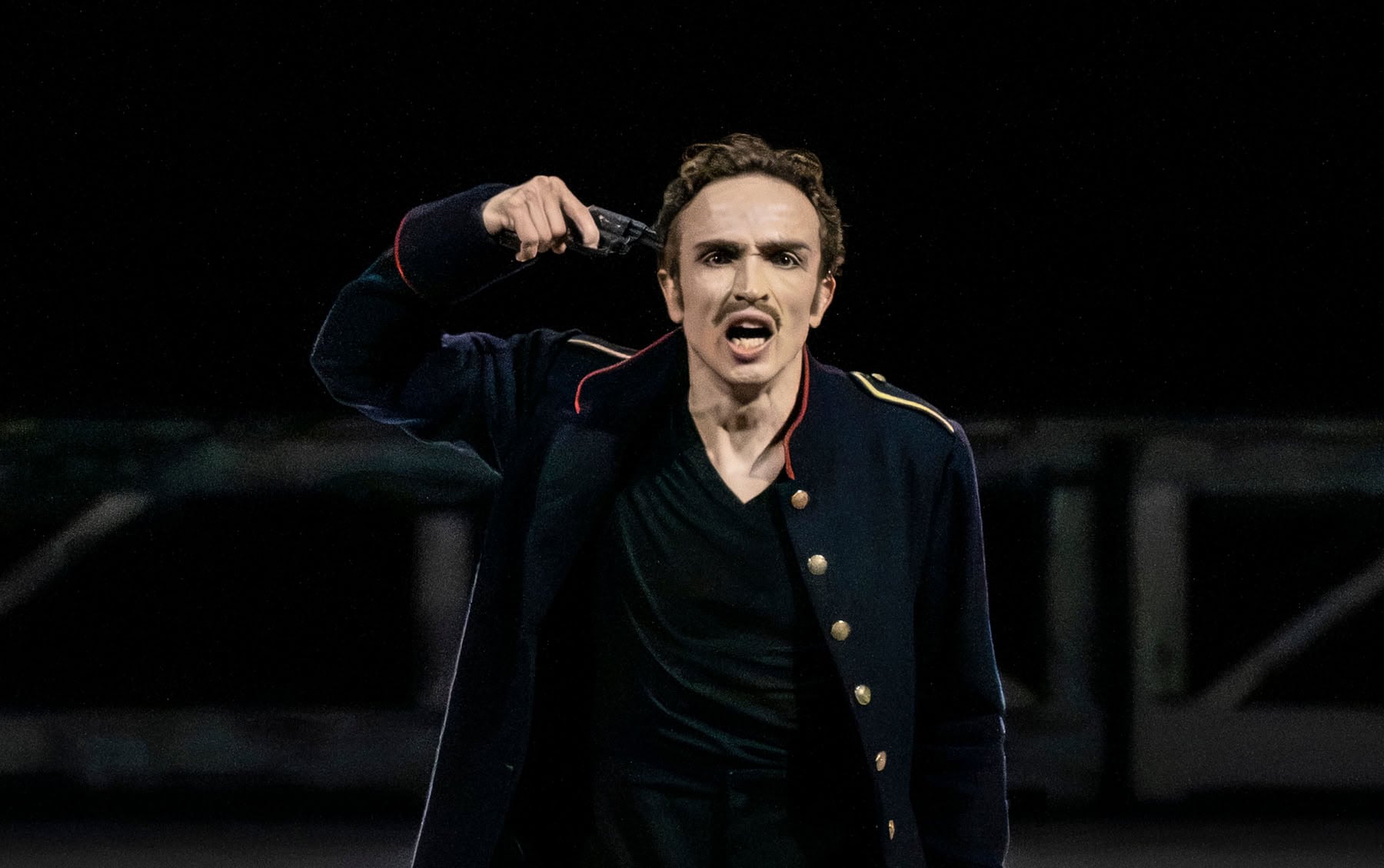
Spuck also includes three songs (in this case traditional Russian folk songs) to represent Anna’s alter ego, here sung hauntingly live on stage by Cecilia Zhang, from the Wilhelmsen Opera Studio for Young Singers elite talent programme.
Spuck prioritised key scenes to emphasise both the central storyline, such as the aforementioned horseracing, and the romantic idyll for Anna and Vronsky in Italy, which provided a sensuous pas de deux for Nybakken and Dekkers. There was also an effective male ensemble number for a group of bare-chested farmworkers, with Spuck’s descriptive choreography essaying their toil.
The work has been starkly designed in an innovative and risky way that pays off handsomely. Spuck’s own set design (with Jörg Zielinski) integrates both indoors and outdoors without the need for complex changes. Pieces of period-appropriate furniture grace the stage, with chandeliers hanging in the upstage left corner that give credence to the household and ball scenes, and yet three tall, branchless silver birch tree trunks reach up into the flies at upstage right and, diagonally opposite, at downstage left. For some reason that I can’t comprehend, these were reduced to just one distant tree in the second act.
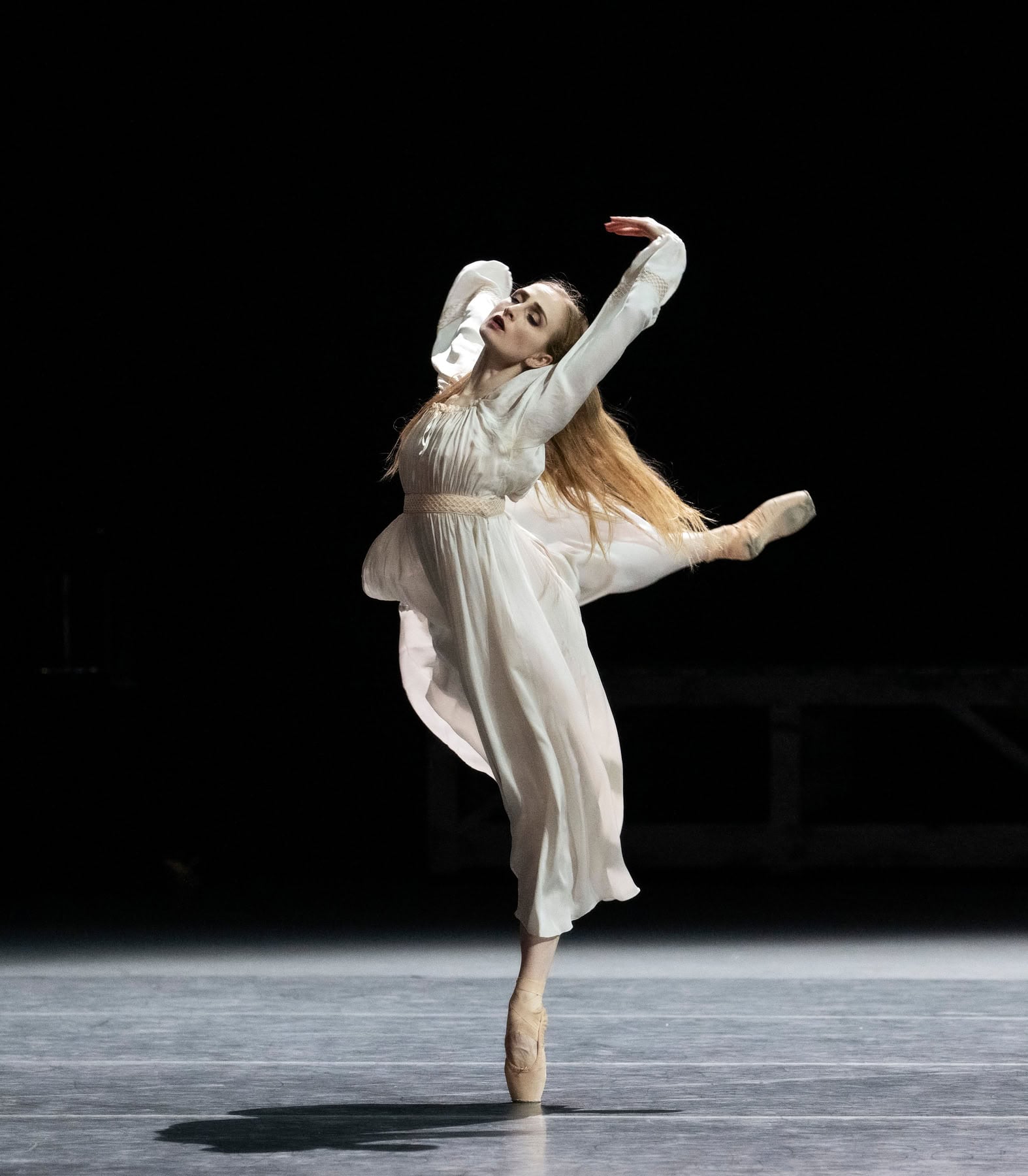
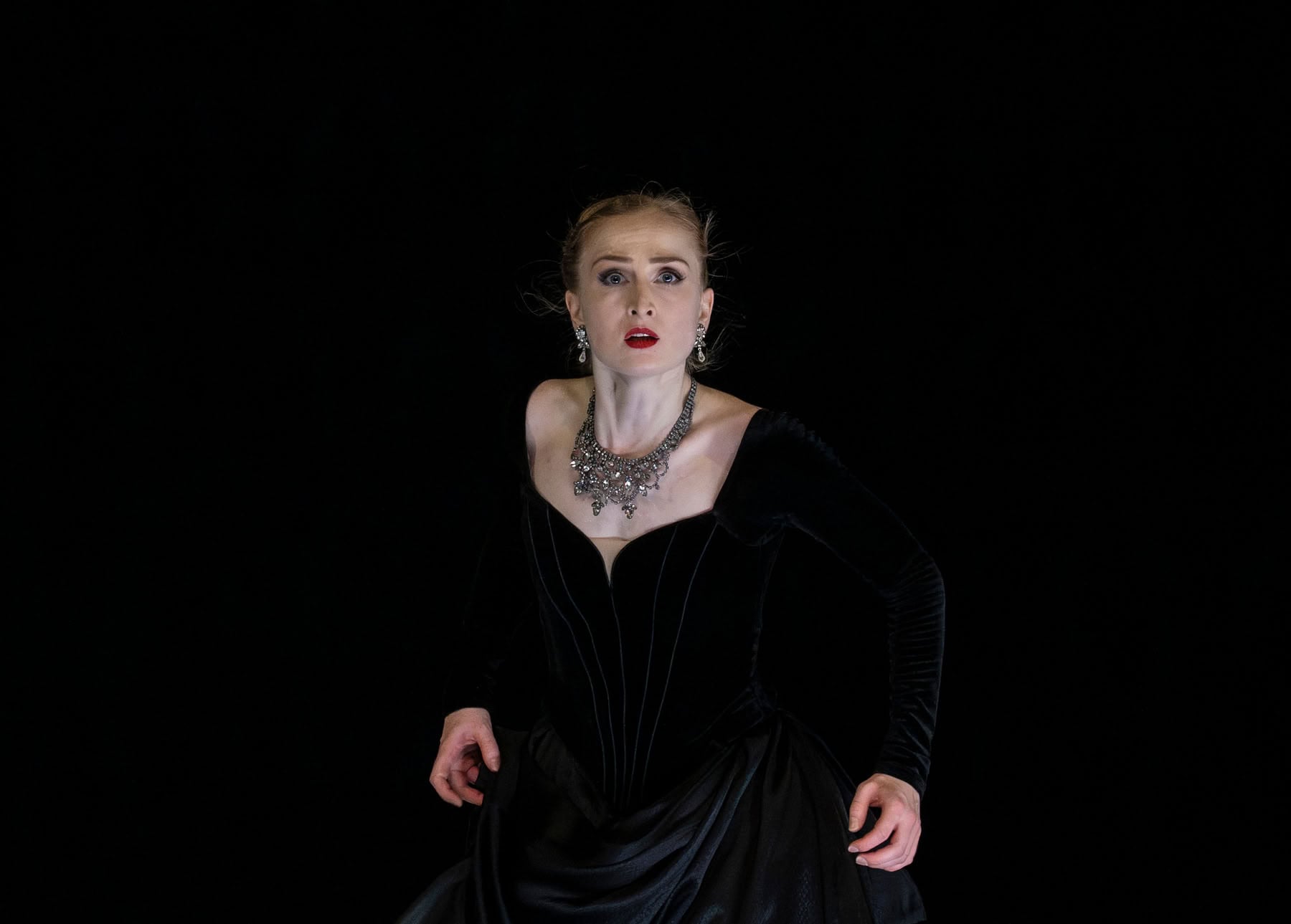
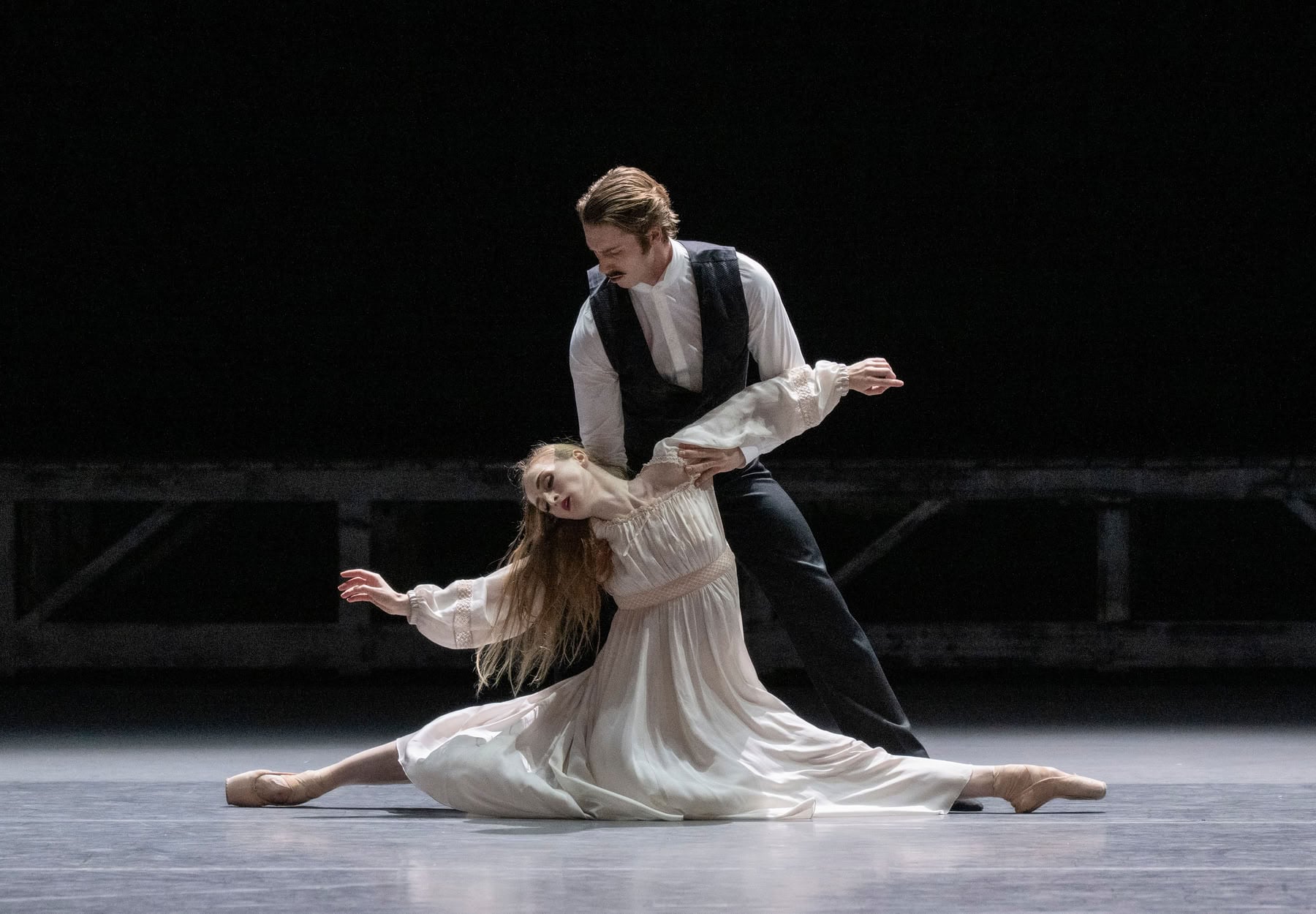
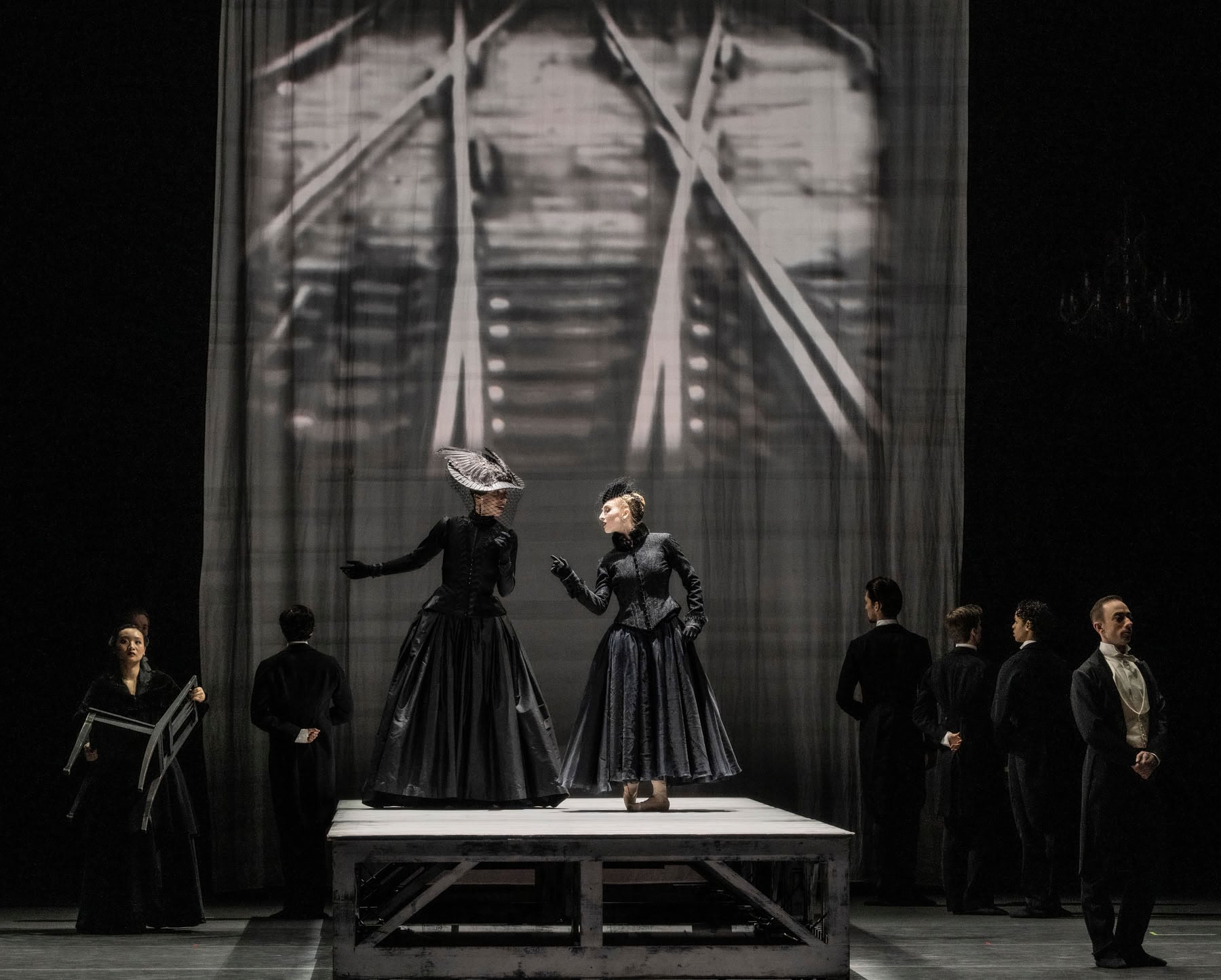
The set design was complemented by a process of the cast incongruously bringing on wooden pallets as benches or stands at the horseracing and also pulling fabric screens across the stage onto which Tieni Burkhalter’s grainy black-and-white vintage projections of horseracing and steam trains were shown, giving an evocative feel to both place and time. Emma Ryott’s colourful costumes were similarly authentic, and the shadowy elements in Martin Gebhardt’s lighting designs gave the work a cinematic film noir aura.
This powerful work may have been conceived in Ipswich and born in Zürich, but it has clearly reached a profound maturity here in Oslo.