
Concours: healthy competition at the Paris Opera Ballet?
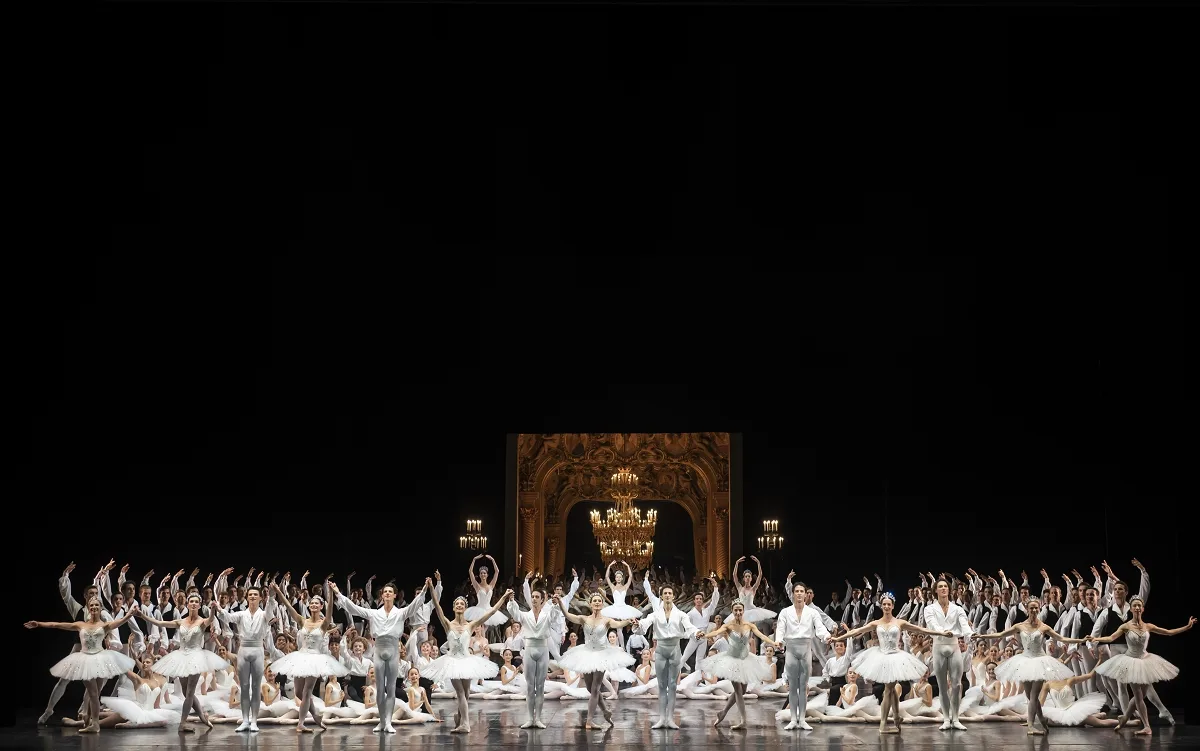
Do we need another article looking at the traditions in classical ballet?
I know it’s a bore, but the Concours of the Paris Opera Ballet has got me thinking along the lines of: does the ballet world benefit from this specific tradition in 2023?
This piece is journalistic musing more than academic research, so I welcome any feedback and will aim to shy away from intense, analytic writing. Famous last words…
The Paris Opera Ballet was founded in 1669 and is still regarded as one of the most traditional companies in the world. What do we mean by traditional? The definition of tradition reads: “the transmission of customs or beliefs from generation to generation, or the fact of being passed on in this way”.
Which all sounds lovely on paper, but immediately begs the question: is each generation the same as their predecessors? If not – do the customs and beliefs in question need readdressing? And can they survive as they are, or is evolution a necessary consideration?
This argument currently seems prevalent in numerous sectors, mostly along the lines of “don’t change anything” vs “if things don’t change they’ll become redundant”, and many would argue the ugly side of tradition is ballet’s nemesis.
Problematic areas of the art form aren’t readily up for discussion as they’re considered ‘traditions’. A good job we aren’t working in socio-political arenas… oh wait…
One such active tradition is the Concours at the Paris Opera Ballet. Held yearly, the Concours is the company’s version of auditions and promotions, and the website is aggressively clear: “The Paris Opera Ballet never organises private auditions nor recruits on videos. Recruitment is only possible through our annual competition”.
Let’s revisit the notion of competition later. I contacted the press department of the POB and asked them four direct questions concerning the Concours marking criteria, promotion infrastructures, selection processes and costs. They replied with generic press releases but no concrete answers to my proposed questions. Consequently, any information in this article has either been gathered via the internet or collated through conversations with anonymous sources inside the POB.
So, one assumes hopefuls send in CVs and pictures, and if selected can attend the audition ‘competition’. On the day, the candidates take class, perform a solo (specified on the POB website) and take part in a rehearsal. Those who are successful are awarded a place in the company.
Pros: anyone can apply for the audition, as far as I’m aware.
Cons: this fact gives full-time students at the POB school less chance of acquiring a position in the company.
Unknown: whether the company charges for attending the event – a recent trend that, given my former status as an unemployed freelance dancer, makes my blood boil.
Suppose you join the company, you would of course then have your sights set on the globally coveted position of Étoile – the star dancers at the absolute top of the POB’s traditional, hierarchical pyramid scheme. But how does one get there? Work like a dog all day, every day? Not enough in Paris, I’m afraid.
Full-time company members must partake in the yearly Concours de Promotion in order to ascend from the lower two ranks of the company.
The Concours – meaning competition (the activity or condition of striving to gain or win something by defeating or establishing superiority over others) – is an opportunity for ambitious company members to put themselves forward for promotion. Research suggests each candidate must perform two solos: one classical (without option, but dependent on the desired rank), and the other a free choice.
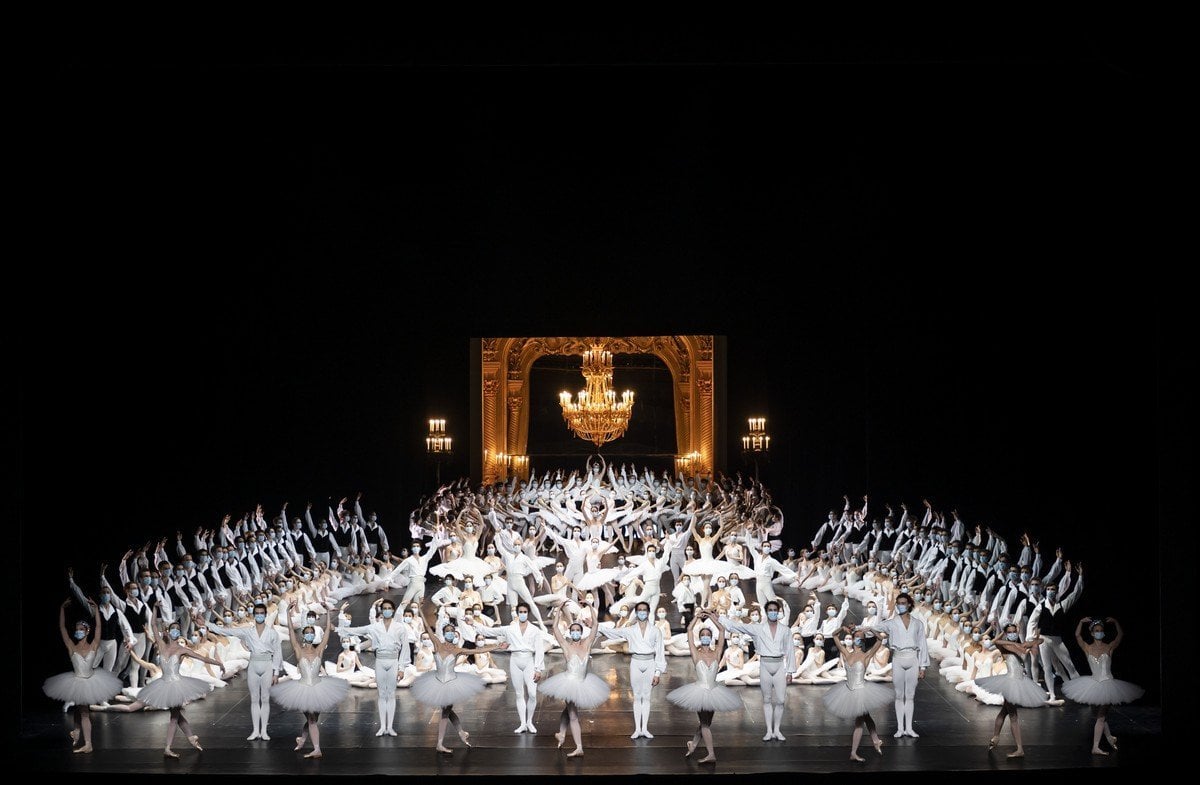
The event takes place at the Palais Garnier with an audience and panel of 11 judges. In 2023 there were three internal, three external, and five dancers who are all current company members. Each candidate executes the required elements, the panel confers, and results are announced a few hours later.
Many will read the above and say “and?” …but as an ex-dancer, I’d like to unpick the current format and contemplate the variables and fallout, both positive and negative:
Self-promotion:
The opportunity for dancers to propose themselves has a very positive aspect. Often company environments and hierarchies remove agency from individuals, so the possibility of enabling rather than hindering is only productive. That said, of course, this type of opportunity isn’t necessarily seized by all kinds of people. Dancers tend to be a heady mix of insecurity and (faux) confidence, assumed after years of rigorous training within very particular environments. Those who don’t embody the requisite self-worth could remain at the back of the studio, doing super work, but continually missing the boat as they haven’t mustered the strength to wrestle with the associated peer pressure and artistic staff judgement. Has the POB missed out on numerous individuals this way? Here’s hoping the in-house staff has a keen and kind eye on all, in order to manage developing careers, especially the less obvious ones.
Internal/external perception:
The fact the panel of judges is a mix of internal staff (Director of the Paris Opera, Director of Dance and Ballet Mistress associated with the Dance Directorate) and external experts (choreographer/freelance ballet mistress, external Artistic Director and external company ballet mistress) allows for both positive and negative actualities:
Internal (staff) will know the dancers well in relation to personality, professionalism and whether their work on the day of the Concours is a fair example of their capabilities. However, previous knowledge of a specific individual can also inform predisposed, negative assumptions about the dancer in question. Having assessed students in examination environments, I have personal experience of how difficult it is to separate the two i.e., objective analysis of the work being presented, and resisting subjective, pre-existing comprehension. No matter how resilient a judge.
External (staff) are basically the opposite of the above. In an objective, competition-style environment, former knowledge of the candidates isn’t necessary and can confuse matters. But the decisions being made are life-altering for both the individuals and the company they dance for. Recognising this, do external experts playing a role in shaping the career trajectory of company dancers seem of value? Isn’t that the point of a company and the associated artistic team so that the daily commitment and development of individuals can be analysed, acknowledged and rewarded through promotion? With the alternative being that negatively ‘labelled’ dancers can be judged on their capabilities, as opposed to their ‘professional’ relationships and assumed company conduct, or lack of it.
Internal (dancers) on the panel is problematic for me. I don’t think peer-on-peer evaluation is beneficial in a formal setting. It’s something that happens in the studio daily, largely positively through feedback and camaraderie, but these environments are delicate and can alter in nanoseconds. A good example is the school playground – when conditions shift, individuals can feel isolated and unsafe. The dancer panellists are picked at random, but imagine a candidate being faced with five company members with whom they don’t have positive relationships. This could be a hugely negative dilemma for the individual, and a situation used for foul play by those in the position of power. Ethical code parity isn’t a given in professional environments.
And my concerns are corroborated by those of the POB dancers themselves. A current company member confirmed “it is of course a little weird. We feel that our peers/colleagues could be influenced by personal/emotional preferences, which we don’t want”.
Case studies:
Companies are full of all kinds of people, so let’s analyse some theoretical case studies that could be realised through the Concours framework:
Marion – a true member of the company. Brings positivity and energy wherever she goes. Disciplined and diligent, she has a charming technique and sophisticated artistry, but can lack confidence in the moment. Marion doesn’t perform well during the Concours and consequently isn’t promoted. This isn’t the first time it’s happened, and each experience is weakening Marion’s already questionable confidence.
Olivier – a survivor who’s out for himself. A complicated childhood means he has always had to make things happen without support. This reality informed his adult life, so subsequently he isn’t interested in company locales, has limited empathy and would do near on anything to succeed. His obsessive nature means he’ll rehearse until he succeeds and isn’t phased by nerve-inducing scenarios. No one can deny the work Olivier offered in the Concours – he’s duly promoted.
The above two case studies are of course imaginary, but they plausibly highlight the sensitivity of the Concours ecosystem – the fallout for some individuals, the possible shaping of the company’s professional and personal environments, and the necessity for ongoing analysis and discussion concerning extant traditions. The recently promoted Sujet, Chun-Wing Lam shared a poignant insight into the lived experience on his Instagram account: “beneath the glimmer of this Concours de Promotion lies a hidden world of relentless commitment and hidden sorrows. A one-of-a-kind life experience” – and it’s important to note that Lam is one of the luckier participants: a winner in the overall game.
To tackle the above, one assumes the POB has rigorous (modern) criteria supporting its traditional infrastructures… or perhaps not. When posed the question, a current POB dancer confirmed, “There are no particular criteria. Each member of the jury just votes for their favourites.” If this is the case, where’s the presence of procedure and accountability? Is this a sweet shop, or an annual, formal situation that sees people’s professional lives in the hands of others with no actual methodology involved?
Philosophically speaking, how does one define what’s best when there’s no official framework to reference? What determines the superior pirouette? Undeniable musical embodiment? Powerful artistic interpretation?
Art is subjective – that is both its strength and weakness – so to make something subjective, objective, one needs to adopt an analytical foundation in order to determine an independent, fair result, then the artistic event will morph into a more sports-based scenario. This would allow for true competition to take the lead, thus enabling the acknowledgement of what’s actually happening, and subsequently transferring the theoretical into the practical through the necessary, underpinning strategies.
A basic methodology could be:
Each candidate has a possible maximum of 15 points to be awarded –
● Musicality 5
● Artistry 5
● Technique 5
All individual marks are combined to provide an aggregate per dancer i.e., candidate A received 143/165 (15×11).
The totals define who gets promoted depending on how many positions are available in each rank per year.
This seems like a more democratic, accountable approach to competition.
Considering all the above, the original questions remain applicable – is each generation the same as its predecessors? If not, do the customs and beliefs in question need readdressing? Can they survive as they are, or is evolution a necessary consideration? And I’d add a further, pressing point: develop and introduce formal criteria in order to make an already questionable framework, more credible. ASAP.
However, some Parisian developments are encouraging:
● The promotion of Sujet to Premier Danseur is now to be enacted in the usual manner from October of this year. Dancers will advance on the value of the totality of their work, rather than through the delivery of an isolated event. As confirmed by French Critic, Laura Cappelle on 20 November:
● The promotion of Guillaume Diop (aged 23) from Sujet to Étoile in March 2023 who skipped the rank of Premier Danseur to become POB’s first black Étoile.
Aspects of the POB’s traditional frameworks are evolving, and both of the above points were actioned by Martínez, who became the POB’s Director of Dance in December 2022, replacing Aurélie Dupont (2016-22).
However, the progressions haven’t reached the larger groups of the Corps de ballet (Quadrilles) and Coryphées yet. And this is where the largest body of the company resides.
In closing it feels relevant to hear from an internal voice concerning the company’s thinking on the Concours as it stands. A current company member confirmed: “A significant amount of the dancers think the Concours are an outdated format, while others feel we should keep this democratic system for a company of this size.”
So, the jury is still out, it seems – and whilst the overall theoretical concept of the Concours is working towards a notion of fairness, can a panel of 11 judges with (a currently) unaccountable free rein, be considered a true, democratic, neutral voice in practical terms? I hear the murmurs of a revolution…

Matthew Paluch was awarded a place at The Royal Ballet School in 1990 where he graduated in 1997. His first four years as a professional dancer were spent working with London City Ballet, Scottish Ballet, K-Ballet and English National Ballet, becoming a full-time member of ENB until leaving in 2006.
Matthew graduated from the Royal Academy of Dance, Professional Dancers’ Teaching Diploma in 2007, and was formerly on faculty at The Royal Ballet School. He completed his Masters in Ballet Studies at Roehampton University in 2011, has been a freelance writer since 2010 and currently works in the Law Sector.
He is a member of the Dance Section of The Critics’ Circle.


This all sounds very, very trivial in the context of what is going on in the World at large: Ukraine (mostly unsupported by EU), Gaza, and Israel.
Of course. But this is a very focused website.
Matthew, your points are thought-provoking, and I beg to offer some further information.
On the point you offer that students of the POB School have less chance to enter the company: did your research not make it clear that there are in fact two entry competitions each year? The first held is the internal one, for students of the School only, and then some days later is the external one, which anyone can enter, including unsuccessful candidates from the internal one.
The number of positions available, male and female, is made known before the internal competition.
At the end of the internal competition six male and six female dancers are “ranked”, with full-time contracts offered to one or more in each class. The external competition then has X number of places on offer, to fulfil the “quota”. Again, six male and six female dancers are “ranked”, to whom any remaining contracts are offered in order of ranking.
Some may be offered short-term contracts (three or six months) and can then continue to enter the external competition in subsequent years.
Current étoiles Park Sae-Eun, Ludmila Pagliero and Hannah O’Neill all followed the path given in the above paragraph. Both Park and O’Neill, with their extensive YAGP and Prix de Lausanne expérience, were well-used to competition and it worked in their favour. Both Park and Pagliero had considerable professional experience before eventually succeeding in gaining full-time contracts; O’Neill first entered straight out of Australian Ballet School.
Chun-Wing Lam is an interesting case. He has had a number of injuries, impacting his ability to even enter the concours, hence the six years it took him to go from quadrille to coryphée. As a student he’d been tipped to emulate Park and O’Neill, stepping up a grade each year.
A prominent example of the concours not suiting every dancer is Mathilde Froustey, a great audience favourite, who despite dancing a number of principal roles in Paris, year after year bombed the concours, eventually departing on leave to dance as a principal at San Francisco Ballet.
One of the reasons current and recently-former company dancers find the concours, both for entry and for promotion, problematic is that POB School students are not entered for such external competitions as YAGP or Prix de Lausanne, and hence find the concept, in the words of one former company member of my acquaintance, “alarming”.
Those who really really really want to succeed either in entry or in promotion approach senior company members for private coaching over and above what the company offers (for the promotion competitions). It can be expensive for the applicant and a useful sideline for the coaches!
HTH.
Thanks for reading the article and sharing your informative feedback.
I did know about the internal Concours for the students, but this is to expected in some form for all vocational schools attached to a company.
I’m interested in the concept of ranking you mention. Do you know the particulars/adopted framework?
I also wonder if the fact the external is after the internal, affects – consciously or subconsciously – the way the internal is observed: “is there something better…” etc.
Of course you confirm that POB students who aren’t initially offered a contract can attend the external Concours. I propose this ‘opportunity’ reconfirms the underpinning question regarding ‘healthy’ competition. As in ‘we don’t want you, but you can try again’, but this time in a public arena!
Likewise the lived experience of short-term contracts and the redoing of Concours. All of this extra stress simply means dancers can’t concentrate on their actual careers, let alone trying to have a life outside of them. Why do we (as a sector) feel okay with such vivid insecurity and lack of agency?
You mention the fact POB students aren’t entered into external competitions as a possible hindrance to their Concours resilience. And I suppose that’s also what the piece is touching on: what kind of young dancers do we want to produce? Hard as nails show ponies? I’m not suggesting that’s the only outcome…but looking at a lot of recent examples I’m tempted to say that the current approach isn’t foolproof. Of course it comes down to taste and a bigger, ongoing debate.
Regarding the commercial element of dancers having to fund their own Concours coaching. Isn’t working super hard and well for the entire season enough? Do we want to perpetuate exhaustion and personal cost as norms?!
The questions keep coming…
Thanks for the article. It’s rather rare to see English-speaking dance writers expressing keen interest in the POB.
Two points I’d like to share:
The ‘surprise’ announcement of the new Première Danseuse and Premier Danseur not long ago may result (partly) from conservative pressure on the reformer(s) in the Dance Directorate. According to the official announcement regarding this year’s internal promotion published on 9th October, the nomination of Première Danseuse/Premier Danseur will be realised ‘jusqu’à la fin de la saison 2023/2024’, implying that the decision would be the fruit of continuous consideration throughout the entire season, which ends in next July.
Although rare, rank-skipping isn’t unprecedented among Parisian étoiles. Renowned dancers including Dominique Khalfouni, Laurent Hilaire, Manuel Legris and Mathieu Ganio all skipped the rank of Première Danseuse/Premier Danseur.
Thanks for this.
Absolutely. And I mention Diop exclusively as he’s recent, under Martínez’s direction (at the time) and has an important identity aspect (within the POB’s history) to his career development.
Why are these “progressions” allowing a director promote a ‘favorite’ without consultation (or maybe there is?) A panel seems fairer to me.
One hopes there’s consultation in-house. Which allows for dancers to be observed throughout the working year – rather than judged on an isolated event. Less Olympics more measured analysis.
I agree that an arc of time is better than a snapshot on one day, but surely this needs to be regulated too, not just random chats about a dancer’s future over a glass of wine.
Amen. Criteria anyone? Framework?!