
[Review] Alexei Ratmansky’s Coppélia for La Scala Ballet – endlessly inventive with extraordinarily good storytelling
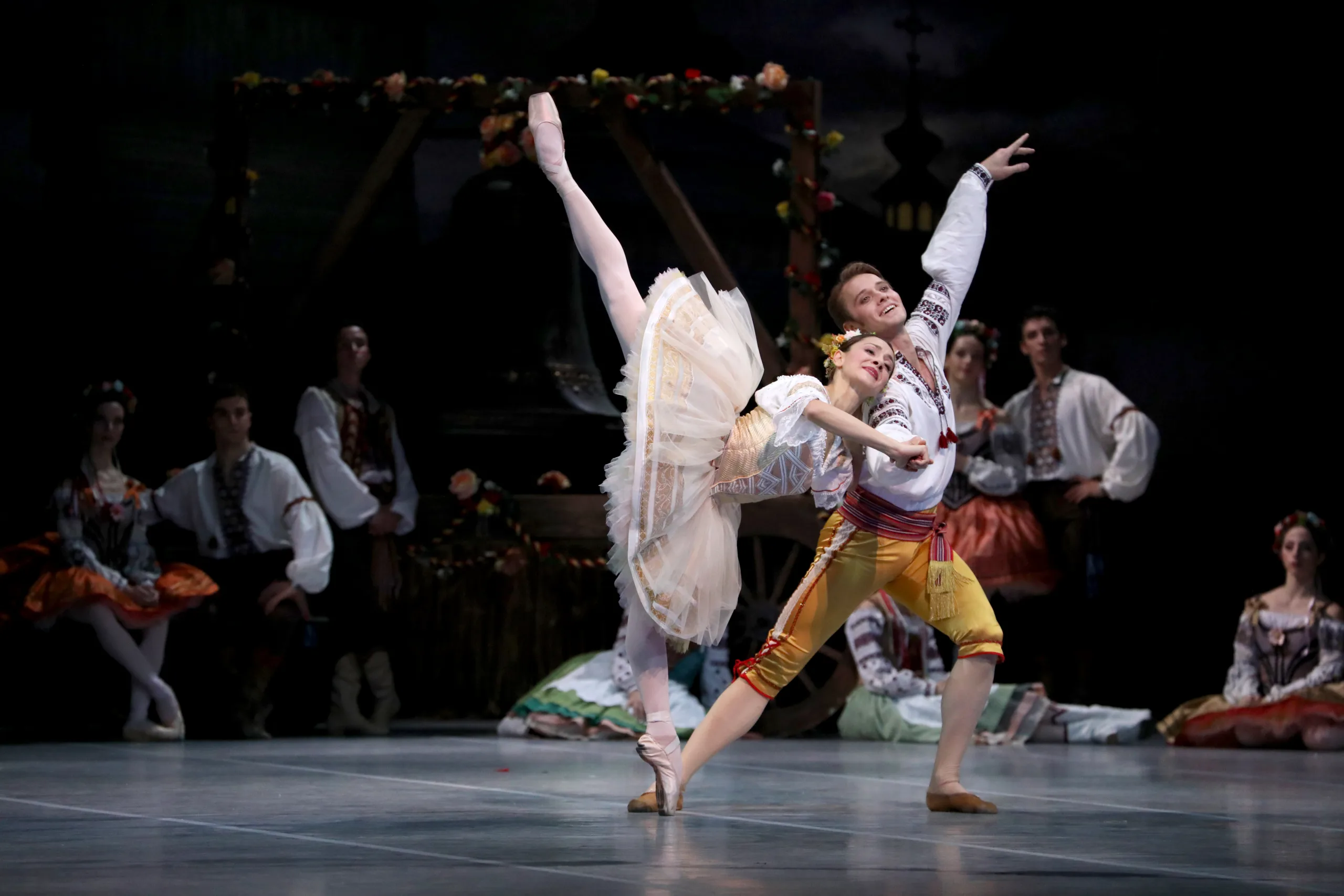
Alexei Ratmansky‘s beautifully judged version of Coppélia for La Scala Ballet expertly combines the celebrated moments – the line of girls holding hands as they muster up the courage to enter Dr Coppélius’s house – while trimming away cringe-making cutesy moments and introducing some very conversational mime and laugh-out-loud opportunities. When Franz takes fright at being caught by Coppélius after entering the doctor’s house via an upper balcony, there is some Chaplinesque running on the spot as Coppélius stops him from escaping with an imaginary (or maybe real) hex.
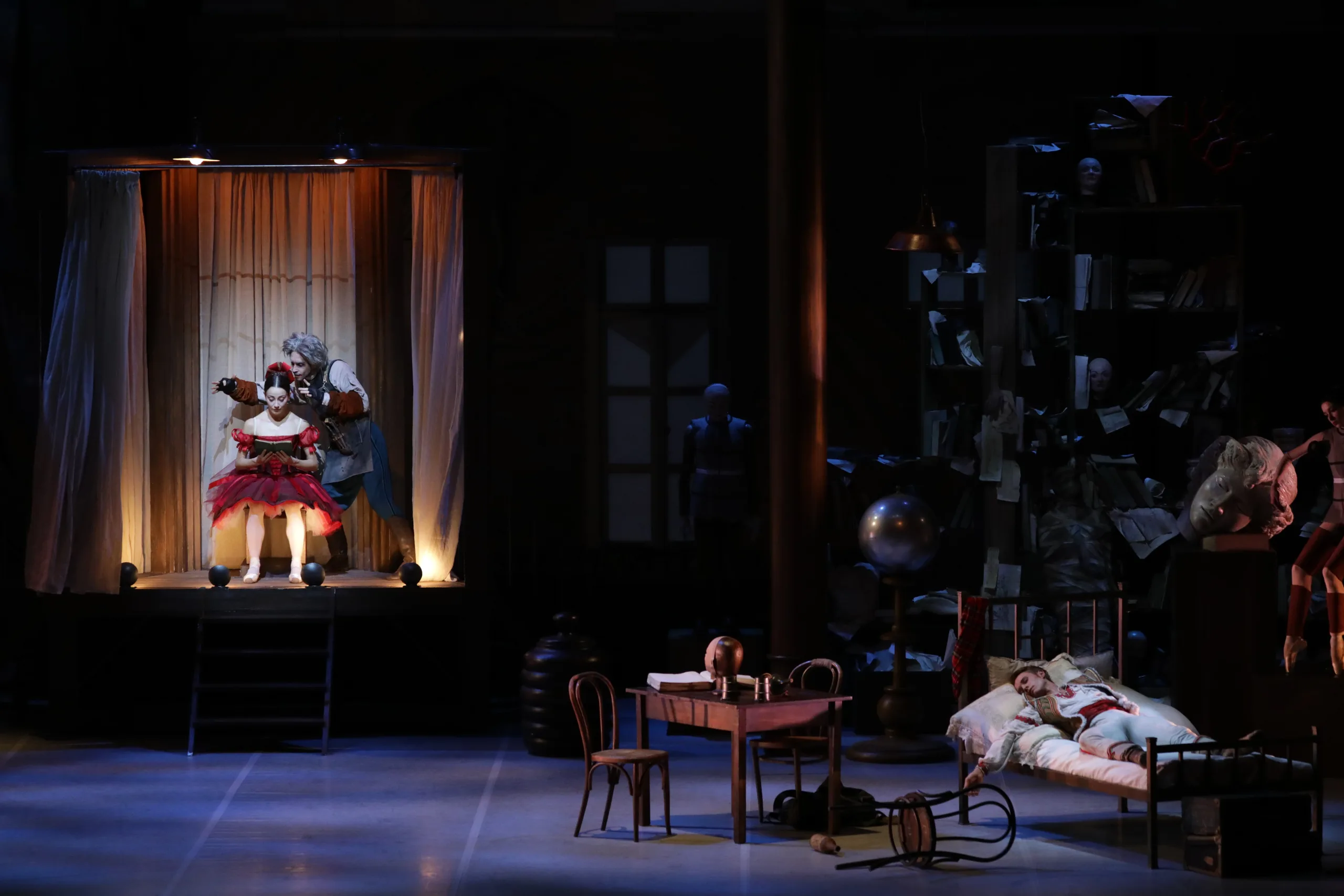
It’s a traditional version in that there is a doll on a balcony with a book, an ear of corn (if it rattles, Swanhilda and Franz will be married), and the blessing of the church bell during the final act wedding celebrations. Also, Jérôme Kaplan’s sets are ‘traditional’, but it is a Disney-like place which looks flimsy and in the first act there is a sky backdrop lit in ominous purple as though Carabosse is about to arrive, which didn’t appeal.
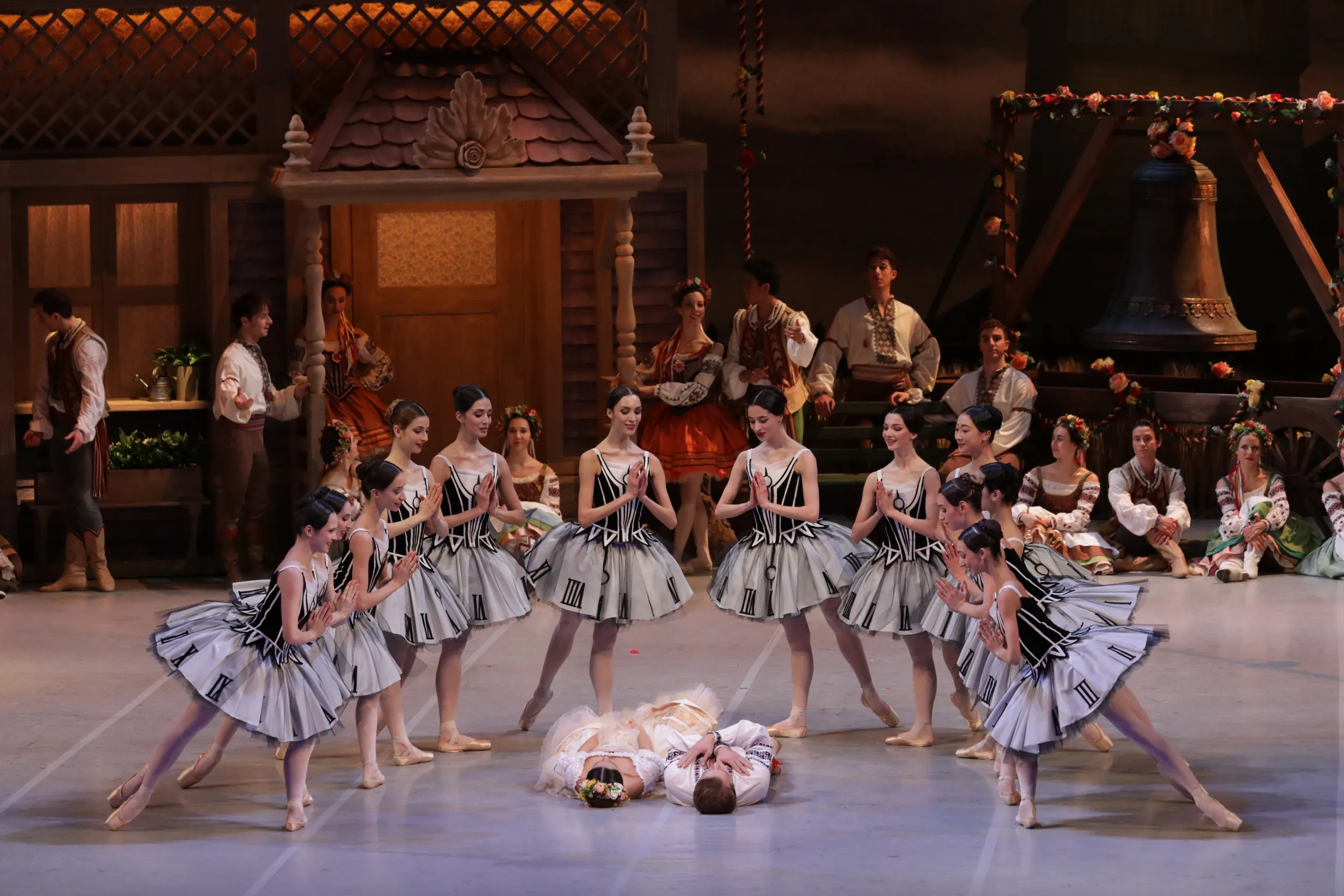
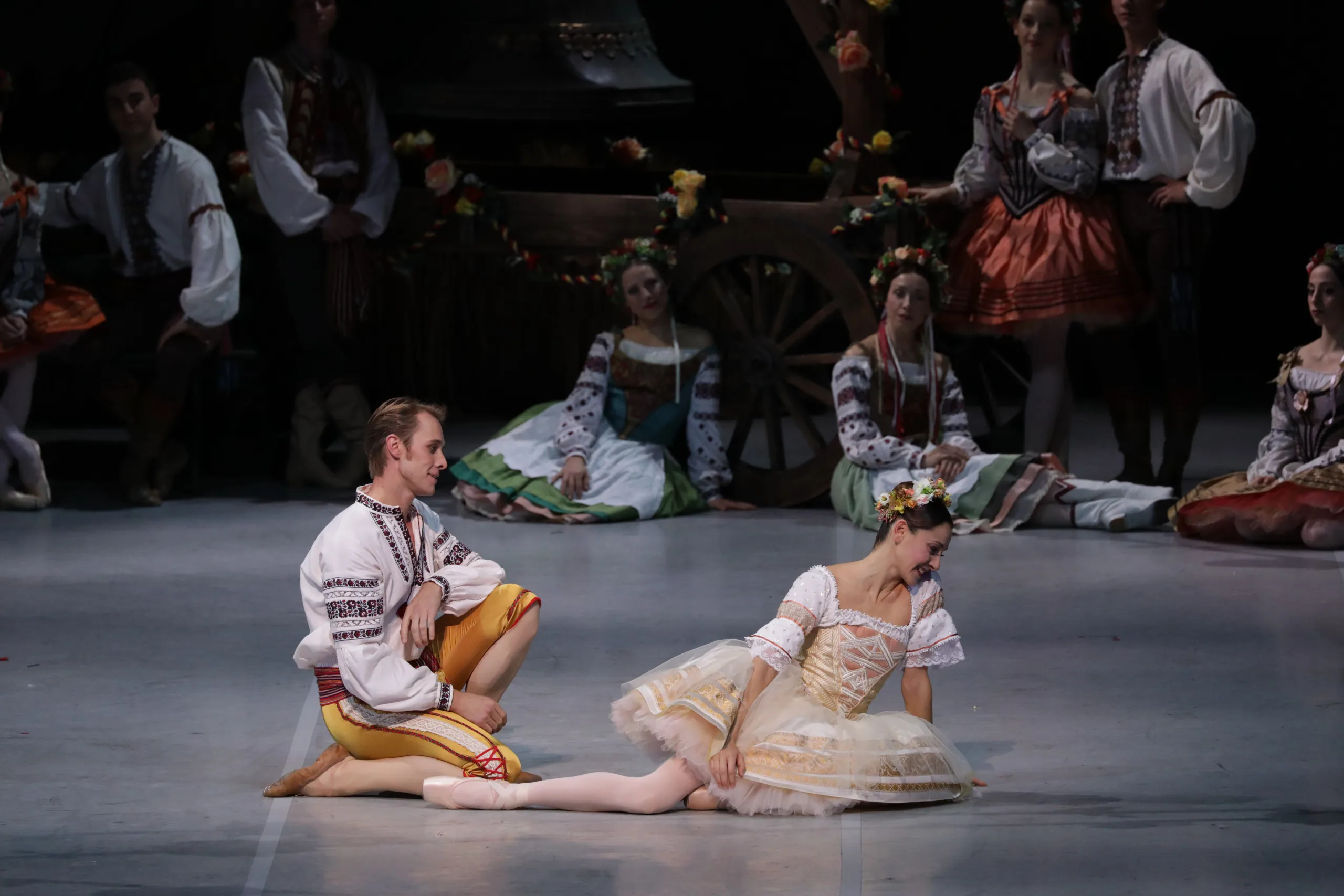
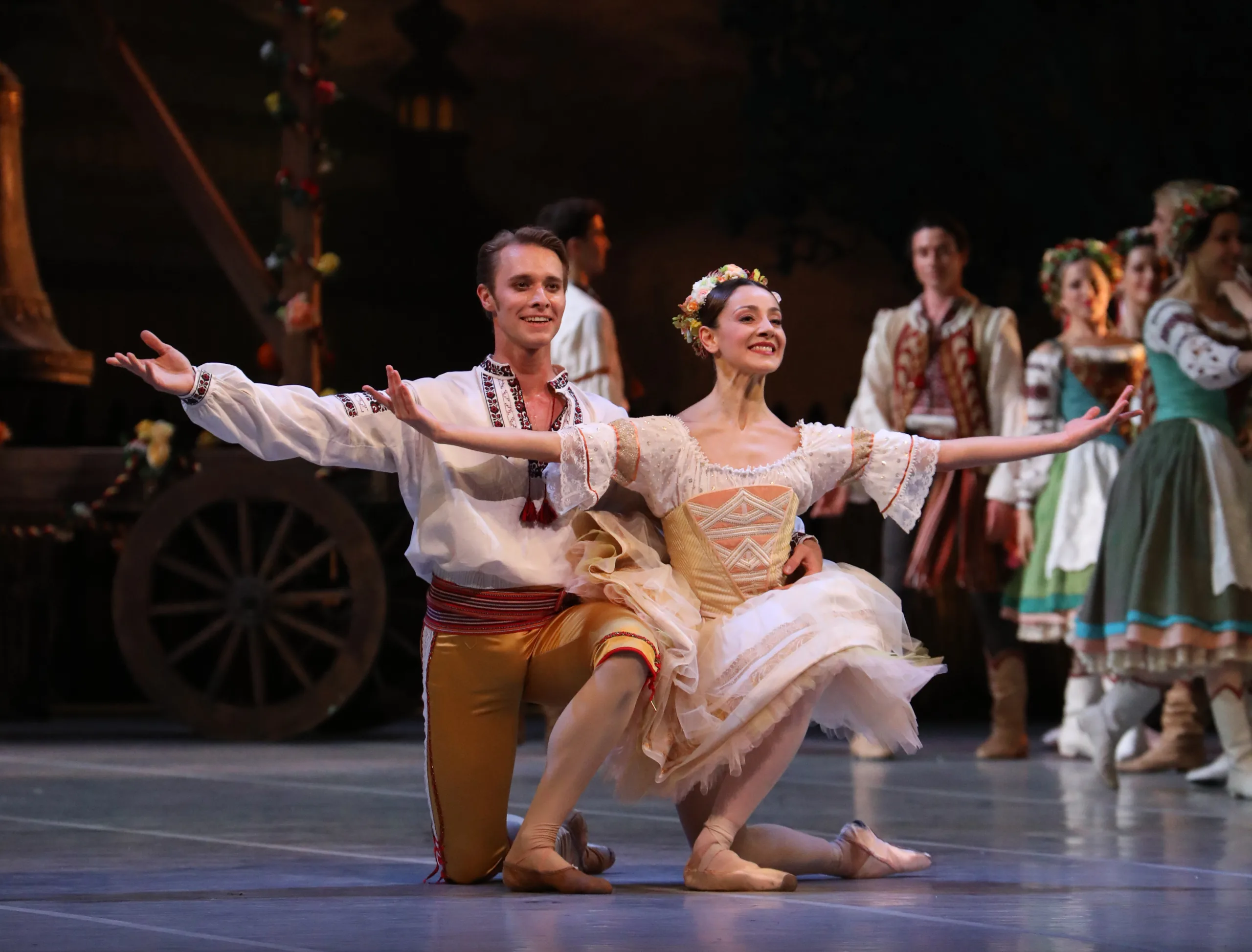
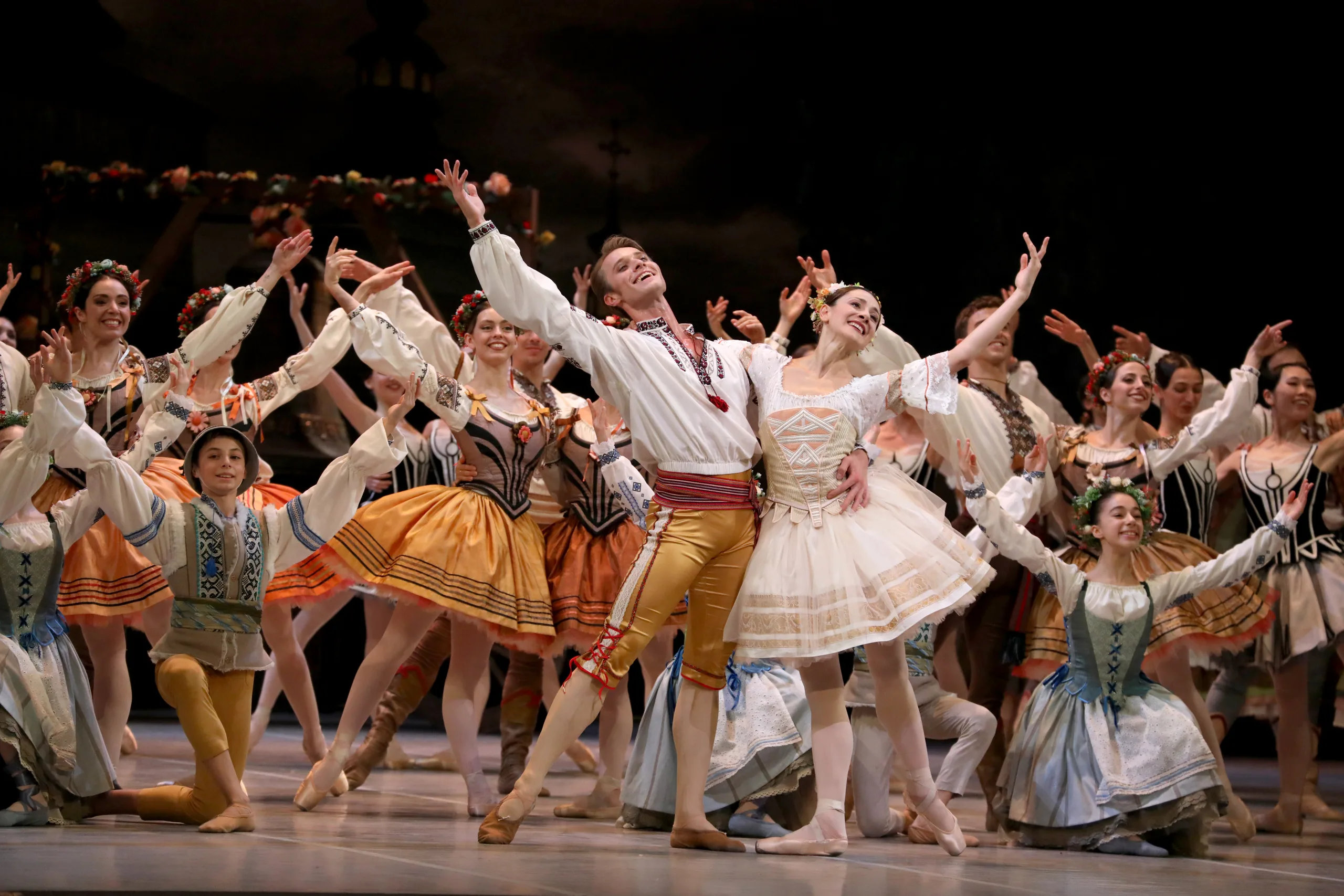
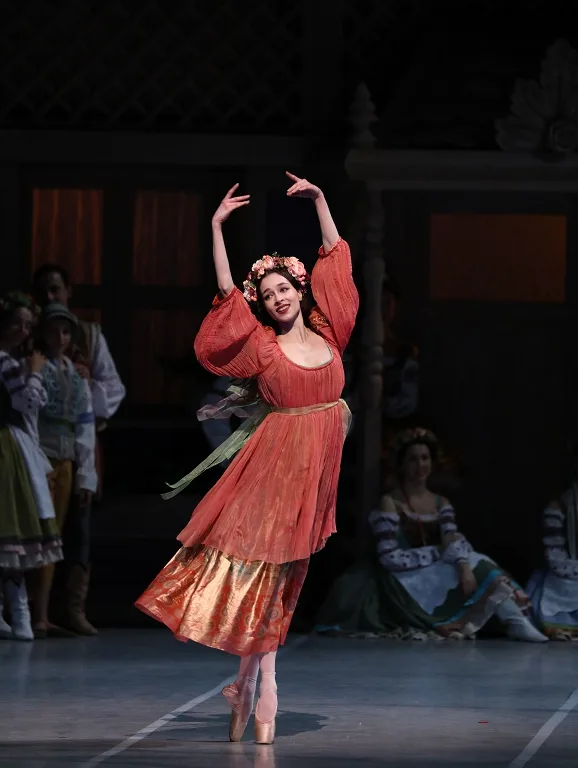
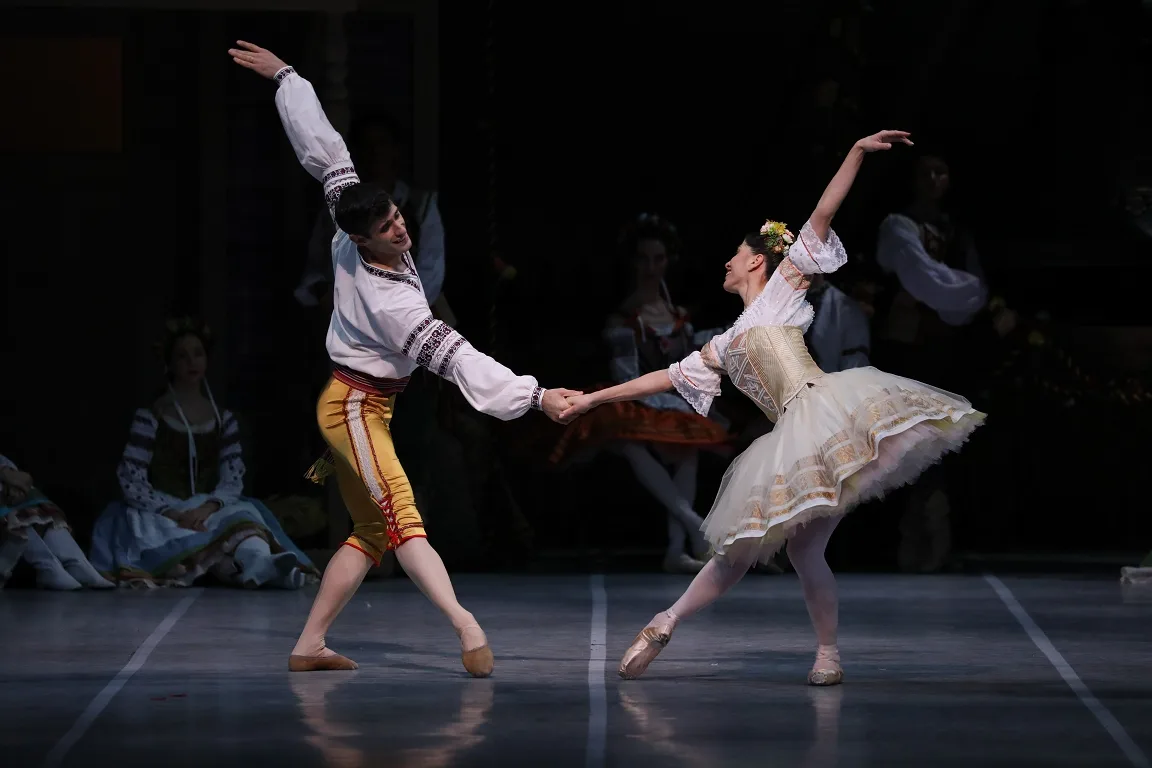
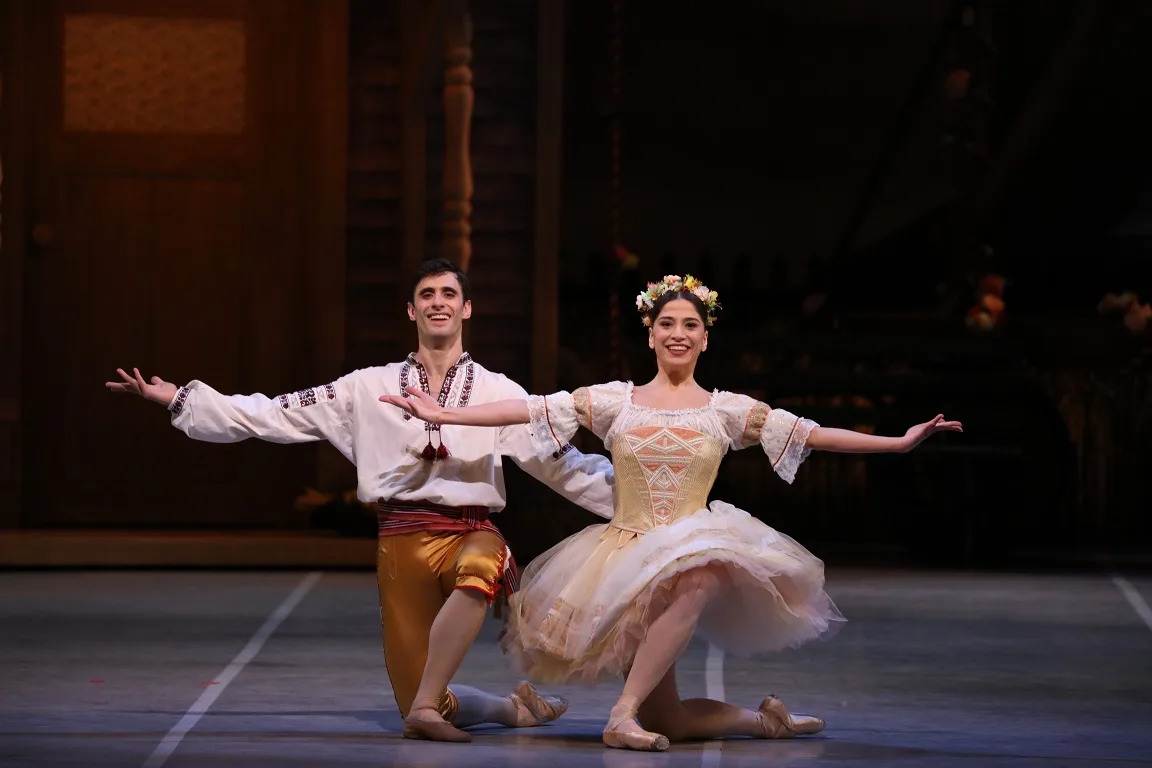
Yet Kaplan’s costumes are sumptuous. Charles-Louis-Étienne Nuitter’s 1870 libretto for the original Paris version of the ballet by Arthur Saint-Léon sets the action in Galicia, an area now partly in Ukraine. The fact that Ratmansky is from Ukraine and has been very active in the campaign against the Russian invasion presumably drew him to this project, and it was announced that there would be Ukrainian influences in the designs. There were no flag-coloured blue and yellow costumes, but it was the traditional folk costumes that inspired Kaplan. Ratmansky places the corps de ballet so close together – with some devilish choreography – that we hear the rustle of the skirts as they swish against each other. Also, he choreographs the use of the heels of the boots to make sound. The men carry the woman onstage horizontally several times, their hands behind their heads, though I haven’t discovered whether this position comes from folk dance. Likewise, I can’t explain why Swanhilda and Franz lie on the ground during the wedding ceremony like statues on a tomb (the comments section is below!)
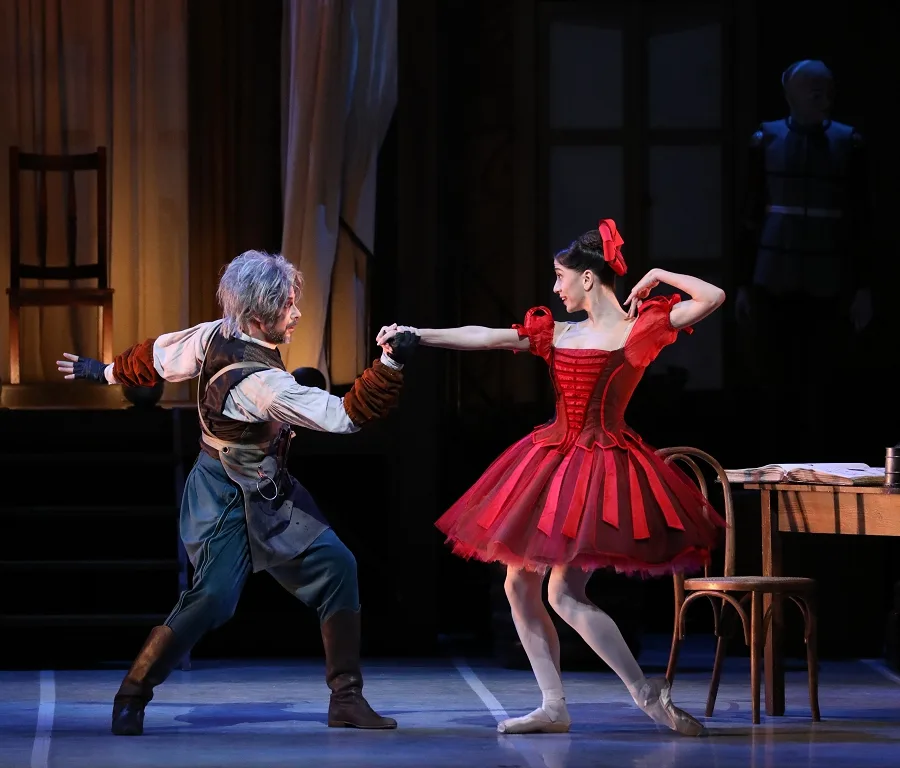
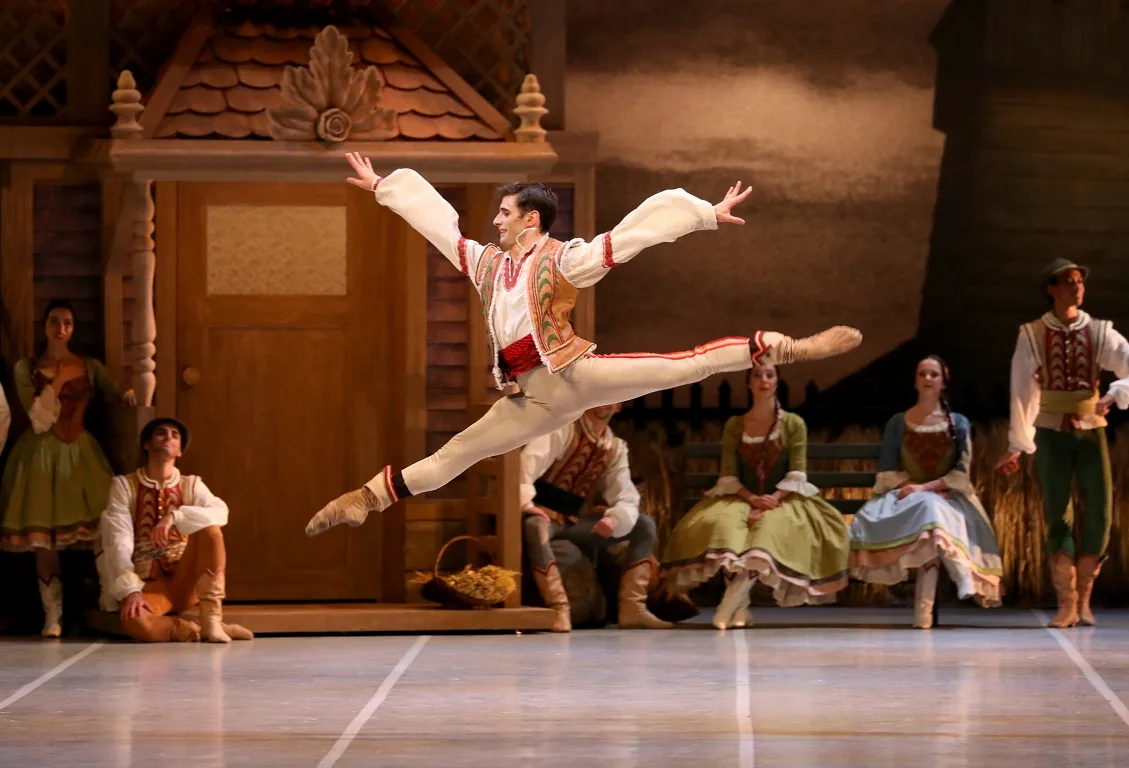
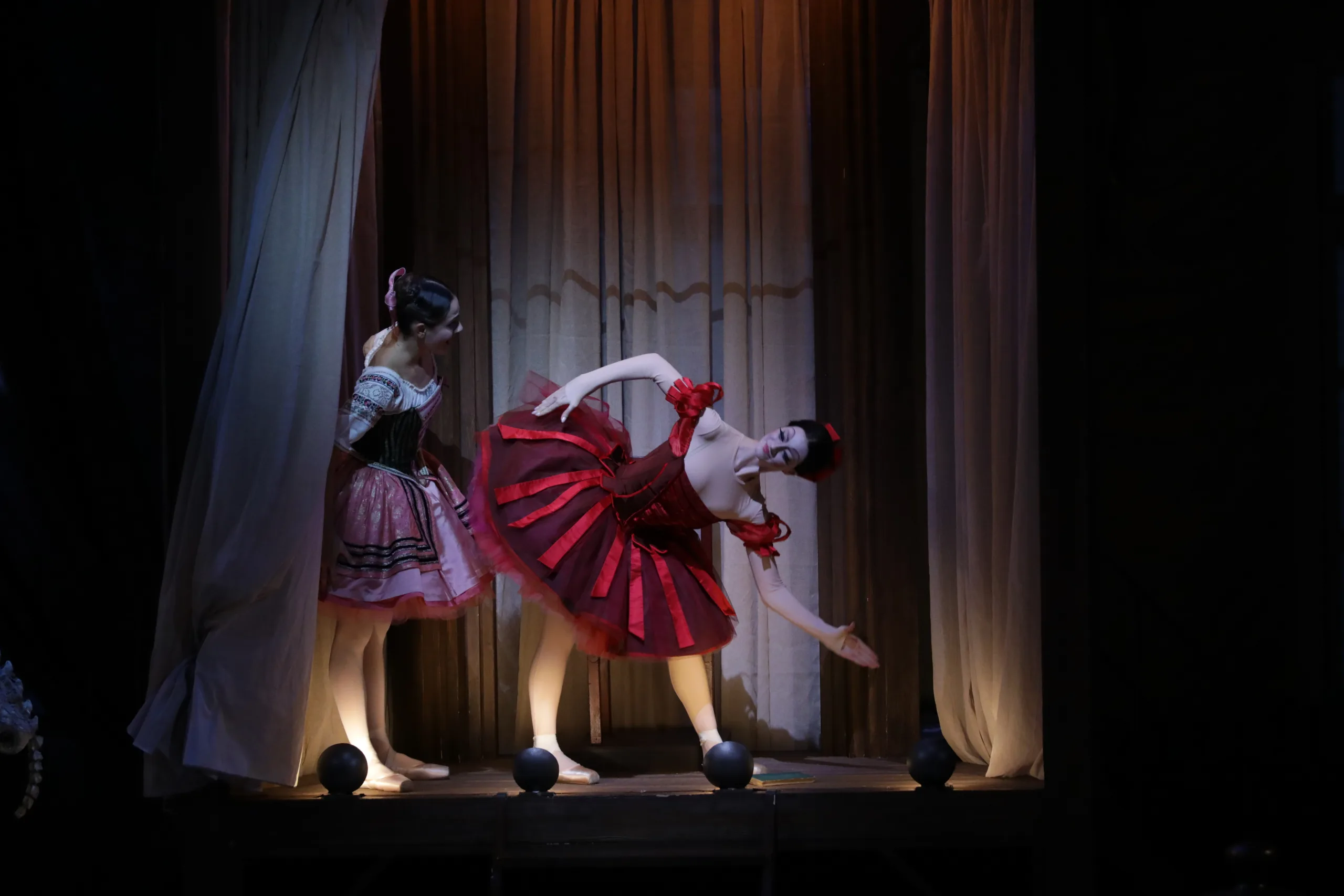
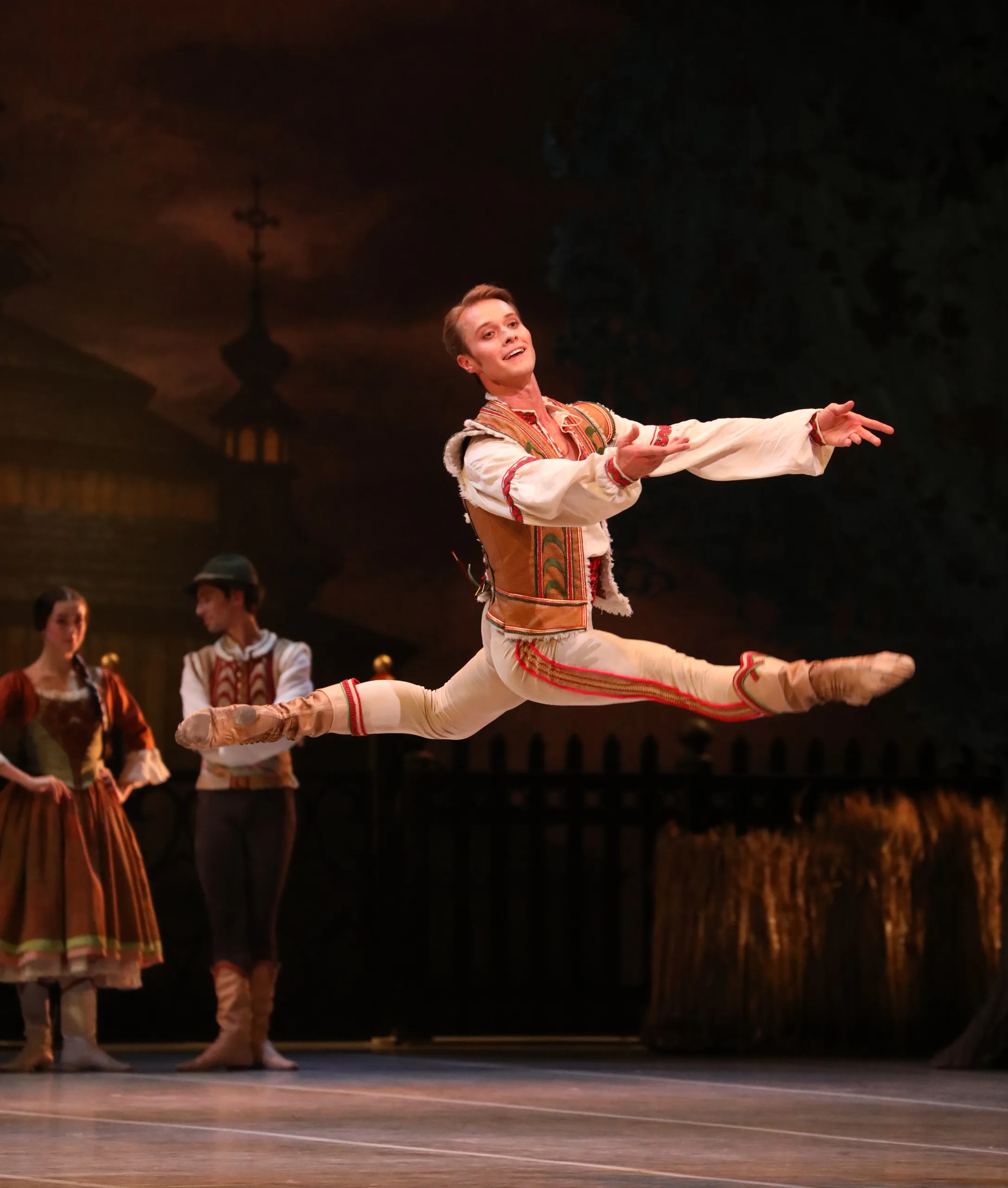
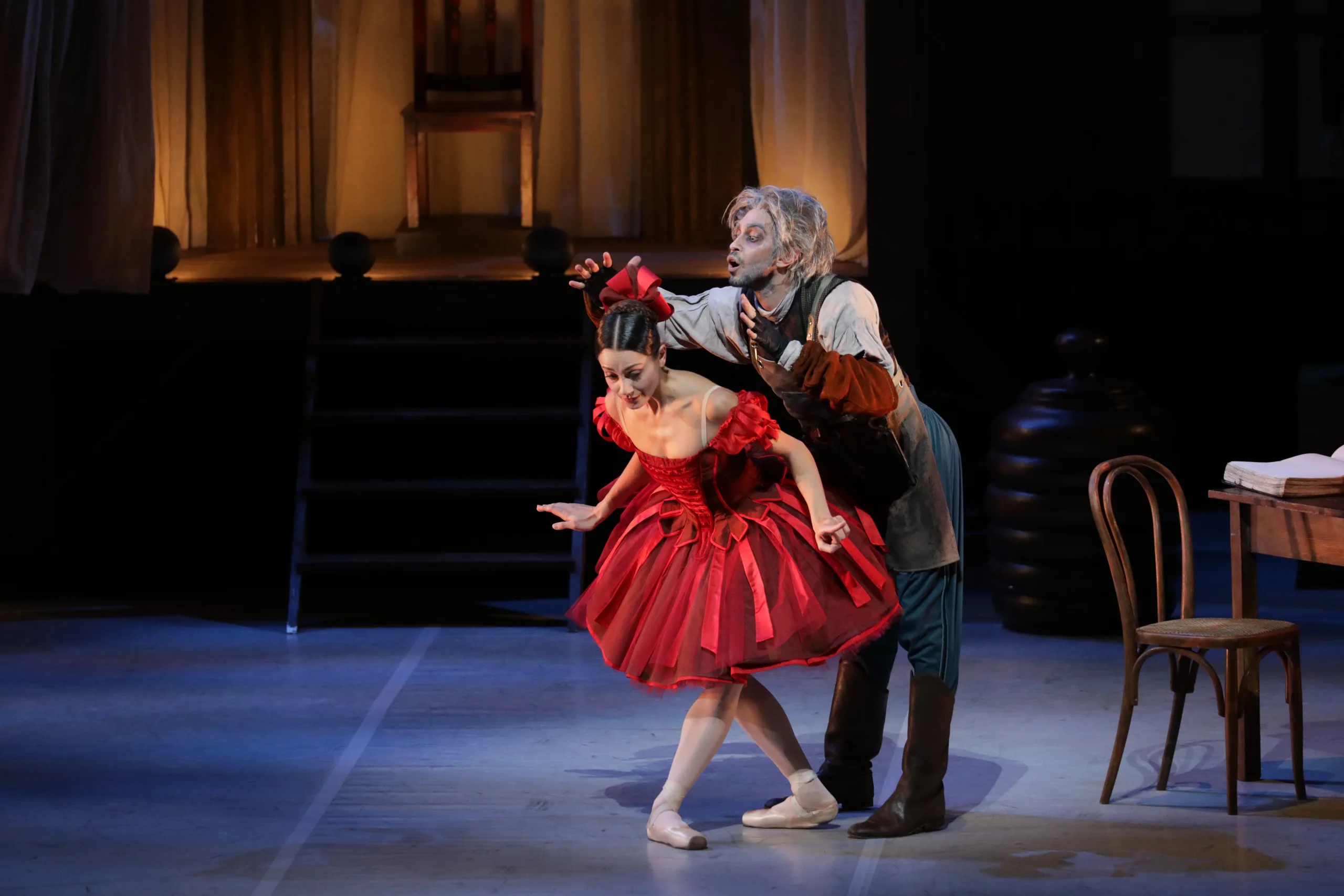
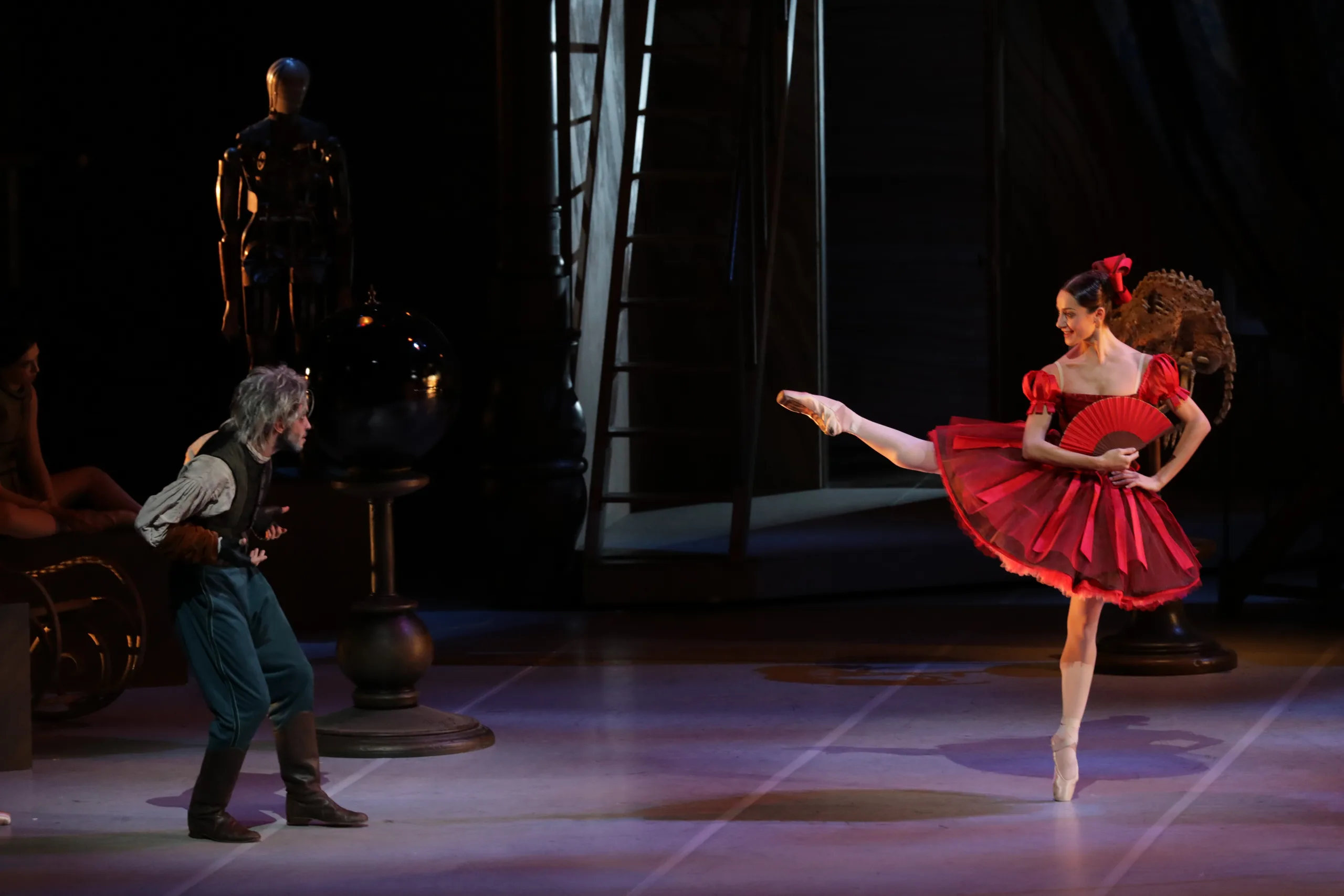
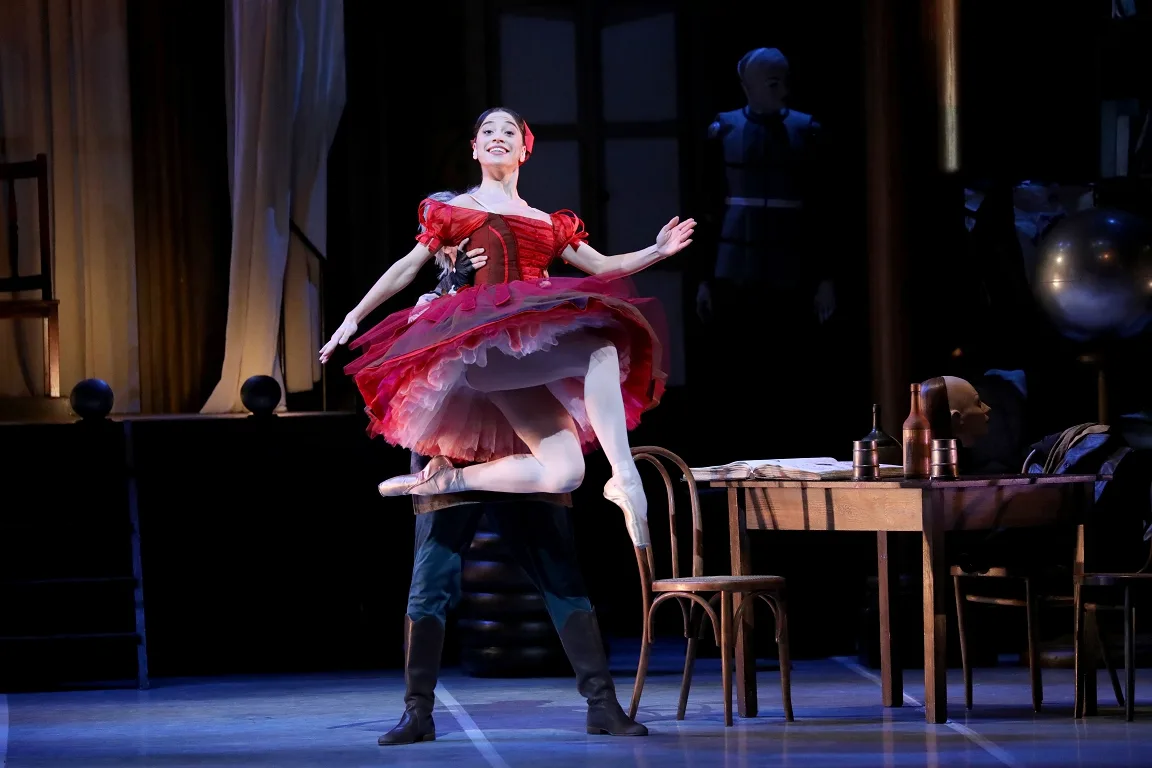
Ratmansky is endlessly inventive. He gives Franz a cock-of-the-roost hip swagger and a Happy Days smoothing-down-the-hair-gel move with both hands (which is later imitated in mocking fun by both Swanhilda and Coppélius). But Franz’s attitude is mixed with “I’m also just a boy, standing in front of a girl, asking her to love him” sentiment. The doll has been programmed with just one short sequence of movements that she repeats incessantly on the balcony and during the scene in Coppelius’s workshop – she’s obviously an entry-level model, and Franz is certainly not very observant. Ratmansky has Coppélius in a Back to the Future mad-scientist wig, and allows him to swing himself around Franz, so he’s no dodderer, but an obsessed and vital character. There are a couple of vocal moments which were so quick as to be fun (I’m usually irritated by dancers shouting in ballet), with a “Hey!” from Swanhilda when Franz sneaks a kiss, and an “Ooooh” gasp from the corps when she gestures that she will not marry him. Ratmansky has given some tough choreography to Swanhilda when she’s dressed in the (gorgeous) red doll’s dress, so after the Spanish dance she uses her fan to cool down her feet. The six unfinished dolls in the workshop are propped up on stands enabling the six dancers to keep completely still while maintaining unnatural positions, so it really is a surprise when they start to move. And there are numerous small details too, especially in the casts’ facial reactions.
The mime is clear and natural, and the dancers saunter in and out of pas de deux and variations without formal preparatory steps. As soon as the dancing begins however it is purely classical with many Petipa sections kept, and occasionally some unobtrusive jazzy touches (you can see that Ratmansky has been in New York for two decades surrounded by Balanchine and musical theatre). His Swanhilda is a tough cookie and will surely become mayor one day, while Franz tries to be cool, but in the end drops the facade to become the attractive naïve village boy he truly is. This is extraordinarily good storytelling.
During the wedding celebrations after the Dawn, Prayer, and Work variations, we see the oft-cut War and Discord variation, and in the present climate and with Ratmansky at the helm it was impossible not to politicise this moment as this variation succeeds in dividing the village even causing Franz’s four friends to split into two conflicting factions. However, the love demonstrated by the two protagonists (Peace) succeeds in uniting the village once more. Let’s hope that life mirrors art.
And how wonderful to see the dancers in the company in such good form and having the time of their lives. In the opening cast Nicoletta Manni and Timofej Andrijashenko were transformed into two vivid, comic but utterly believable characters. Their reactions were perfectly timed, and the technical difficulties – there were many – were shrugged off with playful nonchalance. Christian Fagetti was an animated Coppélius.
In a later cast, Alice Mariani was a fiery Swanhilda paired with a slightly dumb Franz danced by Nicola Del Freo with his usual technical assurance. Massimo Dalla Mora was less crazy than Fagetti but more believable in an unbelievable role.
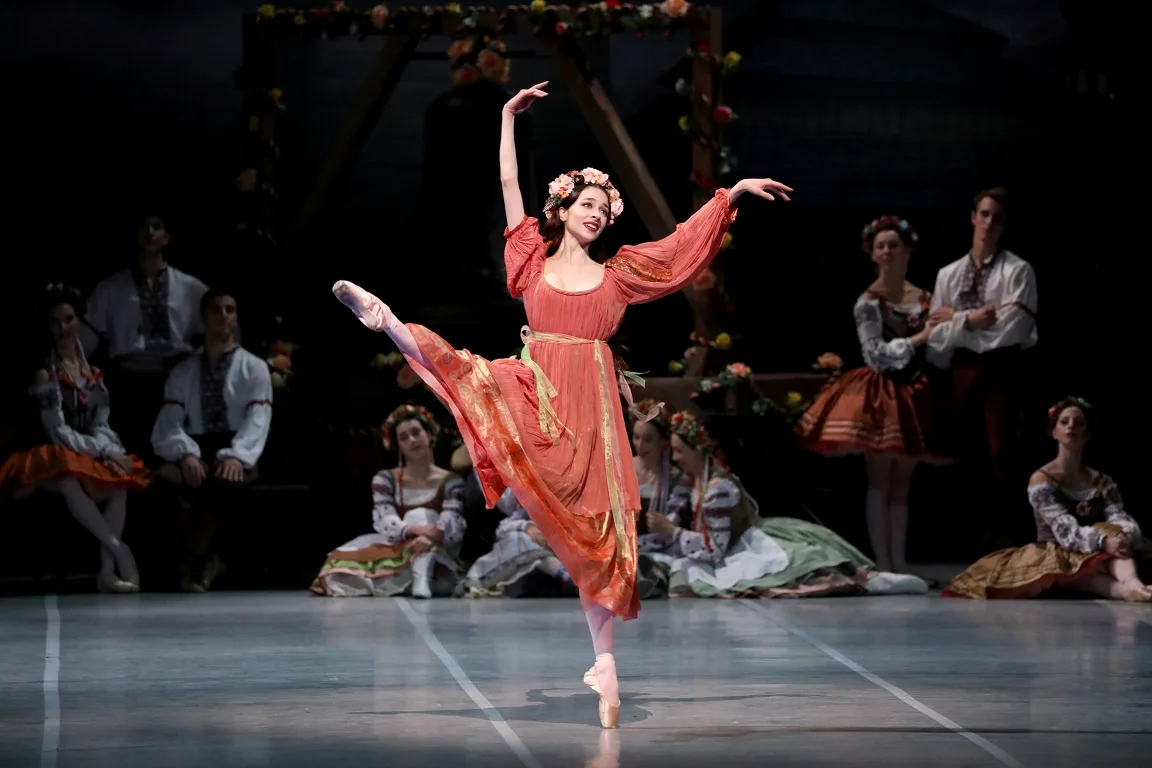


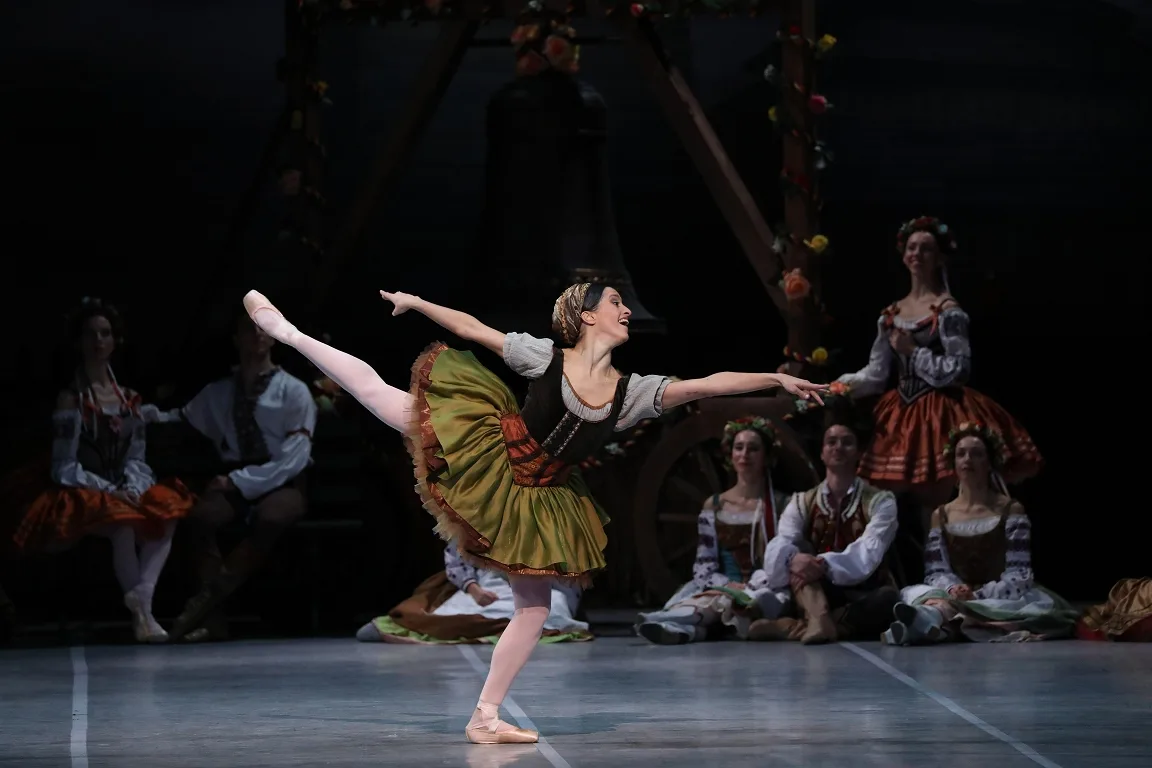
Linda Giubelli and Letizia Masini were grace personified as Dawn, with six young children – one from Ukraine who stands out in La Scala school performances with her bubbly smile – dancing with them; Navrin Turnbull and Edward Cooper were elegant in simple tunics as Prayer; Maria Celeste Losa and Alessandra Vassallo were both assured in the Work (Spinner) variation; and Rinaldo Venuti and Saïd Ramos Ponce potent in the War solo.
A word for the orchestra. La Scala has an uneven acoustic, but halfway back in the stalls on the left there is a crisp sound like when wearing headphones, and to hear Léo Delibes’s glorious score so vividly, conducted with vim by Paul Connelly, was the icing on the wedding cake.
Coppélia – Nicoletta Manni, Timofej Andrijashenko


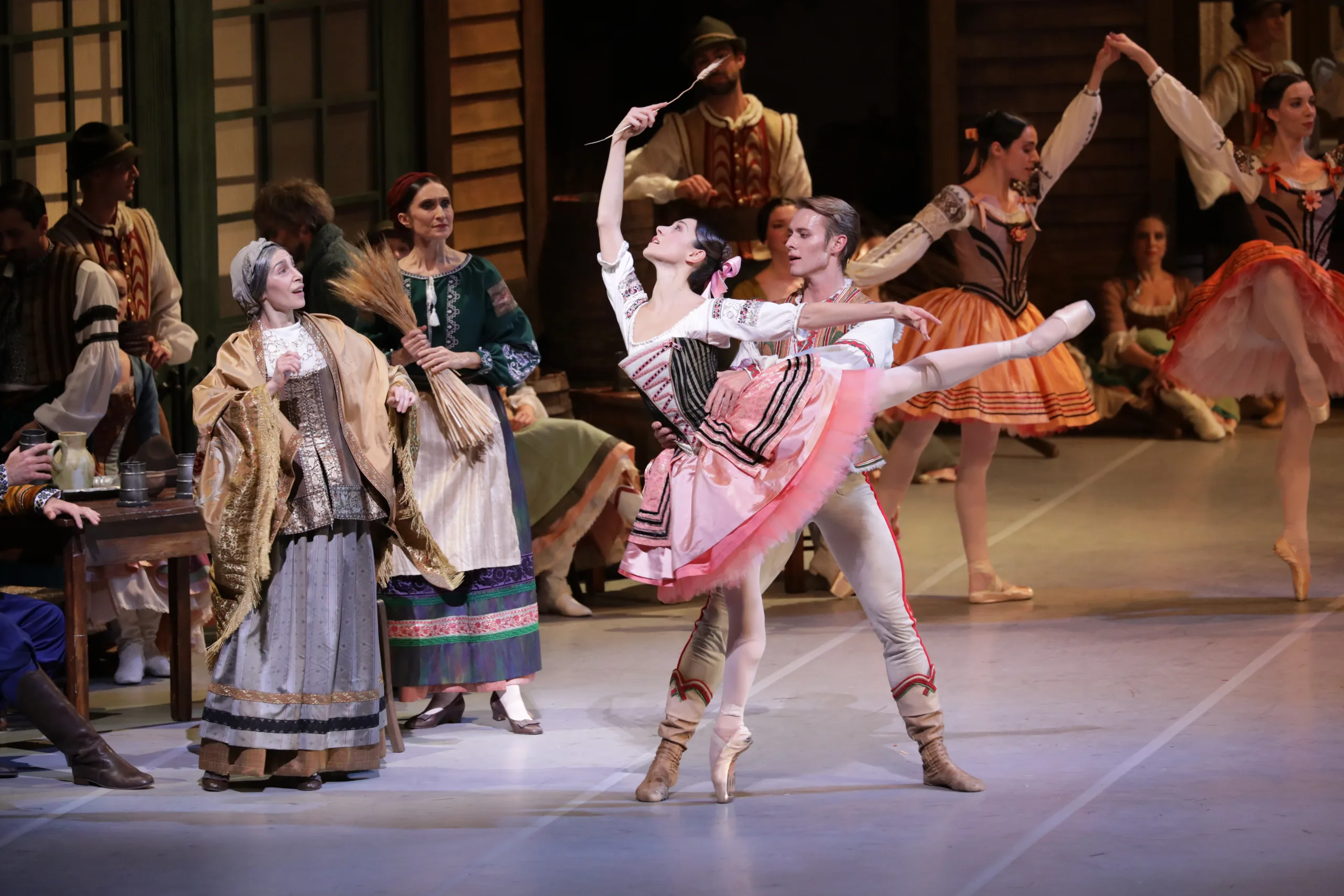









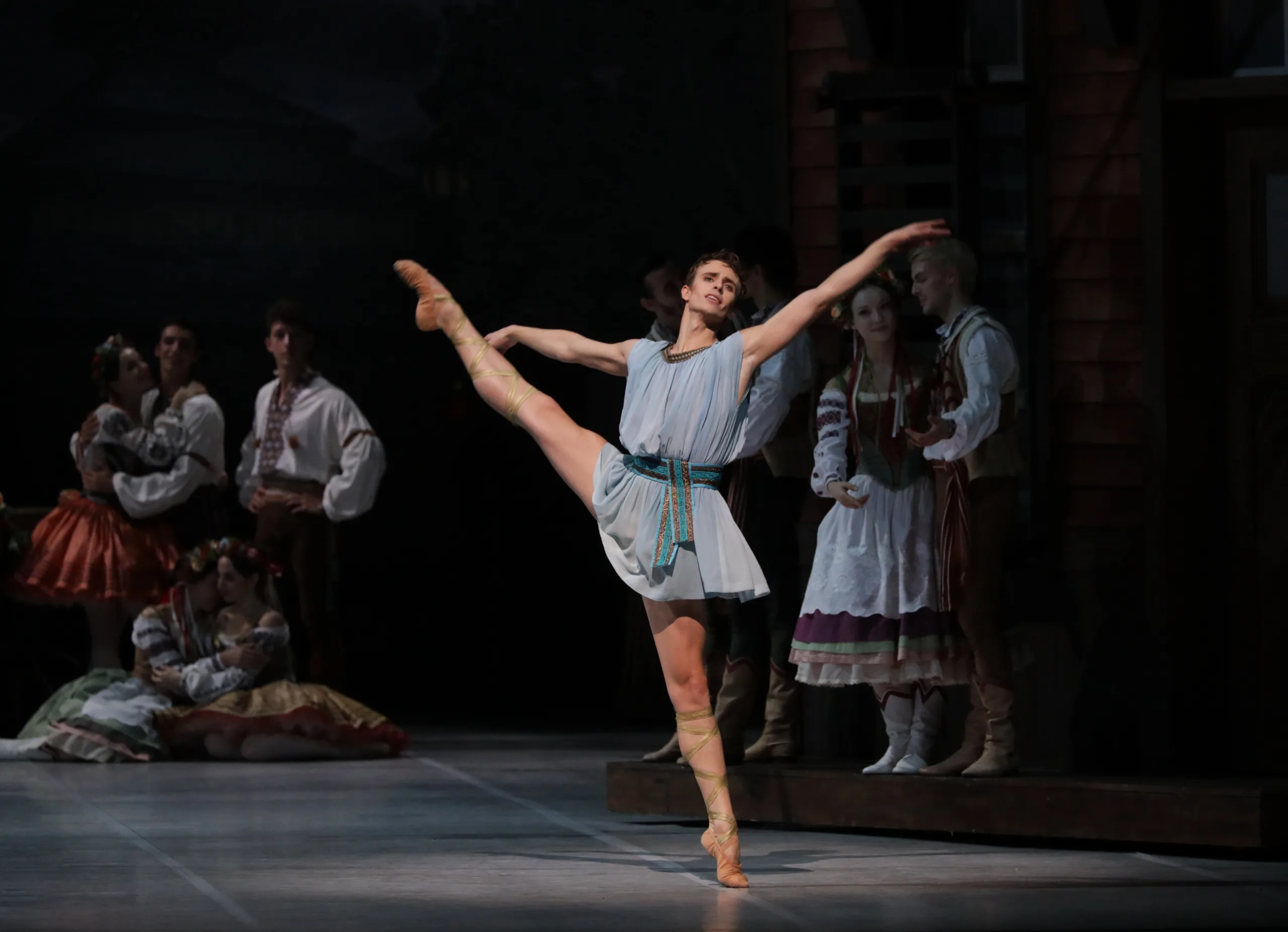

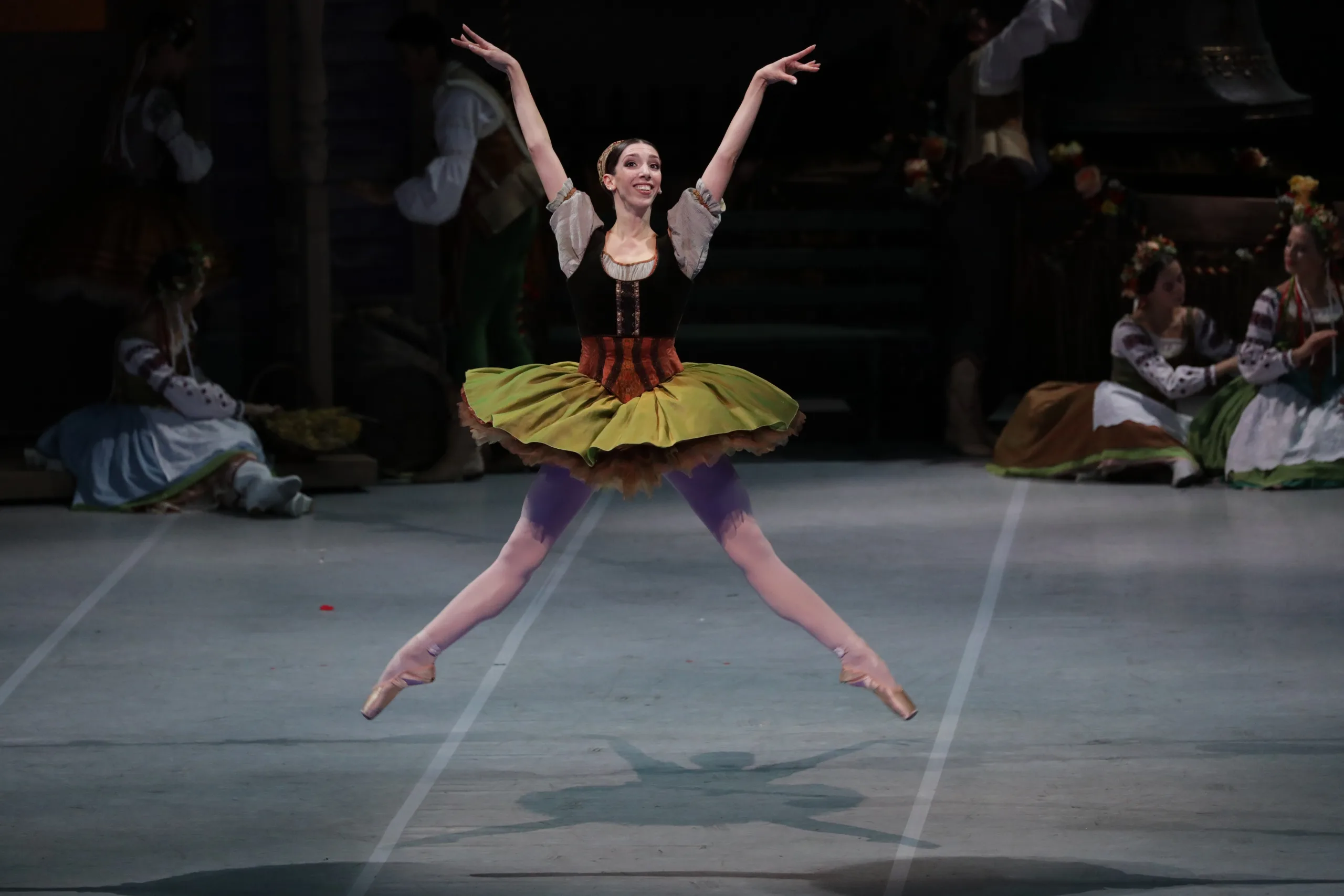

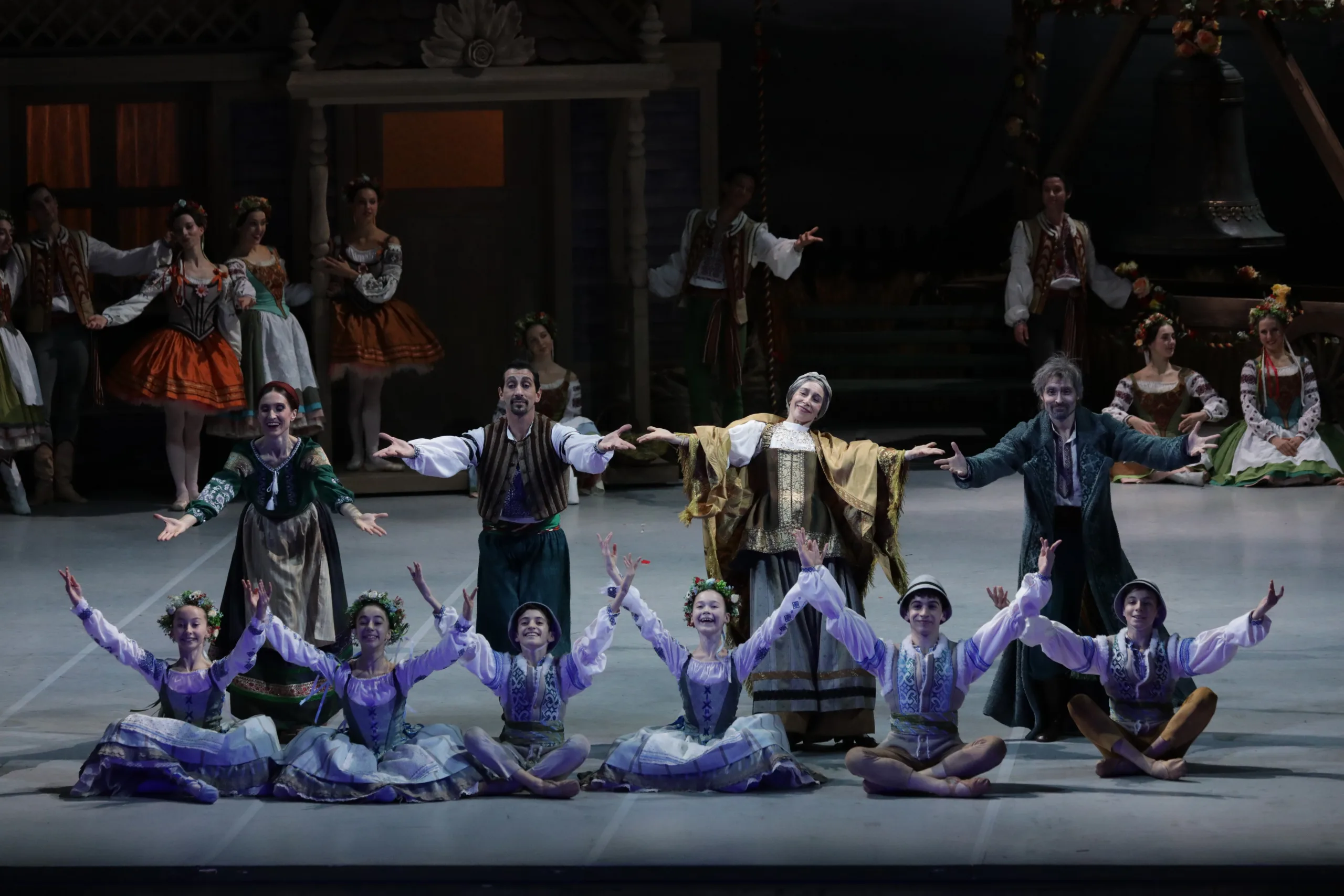


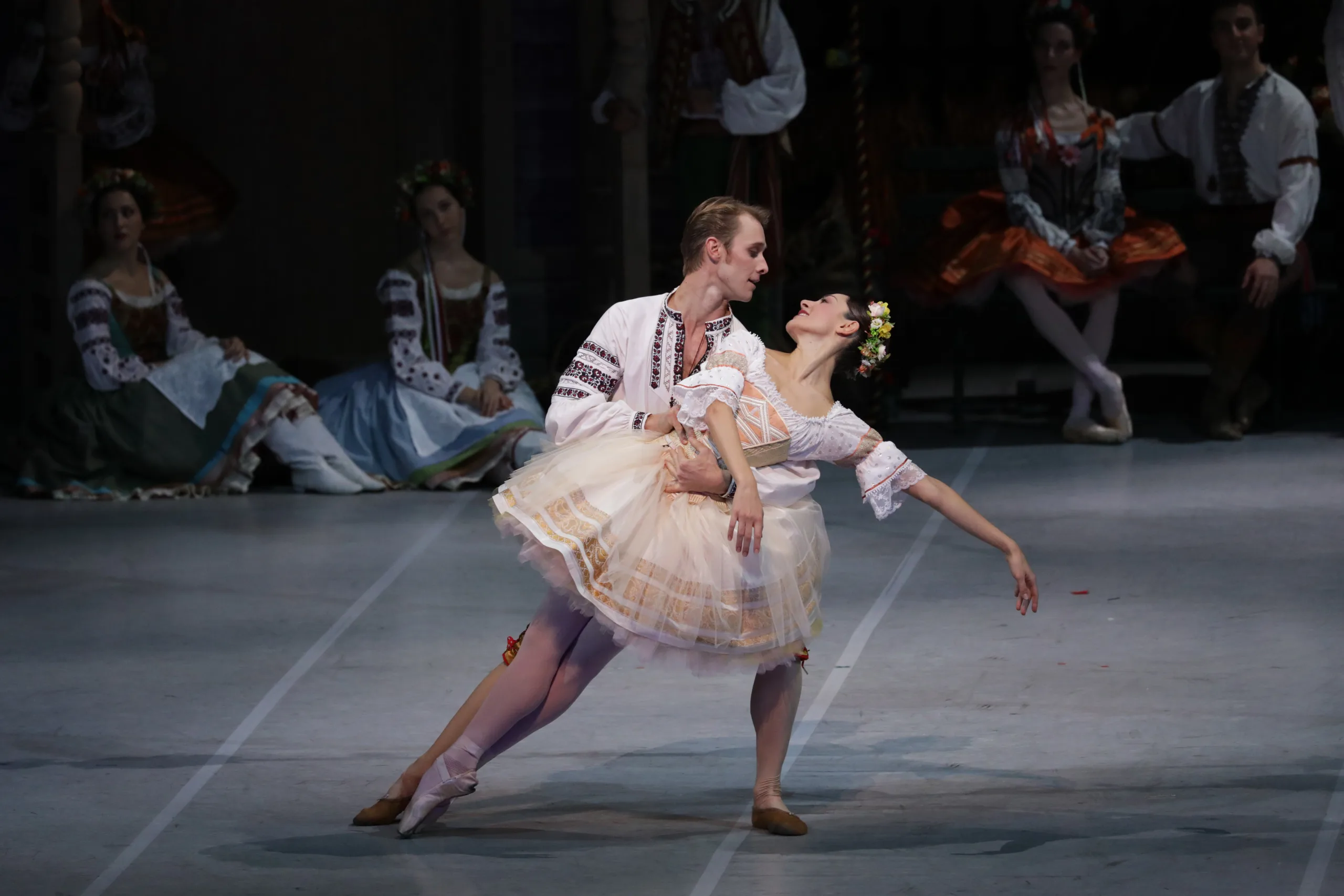


Coppélia – Alice Mariani, Nicola Del Freo







Graham Spicer, aka ‘Gramilano’, is a writer, director and photographer based in Milan. He was a regular columnist for Opera Now magazine and wrote for the BBC until transferring to Italy. His articles have appeared in various publications from Woman’s Weekly to Gay Times, and he wrote the Danza in Italia column for Dancing Times magazine. Graham was the historical advisor on Codice Carla, the 2023 documentary on Italian ballerina Carla Fracci.
Graham also works as a dance photographer, and his photos have appeared in many books, theatre programmes, and magazines, including Dancing Times, Dance Spirit and Ballet2000, as well as all the major Italian newspapers.
He is a member of the Dance Section of The Critics’ Circle.




That makes me curious!
What?
Loved it when broadcast – delightful. For those of us in the UK at least the production is available to Medici TV subscribers, though I’m not sure for how long.