[Review] Yorke Dance Project in California Connections: Three Pioneering Women at The Royal Opera House

Jonathan Gray sees California Connections: Three Pioneering Women with Yorke Dance Project – Isadora, Errand Into the Maze, A Point of Balance.
| Title | California Connections: Three Pioneering Women |
| Company | Yorke Dance Project |
| Venue | Linbury Theatre, The Royal Opera House, London |
| Date | 21 March 2024 |
| Reviewer | Jonathan Gray |
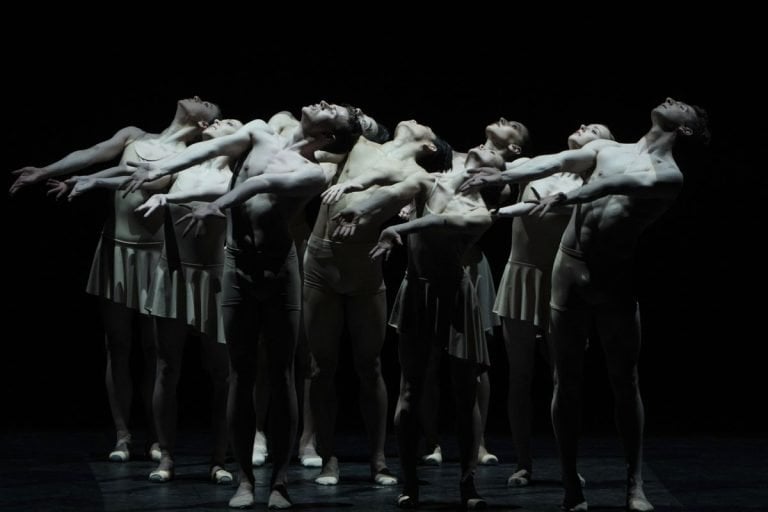
Yorke Dance Project celebrated its 25th anniversary at the Royal Opera House’s Linbury Theatre on 21 March with California Connections, a programme devised by its founder, the dancer and choreographer Yolande Yorke-Edgell. Subtitled Three Pioneering Women, it consisted of works choreographed by, or about, a trio of major female dance-makers who spent their formative years in the state. The programme also offered a new piece from Yorke-Edgell, who was based in California herself earlier in her career. If it was, perhaps, a little earnest in outlook, the evening nevertheless gave an interesting overview of American modern dance in the 20th century, and I appreciated the opportunity to view dances rarely seen in this country.


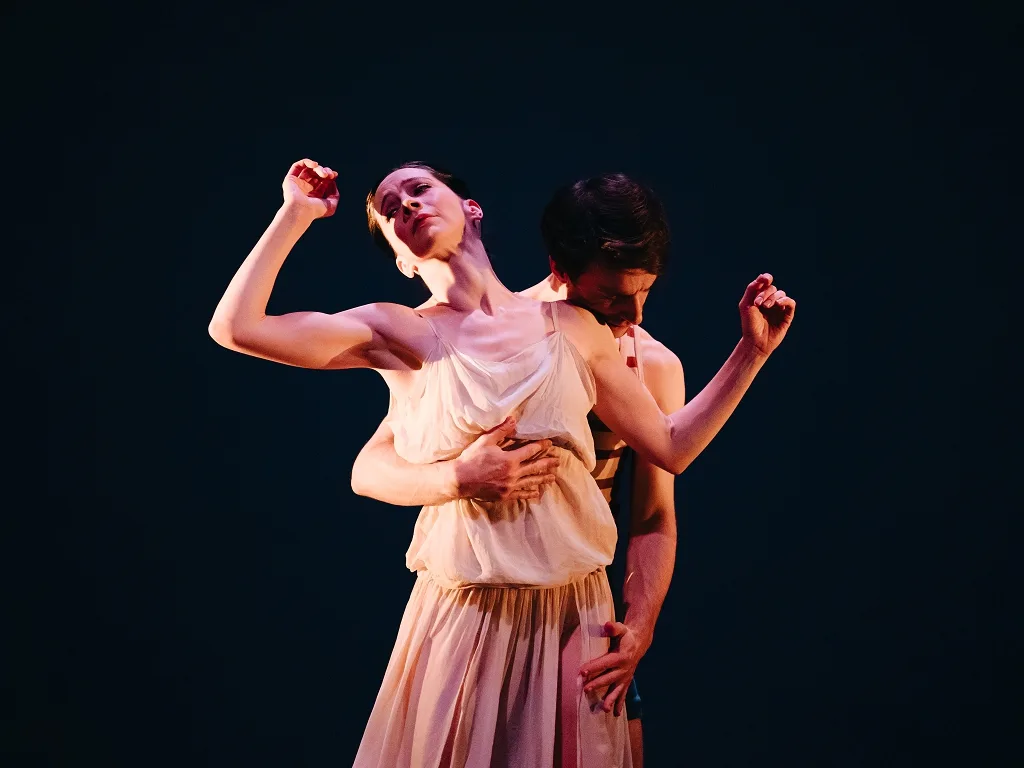
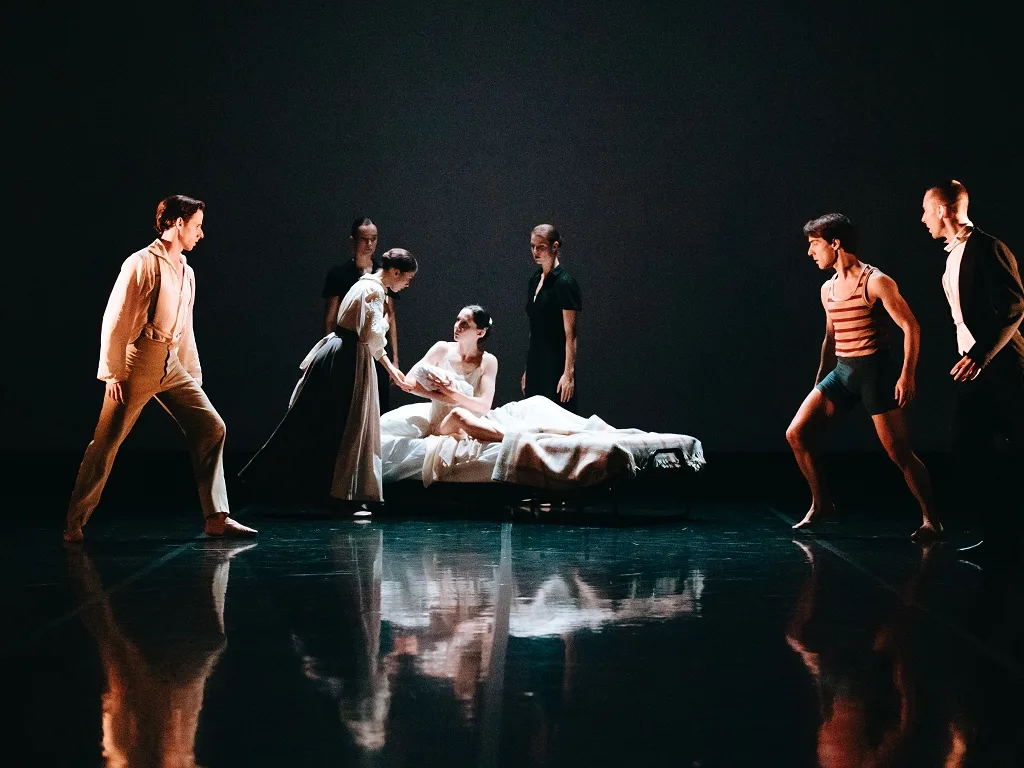
Originally a two-act work, Kenneth MacMillan‘s Isadora has had a problematic history since its first performance in 1981. Epic in scale, it portrayed the turbulent life of Isadora Duncan, the San Francisco-born “mother of modern dance”, but its central theme focussed on Duncan’s devastation following the deaths of her three children. An attempt to salvage Isadora as a one-act work was made by Deborah MacMillan and Monica Mason in 2009, and now an even shorter version has been devised for Yorke Dance Project, transforming the ballet into a chamber piece centring on the solos and duets MacMillan created to suggest Duncan’s artistry as a “free” dancer, and her unhappy, ultimately tragic, life. A commentary of Duncan’s own words, spoken by Rachel Handshaw, is used to link the dances and set them into a historical context, but whilst one can marvel at MacMillan’s reconstruction of Isadora’s dancing, and admire the intensity of the pas de deux, this new Isadora seems too piecemeal to make a strong impact, despite the commitment of the company. Amy Thake performed beautifully as Isadora but she was too restrained to convey the idiosyncratic strength of Duncan’s magnetic, ground-breaking personality. The production desperately needs a better recording of Richard Rodney Bennett’s music, however, which sounded coarse and “tinny” in the Linbury.
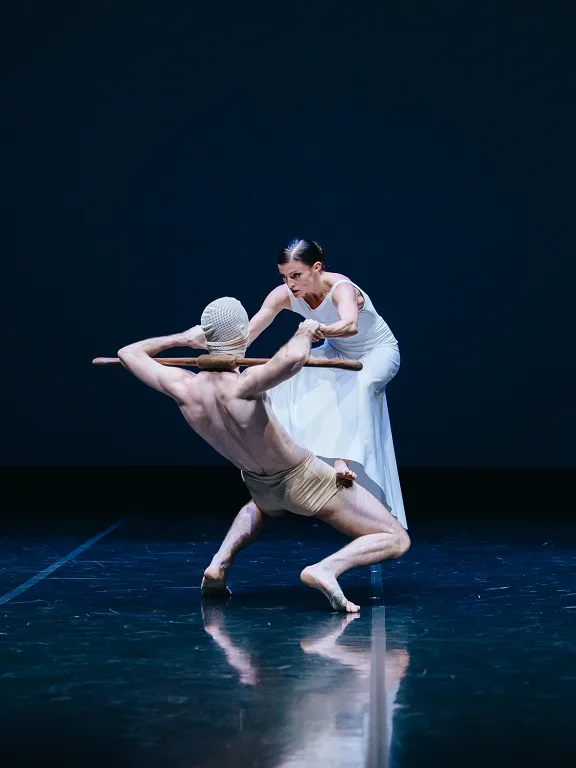
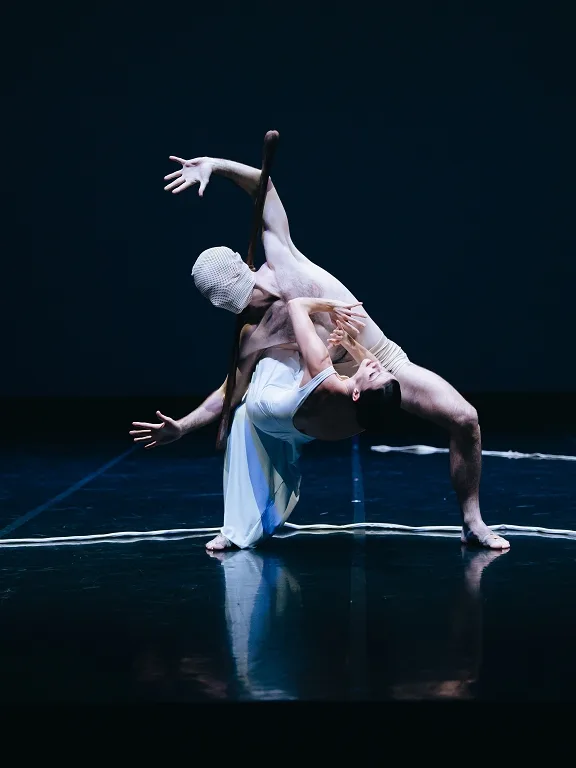


Next was Martha Graham‘s Errand Into the Maze, a re-telling of the Minotaur myth in which Graham transforms the character of Theseus into a woman. Graham lived in California as a teenager, and studied dance at the Denishawn School in Los Angeles, but in the early 1920s she travelled to New York and established there her own company and unique style of modern dance, as well as the Graham technique that would become the foundation of what we now think of as contemporary dance. A short duet performed to music by Gian Carlo Menotti, Errand epitomises Graham’s heroic vision of mythic dance, using strong imagery and weighty moves to depict forcefully a battle between a woman and a seemingly invincible monster. The woman plunges her feet into the stage, her body taut as she travels along a length of coiled rope used to evoke the labyrinth, and the minotaur’s man-beast persona is suggested by the placing of a wooden staff across the shoulders and behind the neck of the male dancer. Their battle is represented through symbolic moves, the minotaur stamping around the woman’s prone body as she lies on the floor, and her victory affirmed when she rises upright, standing firmly on his thighs until he collapses to the ground. This powerful work, made as long ago as 1947, received superb performances from Abigail Attard Montalto and Edd Mitton, who made me long to see more of Graham’s choreography, absent from London for too many years.
Yorke-Edgell’s A Point of Balance, danced to music by Heiner Goebbels, Klaus Grünberg, Hubert Machnik, Will Bopp, the Kronos Quartet and Laurie Anderson, aimed to portray a woman at a turning point in her life. A central character dressed in pink, Eileih Muir, is in anguish and apparently tormented by Jenny Hayes, a malevolent figure dressed in black. Ellie Ferguson, dressed in lilac, is her benevolent counterpart and, in consequence, it was difficult to shake off the impression that these women were in fact Princess Aurora, Carabosse and the Lilac Fairy from The Sleeping Beauty, which is probably not what the choreographer intended. Eventually Muir found resolution, dancing alone more lightly and with a greater sense of ease.


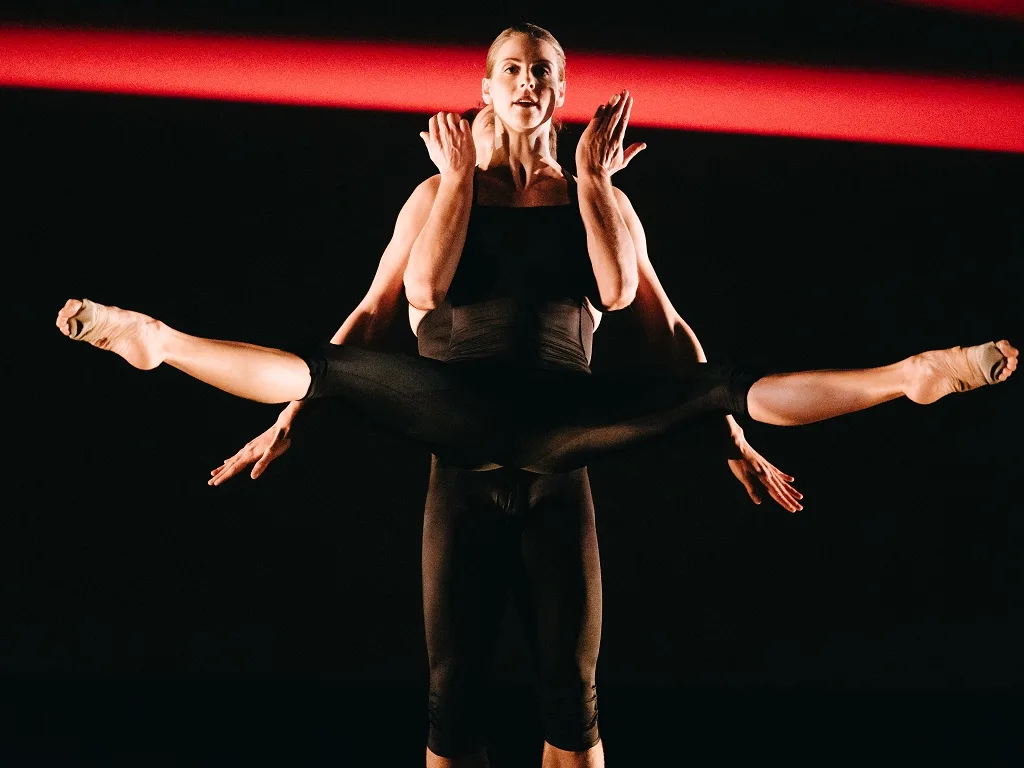
The Los Angeles-based dancer and choreographer Bella Lewitzky, who died in 2004, created her own dance technique, as well as many modern dance works, over a period of 70 years and was known for her strong independence. META 4, to music by Robert Xavier Rodriguez, was originally made for Lewitzky’s own company in 1984, where Yorke-Edgell later danced, and is an abstract work for four dancers that begins with hard, square movements which eventually soften as the work proceeds. The dancers evolve and change with each succeeding section of music until they transform their diagonal jerks into flowing, circular patterns, their hands and arms interlinking and detaching as they proceed. Luke Ahmet, Hayes, Attard Montalto and Pierre Tappon brought vitality and pace to this closing work on the programme.
An evening of serious intent, then, and congratulations to Yorke Dance Project for reaching this milestone, but perhaps something with a little more lightness of spirit would not have come amiss. After all, when I think of California, I imagine sunshine, Hollywood, beaches, palm trees and David Hockney swimming pools; it might have been nice to find a little of this flavour somewhere on the programme too.

Jonathan Gray was editor of Dancing Times from 2008 to 2022.
He studied at The Royal Ballet School, Leicester Polytechnic, and Wimbledon School of Art where he graduated with a BA Hons in Theatre Design. He was on the Curatorial Staff of the Theatre Museum, London, from 1989 to 2005, assisting on a number of dance-related exhibitions, and helping with the recreation of original designs for a number of The Royal Ballet’s productions including Danses concertantes, Daphnis and Chloë, and The Sleeping Beauty.
Jonathan Gray has also contributed to the Financial Times and The Guardian, written programme articles for The Royal Ballet and Birmingham Royal Ballet, and is co-author of the book Unleashing Britain: Theatre gets real 1955-64, published in 2005. He is a member of the Dance Section of The Critics’ Circle.