Review: Annabelle Lopez Ochoa’s Gentleman Jack with Northern Ballet – a star performance and an outstanding score

Graham Watts sees Gentleman Jack with Nida Aydinoğlu – a future star – and enjoys the unique choreographic style, memorable score, and emphatic set design.
| Title | Gentleman Jack |
| Company | Northern Ballet |
| Venue | Theatre Royal, Norwich |
| Date | 27 May 2026 |
| Reviewer | Graham Watts |
I came to Gentleman Jack as an Anne Lister virgin. Not only had I never heard of her, but the whole Suranne Jones TV series had passed me by. I have a bottle of Gentleman Jack whiskey in my drinks cabinet, but I don’t think that counts!
So, my first reaction to Annabelle Lopez Ochoa’s ballet is that prior knowledge of Lister’s remarkable story is unnecessary since, with the experience of fifteen narrative ballets already in her locker, Lopez Ochoa has captured the simple essence of the narrative with a clarity that is helped along by a memorable score, an emphatic set design, and plenty of humour.
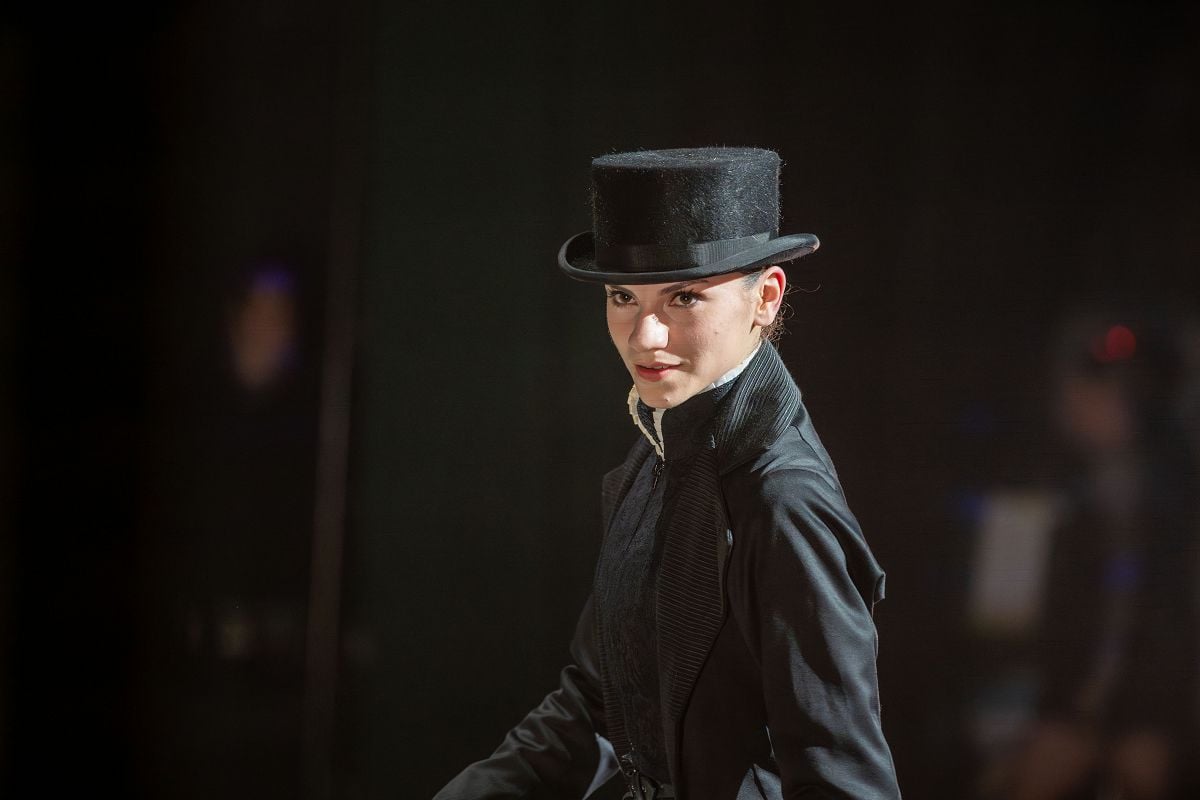
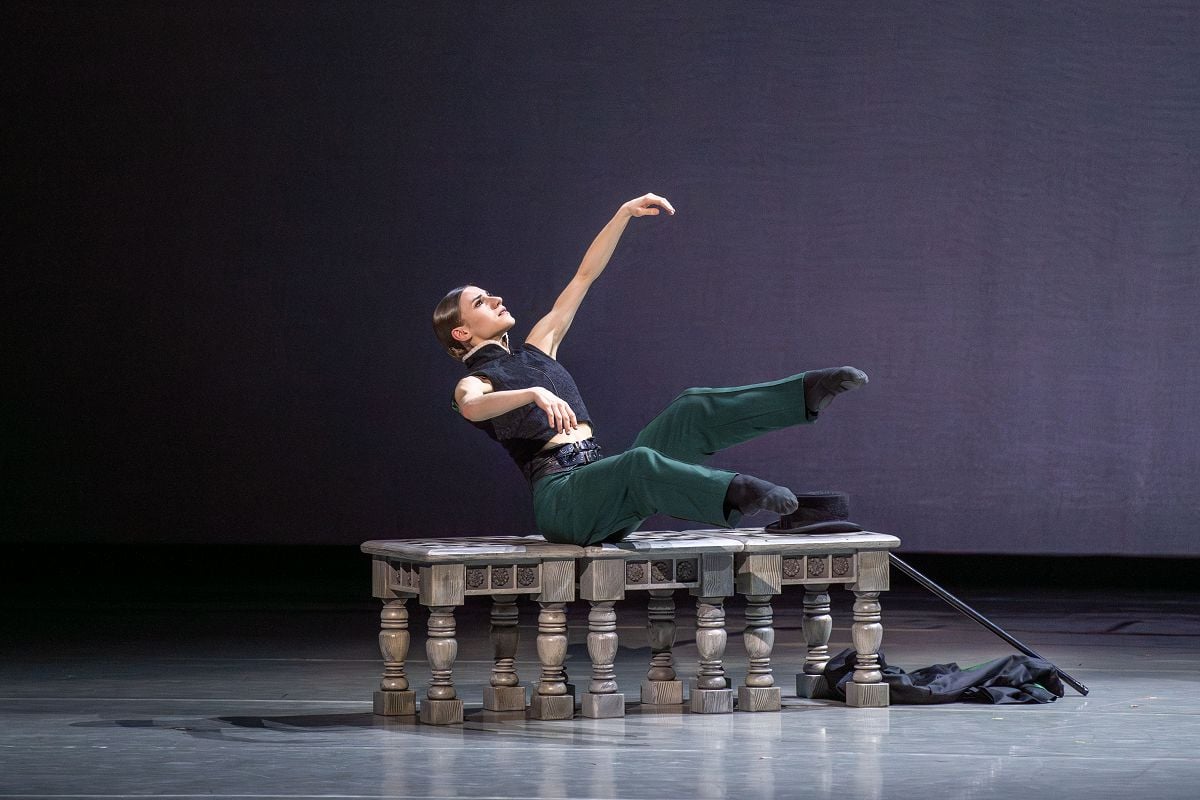
It’s also a ballet that has three women leads, a fact that is hammered home at the curtain call. At this opening night in Norwich, the lead role of Lister was taken by 20-year-old Nida Aydinoğlu, hopefully the first of many future debuts in principal leads, because this was a remarkably mature, captivating and apparently nerveless performance. It was only in her solo curtain call that Aydinoğlu allowed her facial expressions to betray a realisation of the enormity of her achievement.
Gentleman Jack was an unkindly meant nickname for Lister, who lived openly as a lesbian businesswoman in early nineteenth-century England, even going through a version of a marriage ceremony in York with her lover, Ann Walker, 180 years before same-sex marriage was legalised in England.
The innovative set design by Christopher Ash transports the audience from Yorkshire to Paris and from rural to industrial England with minimal effort since the necessary imagery is projected via mobile screens, which, when revolved, become bookcases. It’s a clever device that enabled the same set to be used here on the smaller Theatre Royal stage as at Sadler’s Wells (where I saw a different cast, a week previously), and it must be considerably easier and cheaper to tour. Another clever touch was a travelator, which readily conjured the image of Lister’s many journeys.
Louise Flanagan’s costume designs are generally accurate to the period, and Lister’s preponderance to have dressed in black is faithfully represented. I’m reliably informed by a historical fashion expert that there were boundaries to her early-nineteenth-century openness, so it is highly unlikely that she wore trousers, for example, though such artistic licence is thoroughly understandable.
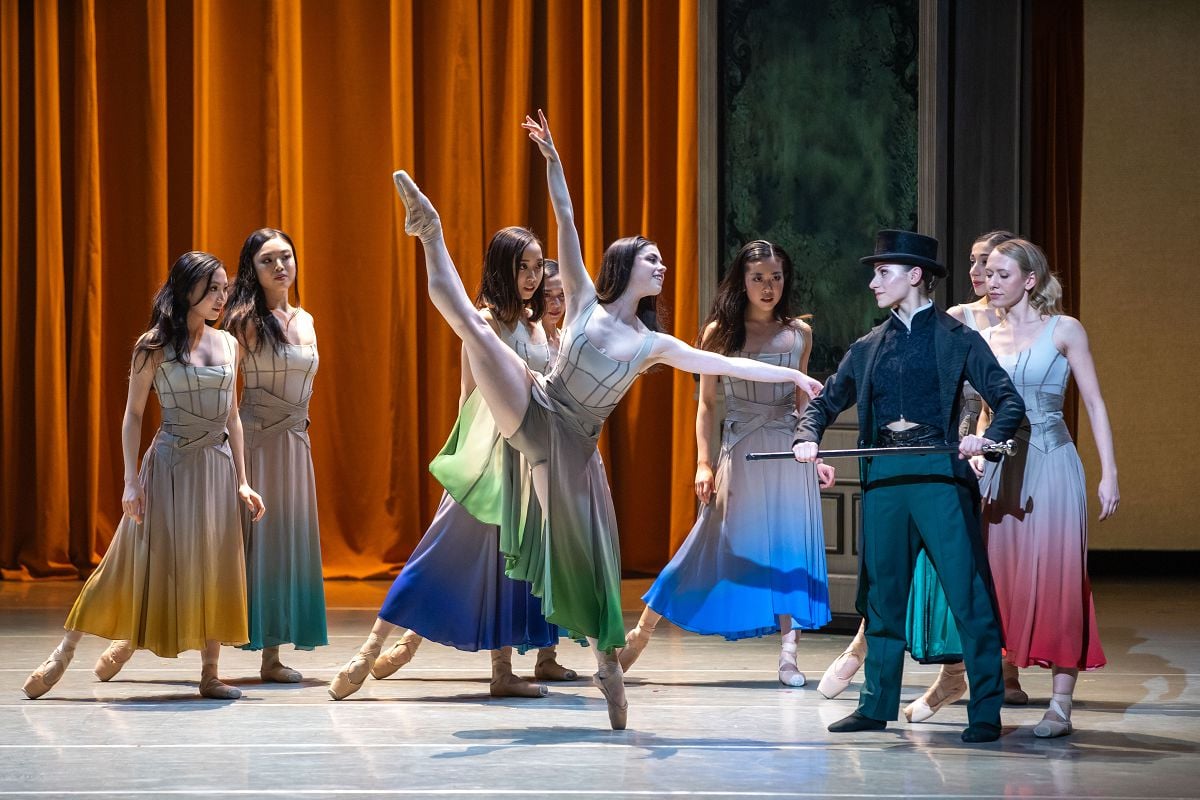
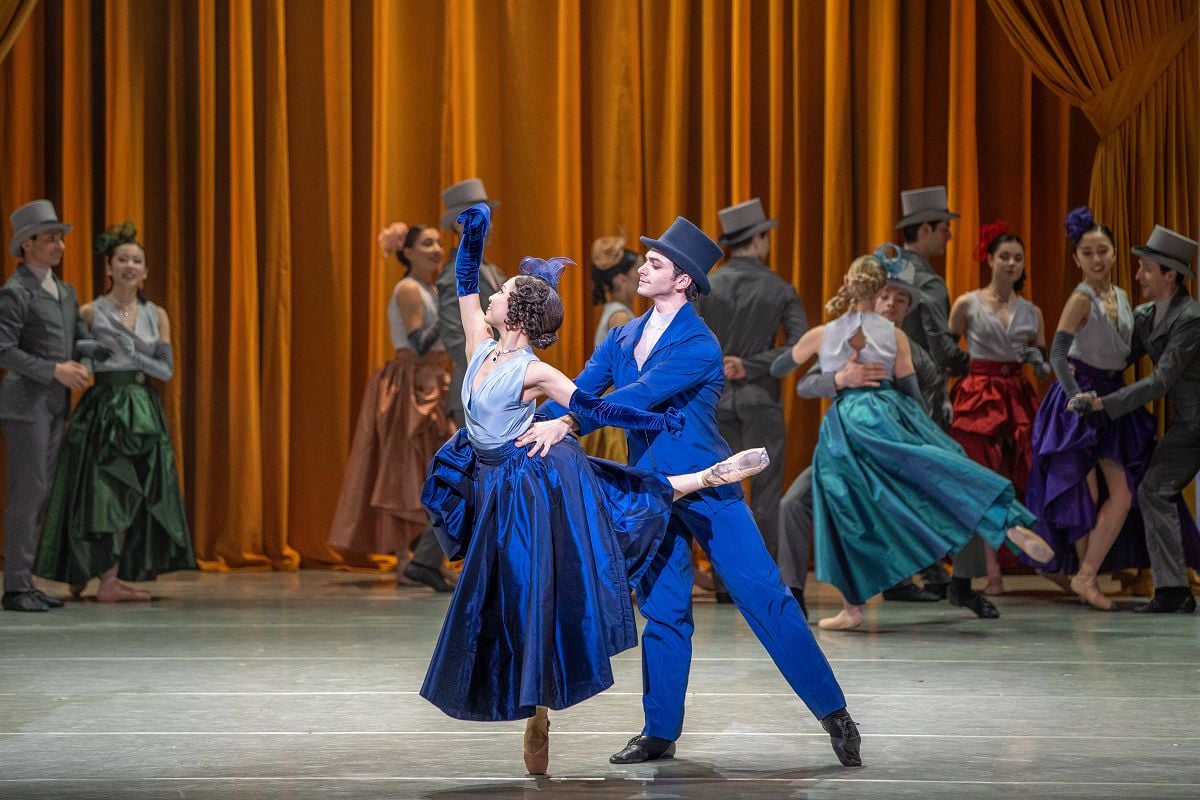
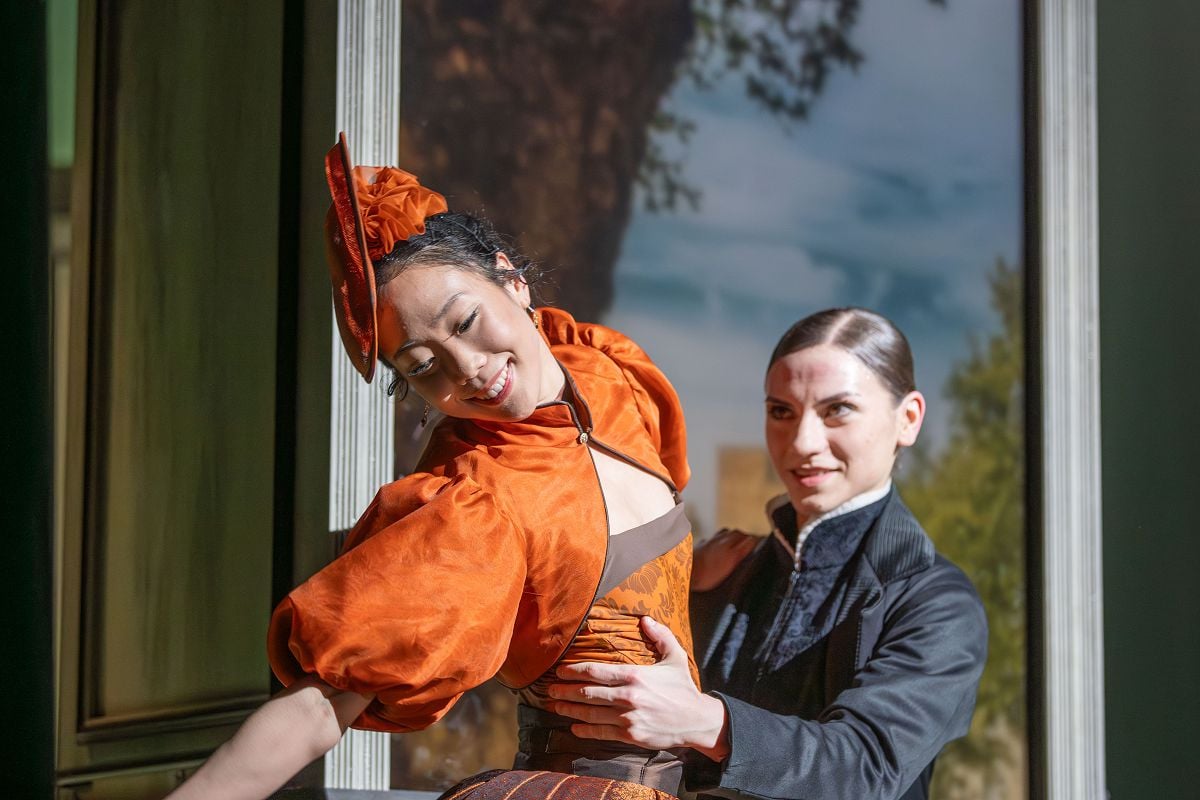
Lister’s first serious adult affair was with Marianna Lawton (née Belcombe), seductively portrayed by Sarah Chun, who was ultimately unable to be as open with her sexuality and fell into the safety of a marriage to Charles Lawton (a suitably protective performance by Jonathan Hanks). The pas de deux between Aydinoğlu and Chun, on, over, under and beside a kitchen table was both sensitive and steamy in its inferred eroticism.
Lister’s meeting with Walker, while out for a stroll, presented an emphatic love-at-first-sight moment, and although Walker’s character is thinly drawn in the not unwelcome interests of brevity, Julie Nunès was excellent in her portrayal of the exact opposite journey as Lawton, being hit by a force of nature that released her true sexuality. The main pas de deux for Aydinoğlu and Nunès was less lustful and more romantic, expressing the permanence of their relationship.
The production benefits from another outstanding bespoke score by Peter Salem* that is lyrical, descriptive, diverse, and thoroughly enjoyable. Salem has aided the choreography by adding motifs to emphasise each main character, so that Lister’s relationship with Lawton is underscored by soft trumpet playing and the later relationship with Walker is represented through the romantic lyricism of the piano. It is one of the best new scores for ballet that I can recall, and the small orchestra, conducted by Daniel Parkinson, did a great job.
Lopez Ochoa has a unique choreographic style, invested with strong motifs for her characters and peppered with humorous interludes. The domestic routine of Lister’s familial Yorkshire home at Shibden Hall is represented by choreographed tea stirring, and she (mistakenly) presents her frosty, uptight sister, Marian (Heather Lehan), with the present of a sexy black bra!
Lister’s ambition and assertiveness are articulated in her interruption of business meetings led by her nemesis and Ann Walker’s uncle, Christopher Rawson (Miguel Teixera), as she attempted to describe how her family’s coal mines could be expanded, which gives another opportunity for comedy as Rawson unveils his plans by unravelling a scroll, only for Lister to open one twice as long.


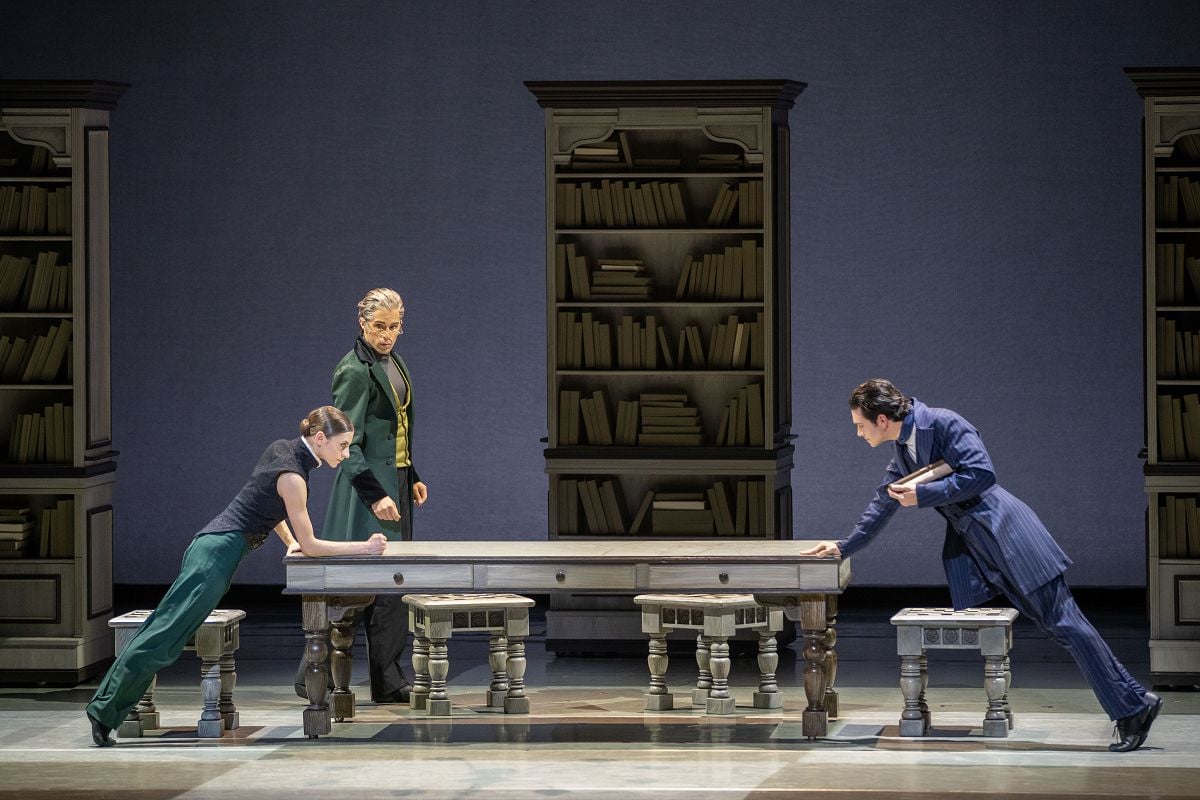
Lister’s journey is, of course, not plain sailing and she is regularly rebuffed by the male industrialists who close ranks on her. The first act ends with her being set upon and beaten up by a gang of hostile men (although a Gentleman Jack aficionado told me that her assailant is a single brute in the TV series), and the second act starts from the aftermath of that abuse, as she confides her innermost secrets to her aunt, also named Anne Lister (Saeka Shirai). This gives her the confidence to embrace the freer society of Parisian life.
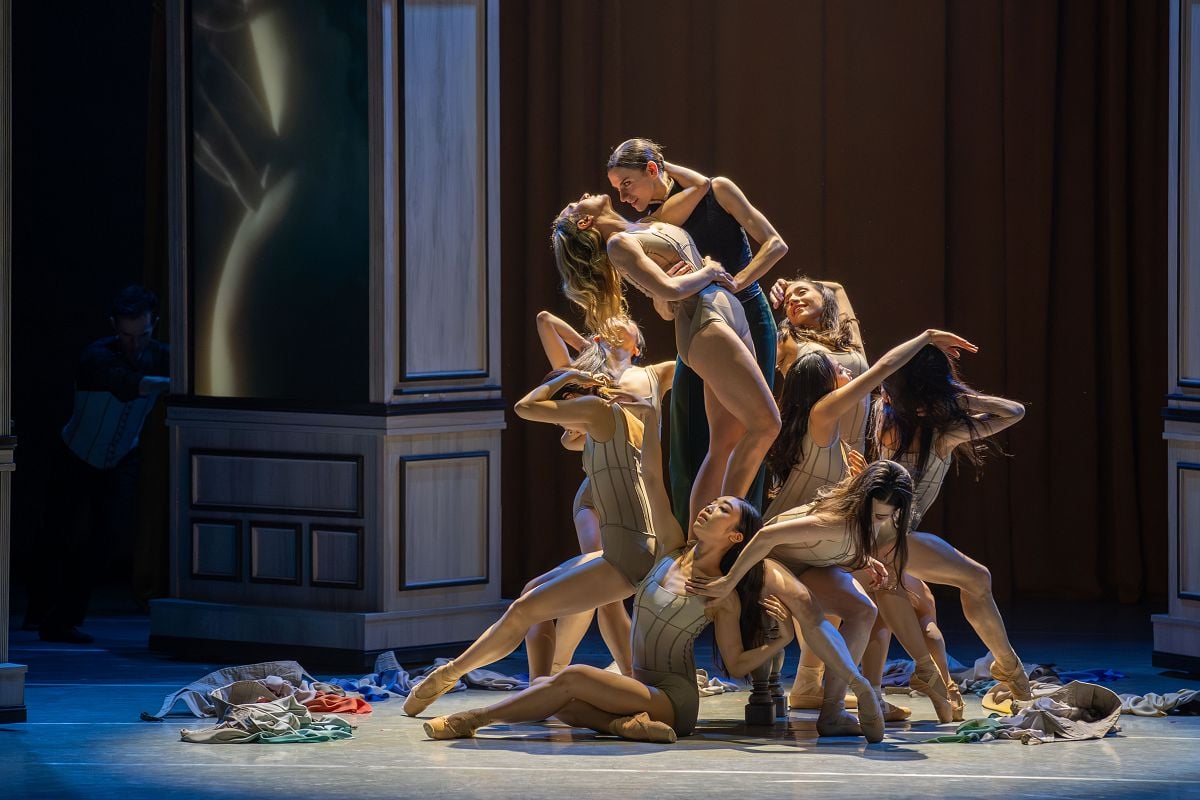
We would know nothing about Lister if it were not for her accomplishment as a diarist, and her detailed and coded contemporary record is the basis for the legend of Gentleman Jack, which is respected by Lopez Ochoa with a leitmotif of written words running through the work, both in projections and on the costumes of the Chorus of Words represented by the small but powerful corps de ballet.
In the past, I often criticised Northern Ballet (and Northern Ballet Theatre) for narrative treatments that were too complex and gratuitously long. On the contrary, Gentleman Jack was not only easy to follow, but it ended with me wanting more, from a performance that also heralded Aydinoğlu as a star for the future.
* Peter Salem – ballet music includes scores for Broken Wings (English National Ballet), Frida (Dutch National Ballet) and Emma Bovery (National Ballet of Canada).

Graham Watts is a freelance writer and dance critic. He writes for The Spectator, Tanz, Shinshokan Dance Magazine (Japan), Ballet Magazine (Romania), BachTrack and the Hong Kong International Arts Festival and has previously written for the Sunday Express, Dancing Times, Dance Europe, DanceTabs, London Dance, the Edinburgh International Festival and Pointe magazine (USA). He has also written the biography of Daria Klimentová (The Agony and the Ecstasy) and contributed chapters about the work of Akram Khan to the Oxford Handbook of Contemporary Ballet and on Shobana Jeyasingh for the third edition of Routledge’s Fifty Contemporary Choreographers.
He is Chairman of the Dance Section of The Critics’ Circle and of the UK National Dance Awards and regularly lectures on dance writing and criticism at The Royal Academy of Dance, The Place and (until the war) for Balletristic in Kyiv. He was a nominee for the Dance Writing Award in the 2018 One Dance UK Awards and was appointed OBE in 2008.