Review: the autobiography of Anna Maria Prina, director of La Scala Ballet School for more than three decades

The preface to Incontro con la danza (Encounters with Dance) is by writer Paola Calvetti, who opens with: “Anna Maria Prina has always been the ‘Director’,” the ‘direttrice’.
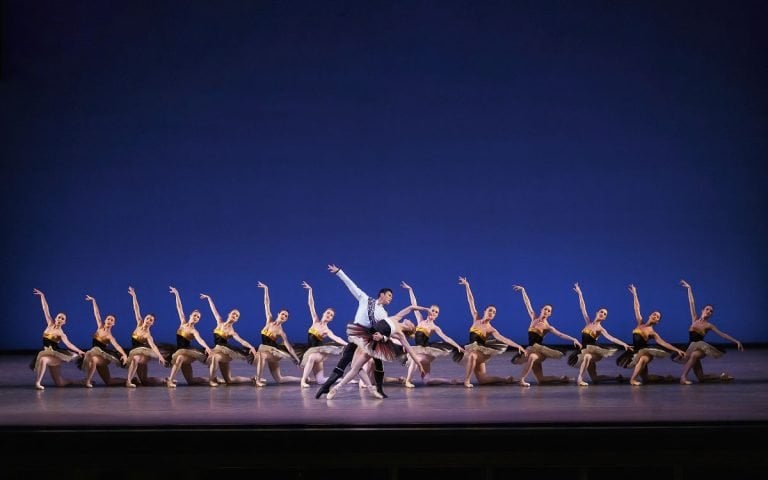
‘La’ Prina (as the Milanese would say, adding in the article) was the longest serving director of La Scala’s fabled ballet school in Milan, commanding and guiding thousands of dancing students for 32 years from 1974.
Her autobiography – written with Francesco Borelli – is a dip-in book, with some chapters just a page long, and without a strict chronological order. There are chapters on method and style, on Nureyev and Fracci, on famous students like Bolle and Murru, on illness, friendship and love. The book can be flipped open and read from any point.


Anna Maria Prina is still very active on the dance scene, nipping around the Italian peninsula to chair juries and give masterclasses. She has a ballerina’s posture, piercing dark eyes and dark lipstick. She can be both formidable and flirty, rather like her hair which is grey and cut short yet styled with a cheeky outward flick. She is always elegantly dressed in a simple, modern way, and is extremely well informed about dance of the past and everything current.
Her inquisitive and modern outlook was reflected in the changes she brought about to the school’s curriculum during three decades where she gave more importance to contemporary dance, alternative training such as Pilates, and a more holistic approach to dance and her students.
She herself was a product of the school she would later direct. Aged nine, walking near La Scala with her mother, Rosa, she saw a poster announcing auditions for the ballet school. Without fully understanding what it was about she told her mother she wanted to go. She did, and was accepted. La Scala would be her base for more than half a century.
As a student, she spent two years in Russia as part of a training programme organised by La Scala’s school which gave her a deep experience of Russian methods, especially those at the Bolshoi where she also danced some soloist roles. Prina went with four other ballerinas, including Luciana Savignano and Liliana Cosi, and the experience made a strong impact on her. She has several chapters dedicated to those years – ‘Leaving for Moscow’, ’My Bolshoi’, ‘Artists of the Soviet Union’, ‘My Russian Friends’ – including ‘My Grig’, Grig being Yury Grigorovich, dancer, choreographer and the formidable director of the Bolshoi Ballet for thirty years until 1995.
Prina met him for the first time in 1964 during a rehearsal for The Sleeping Beauty at the Bolshoi:
I was struck by his charisma and professionalism.
Maestro Grigorovich – known as Grig – knew how to respect and enhance the artistic personality of each dancer. This was important because in the former Soviet Union, every ballerina had her own distinctiveness, and the same role could be interpreted in completely different ways. Today, however, I believe that more importance is given to technical performance, and less to the style and personality of each artist.
Even as a young man, Grigorovich was an extraordinary personality of the ballet world. For me he is ageless, an artist of inexhaustible energy and a Maestro who literally wrote the history of dance, of which he is an unforgettable protagonist. Many disliked his rigidity and occasional aggressiveness. What Grig said, had to be. Even the Bolshoi corps de ballet contested him. He came to Italy to mount his beautiful Raymonda, and at the end of a rehearsal with orchestra he pronounced into the microphone, ‘Today the best here were the children from the school!’ He was like that, unfiltered, always direct.


Another important Russian in her life was Rudolf Nureyev. When he created his version of Sleeping Beauty for La Scala in 1965, the role of the Lilac Fairy was created on Prina, but she was already an admirer after seeing him with Marget Fonteyn in Le Corsaire at La Scala two years before.
I was immediately struck by Nureyev’s charm on stage. I came to admire him watching him from the wings and from the stalls. I particularly remember the finale of the manège in Act III of Sleeping Beauty – after a long, frenzied series of chainés, he finished in a perfect fifth position and with a self-satisfied smirk. In those times it was a feat of extraordinary virtuosity. And I’ll never forget the first time I saw his entrance in Giselle, Act II. Rudy wore a long cloak, artfully draped over his shoulders, revealing only one leg, and held flowers in his arms as he walked elegantly from the back of the stage, in perfect en dehors with a regal attitude, exuding a magnetic charm. What emotions!
Moments in rehearsal and on stage could also be emotional, though not in a positive way, and during the creation of Sleeping Beauty “I heard swearing that I’d never heard in my life!” Though, as Prina was the only one who understood Russian, she would hide herself away to laugh about it.
Two years later, I was on stage in the Nureyev version of The Nutcracker, where I played Mrs Stahlbaum (Clara’s mother) in an empire-style costume so loose that it hid my midriff (I was expecting my daughter Gaia). In Act I, when the party was over, the protagonist Clara, played by Carla Fracci, had to change her dress backstage while the lights were dimmed and quickly return on stage.
At the rehearsed moment, I went to Nutcracker/Nureyev to greet him, elegantly offering him my hand, but he, through clenched teeth, told me to get Carla, who was late, and in a fit of nervousness… he bit my hand! As I was on stage, I pretended nothing had happened, but I was truly shocked. At the end of the performance, I went down the stairs to leave the theatre, plotting revenge, and at the bottom I saw Nureyev. I was extremely angry and he, grinning, said to me in Russian, ‘Your hand is very tasty!’ At that point I burst out laughing and forgot everything in an instant.
On New Year’s Eve of 1955, when a teenage Carla Fracci substituted Violette Verdy as Cinderella, Prina was on stage, herself a substitute, for a corps de ballet dancer – she was just 12 years old. Their paths would continue to cross until Fracci’s death, three years ago. There was a personal connection between the two – Prina’s first husband, the legendary Italian actor known for playing Harlequin, Ferruccio Soleri, was best man at Fracci’s wedding. Soleri and Fracci’s husband, Beppe Menegatti were schoolboys together in Florence. “For me, she was ‘Carlina’, a woman delicate and small, who spoke little, often in a whisper.
Between Carla and me, there was a relationship of mutual esteem and respect. I admired her greatly because no one could interpret the great romantic ballets like she did. She was a refined dancer with a perfect port de bras and an absolutely extraordinary interpretative style.
Carla passed away on 27 May 2021, leaving everyone dismayed. It seemed impossible to me that a woman like her, such a great artist, could have flown away in silence. However, I realised that people like Fracci, artists of her standing, will never leave us. Her immense art, bequeathed to us, is so present throughout the world that it is difficult to speak of her in the past tense. Carla will never be just a memory. Carla is with us every day, on every stage where she danced, in every dance studio where young girls work hard with the dream of becoming like her.

Aside from recalling many well-known colleagues, the core of the book is about teaching, especially during the years at La Scala’s school where, as its director, she followed in the footsteps of Carlo Blasis and Enrico Cecchetti.
I believe that the prerequisite for a good dance teacher is to possess an innate gift – the desire to give and to pass on to others. There are teachers who give lessons, but do not teach, and there are teachers who, having had good careers, think they can propose combinations of steps tuned to themselves, but these are not necessarily suitable for their students, with the depressing result that they are only competing. Nothing could be more wrong.
She also underlines the flexibility required of a good teacher and that the same approach will not work for all:
In addition to careful lesson preparation, communication with the students must be handled with intelligence and sensitivity. A good teacher must understand what kind of dancer is in front of them and choose the best way to make themselves heard and to convey their teaching.
Prina talks about the structuring of a lesson, dance competitions, and styles – all in bite-size chapters.
In short, teaching dance is a wonderful and rewarding activity that requires experience, culture, sensitivity and great respect. And a generous continuous exchange with the students, which can only be fruitful if the teacher is competent, communicative and naturally gifted for teaching.
Prina is certainly communicative, which comes through in the book, but the pages also reveal someone of great honesty, able to talk about herself with rare objectivity. She writes of her own dancing abilities as though grading a participant in a competition; “As a dancer, I believe I was of medium level, with an adequate technique, and a commendable poise and port de bras.” She pulls the rug out from under those who, behind her back, ‘accused’ her of favouring the male students when she says:
I confess that during my years as a director I had a slight predilection for male students – young men who unleashed power, energy and vitality, and required a lot of attention, being less disciplined and more instinctive than girls. They gave me great satisfaction!
And so there are chapters on Robert Bolle (“hard-working, polite, and also extremely reserved”), Massimo Murru (“his intelligence and great expressivity was obvious from the start”), with many mentions of Mick Zeni, and current dancers Gabriele Corrado and Christian Fagetti.


But there are the female students too, of course – Stefania Ballone (currently in the company, excelling in contemporary dance and choreography), the teachers Patrizia Canini and Emanuela Tagliavia (also a choreographer), Paola Cantalupo (Director of the Rosella Hightower centre in Cannes), and several others.
With sadness, Prina mentions the political manoeuvring that ousted her from her position as director two years before her official retirement, saying that it felt like a curtain coming down but without the possibility to take the final applause.
Having left the role of Director behind, I certainly softened as a person and opened up to a new world that was waiting for me, and everything was a discovery. From the gilded cage of La Scala from my childhood, I moved on to normal life. Prina, a measured, complicated and critical individual, was transformed into a sweet, witty woman, more inclined to welcome others, without fear or constraints.
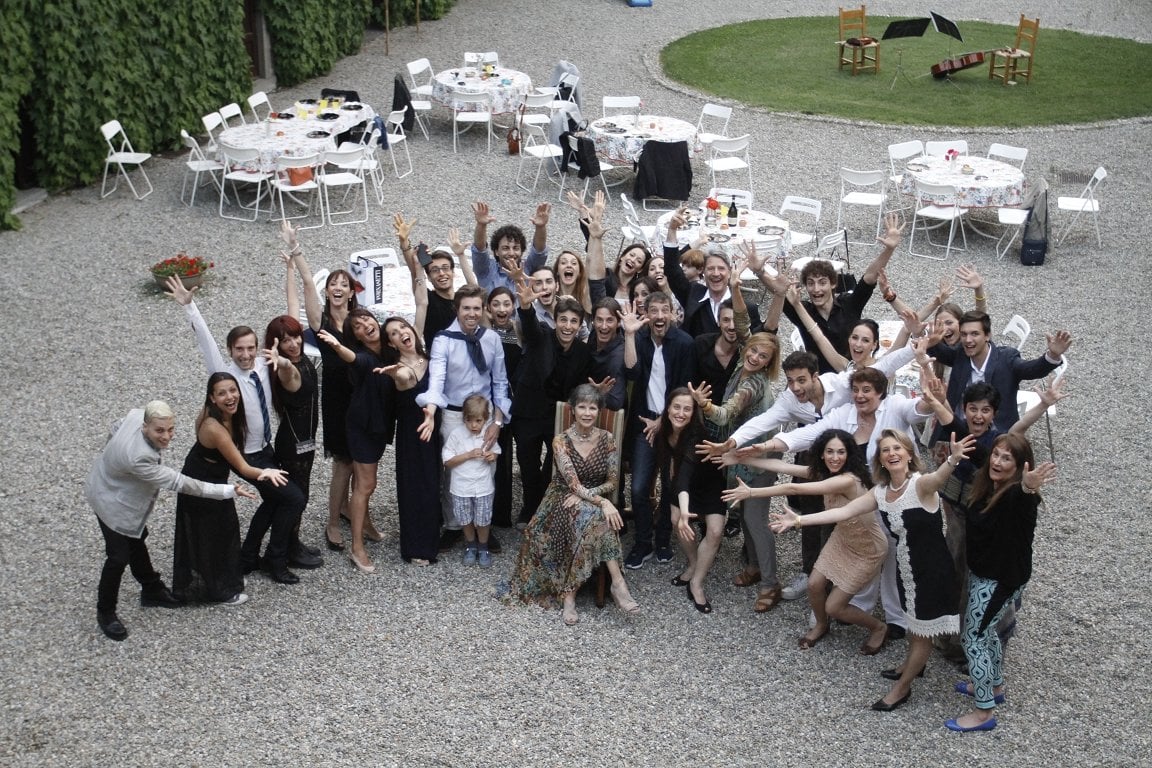
Aside from the names already mentioned, students included Davide Bombana, Ranata Caldarini, Marco Pierin, Mara Galleazzi, Marta Romagna, Vito Mazzeo and Maurizio Bellezza. The importance of her former pupils in her life, expressed with motherly affection, is revealed in the chapter about the big party that they threw for her 70th birthday,
The gratitude and love of ‘my children’ was palpable and intense – that was my greatest gift.
The book provides a fascinating insight into a long period of La Scala’s history, with juicy titbits, important opinions and, despite its length, copious information. Prina’s last phrase of Incontro con la danza is, “Who knows if one day, speaking of me, they might say, ‘Of course, if there hadn’t been la Prina…. everything would have been different!”
I’m sure that’s what they will say.
INCONTRO CON LA DANZA (in Italian)
Authors: Anna Maria Prina in collaboration with Francesco Borelli
Publisher: Gremese Editore
Series: Biblioteca delle Arti
Volume: Paperback
Format: 14×21 cm
Pages: 160
EAN: 978-88-6692-174-5