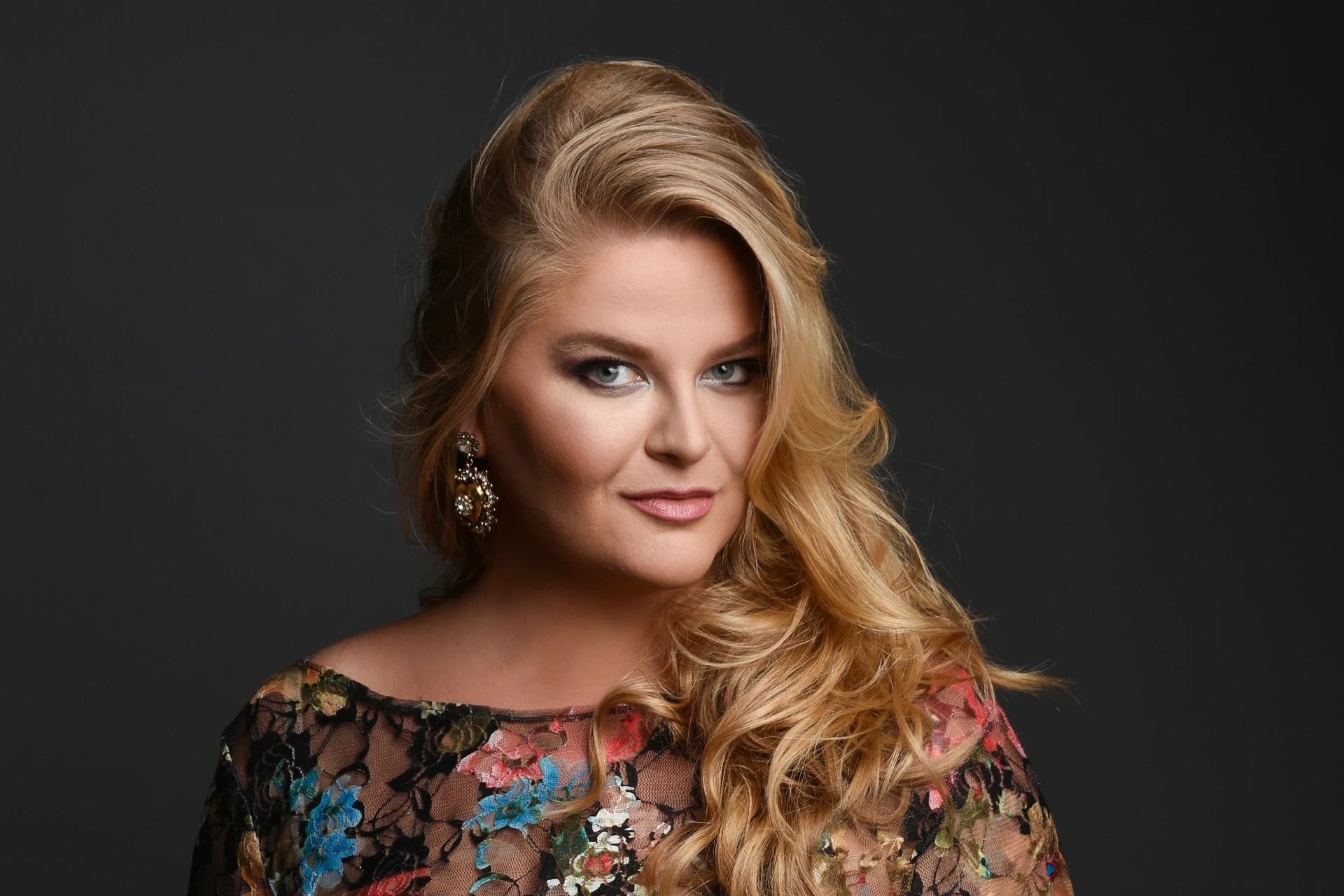
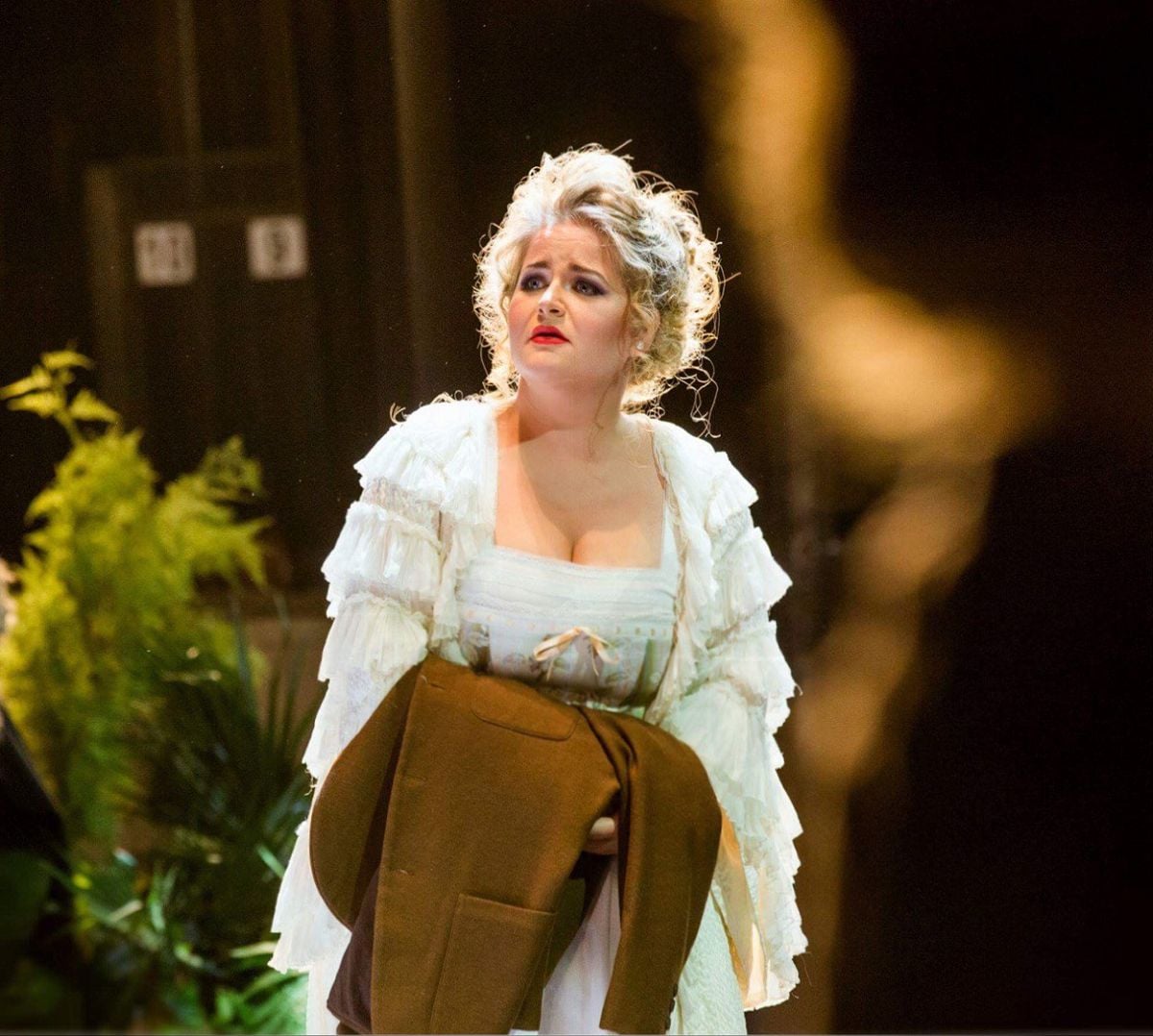
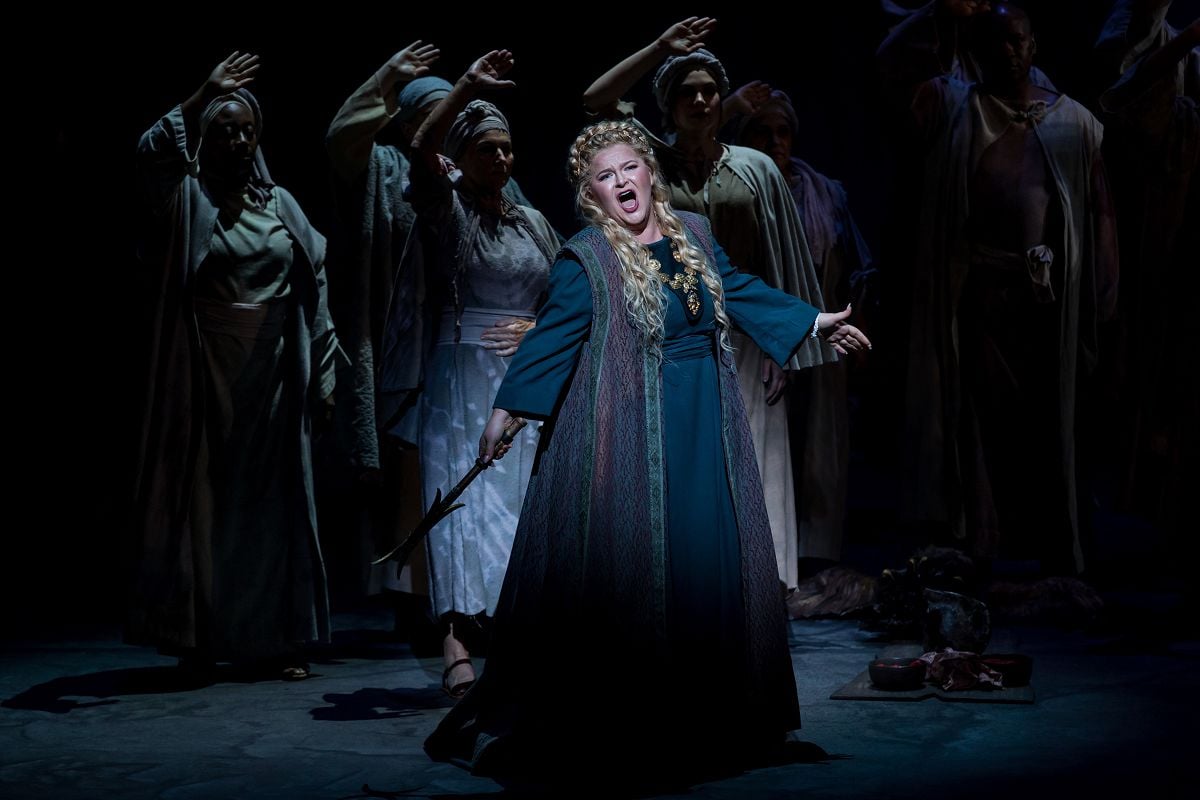
Maybe you haven’t yet heard of Marigona Qerkezi but the soprano from Kosovo has a burgeoning career. Although she made her debut as Queen of the Night at the Royal Opera House Muscat in Oman, and has sung Lucia in Lucia di Lammermoor in Cagliari and Pisa, and Rosalinde in Die Fledermaus and Adina in L’Elisir d’amore in Bari, she is largely leaving that repertoire and has just finished a run as Abigaille in Nabucco at the Deutsche Oper am Rhein Düsseldorf and she has Manon Lescaut, Aida, Lady Macbeth, Tosca and Norma coming up.
A YouTube search will find videos of Qerkezi – ‘Qer’ pronounced like ‘chair’ – singing many contrasting soprano roles.
However, we are having a chat because tonight, 29 November 2024, she is singing in the world premiere of conductor and composer Andrea Battistoni’s cantata Pucciniana to mark the 100th anniversary of Puccini‘s death at the Opéra Royal de Wallonie-Liège.
But more of that later. First, I wanted to ask about her family, especially her mother, Merita Juniku, a mezzo-soprano.
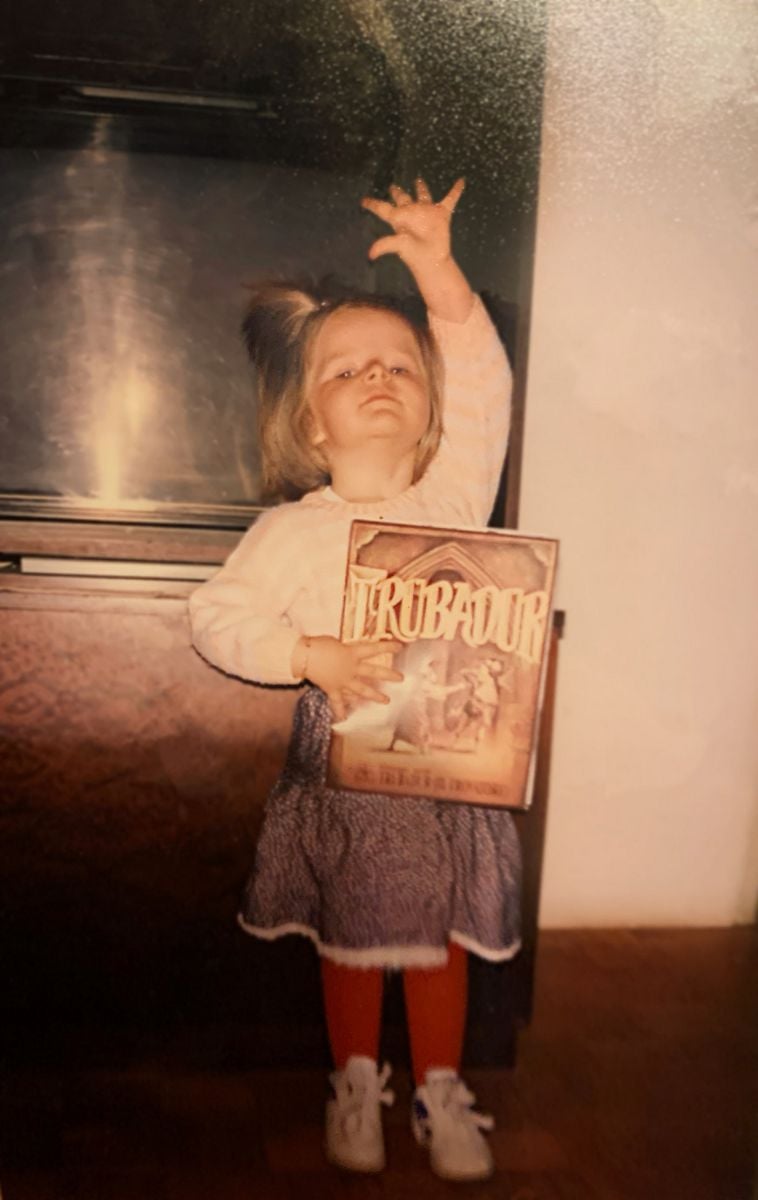
My parents, both from the theatre, have had a profound influence on my life and career. My mother is a celebrated opera singer and introduced me to music and mentored me, and continues to mentor me in vocal technique and performance. Her guidance, both as a supporter and honest critic, has shaped my artistry and continues to inspire me.
My late father was always a helping hand when it came to aesthetic aspects, having been a costume designer. Their dedication to the arts instilled in me a deep respect for storytelling and authenticity, which remains the foundation of my work today.
Have you ever sung in public with your mother?
I’ve had the pleasure of performing with my mother, mezzo-soprano Merita Juniku, on several occasions like in Milan and Zagreb. It was a magical feeling and also a beautiful blend of vocal colours and timbres. Some of the pieces we’ve performed together include duets from Bellini’s Norma, Pergolesi’s Stabat Mater, and Offenbach’s The Tales of Hoffmann.
You are from Kosovo. Did the conflict affect you or your family in any way?
Yes, the Kosovo War deeply affected my country and my family, shaping the destiny of our entire nation, no matter where we are physically. Although I was just a child and far away, having been born and raised in Zagreb, I witnessed my parents’ sacrifices while facing the uncertainty of our loved ones in Kosovo.
Many members on my father’s side of the family lost their lives during the Kosovo war, and all we have left of them is a street named after the “Qerkezi Martyrs” and their home, which was donated by their mother to remain as a city museum, seeing as there is no family left to live in it.
My family’s strength, commitment to the arts, and resilience during those difficult times taught me the power of perseverance and the transformative strength of art – lessons that continue to inspire me today.
Many important operatic voices come from Eastern Europe – why do you think that is?
I believe that a natural predisposition for good voices provides a strong foundation for nurturing operatic talent, which, when combined with solid education and emotional expressiveness, has allowed many artists from our region to excel on international stages.
Apart from your mother, who have been the significant figures in your artistic growth?
My mother is my primary influence, but I must say I’ve greatly enriched myself through masterclasses with renowned artists, collaborations with conductors and directors, as well as sharing the stage with exceptional performers. Undoubtedly, the rich legacy left by legendary opera singers has also profoundly inspired my journey.
Your biography says that you attained “a master’s degree from the Prishtina Academy of Arts in Flute and Opera Singing”. Do you still play the flute?
The flute has played an important role in my musical journey. I’ve performed in various concerts and even won competitions as a flute soloist. One significant performance, which was highly praised by the press, was in the production of Rossini’s Il Viaggio a Reims. In this production, I not only performed the role of Madama Cortese but also played the flute solo in Lord Sidney’s introduction to his aria – a beautiful and virtuosic passage.
The biography also states that you have a “bachelor’s degree in business management from Staffordshire University”! Why did you decide to do that degree?
I believe management is a crucial concept in our lives – managing our time, resources, prioritising, and deciding where to focus our energy, and so on. I pursued a BA in Business Management through Staffordshire University’s franchising program in Kosovo after winning a scholarship.
So you ended up in the Midlands in the UK?
This opportunity allowed me to combine my academic interests with the chance to study under an internationally recognised curriculum, without the need to relocate to the UK. Looking back, I can say that my academic years were very intense, as I was studying both music and business simultaneously!
It was one of the most exciting experiences of my early years in competitions. Winning the Grand Prix, named after the legendary Leyla Gencer, along with receiving a scholarship from the Accademia Teatro alla Scala, was an incredible honour and a powerful motivation to continue my hard work and development.
There are a couple of videos of you with a nostril piercing which isn’t usual in opera. Are you a bit of a rebel?
Ha, yes! I had a nose piercing for many years. I enjoyed it while I had it, but our ‘relationship’ has come to an end. Joking aside, at some point I felt it had been with me long enough, so I decided to remove it, and I no longer wear it.
Your voice is impressive – it has power, control, range, coloratura, and a beautiful trill… how do you decide on the repertoire to sing?
Thank you very much! I believe that choosing the right repertoire is about understanding my voice and its strengths. I focus on roles that showcase my range, technique, and emotional depth, always staying true to my own voice. It’s a synthesis of my instincts as I explore a new role, my mentor’s guidance, and my agent’s advice – balancing vocal suitability, artistic challenge, and the character’s storytelling.
How important is acting to you? Do you study a character as well as the score?
Acting is very important to me – it brings the character to life, and it visually connects the music to the audience through portraying the role. I study the character’s emotions and motivations in depth through the libretto to create an authentic and cohesive performance. I believe it is what makes opera so beautiful and multi-dimensional.
Have you been in operas where you don’t share the director’s vision?
Yes, it happens, although very rarely.
How do you deal with that conflict?
When I don’t fully understand or align with a director’s vision, I focus on collaboration and open communication to find common ground. My priority is to bring authenticity to the character while respecting both the composer’s intentions and the director’s concept. Ultimately, opera is a team effort – it tells a story, and I strive to embody the character in service of the performance.
Have you ever chosen a role and then decided not to return to it?
No, I haven’t. Every role I’ve chosen has been a meaningful part of my artistic journey and I believe each one contributes to my growth and expression as an artist.
What about nervousness? With many singers you see something in their eyes or their hands before a tricky passage – before the high notes in Pace, pace mio Dio, for example, do you think, “Oh no, here it comes?”?
I make sure to prepare for the performance to the best of my abilities, working on the specific challenging parts as much as possible so that I feel fully prepared. When it’s time for the performance, I experience a ‘burning’ impatience and excitement to get on stage as soon as possible. I always find myself wishing the performance would come sooner than scheduled!
You’ve sung in public since you were a child – has that helped you with being on stage?
Singing in public from the age of 6 in Ljubljana while I was living with my family in Slovenia, has definitely helped me feel connected to the stage, especially since that connection was never interrupted as I basically grew up performing on stage as a flautist and singer. Before big debuts, I feel excitement, and impatience but also I do my best to stay focused and do what I’ve worked on beforehand, and I enjoy the moment. It is always special to bring the character to life.
Abigaille, Aida, Norma… they are big sings! Does that mean you will not be returning to the ‘lighter’ roles? [There is a beautiful video on YouTube of Qerkezi singing Quel guardo il cavaliere from Don Pasquale.]
Exactly. I won’t be returning to those roles, although I enjoyed singing them at the time. As my voice has naturally evolved, my focus has shifted to a different selection of roles, some of which I am already performing and many wonderful new ones that are waiting to be explored.
Characters with depth and complexity – those who undergo profound emotional journeys or face intense internal and external conflicts. I love exploring roles that challenge me to connect deeply with their psychology, such as strong, passionate figures or those grappling with vulnerability and resilience. These characters allow me to bring a rich emotional palette to the stage, making the storytelling even more compelling.
What role are you looking forward to confronting for the first time in the future?
I’m particularly excited to take on two exceptional roles in the near future – Tosca at the Royal Danish Opera in Copenhagen and Lady Macbeth at the Theatro Municipal de São Paulo. Both operas are rooted in timeless themes and universal stories, and these iconic roles offer incredible depth, emotional intensity, and dramatic power. Elements I can’t wait to explore and bring to life for the first time next year!
And are Puccini and Verdi favourite composers?
Oh yes. In chronological order – not by preference – Bellini, Verdi and Puccini.
Bellini, Verdi, and Puccini are my favourite composers because of their unique ability to create music that deeply connects with both the performer and the audience. Bellini captivates me with his long, flowing melodic lines and exquisite bel canto style, which allow for profound emotional expression and vocal finesse. Verdi is unparalleled in his ability to combine dramatic intensity with powerful, emotionally charged music. His compositions offer a perfect balance of beauty and technical challenge, and his characters are so complex and rich. Puccini moves me with his lush orchestration and deeply personal, heartfelt music. His ability to capture raw human emotions gives his operas endless opportunities for deep artistic exploration.
Although Verdi holds a prominent place in the roles I’ve performed so far, all of these composers’ works are endlessly inspiring.
Three Italian composers, and you speak Italian perfectly – when did you start to learn the language?
Grazie mille! Italian is such a beautiful and melodic language, the language of music! I was fortunate to start learning it intensively as soon as I won the AsLiCo competition in Como, an experience that truly opened the doors to my career by giving me the opportunity to debut in the operatic world. Learning Italian while living in Italy and being surrounded by its beauty and culture was an incredibly enriching experience.
Battistoni says of his Pucciniana project, “[Puccini’s] works have always been an inexhaustible source of inspiration for my work as a composer. With this piece, I wanted to engage with his music and his artistic legacy and express my admiration and gratitude with this sincere tribute.” What is this piece?
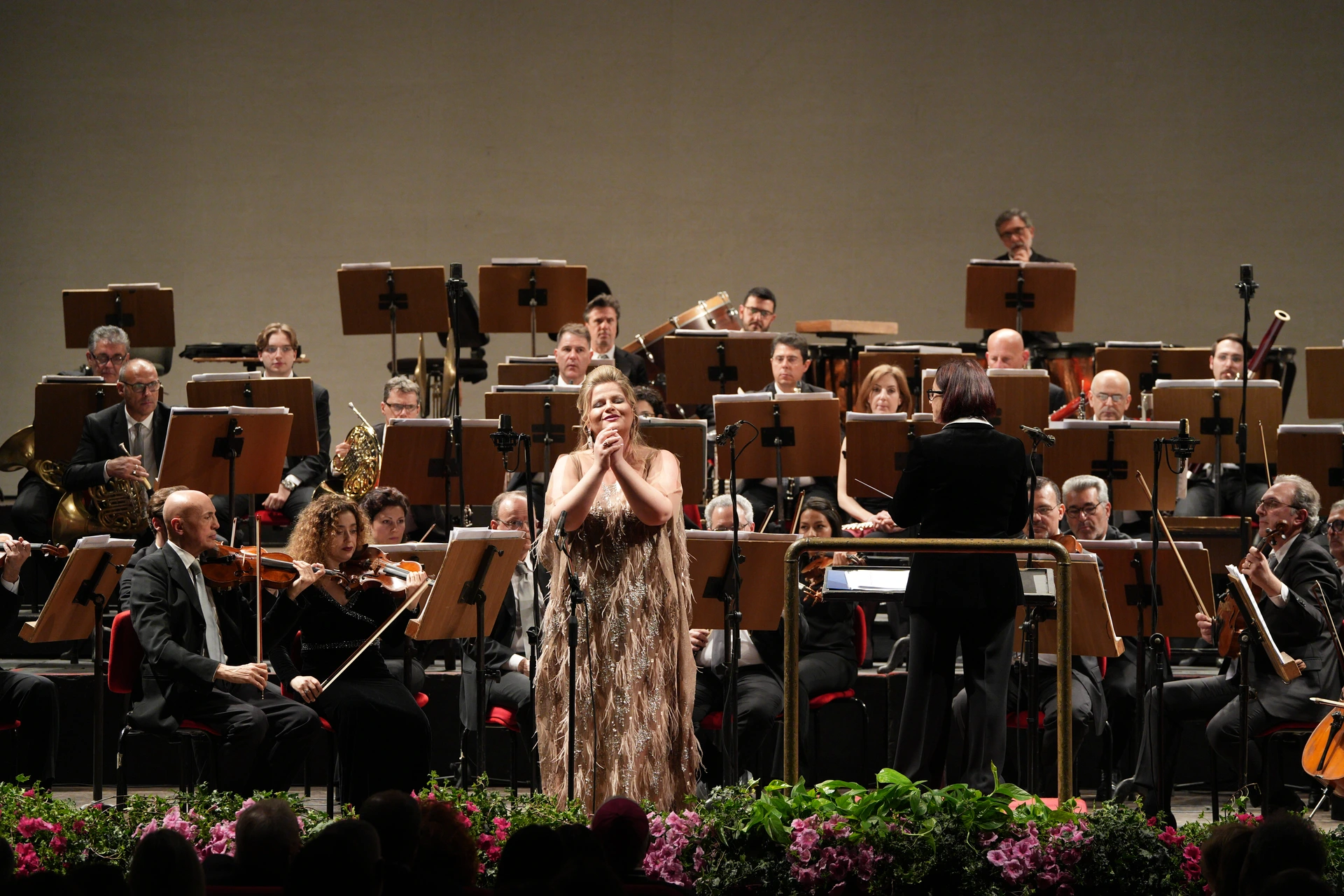
Pucciniana, composed by conductor and composer Andrea Battistoni, is a tribute to the timeless genius of Giacomo Puccini. It is a cantata for soprano, tenor, choir, and orchestra, created to honour the centenary of Puccini’s death. Being the soprano soloist for its world premiere on 29 November – the exact day of Puccini’s passing – is an incredible honour. I am especially excited to return to the Royal Opéra de Wallonie in Liège for this occasion, under the baton of the fantastic Maestro Giampaolo Bisanti, to bring this exceptional work to life for the first time.
Marigona Qerkezi in concert
What is your routine on a performance day?
Oh, I love to sleep! A good night’s rest is very important for me on the day of a performance. Hydration and nutrition are also key, as is general wellbeing, but we’re not always feeling our best. After all, we’re just human! That’s why I would emphasise once again the importance of having a solid singing technique and the ability to navigate the warming up of my body and instrument in accordance with the day and what awaits me on stage.
Do you have any ‘superstitions’ or keep certain objects in your dressing room?
Not really, except for making sure that I don’t forget my contact lenses [she laughs].
As an opera singer you are always travelling – is that difficult for you?
I view travelling as an enriching part of my life as a singer. It allows me to discover new cultures, meet fascinating people, and, of course, perform in incredible places around the world. While it can be demanding at times, being in new places surrounded by new environments and people, I see it as an opportunity for growth and inspiration, both personally and artistically. That said, it can get lonely sometimes!
Where is home for Marigona Qerkezi?
Whenever I can between projects, I return to my family and loved ones in Kosovo. Sometimes, I even bring them along to join me wherever I am, which makes any place feel closer to home.
Graham Spicer, aka ‘Gramilano’, is a writer, director and photographer based in Milan. He was a regular columnist for Opera Now magazine and wrote for the BBC until transferring to Italy. His articles have appeared in various publications from Woman’s Weekly to Gay Times, and he wrote the Danza in Italia column for Dancing Times magazine. Graham was the historical advisor on Codice Carla, the 2023 documentary on Italian ballerina Carla Fracci.
Graham also works as a dance photographer, and his photos have appeared in many books, theatre programmes, and magazines, including Dancing Times, Dance Spirit and Ballet2000, as well as all the major Italian newspapers.
He is a member of the Dance Section of The Critics’ Circle.