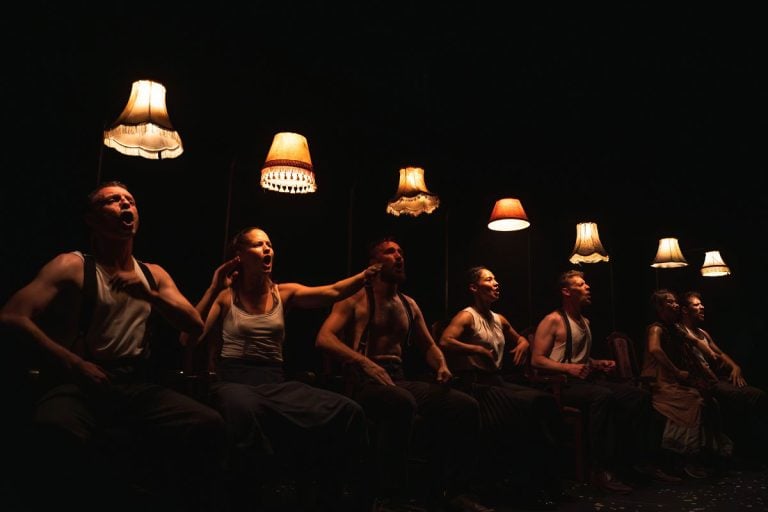
Review: La Scala dances Balanchine and Robbins – mesmerising beauty and charm

Graham Spicer sees La Scala Ballet’s triple bill with George Balanchine’s Theme and Variations and Dances at a Gathering and The Concert by Jerome Robbins.
| Title | Balanchine and Robbins |
| Company | La Scala Ballet |
| Venue | Teatro alla Scala |
| Date | 15 November 2024 |
| Reviewer | Graham Spicer |
La Scala’s triple bill of works by Balanchine and Robbins was one of the most satisfying evenings of dance I have seen for many years. It was my first time seeing Dances at a Gathering in the theatre and I was mesmerised and moved by its beauty and charm.
But first to Balanchine.
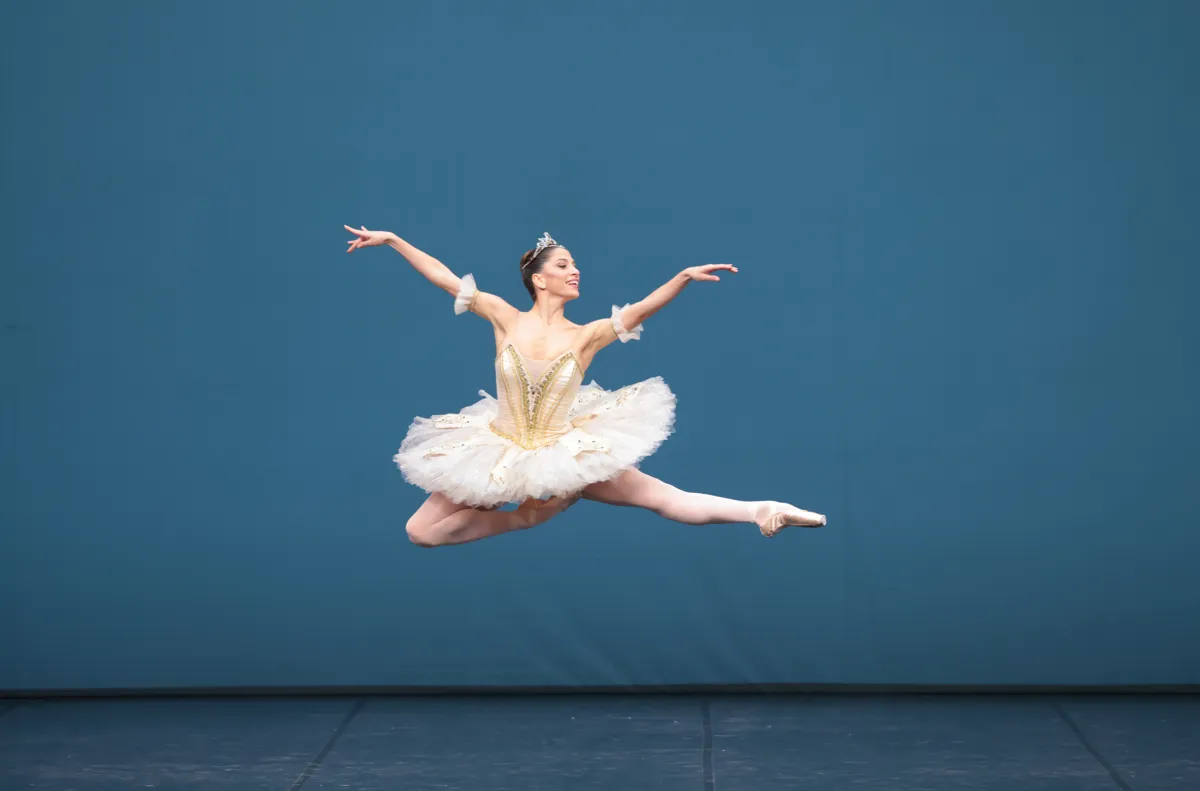
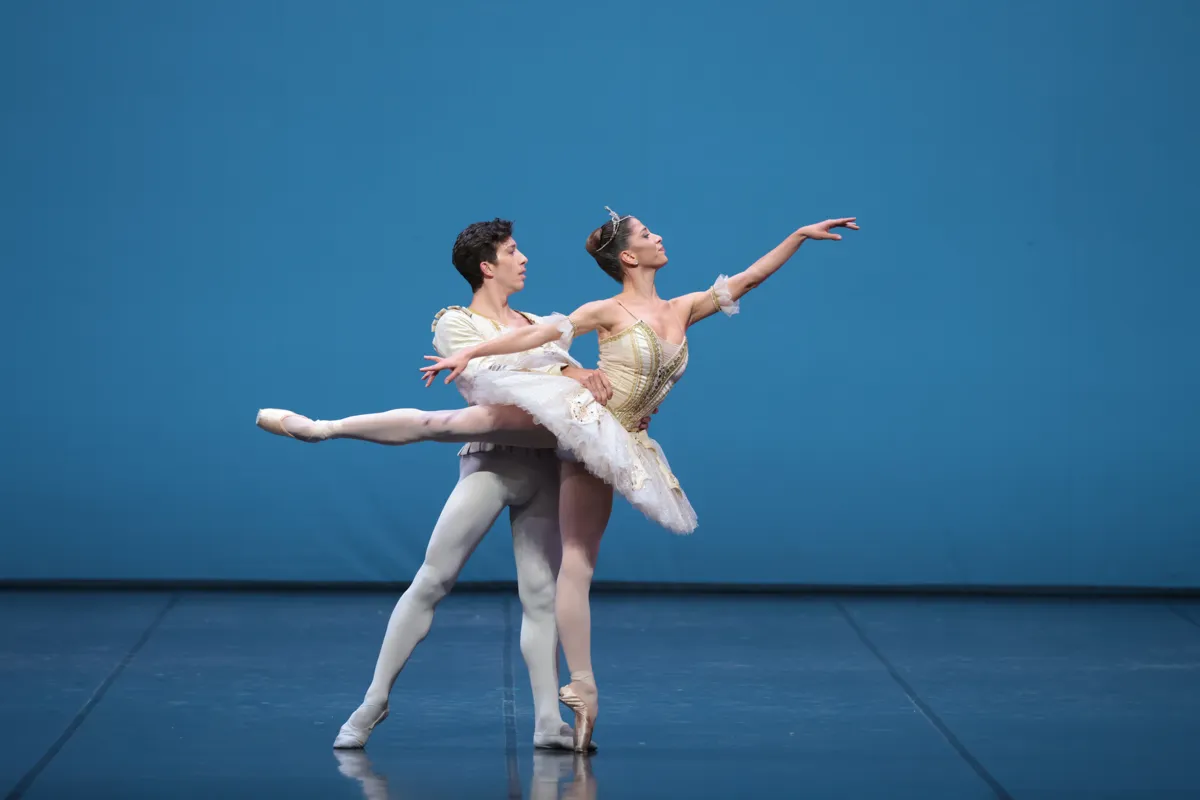
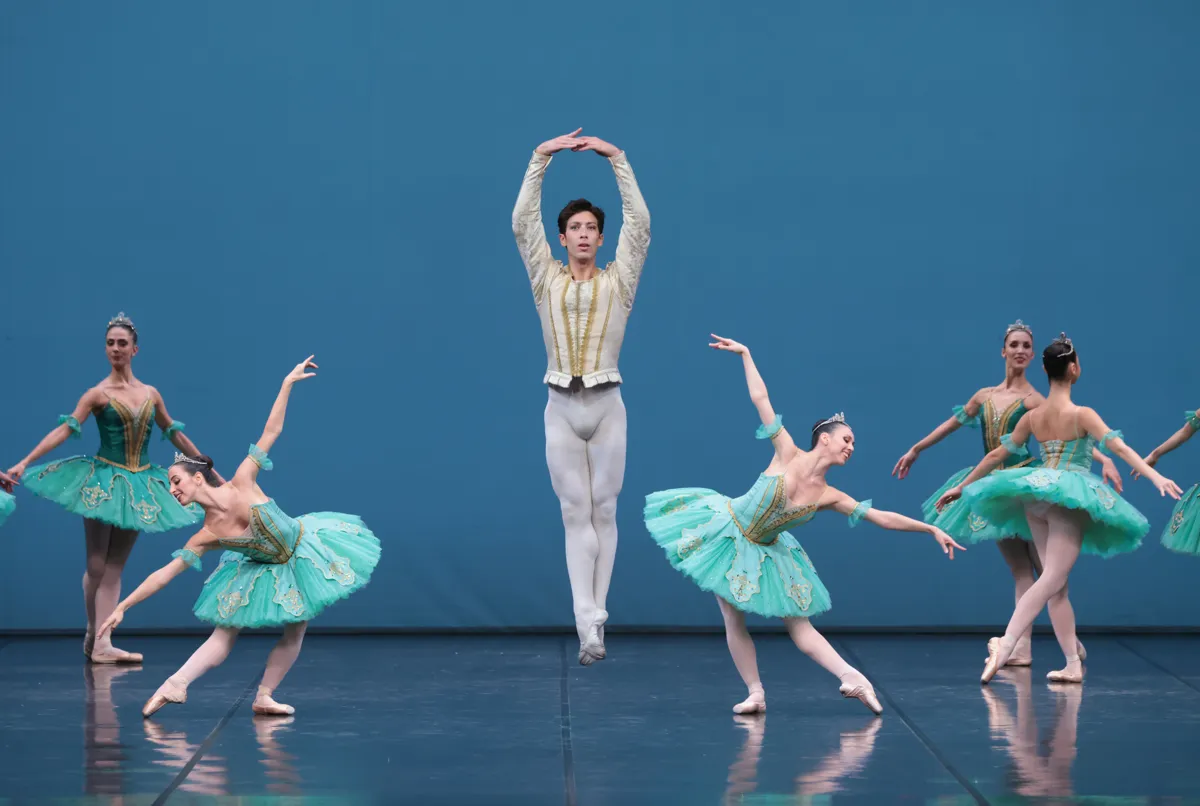
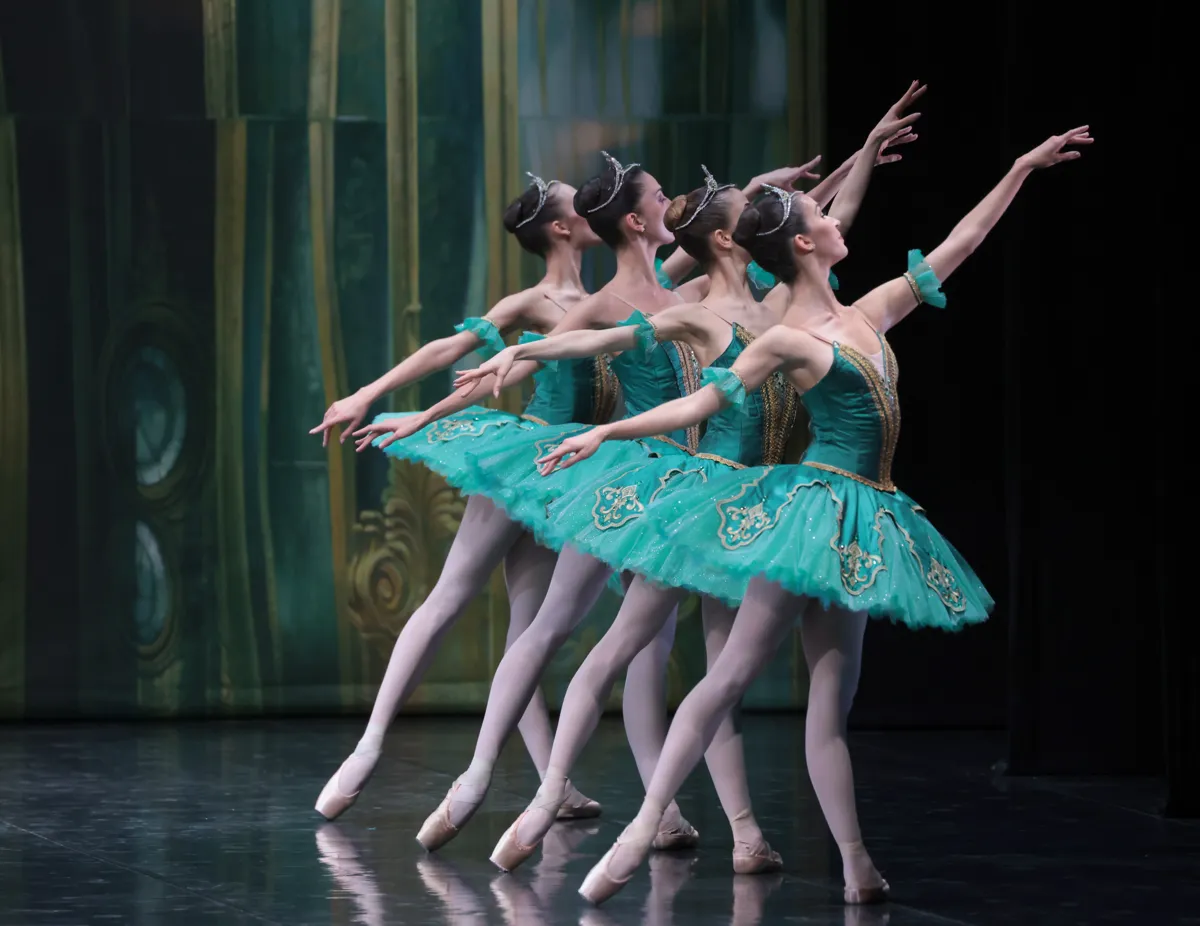
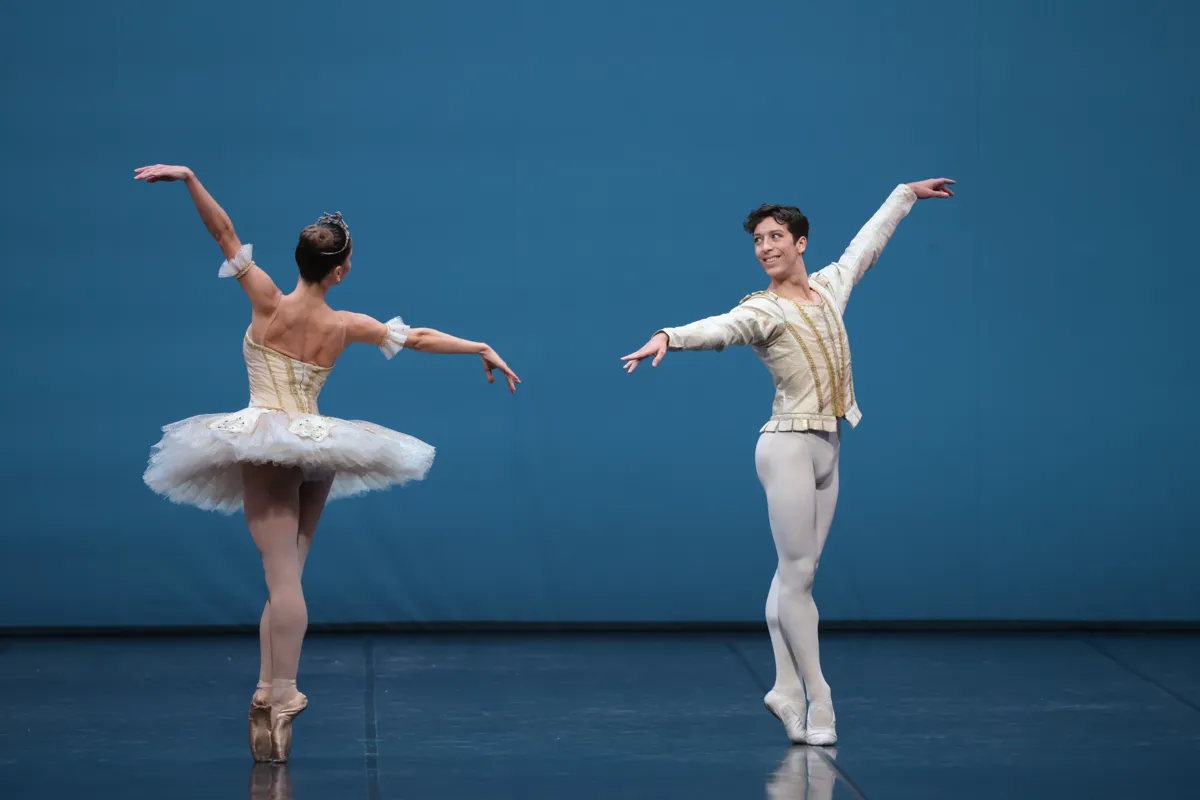
George Balanchine‘s Theme and Variations opened the programme. This show of virtuosic technique and stylistic elegance was costumed by Luisa Spinatelli in emerald green for the eight soloists and sixteen corps dancers, and with white and gold for the principal couple. The opening was dazzlingly lit, setting off flickers of magic from the tiaras and tutus. Alice Mariani and Mattia Semperboni added a megawatt spark with their magnificent performances.
Balanchine created his 1947 work on bended knee paying tribute to Marius Petipa – even with nods to some of his choreography, such as Swan Lake’s four cygnets – and Russian imperial grandeur. It is set to the final movement of Tchaikovsky’s third orchestral suite with its thrilling pomp and never-ending buildups. It starts quite simply – the theme – with sequences of steps you might find in a ballet class, but that doesn’t last for long as the 20-minute ballet heats up with twelve variations.
The initial explosion comes with Mariani’s first variation – double gargouillades, lightning-fast chainées, pirouettes with one arm raised, and so on – with hardly a breath between each step. When there was a short preparation her port de bras was generous, deep and soft. She is always a composed dancer and notwithstanding the speed and difficulty, she looked as though she was thoroughly enjoying herself.
Semperboni impressed with his clean technique and fleet footwork, and his sequence of eight double tours (separated by single or double pirouettes!) was remarkable, with him often landing in perfect fifth position. The couple’s main pas de deux was sublime.
The final polonaise had this spectator grinning widely from the sheer pleasure of the music, the movement and the dazzling stage picture.
Both Jerome Robbins pieces were new to La Scala, and both are to music by Chopin.
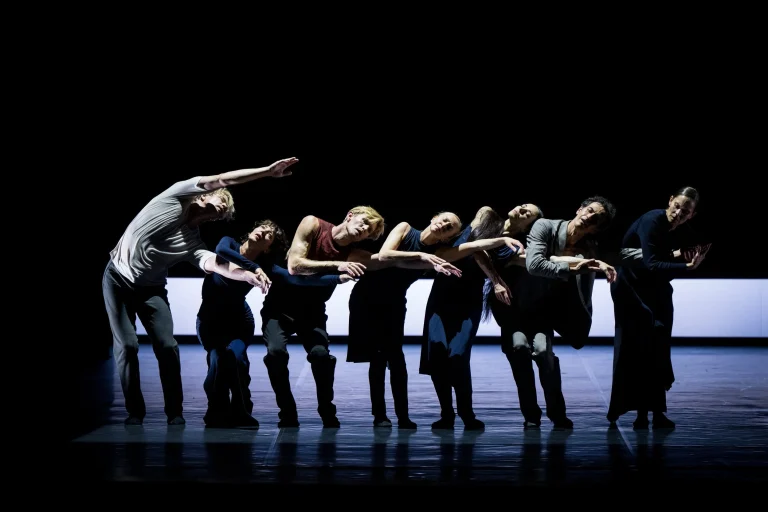
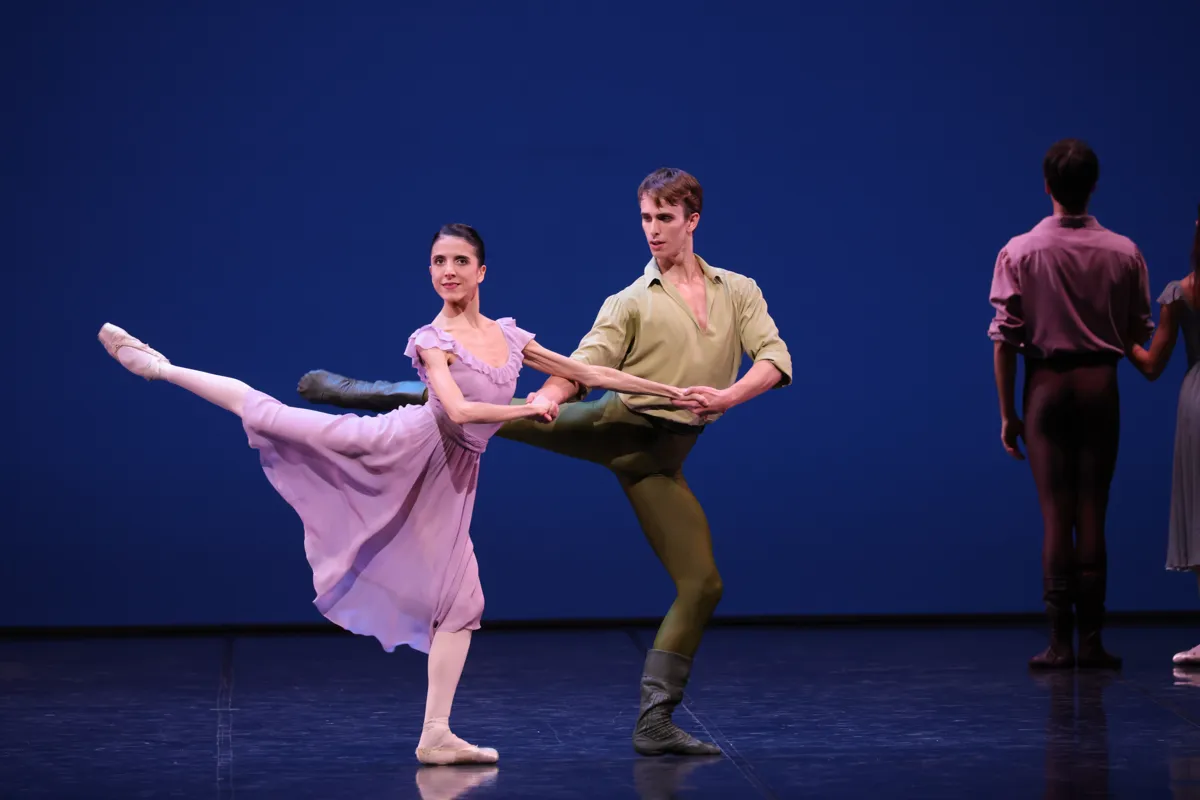
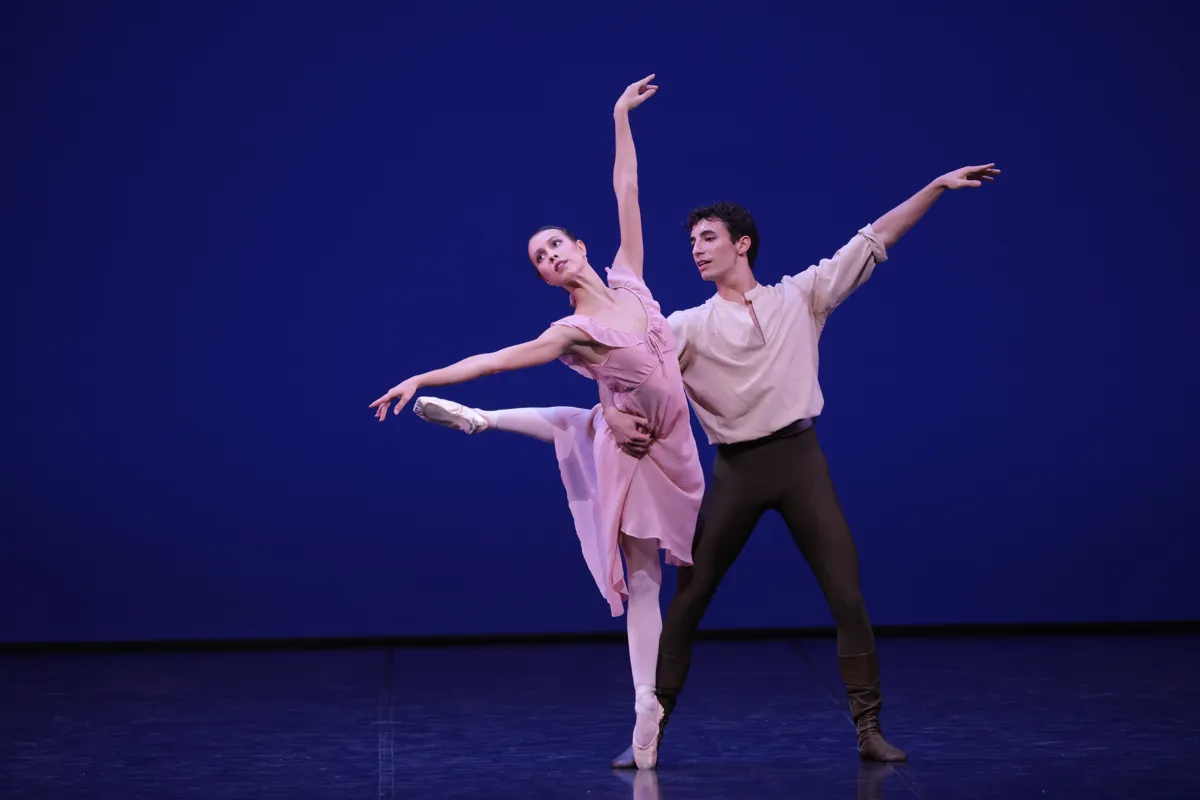
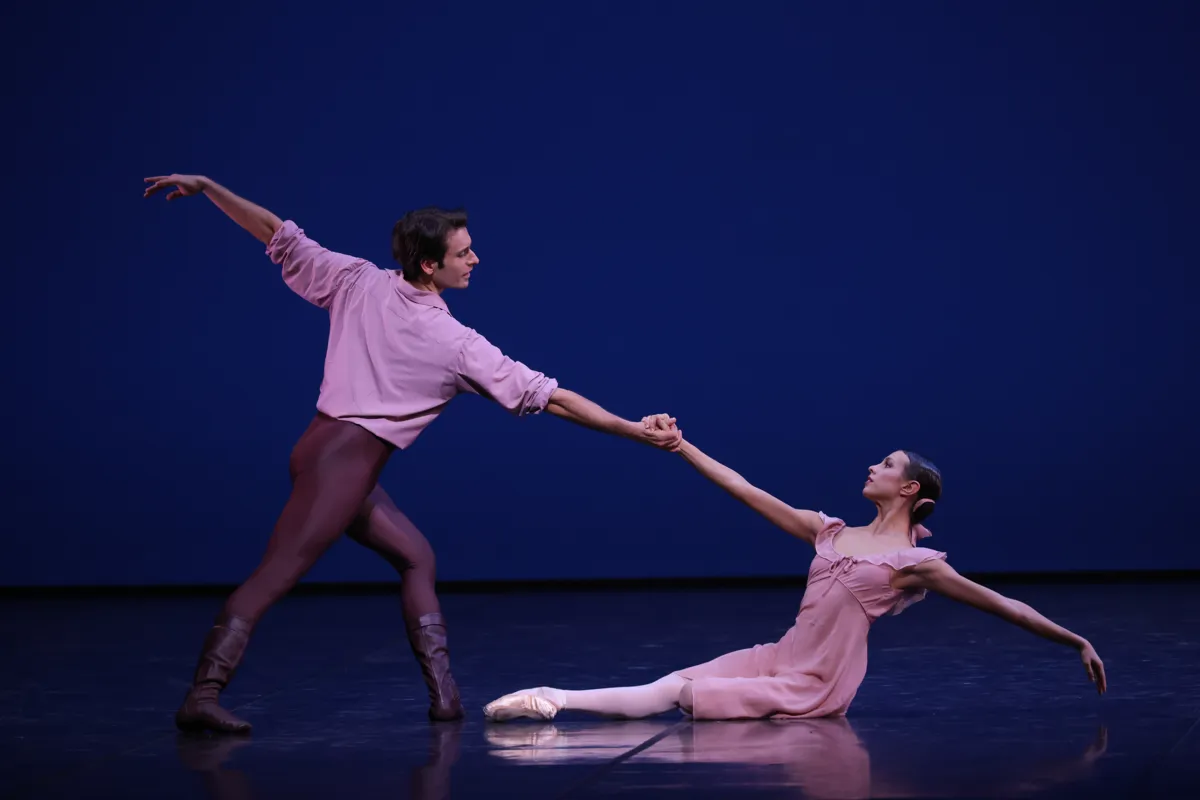
Dances at a Gathering is a casual, seemingly improvised series of dances to solo piano with playfulness, doses of Eastern-Europe melancholy, and very human reactions between those on stage. So much so that after its 1969 premiere with the New York City Ballet, Robbins wrote a well-known letter to the editor of Ballet Review:
For the record, would you please print in large, emphatic and capital letters the following:
THERE ARE NO STORIES TO ANY OF THE DANCES IN DANCES AT A GATHERING. THERE ARE NO PLOTS AND NO ROLES. THE DANCERS ARE THEMSELVES DANCING WITH EACH OTHER TO THAT MUSIC IN THAT SPACE.
Thank you very much.
Jerome Robbins
Yet even an eminent choreographer can’t stop an audience seeing stories in the dancers’ movements and reactions – if a dancer offers his hand and the ballerina taps it playfully instead of taking it, then there is already the beginning of a story.
Sometimes the dancers seem to be remembering a step, something that has been done before, as though recreating a sequence might evoke a series of memories. It is haunting. Robbins knows how to use silences, and how to be expressive by not using movement even as the music goes on – a true man of the theatre.
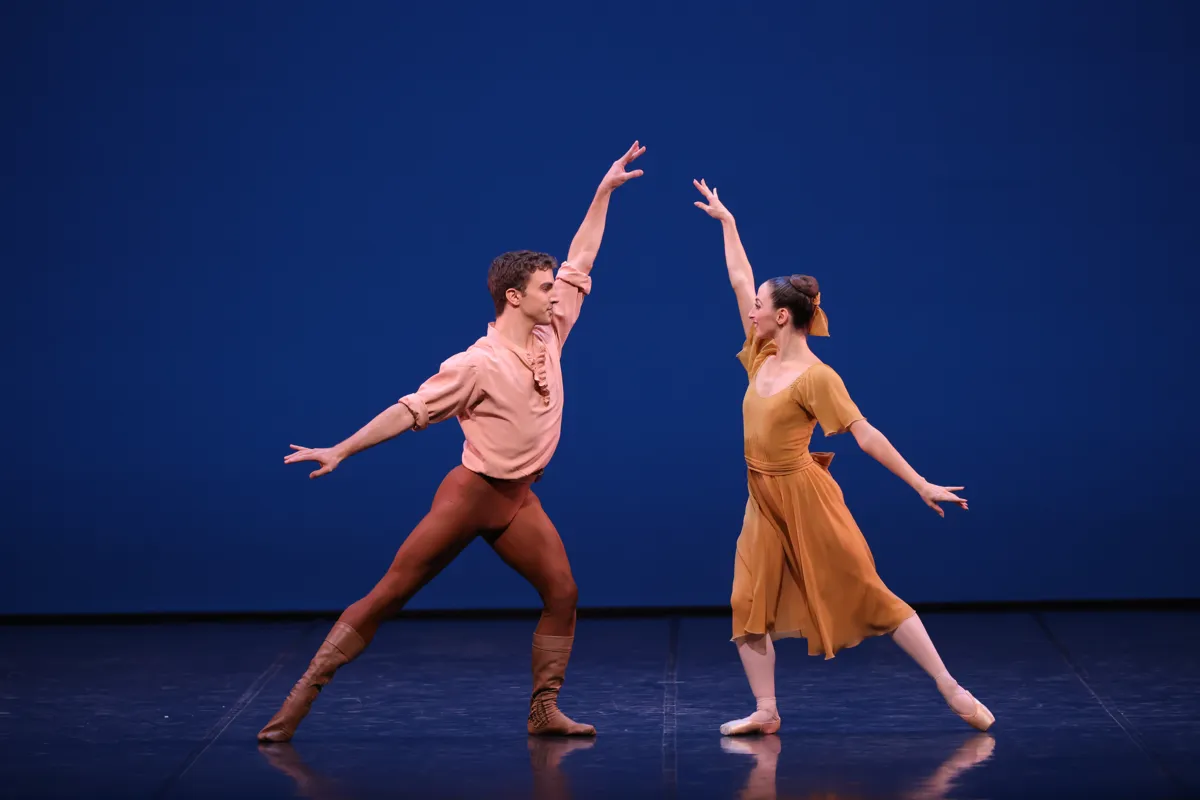
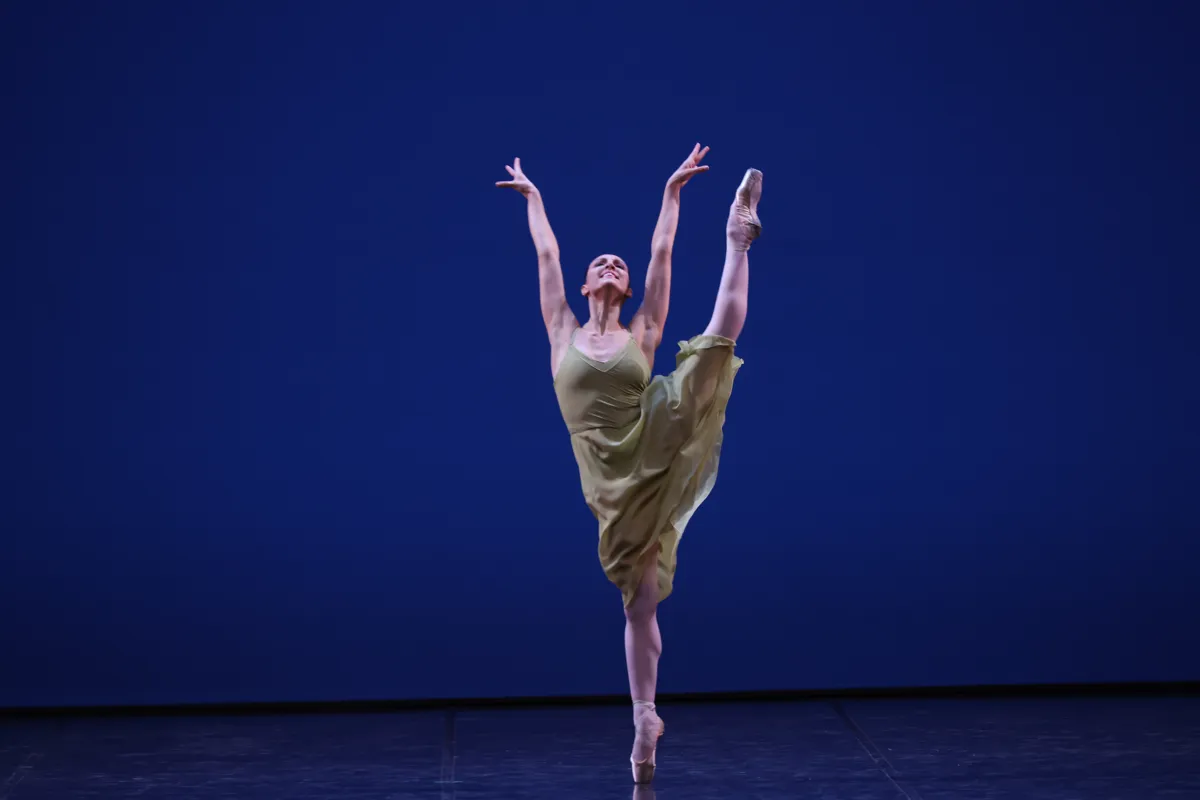
The use of a colour-coded cast – Mauve Boy, Brick, Pink, Blue Girl, and so on – makes it clear that the duos and various groupings are usually random. Principal dancer Martina Arduino was Mauve in the LaScala.tv relay of the opening night cast, but in the cast I saw in the theatre she was even more expressive as the flirty Green Girl. Five of the ten dancers on opening night were principals, but there were just two here, together with soloists and corps members, yet it was exquisitely performed revealing some exciting new talents. The promising Darius Gramada (corps) who was Green Boy on the opening, gave way to the elegant Navrin Turnbull (soloist). Others that particularly caught my eye were Agnese Di Clemente, Vittoria Valerio, Camilla Cerulli, Domenico Di Cristo and Gioacchino Starace.
Saïd Ramos Ponce’s solo as Brown Boy opened the piece with pensive gestures – recalling a past gathering? (Sorry Jerome, I’m making up stories again.) An hour later all ten dancers are on stage gazing out and upwards, like The Cherry Orchard‘s Ranevskaya, looking at the home she’ll never see again. It’s a masterpiece of sweet longing.
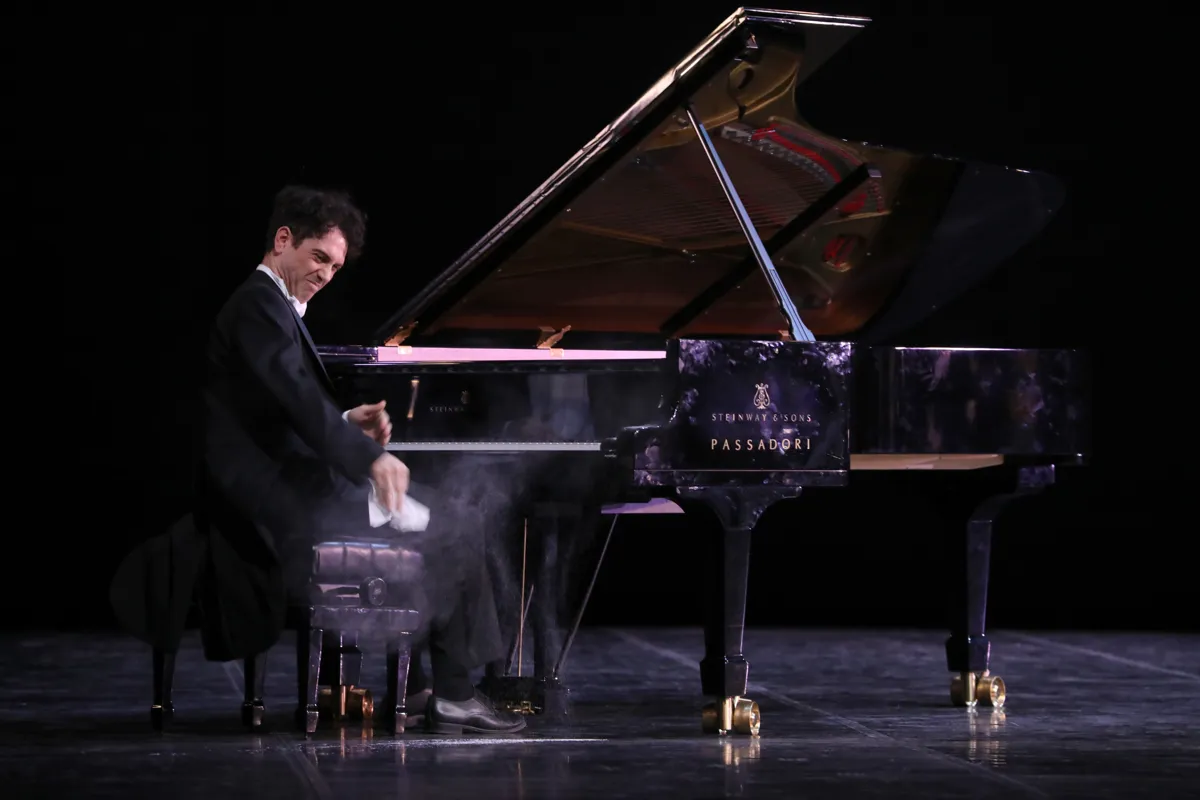
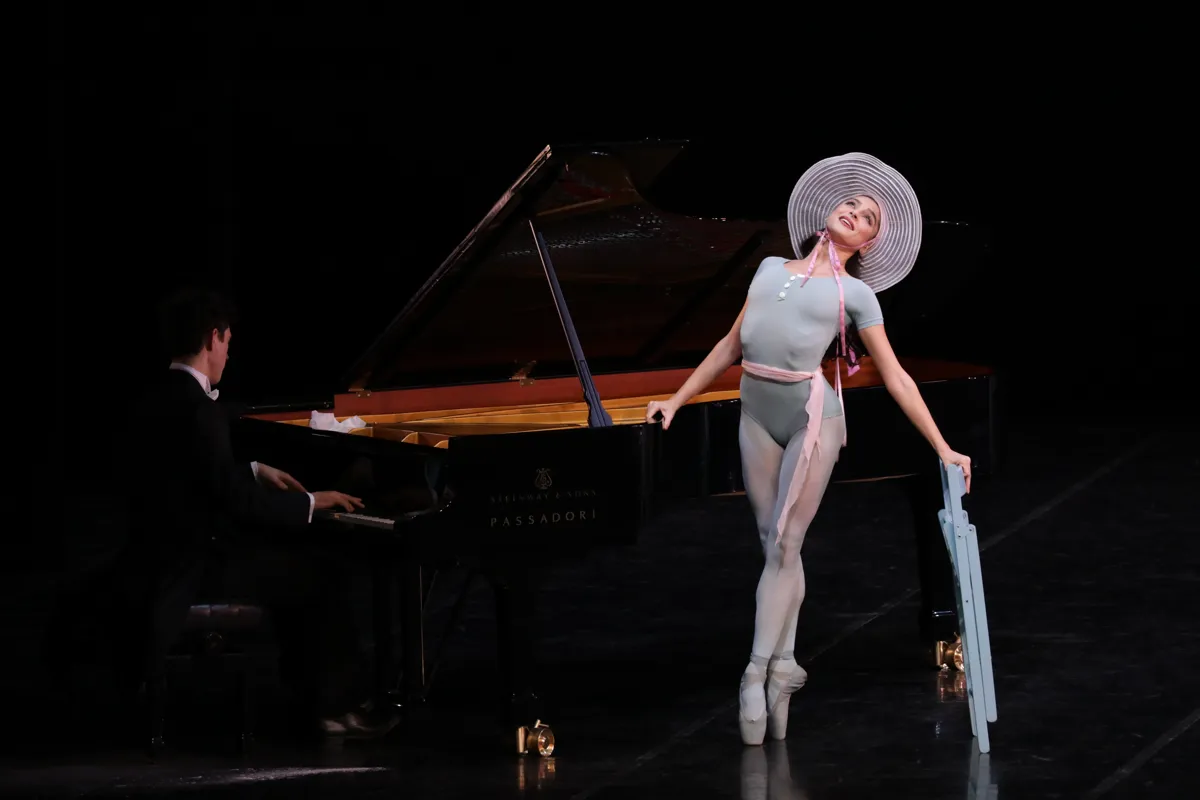
A special mention for the pianist, Leonardo Pierdomenico – whose debut album of works by Franz Liszt was a Gramophone Magazine’s Editor’s Choice – who was captivating at the piano in the pit and showed great comic timing when the piano came onstage for The Concert.
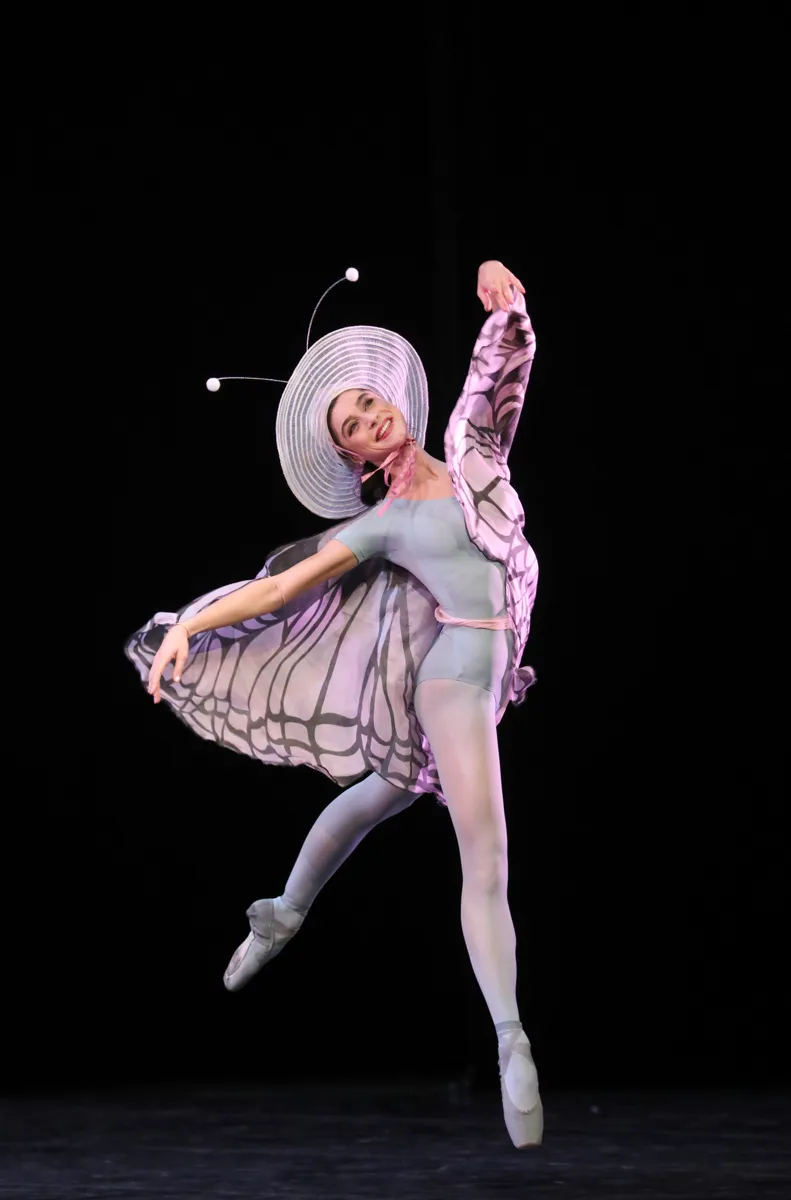
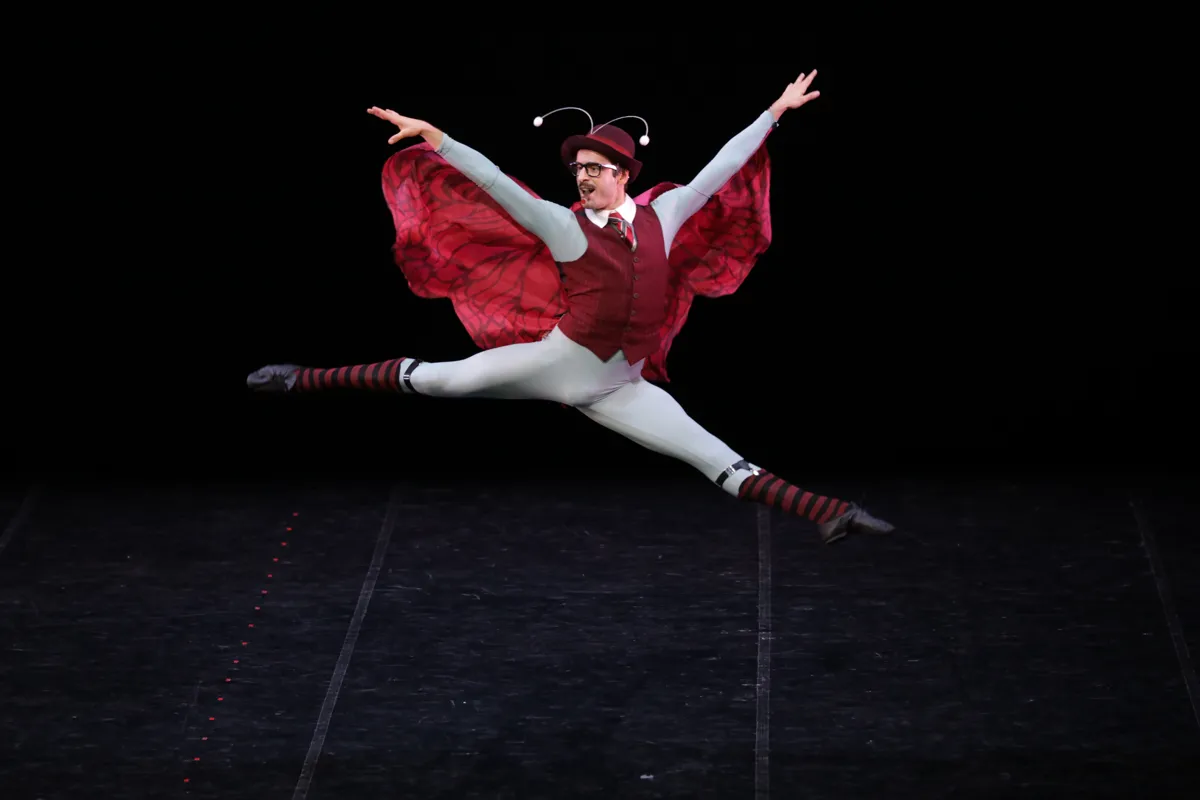
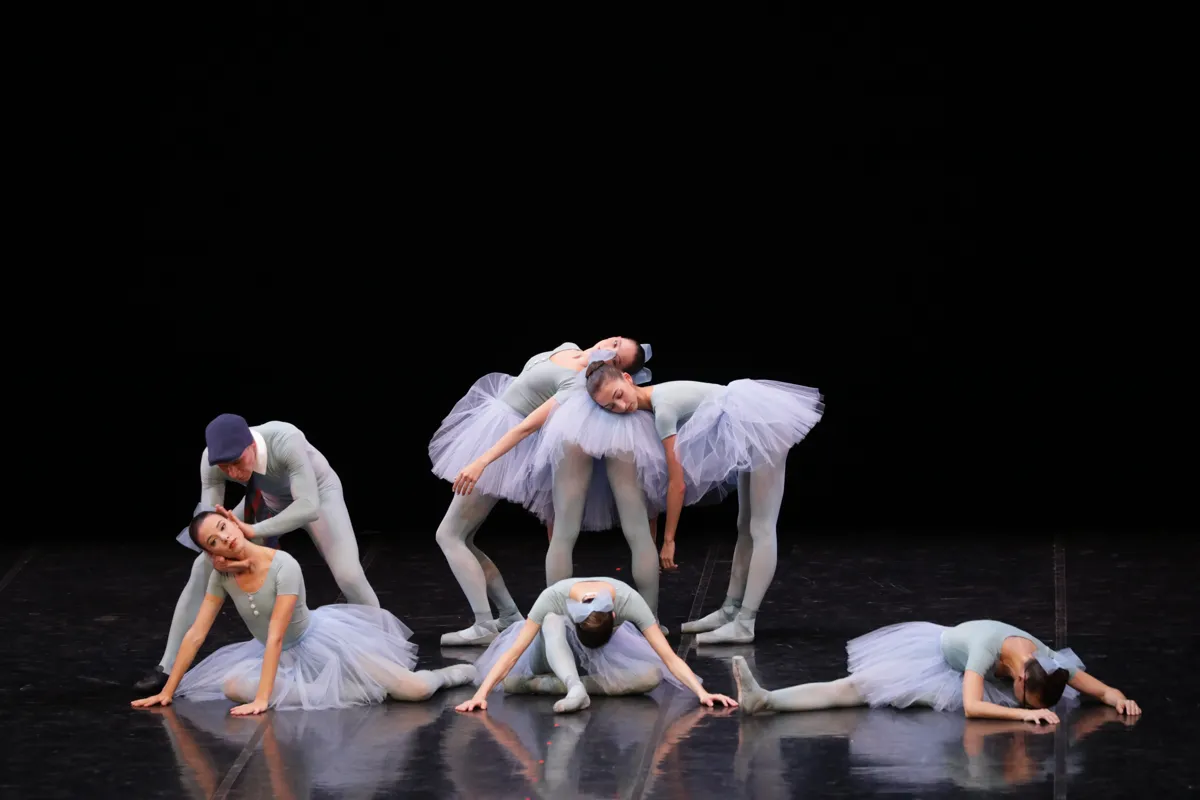
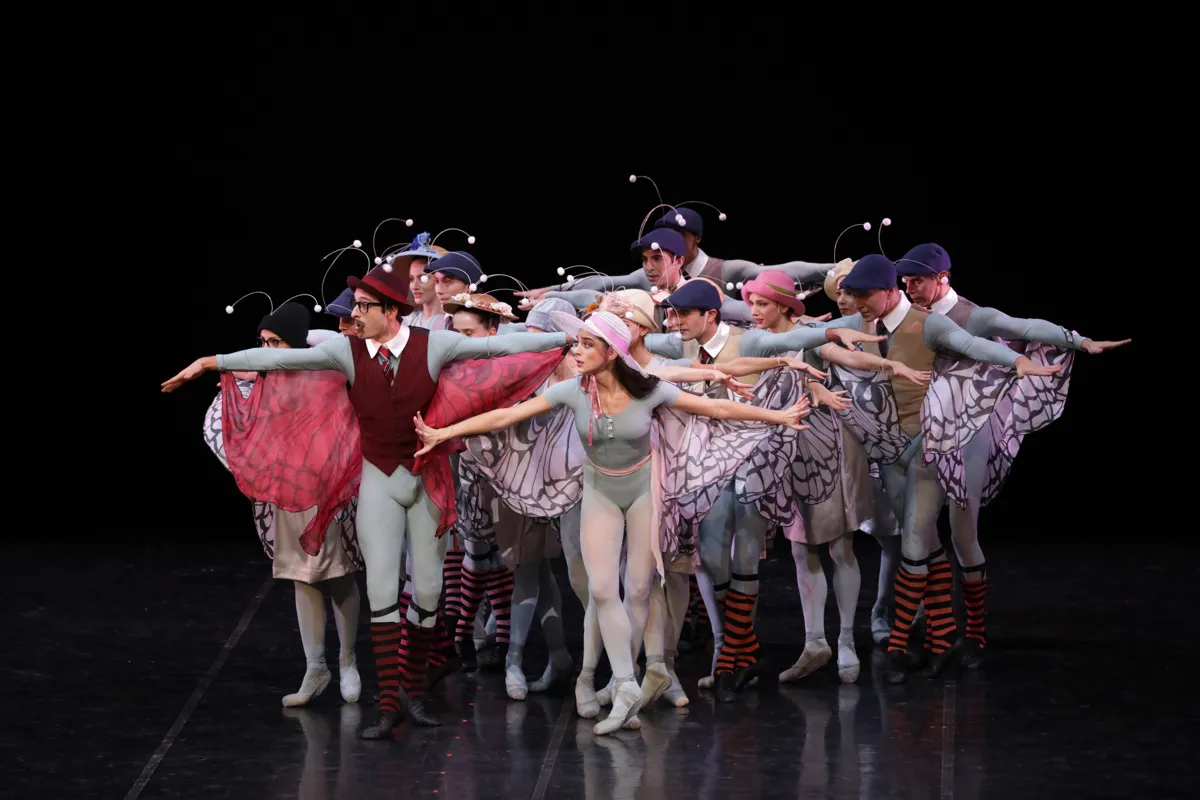
The fun final part of the programme sent the audience home smiling. The Concert, with its slapstick humour and ballet gags, also has its poetic moments, like when the cast crosses the stage with umbrellas – a simple walk, but hugely effective. Robbins anticipated The Trocks in this 1956 work, with The Mistake Walz having ballerinas slowly correcting an incorrect port de bras, or a lone ballerina heading off in the wrong direction. Of course, this is only funny if it extremely well performed, which it was.
Outstanding was Marco Agostino as the Groucho Marx-like, set-upon husband, and Caterina Bianchi was gorgeous as the ballerina. Her pas de deux with the Shy Boy Alessandro Paoloni was very funny indeed, as was her butterfly dance with Agostino. Not one performance let the piece down, and all the roles were played with truth – the only way to make the comedy work.
Several years ago, I voiced my opinion about the low standard of acting in the La Scala company. Someone who had seen Frederick Ashton’s La fille mal gardée in London said it would be good to see it in Milan. I replied that they didn’t have the acting skills and would not find the irony in the piece, but how that has changed, as the two Robbins pieces proved. Now casting Lise, Colas, and Alain would be easy, and there are quite a few who could play Widow Simone… just sayin’.