Interview: Jakub Józef Orliński – freedom of movement

Five years ago, in 2019, I interviewed the countertenor Jakub Józef Orliński ahead of his Glyndebourne debut. The interview was not about his singing for an opera magazine, but about his dancing for Dancing Times. His career was taking off, especially after he was seen in a video that went viral in 2017, which has been seen 12 million times – somewhat unusual for a countertenor singing an aria by Vivaldi. I interviewed him for Gramilano in 2018, just before the release of his first album – he now has nine albums and several opera recordings under his belt.
Below is the interview from 2019.
A countertenor taking over a lead role doesn’t usually make headlines, but if you are Jakub Józef Orliński and you happen to do a little breakdancing on the side, you may find The Sunday Times coming up with “Opera’s baroque‘n’roll Glyndebourne star” or a BBC news item announcing, “Breakdancing opera singer steps in as Glyndebourne leading lady pulls out”. He’s a PR dream.
However, it’s not smoke and mirrors. The 28-year-old Polish countertenor is a fine singer – he returns to the Wigmore Hall in December with a programme from his new album ‘Facce d’amore’ – and an impressive b-boy too.
Mini glossary, part one: breakdancers are known as ‘breakers’ or ‘b-boys’ (break-boys) as well as ‘b-girls’, a more recent PC introduction. The term breakdancing is considered a media term and breakers call the style ‘breaking’ or ‘b-boying’.
I chatted with Orliński two days before his Glyndebourne Festival debut as Handel’s Rinaldo in August 2019.
“Dance came naturally to me. I came to it late because I started breaking when I was 18 or 19, but I was always an active kid and in snowboarding, skateboarding, and rollerblading I did a lot of tricks: backflips and sliding down rails. A friend suggested we should try breaking and we went to a class.” He describes the experience as being akin to an enlightenment. “It was like finding something you were searching for, even though you didn’t know what it was. The freedom of movement, and the music! I love music.”
To convey Orliński’s speech accurately, would be to splatter the page with exclamation marks. He is infectiously enthusiastic. “It’s not like ballet where everything has to be technically correct, here you have the basics and then you can just experiment, develop your own style. There is no right or wrong, it’s just about letting it flow.”
In Poland, he joined the Skill Fanatikz Crew and they entered major competitions and performed shows. Using his b-boying abilities, he was featured as a model and participated in publicity campaigns for big-name companies..
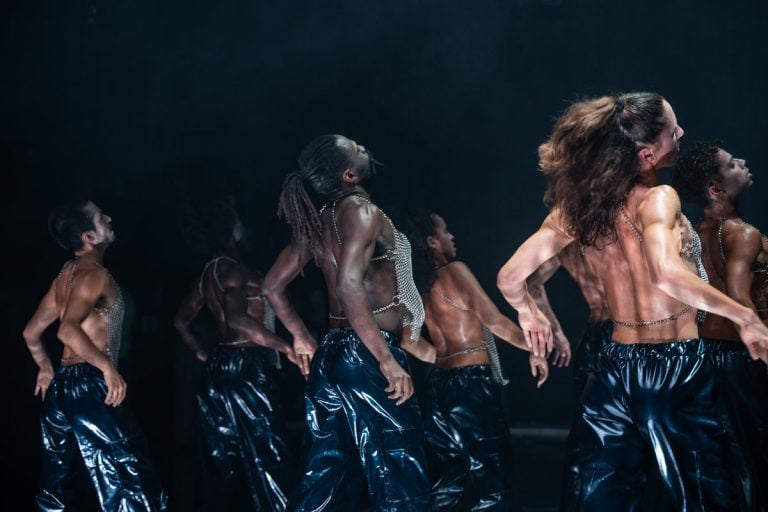
Mini glossary, part two: breakers have four main moves, which are toprock, downrock, power moves and freezes. Power moves include showy headspins and windmills; toprock is performing complex footwork while upright; downrock is floorwork with the body supported on the hands and feet; and freezes halt all movement, maybe by balancing on the one hand.
“People think of breaking as backflips and head spins, those power moves, which are really spectacular, but there’s so much more… there are so many colours. It’s more complex and difficult than it looks.”
To my eyes it looks extremely difficult, dangerous even. “I learned pretty early how to fall. There is a technique in breaking which is called from crash to create. You try to fall in a creative way so it doesn’t look like a crash.” To minimalise crash damage, Orliński is careful about warming up. “Breaking is pretty extreme, so you have to be careful. You can’t just walk into a room and start doing a headspin or you’ll break your neck.
“I put on some relaxing music, so not Jurassic 5, my favourite hip hop crew, otherwise I get too excited and want to dance right away and that’s not cool. I slowly do my warmup: a yoga-ish, break-ish routine with a bit of stretching, and some handstands for example.”
Then he ups the ante. “I love to put on music and dance freestyle, it’s like a mantra, a feeling sort of like meditation. Sometimes I just freestyle but sometimes I work on certain moves. For example, if I want to learn how to do a transition from windmills to flares, I repeat and I repeat and I repeat. It’s super when you’re finally able to do those power moves, you feel the momentum, and you don’t actually use that much energy while doing them. It’s incredible.”
There are moves that he wouldn’t risk because of his voice. “A headspin is very heavy for your neck muscles, so I don’t do headspins – also because I don’t want to lose my hair, and I like my hair!”
At the Julliard School in New York, Orliński was taught tangos, waltzes, and Baroque dance during his opera training, but he’s never used any of this in opera. However, in Cavalli’s opera Erismena in Aix-en-Provence in 2017 he did some breaking on stage: “My character had an explosion of ecstasy and happiness, as though he was on drugs, so I was doing windmills on stage in the break during my aria.”
Although he gets little opportunity to dance on stage, he likes to get physical nonetheless. “In Rinaldo in Frankfurt there were real sword fights, and I was rolling across the stage a lot, but I was doing it with dancers. I like this kind of physical challenge on stage but not because it’s trendy. With singers, I always ask how they prefer to do it – my way’s not the only way. You don’t have to be thin or good-looking to be a singer, but you need to be fit. I work a lot on my voice, and I work a lot on my body. It’s about stamina.”
He finds that the discipline of dance helps inform his movements. “I always start to create my character from movement, and it even helps me find how that character would sing and what sort of ornaments they would add in. I always ask for the character’s shoes in rehearsal because they give you hints about how the character can move. When people rehearse in sneakers and then they are put in stiff boots or shoes with heels, suddenly their character is broken.
“Like I put the music of a new opera into my voice, I want to put the physicality of the character into my body. I go to a practice studio by myself because I don’t want to waste anybody’s time but, like the voice, it needs repetition.”

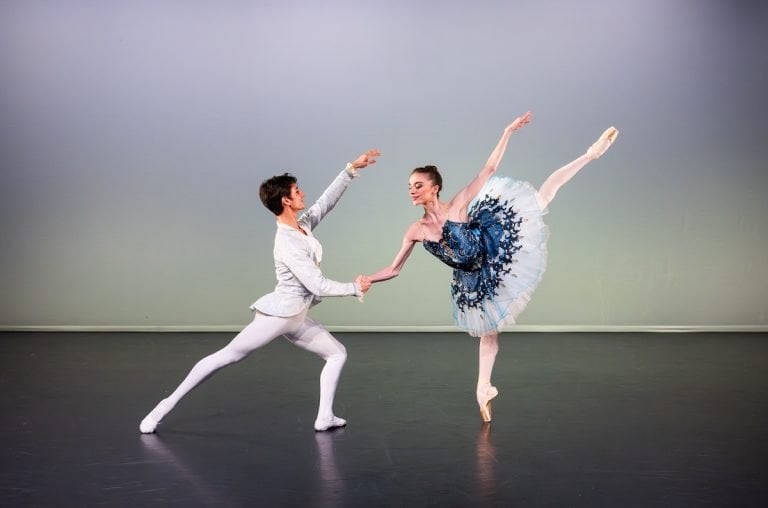
In 2015, Orliński found himself signing a contract with Leipzig Ballet. Mario Schröder’s ballet Othello called for a countertenor to play Shakespeare and, having a b-boy in front of him, the singing role became somewhat athletic. “I decided to take classes with the company, so for two months I was at the barre every morning. That was my first time in a ballet class. It was entertaining for my colleagues because they were all laughing at me. It was embarrassing, but it was amazing.
“In breaking, muscles are very strong but compact. We do like a battle system, so you’ll do your set for like 45 seconds and then the other dancer comes in and you have a pause. During the set, it’s a very intense 45 or so seconds. In ballet, you hold your leg out straight for like 500 hours, and the muscles are very long. It’s a totally different usage so it was very painful at the beginning. After a few classes I couldn’t move, but it was a really crazy, good experience.
As his opera career flourishes, his free time diminishes. Does he feel frustrated when he doesn’t have time to dance? “Yes, and unhappy. When I was on tour in June, I was on a train every day and there was no time to do any physical stuff. I did little routines before singing, but that’s not a workout, that’s not my dancing. It was like there was a huge bomb of energy I needed to release.
“It’s sort of like a meditation for me to do breaking because this classical world and life in general is sometimes tough. This is how I deal with stressful situations. I just go the studio and let it out physically because then I become calm and I can think more clearly. Everything becomes a little bit easier.”