
The Royal Ballet School looks to the future as it celebrates its 100th anniversary
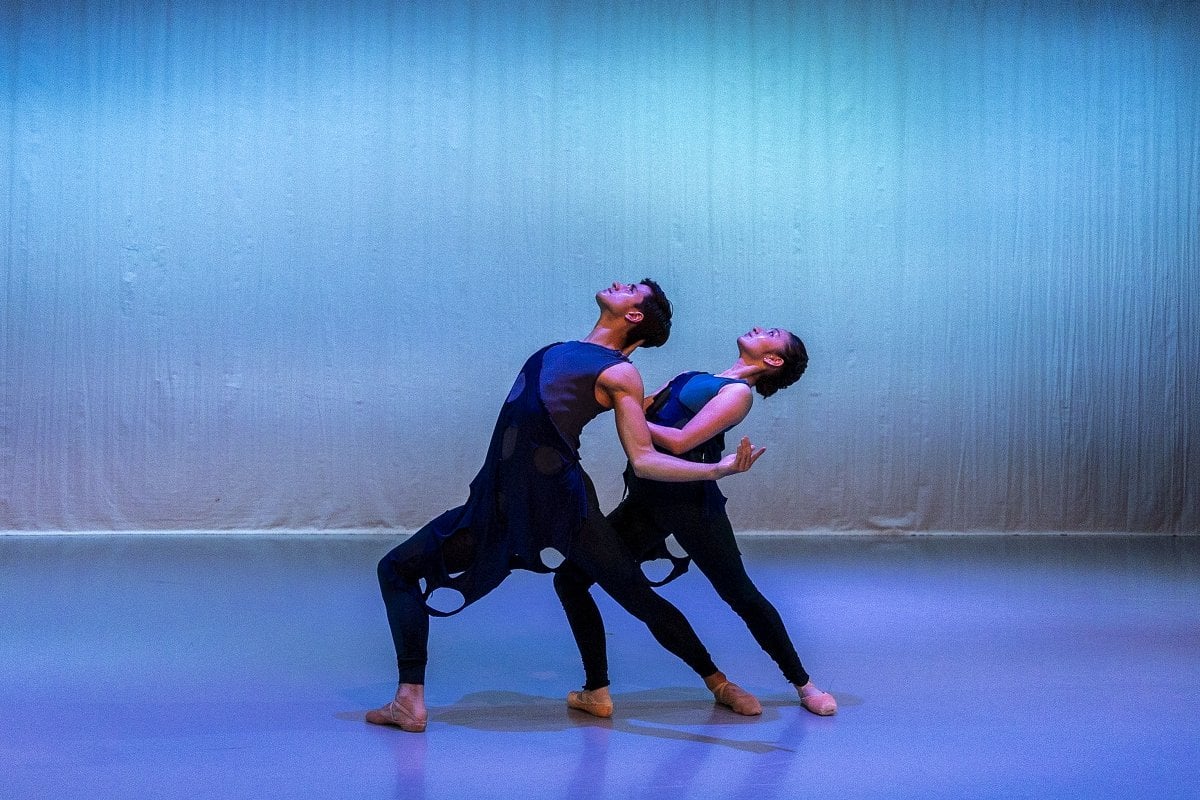
| Matthew Paluch attended a Royal Ballet School Centenary Insight Day. Like the school’s founder, Ninette de Valois, he believes we need more than feelings; we need intelligence. |
2026 is the centenary year of The Royal Ballet School, and in order to celebrate this milestone, the school has organised a number of events. One, or rather three of these events, are Insights organised by Dr Anna Meadmore (Manager of Special Collections) over three Sundays in March.
March 8th looked at “our past – Revisiting the founding ethos and creative ambition of de Valois’ Academy of Choreographic Art: putting principles into practice”
March 15th, “our present – Shaping Change: Innovation and Evolution in Ballet Training”
March 22nd, “our future – Foundational and future aspirations: considering the ongoing impact of the regenerative creative ethos embedded in The Royal Ballet School”
I was only able to attend the final event, but if honest, I am personally most interested in the future. Why? Because I believe the answer(s) to be elusive and in desperate need of discussion, analysis and some kind of resolution/structuring.
My fears of the intangible feel apt post-Insight – but attending the symposium was absolutely worthwhile, as it both solidified concerns and raised further valuable questions regarding the hard-to-quantify conundrum: what is the future of ballet?
Below, I’ll include the RBS programme notes of the day and share some thoughts I had on each section. Following this, a closing paragraph to keep the dialogue alive.
“Dr Anna Meadmore (curator of this series of centenary insight days) considers the enduring strengths and possible fault lines in Ninette de Valois’ founding vision for her School – in relation to the teaching of choreography as a composite theatrical form, fostering versatility, and creating a modern ballet repertoire”
This was, of course, riveting, as Dr Meadmore is highly knowledgeable about all things de Valois and has a knack for making her rigorous work accessible. What struck me most were the cause-and-effect relationships between de Valois’ choices and where we are today, in the negative sense.
De Valois was responsible for starting the school, initially known as The Academy of Choreographic Art, and was a capable, modernist choreographer in her own right. Yet de Valois knew in order for the experiment to succeed she had to put the company (Vic–Wells Ballet 1931) before the I (herself) to the point that she stepped aside to allow for other creative talent to flourish – most evidently Frederick Ashton and Kenneth MacMillan.
As these two men went on to create the majority of the Royal Ballet’s key repertoire (to date), a pattern emerged: male choreographers creating on female muses. And this was to define what came after, i.e. an undeniable choreographic gender imbalance within the walls of the Opera House (ongoing).
Meadmore was quick to confirm that women within the institution have been able to flourish outside the Opera House, and that the Royal Ballet seems capable only of nourishing male choreographers. I’d argue that isn’t always the case; take, for example, Matthew Hart and Liam Scarlett… but that’s for another conversation.
So what we have is a woman impeding the progression of other women within the genre without necessarily realising it. And of course, mass society didn’t start to pose Second–wave feminism’s questions until the 1960s, by which time the Royal Ballet’s creative structures were firmly in place.
Returning to the ‘company before the I’ concept, Meadmore confirmed that de Valois very much believed in the idea of the dancers submitting both their talent and egos to the bigger cause. This seems to fit into the broader notion of dancers being infantilised, and is something present-day training/working environments want to move away from. I’d proffer it also makes the dancers in question institutionalised, which can lead to all manner of other problems – both at work and in their personal lives.
I’d like to think the sector has evolved in relation to this… but examples still very much exist where we see box–ticking rather than real evolution. Dancers who lack autonomy will find survival much more difficult in the current workplace, as identity and collaboration are very much required. But perhaps only enough not to seriously rock the pyramid scheme infrastructure. The real work continues.
The final salient point was de Valois’ desire for ballet to be part of mainstream culture. I think we all know that isn’t the case, apart from maybe The Nutcracker, and the issue is a complex combination of historical prejudice, exclusion and high–art rigour. More on that later, and possible remedies.

“Iain Mackay, graduate of the School, former Principal of Birmingham Royal Ballet and our Artistic Director since 2024, introduces and discusses the School’s unique Ninette de Valois Choreographic Programme. Illustrated by practical student demonstrations and performances of their own work”
This was largely a practical demonstration of the students’ choreographic skills underpinned by the Ninette de Valois Choreographic Programme. The students have the opportunity to choreograph from the age of 11 until they graduate, and each year sees them navigating the programme with greater autonomy.
We saw three different pieces, and they all had maturity and sophistication for such young choreographers. One maker was even brave enough to use Satie, a composer whose music is hallowed in the Royal Ballet’s choreographic lineage!
Mackay was clear that there’s no gender imbalance when it comes to the student body choreographing… but we all know this doesn’t carry over into the professional sphere. Why? This has been discussed a lot, so I won’t repeat here, but perhaps this should be a continued conversation between the directors of the school and the Royal Ballet companies, so we see actual change through systemic rethinking.
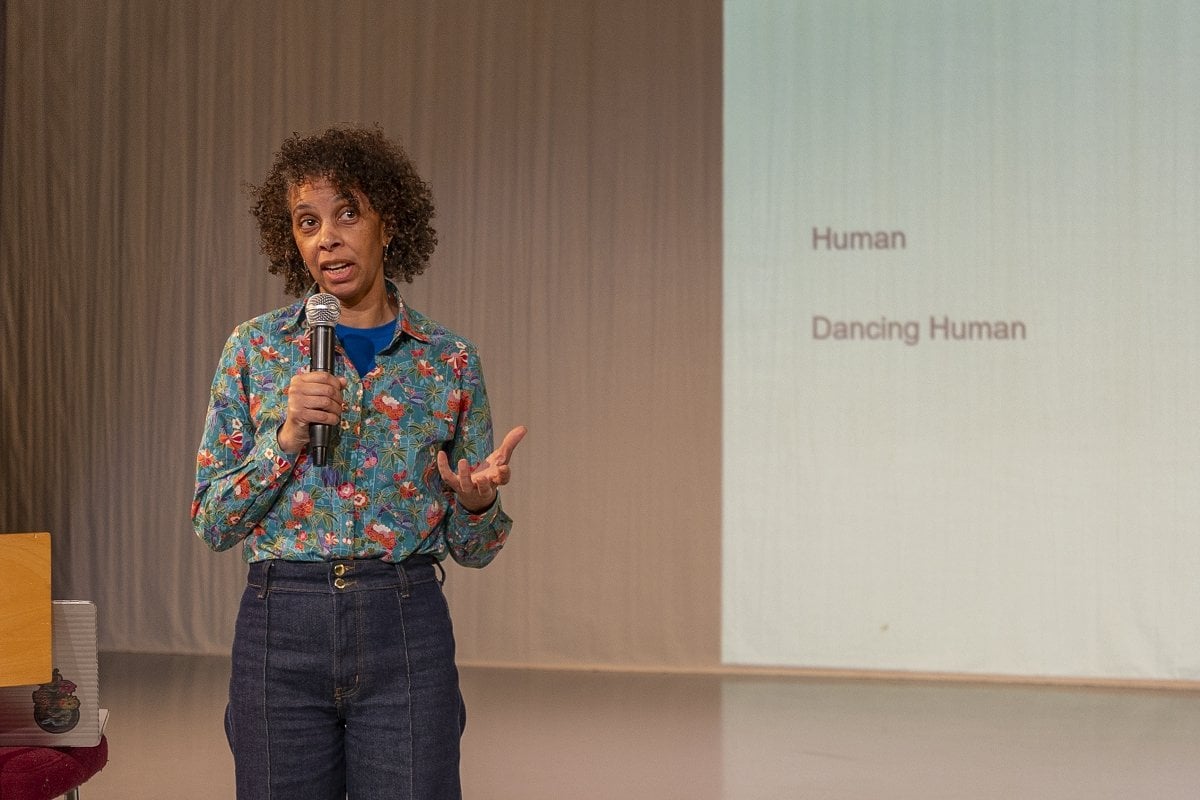
“Dr Adesola Akinleye, dance artist, choreographer and the editor of the seminal volume (Re:) Claiming Ballet (2021), presents a performance of Excerpts from ‘Sycorax’s Tempest’, a duet, trio and quartet especially created for Upper School students. She considers how the physical language of ballet can be experienced as a creative act of translation between diverse legacies, histories and cultures.”
This portion was a lecture demonstration in which Dr Akinleye discussed the broader mindset of the ballet sector, in relation to history and current practices, and shared sections of a ballet she’s currently working on.
Key to all of the above is Dr Akinleye’s overarching perspective: Afro–indigenous. During her lecture, she proposed the idea of Art v Property – that ballet is an art form for all as opposed to a property for a select few. This, of course, feeds into the diversity conversation, which is still very much theoretical in the ballet world. We undoubtedly see improvements in outreach work, but are yet to see more balanced representation on both the stage and in the auditorium.
All of Dr Akinleye’s suggestions came from a place of interconnectedness, and she reiterated the need for ballet to acknowledge its chequered past, ask for forgiveness and move forward with the concept of us–ness; throughout the sector.
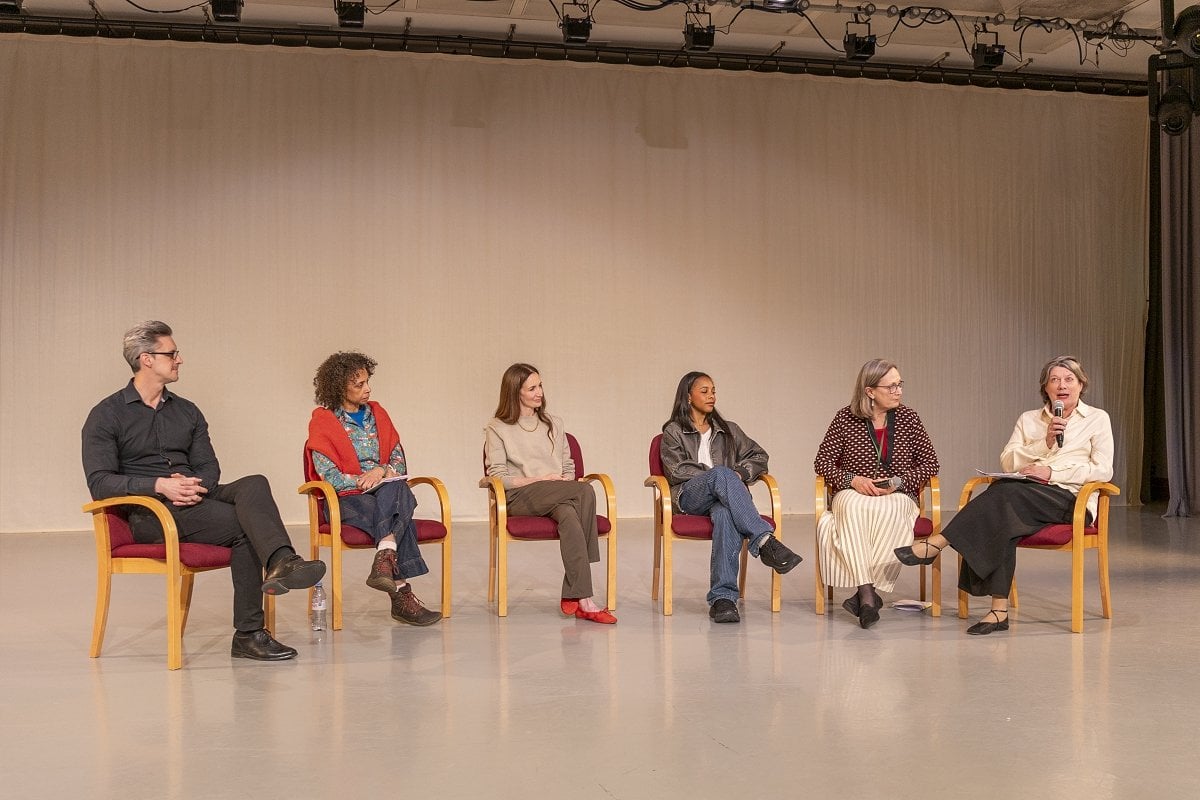
“Sarah Crompton, the dance and theatre critic, journalist and writer, hosts a panel including School staff, alumni and current members of The Royal Ballet. The discussion will range across the century–long arc of the three days of insights but focuses on the future relevance of ballet to theatre and wider culture”
Closing the event was a panel including Sarah Crompton, Iain Mackay, Dr Meadmore, Dr Akinleye and dancers Lauren Cuthbertson and Rebecca Myles Stewart. It was more of a summing-up than a probing dialogue, though Dr Meadmore did speak about the development of the school’s care of the students. I was a student in the 1990s under Merle Park’s directorship, and it was a lot more Hunger Games than it is now. I definitely saw peers struggle and ultimately lose their battle to flourish and prosper, and that’s a true shame as their talent was never fully realised.
Dr Meadmore mentioned her dance studies teacher when at the school, and also mine – Dr Geraldine Morris, who also happened to be in the audience and asked the most pressing question of the event: “What do we mean by classical (ballet)?”
Dr Meadmore was brave enough to reply, discussing the idea of foundational principles, which is, of course, right, but no one proposed how they work in practice, specifically in relation to shifting values, aesthetically speaking.
This is a big issue as the present–day value system manipulates the foundational principles of the danse d’ecole, and very soon this altered framework becomes the norm, expected, and part of choreographers’ creative toolbox. Once this has happened, all former lines are blurred, and a new reality is fully underway. Look no further than social media for endless examples of the warped, hyper–realised ‘new’ ballet expectations. Can they do 12 pirouettes and gymnastic–style adagios? Sure. Do they know why they’re doing it? Probably not. I’m not sure this fad purports the thinking dancer etc.
In closing. All gatherings are valuable, but I left the symposium none the wiser as to the future of ballet in its totality.

The calls for more holistic practice have been sounded for some time, and the speakers discussed its importance in the workplace, specifically offstage. What I craved was more of a discussion concerning what’s on the stage. Yes – positive studio environments lend to more cohesive, creative output – but what is the reality of current, ‘ballet’ choreography?
Well, it isn’t great. If one takes current and upcoming performances in London, English National Ballet has a double bill featuring work by Crystal Pite and Kameron N. Saunders, and the Royal Ballet has another featuring work by Sol León and Paul Lightfoot. These are all categorically contemporary dance choreographers – and while I understand the need for repertoire balance, it feels like ballet isn’t holding its own.
Yes, we see Giselle, Nutcracker, etc., but where is the new work? And I go as far as to say the new, non–narrative work. Narrative ballets are a distinct genre and, understandably, focus on storytelling rather than the movement itself. I’m talking about movement for movement’s sake – works that explore the danse d’ecole and where it could go next. Or how complex scores can unlock new ideas of rhythm, phrasing and emotional underpinning.
Take Balanchine’s Ballo della Regina (1978). It’s jam–packed with fresh takes on new steps, but one specific moment is a pièce de résistance example. In the principal ladies’ solo (choreographed on Merrill Ashley), the dancer does a combination of eight échappés en pointe while rotating clockwise. Now échappés in 2nd we know, and also in 4th, but Balanchine uses the échappé in second and adds a hop en pointe each time before closing back to 5th.
On paper, it seems like nothing, but in reality, this is a highly concentrated danse d’ecole (choreographic) evolution – and this is what the art form needs. Why? In order to evolve, stay relevant, challenge the dancers and build on the foundations of what came before.
Dancers in ballet companies do decades of training in order to get there, and then very often don’t get given the opportunity to explore their base language on the stage or creatively. This is a crying shame to me, and one that needs addressing.
Balance – absolutely. Holistic approaches – no question. But also the work, the work, the work. Without the work, what are we all going to watch or dance? And whilst there’s no future without the present or the past, we don’t want our beloved language to fester in the latter.
Ninette de Valois’s great niece was in attendance at the symposium, and when the floor was opened for questions, she shared something about de Valois that felt acutely insightful: “Edris (her real name) didn’t want feelings, she wanted intelligence.” – and with that short statement, de Valois continues to upset the apple cart of ballet.


