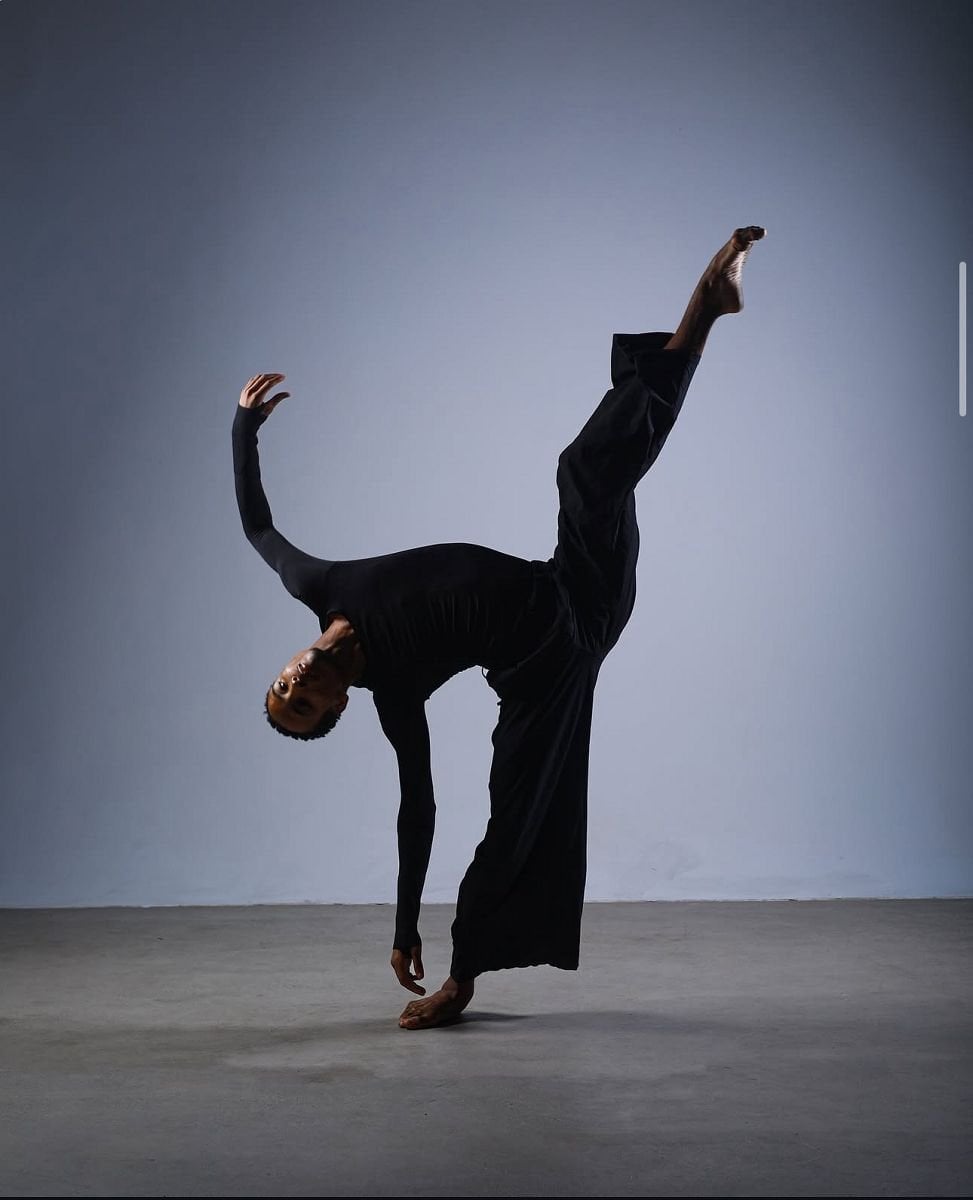
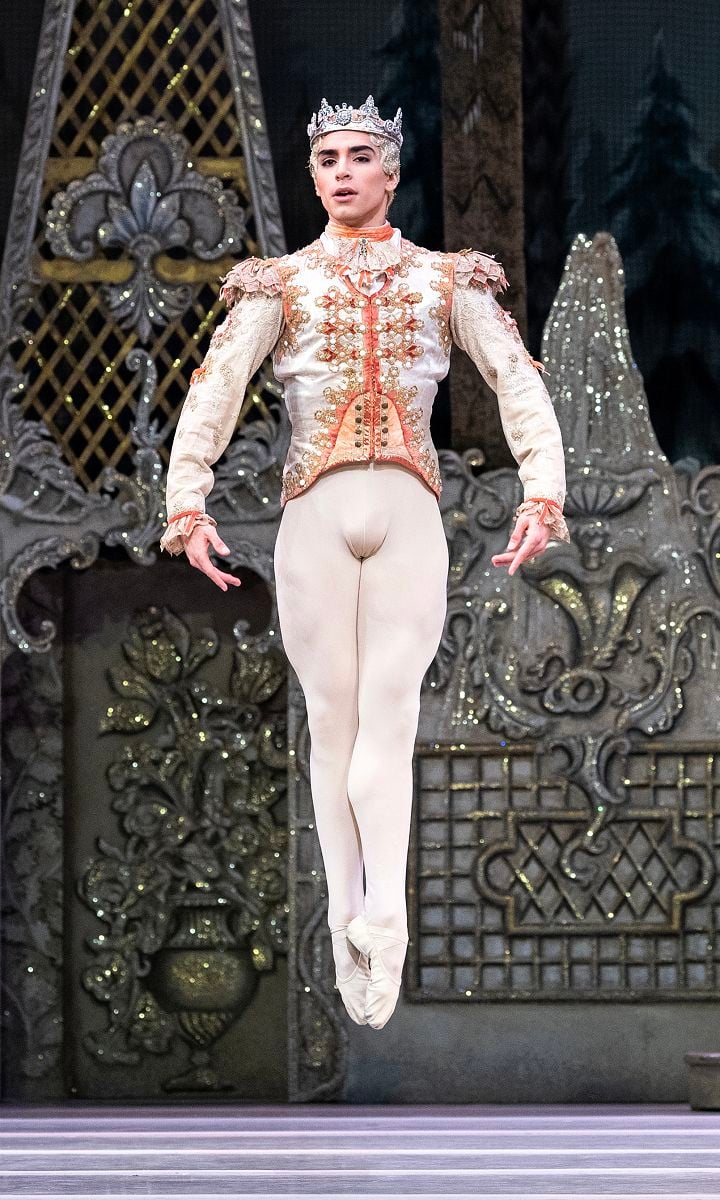
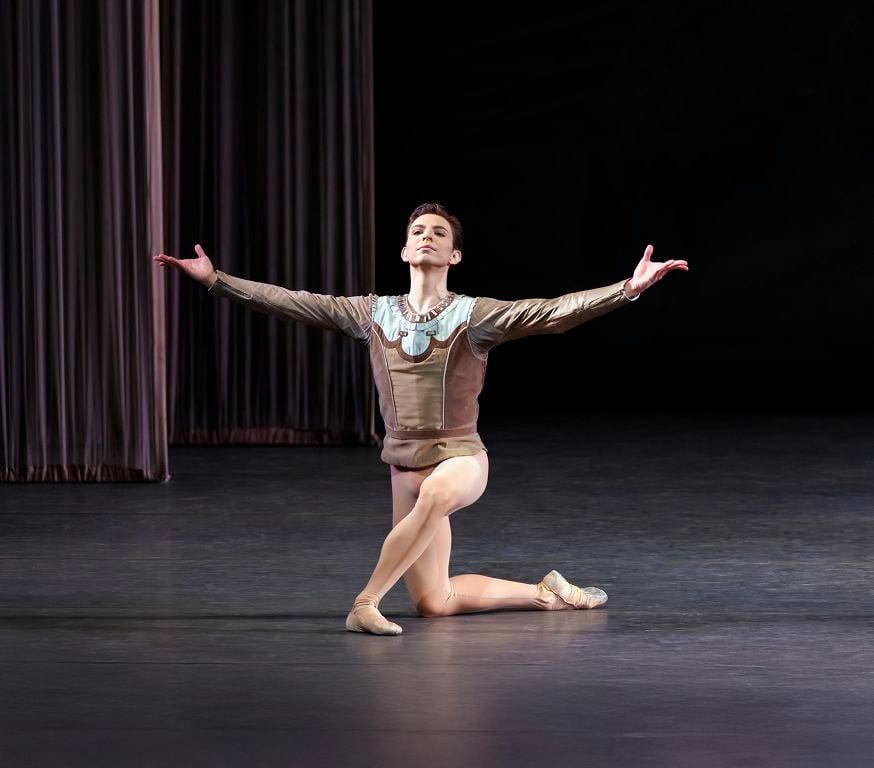
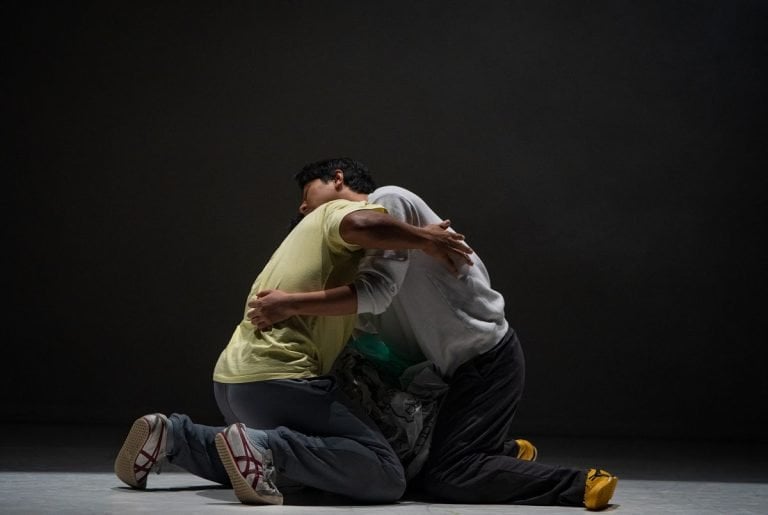
Gala de Danza is somewhat different from the usual gala format with countertenor Jakub Józef Orliński singing (and breakdancing?), William Close playing his gigantic ‘earth harp’ (which looks like something from a sci-fi film), and the fingerstyle guitarist Marcin. Sculptor David Begbie’s wire-mesh sculptures can be admired in the foyer, and there’s even a sensory experience from one of the sponsors that will infuse incense throughout the building.
I chatted with the gala’s founder, former dancer Christina Lyon, about her Gala de Danza that, according to the website blurb, is “not about being the biggest Gala in the world but simply THE BEST”.
Christina, that’s quite a claim!
I certainly do not make the statement lightly as it is entirely about the organisation itself. We pride ourselves on creating the best possible experience for our artists. My wish is to create a synergy among the artists. Having been on the other side of it, I know all too well the hardships endured and my wish it to create a beautiful event upholding the highest standards and raising the bar on how the performing arts are viewed.
Hence “beautiful artistry in extraordinary places!” At Gala de Danza, we curate experiences that are emotionally charged, meticulously crafted, and artistically fearless. Our artists don’t just participate to perform, but to collaborate and do something different. That energy, that singular intensity, is what makes each edition feel unique.
Lyon is infectiously animated about her project, and her claim doesn’t sound like arrogance but a statement of fact and a source of pride. Her first Gala de Danza was in Los Cabos, Mexico, in 2013.
I first started to travel on holiday there with my family and fell in love with the local community. I came across a local dance school with incredible talent and was inspired by their hunger and desire to dance. Their response was immediate and profound and that emotional connection has stayed with the Gala ever since.
It started with a gifted local dancer, Mariana Carrillo, who had not been exposed to live performing arts. I saw it as an opportunity to bring world-class performers into conversation with new talent, not just to showcase excellence, but to share it. We established a foundation Danza que D’Esperanza that impacted youth in difficult situations to receive training and support.
The first year the Gala took place, one of the students from the school came to watch and he came backstage afterwards and said, “Ms Lyon, I’d love to dance for your Gala one day!” I told him to come to class the next day and we’d see. He was just 13, an absolute natural. I made a few calls, and he was accepted on full scholarship to The Rock School of Pennsylvania Ballet. From there, he went on to compete at Youth America Grand Prix and received more scholarship opportunities than any other competitor that year. He accepted a full scholarship to the School of American Ballet where he won The Mae L. Wein Award upon graduation and became the first Mexican-trained dancer of New York City Ballet. His name is Andres Zuniga, and he will be returning to perform at Gala de Danza with Principal Dancer Emma Von Enck.
And he’s not the only young dancer you’ve helped directly, is that right?
Well, Enrique Bejarano was another boy I discovered in Mexico when he was 15 years old. I helped him get to New York and hired a coach for him. He won first place at Youth America Grand Prix, went on to Princess Grace Academy in Monaco, and is now a soloist at the Birmingham Royal Ballet.
And just the other day, Royal Ballet soloist Daichi Ikarashi came up to me on the street. He made me cry.
Ikarashi won the prestigious Hope Prize at Youth America Grand Prix when he was just 10, and then danced in a Lyon gala.
He said, “You changed my life. When I came to your gala I didn’t speak any English, it was my first time abroad, you flew my mum out…” and he started recalling every detail of the gala – the hotel, his breakfast on the terrace, the transport to the theatre. “It really set a standard.” I’m very much about attention to detail, and when I say it’s the best, it’s not because I’m trying to promote the gala, but that we pride ourselves on our reputation to be the absolute epitome for everyone who comes and everyone who participates.
Would it be right to say that you have a mission to educate, not just to put together star names?
From the very beginning, Gala de Danza has been about more than showcasing world-class talent – it’s also about access, mentorship, and inspiring the next generation. In a time when arts education is being drastically reduced, I believe it’s more important than ever to keep the performing arts alive and accessible. Children need curiosity to grow, and exposure to the arts can ignite that spark.
Central Hall Westminster, photo by Nobuyuki Taguchi
Which leads me to London Youth, the charity that champions a network of 600 of London’s youth organisations.
This year, we’ve partnered with London Youth, which has 700,000 members, dedicating all the tickets to our first show to the community programmes they support. It’s our way of ensuring that young people, who might not otherwise have the opportunity, can experience the magic of live performance, and with a special QR code they can book a seat. These children are our future artists, patrons, and audience and it’s our responsibility to nurture that future.
It’s not for the money, you know, and this is certainly not a vanity project. I do this purely because I want to promote the art. And the idea was never about spectacle alone – it was about meaningful exchange, and building something lasting across borders.
As a young dancer you crossed some borders yourself, studying at the Bolshoi Ballet Academy.
My path into ballet was anything but conventional. I began dancing at 12, having previously been a competitive downhill skier. Just a year later, I attended a workshop in Vail, Colorado, where the Bolshoi Academy had come to the U.S. for the first time as part of a cultural exchange. I was scouted by the legendary Sophia Golovkina, Director of the Academy, and invited to study in Moscow.
I became one of the first American girls to train at the Bolshoi. I spent three intensive months there and was offered a place in the year-round program. At just 13, my parents weren’t ready for me to make the full-time leap, but even that short time was transformative. The discipline, the tradition, the emphasis on both technical precision and emotional truth – it shaped the foundation of my artistic life.
My journey with American Ballet Theatre began serendipitously and quite early. After only six months of formal training, I had the extraordinary opportunity to perform with the company as a student, appearing as one of five young dancers in Études. At just 15, I auditioned for ABT and was offered a place – an incredible honour. However, it was important I complete high school first. I accelerated my studies and officially joined the company at 16, becoming one of the first dancers hired by Kevin McKenzie following his appointment as Artistic Director.
I danced with ABT from 1993 to 1996, during which time I toured internationally and gained invaluable experience performing a diverse repertoire. Those years were formative and deeply inspiring. Yet, even amid the excitement and prestige, I felt a growing desire to explore ballet in a broader context – to challenge myself further and to contribute in new ways to enhance the artistic experience, both for performers and for audiences. That curiosity ultimately guided the next chapter of my artistic journey.
It was during this time that you met Jacqueline Kennedy Onassis.
Ms Onassis was Chair of the Board when I joined the company, and she took me under her wing and guided me in how to produce galas. She embodied elegance with purpose. Ms. Onassis had a way of elevating everything she touched, not through extravagance but through intent. Her work in the arts resonates with me deeply. She also understood diplomacy in the most nuanced sense.
This is the first time that your gala format has appeared in London, but in an interview you said, “London is where my heart is”. Why?
I first came to London when I was 15, and something about the city just resonated with me. I was flying over the English countryside, and I said to my mom at the time, “I just have to live here,” and she said, “How do you know?” I said, “I just know!” It was an instant love affair. When you find a place that speaks to your soul, it feels like home. I think part of that connection came from my early ballet teachers, who were British and South African. I adored the sense of formality they brought into the studio. Before class, we would often have tea, but it was more than a ritual – it was a glimpse into a culture I grew to love. In many ways, I suppose I inherited that culture from them, and London has always felt like a natural extension of that early influence. I actually live in London now. I’ve been here three years now, and I love it
And why Central Hall Westminster, which is now an event and conference centre, but isn’t an obvious choice for dance?
It’s iconic, but it’s also unexpected. I love that. Central Hall Westminster has a grandeur that commands presence, but it’s also incredibly versatile. Its architecture informs how we shape the performance, and the space encourages intimacy, not just spectacle. We’ve tailored much of this year’s gala to respond to its unique character, including scent, sound, and visual design.
I have seen concern on some online forums about the hall’s sightlines.
I understand that, and we’ve taken it seriously. We’ve adapted the staging to create a much larger stage and lighting to enhance visibility from every angle and worked closely with the venue team to ensure the audience experience matches the artistic ambition. It’s a historic hall, yes, but it’s also proven remarkably flexible when approached with creativity.
So who is taking part in your London edition?
We have assembled a stellar line-up! We’re welcoming Royal Ballet’s Francesca Hayward, Melissa Hamilton and Cesar Corrales, New York City Ballet’s Emma Von Enck and Andres Zuniga, and Shale Wagman from Paris Opera Ballet. Then there are rising stars like Braylon Browner from USC Kaufman; the phenomenal countertenor Jakub Józef Orliński and guitar virtuoso Marcin, who is known to render audiences speechless! We have a number of world premieres, including a new piece by Emma Evelein for Rambert, Brazilian choreographer Juliano Nunes, and another premiere by Jade Hale-Christofi, as well as the 30-member French dance troupe Murmuration, alongside young talent from Trinity Laban and Youth America Grand Prix. Each artist was selected not just for their technical ability, but for their capacity to surprise, to collaborate, and to elevate others. It’s about expecting the unexpected with collaborations both in music and dance.
What are your future plans, Christina?
I’ve always seen Gala de Danza as a shape-shifting project, responsive to place, people, and time. London opens a new chapter, and conversations are already underway for future editions in other international centres such as Egypt and the Middle East. Each one will bring something different, but the soul will remain – bold, generous, and built on excellence.
Graham Spicer, aka ‘Gramilano’, is a writer, director and photographer based in Milan. He was a regular columnist for Opera Now magazine and wrote for the BBC until transferring to Italy. His articles have appeared in various publications from Woman’s Weekly to Gay Times, and he wrote the Danza in Italia column for Dancing Times magazine. Graham was the historical advisor on Codice Carla, the 2023 documentary on Italian ballerina Carla Fracci.
Graham also works as a dance photographer, and his photos have appeared in many books, theatre programmes, and magazines, including Dancing Times, Dance Spirit and Ballet2000, as well as all the major Italian newspapers.
He is a member of the Dance Section of The Critics’ Circle.
Graham Spicer sees La Scala’s thrilling contemporary programme: Wayne McGregor’s Chroma, Jean-Christophe Maillot’s Dov’è la luna and Ohad Naharin’s Minus 16.
New York City Ballet’s 2025-26 Season will open with a four-week Fall Season on 16 September with a week of programming dedicated to George Balanchine.