Review: City Lights ballet is a Chaplin triumph for the National Ballet of Japan
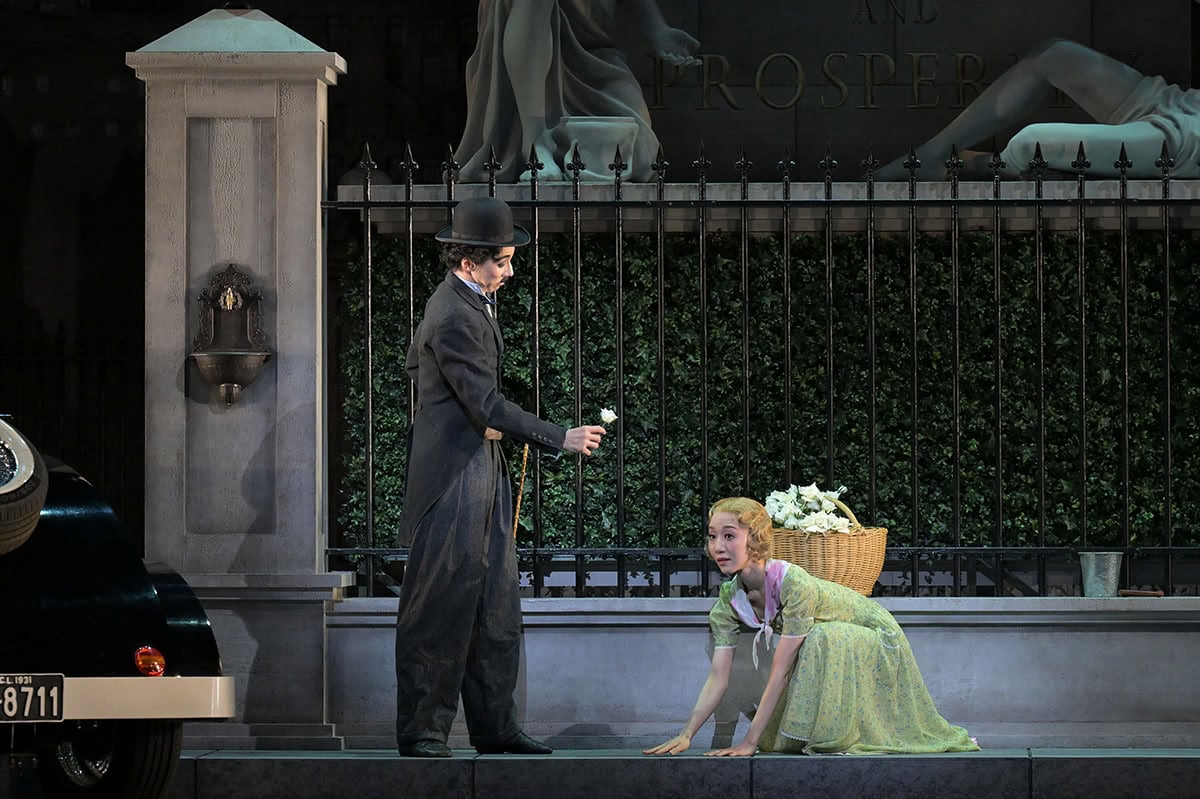
Alastair Marriott tells Chaplin’s silent story through dance with absolute clarity, and Kosuke Okumura’s double tours and twirling walking stick bring the little tramp vividly to life.
| Title | City Lights |
| Company | National Ballet of Japan |
| Venue | New National Theatre, Tokyo |
| Date | 23 October 2026 |
| Reviewer | Graham Watts |
The spirit of Charlie Chaplin lives on. Ninety-five years after he premiered City Lights, the poignant story of a little tramp* and his love for a blind flower girl has returned to entertain a new generation, but as a ballet!
Chaplin’s romantic comedy was released four years after Al Jolson first spoke in the movies (The Jazz Singer, 1927), but the man made rich and famous by his silent portrayal of the downtrodden, yet still gentlemanly, little tramp insisted on City Lights being a silent movie against the prevailing fashion for talkies.
Alastair Marriott‘s idea of turning a film without words into dance theatre was a stroke of genius because his end product is a story told with absolute clarity through expressionist ballet, even without any prior knowledge of the film.
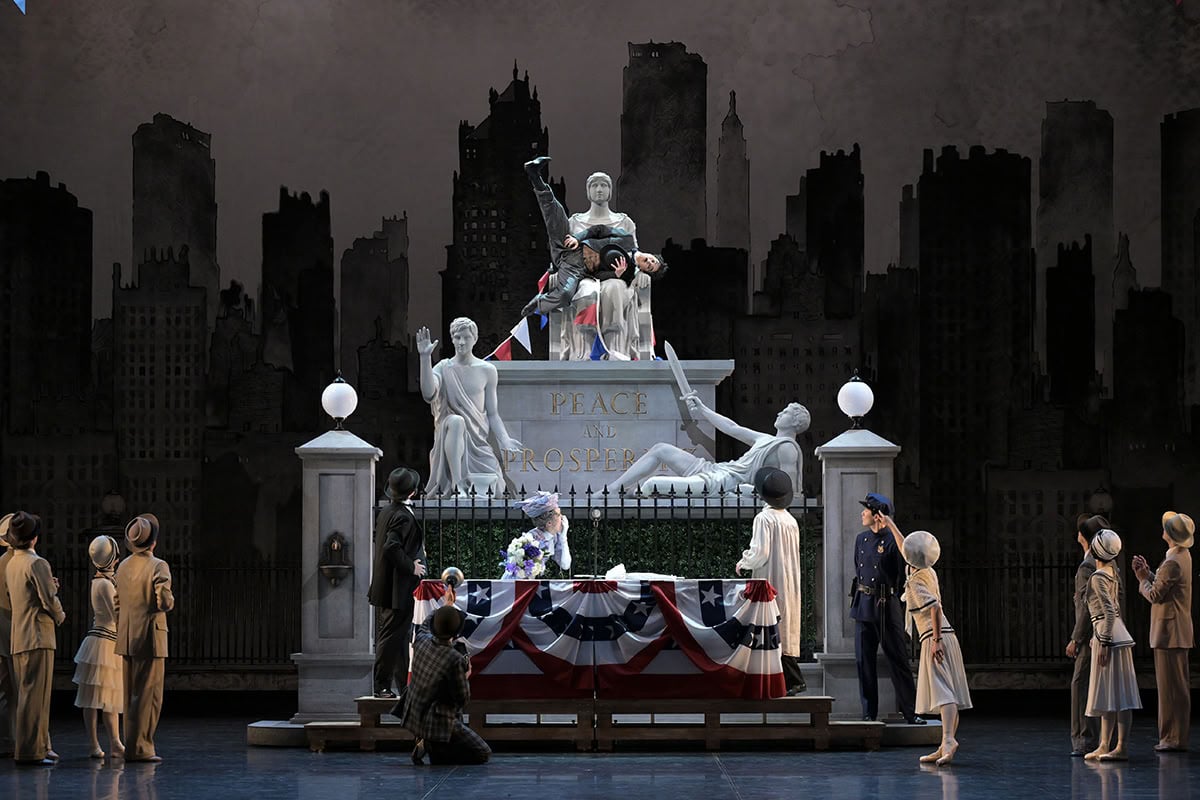
His City Lights was made with the full support of the Chaplin Office in Paris (the repository for Chaplin’s archives and rights) and it is delightfully authentic to the movie and its place and period, New York in 1930. The underlying post-crash austerity is ever present but not enough to dash the little man’s hopes or the flamboyant entertainment of high society.
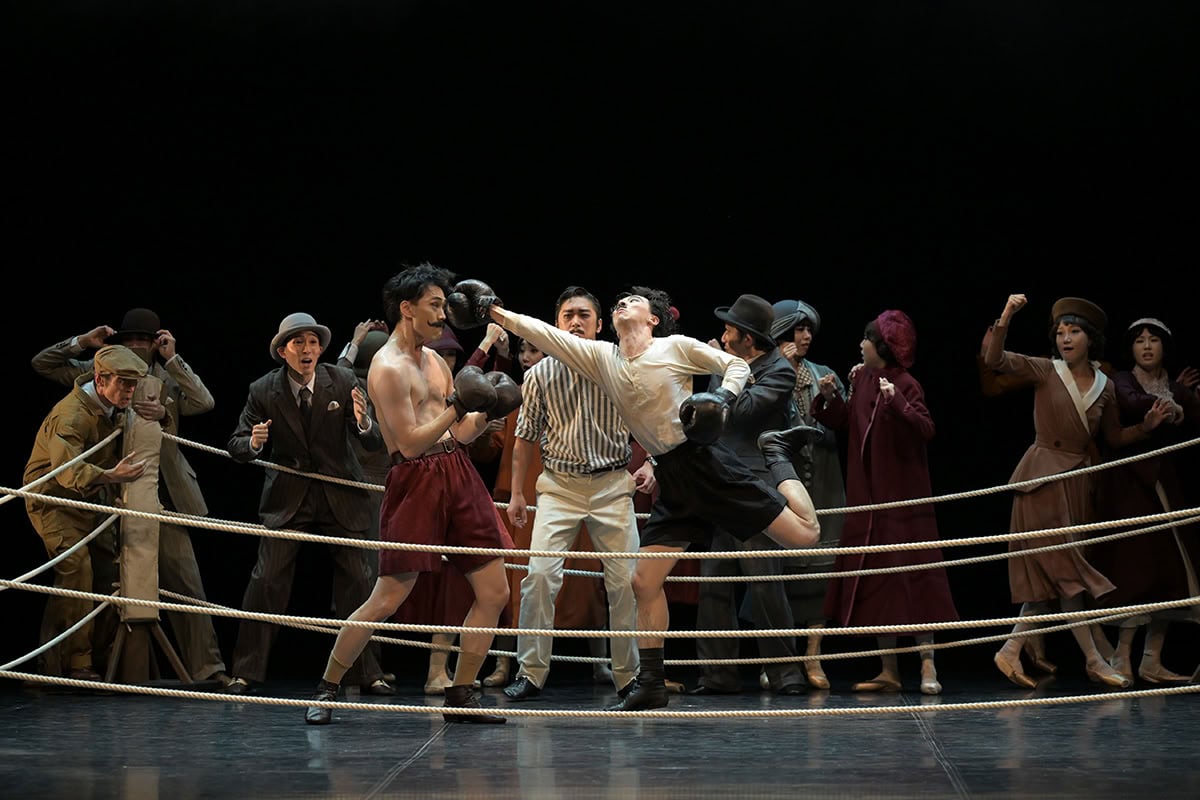
Narratively the ballet’s success lies in simplicity. In a case of mistaken identity, the flower girl believes Chaplin’s tramp to be a rich man when he first buys a flower from her with a coin he found in the street. By touch, she recognises him whenever he re-enters her world, always believing him to be her wealthy benefactor. After sundry misadventures, including an hilarious boxing match, which he enters – courageously, but unsuccessfully – to win a $50 prize to prevent the eviction of the flower girl and her grandmother (played with Disneyesque empathy by Ikuko Kusumoto), his on-off friendship with a drunken millionaire (a rotund happy inebriate portrayed by Masahiro Nakaya) leads to the latter giving him $1,000, but the conniving butler (Hiroyuki Uka) and lascivious maid (Miho Naotsuka) exploit their employer’s inebriation to claim that the homeless man stole the loot. Before his capture by the cops, the little tramp manages to give the flower girl the cash, thus providing the wherewithal to both restore her sight and open a florist shop. When the little tramp is released from jail, they are reunited in her realisation of the truth with a poignant but heartbreaking conclusion.
Every creative element has contributed to a roaring success. Chaplin’s own music, arranged and, where necessary, expanded by the Chaplin-score specialist Timothy Brock, who also conducted the Tokyo Philharmonic Orchestra, referenced New York in the Jazz Age with a strong emphasis on the brass instrumentation and a prolific use of mutes, especially in the outstanding overture and the early scene-setting music. Chaplin’s melodies also provided a theme for every main character, augmented by José Padilla’s delicious La Violetera refrain providing a romantic aura for every appearance of the flower girl.
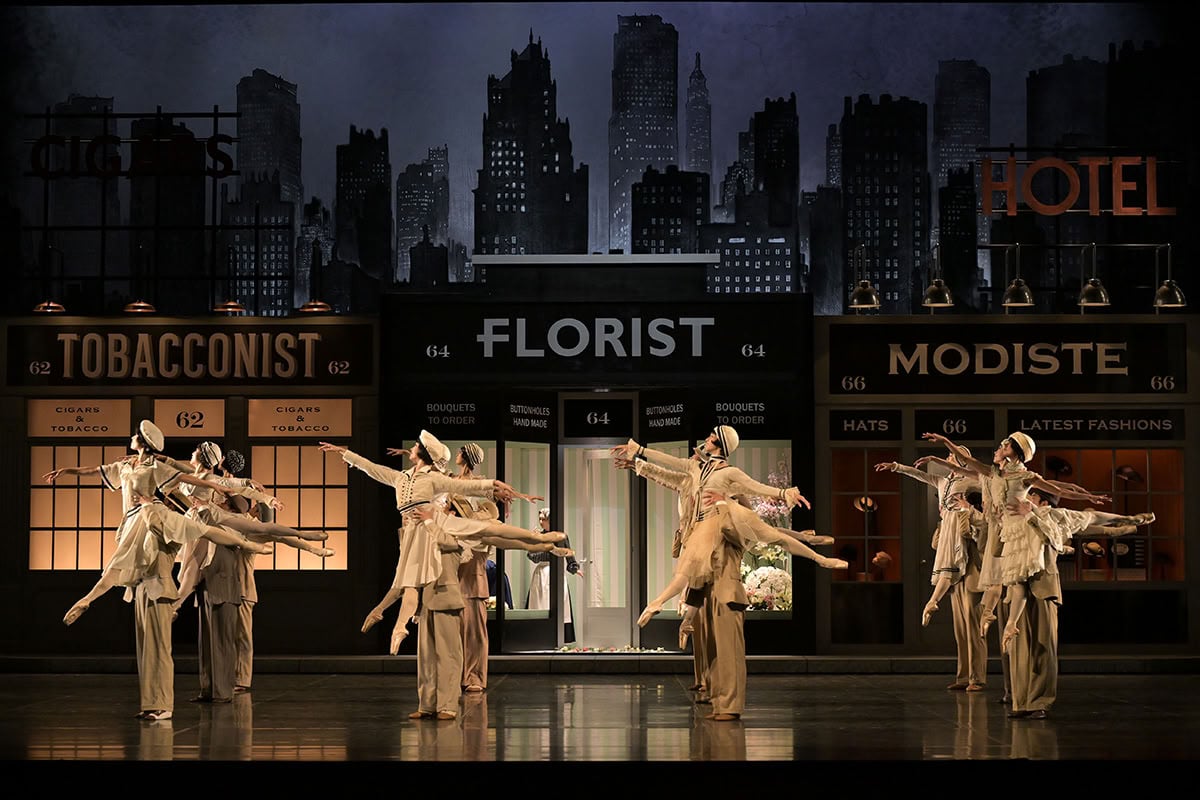
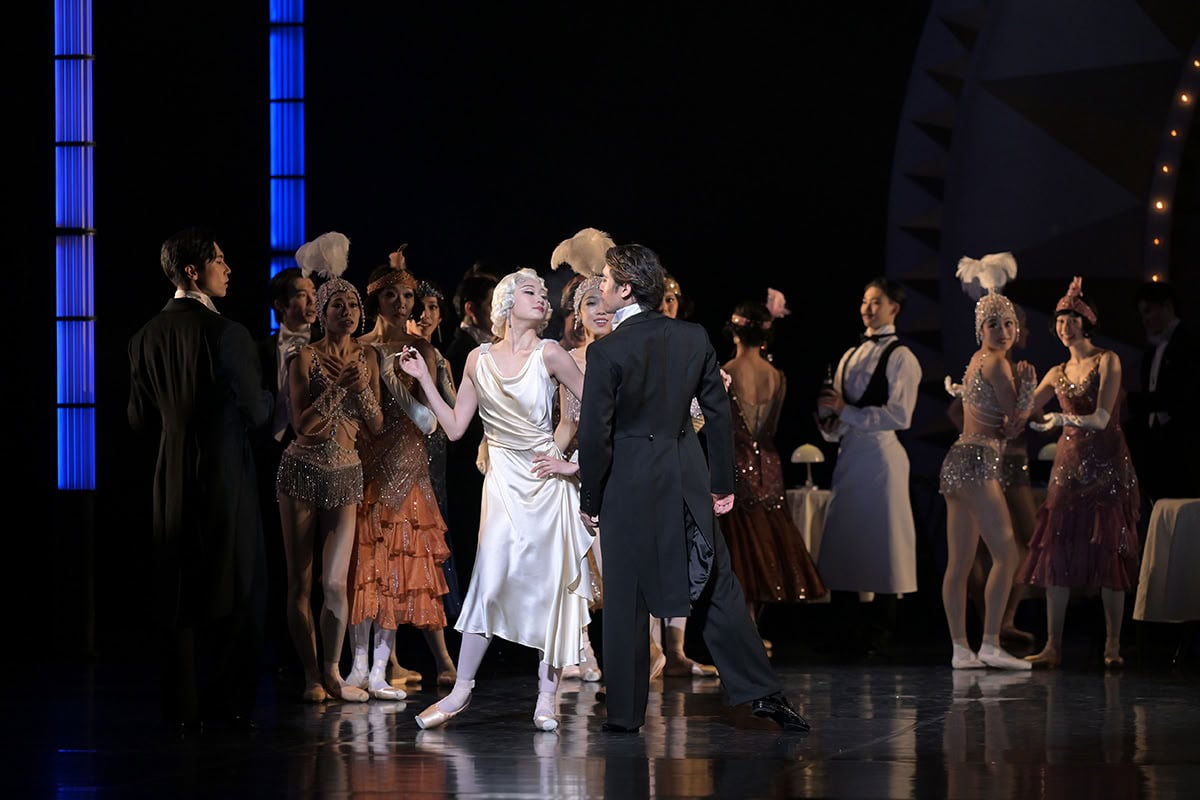
If Chaplin, Padilla and Brock gave the perfect aural accompaniment then Dick Bird nailed a design achievement to match, firmly enhanced by Ellen Ruge’s sympathetic lighting. From the New York skyline, switching seamlessly from day to night, to the splendid art deco interior of the millionaire’s house complete with a huge portrait of his ‘bolter’ wife in the style of Tamara de Lempicka, it’s a design triumph with touches of genius. Staging the boxing matches, complete with authentic saggy-rope ring, initially in the background of the changing-room comedy, gave a vital two-tiered visual effect; and each scene was introduced briefly by evocative captions, the light flickering authentically to nail the illusion of this being a silent movie staged live.
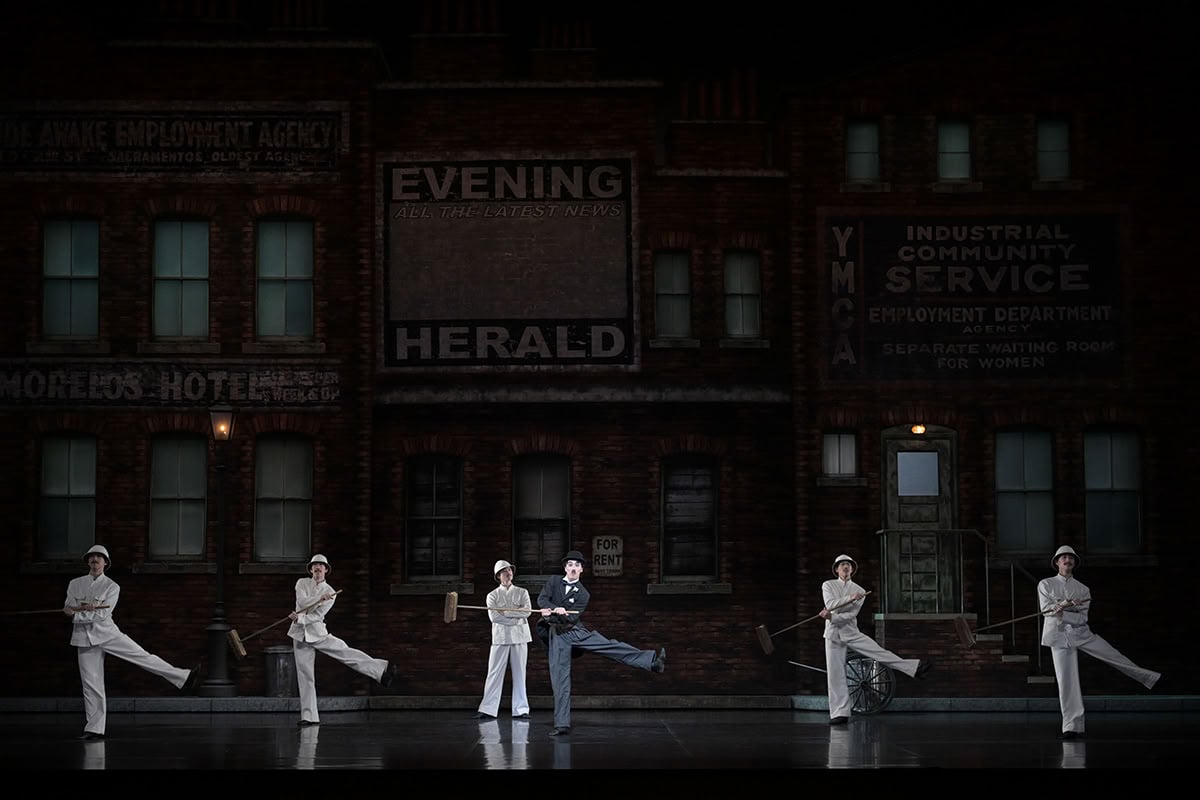
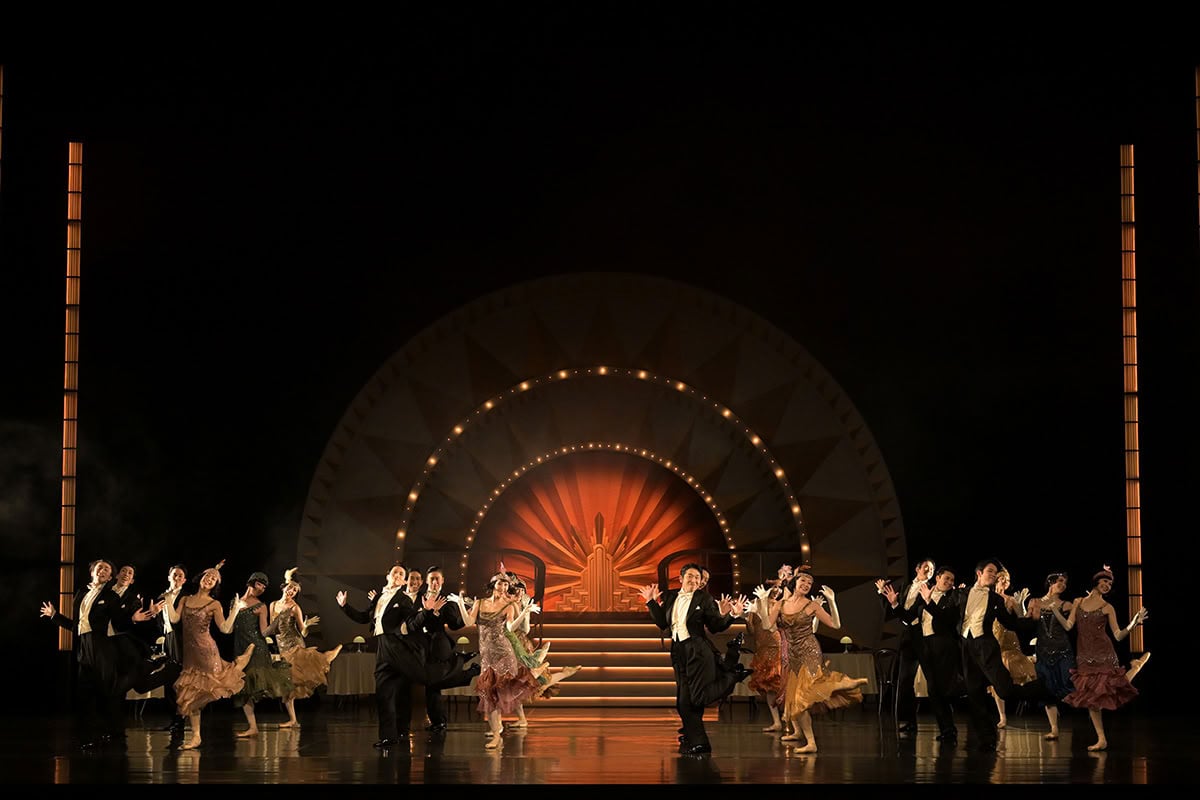
Always with the bedrock support of his collaborator Jonathan Howells, Alastair Marriott‘s direction and choreography have injected new life into Chaplin’s classic bittersweet comedy. Structurally, he uses an ensemble of 24 dancers in showtime dance numbers to bring a sense of scale to the public and nightclub scenes – his choreography for six rough-and-ready showgirls in the club scene with their Tiller Girl high-kicks had a touch of Matthew Bourne‘s vintage humour; and the central relationship of little tramp and blind girl is offset by several other supporting characters, including a pair of entitled movie stars in the nightclub (splendidly danced to great audience acclaim by Yuri Kimura and Yudai Fukuoka), the aforementioned evil maid and butler, the seaside postcard comedy of the muscle-wielding boxers, a pair of bicycle-riding youngsters who serve as the little tramp’s tormentors, and Marriott’s own version of the Keystone Cops!
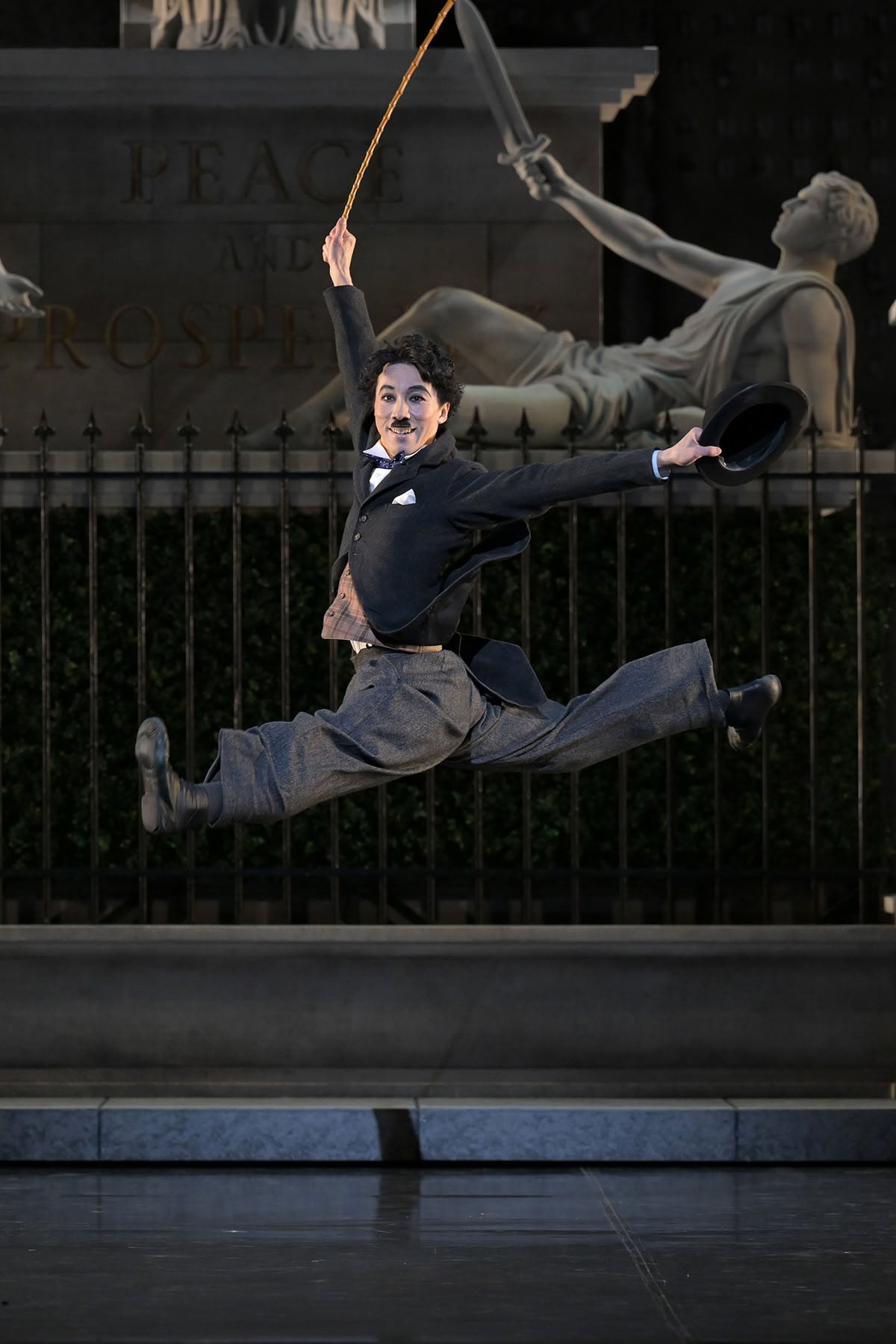
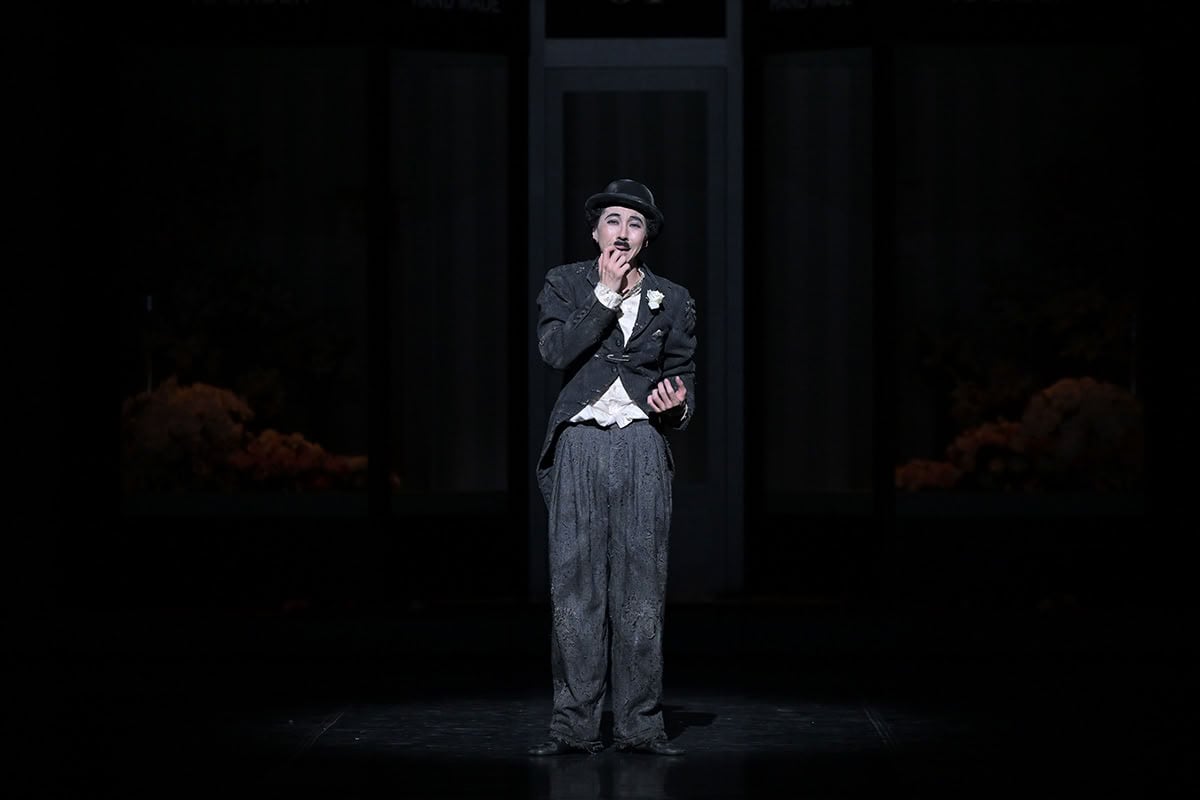
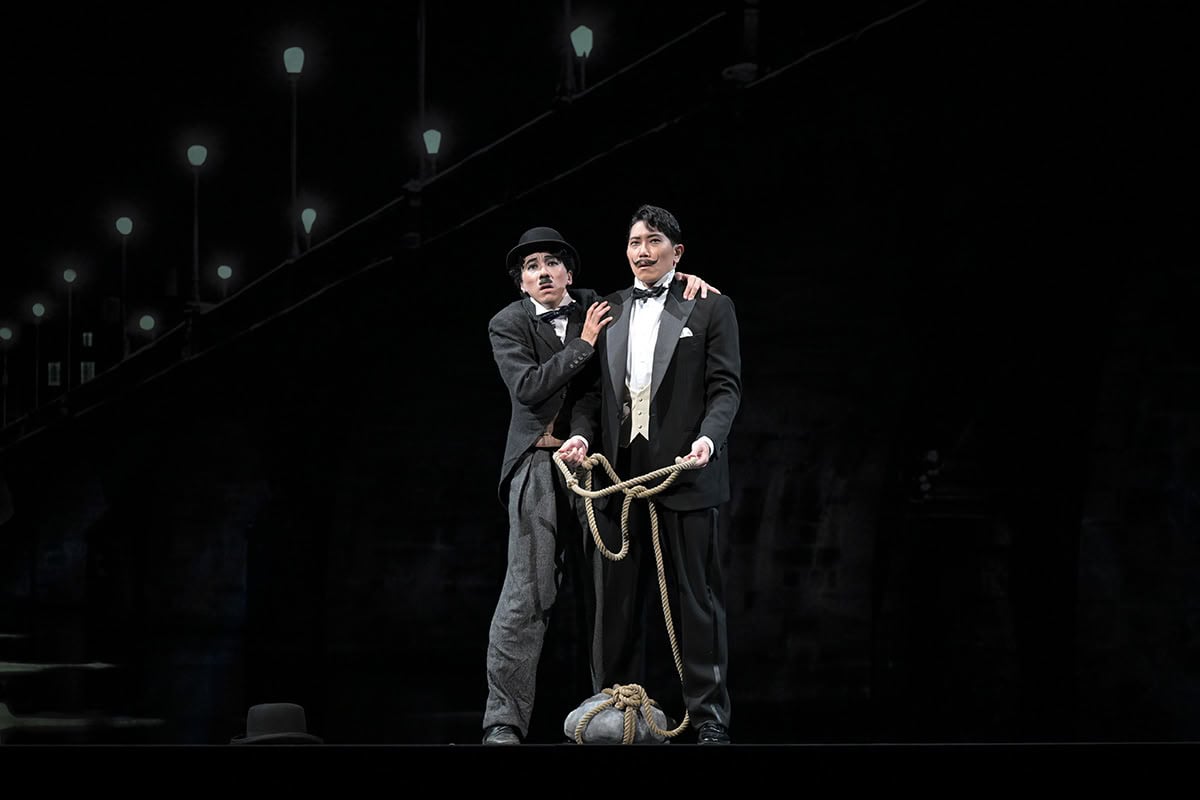
All of this would mean very little without a believable performance as the Little Tramp and Kosuke Okumura gave such an astonishing portrayal, realistic in every way but with his Chaplin impersonation allied to impressive virtuoso dancing, delivering double tours and other spotless jumps while also mimicking his body’s movement with whirls of the tramp’s trademark walking stick in the air. Marriott’s choreography regularly employs props, from the brooms of the street sweepers to the umbrellas of a crowd caught in the heavy rain.
Just as Okumura was truly outstanding, so too was Yui Yonezawa’s performance as the enchanting flower girl, portrayed by Virginia Cherrill in the film. Her vulnerability was paramount to the storyline and the pair danced together with great emotion but – until the final pas de deux – the character’s blindness was always respected in her movement and their partnering.
It is necessary to pay tribute to the whole cast because everyone pulled together, in the unity of their movement and individual characterisations, to great effect. Comedy spread through the work from subtle surprise – the opening of a mayoral unveiling of a monument to peace and prosperity revealed the Chaplin figure asleep on it – through gentle chuckling humour to out-and-out slapstick.
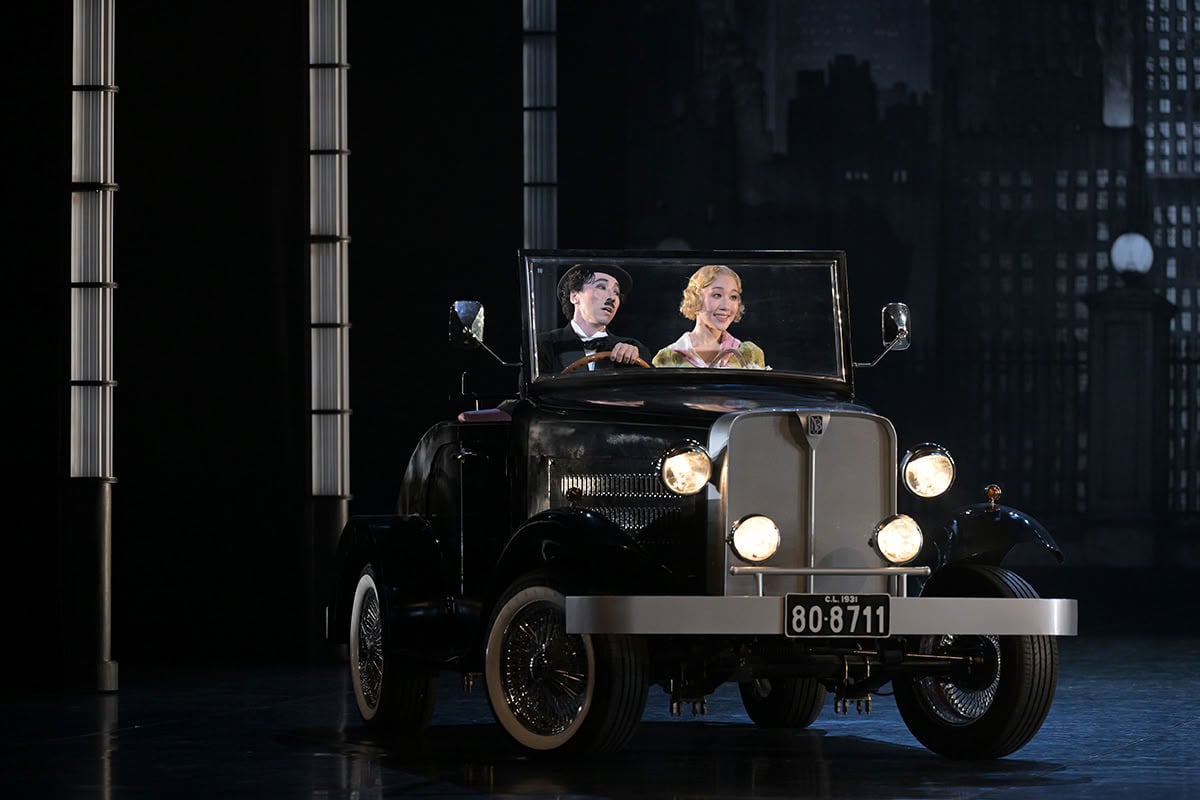
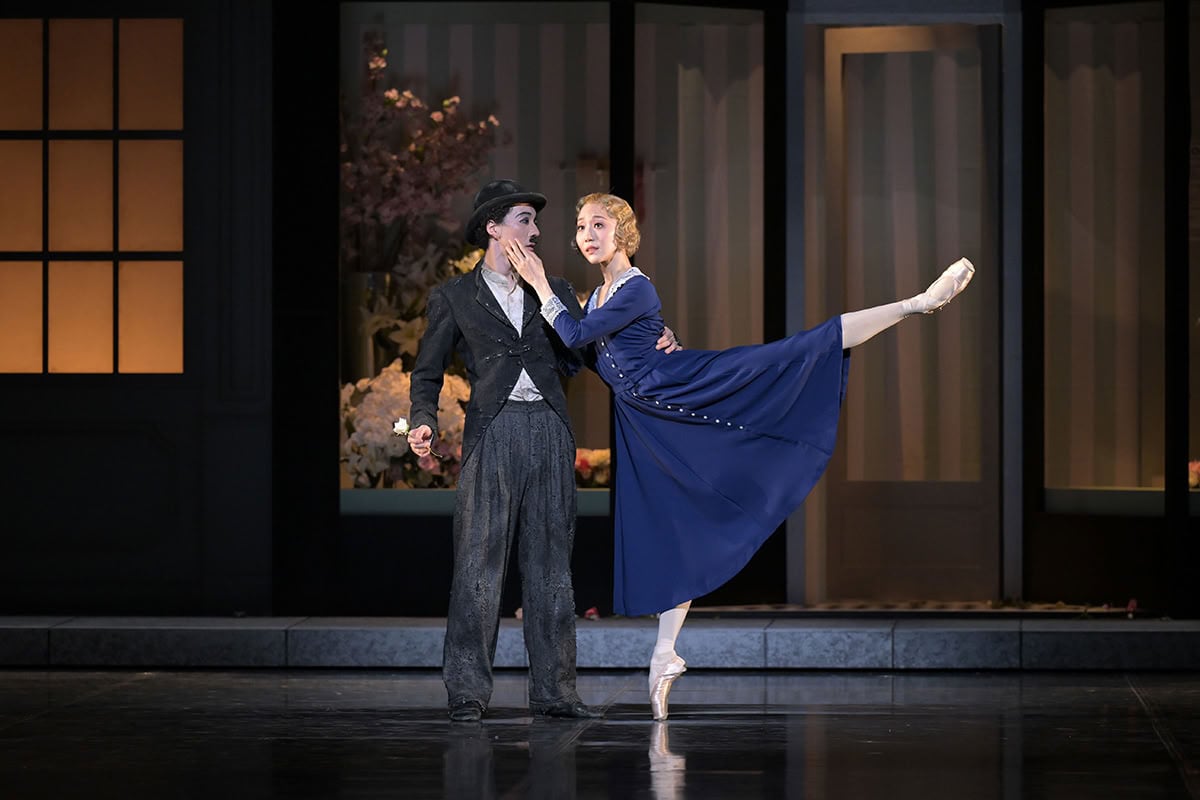
Key to the narrative is a motor car because it is the sound of the millionaire’s car door slamming that makes the flower girl think that the car belongs to the rich man she believes the little tramp to be (reinforcing the image when he later takes her for a ride in the car he has borrowed from the millionaire). And it was quite a coup for the creative team to procure an authentic-looking vintage automobile to be driven around the stage. One final touch of design clarity that made the whole seem so vital.
I loved City Lights. It will take something extraordinary to overshadow it as my best new ballet of 2026. In fact, I loved it so much that I’m seeing it four times in two days, rather than sightseeing in Tokyo. If you are anywhere near the city between now and 1 November, I would urge you to see this tremendous new ballet, which I hope will become a signature ballet for this outstanding company, which is a huge credit to artistic director Miyako Yoshida and her team.
* I appreciate that the term ‘tramp’ to describe a homeless person is no longer acceptable, but I use the term in the way Chaplin’s principal comedic character was described at the time.