Review: Ballet Flamenco de Andalucía in PINEDA – a difficult work to comprehend
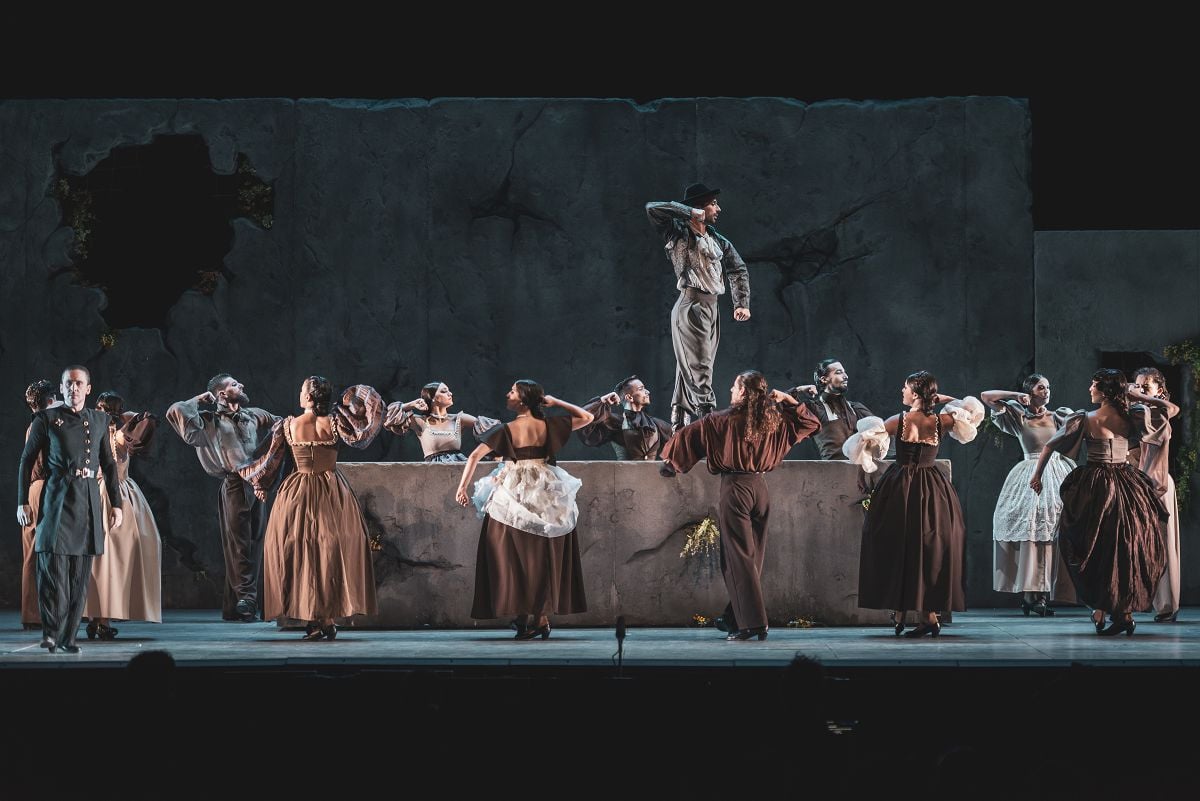
Graham Watts sees PINEDA with the Ballet Flamenco de Andalucía – a mesmerisingly synchronised corps but lacking in magic.
| Title | PINEDA. Romance popular en tres estampas. |
| Company | Ballet Flamenco de Andalucía |
| Venue | Sadler’s Wells, London |
| Date | 6 June 2025 |
| Reviewer | Graham Watts |
A good friend and fellow flamenco aficionado told me that she had seen PINEDA one evening in a beautiful outdoor theatre in Granada’s Alhambra fortress and that it had been magical. For me, in this enclosed proscenium theatre setting, that magic was not so evident.
I love flamenco but, even though there is plenty of evidence to the contrary, I’m not convinced that it suits this kind of live theatrical storytelling. It’s a medium that thrives through the compelling interactions between dancer, singer, guitarist, percussionist and other musicians and that uniqueness is lost when – as here – only the dancers are visible: from my seat, the musicians appeared to be seated in the front row of the stalls.
Mariana Pineda was a nineteenth-century Spanish revolutionary heroine (apparently, the anniversary of her execution is still celebrated as a national holiday in the city of Granada). As a child, Federico García Lorca was so impressed by a bronze statue of Pineda that he wrote a play about her, very early in his career, and it is Lorca’s vision of Pineda that has inspired this flamenco dance theatre, the first work by Patricia Guerrero in her role as artistic director of Ballet Flamenco de Andalucia.
Guerrero stars as the heroine and one assumes, since she also hails from Granada, that Pineda’s short, heroic life holds a particular emotional resonance for her. Pineda’s “crime” was embedded in a flag onto which she had embroidered the insurrectionary words “Ley. Libertad. Igualdad” (“law freedom equality”) the discovery of which by Ferdinand VII’s military was sufficient to send the 26-year-old to her death (after refusing to betray other liberals).
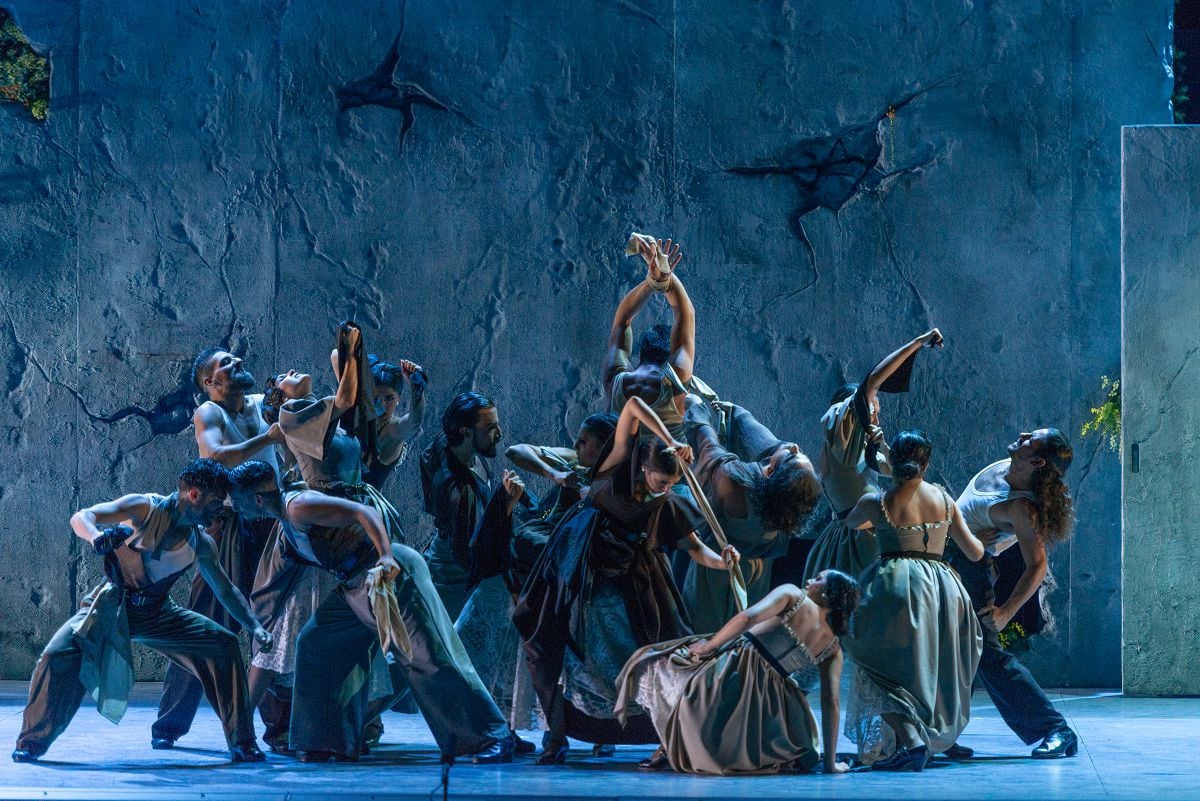
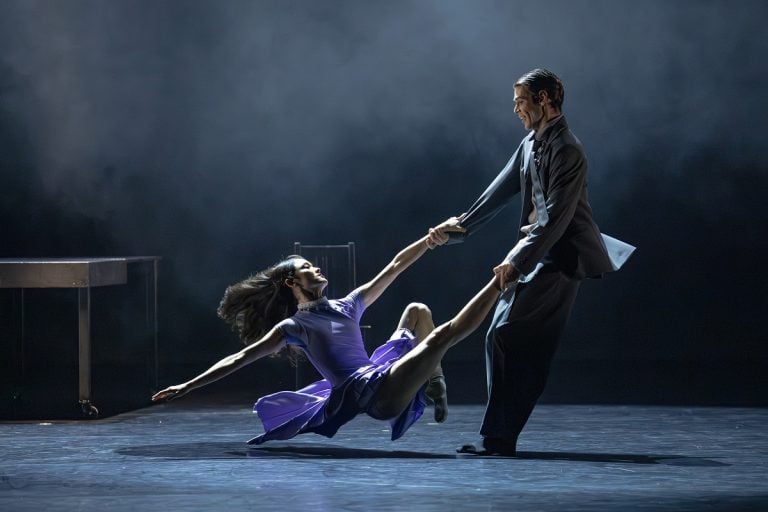
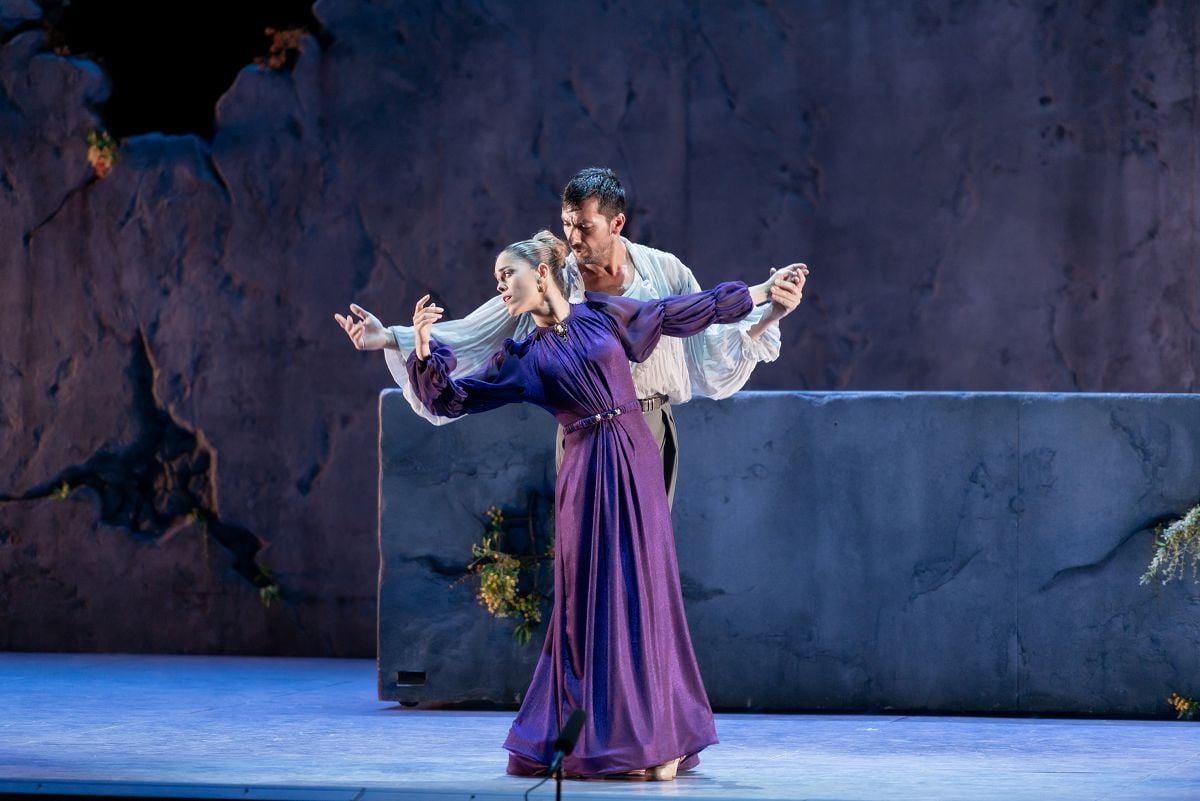
I confess not knowingly to have heard of the brave Pineda, nor of Lorca’s play, prior to this performance, and so the narrative, spread over twelve scenes and three acts (although all tightly compacted into 90 minutes without an interval), was confusing. The best of the performance was Guerrero’s expressive and electrifying performance, with exceptional footwork and a sentimental portrayal of the heroine’s difficult life (a mother at 15, a widow three years later) and her courageous love of freedom. In one memorable scene, the multi-talented Guerrero lies on a raised platform and sings a sad lullaby; her outstanding dancing ranged from gentle duets with her lover, Pedro de Sotomayor (Eduardo Leal) to a fierce combative footwork duel with Pedrosa – the Mayor of Granada – played with villainous intensity by guest artist Alfonso Losa.
There are some superb ensemble scenes where the dancing of Ballet Flamenco de Andalucía’s corps was mesmerisingly synchronised, although I found the battle between the liberals and the absolutists in the streets of Albayzín to be underwhelming with dancers running on, off and across the stage to no obvious purpose. This “fight” choreography was separately created by La Venidera (a joint name for Albert Hernández and Irene Tena) and it was very distinctive from Guerrero’s own choreography.
Another element of the show that went above my head was the song lyrics, adapted from Lorca’s play, although the music, composed by Agustin Diassera, Dani de Morón and Sergio ‘El Colorao’, contained a range of qualities, illustrating the diverse action onstage. The minimalist set design (by Bengoa Vázquez and Laura Ordás) worked well to suggest the various scenes (streets, convent etc), aided by excellent lighting by Juan Gómez Cornejo. Pablo Árbol’s costumes were an intriguing mix of traditional and contemporary.
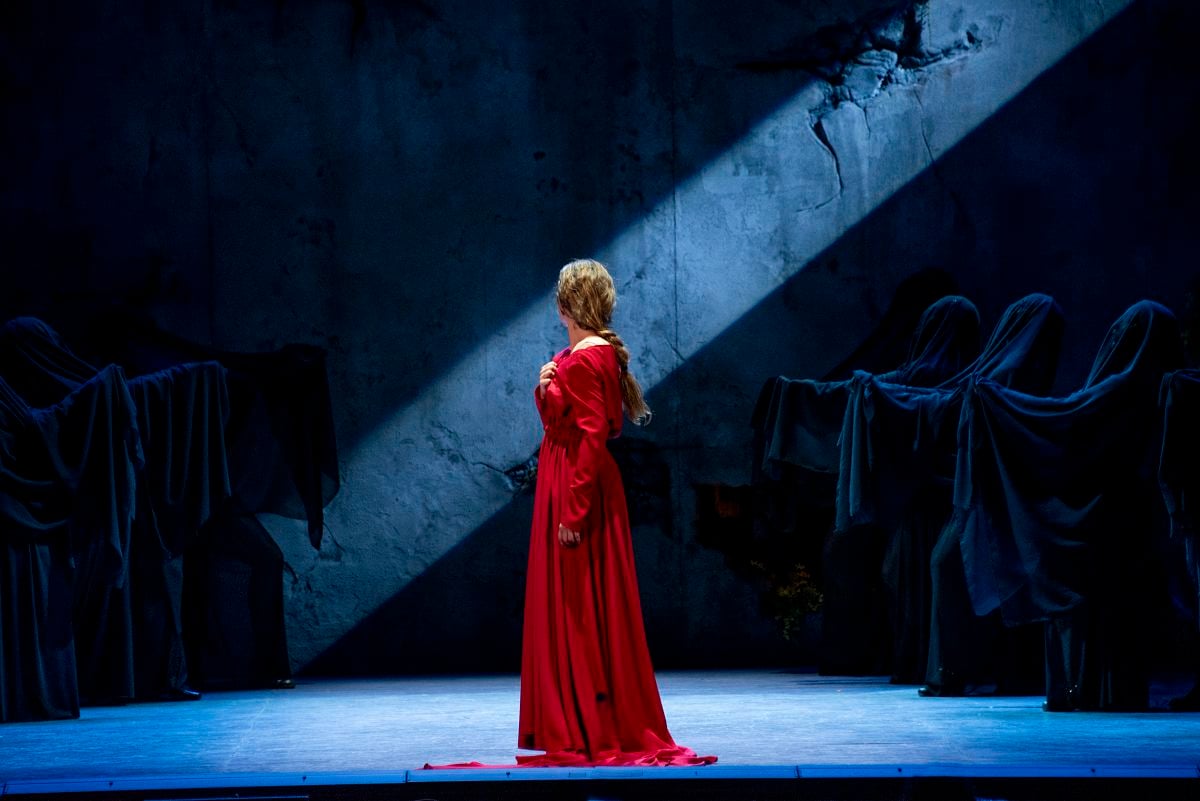
After Pedrosa’s discovery of the flag and Pineda’s refusal to condemn her liberal associates, the final “act” places her in the sombre setting of a convent, surrounded by nuns, where Fernando (Hugo Agular) – a young man in love with Pineda – tries to persuade her to save herself by revealing her co-conspirators’ names. She again refuses and the performance ends with Guerrero walking slowly, and with great dignity, to the execution yard and the despicable garotte that awaits her.
I suspect that this review may seem curmudgeonly to those many people who stood and applauded loudly at this work’s conclusion but – without prior knowledge of the history, the subject and the story – it’s a difficult work to comprehend. It may have been different if seen outdoors on that sultry evening in Granada!

Graham Watts is a freelance writer and dance critic. He writes for The Spectator, Tanz, Shinshokan Dance Magazine (Japan), Ballet Magazine (Romania), BachTrack and the Hong Kong International Arts Festival and has previously written for the Sunday Express, Dancing Times, Dance Europe, DanceTabs, London Dance, the Edinburgh International Festival and Pointe magazine (USA). He has also written the biography of Daria Klimentová (The Agony and the Ecstasy) and contributed chapters about the work of Akram Khan to the Oxford Handbook of Contemporary Ballet and on Shobana Jeyasingh for the third edition of Routledge’s Fifty Contemporary Choreographers.
He is Chairman of the Dance Section of The Critics’ Circle and of the UK National Dance Awards and regularly lectures on dance writing and criticism at The Royal Academy of Dance, The Place and (until the war) for Balletristic in Kyiv. He was a nominee for the Dance Writing Award in the 2018 One Dance UK Awards and was appointed OBE in 2008.