
As queer male representation in ballet soars, queer female representation stays firmly on the ground
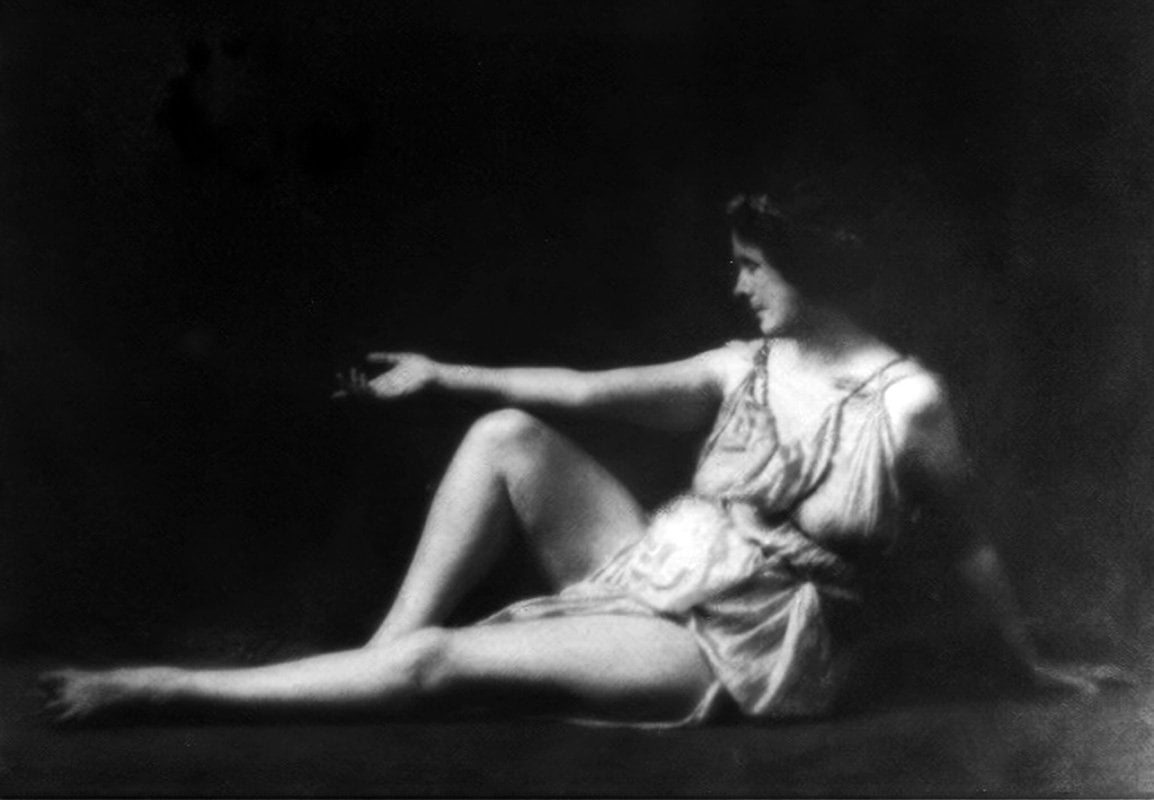
Ballet has long served as a haven for queer people. From composers such as Pyotr Tchaikovsky to choreographers like Frederick Ashton and Jerome Robbins, impresarios like Sergei Diaghilev, and, of course, dancers like Vaslav Nijinsky and Rudolf Nureyev, the art form would not exist as it does today without its queer contributors.
Though these artist’s intense passions for the form have enhanced and shaped it, their ability to bring their romantic passions to the stage have proven difficult, and the progress of queer representation in ballet seems much slower when compared to other art forms, having been hampered by anti-homosexuality laws and the devastation caused by the AIDS epidemic that would claim the lives of many dancers, including Rudolf Nureyev, Kelvin Coe, and Dominique Bagouet.
But even as the AIDS epidemic progressed, it would be Nureyev’s adaptation of Swan Lake for Paris Opera Ballet in 1984 that would arguably lay the foundation for using classical ballet as a means to explore queer sexuality. Nureyev’s Siegfried is ‘latently homosexual’ but this was alluded to rather than explicitly shown, and the role of Odette/Odile was still danced by a woman.
It would be Matthew Bourne‘s 1995 adaptation of Swan Lake, with an all-male corps and a Prince who falls in love with a decidedly male swan, that would revolutionise depictions of queerness in ballet. The longest-running ballet on the West End and Broadway, the production won a slew of awards and instantly achieved icon status. Just five years after the ballet’s premiere, the dual role of The Swan/The Stranger was chosen as the climactic role Billy would dance at the end of Stephen Daldry’s Billy Elliot, suggesting that the role was the summation of balletic greatness.
In the thirty years since the premiere of Bourne’s Swan Lake, queer presences in ballet have grown increasingly visible, both on and offstage, with some of the biggest names in ballet being openly gay, including David Hallberg, William Bracewell, and Marcelino Sambé.
In 2024, Hallberg, the Australian Ballet‘s Artistic Director, commissioned the openly gay choreographer, Christopher Wheeldon, to create the company’s first full-length narrative ballet in twenty years, Oscar, based on the life of Oscar Wilde, and Jonathan Watkins, the Founder of Ballet Queer, the UK’s first LGBTQ+ ballet company, is bringing a full-length balletic adaptation of Christopher Isherwood’s A Single Man to the Linbury Theatre at the Royal Opera House in September.
Unfortunately, queer women have not enjoyed anything close to the same level of momentum. They have appeared in contemporary ballets, such as Christopher Wheeldon’s Corybantic Games and Wayne McGregor‘s Woolf Works, but are by no means at the heart of the narrative. In trying to ascertain this lack of representation, I have concluded that there is not one problem responsible for this imbalance – there are several.
Firstly, despite an overwhelmingly female presence in ballet, there are far fewer female choreographers of note. Those who adapt or restage classical ballets, like Tamara Rojo or Natalia Makarova, tend not to deviate from the original gender castings, and contemporary choreographers like Crystal Pite and Pam Tanowitz rarely, if ever, have queer stories at the forefront of their work.
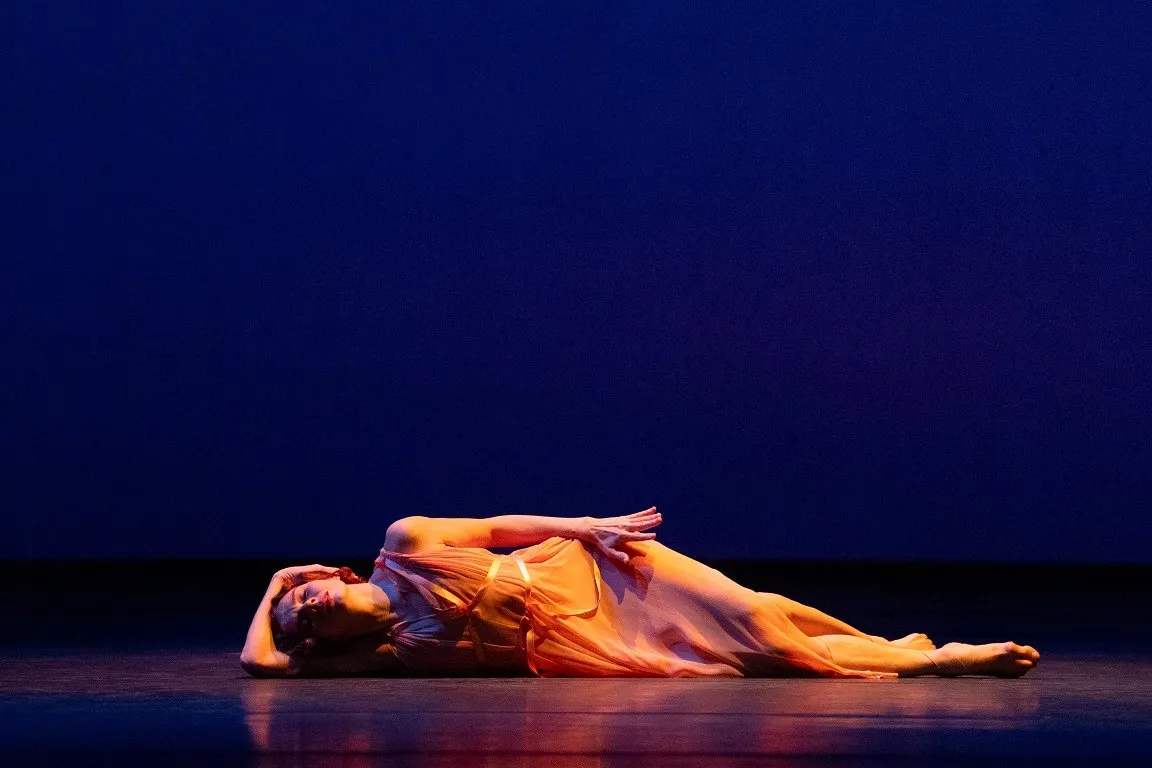
I approached choreographer and former Paris Opera Ballet dancer, Laura Bachman, about her piece, Ne Me Touchez Pas, a dance between two women, which she starred in alongside Marion Barbeau.
Said Bachman, “The piece wasn’t created with a specific aim at depicting queerness, it is a general exploration of touch. Being two women in the studio and on stage has definitely brought a certain trust, freedom, and a specific point of view on the subject we were exploring.”
Perhaps, for female choreographers trying to forge their own path and artistic voice, working with female dancers to create work devoid of a masculine influence is work enough.
The Canadian choreographer, Emma Portner, is openly lesbian, and her first-ever ballet, islands, was a pas de deux between women, which Lyndsey Winship noted in her review as being ‘surprisingly rare’.
In an interview in The Guardian, Portner said, “It’s an inherently queer duet because I’m queer and it’s two women. But at the same time, I liked the idea of leaving it open. You could find a mother-daughter relationship in it, or a sibling relationship in it, or is it the same person, dancing with the self?”
Since islands, Portner has choreographed four more ballets, and her reviews have been favourable – “More Emma Portner, please!” wrote the Swedish newspaper, Dagens Nyheter – but she is yet to be presented with the opportunity to choreograph a full-length ballet.
As already mentioned, the choreographers Christopher Wheeldon and Wayne McGregor have featured queer women in their ballets, but only fleetingly. Established in their careers and therefore possessing the ability to be bolder with the stories they choose to tell, one wonders if their intentions of inclusion are undermined by their being male. Faced with the potential of accusations of salacity, or worse, exploitation (Léa Seydoux crying at Cannes comes to mind), is this a risk simply not worth taking? Is it a matter of spectacle? Is choreographing dances for women who cannot lift another dancer simply not very interesting? Would audiences be happy with turns and extensions, or would they be more satisfied with the brute force of a MacMillan pas de deux?
Another issue is that, compared with their male counterparts, there is a profound lack of openly queer female ballet dancers, especially in major ballet companies. Indeed, the only woman mentioned on Ballet Queer’s website is Isadora Duncan, who has been dead for nearly a hundred years.
In interviews, queer female dancers like Kiara DeNae Felder and Lauren Flower have spoken about the rigid gender expectations they feel they must adhere to, and the concern that if they don’t present themselves as entirely feminine, they risk damaging their careers.
“There’s a lot of fear – especially when so many artistic directors are men – that queer women might be looked at differently,” said Lauren Flower, a former dancer with The Boston Ballet, in an interview with Pointe.
Ultimately, queer women feeling unable to come out means their lack of representation becomes something of a self-fulfilling prophecy; if there is no one to inspire or champion these stories, they won’t be told.
That’s not to say that there aren’t attempts to rectify this imbalance, with companies like Queer The Ballet and Ballez being founded, but their works, much like the resources available to them, are limited in scope. They are mostly short, nonlinear pas de deux, which have a place, but why is that all that queer women are afforded?
I would like to see bigger companies lead by example and at least attempt to match the effort made to highlight queer men’s stories and experiences. It’s not as if there aren’t several seminal works of literature that would lend themselves to a balletic interpretation, like Sarah Waters’s Fingersmith or Radclyffe Hall’s The Well of Loneliness.
We are blessed to live in an age where ballet dancers have never been better, and the quality and diversity of works available have never been broader, yet there are still very clear limitations. To confine contemporary talents to the same gender dynamic for the entirety of their careers feels almost wasteful. Arguably the most prominent ballet about a queer woman, Frederick Ashton’s Five Brahms Waltzes in the Manner of Isadora Duncan, has been danced by era-defining talents, such as Lynn Seymour and Natalia Osipova, but within it, Isadora dances alone.
If dancers like Nureyev hadn’t died before their time, I like to believe that they would have enabled and facilitated further change and development within the world of ballet, but there are plenty of gay men in positions of leadership who seem intent on maintaining the status quo. In an interview with The New York Times, Adriana Pierce, a queer choreographer and former dancer for the New York City Ballet, spoke of the isolation she felt when she trained at the School of American Ballet, “Has anyone ever done this? Has anyone like me ever walked these halls?”
It’s been forty-one years since the premiere of Nureyev’s Swan Lake, and ballet has come a long way. I’m tremendously excited for A Single Man and wish it every success, but I hope that one day I can be excited to see a work with queer women front and centre, or at least, have a queer woman who isn’t Isadora Duncan mentioned on Ballet Queer’s website.

Lily Hyde is a cultural and dance writer based in London. Her writing has appeared in The Fence and The Creative Independent, and she runs the cultural newsletter, Falling Upwards. She is currently writing her first novel.



Thank you for taking up this subject!
I think there is one point missing, however: from my experience, far (far!) fewer lesbian girls/women end up doing ballet than gay men, though I don’t know why. I’m quite sure of it, having been one of them.
In school, the subject of a lesbian ballet student was absolutely non-existent, while the boys would speak about it and come out (not all of them, of course). As a young openly lesbian dancer I met exactly one other lesbian taking classical training – I was already 20 at the time.
So – though I wish it were otherwise -, I think the numbers alone don’t give lesbian dancers much visibility or weight, especially not in ballet (though there are some, I know).
Thank you for writing this. I wanted to make a comment when the article was published but I was afraid of putting a foot wrong… the terminology, assumptions. But your point is exactly what I was thinking (though I’m a ballet watcher not a practitioner) that queer and lesbian dancers and choreographers are far less. Balanchine and MacMillan sure, but there’s Ashton, Wheeldon, McGregor, Scarlett, Cranko (just thinking of the Royal Ballet). But I’m glad the subject is being aired.