Review: English National Ballet’s R:Evolution – a beautiful dance down memory lane
Lucía Piquero sees English National Ballet’s mixed bill with a “company full of energy and vision, galvanised through dancers you cannot stop looking at”.
| Title | R:Evolution Theme and Variations, Errand into the Maze, Herman Schmerman, Four Last Songs |
| Company | English National Ballet |
| Venue | Sadler’s Wells Theatre, London |
| Date | 1 October 2025 |
| Reviewer | Lucía Piquero |
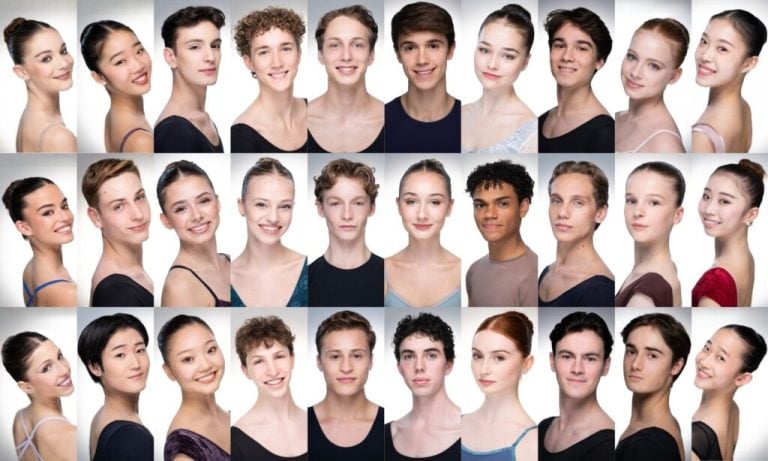
There is something almost beautifully didactic about English National Ballet‘s latest mixed bill – if you want to introduce someone to ballet and modern dance, this is the perfect show. Starting with George Balanchine‘s pomp in the form of Theme and Variations, following, if not quite chronologically, with Martha Graham‘s Errand into the Maze, then William Forsythe‘s lively quintet Herman Schmerman, and culminating with a relatively new piece, especially in comparison, David Dawson‘s Four Last Songs. The programme shows the company in top form, especially soloists and artists, and speaks of their amazing versatility. This is a company full of energy and vision, galvanised especially through dancers you cannot stop looking at – Swanice Luong, Carolyne Galvao, Precious Adams, Rentaro Nakaaki, amongst others, I’m looking at you… literally!

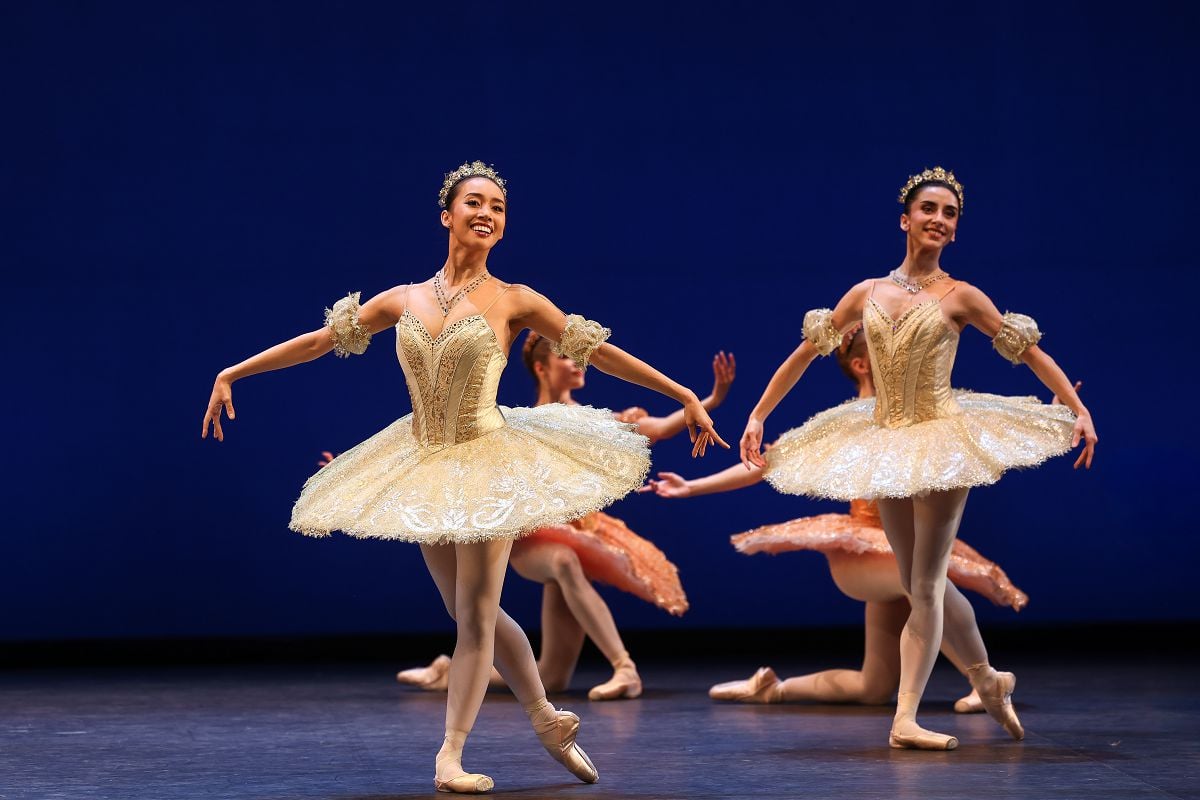

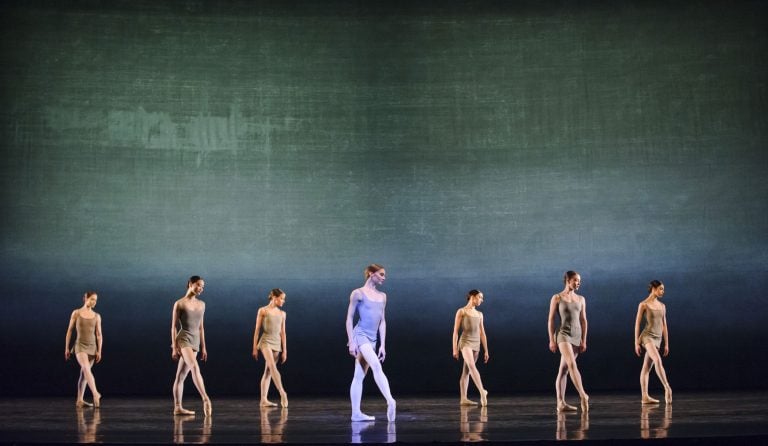
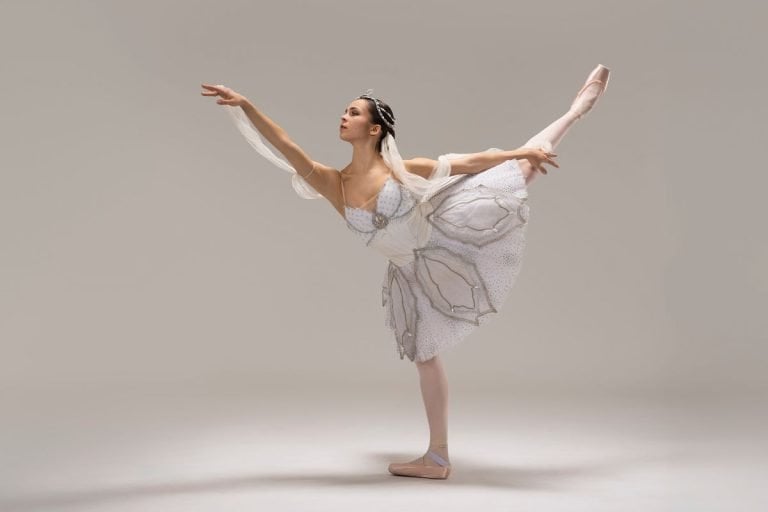
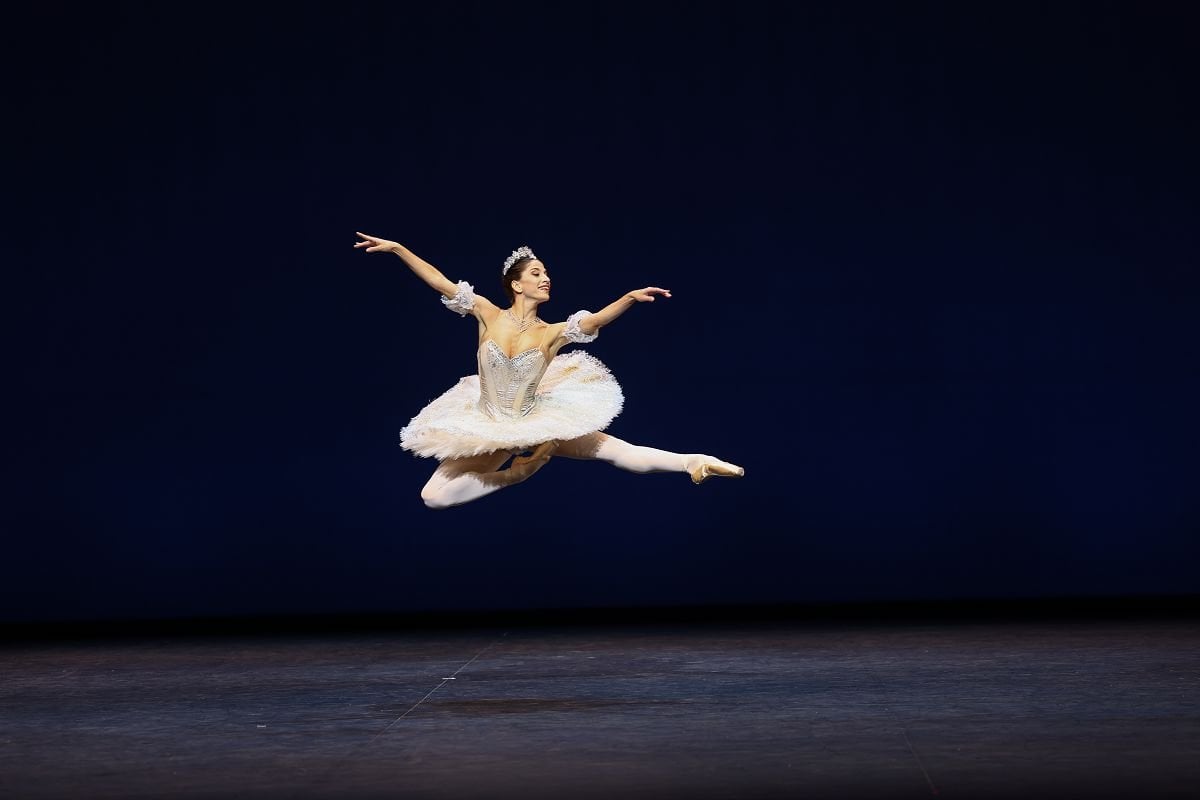
Theme and Variations, in all its high-speed, procession-like, technically accurate glory, was also beautifully performed by guest principal Alice Mariani, who was the personification of ease and lightness, while her feet dazzled in the complex pointe work. Opposite her, Ricardo Castellanos seemed to be struggling. There is no doubt that he is a very accomplished dancer, so I can only wonder if there was a last-minute injury or illness coming into play here. The soloists and artists provided both the fireworks, which weren’t quite there with the first couple, and the neatness of formations, with special mention to new joiners looking great in the fast choreography, and dancers gracefully solving some costume malfunctions. This is the most “classical” Balanchine, with fast footwork, clear musicality, and a sense of ceremonial excess which came through both in the orchestra’s interpretation of Tchaikovsky, conducted by the wonderful Maria Seletskaja, and the dancers’ performances.


Emily Suzuki and Rentaro Nakaaki did a great job embodying Graham’s dramatic choreography for Errand into the Maze, and this short and minimalist duet looked good and was loved by the audience. Even if the full story might escape most of us, it resonates, as it is clear that we live in a time when we all have to be looking into our hearts and fighting with fear. It is evident in their movement that Suzuki and Nakaaki are not pure Graham dancers – some bodily tension is missing, some definition of positions – but this only adds to my appreciation for their versatility. I’m still a bit mystified by the choice to include this piece in the mixed bill, but contextually, it was quite something to see two pieces which premiered very close to one another – both Theme and Variations and Errand into the Maze premiered in 1947 – but could not stem from more different viewpoints. Again, that somehow didactic undertone appears here for me.


Forsythe’s quintet Herman Schmerman is always a good and safe choice – light-hearted, fun, showing the dancers off in a great way, clearly an audience favourite. The dancers were evidently enjoying it, and their energy together with the music and the choreographic ‘sass’, clearly transmitted to the audience. There is a complexity to Forsythe’s choreography that also came through very clearly in ENB’s performance, and which can mean that you see a slightly different thing every time you watch the piece. The second layer of the music and how the dancers’ energy relates to it, for example, was somehow emphasised in this performance. Forsythe is another paradigm shifting choreographer, which makes the third one in this mixed bill, so of course simplicity in his work is often masking very elaborate technical and choreographic features.


Dawson’s Four Last Songs had a sad beauty to it, even if it was extended slightly too long. And perhaps because of being the most recent piece it feels necessary to engage with its choices a bit more – it doesn’t yet have the relative protection of being ‘in the canon’. For example, why the amazing soprano, Madeleine Pierard, was towards the side of the stage, not really part of the action but only lightly engaged with by the dancers every now and again with longing looks. Or, most importantly, why, while the male dancers were given the chance to show their beautiful, independent dancing repeatedly, I doubt there were 30 straight seconds in which a female dancer moved without being lifted or manipulated by a man, other than when walking or running. They seem to do more so in Balanchine’s piece, and when Balanchine feels more empowering to women than more recent choreographers, then we know we have a problem. I have recently heard from several people that there is a feeling going around that male dancers are outperforming female dancers, perhaps we need to reflect a bit on what opportunities are given to each, and who makes the choreography since we are at it.
Overall, this was a very enjoyable night, and a strong-looking company sharing versatility and an evident respect for the history of western theatrical dance. I just wish the repertoire showed a little more actual ‘evolution’ in the choreography. Seeing that the artistic vision is evidently supporting dancers to become truly strong and magnetic performers. I’m sure we will be seeing this soon.