Review: Ballet Black’s 25th Anniversary – a timely, powerful, inspiring, honest show of dance
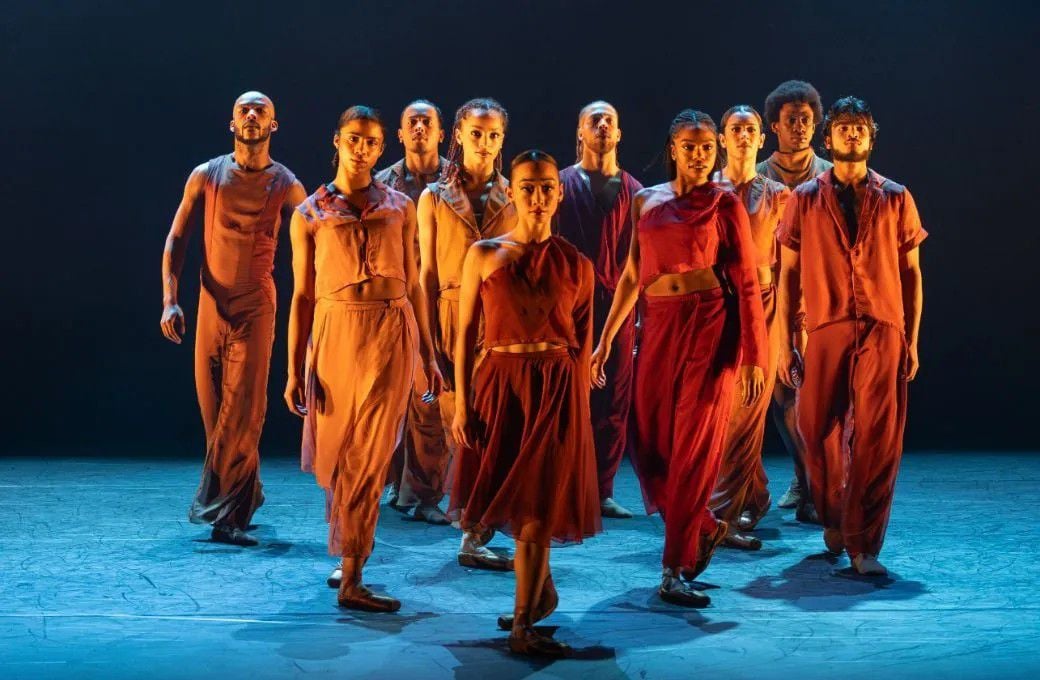
Lucía Piquero sees Ballet Black celebrating its 25th anniversary – these dancers are powerful people, powerful presences, honest and human… We cannot ask for more in the world of dance.
| Title | …all towards hope | Ingoma |
| Company | Ballet Black |
| Venue | The Linbury Theatre, Royal Opera & Ballet, London |
| Date | 3 March 2026 |
| Reviewer | Lucía Piquero |
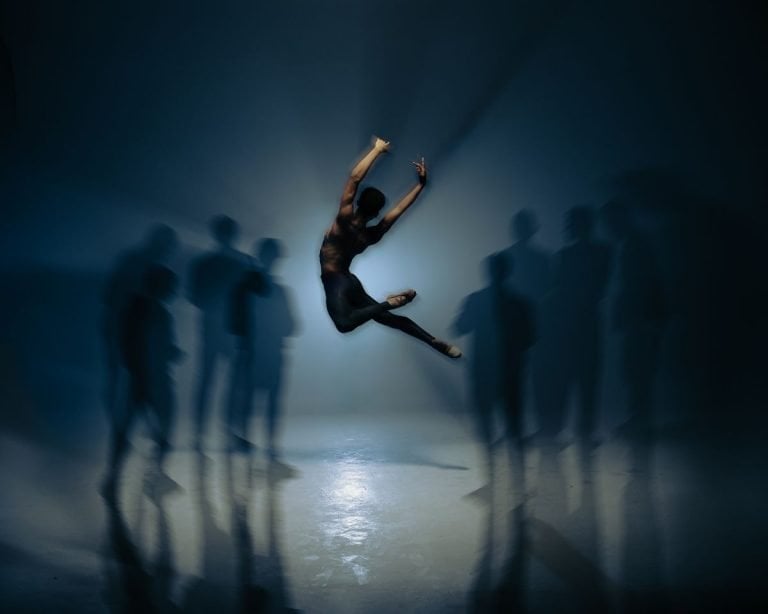
Blue-tinted lights come up on a closely-tight group of dancers. A voice over tells us all about hope, about togetherness, about what we can achieve through both of these key things. From there we are gifted with nothing short of a party, both in the joy and in the technique.
The Ballet Black dancers have this amazing ability, not often found, of merging technical virtuosity with movement ease and fluidity so that they are seamless and joyful. In the pleasure of watching, I don’t often highlight their feats of technique, but just a second of reflection is enough to realise that it is there all the time. In Hope Boykin’s …all towards hope, which couldn’t be more aptly named for a premiere in 20, we don’t get narrative, we don’t get representation, but do we get meaning!

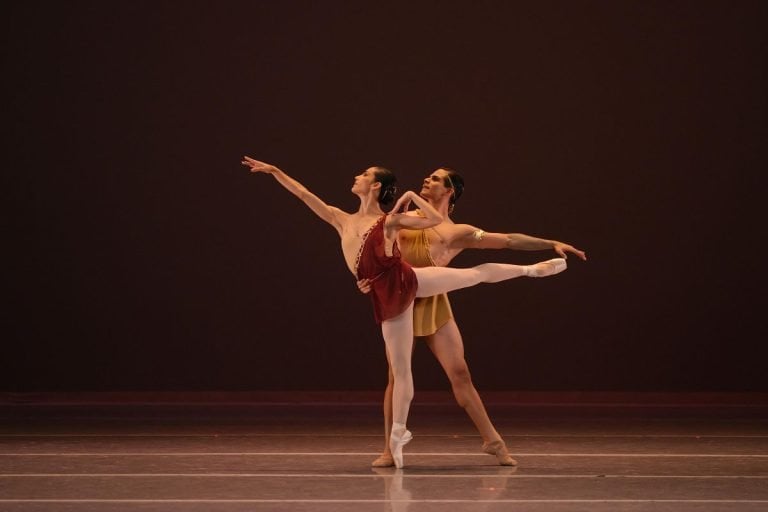
A series of solos, duets, and group moments, with and without music or voice, which take us on a wonderful journey. Jumps, legs, balances and pirouettes to die for, paired with bright smiles and rhythm. The piece was not perfect; sometimes the more traditional choreographic devices – the canons, the repetitions, the orchestration – were a bit too evident, and at points it verged on the too long. But it was so well defended by the dancers that it really didn’t matter. By the end, the audience was smiling and joining in the clapping at the curtain call.
I was grateful also because the work showed the struggle of hoping, mainly in the role of Isabella Coracy. It is always a pleasure to watch her dance, but here she delivered her usual powerful, beautiful dancing with a dose of realistic darkness, the fight for hope. The audience erupted in spontaneous applause at the end of one of her solos, I think half from the relief of watching her emerge victorious, although sighing, from her struggle, and also out of the joy of watching her dance.
These dancers are powerful people, powerful presences, and they also show us that they are honest and human, especially in their relationship with each other on stage, their looks and smiles. We cannot ask for more in the world of dance.

The second piece, Mthuthuzeli November’s Ingoma, originally premiered in 2019, takes hope in a different form. Hope as community, hope as resistance and resilience. I would not be fair to this piece if I did not share that I had goosebumps through more than half of it. It exudes power and truth.
Ingoma starts with a sole dancer in the middle of the stage, Bhungane Mehlomakulu, performing a heartfelt, beautifully moving solo made mostly of soft arm gestures. On the side of the stage, a group of dancers, miners, crouches or sits on the floor. This is followed by a nuanced, aching duet between Mehlomakulu and Taraja Hudson, husband and wife preparing for him to go down to the mines and on to the resistance (the story is set in the African mine workers’ strike in Marikana in 2012).
Both the pain of going and letting go, and the understanding of the necessity to fight for what is right, are evident in the choreography of the duet, and then continued in the group work with influences of gumboot. The movement, albeit strong and reaching, carries the weight of loss, of the fatigued, physically and mentally, people of a struggling society. Their movements take them from grounded, weighted humans to light personifications of flight.

The elements of the choreography, narrative, props, rhythm, the beautiful music by November and Peter Johnson, all merge together in a cocktail that takes our gut and twists it, truly finishing us off with Coracy’s heart-wrenching performance towards the end of the piece. It wasn’t only the – very real – crying, but the short, repeated breath intakes to control the breathing, which made my own breath hitch. Not a trace of pasted-on emotion here, the dancers were feeling the story and taking us with them. In the end, we breathe a bit better when Coracy walks off stage, gathering her strength to continue, and takes the community with her.
And Ballet Black is community: we see it on the stage, and we feel it from the stalls. And whatever the absolute opposite of tone-deaf programming is, Cassa Pancho is the personification of it. A timely, powerful, inspiring, honest show of dance.

Lucía Piquero Álvarez was born in Asturias, Spain, where she trained in Classical Ballet and read for a BSc in Psychology. She moved to London where she trained in contemporary dance (LCDS), also getting an MA in Choreography (Middlesex University). Lucía has been an independent dancer and choreographer since 2007, her choreographies have been presented internationally and she has been commissioned by choreographic centres, national companies and festivals.
She was lecturer and head of the Dance Studies Department at the University of Malta, and Senior Lecturer at Dance City (Newcastle), and is currently lecturing at Trinity Laban and English National Ballet School. She completed her PhD at the University of Roehampton. Her main research interest is on embodied emotion and cognition in dance, she has presented in conferences and directed workshops and practice research projects internationally, and published articles and chapters in diverse platforms as well as her own monograph.