Carlo Vistoli revives Handel’s Italian castrati in new album with Emmanuelle Haïm
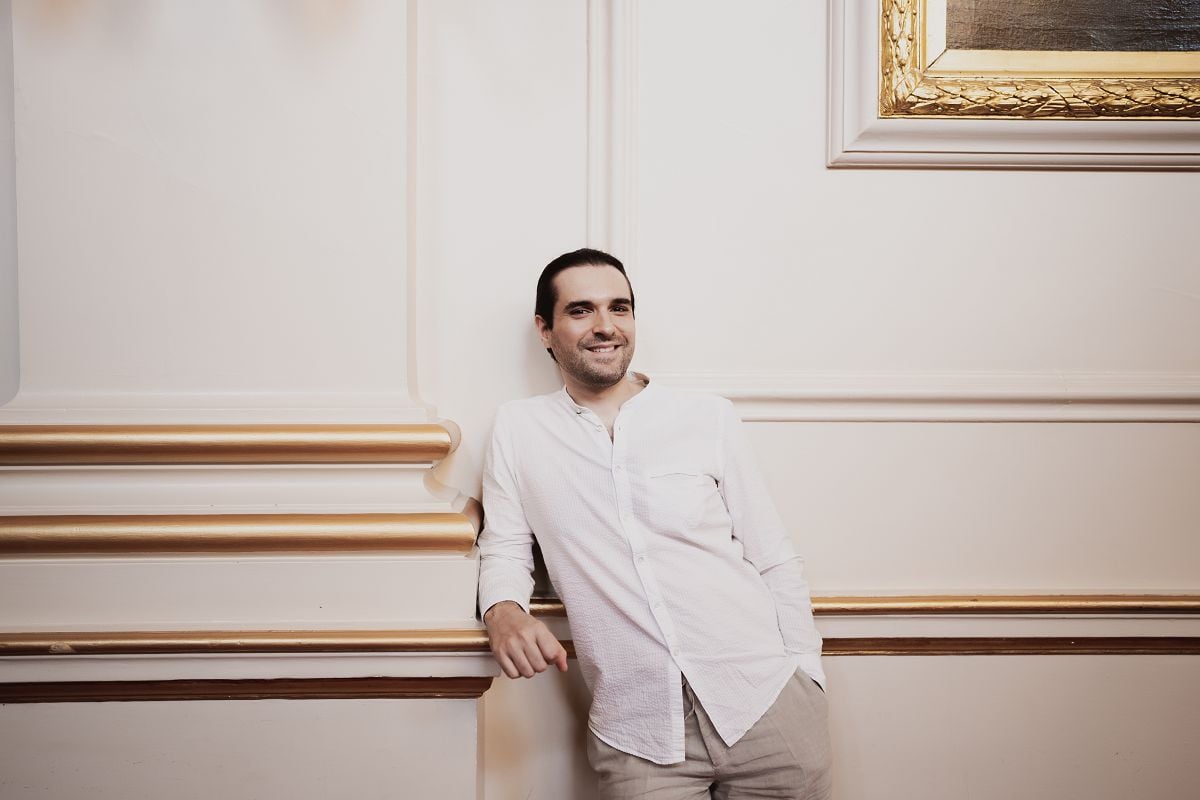
As the first winds of the 18th-century Enlightenment reached Georgian Britain, softening its puritanical rigours, a new form of music theatre began to flourish on English soil: the dramatic oratorio. While Protestant voices were raised against the idea of a theatrical representation of Biblical and religious subjects, the oratorio largely disarmed their arguments, staged as it was in a concert format, without acting, scenery or costumes. The guiding light who gave a new direction to the oratorio, a genre already enjoying great success in Italy and Germany since the previous century, was George Frideric Handel.
– Luigi Sebastiani, Handel’s Italians album booklet
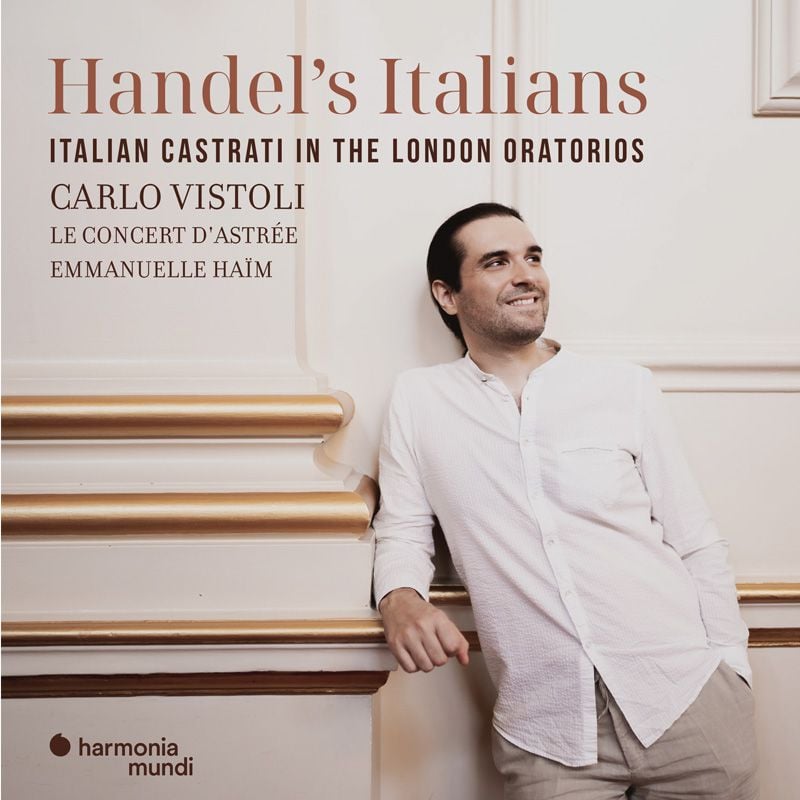
Handel’s Italians explores the music Handel wrote for the great Italian singers who helped establish English oratorio in London.
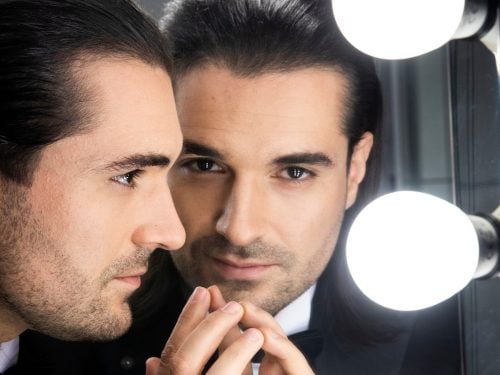
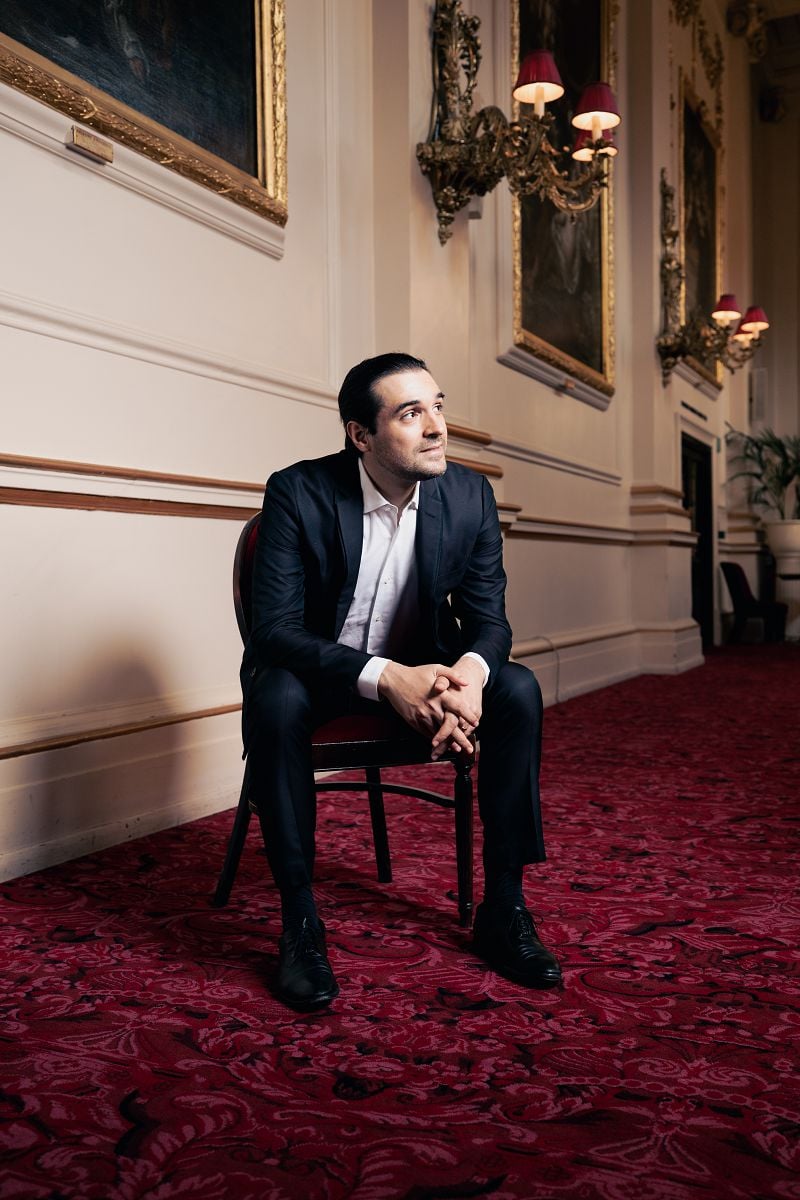
Countertenor Carlo Vistoli shines a spotlight on the celebrated Italian castrati who inspired some of Handel’s finest oratorio writing in his new album, Handel’s Italians, released today, 4 September 2026, and available on major digital platforms.
Recorded with Emmanuelle Haïm, who directs and plays organ, and her renowned baroque ensemble Le Concert d’Astrée, the album focuses on arias from Handel’s London oratorios written for some of the most famous Italian singers of the 18th century, including Francesco Bernardi “Senesino”, Giovanni Carestini, Gaetano Guadagni, and Giovanni Battista Andreoni. Soprano Giulia Semenzato joins Vistoli in two duets.
Handel’s oratorios with Italian flair
“When the idea arose for a new recording project with Harmonia Mundi devoted entirely to Handel’s English-language oratorios,” says Vistoli, “it seemed interesting to approach this repertoire from a rather unusual perspective by focusing on the role played by the castrati and, more generally, the Italian singers.”
He points out that from Handel’s earliest London oratorios of the 1730s through to Theodora, one of his final masterpieces, the composer continually wrote and revised music for the same elite Italian singers who were also appearing in such celebrated operas as Orlando, Alcina and Ariodante.
“Starting from this idea, we imagined that a more dramatic and theatrical style of performance, derived from Italian opera, may well have been what Handel intended. I am delighted to have undertaken this musical journey with an extraordinary artist such as Emmanuelle Haïm and her ensemble Le Concert d’Astrée, which today ranks among the finest baroque groups in the world.”
The Italian artists who transformed English oratorio
In the 1730s Handel introduced the English-language dramatic oratorio to London audiences. Based on biblical and religious subjects and presented in concert form rather than staged productions, these works complied with the religious conventions of Calvinist London while still delivering powerful musical drama.
The first company to embrace the genre was the Royal Academy of Music, established under Handel’s auspices and supported by a group of aristocratic patrons. Remarkably, its singers were almost entirely Italian. Among them were the celebrated castrato Senesino and the soprano Anna Maria Strada del Pò, both performing in English rather than the Italian and Latin repertoire for which they were known.
This recording traces that story through a fascinating selection of music. Vistoli performs English-language arias such as Ahasuerus’s How can I stay when love invites from Esther, Handel’s first London oratorio of 1732, originally sung by Senesino. Also included is Cyrus’s Great God! Who yet but darkly known from Belshazzar, created for Gaetano Guadagni when the work was revived in 1751.
![[NEW RELEASE] Handel's Italian | Aria "Di Jonathan lo stral portò", Saul | Carlo Vistoli, E. Haïm](https://www.gramilano.com/wp-content/cache/flying-press/d9a630ab35932a48208283650b240f46.jpg)
Rare Italian versions recorded for the first time
One of the album’s most intriguing features is its inclusion of arias translated into Italian for singers less comfortable performing in English.
Among them are Più bella spoglia sarà fral from Deborah, sung by Giovanni Carestini during the oratorio’s third revival in 1734, and Di Jonathan lo stral portò from Saul, written for Giovanni Battista Andreoni. Both works receive their first recordings in their Italian versions.
The programme also includes music from Theodora, featuring the duet To thee, thou glorious son of worth sung by Vistoli and Semenzato, as well as pages from Messiah and Athalia.
With Handel’s Italians, Vistoli offers a fascinating exploration of the singers who shaped Handel’s oratorios from within, reconnecting this quintessentially English repertoire with the remarkable Italian artists for whom so much of it was originally conceived.
Touring with Messiah
Vistoli, Haïm and Le Concert d’Astrée will reunite this December for a tour of Handel’s Messiah, with performances in Utrecht, Tourcoing, Paris, Lyon, Barcelona, Madrid, and Los Angeles.