Review: Kaloyan Boyadjiev’s Romeo and Juliet with the Norwegian National Ballet
Graham Watts sees Romeo and Juliet with choreography by Kaloyan Boyadjiev – a production that looks glorious and manages to be both familiar and fresh.
| Title | Romeo and Juliet |
| Company | Norwegian National Ballet |
| Venue | National Opera House, Oslo |
| Date | 2 September 2026 |
| Reviewer | Graham Watts |
Of all the Shakespeare plays, none has the effect of catnip on choreographers so much as Romeo and Juliet. MacMillan, Cranko, Ashton, Neumeier, Nureyev, Grigorovich, Maillot, Pastor, Ek, and recently, Marston are amongst the many great choreographers who have turned this tragedy of the star-cross’d lovers into ballet. Kaloyan Boyadjiev has now joined their ranks with a version that premiered in Sofia last year, and has been significantly re-engineered, with all-new designs and revised choreography, for this v2 production in Oslo.
These two cities are key to Boyadjiev’s career since he was born and trained in Sofia and has spent two decades in Oslo, as principal dancer, ballet master and director of Norwegian National Ballet‘s second company. His production of The Nutcracker, which premiered in 2016, remains hugely popular in Oslo (and has been taken on by several other companies across Europe) and only the pandemic delayed this, his second full-length production for the company, until now.
Any new production of Romeo and Juliet (Romeo og Julie in Norwegian) has to stand the test of comparison with the many versions that have gone before, and Boyadjiev passes this examination with flying colours. With his creative collaborators, he has crafted a production that looks glorious and manages to be both familiar and fresh, which is quite the achievement.
Everything that one wishes and expects to see in the ballet is there, from the opening courtyard clash between the Montagues and Capulets, happily more of a skirmish and less of a battle (with the consequent absence of a pile of dead bodies) as in MacMillan’s production, to the tragic dénouement that (spoiler alert!) takes both young lovers’ lives by suicide in the final scene. As an aside, the fight choreography throughout the ballet is effective, especially in the exciting final duel between Romeo and Tybalt.
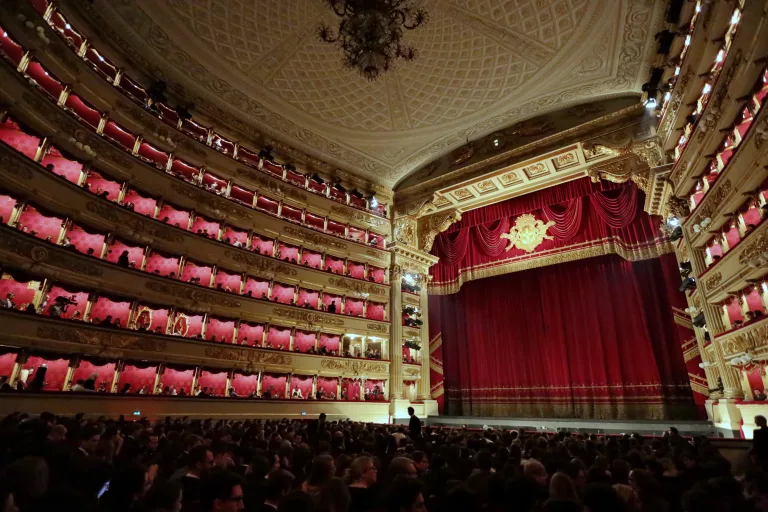
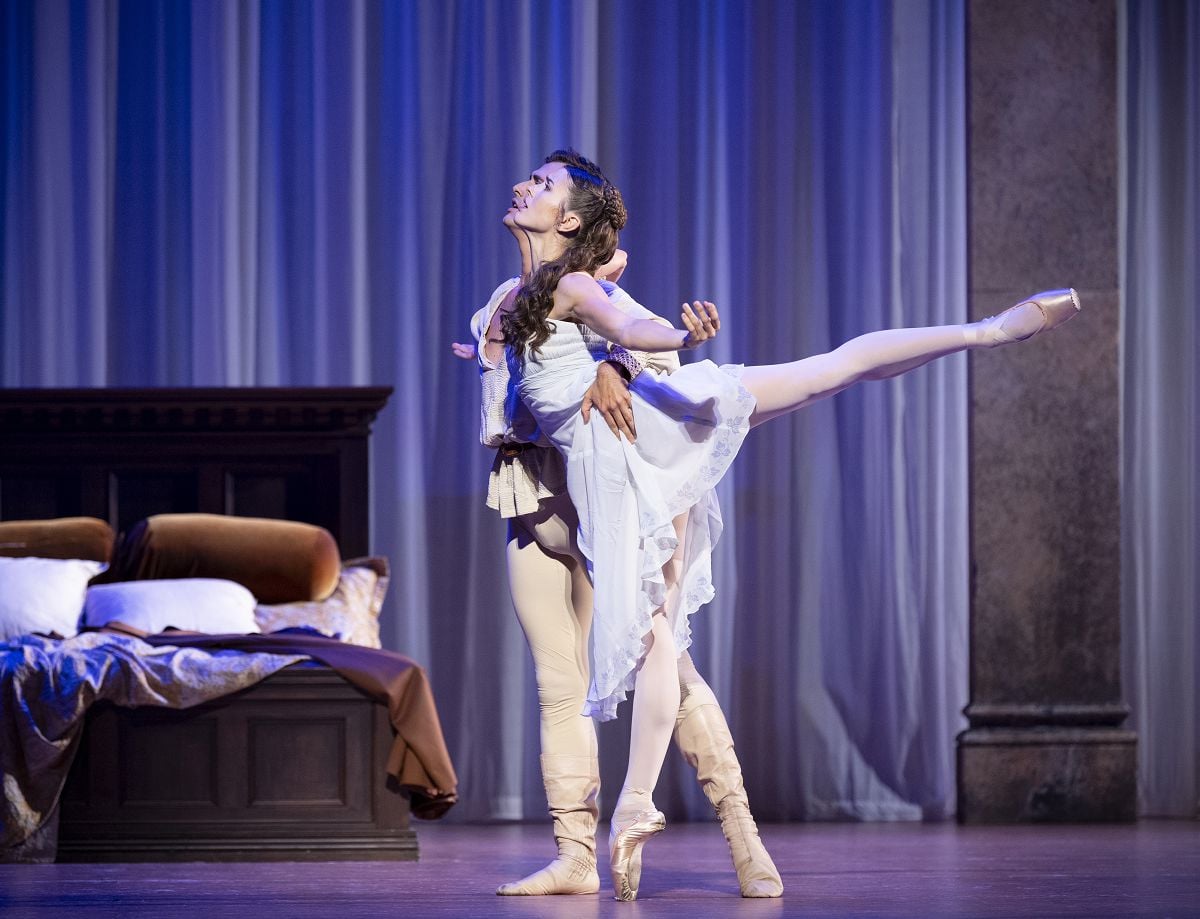
The production is significantly enhanced by Christopher Oram’s sumptuous designs, emphatically lit by Neil Austen, especially in a set that was splendidly authentic of period and gorgeous in its architecture and autumnal colours. And this performance was also uplifted by the rich textures in Prokofiev’s music being elevated through the acoustics of this marvellous opera house (truly one of the seven architectural wonders of the twentieth century) in a superb orchestral performance, conducted by Vello Pähn.
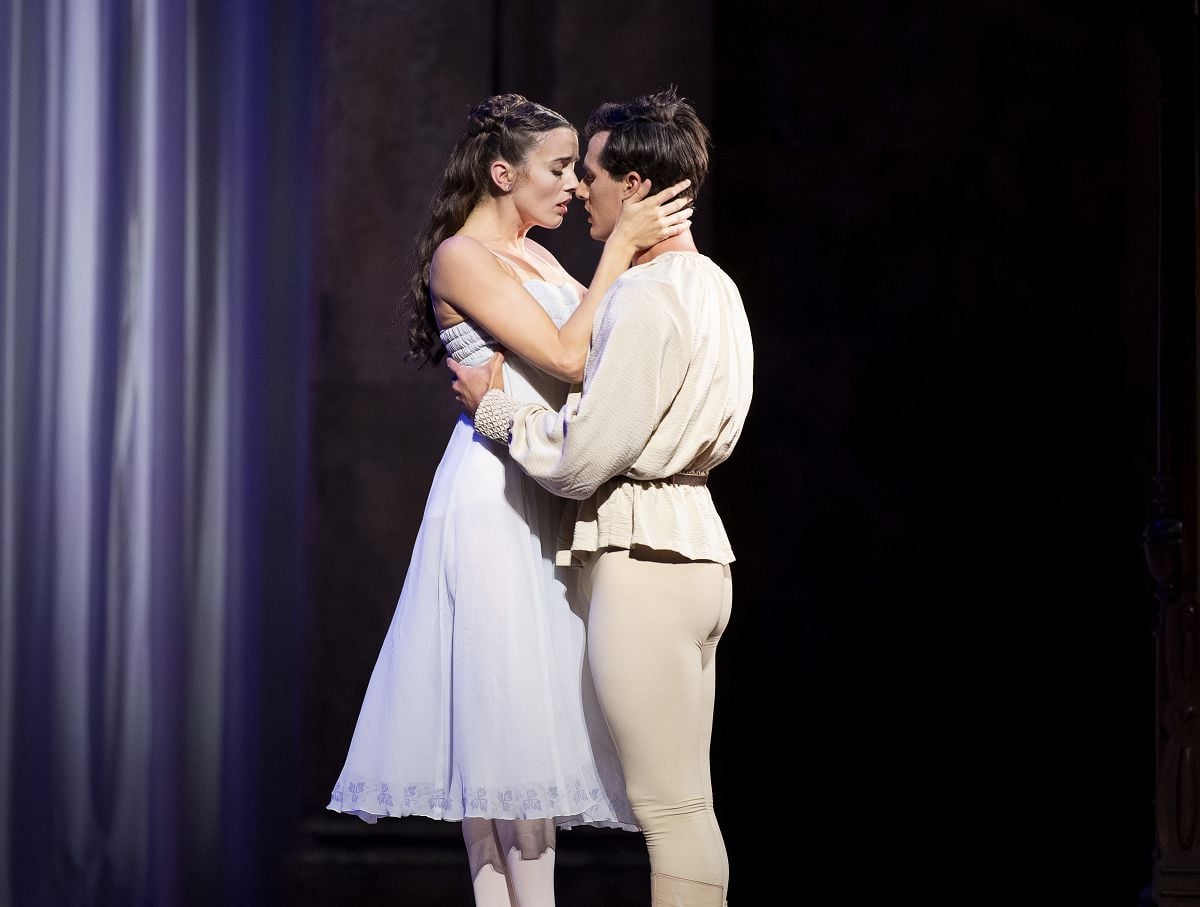
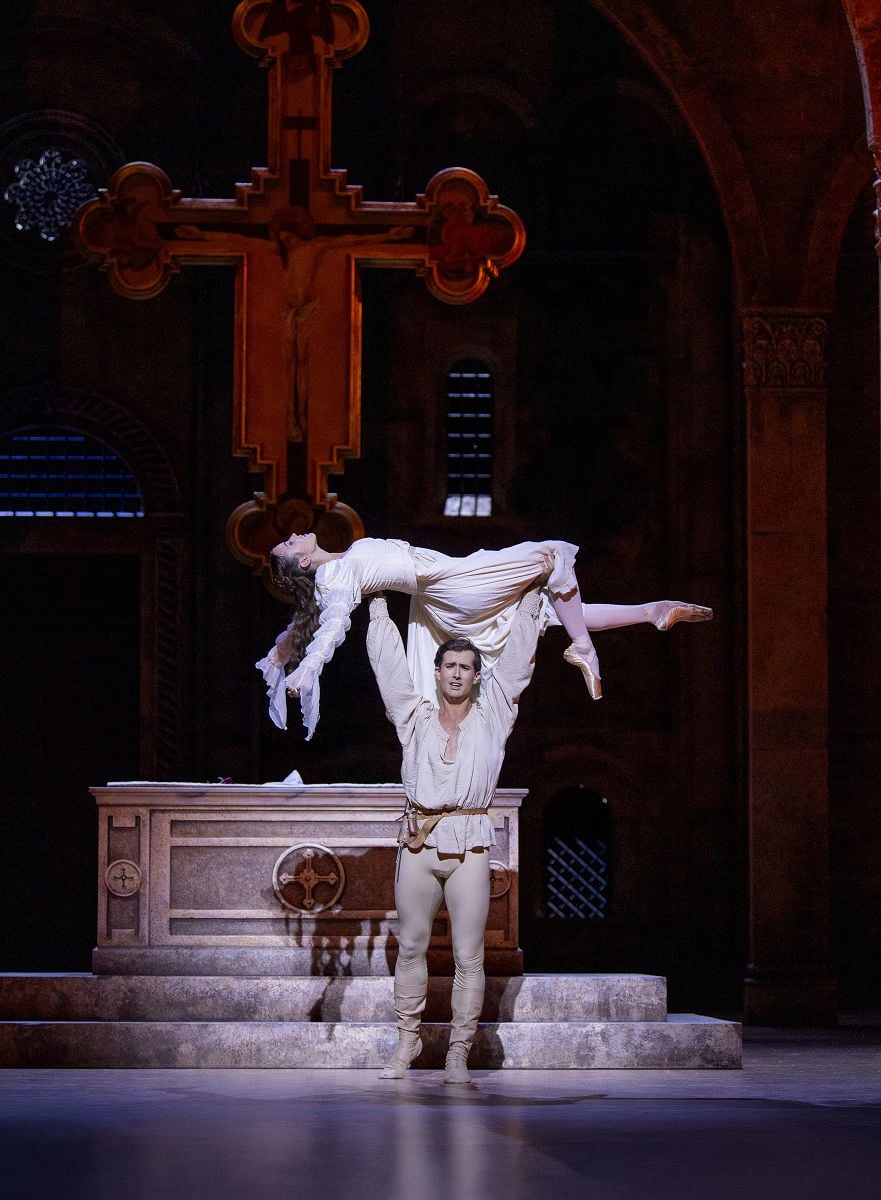
Although this was not the Oslo premiere, it featured a host of debuts that perhaps contributed to the freshness. Both title roles were being performed for the first time by Alex Cuadros Joglar and Anaïs Touret, and their chemistry was both charming and magnetic. Joglar conveyed all the aspects of Romeo’s rapid maturity, from the devil-may-care pursuit of Rosalinde (a haughty performance by Sofia Blok Lysvåg, complete with page boy in tow) and lustful flirtations with the Montague girls (Daniela Cabrera, Anna Sheleg and Gina Storm-Jensen) through the vengeful killing of Tybalt, its sorrowful aftermath and his passionate, obsessive love for Juliet.
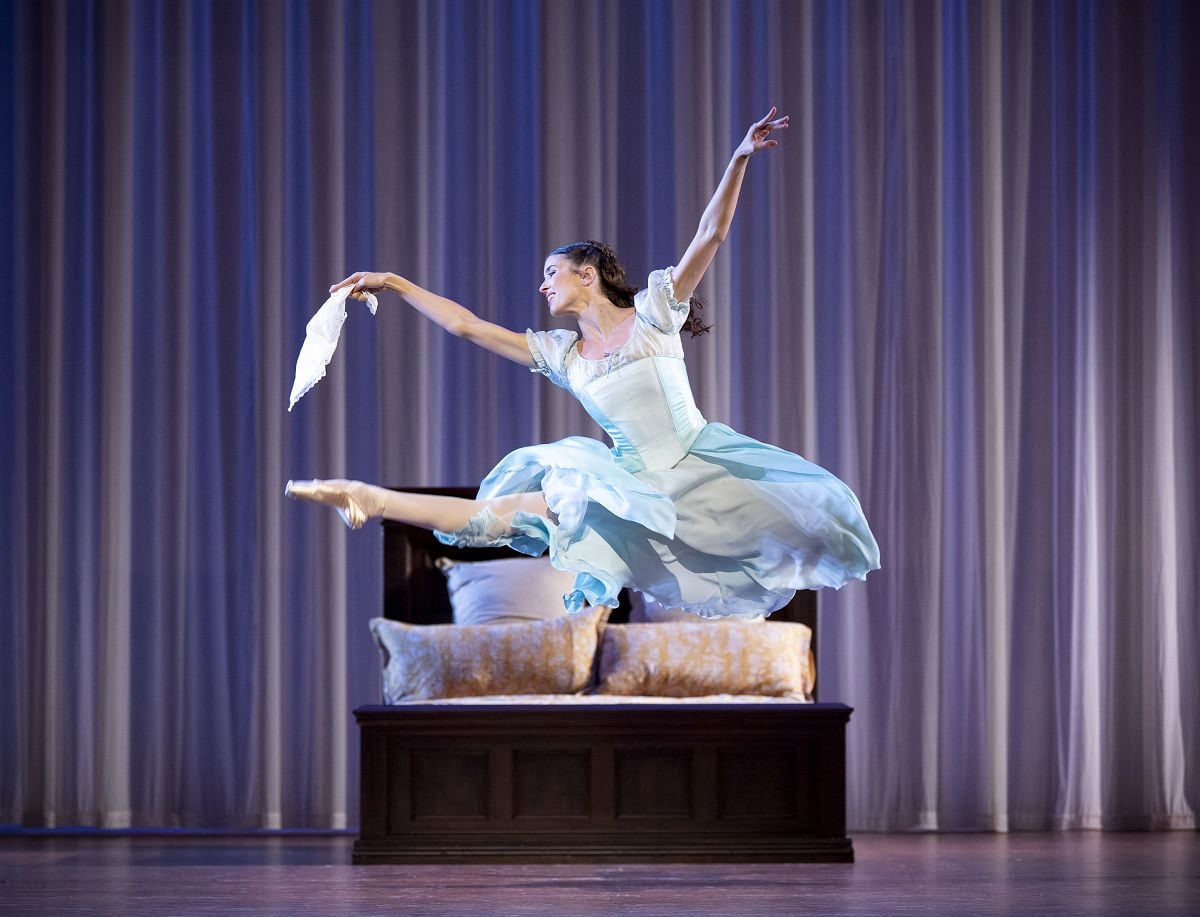
Touret was a perfect representation of Juliet. From the teenage enthusiasm of her opening scene with the Nurse (a bustling Celine Krall) to the sudden rush into adulthood when meeting Romeo at the Capulet ball. Boyadjiev emphasises Juliet’s steely determination to find a way of thwarting her parents’ ambition for her to marry Paris, a few moments in which the darkness of the music is matched by her stillness on the bed in the story’s significant turning point. Touret gave a tremendous and already fully rounded performance, which I feel sure will get even richer in years to come.
The key duets between the pair were beautifully performed, with Boyadjiev’s solo emphasis changing from Romeo’s declaration of love in the balcony pas de deux to Juliet begging him to stay in the bedroom duet. The dance between Romeo and the unconscious Juliet in the final scene was the epitome of human anguish and beautifully performed.
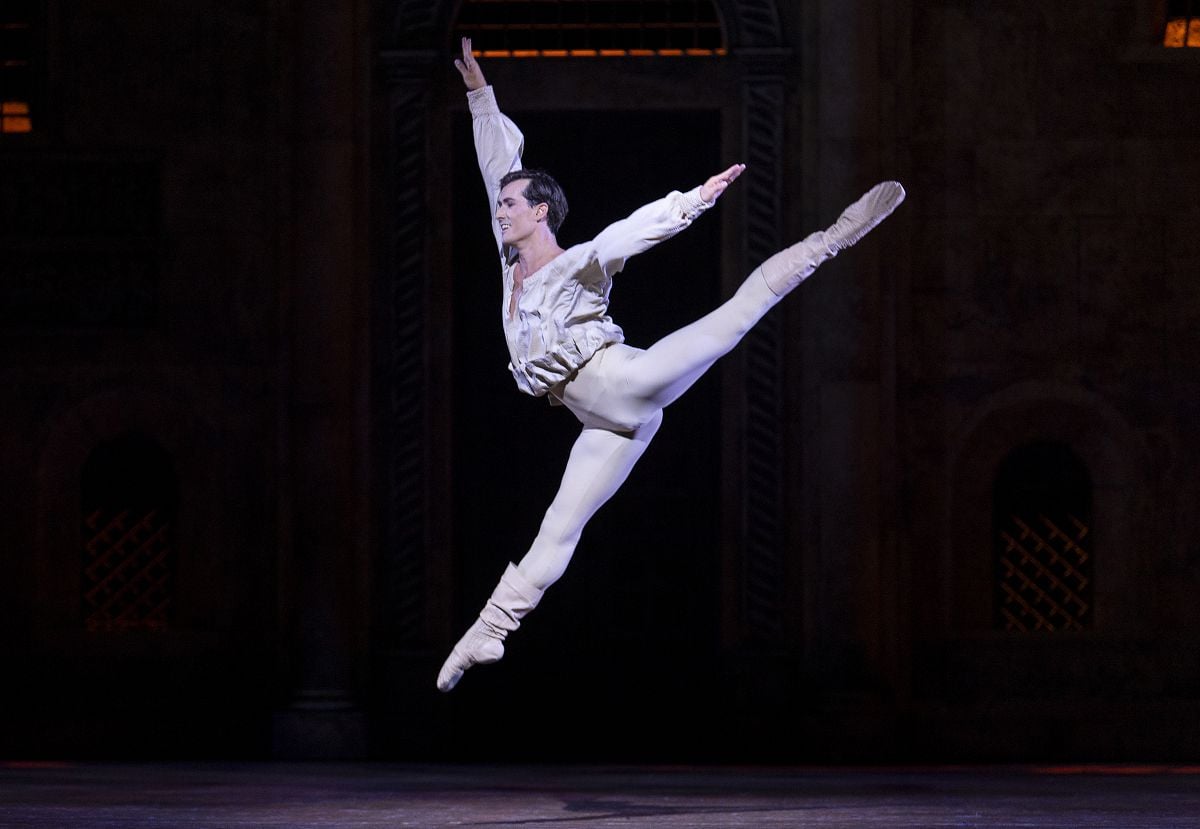
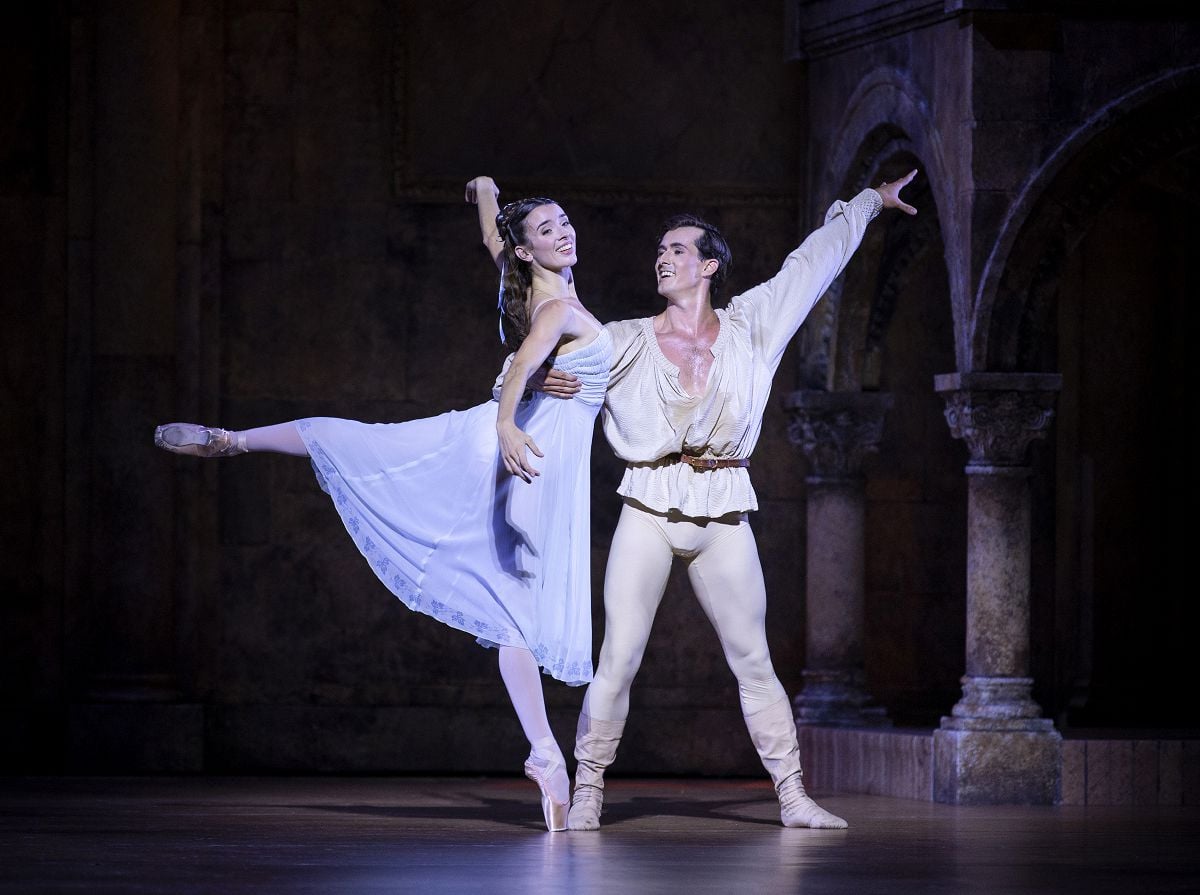
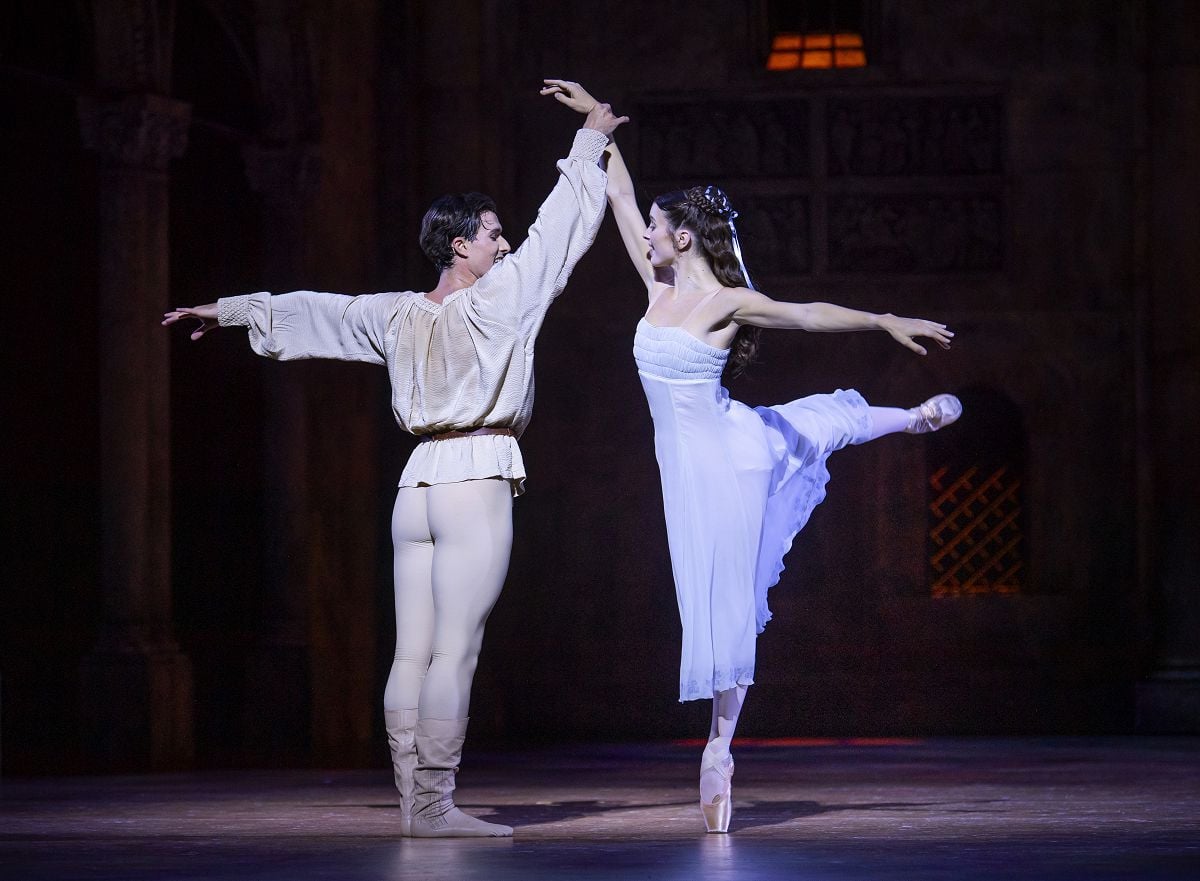
Boyadjiev tugs the heartstrings even more by having Juliet waking before Romeo has died from his poisoning, similar to the Cranko structure but even (if my memory serves me correctly) more drawn out, before she draws his knife from its sheath to inflict the fatal stab on herself. Incidentally, in this performance Romeo’s murder of Paris in the crypt was omitted.
Other debuts included the boisterous Mercutio of Martin Dauchez; Simon McNally’s haughty, aristocratic Paris; Dingkai Bai’s sinister Tybalt; and the Lord and Lady Capulet of Linus Lynch and Freya Murzagiliyev-Thomas. His domineering and abusive approach to Juliet’s rejection of Paris was appropriately uncomfortable to watch, and her coruscating distress at the death of Tybalt was a brutal indication of their true relationship.
A word also to praise Andrew Coffey’s performance as Benvolio (wearing the skull cap that Oram used to distinguish Montague from Capulet). It was a huge pleasure to experience Storm-Jensen’s performance as one of the Montague women (also known as a harlot in the MacMillan). She was totally invested in her character, lighting up the stage with a mix of playful charisma and concern (during the fight scenes).
Boyadjiev has put a great deal of emphasis on the supporting characters to create a realistic, holistic image of Shakespeare’s Verona. It’s a ballet that requires a lot of bodies on stage, and there is some understandable doubling up amongst the 60 or so dancers. For example, Lady Montague (Johanne Wien Pedersen) makes a surprise but seamless transition into the Mandolin dance, and her “husband” (Marco Pagetti) becomes a monk in the final scene!
There are no spoilers in Romeo and Juliet. Everyone knows the outcome, and yet its popularity as a ballet is undiminished. I imagine that there is a good chance of it being performed somewhere in the world on every day of the year. One inevitably asks if a new production adds anything to this international repertoire, and in Boyadjiev’s case the response is a resounding “yes”!