Review: A Centenary Celebration with The Royal Ballet, Birmingham Royal Ballet and the Royal Ballet School
From de Valois’s rarely-seen Checkmate to Valentino Zucchetti’s confetti-strewn finale, one school and two companies mark 100 years of The Royal Ballet School with a gala full of variety, versatility and vitality.
| Title | A Centenary Celebration |
| Company | The Royal Ballet, Birmingham Royal Ballet and The Royal Ballet School |
| Venue | The Royal Opera House, London |
| Date | 8 October 2026 |
| Reviewer | Georgina Butler |
One school. Two companies. Three performances of A Centenary Celebration, the Royal Ballet’s special, season-opening showcase celebrating 100 years of the Royal Ballet School.
Founded in 1926 by Dame Ninette de Valois (1898–2001), the Royal Ballet School is one of the most prestigious ballet schools in the world. Committed to de Valois’s philosophy that the fledgling movers and makers it educates are tomorrow’s guardians and champions of an ever-evolving art form, it has produced generations of elite dancers, choreographers and creative leaders.
Students grace the Royal Opera House stage for the annual Royal Ballet School summer performance. Some also dance in company productions. The Royal Ballet and Birmingham Royal Ballet, which operate as independent organisations today, were founded by the visionary de Valois (in 1931, as the Vic-Wells Ballet, and in 1946, as a separate touring company, respectively), and graduates of the school feed into both companies. What better way to honour the history, legacy and future of the school than a glittering gala uniting all three institutions?
Combining a star-studded cast of professionals with up-and-coming young talent in a milestone-marking programme is quite the directive. Happily, directors Kevin O’Hare, Carlos Acosta and Iain Mackay – alongside everyone involved in deciding, drilling and dancing the repertoire for A Centenary Celebration – deliver a memorable tribute to an indomitable woman (affectionately known as “Madam”) whose school sparked a century in motion.
The auditorium fizzes with anticipation and awe throughout what proves to be an experience characterised by variety, versatility and vitality. Twelve pieces – arranged around two intervals and neatly marshalled inside the three-hour running time – trace 100 years of British ballet through the artists and works instrumental in helping the Royal Ballet School preserve its classical roots while embracing experimentation.
Seamlessly and silently integrated projections of quotes from, and photographs of, relevant alumni are shared before each piece to set the commemorative tone and provide context. Beyond this, the dancing (accompanied by live music from the Orchestra of the Royal Opera House and various solo musicians) does the talking.
Proceedings begin with heritage ballets (from de Valois and Frederick Ashton). Next come world premieres (from Christopher Wheeldon and Cathy Marston) and short works (from Kenneth MacMillan, Wayne McGregor, Joshua Junker, David Bintley…). Then comes the grand finale created especially for the occasion (by Valentino Zucchetti).


Checkmate Suite, performed by leading artists from the Royal Ballet and dancers from the Royal Ballet School’s pre-professional year, opens the programme. Checkmate (1937) is a one-act neoclassical ballet composed by Arthur Bliss and choreographed by de Valois. Boasting vibrant Art Deco designs, it personifies a game of chess as a struggle between Love (in red) and Death (in black). The ballet is seldom staged, seemingly due to its scale and expense, but was included as a suite of excerpts in this year’s Royal Ballet School summer performance. A theatrical treat then, and a delightfully dignified dance-drama here, too. Perhaps it will be presented in its entirety, for full impact, on its next outing?
Unfazed students make the first moves, winning admiration for their absorbing accuracy. Eight perky Red Pawns (pre-professional young women in crimson unitards, capes and caps, executing crisp pointe work and chirpy jumps) assemble on the board. Enter Four Knights (pre-professional men Emiliano Cordero Altamirano, Sasha Dobrynin-Lait, Keenan Mentzos and Minjun Suh, demonstrating military precision in synchronised straddle jumps). Red Knights challenge Black Knights. Tension builds under the watchful gaze of the King (principal character artist Christopher Saunders, on a throne upstage), climaxing with the arrival of the Black Queen (principal Mayara Magri). A lonely Red Knight (principal Reece Clarke) is bewitched by the Black Queen – so dances an exuberant mazurka. The Black Queen, wielding two swords, moves in any direction she pleases and takes control of the board…

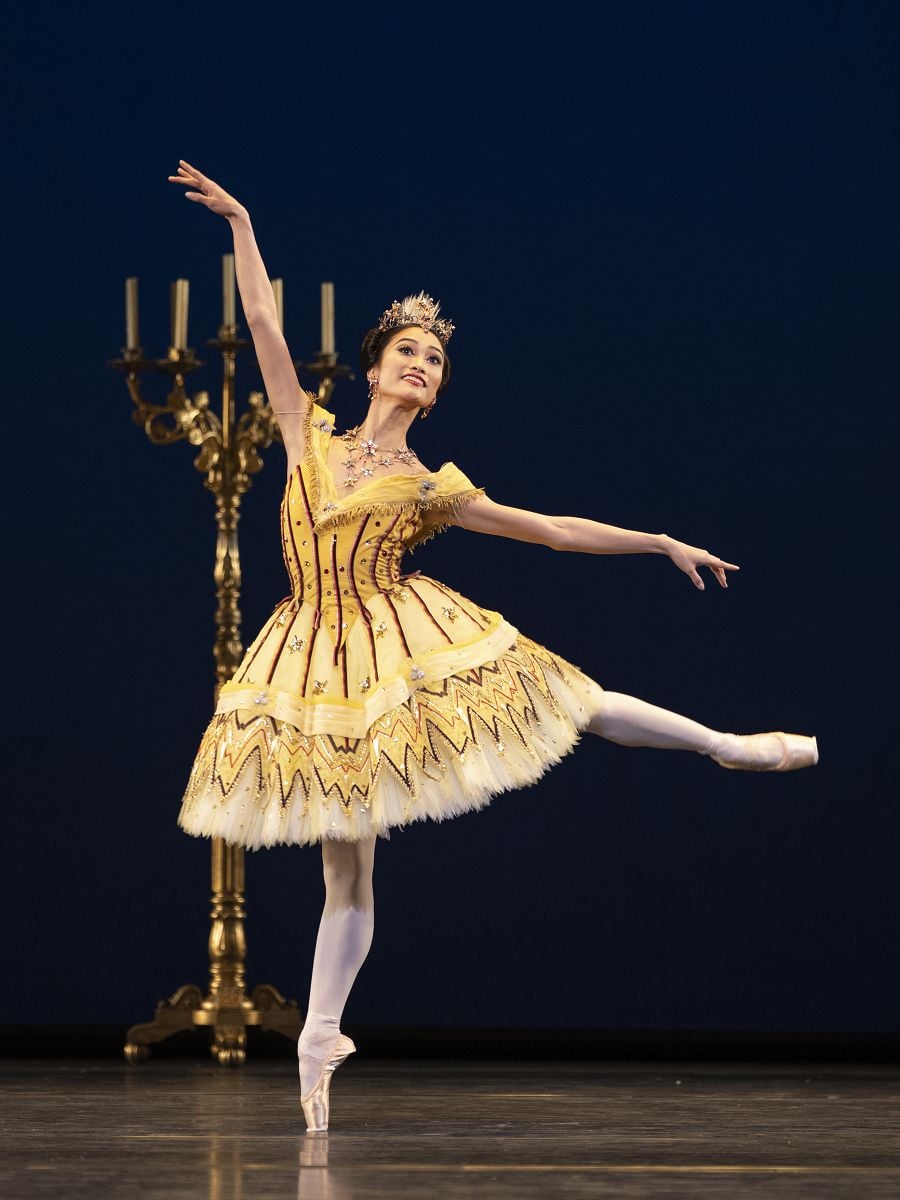

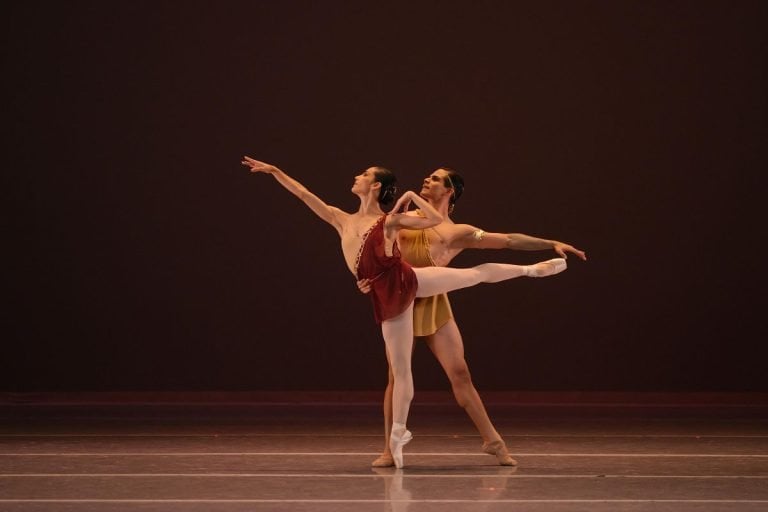
Birthday Offering, danced by a combined ensemble from the Royal Ballet and Birmingham Royal Ballet, is another rarely seen gem. A pièce d’occasion in one scene, it was choreographed by Frederick Ashton (1904–1988) in 1956 to celebrate 25 years of the Royal Ballet. Set to a lush, lyrical score using music by Alexander Glazunov, this is a courtly spectacle for seven couples. It incorporates a regal entrance, elegant and expressive variations for the women, a bravura mazurka for the men, a radiant pas de deux and a jubilant finale.
The royal blue backdrop is punctuated by four large, free-standing candelabras. The ballerinas wear richly embroidered, three-quarter-length romantic tutus with coloured petticoats, and their cavaliers wear matching tunics. The central couple (Royal Ballet principals Marianela Nuñez and Patricio Revé) are resplendent in striking shades of shimmering pale yellow and gleaming gold. Dancers sweep around majestically and show off their unique qualities. An opulent palace setting with quirky character-revealing solos evocative of the fairies in The Sleeping Beauty? Yes! Aristocratic, enchanting and reminiscent of the ballroom scene in Beauty and the Beast? Yes!
Something was off with the spacing between the couples during the expansive waltzing. Still, they pulled off the (extremely challenging) pure classical dancing in this party piece with Ashtonian assurance and fairytale flair.
An interval to draw breath. (Noting that the best move is always the next one – checkmate! Especially if “then somebody bends” – Ashton would approve!)


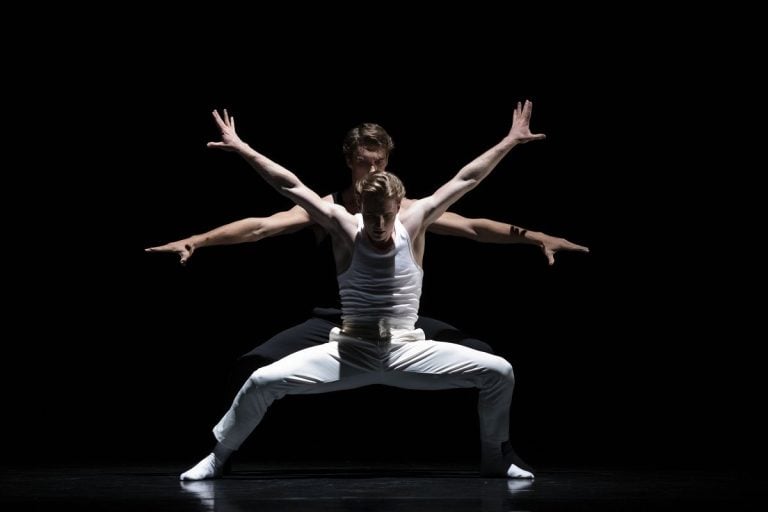
Back to ballet and Beautiful Shadow, the first world premiere of the programme, opens with the Royal Ballet’s Lauren Cuthbertson and Lukas B. Brændsrød in silhouette. A quintessential Christopher Wheeldon offering, this pas de deux slowly shifts through sombre, sculptural shapes in an acoustic landscape supplied by Benjamin Britten. Atmospheric inky lighting envelops the dancers. Her body, costumed in a stylish contemporary tutu by Erdem Moralioğlu, drapes over his bare torso. He lifts her. Is this adoration or manipulation? Darkness descends, but they remain in the light. Together.
Night Falling, the second world premiere, continues the sober, reflective mood. Cathy Marston’s new work embodies the themes of emotional isolation and unrequited love in Britten’s 1937 song ‘Night covers up the rigid land’, sung by onstage tenor Michael Gibson. Inhabited with intent, by Royal Ballet principals Matthew Ball and William Bracewell, the piece comes to a sudden and subdued end.


More melancholy with Winter Dreams pas de deux, danced by Birmingham Royal Ballet principals Yaoqian Shang and Mathias Dingman. Choreographed by Kenneth MacMillan (1929–1992) in 1990, “the Farewell pas de deux” unfolds to Tchaikovsky’s Romance in F major, Op. 51. Out-of-context drama in a gala lineup can be tricky – a transporting and exquisitely musical rendering, but perhaps not this love story’s emotional crescendo.
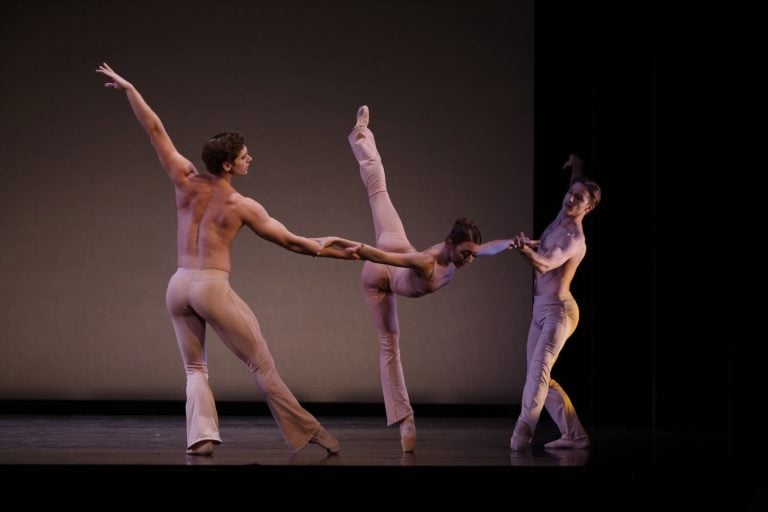
Nimbus (2007) next, performed by Birmingham Royal Ballet’s Miki Mizutani and Tzu-Chao Chou and the Royal Ballet’s Sae Maeda and Joseph Sissens. A departure from the deep and meaningful to marvel at mechanics. Set to a delicate Franz Schubert score, this was Wayne McGregor’s first work as resident choreographer for the Royal Ballet, yet still feels fresh today. The four dancers fluidly interact through end-range movement and switching configurations. Contortion, control, charisma.


King of charisma, Elvis Presley, croons three tracks for a nine-strong Royal Ballet cast to surrender to in Unforgettable. Choreographed by Royal Ballet soloist Joshua Junker in 2022, this rollicking exploration of celebrity worship dynamically draws us into the dancers’ state of collective euphoria. Gathered on a moodily lit stage, they see stars, scream and scatter. It’s entertainingly on the wild side!
There is wildlife on the other side of the second interval. ‘Still Life’ at the Penguin Café – Southern Cape Zebra, performed by Birmingham Royal Ballet, with soloist Yasiel Hodelín Bello as the noble striped steed. One-act ecocritical ballet ‘Still Life’ at the Penguin Café was created by David Bintley for the Royal Ballet in 1988, during his tenure as the company’s resident choreographer. Witty, wildly popular and distinctly English, it sits proudly within the de Valois and Ashton tradition.
African-inspired polyrhythms roll out as Simon Jeffes’s buoyant score introduces Bello’s Zebra. The endangered equine shunts and shimmies his way downstage while self-absorbed fashionistas in black-and-white [zebra] striped dresses and heeled shoes sassily wander by. They ignore the graceful beast in their midst, focused entirely on strutting and posing. When he is shot, they are unmoved by the slaughter. There is plenty of life in this charming work and its cautionary message feels more poignant now than ever before. When shall we expect a return of the entire ‘Still Life’ menagerie to Covent Garden?


Back to pointe shoes and partnering. Danse Russe is a pas de deux for Royal Ballet principals Sarah Lamb and Steven McRae. Choreographed by Loughlan Prior and danced to an excerpt from Tchaikovsky’s Swan Lake played on solo violin by Vasko Vassilev, it premiered in September as part of The McRae/Vassilev Project. It unpretentiously melds movement with music while accentuating the dancers’ sparkle and strength.
The familiar Manon – Act I Bedroom pas de deux, performed by Royal Ballet principals Francesca Hayward and Marcelino Sambé, is a teaser for this season’s Manon run. The three-act ballet, which tells the story of a young woman torn between a life of luxury or love, was choreographed by MacMillan in 1974 to music by Jules Massenet. Even out of context, and despite some fumbles, the chemistry between Hayward and Sambé in this dramatic duet sizzles and soars.
Swan Lake – Act III pas de deux, from the 2018 Royal Ballet production by Liam Scarlett, is the final pas de deux of the programme. Royal Ballet principals Fumi Kaneko and Vadim Muntagirov light up the palace ballroom (although those candelabras from Birthday Offering are back to set the scene!). Kaneko is on audacious form as seductive Odile, whipping out double pirouettes throughout much of her whirling series of fouettés. Muntagirov as princely as ever.


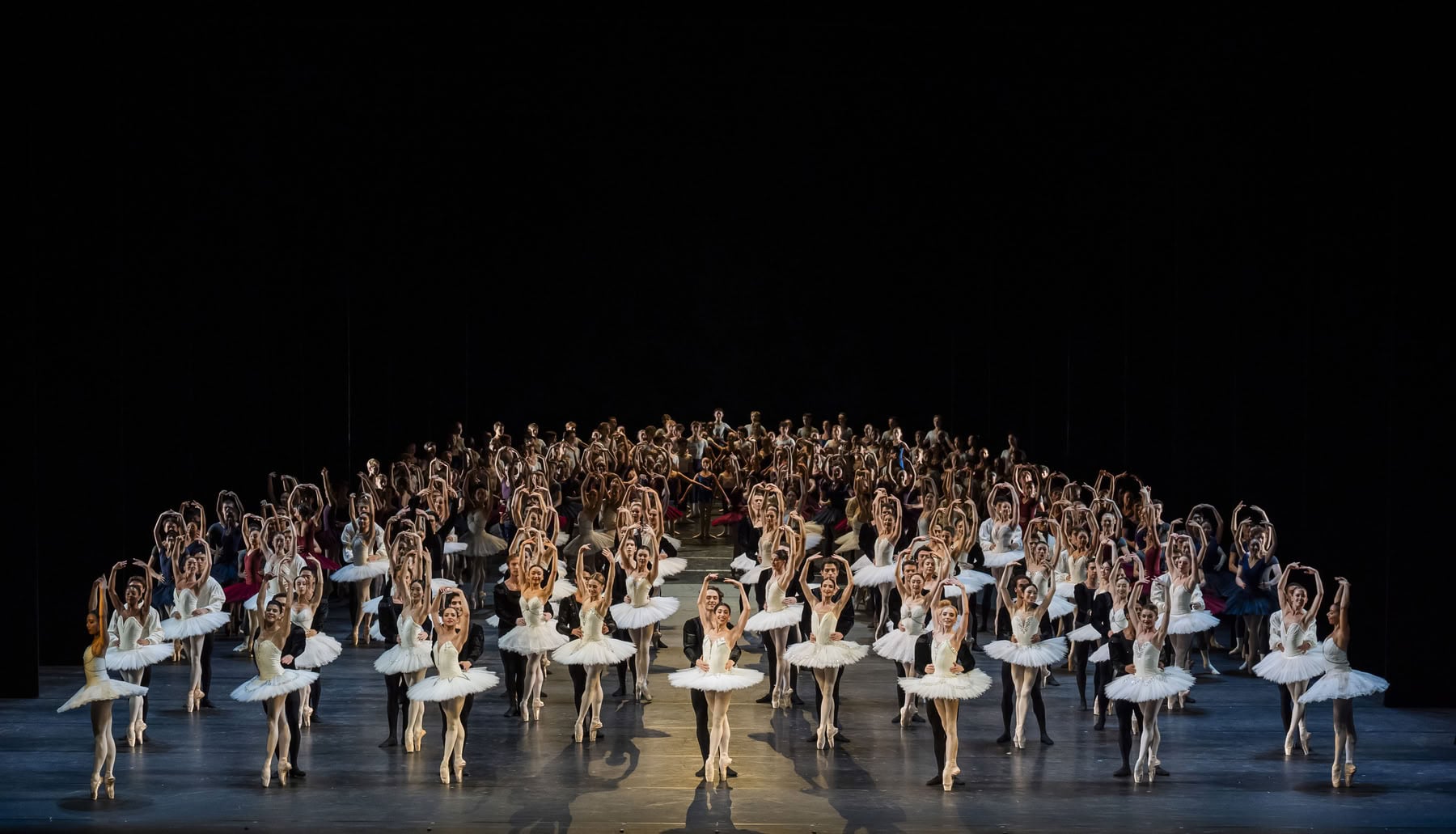
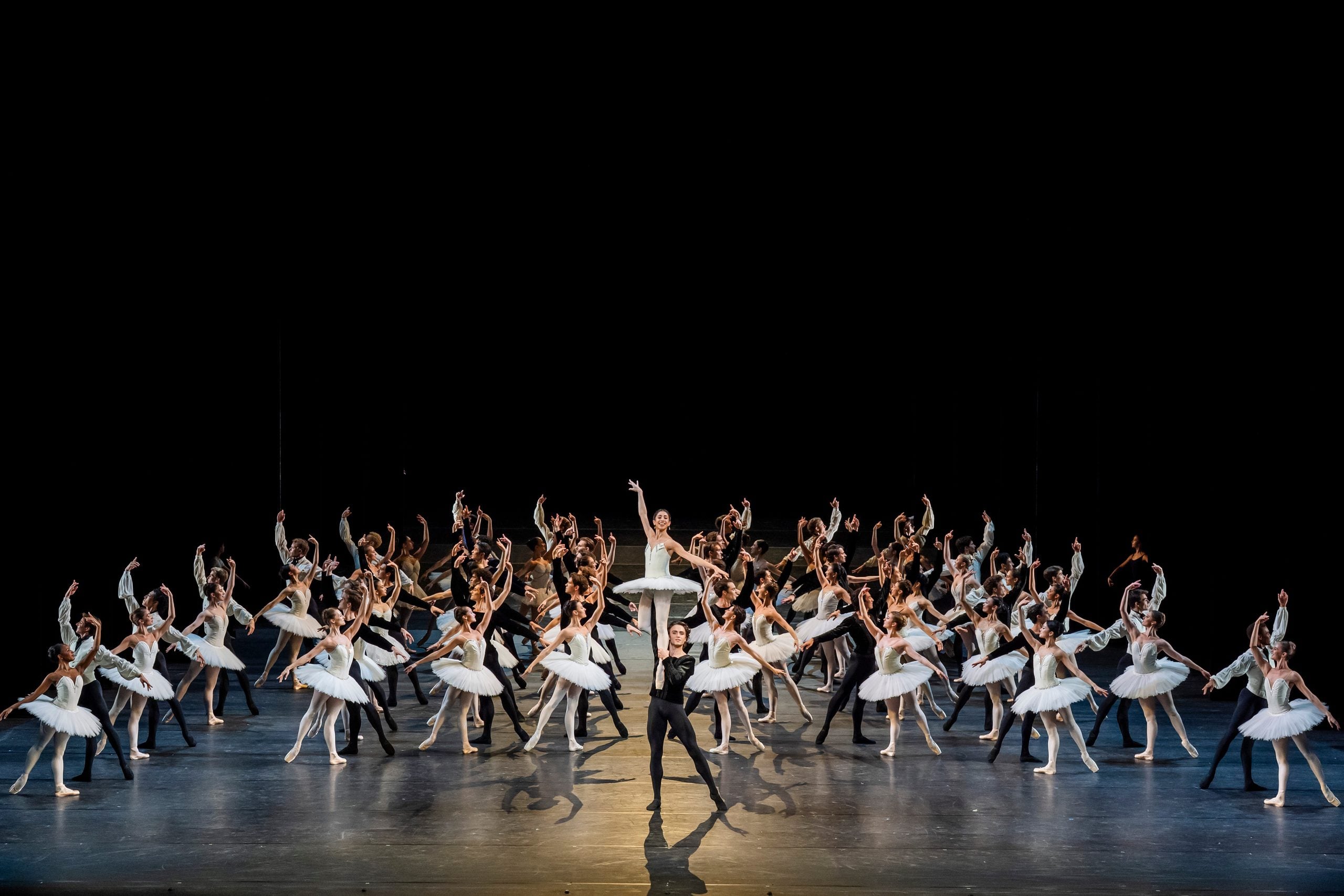
The programme ends with Centenary, an ambitious tour de force of a creation choreographed especially for the occasion by Royal Ballet first soloist Valentino Zucchetti. A grand défilé and then some, this extravaganza sees students from all levels of the Royal Ballet School performing alongside the Royal Ballet and Birmingham Royal Ballet. Starting with the youngest students (aged 12), wave after wave of dancers flood the stage. Who knew that stage had such depth?
Students, wearing their colour-coded year uniforms, are joined by professionals from both companies, the women wearing classic white tutus and the men wearing black. The effect is quite overwhelming as groups pass each other. Aspects of Balanchine and Etudes meet Busby Berkeley. Echoes of a fire drill. A glimpse of dancing ghosts. Culminating in glittering gold confetti showering down over the cast, it was a sight to behold.
Heritage ballets. World premieres. Short works. And a (ginormous) grand finale. Something for everyone – centenaries should come around more often!