Review: In Birmingham Royal Ballet’s Swan Lake, a great ballet is trapped inside a good one
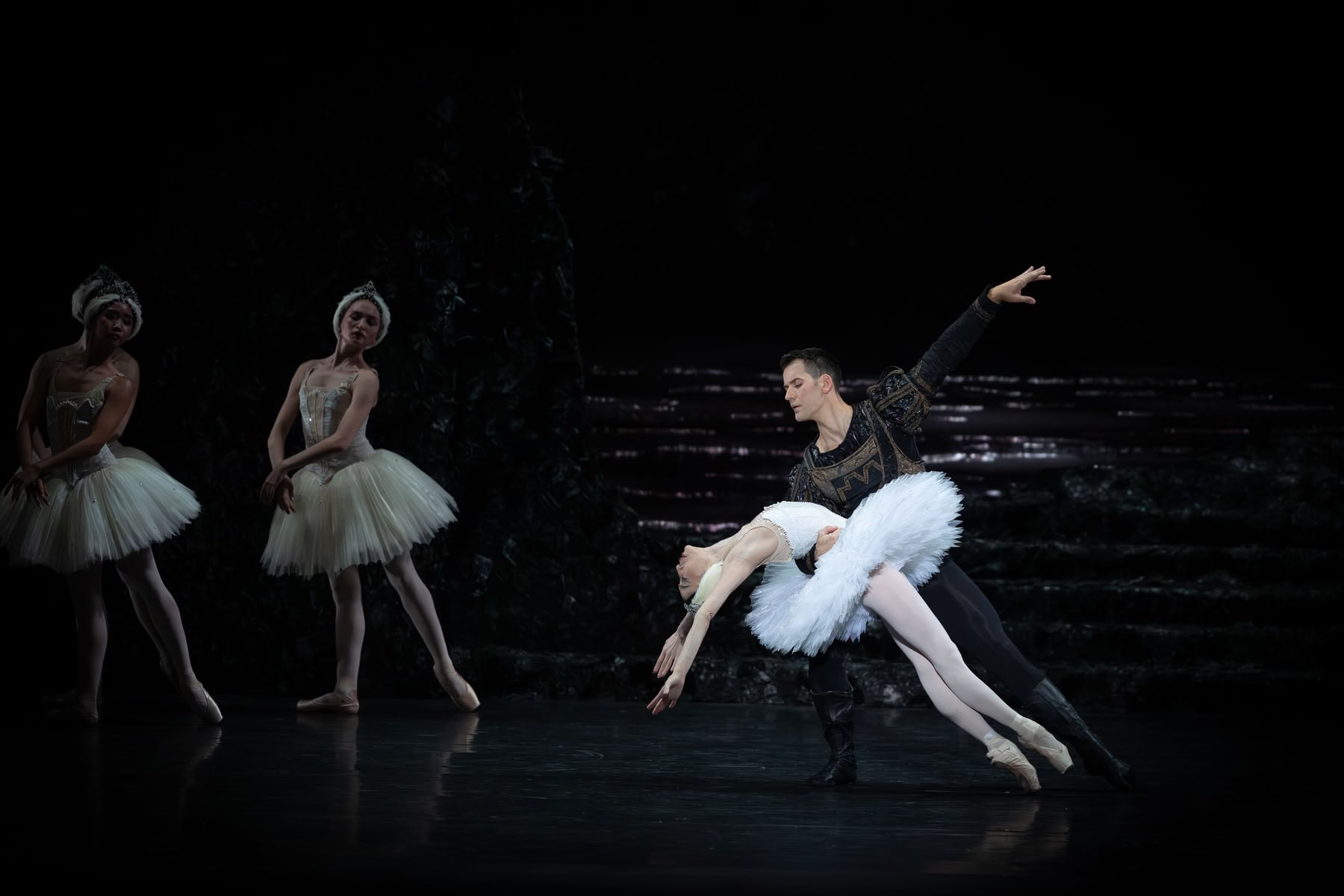
Momoko Hirata and Mathias Dingman anchor superbly danced leads, but Peter Wright and Galina Samsova’s choreographic choices – not least the wasted Act I finale and Act II overture – hold the production back from greatness.
| Title | Swan Lake |
| Company | Birmingham Royal Ballet |
| Venue | Birmingham Hippodrome |
| Date | 23 September 2026 |
| Reviewer | Lily Hyde |
Just as in Swan Lake, the soul of a princess is trapped inside a swan; in Peter Wright and Galina Samsova’s adaptation, the soul of a great ballet is trapped inside a good one.
Birmingham Royal Ballet‘s Swan Lake has been in the company’s repertoire for forty-five years, and its qualities fall into three categories: the good, the bad, and the baffling.
Starting with the good – the calibre of the dancing is superb. Birmingham Royal Ballet has always been a company that punches well above its weight, and the high quality of the dancing was evident in every dancer from the corps to the ballet’s leads, Momoko Hirata and Mathias Dingman, who gave performances that wouldn’t look out of place on any major stage in the world.
Paul Murphy and the Royal Ballet Sinfonia brought Tchaikovsky’s score to life immaculately, bringing the necessary balance of dramatic flair and soulfulness. Harpist Susan Blair was especially excellent.
Philip Prowse’s wonderfully mad production design (an aesthetic I can only describe as 15th-century Central Europe on steroids) creates a gloomy world of icy greys and harsh, menacing blacks. The court’s swathes of heavy fabric (spare a thought for the corps) pool on the floor and add to Siegfried’s claustrophobia.
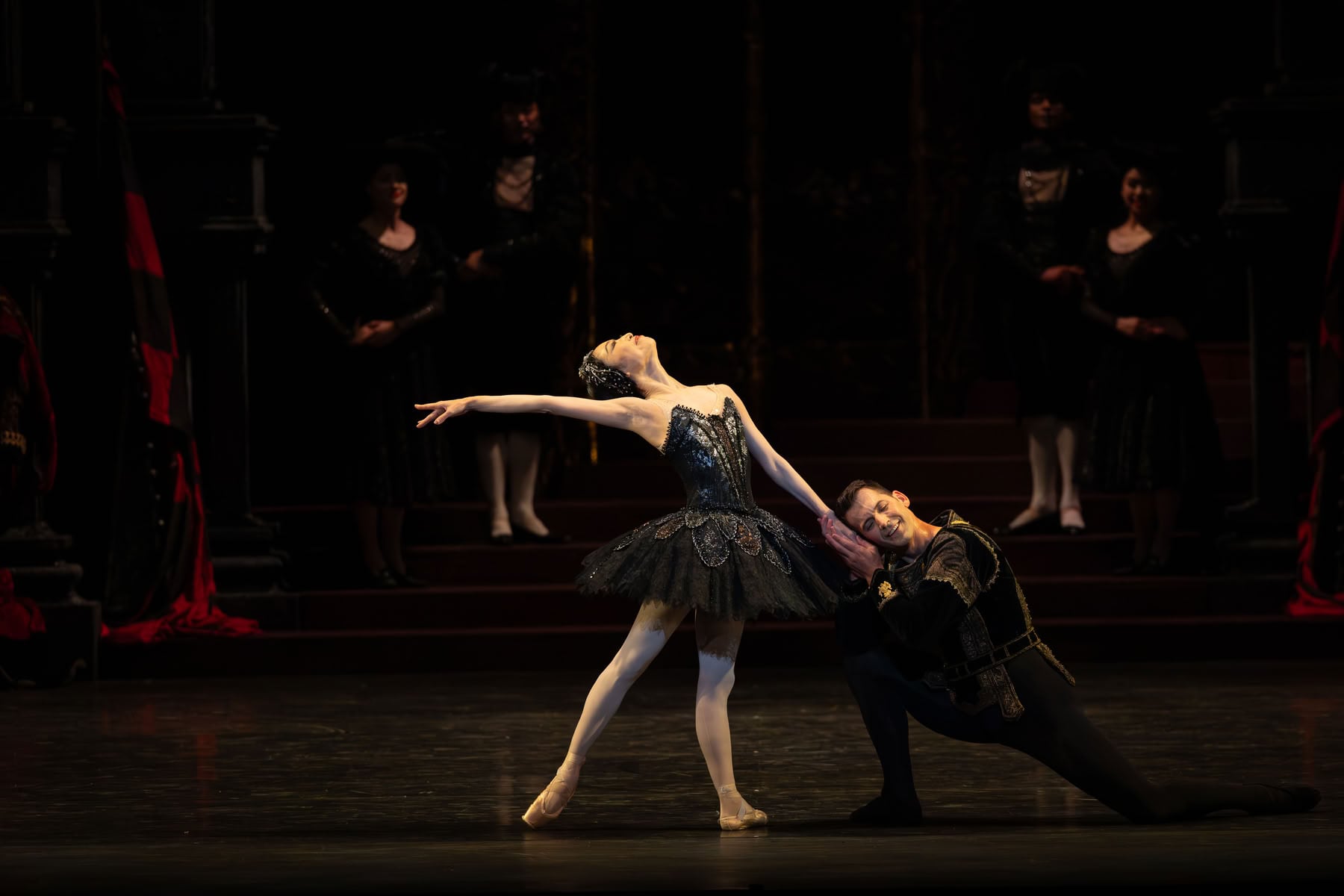
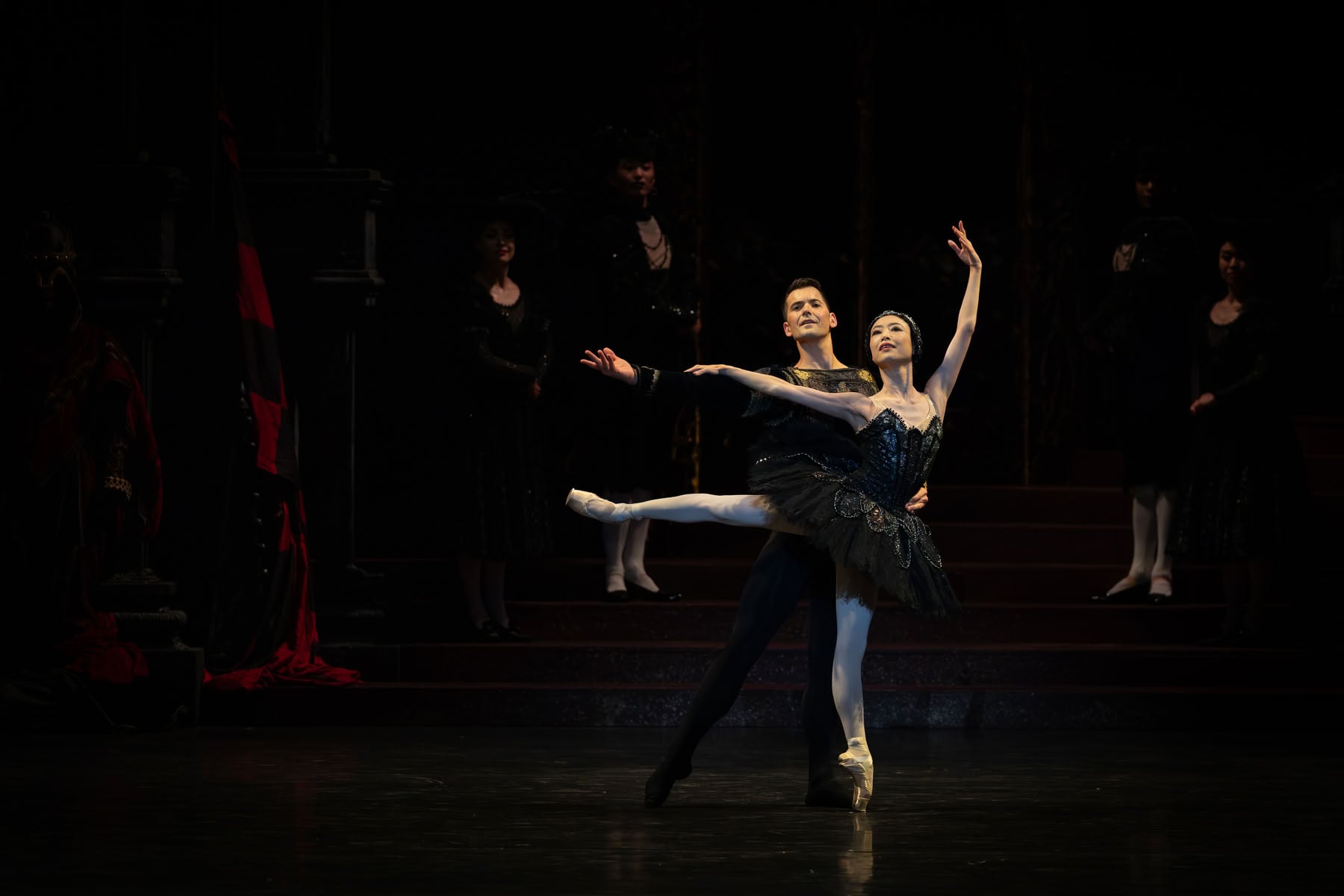
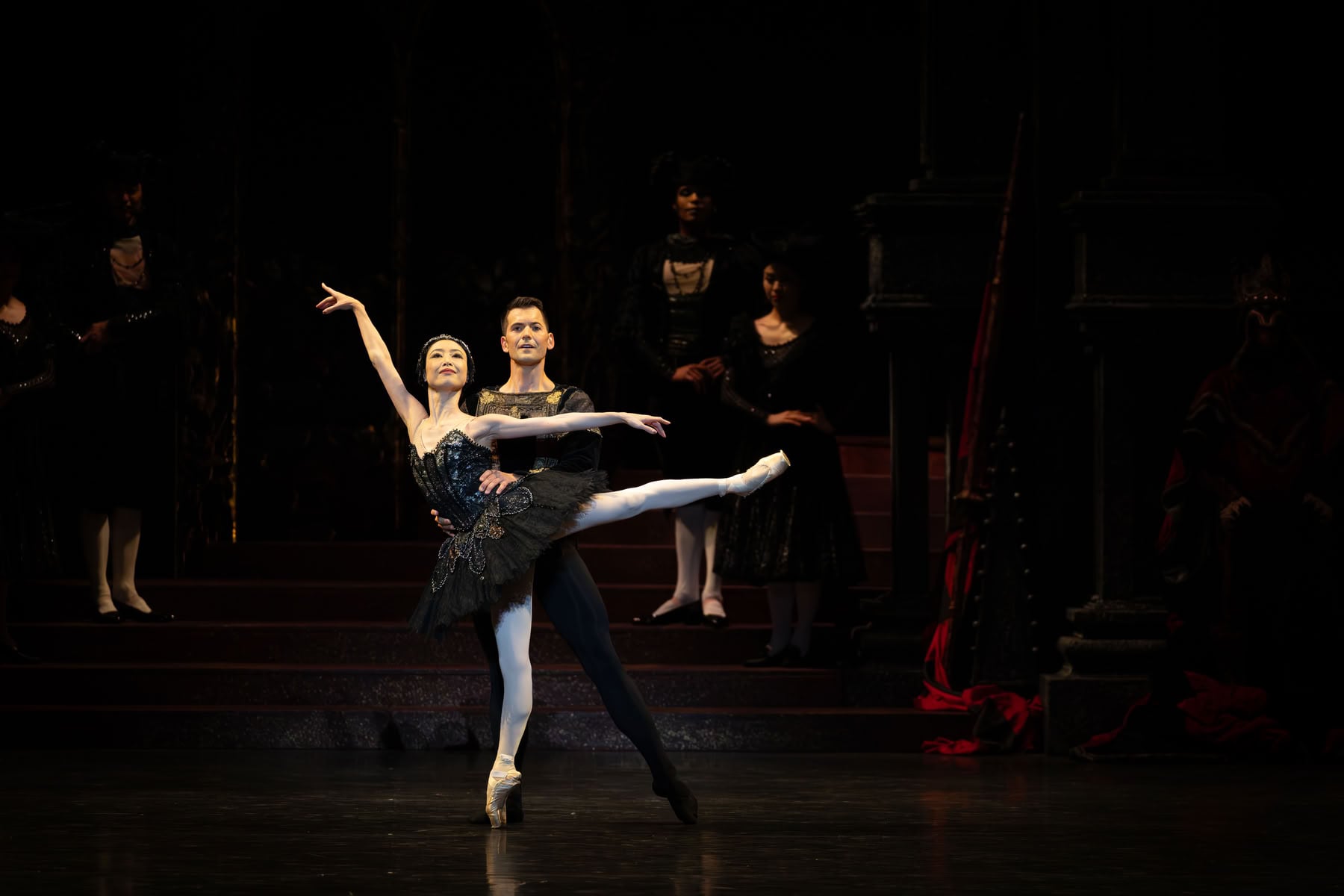
The biggest issues, however, lie with the decisions made by Wright and Samsova. Dramaturgically and choreographically, some of their deviations really work; showing the funeral of Siegfried’s father in the prologue establishes the gloominess of his world. Siegfried joining the Coda of the Pas de Trois to make it a Pas de Quatre allows for a more elaborate and satisfying finale. The transformation of the Spanish dancers to be part of Odile’s cortège adds prestige and legitimacy to Odile that pleases the Queen, and there’s a nice balance between some of the choreography in Act II, like Siegfried searching for Odette amongst the swans, foreshadowing Act IV, and Odette’s entrance in Act IV mirroring that of the beginning of her Act II Coda.
However, a lot of the choreographic changes are at best punitive for the dancers, and at worst, very ugly. There’s a strange insistence on dancers carrying their arms in fourth position, which plagues the entire ballet and rarely looks good. The choreography for the Act I Waltz failed to match the music’s sharply punctuated, almost staccato, beats of the crescendo, and there are strange additions to the Swan’s Act II Waltz – heavy entrechats and awkward moments on demi-pointe. Through no fault of the dancers, the Dance of the Little Swans had so much frantic neck action; it was a wonder they didn’t get whiplash.
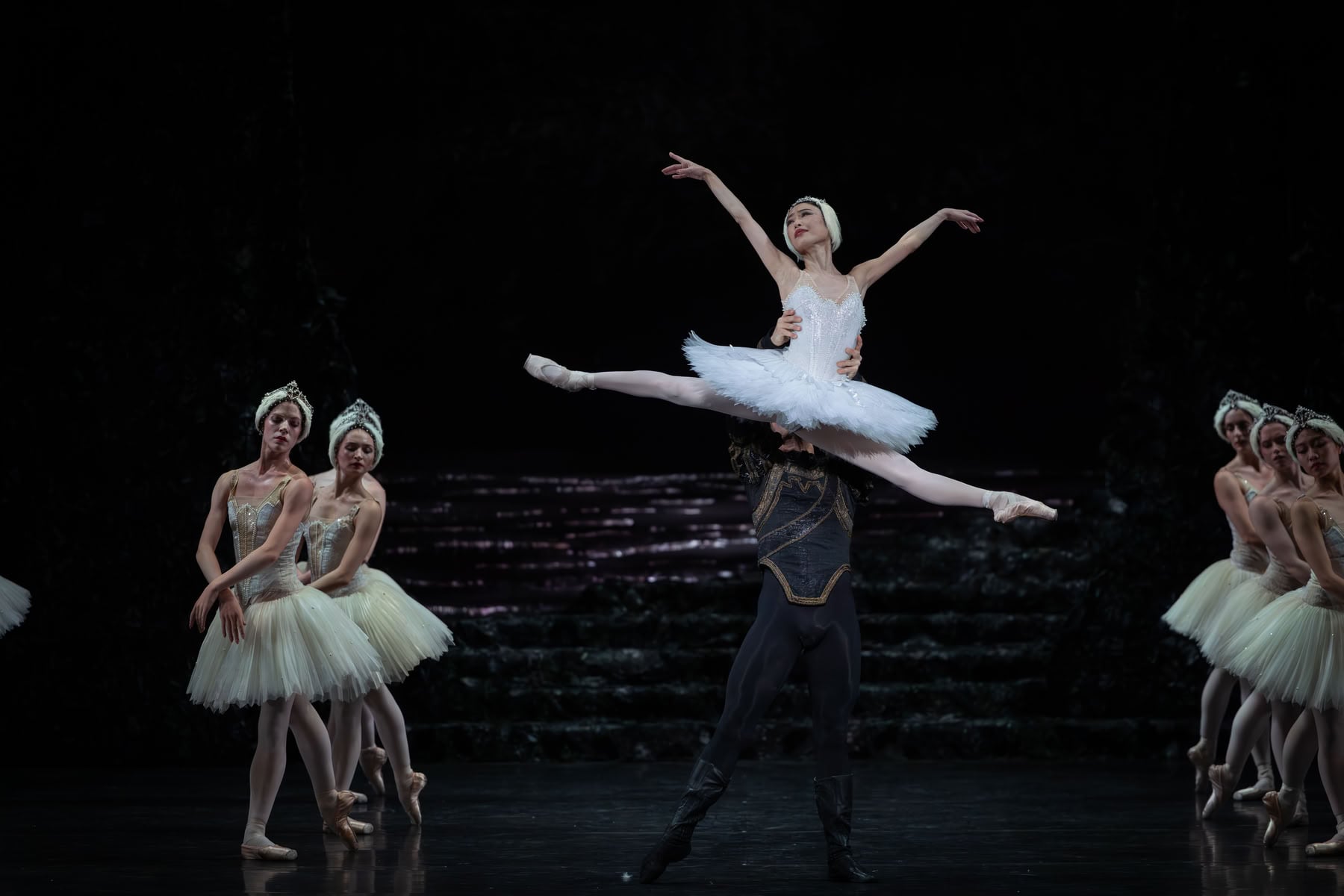
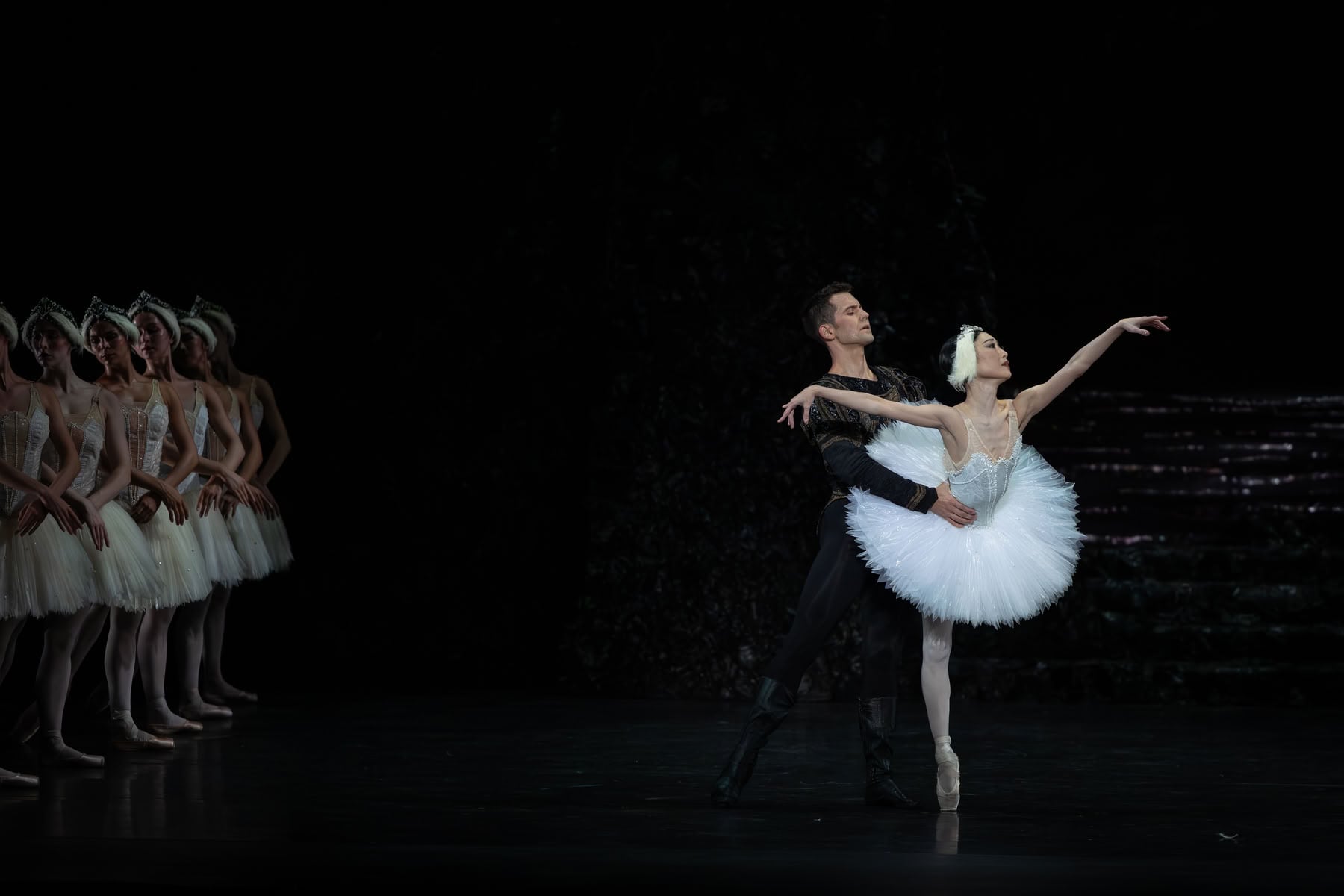
Dramaturgically, beats are changed, and beats are wasted. The rhythm of the Pas de Trois is interrupted so Siegfried can perform a solo, which sits better at the end of the act. The decision to send all the female corps offstage except for the two Pas de Trois dancers, who are courtesans, gives a weirdly seedy feel to what is, in many other productions, a sedate garden party. However, the most unforgivable decision is the absolute waste of the music for Act I’s Finale. What should be Siegfried’s solo is instead him gathering some random corps members with lanterns. This could be forgiven if the Act II overture (the ballet’s most famous music) wasn’t also wasted with the curtains closed, only for them to open and Siegfried to immediately send the dancers with lanterns back offstage.
Again, this is a good ballet, but it does make for frustrating viewing when its potential to be great lies so clearly within reach.
The greatness of the ballet lies with the dancers. As Siegfried, Dingman marries technical adeptness, with soaring jumps and dizzying turns, to an internal heaviness. As festivities surround him, you can see him plaster the smile back onto his face.
Hirata’s Odette’s swan-like qualities linger long after her transformation; despite her lithe arms, her port de bras has the weight of cumbersome wings, and she twitches and tilts her body with uncanny sharpness. The pair’s sudden love felt genuine, and their pas de deux was devastatingly tender.
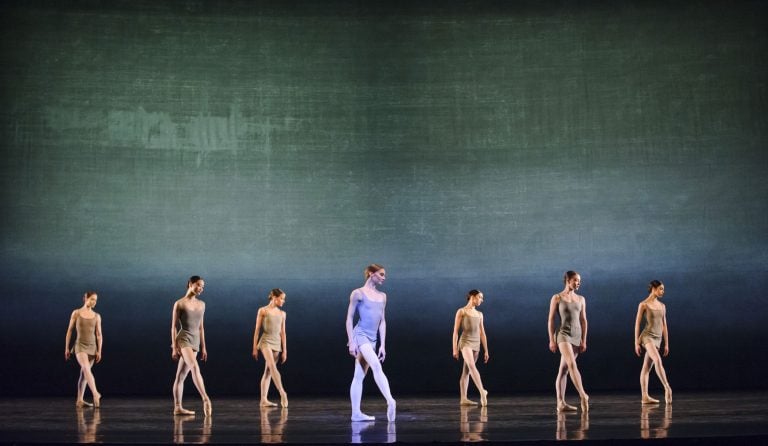
The corps shone throughout the production; their presence was such that sixteen swans in Acts II and IV had as much impact as thirty-two, moving with adept synchronicity and strength. The character dances in Act III were a festoon of heavy fabrics and intricate footwork. The solos for the Princesses were a nice addition, and the jealousy between them offered a rare comedic beat. Lucy Waine brought a fantastic Raymonda–esque quality to the Hungarian Princess, Rosanna Ely nailed some incredibly arduous choreography as the Polish Princess, and Katherina Ochoa (who also performed in Act I’s Pas De Trois) made light work of the Italian Princess’s solo.
Of course, none of them is the girl for Siegfried, and his individual rejection of all three was a nice touch. Hirata’s Odile was surprisingly measured, her entrance more sweet than dramatic. It was only as her dancing progressed that her smile became increasingly frozen and insincere. Her eyes drifted to Von Rothbart coaching her from the wings like a proud stage parent, and the pair played it not as some profound deception, but as a silly joke, which really worked.
As for the solos and the coda, Dingman was a little cleaner than Hirata, with astounding entrelacés.
Although Hirata didn’t quite reach the famous thirty-two fouettés, she finished them with such grace, her expression serene and confident, that it felt unreasonable to ask for more.
The pair were excellently supported by the rest of the cast. Riku Ito’s Benno matched a flawless technique with a genuine care for Siegfried; Daria Stanciulescu brought an imperial solemnity to the queen, and
Reina Fuchigami and Katherine Ochoa made light work of the Pas de Trois, with seamless bourées and lovely arabesques. Von Rothbart can be a rather thankless role, especially with little to do in some productions but mindless flapping in Act II, but Jonathan Payn’s over-exuberant stage presence in Act III more than made up for it.
In short: come for the principals, stay for the corps, and try not to get too aggrieved by the waste of the Act I Finale.

Lily Hyde is a cultural and dance writer based in London. Her writing has appeared in The Fence and The Creative Independent, and she runs the cultural newsletter, Falling Upwards. She is currently writing her first novel.