Review: Paul Taylor Dance Company at the Royal Ballet and Opera, programme two

Jonathan Gray sees the Paul Taylor Dance Company in London – What a company, and what a choreographer!
| Title | Triple Bill: Concertiana | Echo | Esplanade |
| Company | Paul Taylor Dance Company |
| Venue | Linbury Theatre, Royal Ballet and Opera, London |
| Date | 28 January 2026 |
| Reviewer | Jonathan Gray |
How wonderful to have the Paul Taylor Dance Company (PTDC) back in London after an absence of over two decades. It’s been far too long a wait, but at least now we in the UK can rejoice once more in seeing Taylor’s brilliant choreography and the marvellous ensemble of dancers who continue to perform his works. One of the greatest choreographers of the 20th century, Taylor – who died in 2018 – had the gift of creating dances that could express sheer joy and pleasure in movement and music; you witness more real choreography in one 30-minute piece by him than you would gain from watching hours and hours of works by any one of today’s fashionable establishment figures in the contemporary dance world. Don’t be fooled, however, for Taylor’s works can also express a seriousness of purpose, as well as truths about the human condition, especially in such celebrated creations as Esplanade.
The second programme presented by PTDC during its brief season at the Linbury Theatre offered the audience two pieces by Taylor alongside a new creation by resident choreographer Lauren Lovette, which showcased an array of dancers new to London. Let me, at once, pay tribute to these marvellous artists, all of whom are highly individual, and who dance with a shared sense of nuance, discipline, aplomb and innate musicality that I found enthralling and deeply moving. PTDC made me think of an ensemble of real people who happen to be dancers, and not the dancing clones we see too often on stages today.

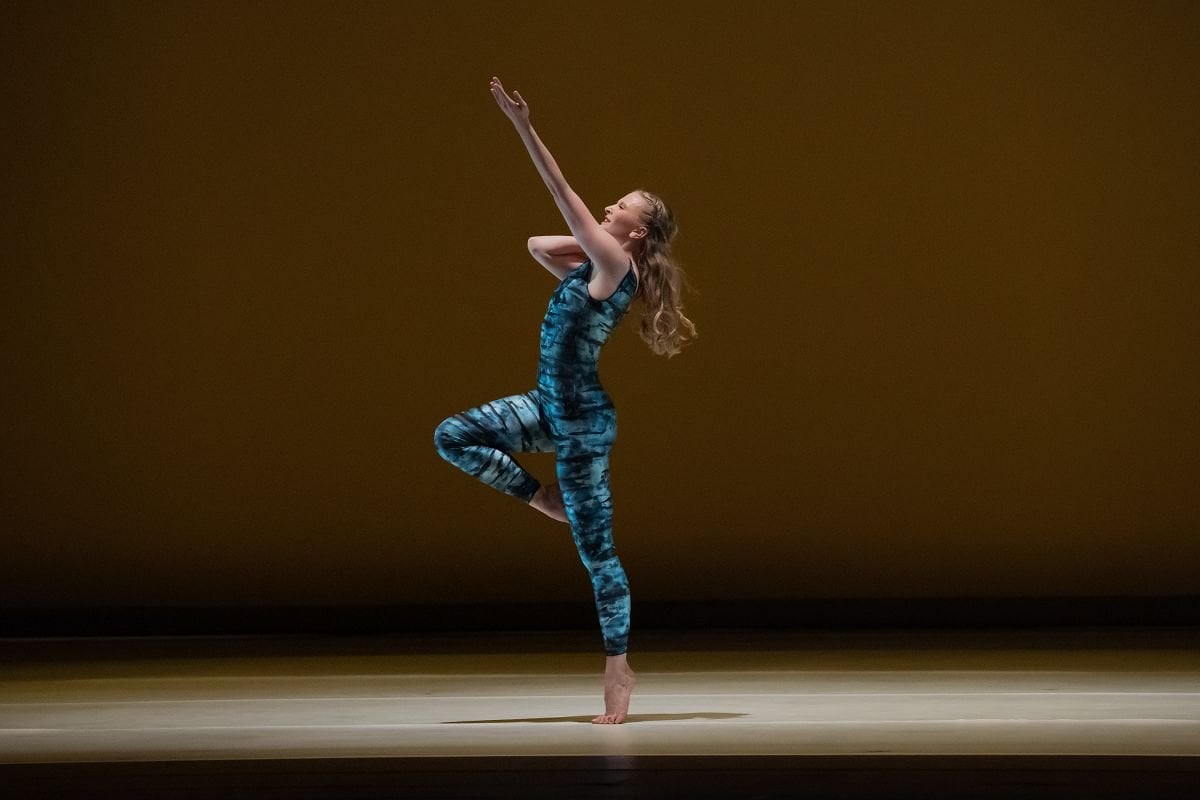

The evening opened with Concertiana, Taylor’s final work, made in 2018, danced to Eric Ewazen’s rather sentimental Concerto for Violin and String Orchestra. The dancers, dressed in green-patterned bodytights designed by William Ivey Long, perform in lines and processions of movement that loop, circle, entwine, weave in and out and separate, allowing individuals to jump and turn, or to engage in tender duets against a changing light scape by James F Ingalls of alternating green and orange colours. In a central section, a woman with loosened hair (Elizabeth Chapa) seems to struggle, hitting her thighs with her hands or lying on the floor. Yet, in the third movement, it is almost as if the world has become suffused with the breath of a new day, the dancers often moving in off-centred turns. Most striking throughout Concertiana, however, is Taylor’s attention to grace and line, and a gloriously free ease of movement.
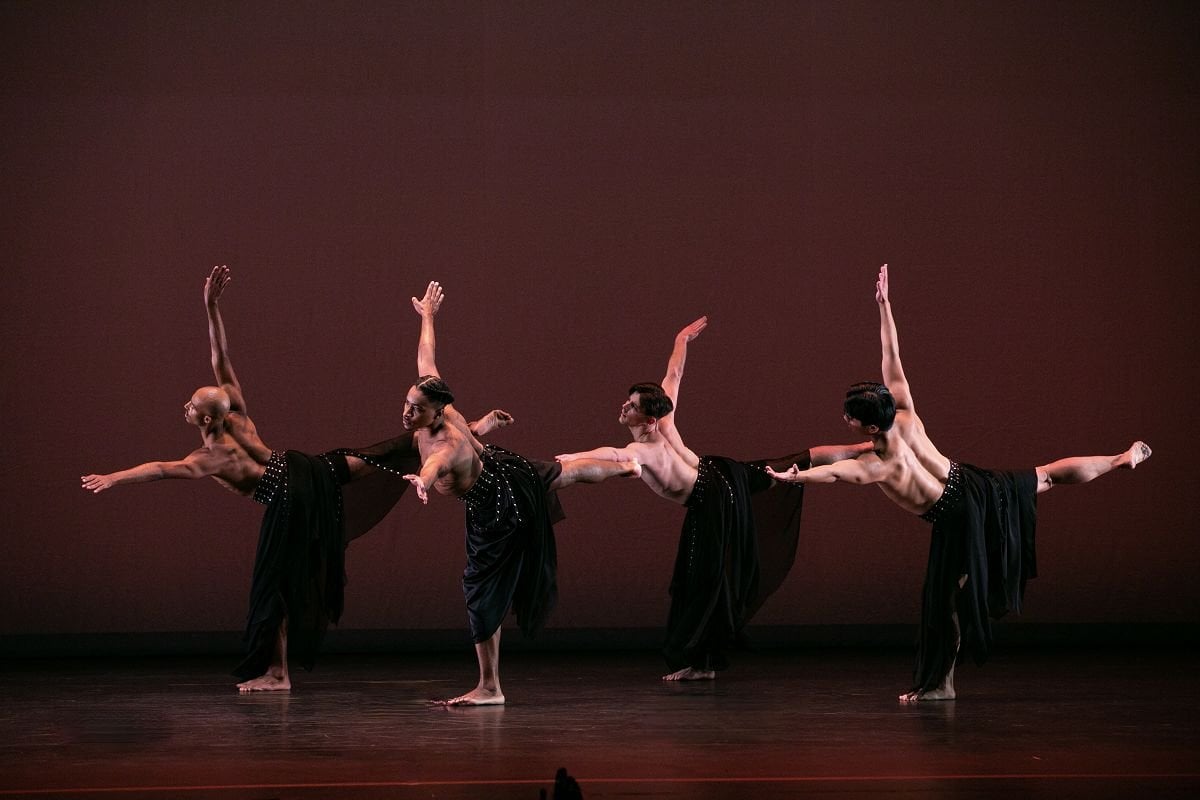
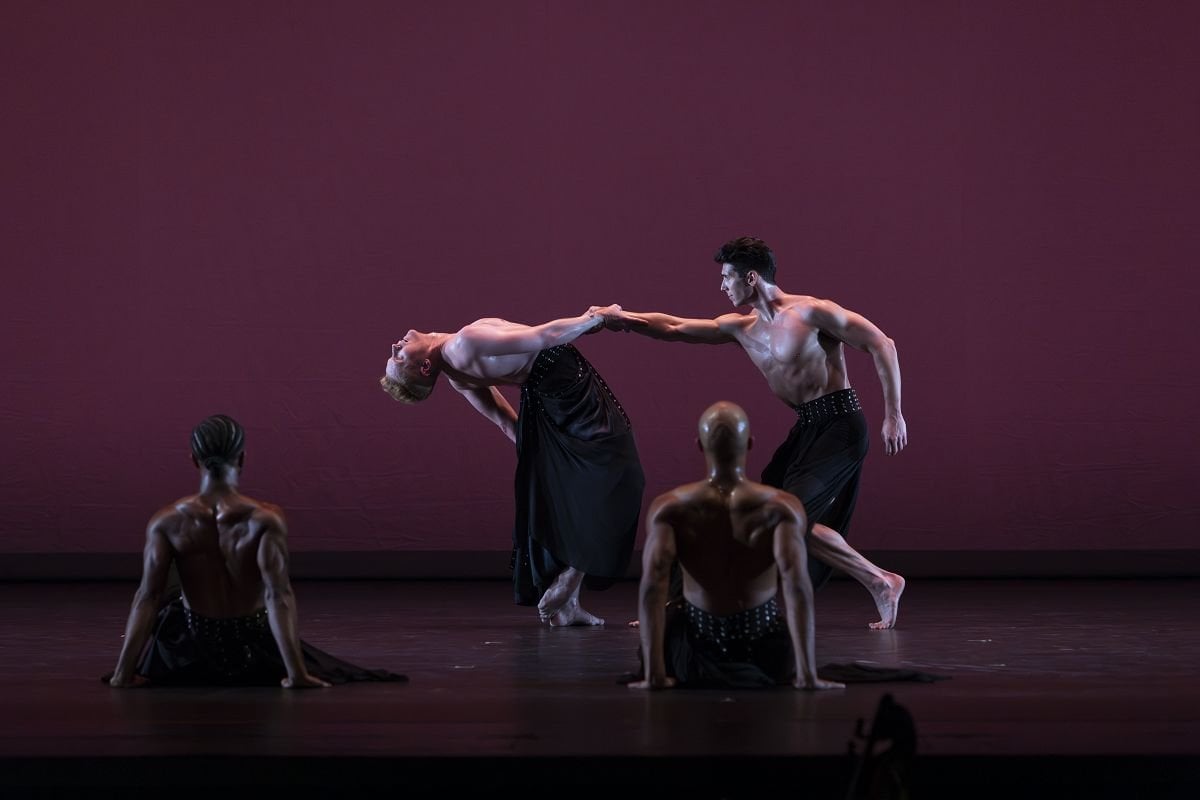
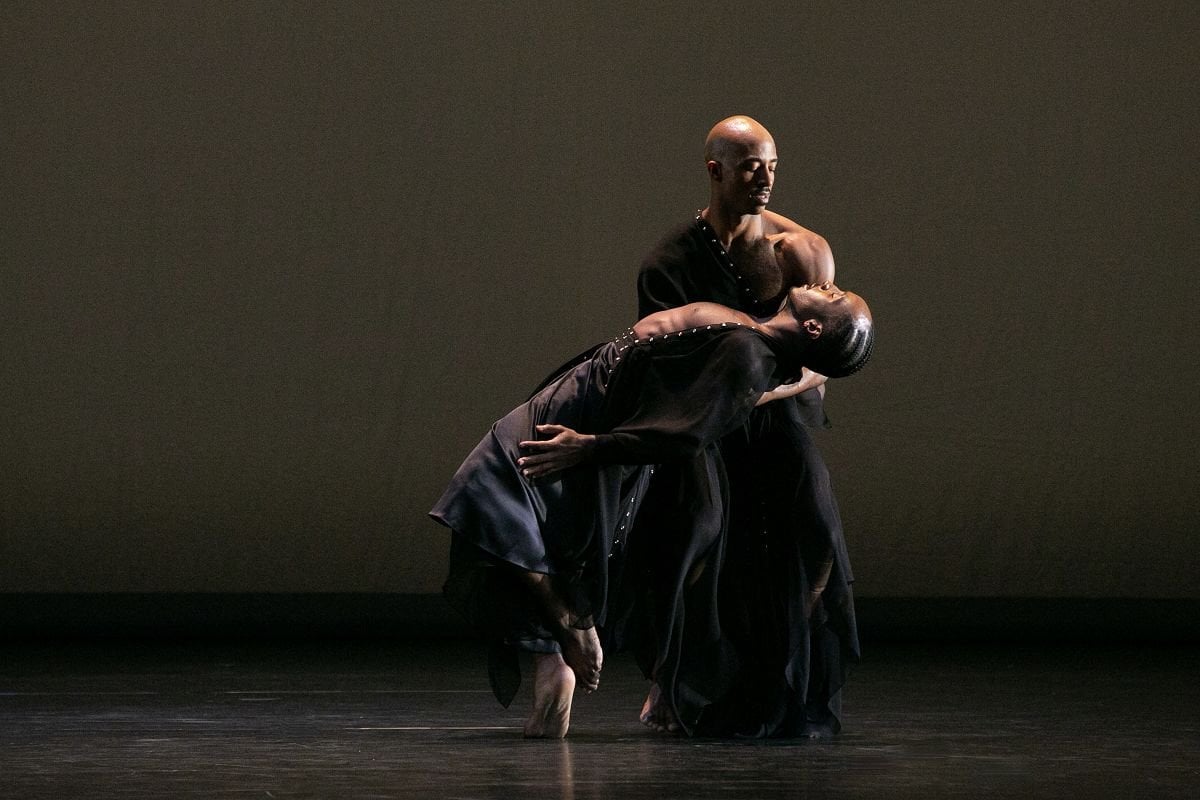
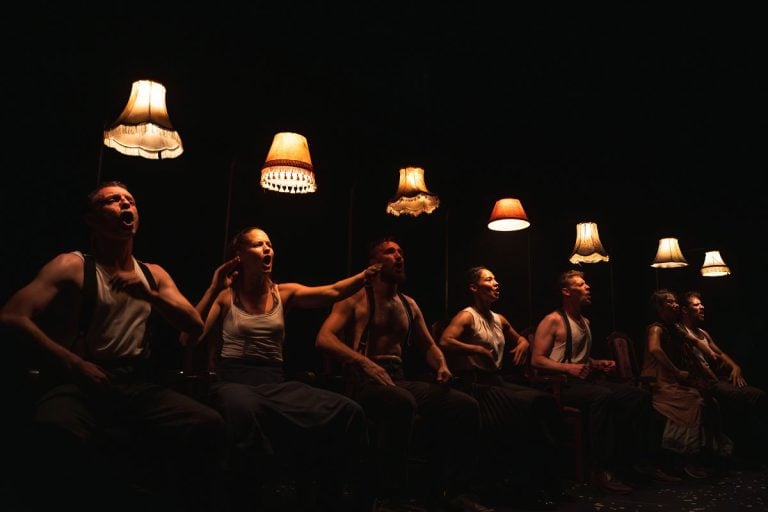
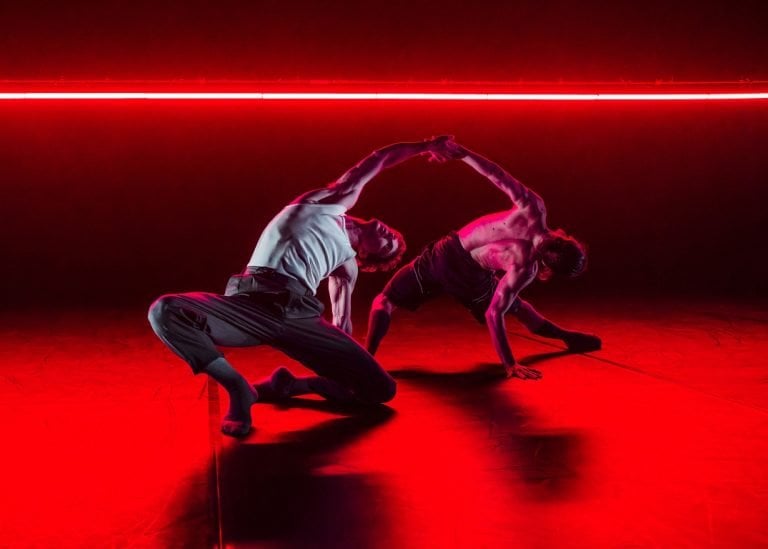
At the centre of the programme was Lovette’s Echo, made for PTDC in 2023 and danced to a commissioned score by Kevin Puts that features the violin. The work “explores the social complexities of masculinity and maleness” but Echo seemed to me a disappointingly predictable series of passive-aggressive dances for the men (dressed in unattractive costumes by fashion designer Zac Posen), often in taut, tense patterns of movement. There are lots of jumps and turns, lots of posturing, hints at folk dancing, and a confrontational duet for Lee Duveneck and Kenny Corrigan (both marvellous) that eventually softens into something more tender. Now and again, the dance is lightened by the appearance of the lithe Caleb Mansor, who brought some light and shade into a work that otherwise seemed heavy-handed and that sprung few surprises. The cast – which also included Alex Clayton, Devon Louis, Austin Kelly and Patrick Gamble – were uniformly excellent.
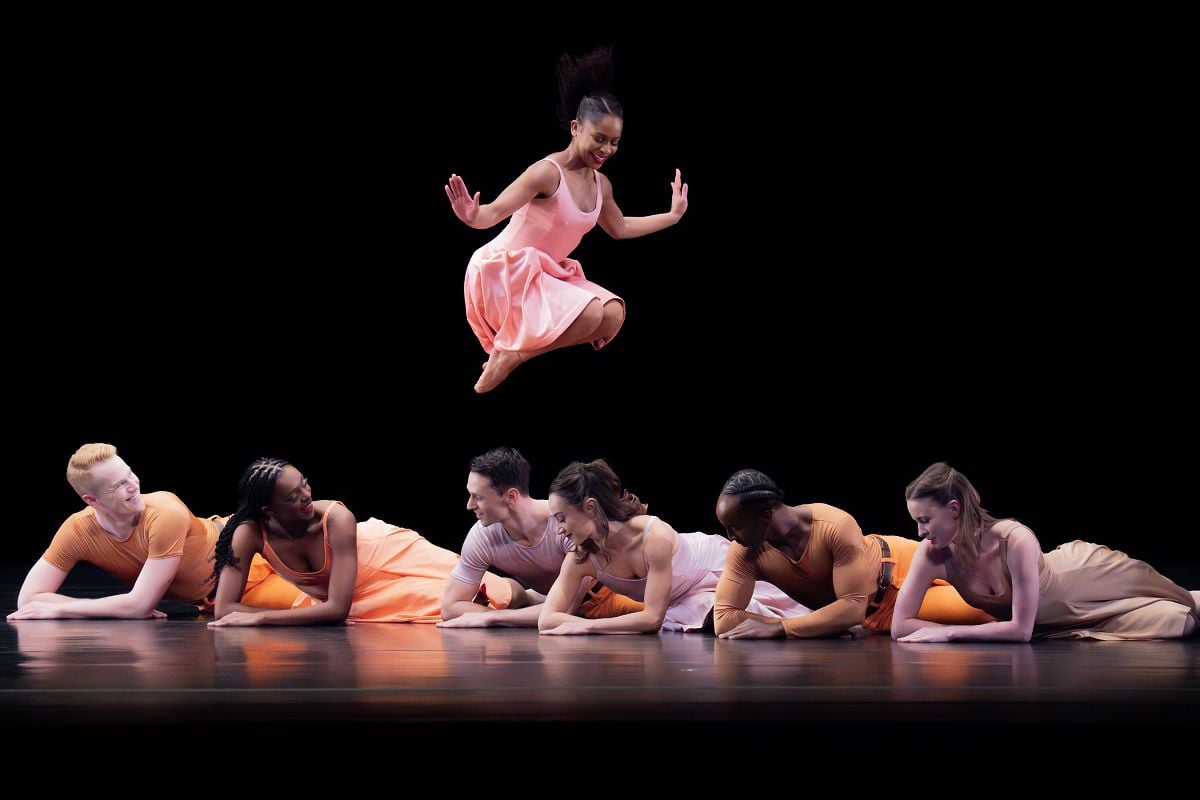
My disappointment with Echo meant this review gained only four stars out of five, but if I had concentrated solely on the closing work, Esplanade, it would have received ten. Created in 1975 and danced to JS Bach’s Violin Concerto in E Major and the Double Concerto for Two Violins, Esplanade is one of Taylor’s masterworks, an ingenious demonstration of how seemingly ordinary, everyday movements can grow into intriguing, ever-more complex dances. Like Concertiana, the choreography joyously develops from lines and chains of steps into sequences of skips, hops, and jumps that then constantly group and regroup. The atmosphere is carefree, yet the dances also evoke a baroque formality that links it deeply with Bach’s music, and in the second movement, with its shadowy darkness (the lighting is by Jennifer Tipton) and heightened atmosphere, Taylor’s choreography brought to mind not only the emotions of modern-day people, but also gestures inspired by baroque religious paintings, especially those of Caravaggio.
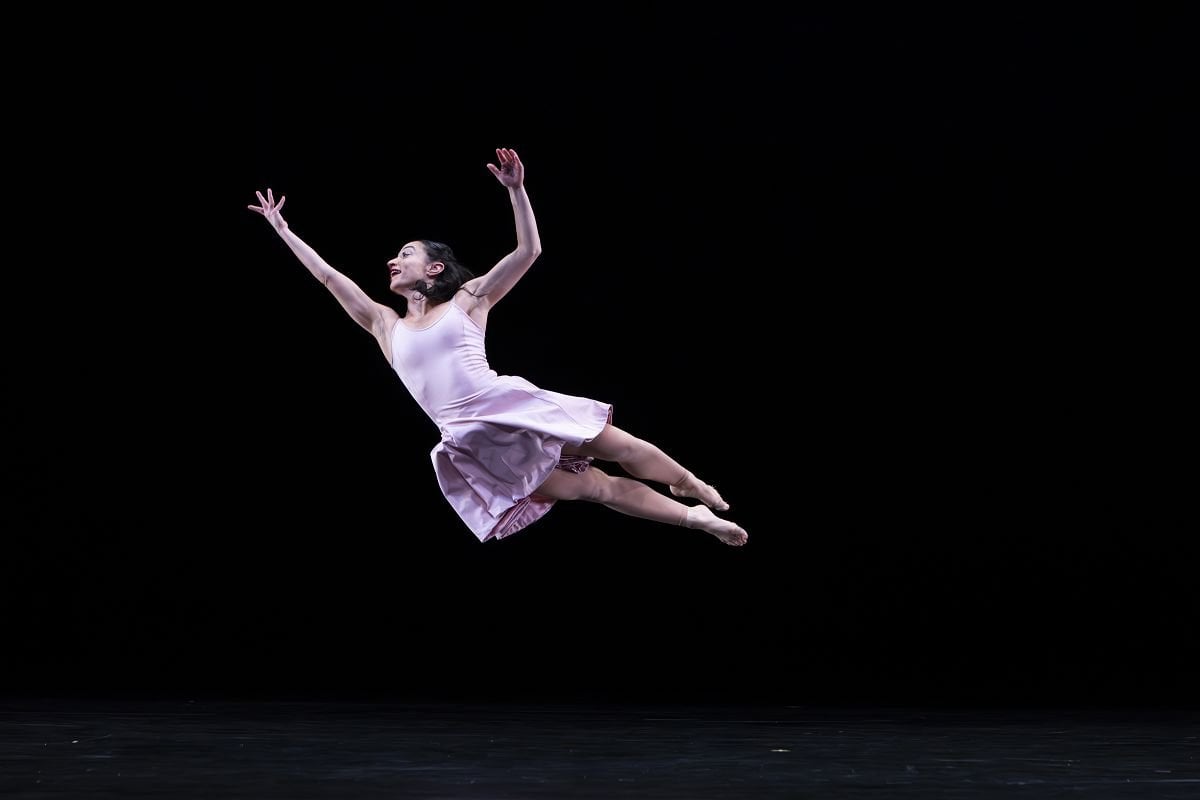
As Esplanade draws to a close, the dancing becomes ever more astonishing. The cast – especially the fearless Emmy Wildermuth – rush across the stage in daredevil jumps and divebomb onto the floor, accelerating faster and faster. The daring, helter-skelter physicality and bravado is thrilling, but it is also a magnificent embodiment of Bach’s music. At the end, I was left full of admiration for this wonderful company, and with a desire to see more, much more, of Paul Taylor’s remarkable choreography. Above all, I need to salute the entire cast, which included not only Chapa, Duveneck, Louis, Kelly and Wildermuth, but also Gabrielle Barnes, Kristin Draucker, Madelyn Ho and Jada Pearman. What a company, and what a choreographer.



Jonathan Gray was editor of Dancing Times from 2008 to 2022.
He studied at The Royal Ballet School, Leicester Polytechnic, and Wimbledon School of Art where he graduated with a BA Hons in Theatre Design. He was on the Curatorial Staff of the Theatre Museum, London, from 1989 to 2005, assisting on a number of dance-related exhibitions, and helping with the recreation of original designs for a number of The Royal Ballet’s productions including Danses concertantes, Daphnis and Chloë, and The Sleeping Beauty.
Jonathan Gray has also contributed to the Financial Times and The Guardian, written programme articles for The Royal Ballet and Birmingham Royal Ballet, and is co-author of the book Unleashing Britain: Theatre gets real 1955-64, published in 2005. He is a member of the Dance Section of The Critics’ Circle.