Sergei Polunin’s Take me to Church: pirouettes or politics?

In the week since David LaChapelle’s video with Sergei Polunin went online it has gone viral, even sending this blog offline a couple of times due to the surge in people searching for information about the Ukrainian ballet star.
As I write the YouTube views are edging toward five million; just yesterday one million new views were registered.
Of course, this huge interest hasn’t arisen just because of the involvement of LaChapelle and Polunin, but for the music they chose for the clip: Hozier’s Take me to Church. It may have been that they just liked the melody, but the original video that accompanied the song caught the attention of the public long before Hozier’s tune or lyrics. It features two men who kiss but then are seen being chased and beaten, and the video was conceived after Russia’s criminalization of homosexuality with the intention to raise awareness and support for gay rights.
Polunin is from the Ukraine, but at this point in his career he mainly lives and works in Russia, so either he is making a brave statement, or it is an interesting coincidence. Openly gay photographer and director LaChapelle must have understood what meanings would be read into the video.
In an interview with fuse.tv, Hozier said,
The song, to me, is about what it is to be a human, what it is to love someone as a human being, and organizations that would undermine that, and undermine the more natural parts of being a person.
If you feel offended or disgusted by the image of two people kissing, if that’s what it is, but you’re more disgusted by that than the actual violence… I think you should take a look at your values, maybe.
I don’t think there really should be a controversy when we’re talking about a basic human right and the equal treatment of people.
Hozier, born and raised in Catholic Ireland, wrote the lyrics (according to Wikipedia) because of his “frustration with the Catholic Church and its stance on homosexuality”. He told New York magazine,
The song is about asserting yourself and reclaiming your humanity through an act of love.
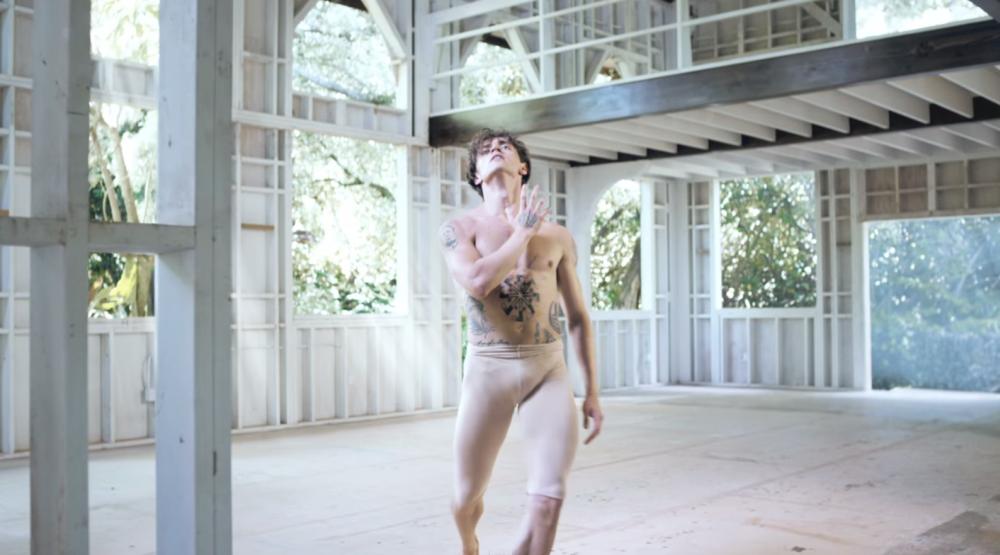
The video itself is pleasurable with Polunin making the most of Jade Hale-Christofi’s bland choreography which at least has the plus of giving the dancer many opportunities to jump and crouch in his torn flesh-coloured leggings and insert angst-ridden pirouettes between his bouncing off the walls. The setting resembles a church with ripped-out windows, undecorated walls and a bare floor. A neat metaphor.
LaChapelle’s camera trails Polunin elegantly and floats around the empty space at different levels giving a swirling thrust to the video. Mist wafts in from between the Hawaiian plants outside and as Hozier sings, “Only then I am clean. Amen. Amen. Amen.” a ray of light pours down from the heavens illuminating Polunin on his knees. The religious imagery is obvious, as is the message the creative team are sending to the millions who are now watching their four-minute video clip.