
Opinion: Who’s Natalia Makarova? Dancing Times column on dancers needing to ‘open their eyes and ears’
This is an opinion piece I wrote in 2016 for Dancing Times magazine’s Talking Point column.
I was reminded of it the other day when hearing a young, professional dancer asking who Natalia Makarova ‘was’. Defending herself in front of an open-mouthed group she drew into the conversation a teenage ballet student who, it transpired, hadn’t heard of Sylvie Guillem… I thought putting these simplistic but relevant words online was timely.
I was recently saddened, though hardly surprised, to hear a teenage ballet student at one of Italy’s top schools declare, almost with pride, that he never visits galleries or museums. He was stretching at the barre and had his heel behind his head as he spoke.
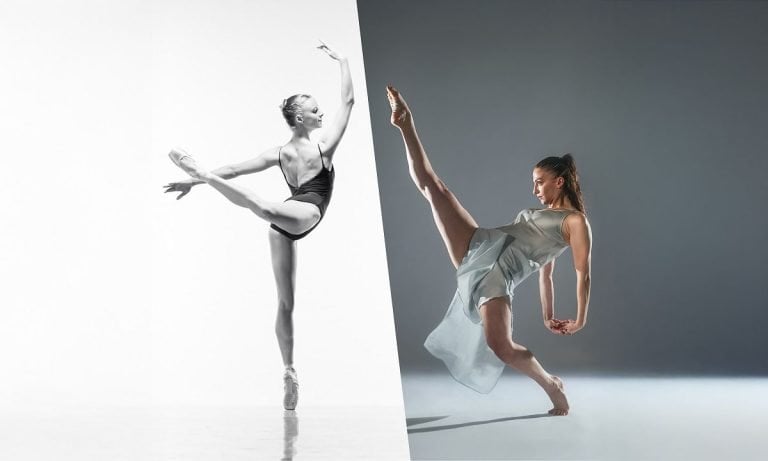
As a blogger, dancers send me photos and videos of themselves. Most of them are young, ambitious, and hope to get some publicity, I imagine. The photos are almost exclusively of extreme stretching; contortionism.
It worries me that an obsession with physique, diet and all things dance excludes a whole world that could turn them into artists rather than just technicians of movement. Writers should visit galleries, painters should go to concerts, musicians should watch the ballet… one discipline informs another. Appreciating and absorbing beauty from all around is essential to form a meaningful interpreter.
I’m fortunate to live in, arguably, the most beautiful country in the world. It has been estimated that Italy is home to more than half of the world’s art treasures. Even the smallest town has a church or piazza worth visiting. Beauty is everywhere, yet many young dancers who dream about one day bringing beauty onto the stage don’t have the slightest interest in what is easily within their grasp.
I say ‘many’, but certainly not all. Dutch National Ballet principal Vito Mazzeo, when he was still a student at the La Scala ballet school, would come up, bright-eyed and bushy-tailed, to talk about a Parmigianino painting he’d seen or the films of Anna Magnani. Yet I was told the other day by a young rising star, that she didn’t know anything about jazz music as she’d been born in the ‘90s. It was the same with films and books. Her world more or less begins with the new millennium. Presumably, she excludes 400 years of music history from her playlists even though, as a dancer, she is often performing to ‘old’ music. Parmigianino was born half a millennium before Mazzeo, but it didn’t stop the eager young student from searching out the master’s paintings.
In an interview before becoming the director of English National Ballet, Tamara Rojo said that she visits the theatre to be “inspired”, adding, “I always want to know what’s going on, to understand other art forms”. Curiosity and observation are vital for communication and interpretation. How many dancers, even well-known ones, have little interaction with others on stage and do steps without purpose? Yet, let’s face it, acting is often just common sense: asking yourself ‘why?’ and ‘how?’ can quickly put a scene in focus. If it makes sense to the dancer, then it has more chance of registering with the audience. Looking at a Bernini sculpture or a Caravaggio painting or, indeed, watching a film with Anna Magnani, can give you clues about efficient ways to transmit intention and emotion – the eyes, the tilt of the head, an exchange of looks, gesture. Not that you’d say, “Yes, I’ll use that next time I do Swan Lake!” but the images and ideas can be absorbed, ready to be tapped into when the occasion arises.
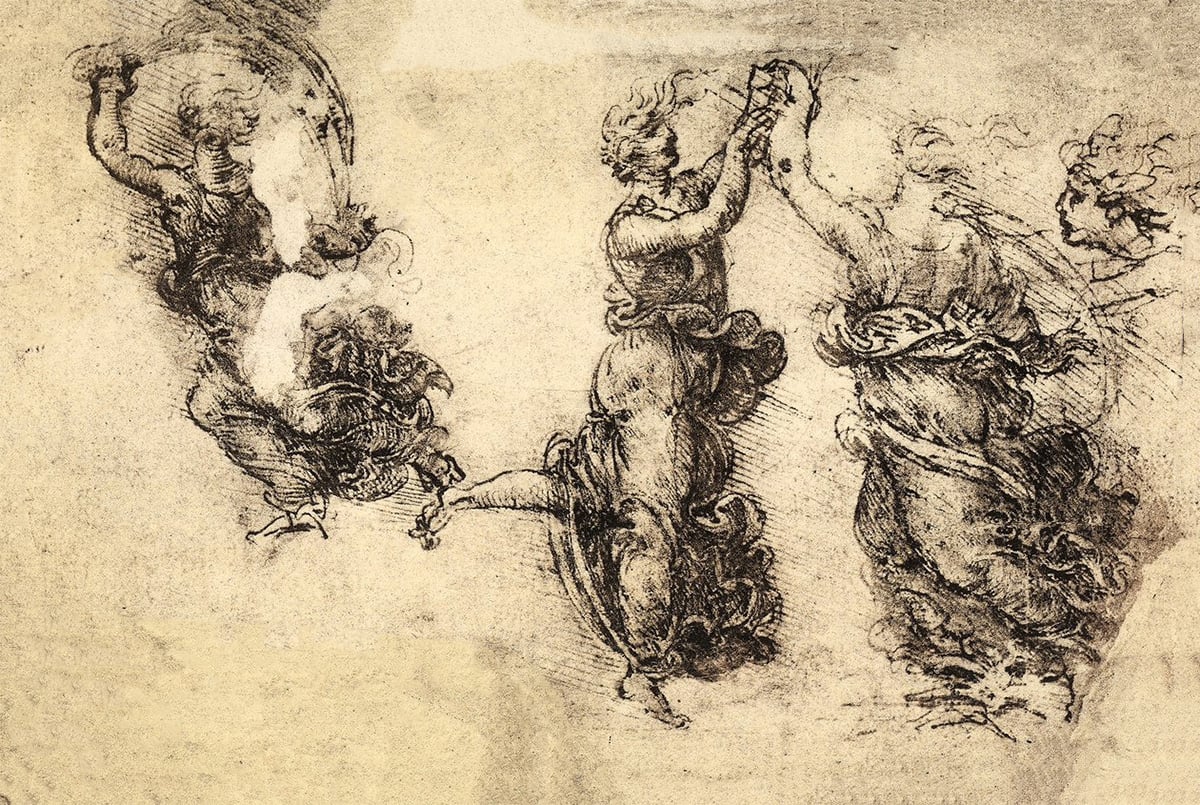
Chiara Rostagno, the director of the museum in Milan that houses Leonardo’s Last Supper, told me, “Leonardo da Vinci used the body to express feelings and character, how you are inside. You come into contact with an absolute truth via a universal language. Through movement he created a direct line between body and soul”. Dance and music, two other universal languages, are privileged to share that direct contact. A shortcut to emotion that an interpreter would be foolish not to exploit.
One of the dance world’s greatest actresses, Carla Fracci – like Leonardo, also a resident in Milan – told me recently, “Your thoughts as an interpreter need to be infused with truth and made real with every performance”. And reality doesn’t mean ‘being yourself’, but to present something that is perceived as being real, formed from your own database of experience. You choose, often instinctively, to use what is appropriate for your character and situation to communicate effectively with the audience. ‘Feeling it’ is not the same as ‘conveying it’. And the more you’ve observed and the more you’ve assimilated, the greater the range of colours on your palette to choose from.
If it isn’t already a habit, then it’s not necessarily going to be easy to sit through a classical symphony or find interest in a gallery, I agree, but then you don’t go to China and expect to understand Chinese. There must be an investment of time, as well as intellectual and emotional engagement.
Stretching’s fine, but not enough to make you an accomplished dancer. Get thee to a gallery! As Leonardo himself said, “Where the spirit does not work with the hand, there is no art”.

Graham Spicer, aka ‘Gramilano’, is a writer, director and photographer based in Milan. He was a regular columnist for Opera Now magazine and wrote for the BBC until transferring to Italy. His articles have appeared in various publications from Woman’s Weekly to Gay Times, and he wrote the Danza in Italia column for Dancing Times magazine. Graham was the historical advisor on Codice Carla, the 2023 documentary on Italian ballerina Carla Fracci.
Graham also works as a dance photographer, and his photos have appeared in many books, theatre programmes, and magazines, including Dancing Times, Dance Spirit and Ballet2000, as well as all the major Italian newspapers.
He is a member of the Dance Section of The Critics’ Circle.


Well, that explains a lot about why when I go to a ballet performance, nowadays, I find most dancers generic and inexpressive of any personality. The same might be said of a lot of opera singers today whose voices are not memorable–though technically more than adequate. I often wonder if all of the “contortionists” are capable of sustaining a develope a la seconde at exactly 90 degrees for any length of time.
Agree! Personalities! And the leg choice seems to be midnight or 6pm… the shading with many (certainly not all!) is lost.
No wonder the en dedans pirouette a la seconde often seems to be the ultimate technical challenge–which few complete successfully.
How beautifully put. Bravo Sig. Gramilano!