
Interview: Houston Thomas moves Firebird from enchanted kingdom to corporate HQ
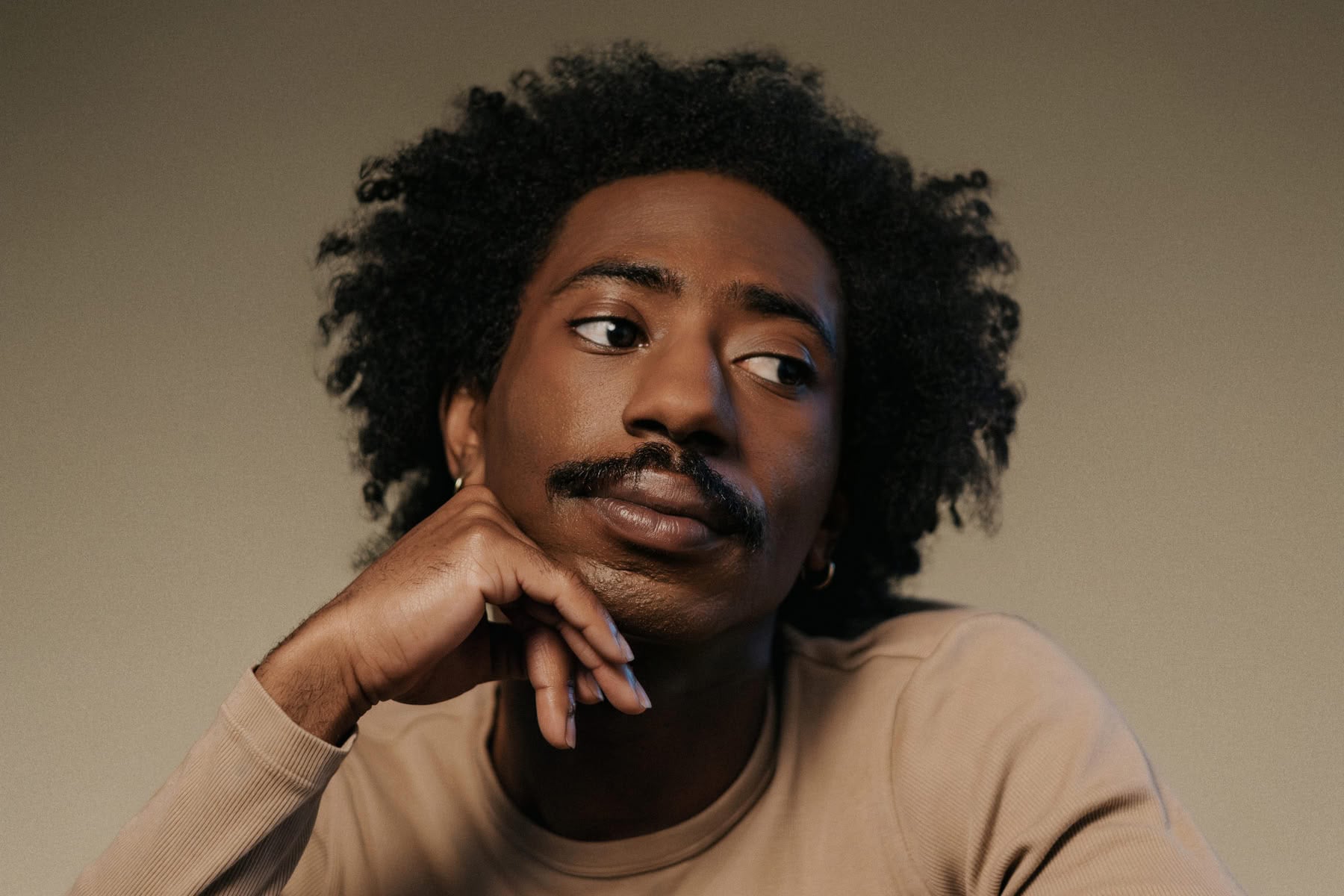
In his first narrative ballet, a Firebird kept as Kastchei’s “exotic pet” meets an overworked employee at Kastchei HQ, a world of dark suits, desks and office machinery, for Royal Winnipeg Ballet
Choreographer Houston Thomas will create his first narrative ballet and most ambitious work to date with a bold new Firebird, receiving its world premiere with Canada’s Royal Winnipeg Ballet from 8 to 11 October 2026. Set to Igor Stravinsky‘s score, Thomas’s work relocates the century-old tale from an enchanted kingdom to the imposing headquarters of a powerful corporation, using the familiar story to examine work, ambition, conformity and the systems that shape contemporary life.
The world premiere is part of Royal Winnipeg Ballet’s Stravinsky Stories, a double bill pairing Thomas’s new work with Alexei Ratmansky‘s The Fairy’s Kiss.
Why did you want to take on Firebird, and what does the story mean to you now?
I’ve never been particularly interested in recreating classical ballets simply for the sake of recreating them. When I was offered Firebird, I started thinking about what it would take for me to connect with this story and these characters now. I wanted to understand why they make the choices they do and bring them into a world that audiences could recognise themselves in.
For Thomas, that world grew in part from his own experience of returning to New York City after living in Germany for a decade. Confronted again with the intensity of American work culture and the constant negotiation between ambition, survival and life outside work, he began to see a contemporary way into a ballet he had never previously felt personally connected to.
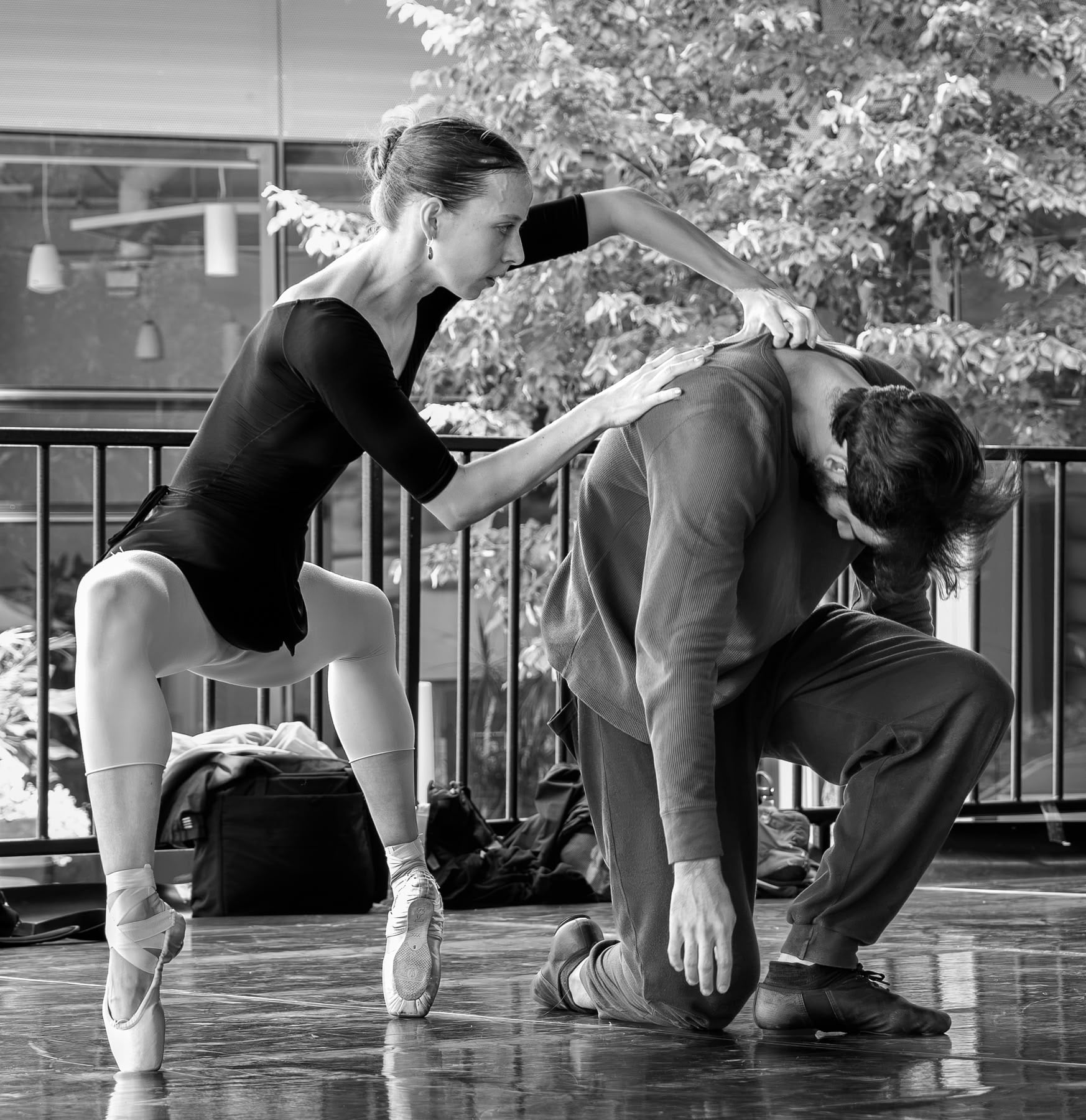
A corporate fairy tale
In Thomas’s version, Ivan is a young employee at Kastchei HQ, working late on a seemingly impossible assignment when he discovers the Firebird, a mysterious creature captured and imprisoned by Kastchei, the company’s ruthless leader. Desperate to escape, she becomes the catalyst that forces Ivan to see his own circumstances differently. As he is drawn deeper into Kastchei’s world, Ivan begins to recognise something of himself in the Firebird’s captivity and to question the power Kastchei holds not only over her, but over everyone who works for him.
How do Ivan and the Firebird relate to each other?
Ivan and the Firebird are both trapped, just in different ways. She has literally been imprisoned by Kastchei, while Ivan has become trapped inside a system he hasn’t yet learned to question. When they encounter one another, she opens up his perspective and he begins to recognise himself in her. For me, that’s where the story became much more than a fairy tale. It became a story about power and freedom, the structures we accept around us, and what it can take to break free from them.
Thomas developed the world of Kastchei HQ with set and costume designer Kinsun Chan, drawing initially on the corporate environments of Mad Men and The Wolf of Wall Street before arriving at what he describes as somewhere between “a corporate office and an evil lair”. Brutalist scenery and a black-and-green palette, inspired in part by Kurt Jooss’s The Green Table, create a stark world of dark suits, desks and office machinery, against which the Firebird emerges as its most exuberant and colourful presence.
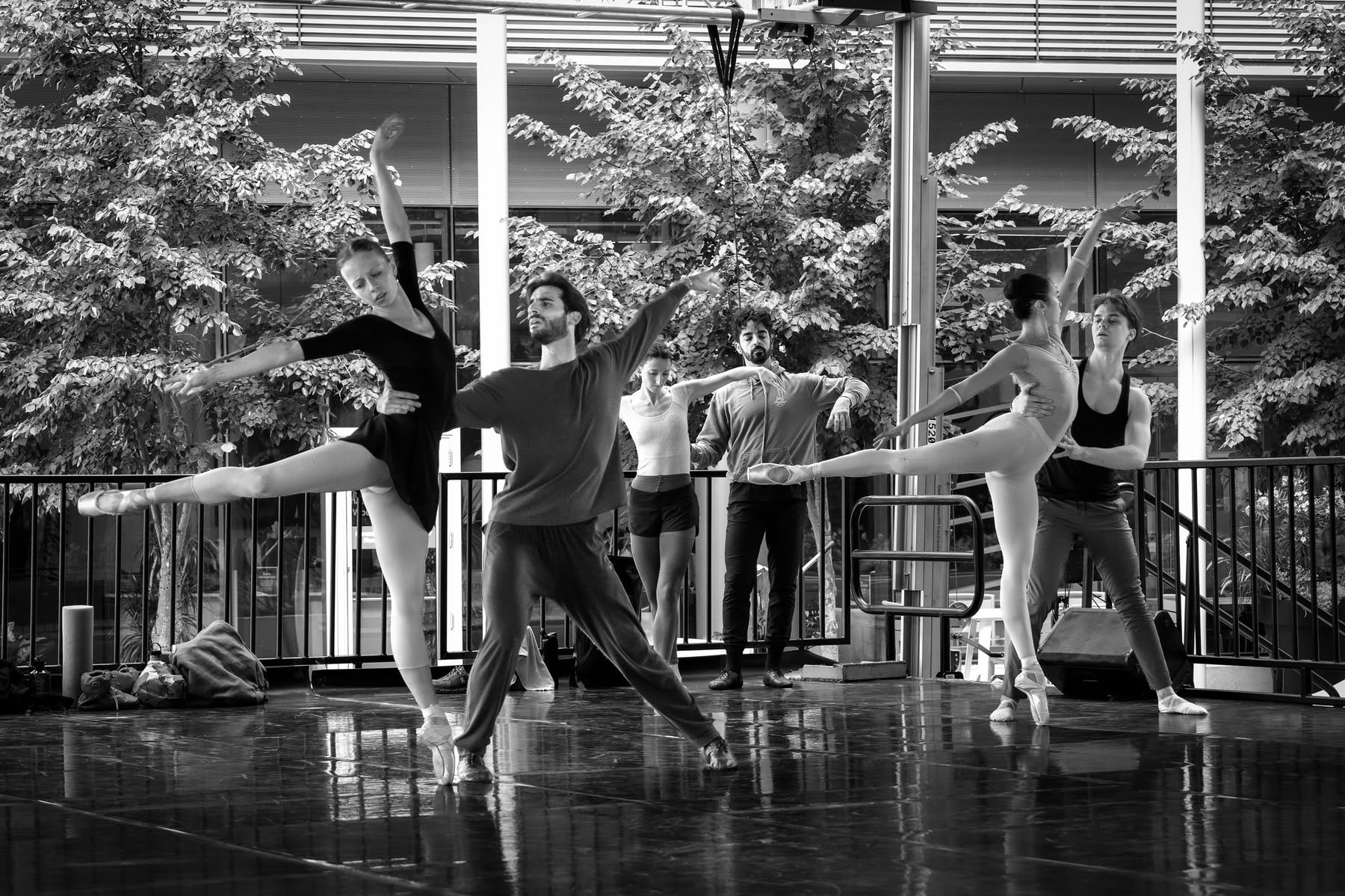
Honouring Stravinsky
Stravinsky’s original is tightly tied to specific narrative beats (Kastchei’s infernal dance, the lullaby, the finale). How have you handled those signature passages when the story around them has changed so much?
Although this is a new interpretation of Firebird, many of the major narrative beats still connect back to the original story. They’re just being presented through a very different world and perspective.
For example, the iconic Infernal Dance is still an important part of the story, but the circumstances surrounding it and how the characters experience it have been completely reimagined. That balance has been really important to me throughout the creation of this ballet.
I wanted to respect the original Firebird while allowing myself the freedom to ask, What does this story mean today? What happens when you take these familiar characters and put them into a completely different world? For me, that’s where the fun of this process has been and why I took on this ballet.
I do hope that with this particular reimagining, it takes ballet out of this kind of fairy-tale fantasyland and really brings us into reality as a world. We’re really asking questions about capitalism, work culture, and also rights and freedoms.
I believe that ballet is a vessel, just like music or visual art, and it can provide so much insight, and it can also uplift and celebrate, just like those other art forms.
A different kind of Firebird
That world extends into the choreography, with everyday gestures and contemporary body language woven into the movement, and desks, paperwork, carts and briefcases becoming part of the action. Thomas deliberately moves beyond traditional ballet pantomime, using the choreography itself to tell the story and grounding the characters in the way people move, gesture, and communicate today.
Are the Firebird’s movements distinct from those of the corporate ensemble?
During the creative process, the Firebird, the artistic team, and I spent a lot of time talking about who this Firebird is and what makes her different not only from other interpretations of the character, but from other iconic portrayals of birds in ballet, like Odette and Odile.
I knew from the beginning that I didn’t want her to feel like a typical, overly serious or mystical Firebird. As we started creating the movement and developing the story around her, her character slowly revealed herself to us. She’s quirky, confident, and a little bit unpredictable. In some ways, she reminds me of Tweety Bird, but without the sinister side. There’s something almost playful and innocent about her.
She’s also slightly naive and doesn’t fully understand the power that she possesses. She has been kept in captivity as Kastchei’s exotic pet, so she has never really had the opportunity to understand who she is or what she is capable of. She knows that she is special, but she doesn’t necessarily understand just how powerful she is.
I wanted her to be more than a magical creature that arrives to save the day. She has her own journey of discovery. As the story unfolds and her circumstances change, she begins to understand herself and the power that she has always possessed.
The Firebird, too, is grounded in a more complex reality. No longer simply a supernatural force in Ivan’s story, she has her own history with Kastchei and her own reason to escape him. Thomas allows her fear, pain and vulnerability to exist alongside her power, giving her a journey and motivation entirely her own.
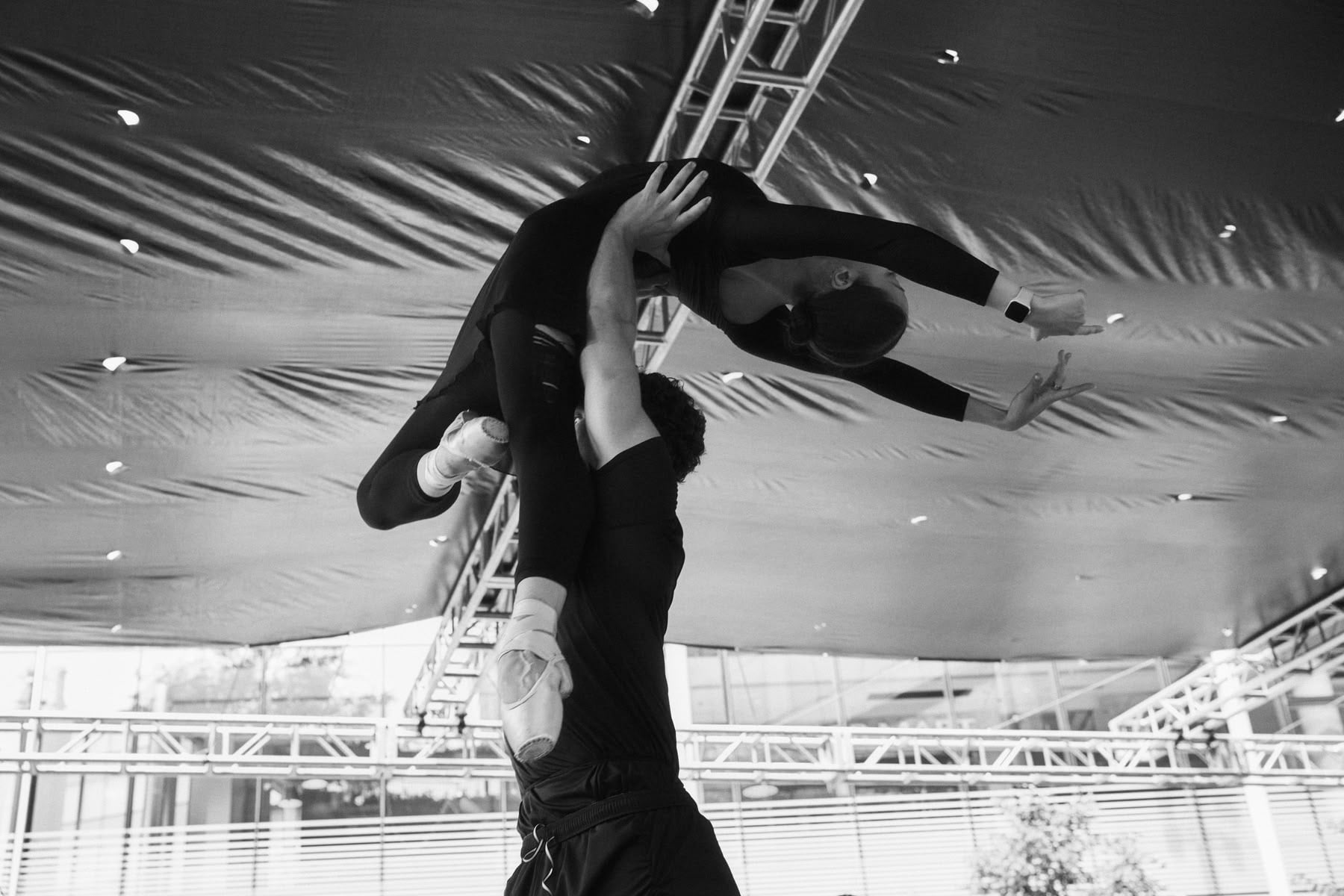
A turning point
At approximately 50 minutes, Firebird is the longest work Thomas has created to date, and marks his first full narrative ballet and first world premiere for a Canadian company. It is also the first new work commissioned under Christopher Stowell’s tenure as artistic director of Royal Winnipeg Ballet.
You retired as a dancer at Semperoper a few seasons ago. What has changed in your choreographic voice now that you’re working full-time? Does this – your biggest, longest and first narrative work – feel like a turning point?
Now that I’m no longer actively dancing with a company, I’ve been given the time and space to fully invest in my own artistic practice. I can actually sit with an idea, develop it, question it, and really commit myself to the process. There is a different level of responsibility that comes with that, but also a freedom that I really value.
I think Firebird is a testament to that commitment and to the work I’ve put into this journey so far. This ballet does feel like a turning point for me. I’m pushing myself not only in discovering movement but also in how I develop an idea, build a world around it, and communicate it.
I really want to take what I know, what the dancers know, and combine that to make new ideas within ballet, not just within the story, but also within the actual language of ballet.
Being able to fully commit myself to choreography has allowed me to approach my work differently. I’m not just creating movement anymore. I’m thinking about the entire experience and what I want an audience to feel, see, question, and take away from the work.
How have your years in Dresden – the choreographers, repertoire, colleagues – influenced your style?
My time in Dresden was the most influential and critical period in shaping my trajectory as a choreographer. Looking back, I really see those ten years as a kind of training ground for the choreographer I am today. It laid the foundation for my artistic voice and gave me the experiences and perspective that I continue to draw from in my work.
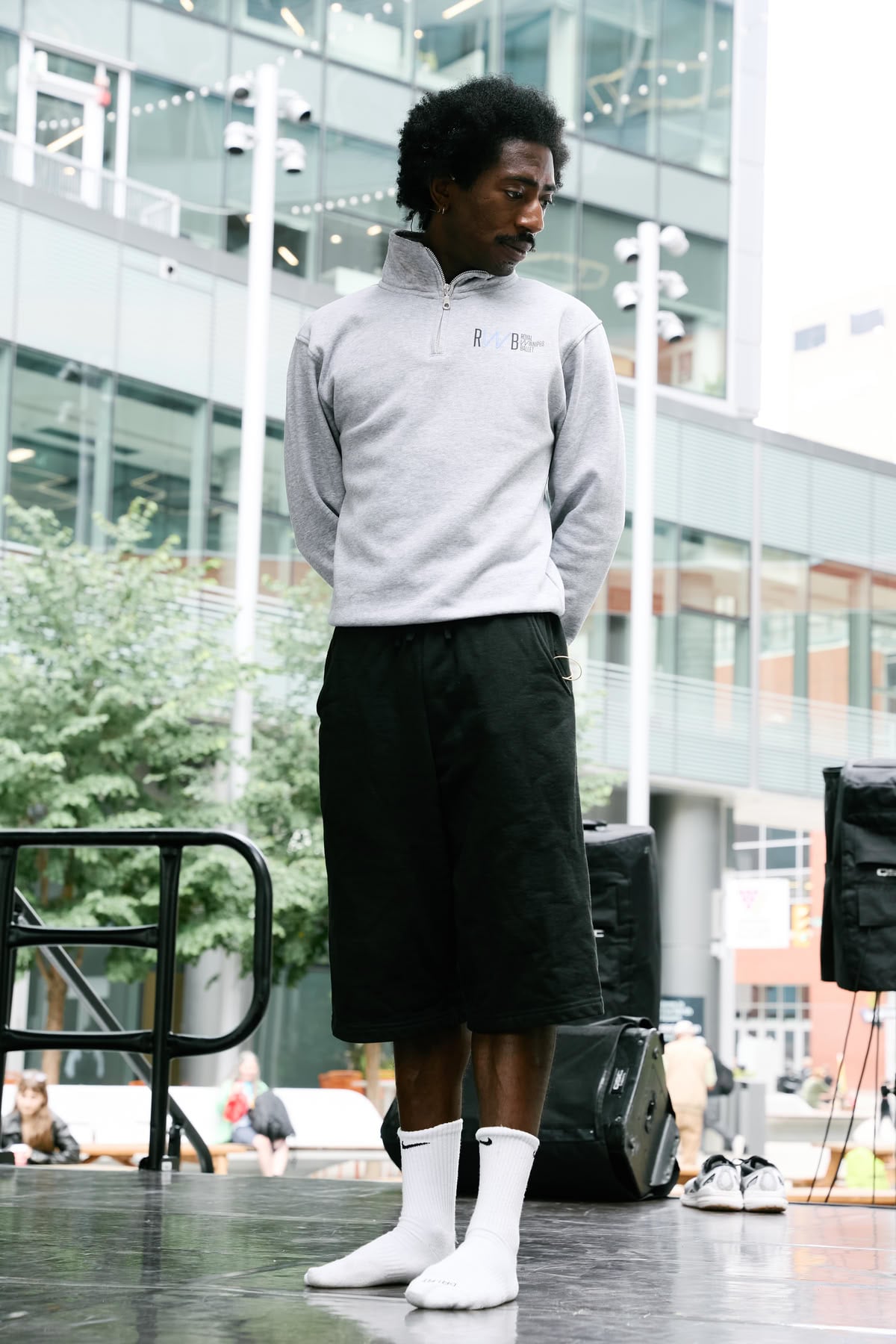
The choreographer
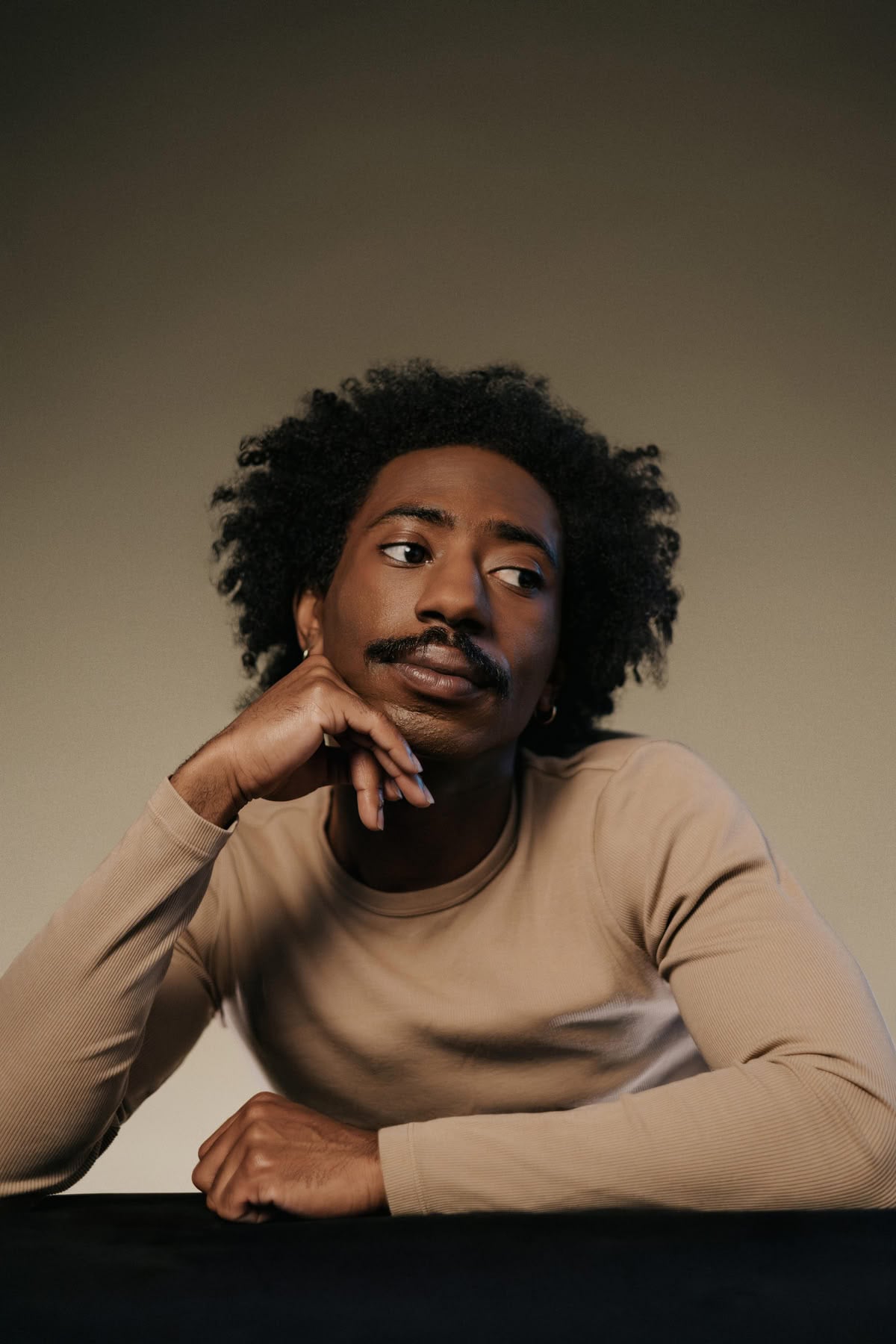
Houston Thomas is a New York-based choreographer and former soloist with Dresden Semperoper Ballett. Born and raised in Chicago, he trained at the Joffrey Ballet Academy before attending the School of American Ballet. After graduating from SAB in 2013, he joined Semperoper Ballett, rising to second soloist in 2018. His performance in Justin Peck‘s Heatscape earned him a Best Male Performance nomination in the 2018 Dance Europe Critics’ Choice.
Thomas began choreographing while dancing in Dresden, creating his first work, Moonlit Variants, for Semperoper Ballett’s Young Choreographers programme in 2018. He has since created works for companies and institutions including The Washington Ballet, Cincinnati Ballet, Complexions Contemporary Ballet, The Juilliard School, ABT Studio Company, Ailey II, BalletCollective, Opéra National de Bordeaux, The School of American Ballet, USC Glorya Kaufman School of Dance and Dance Aspen, among others. He has also created work through the New York Choreographic Institute, working with dancers from New York City Ballet and the School of American Ballet.
After a decade with Semperoper Ballett, Thomas concluded his performing career following the 2022–23 season to focus exclusively on choreography. In recognition of his emerging choreographic voice, he received a 2025 Princess Grace Award and was named a 2026 Baryshnikov Arts Center Resident.
Beyond Winnipeg
Are there plans for Firebird to travel beyond Winnipeg?
Firebird was commissioned by the Royal Winnipeg Ballet and will remain part of the company’s repertory. Following its world premiere in Winnipeg on October 8–11, the company will bring Firebird to the National Arts Centre in Ottawa on October 29–31.
Spoiler alert: does Ivan actually break free, or does the corporate system just close back over him?
Audiences will have to come to the performances to find out what ultimately becomes of Ivan…
Performance information
Firebird will be performed at the Centennial Concert Hall, 555 Main Street, Winnipeg:
Thursday 8 October, 7.30pm
Friday 9 October, 7.30pm
Saturday 10 October, 2pm (Community Matinee)
Saturday 10 October, 7.30pm
Sunday 11 October, 2pm
Tickets start at $45 and are available at rwb.org/performance/stravinsky-stories



wonderful to read this. i am the lighting designer for THE FAIRY’S KISS on the double bill, and very eager to see mr. thomas’ premiere next week.