[Review] Roommates – Ballet National de Marseille’s “rollercoaster of a programme”

Matt Paluch sees Roommates, the six-work “amuse-bouche from Ballet National de Marseille and what a riot it was”.
| Title | Roommates |
| Company | Ballet National de Marseille |
| Venue | Queen Elizabeth Hall, Southbank Centre |
| Date | 2 March 2024 |
| Reviewer | Matthew Paluch |
Kudos to Ballet National de Marseille for offering a rollercoaster of a programme in Roommates (1 – 3 March 2024) at the Queen Elizabeth Hall, Southbank Centre.
The QEH isn’t a natural space for dance, but they could dress the stage with more care. Black curtains aren’t an issue, but make them sit flat and straight is the most basic requirement, non?
The evening includes six works, so feels like a tasting menu, and as my companion commented “it’s entertainment” – and that it is. More high-end than lowbrow I might add. However there are undoubtedly still highs and lows.
Grime Ballet (Dance Because You Can’t Talk to Animals) by Cecilia Bengolea and François Chaignaud isn’t the strongest opener. The piece sets the tone of the entire evening in two clear ways – it will be avant-garde, and there’ll be some serious questions about execution.
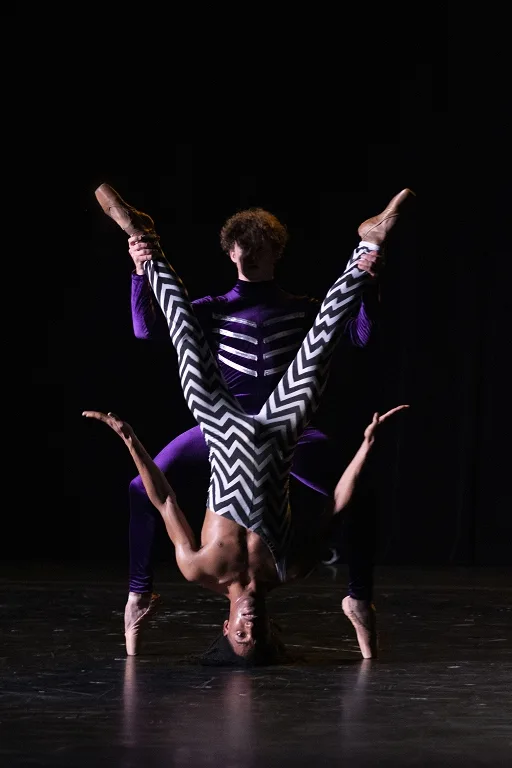
The cast of four are all en pointe, and the overall vibe is Grim(e)y, shown through The Gun Finger dance and choice of urban soundtrack. Elsewhere we see movement language that feels Karole Armitage in its overt randomness and William Forsythe through its use of isolation. But the pointework technique of three out of the four just isn’t up to scratch. I’d scrap the toe shoes altogether as one focuses on the how rather than the what, taking away from the overall experience. Maybe a rethink is needed?
Next follows Weather is Sweet by (LA)HORDE, which is also the choreographic collective that directs the Ballet National de Marseille. Weather is Sweet can be succinctly described as sex with clothes on, à la dry humping.
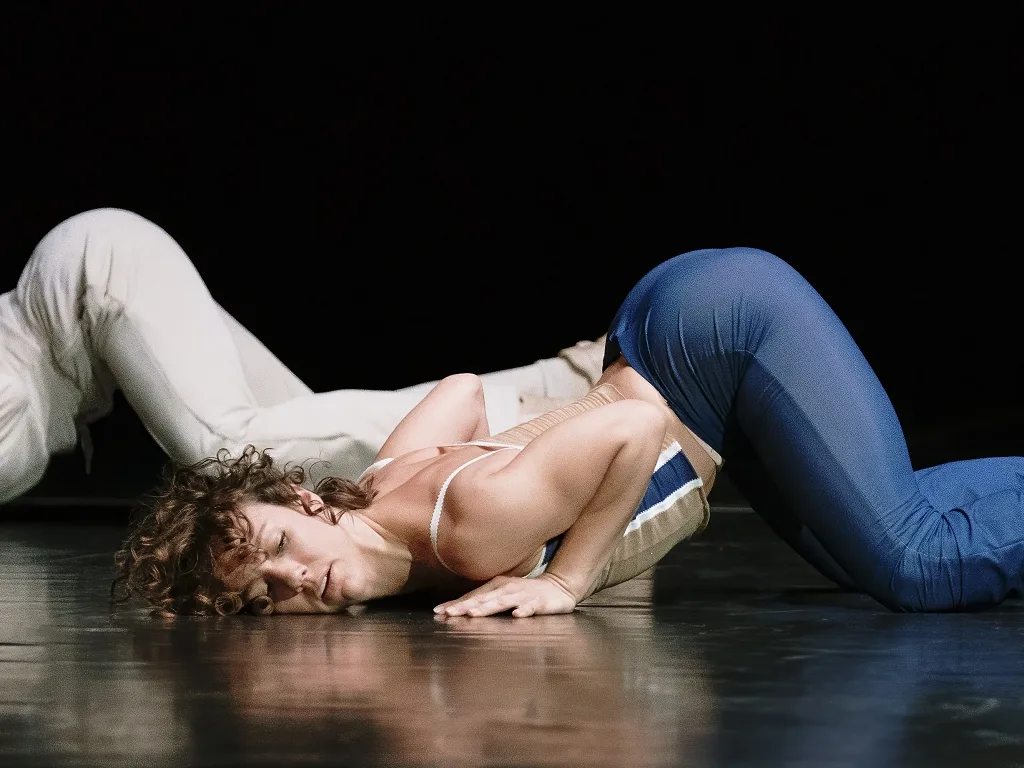
The cast of six flit between each other offering a physical, verging on break dancing vernacular (The Worm) and daring partner work, but it’s all largely focused on the same thing – undulating pelvises, etc. It builds to aggressive twerking, but even this still doesn’t make the piece massively interesting, though its (contextual) originality can’t be denied.
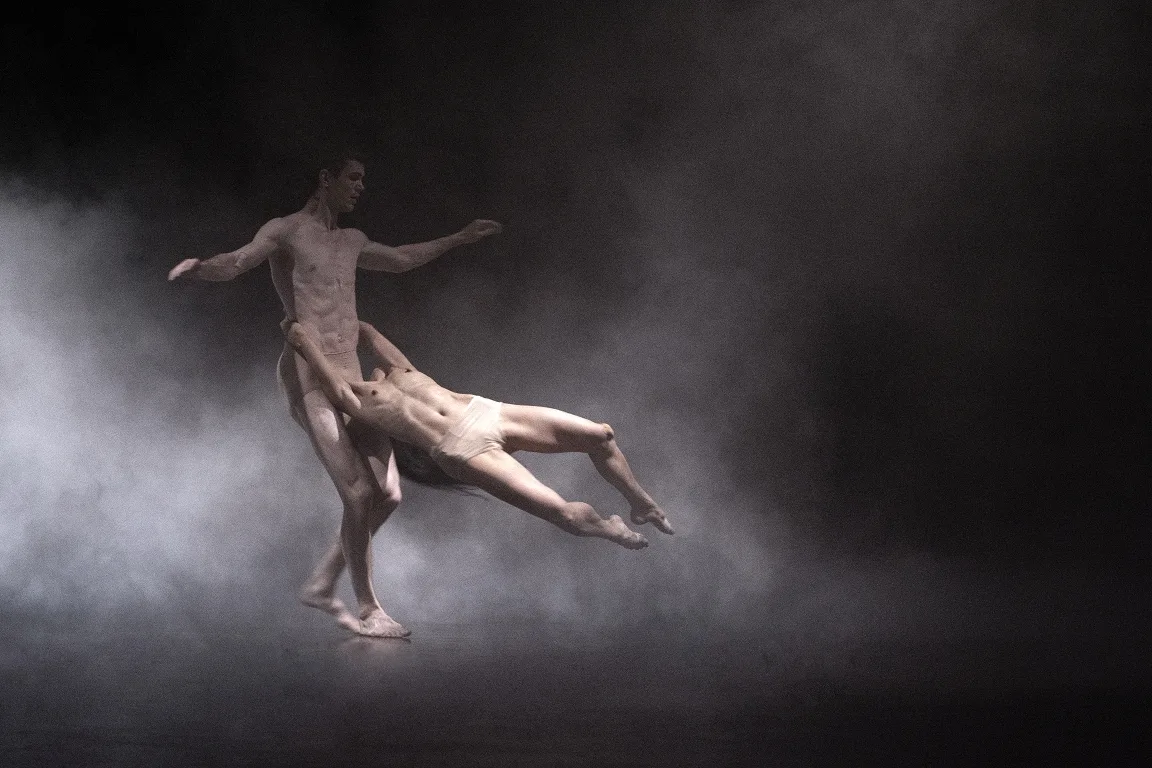
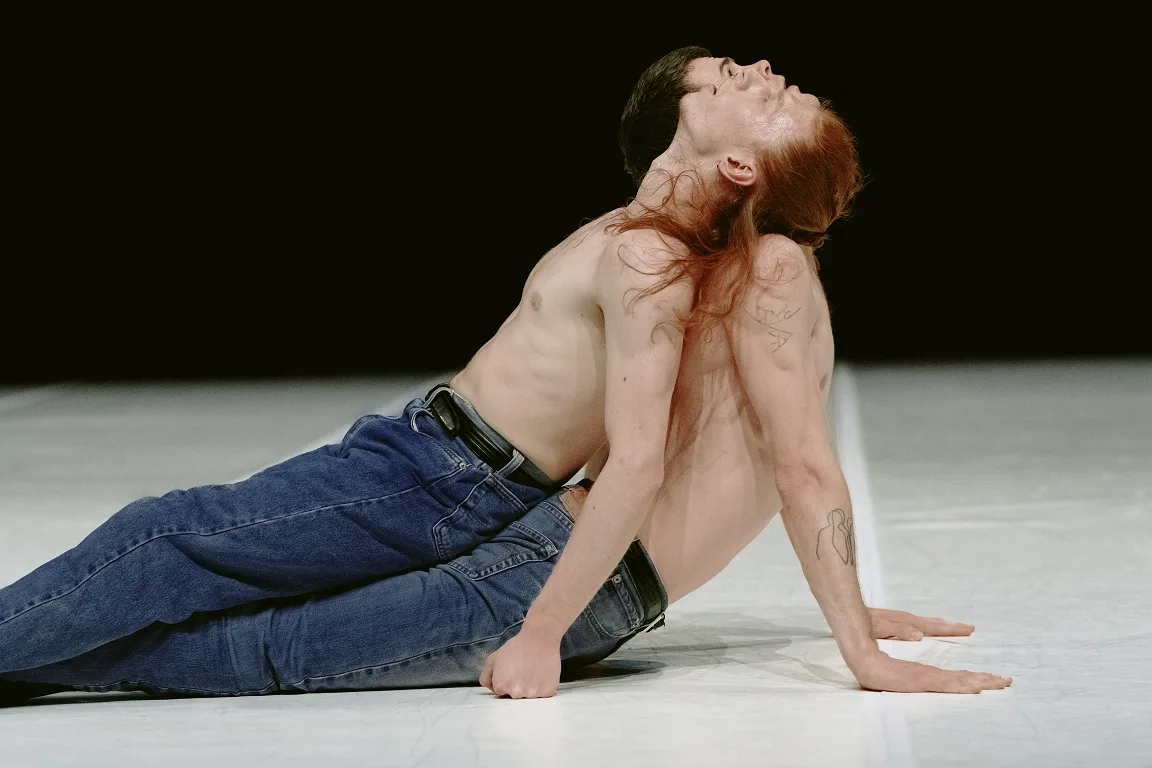
Oiwa by Peeping Tom is as to be expected. Peeping Tom categorically take their audience to another world, but the dynamics within it tend to be predictable. Once the copious dry ice disperses, we see a bare chested, heteronormative couple doing the do… Woman = passive, manipulated ragdoll. Man = aggressive, domineering manhandler. Arresting? Affirmative. But it’s largely uncomfortable watching that feels too rough, too repetitive and too long.
After the interval we restart with a postmodern jolt – Concerto by Lucinda Childs. The cast of seven are dressed in black and move regimentally, against a now grey backdrop and floor. Childs’ skill is taking simple, minimal language and making something complex and layered from it, but her canon requires absolute precision to be seen at its best, and this wasn’t the case. The dancers brought energy and musicality no question, but their execution throughout lacked line, precision and finish. A shame.
Les Indomptés by Claude Brumachon and Benjamin Lamarche is an interesting work. It’s a duet for two men which suggests intimacy without an inkling of romanticism, and it’s refreshing in its matter-of-fact nature. The dancers execute aggressive, articulate phrases in unison and then switch in a blink to long, drawn-out expanses of their limbs. I’d like to see the piece numerous more times for further understanding, and most definitely with the same stunning cast of Jonathan Myhre Jorgensen and Titouan Crozier. Talk about commitment.
Closing the bill is a 15-minute excerpt from Room with a View by (LA)HORDE set to music by RONE. Room with a View leaves a good taste in my mouth, making me want to see Ballet National de Marseille again if they return to London. The piece is simple. It’s a vehicle for collective energy and invigorated movement, and it totally succeeds. The dancers in the cast of 12 feel like bright young things, communicating the right balance of brazen attitude and physical expression. At the beginning we see daredevil group work with dancers being tossed, flipped, and swung like there’s no tomorrow, but all with apparent joy and agency. Next, they find form in a loose mass and perform intricate, perpetual movements with a locking flavour, at times in unison, elsewhere breaking out into smaller groups, but always with a sense of awareness of their group cause.
Was everything perfect? No. Did it all work? No. Am I up for more? Absolutely. This was only the amuse-bouche of Ballet National de Marseille, and what a riot it was. Vive la France, and vive these brave, intrepid dancers.