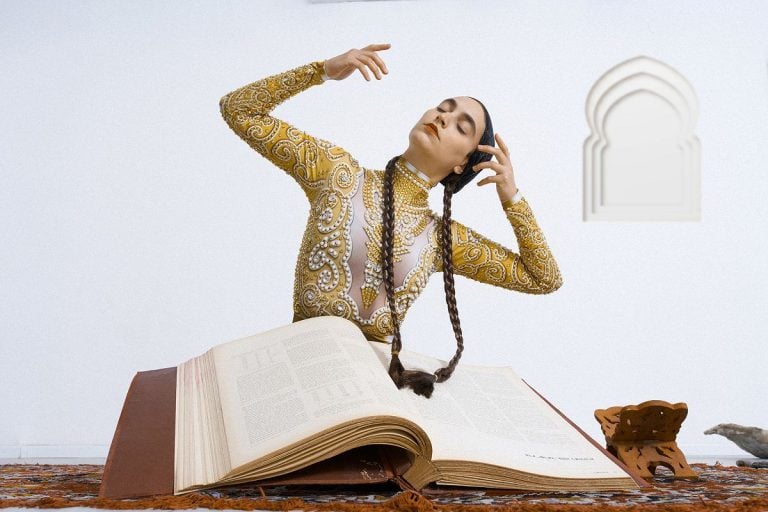
Interview with choreographer Carlos Pons Guerra: dance is an inherently queer art

Paul Arrowsmith talks to choreographer Carlos Pons Guerra as the iconoclast prepares to meet Edward II
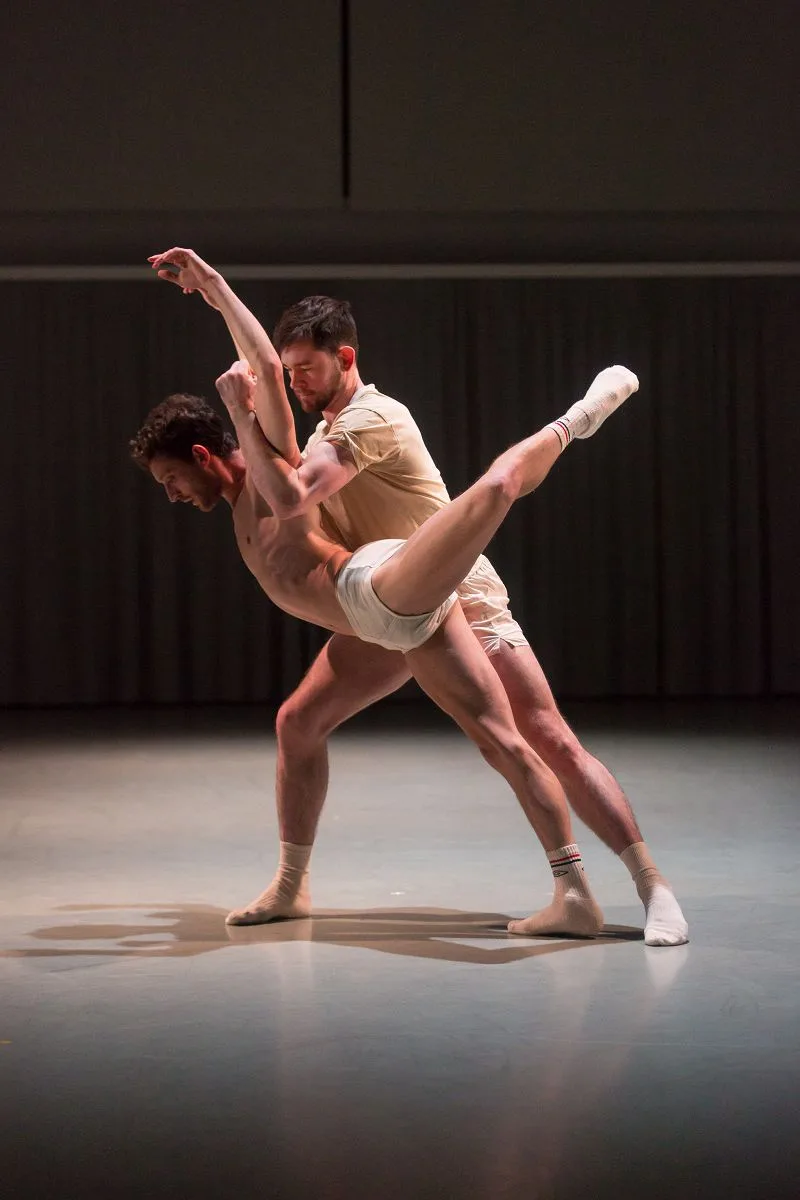
Working in ballet, contemporary dance and theatre, Carlos Pons Guerra creates work that explores gender, cultural and sexual identity for companies including Ballet Hispanico of New York, Rambert, Nashville Ballet, Ballet Concierto Dominicano and Birmingham Repertory Theatre. He is also director of his own company DeNada Dance Theatre.
You are from Gran Canaria – where flamenco was a childhood fascination?
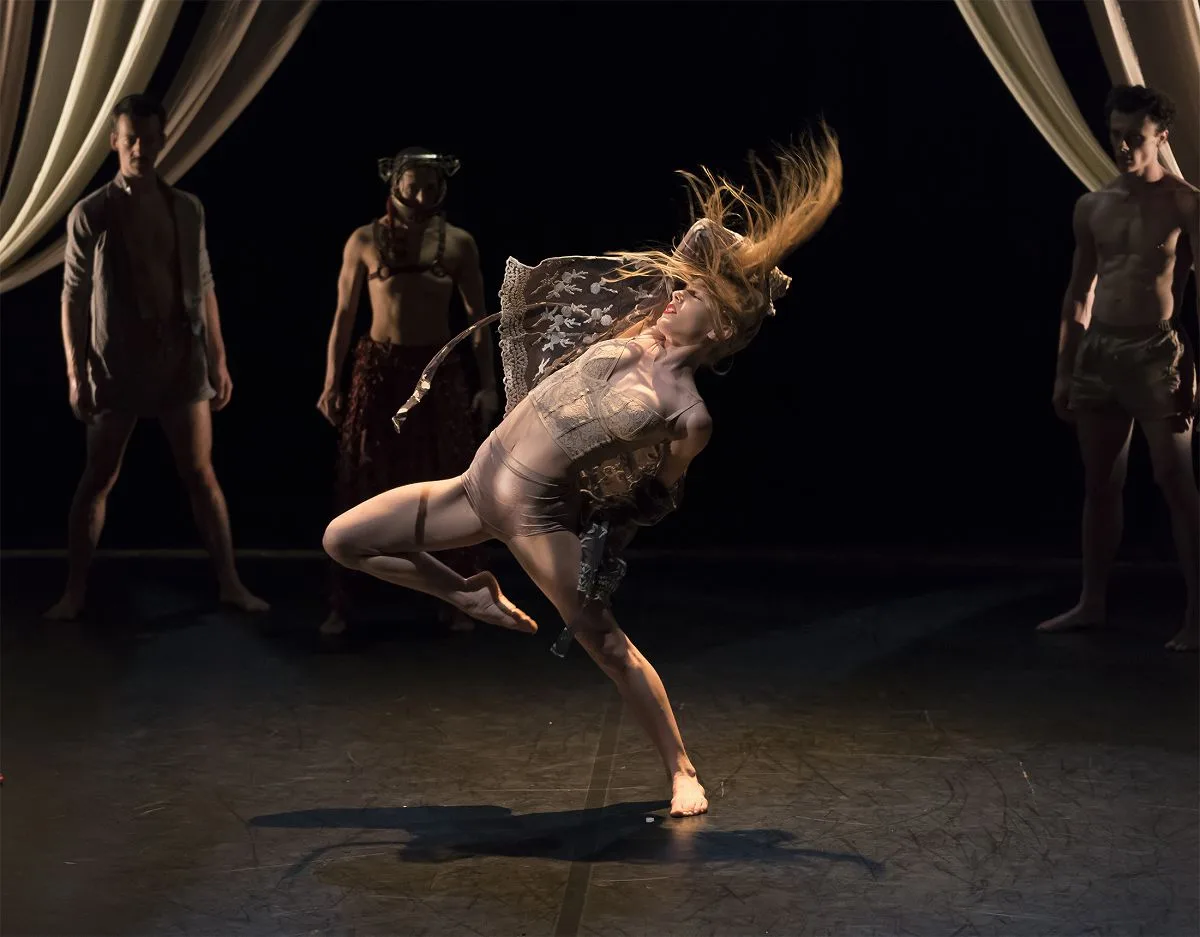
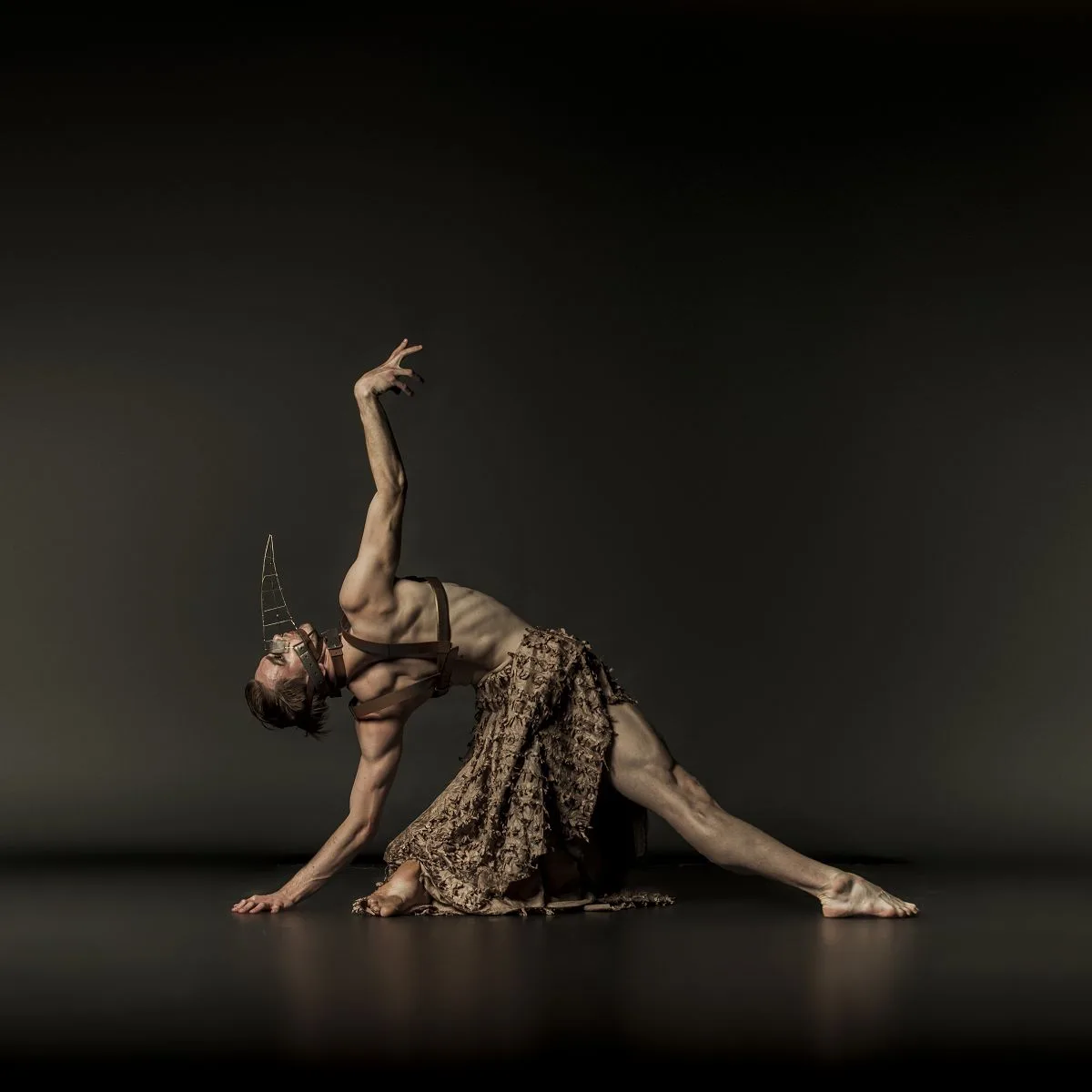
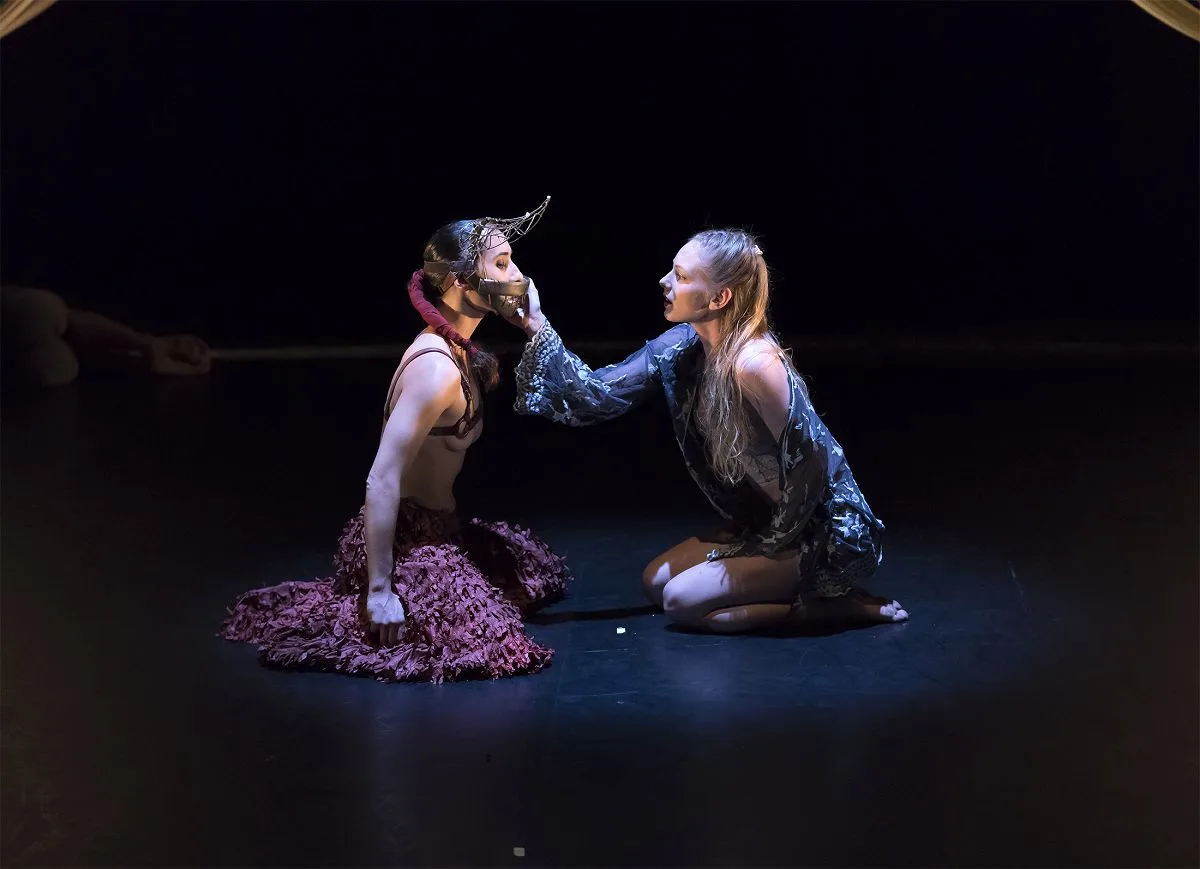
Pons Guerra’s queer retelling of episodes from Ovid’s Metamorphoses will be premiered at Northern Ballet‘s evening of new choreography, 9-10 May 2024 Sketches | Northern Ballet
Aged two they called me “the little castanet thief” at the flamenco school my older sister went to. I would clack away while we waited for her to finish class. I definitely loved the skirts as well!
What drew me in the most were their dance shows. One of my earliest memories is of the curtain at the community theatre, how it would open to reveal one scene, close and reveal another. I really thought the curtain was magic – behind it you could become anything, go anywhere. I still believe that!
You paid for your own dance lessons with Anatol Yanowsky and Carmen Robles?
My parents thought it was cute when I ran around in flamenco heels aged two, but at three, it wasn’t so cute anymore. In the culture I grew up in, dance and ballet were considered something effeminate, not for boys, it could literally turn you into a homosexual. So, dance was forbidden for boys.
Many of the adults around me had grown up during Franco’s dictatorship, so I’ve later come to understand how much a product of that [time] their thinking was. So, at fifteen, I secretly started attending the Yanowsky school in Las Palmas.
You’ve said before they would hate what you do now – why?
The first professional work I made, Young Man!, starred a leg of Spanish ham and was a queer adaptation of Roland Petit’s Le Jeune Homme et la Mort, performed by two women as Spanish machos. It also featured 1970s flamenco rock, chorizo and heroin.
Making it I certainly thought “what would they think of this?” but I was probably being naïve, not giving them enough credit. Both teachers are extremely wise and experienced. I learned so much from them. Anatol’s deep knowledge of history, how he applies [that] to rehearsal, for example, inspired me. My work for adult audiences has yet to visit Gran Canaria. I really hope it does one day so that I can share it with them.

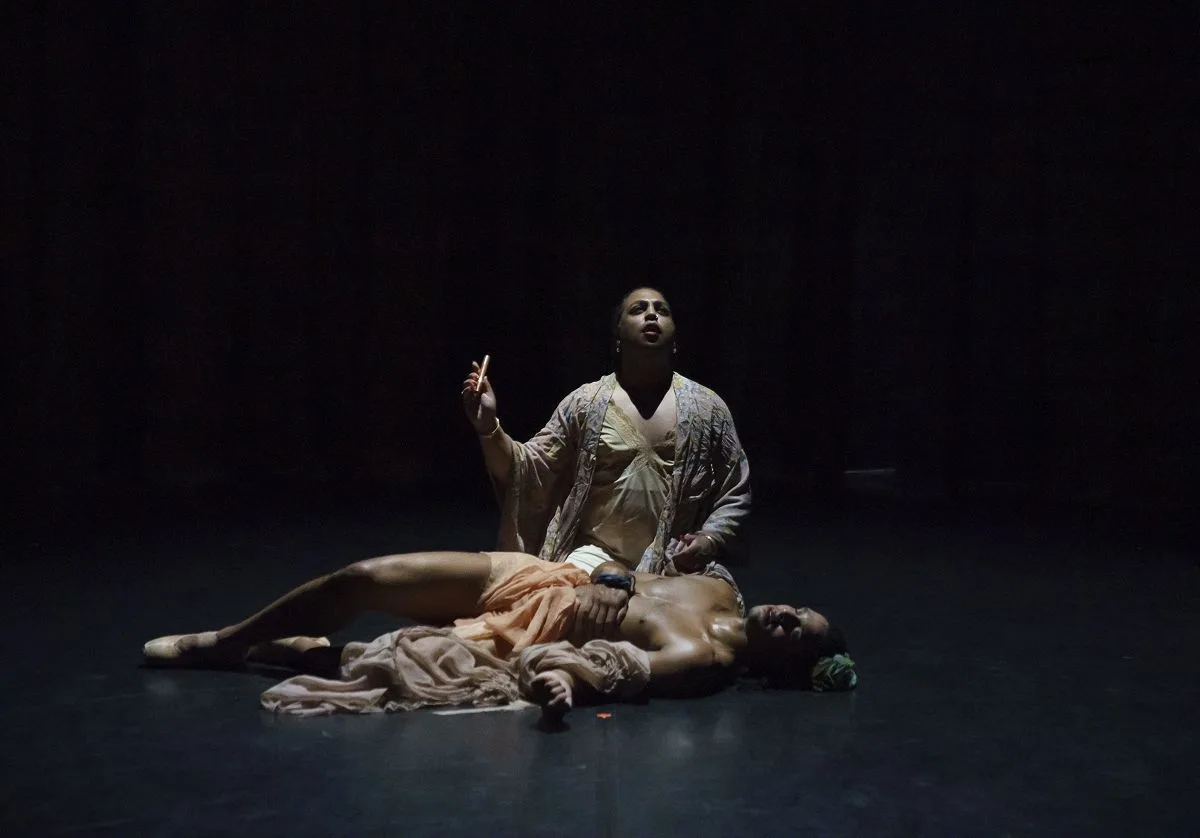

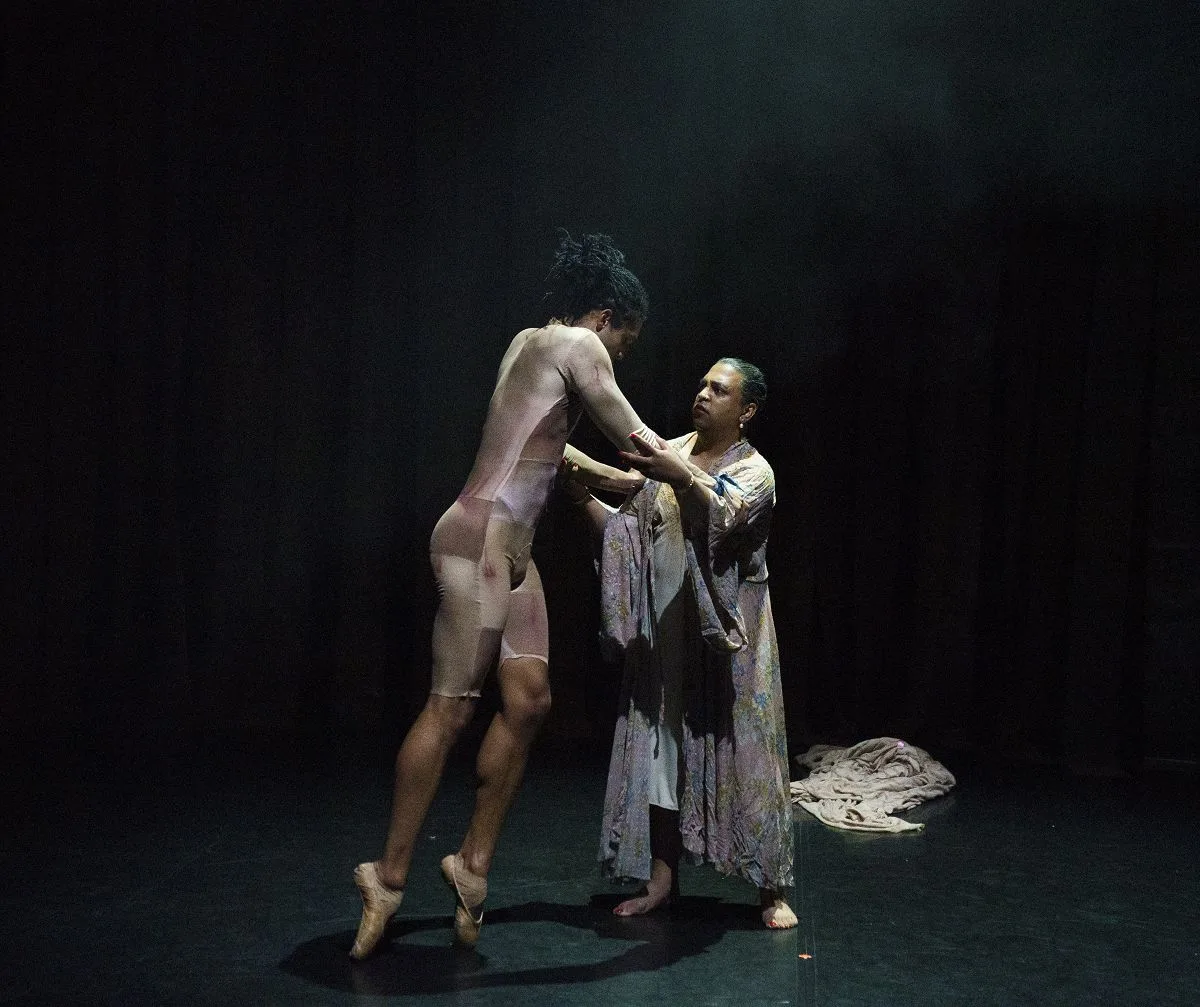

You’ve been described as embracing the era of the Weimar Republic, early Fellini, and Lindsay Kemp – is that a fair characterisation? Do you aim to shock?
That was the biggest praise I have received! My aesthetic world is definitely in the past. My imagination is old-wordly and otherworldly. I am definitely interested in how history interfaces with us today.
I don’t aim to shock. Dance has to speak and make a difference, it has to provoke reflection and cause change. Generally, ballet and dance audiences are more used to “vanilla dance,” so when choreography does say something, it can shock.
As a teenager you saw the work of Uwe Scholz, which made a big impression?
My grandmother took me to Leipzig Ballet dancing his Seventh Symphony, the first ballet I ever saw. I was about fourteen and completely blown away. Then I had an interest in drama (which was ok for boys to do) but when I saw the ballet I couldn’t believe how much purer a form of expression ballet was. It didn’t have the artifice of the word, it was just the body – our most essential instrument.
You studied contemporary dance in the UK and Spain but didn’t go on to become a dancer – why?
For different reasons, I spent more time training than your average contemporary dancer!
When I finally graduated, I auditioned for dance jobs but I’ve always been a bit restless and did not want to wait for somebody to give me work. I thought maybe I should create [my own] opportunity. Two close friends also wanted opportunities to dance, and I had really [enjoyed] choreography at school and wanted to try that. So, we founded DeNada Dance Theatre.
We were very fortunate with the success of Young Man! In 2013, which was programmed widely. I was supported by Northern School of Contemporary Dance’s artist development scheme and slowly started focusing on directing. Eventually I realized that I preferred to be on the maker’s side.
I take much more pleasure in seeing the world that’s in my mind reflected onstage than I ever took in dancing, although I love dancing as well.
Can a non-dancer become a choreographer?
For sure. However, personally I couldn’t do this job if I hadn’t trained as a dancer, because there is a physical understanding to the craft of choreography that I could only get through training and having danced.
You also studied for a degree in English literature in the UK – how does that inform your choice of subject matter?
When I told my parents I wanted to become a dancer – I won’t repeat what the reply was here – but good Catholics that we are, they instilled a lovely sense of guilt in my brain.
I got guilt-tripped into completing an academic degree while doing dance training, which I did through the Open University. It was tough! I may have cheated a little bit, getting through doorstoppers such as Henry James’ Portrait of a Lady and George Eliot’s Middlemarch via audiobooks while warming up for ballet.
Jokes aside, literature is my second passion and influences my work enormously. My absolute literary idol is Angela Carter, and from her I get my joint love for trash and high art; the rococo, the gothic and the transgressively sexual. TORO: Beauty and the Bull made for DeNada in 2018 is my version of Carter’s The Tiger’s Bride.
The psyche of Tennessee Williams‘ characters influences my character building; the magic realism of Latin writers like Gabriel García Márquez is present in almost all my works, and I have a little altar to Jean Genet in my bedroom and pray to him before any premiere.
I have adapted Lorca’s The House of Bernarda Alba as Waiting for Pepe for Ballet Hispánico, New York but I feel my works are a big conglomeration of literary influences. Mariposa is a queer adaptation of Giacomo Puccini’s opera Madama Butterfly, set in post-revolution Cuba, but the work drew on the postcolonial writing of Edward Said, Gayatri Spivak and Franz Fanon, plus Genet’s Querelle of Brest as well as autobiographic writing of the gay Cuban exile, Reinaldo Arenas.




In 2018 you were the subject of a BBC documentary Prejudice and Passion. My major takeaway was how hard you were working. How sustainable is the life of a choreographer?
The documentary shared what goes behind being an independent choreographer, not attached to a theatre or a company, and producing your own work. It’s madness and doesn’t ever get easier. I am fortunate that choreography for companies and commissions, as well as my work directing DeNada sustains me, but it is a tricky industry and not sustainable for many people.
A good 80 per cent [of my time] is other stuff. Grant writing has always been a lengthy process, but it has become a Homeric endeavor. An incredible amount of time goes into devising bids, building partnerships, tour booking, delivering outreach. When the artistic time comes it goes so quick: never have José Limón’s words been truer, “dance is a moment, and then it is gone.”
How challenging is the performing arts’ landscape in the UK currently?
Very. The world has changed drastically since the pandemic, so has our industry. And of course we can’t obviate the many crises – environmental, political, economic, and war – that the world is experiencing.
The UK is no exception. It’s a bit grim but what we do have, which is positive, is a very strong community of dance artists, producers and advocates. We have a big theatrical history in the UK and I think our audiences will be there for us.
Tell us something about your creative process …
My process varies but I am a massive geek and do a lot of research before I get into the studio.
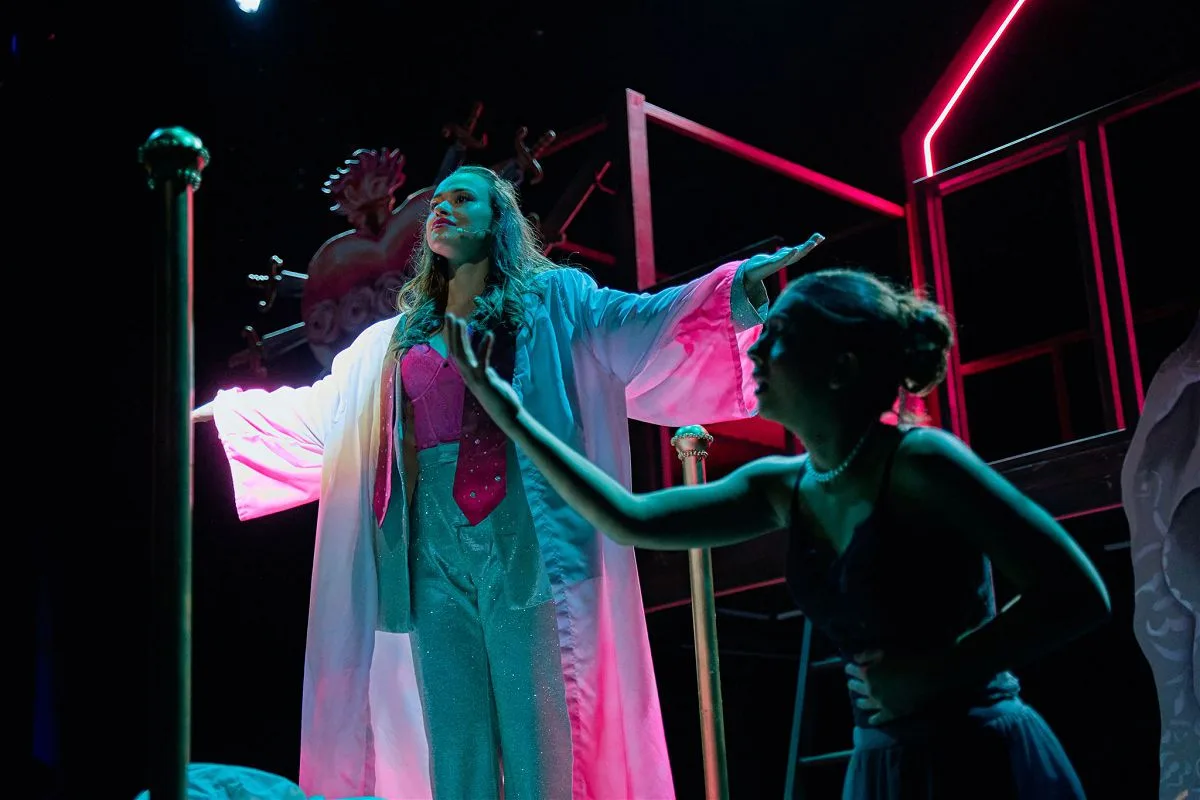
In summer 2023 I directed and choreographed Astor Piazzolla’s Maria de Buenos Aires for Northern Opera. I found the libretto problematic because it draws on the operatic trope of the fallen woman. In trying to address this, I discovered that the score and libretto weirdly parallel episodes in the Bible. That got me down a big rabbit hole! I looked into medieval passion plays and the idea of queer messiahs. My María ended up being a queer retelling of the Bible, from genesis to a ‘queerpocalypse’ in which Maria rises as a divinity. I go down these rabbit holes often!



You are at the start of Edward II – how did you come across him?
Edward II will be my next full-length production for DeNada. I came across Edward II when I did my MA during the pandemic, and instantly fell in love with the text and Christopher Marlowe. I’m excited to find historical texts that show queer love in overt ways. It’s important to bring these texts back so that we understand queer people have always existed.
Have you seen other adaptations or stagings of the play?
I am familiar with David Bintley‘s adaptation for Stuttgart Ballet/Birmingham Royal Ballet, as well as Derek Jarman’s film. I’ve watched footage of Ian McKellen’s [1970] BBC performance and will be diving into archives of other productions soon.
When will your production premiere?
Likely in late 2025. At the moment, we are at workshop stage, trying all kinds of things. I am steered by the idea of wanting to represent the love between King Edward II and Piers Gaveston in a positive light, and how the text can reflect many of the struggles the queer community is currently experiencing.
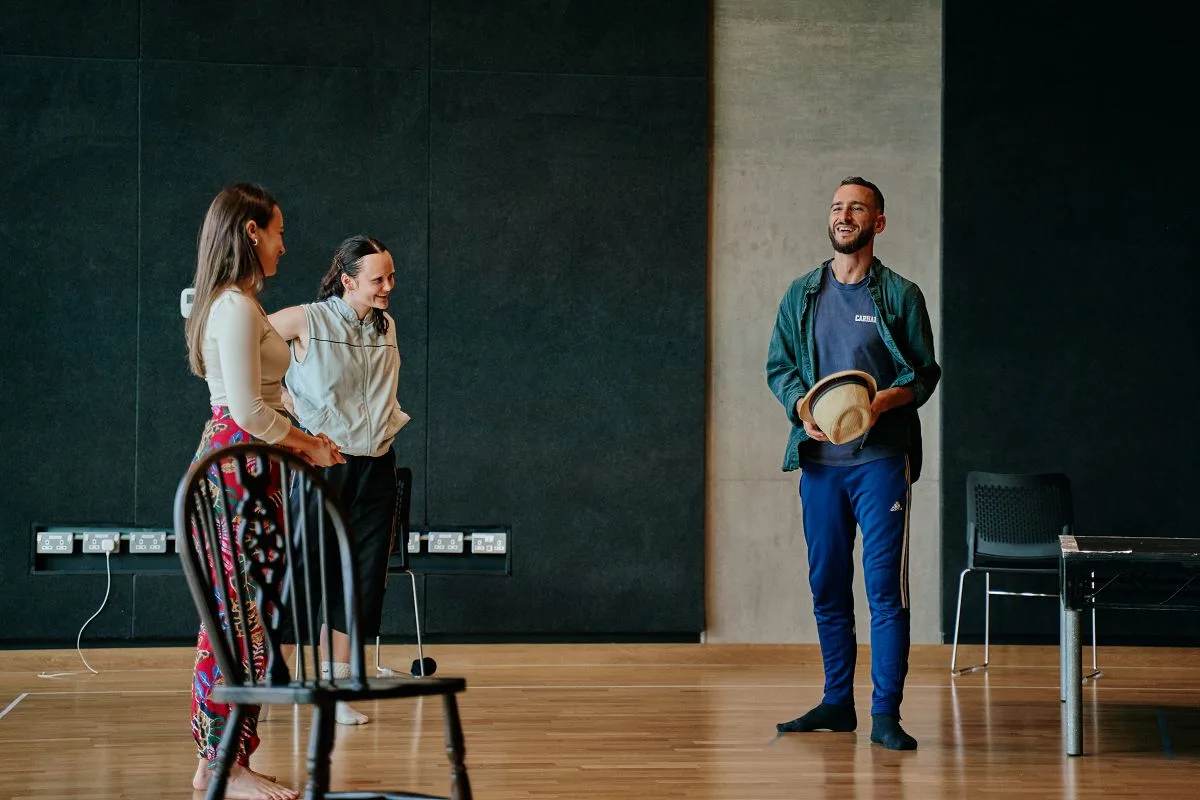
I have a brilliant cast of dancers who are generous, creative, and articulate so it’s been a real pleasure to explore the characters and narrative threads with them. As much of my work is narrative driven, I try to cast dancers according to what the character needs, in terms of physique, choreographic language, age, experience… Different bodies, minds and histories can offer a work different, and valuable things.
We have been exploring the narrative set not within a medieval English court, but within the power dynamics of secondary school. That attracts me a lot. Secondary school tends to be a traumatic place for most LGBTQ+ people, not unlike what Edward’s court must have been to him.

You’ve said in the past that major ballet companies have got too comfortable by not pushing the subject matter they portray – do you still think that?
Ballet companies can definitely do more to diversify the narratives they tell, who tells them, and for whom they tell them. I think the LGBTQ+ community is under-represented on the ballet stage.
But we are still working within largely heteronormative structures; there are fears about audiences and big financial worries. From my experience, audiences are ready for much more than what we tend to give them credit for.
Companies too are now asking themselves these questions, and considering how to diversify their repertoires, which is something new. Northern Ballet and Nashville Ballet [where I created Together Clinging and Private Balls] are taking great and important steps in this.
Would you welcome a commission from a big company or does being artistic director of De Nada give you control?
I work in both contexts, there is a beauty in both. Working with a company like Nashville, for example, you get a shorter but more intense time with dancers, which makes the process much more spontaneous. With DeNada, I generally get to play for a longer period of time, often intermittently, so you get space to reflect between periods of making. In a DeNada process, different dancers will be part of the different stages of creation, so you get the imprint of more dancers.
What’s your reaction to the increased debate we have seen about gender identity over the past decade – and the role of dance to communicate that?
I am increasingly saddened by the transphobic discourse that exists currently, and that has somehow made its way into our industry. I am encouraged because I know that this kind of thinking is isolated and limited to a small number of angry people who are, for some insidious reason, scapegoating trans people.
Gender identity is not a matter of opinion; it is individual to each person and nobody has the right to an opinion about whether somebody’s gender identity is real or not. Over centuries, we have constructed codes for dancing and training that functioned along strict gender binaries that we now know are not only not useful, but are also not real.
As much as I believe dance is an inherently queer art, we have a complex and awkward relationship to gender and sexuality in dance. To be funded, or to not be censored, we have historically had to prove that we are a decent artform – no buggery to see here – that our bodies are behaving in neat and orderly ways. That is why I think queering dance can have particular power when defending ideas of gender and sexual diversity.
What other ideas or commissions should we expect from you?
I was given a gorgeous edition of Cervantes’ Don Quixote for Christmas which I think might be calling to me! Don Q the ballet is the biggest crime ever committed to a Spanish cultural work. I want to do the actual book. I have this scenario of a man who escapes a nursing home in Bradford with help from his nurse, Sancho, to go on a quest to become the Gran Canaria Carnival Drag Queen. The more I think about it the more it sounds like a film, so I may have to think harder of how to make it a ballet!
Carlos Pons Guerra – videos


Paul Arrowsmith has been watching dance for 45 years after Peter Wright’s Sadler’s Wells Royal Ballet was his baptism in dance in the UK. He wrote for Dancing Times between 2010-22, reporting from China, Greece, Italy, France, Switzerland, Germany and Denmark, along the way interviewing Alessandra Ferri, Akram Khan and Miyako Yoshida among many. He has a particular interest in design for dance and has profiled the work of Natalia Goncharova, Jürgen Rose, John Macfarlane and Anthony McDonald. Paul collaborated with Sir Peter Wright on his memoires Wrights & Wrongs and in 2016 was programme consultant for the BBC documentary, The Ballet Master: Sir Peter Wright at 90.