Review: Marianela – Timeless, a love letter to the audience
Lily Hyde sees Marianela Nuñez in Marianela: Timeless – it is Nuñez’s night, and hers alone.
| Title | Marianela: Timeless |
| Company | The Royal Ballet |
| Venue | Royal Opera House, London |
| Date | 29 July 2026 |
| Reviewer | Lily Hyde |
The applause has never rung louder in the auditorium of the Royal Opera House.
Marianela Nuñez certainly needs no introduction, as the Argentinian dancer has been captivating audiences not just in London but around the world for nearly thirty years. A quintessential member of The Royal Ballet, Nuñez, who joined the company at just sixteen, has remained at its front and centre as it has grown, changed, and developed. She has been at the forefront of new works and helmed revivals of old ones – you name it, she’s danced it, and done so with aplomb.
Now Nuñez helms a specially curated programme – ‘a love letter to the audience’, she says in the programme, but if the audience reaction is anything to go by, they are sending several back.
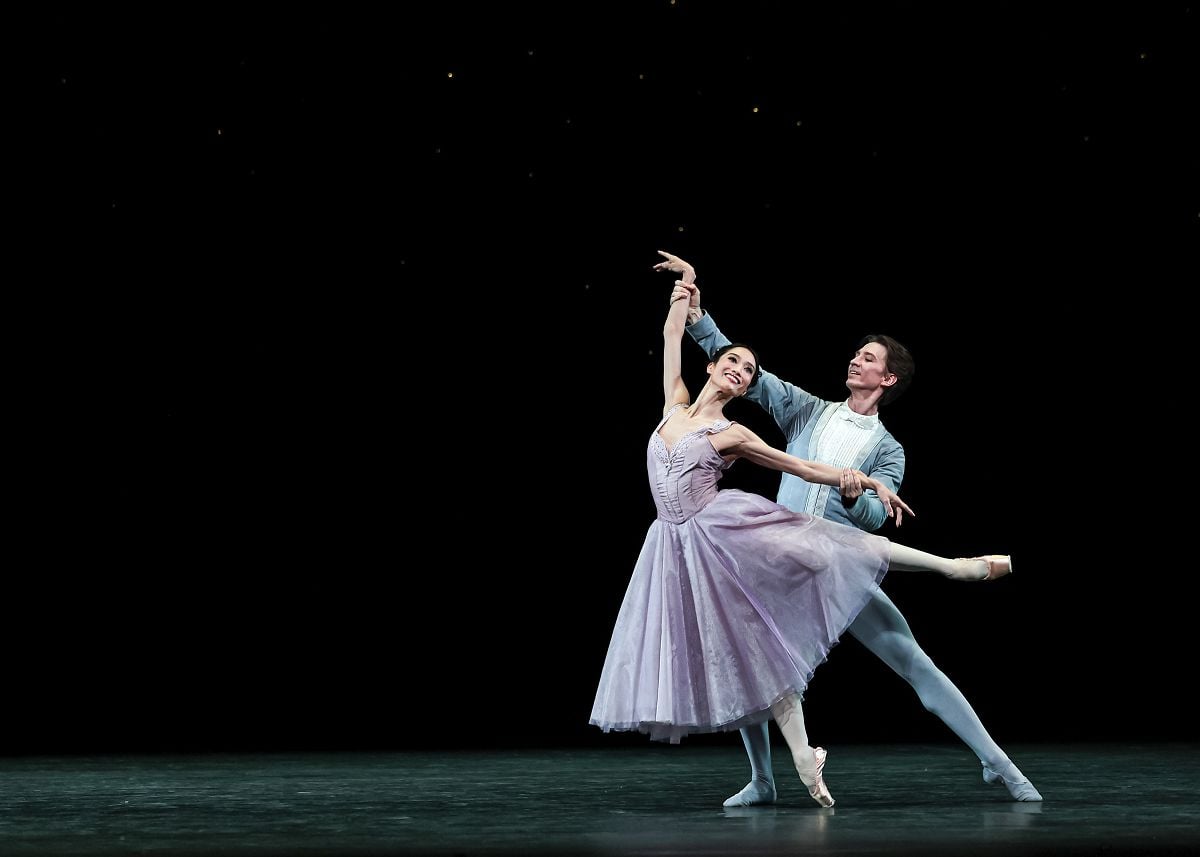
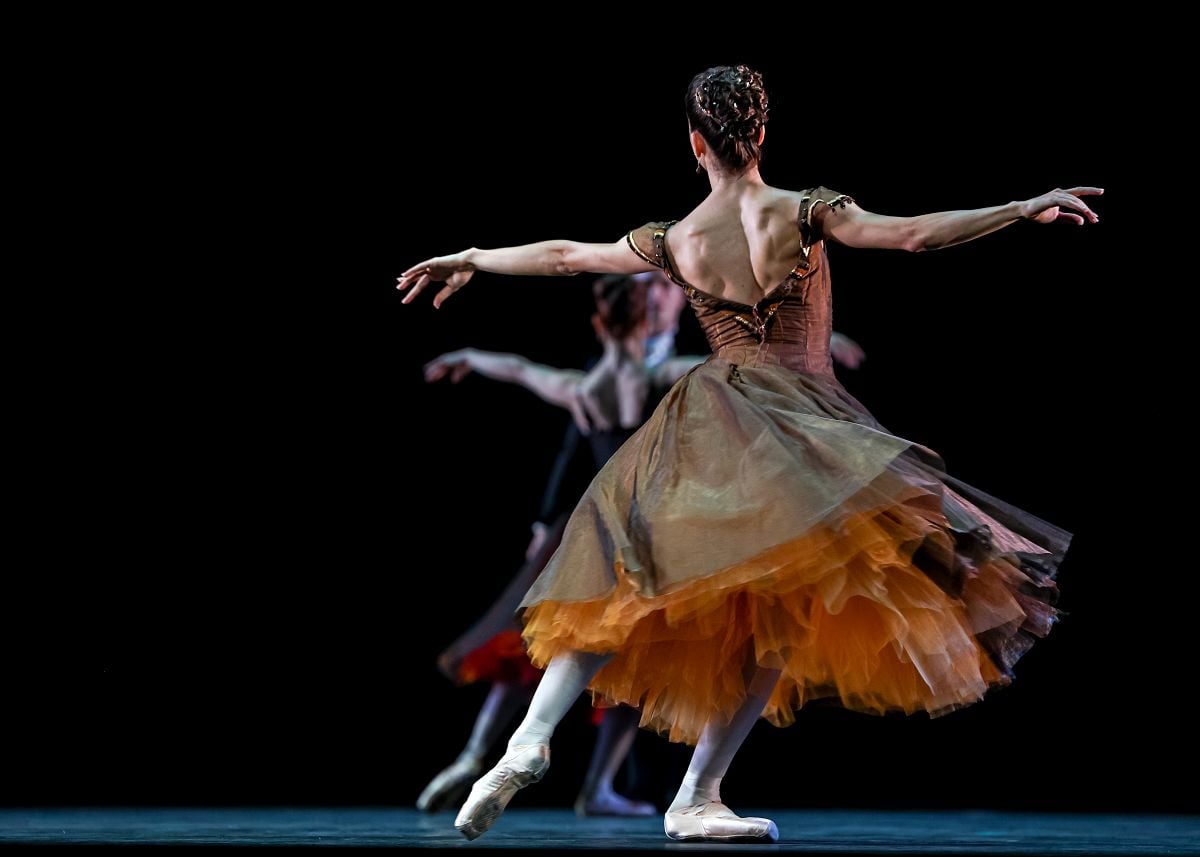
The programme opens with Jerome Robbins‘s In the Night, featuring three couples dancing against a backdrop of stars. Set to four of Frédéric Chopin’s Nocturnes (masterfully played by Kate Shipway), the couples find themselves at different points in their romances. The first couple, danced by Vadim Muntagirov and Fumi Kaneko, looking resplendent in lilac, had a gentle sweetness to their waltzing and sky-high developpés. As usual, Kaneko brought a staggering precision and control to her movements, and though Muntagirov was just as technically strong, his performance seemed reserved in comparison. Considering how ebullient Muntagirov can be, a little more would have gone a long way.
The second couple, Mayara Magri and Lukas B. Brændsrød, seemed to be more in lust than love. Magri, sultry with an exquisite port de bras, brought an Eastern, almost folkish, flair to the choreography, but Brændsrød made for an occasionally awkward partner, stiff and not quite meeting Magri at her level.
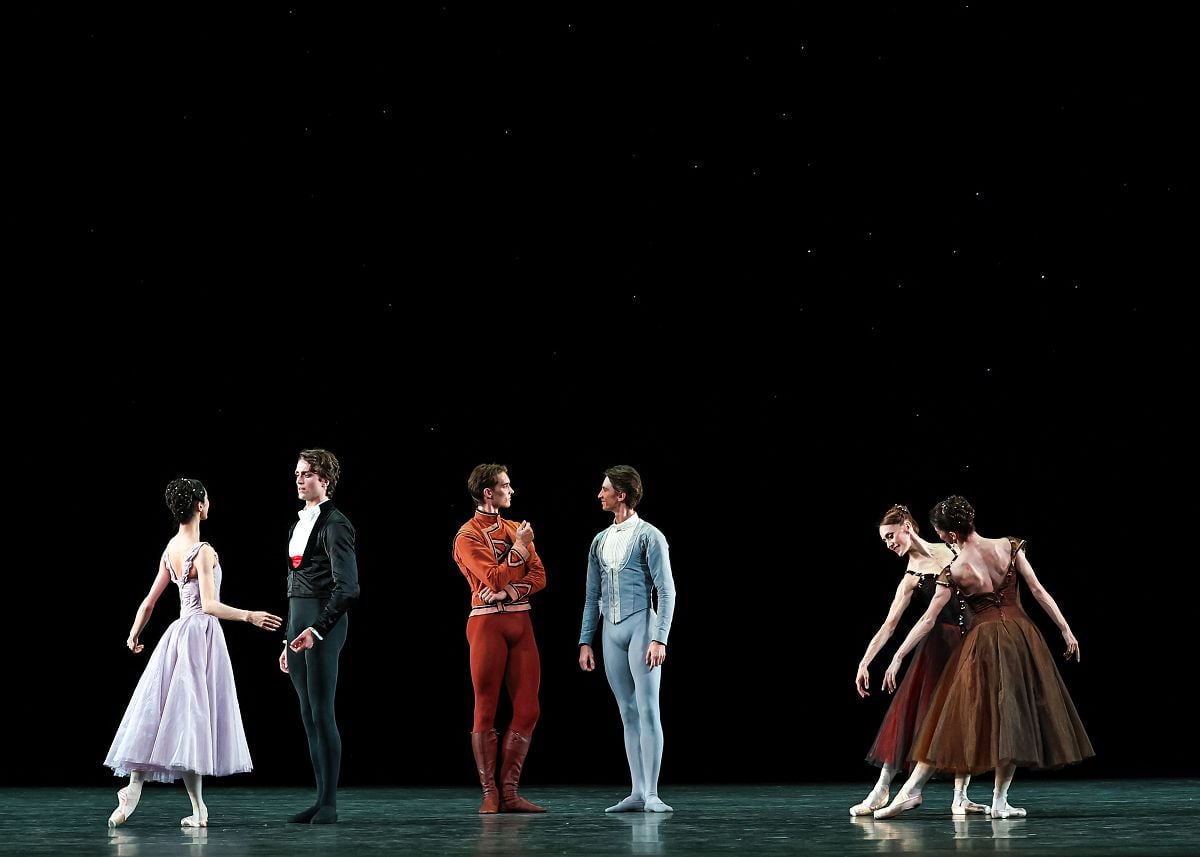
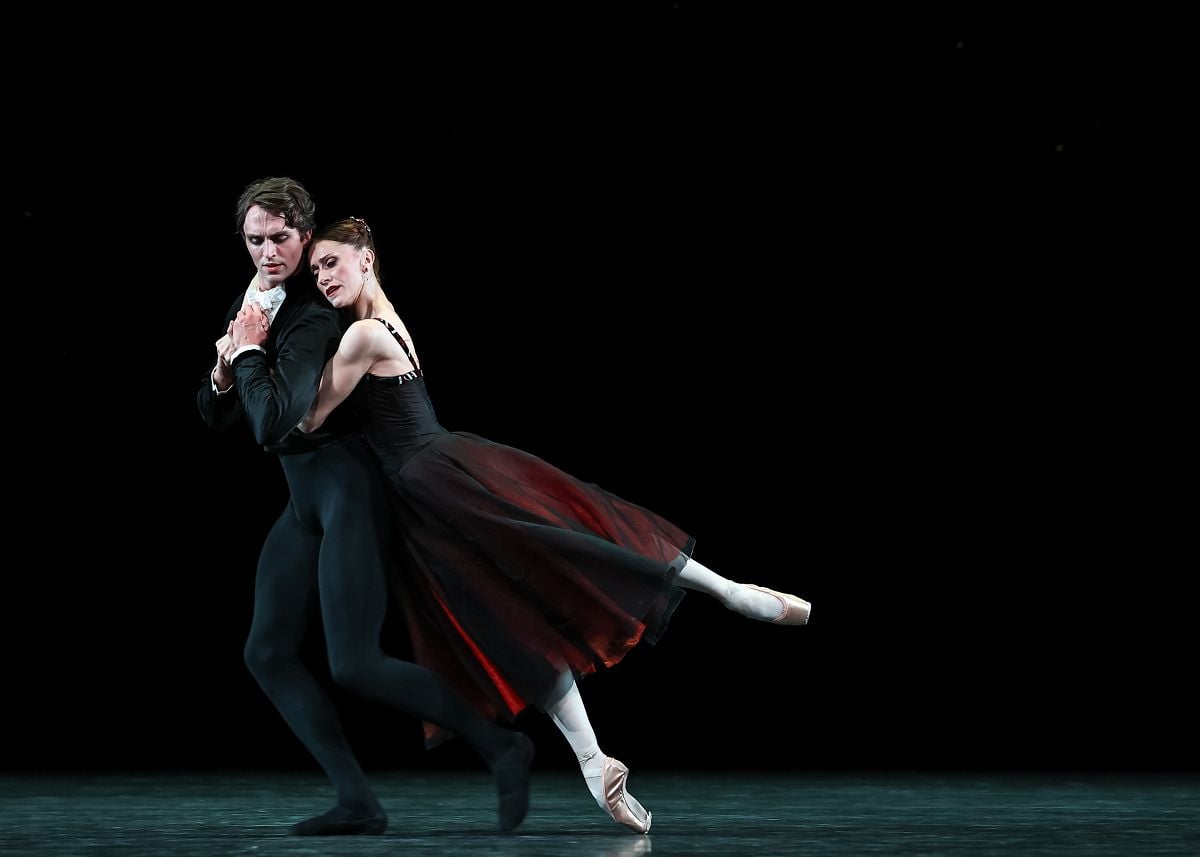
The final couple, the most torrid, were danced by Marianela Nuñez and Matthew Ball. In a Kitri-esque red and black ballgown, Nuñez went head-to-head with Ball, one of the Royal Ballet’s best cads. Their frenetic limbs writhing as they pushed and pulled away from each other, before reuniting, and parting again. There was a desperation to their unhealthy love, and the moment where Nuñez padded her hands down Ball’s frame until she was kneeling in front of him was so visceral it felt almost voyeuristic to watch. It’s fantastic.
At the ballet’s culmination when the three couples gather, there is a tension borne of uncomfortably forced cordiality, but it’s on Nuñez and Ball that your gaze remains fixed.
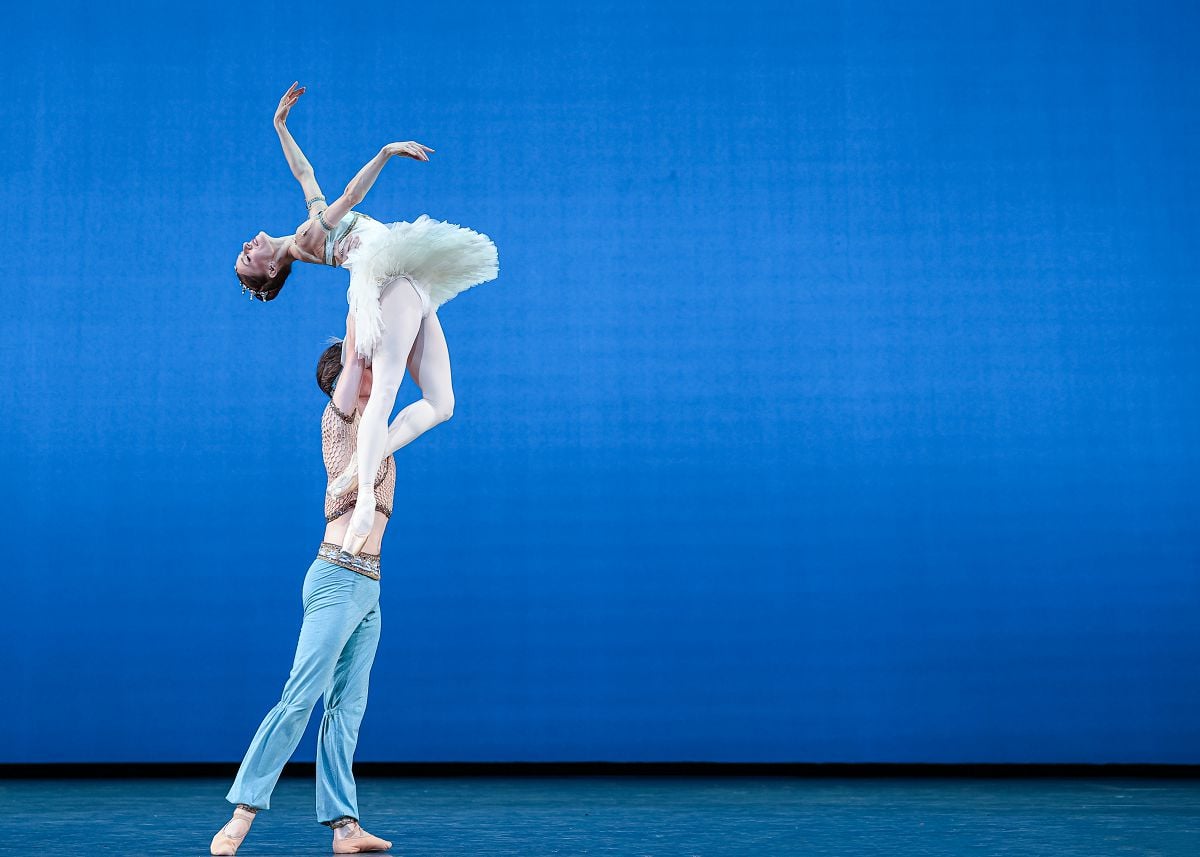

The second act of divertissements opened with the pas de deux from Le Corsaire. Watching Nuñez dance again with Vadim Muntagirov, a staple partnership of The Royal Ballet a few years ago, felt incredibly nostalgic. A true and stalwart classical partner, Muntagirov showcases Nuñez at her best, and their first pas de deux of sinuous limbs and deep arabesque penchés evoked the previous partnerships in The Sleeping Beauty and Swan Lake in the late 2010s. It’s Petipa at its purest.
Muntagirov’s Conrad variation, with breathtaking jetés and turns, was a masterclass in refinement and control with his breathtaking jetés and turns. Medora’s variation was conducted at an almost punishing pace, but Nuñez made light work of it, and the final coda was dizzying and brilliant. The ensuing applause must have broken some kind of sound barrier.
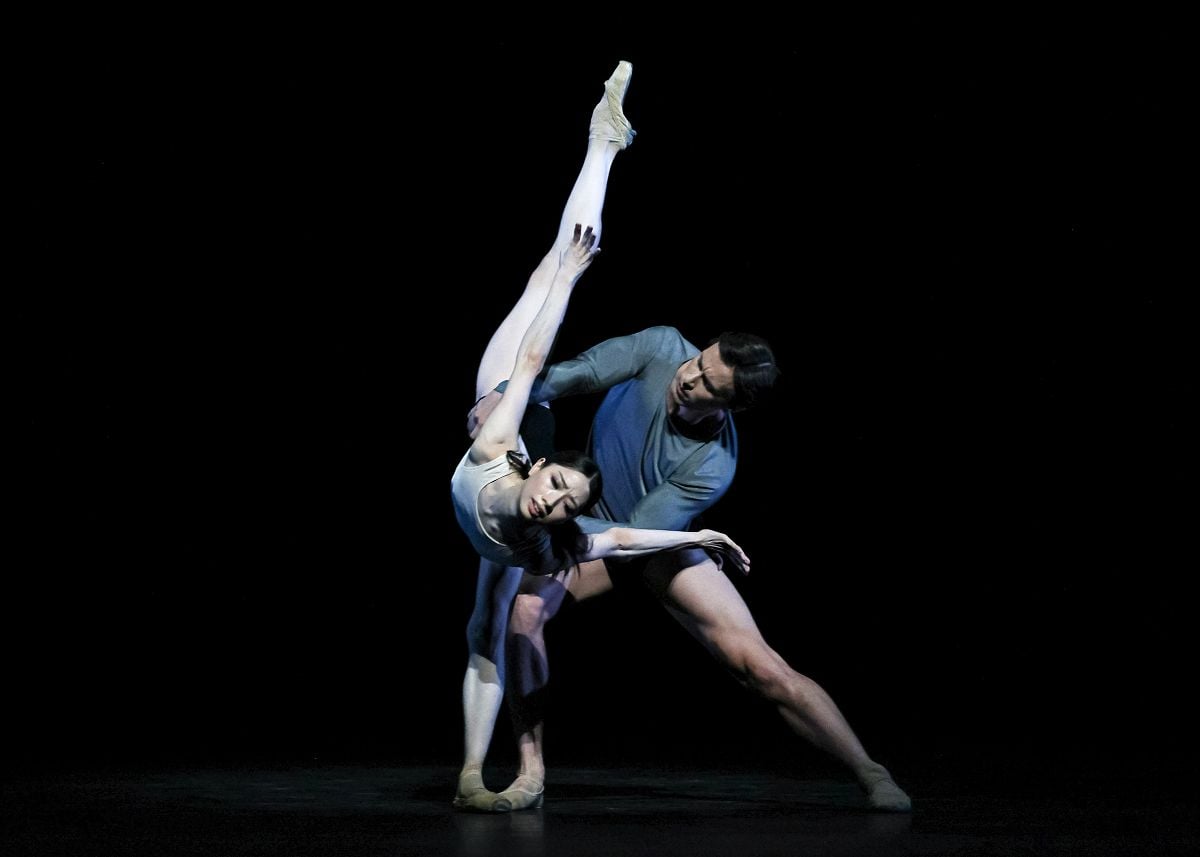
It’s a hard act to follow, and after such a high of classical mastery, immediately going into a dimly-lit pas de deux from Wayne McGregor’s Infra seemed to benefit neither the programme nor the dancers, Calvin Richardson and Akane Takada. Though the pair was both incredibly technically strong and demonstrated a great partnership, the very short runtime did seem like a lot of bother for Richardson and Takada, and not entirely worth skipping their well-earned Summer break for. For many ballet dancers, Summer is a season of Imperial-heavy galas, and though the inclusion of The Royal Ballet’s Associate Choreographers is welcome, it inevitably felt a little tonally dissonant.
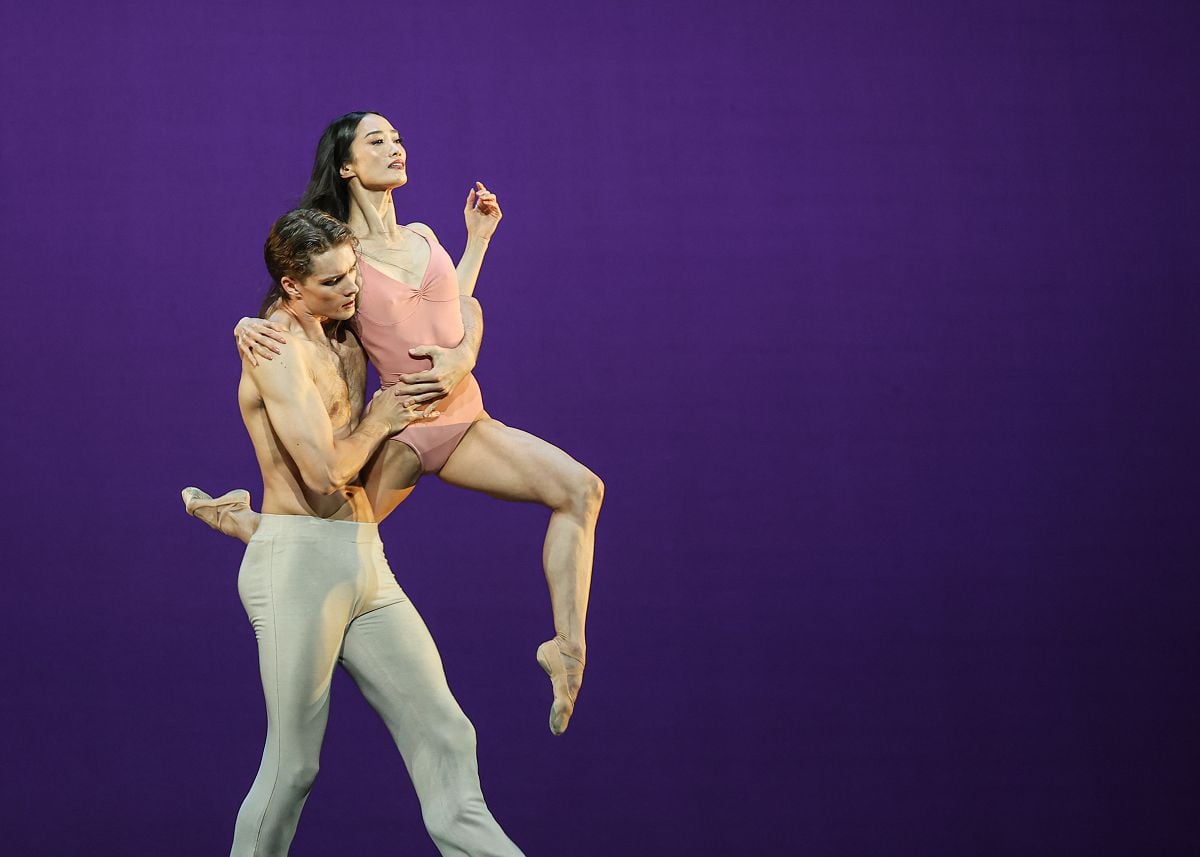

The same problem befell Christopher Wheeldon’s After the Rain danced by Fumi Kaneko and Lukas B. Brændsrød. Unlike Wheeldon’s other works like Alice’s Adventures in Wonderland and The Winter’s Tale, which, by necessity, have very clear-cut emotions, there is a weighty soulfulness to After the Rain that is contingent on being brought to life by two evocative dancers – an even bigger ask when sandwiched between two big crowd pleasers. Kaneko was the stronger of the two, but Brændsrød grew as the performance progressed, and his tender kiss to Kaneko’s forehead told a story in and of itself.
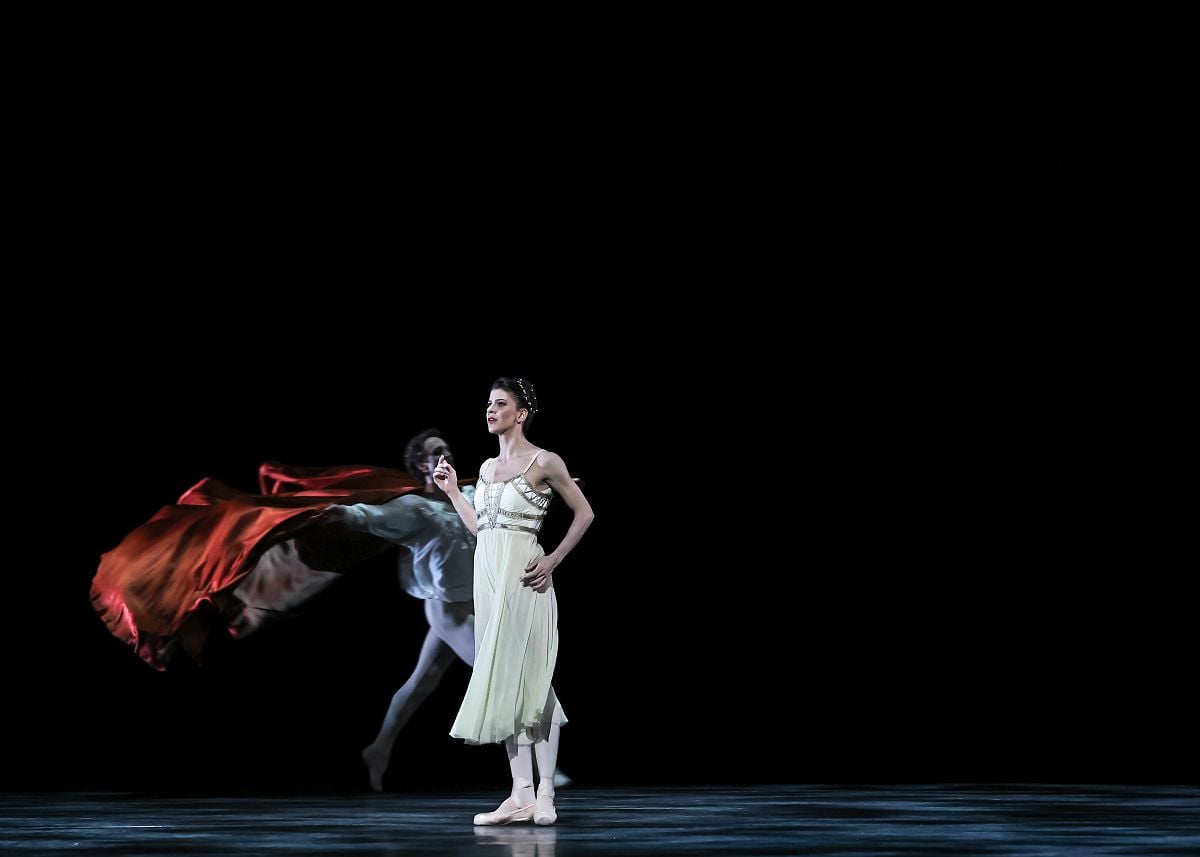
The divertissements also featured the balcony pas de deux from MacMillan’s Romeo and Juliet. Performed without a balcony, the choreography was modified to accommodate this change, and though the stage felt slightly awkward without it, it resulted in some of the best dancing of the night.
The beginning of this pas de deux is a masterclass in stillness, but never, as with Matthew Ball and Mayara Magri, have two bodies radiated more with excitement before they move. Considering what a paragon of strength Magri is, her ability to make herself look fragile, a delicate young girl exultant in the throes of love, is ballet at its absolute best. So too is Ball, bringing a technical excellence to his swooping turns and a swoon-worthy kiss to Magri’s skirts. Their partnership is one of the best in the company; they’re like magnets, instinctively drawn to each other.
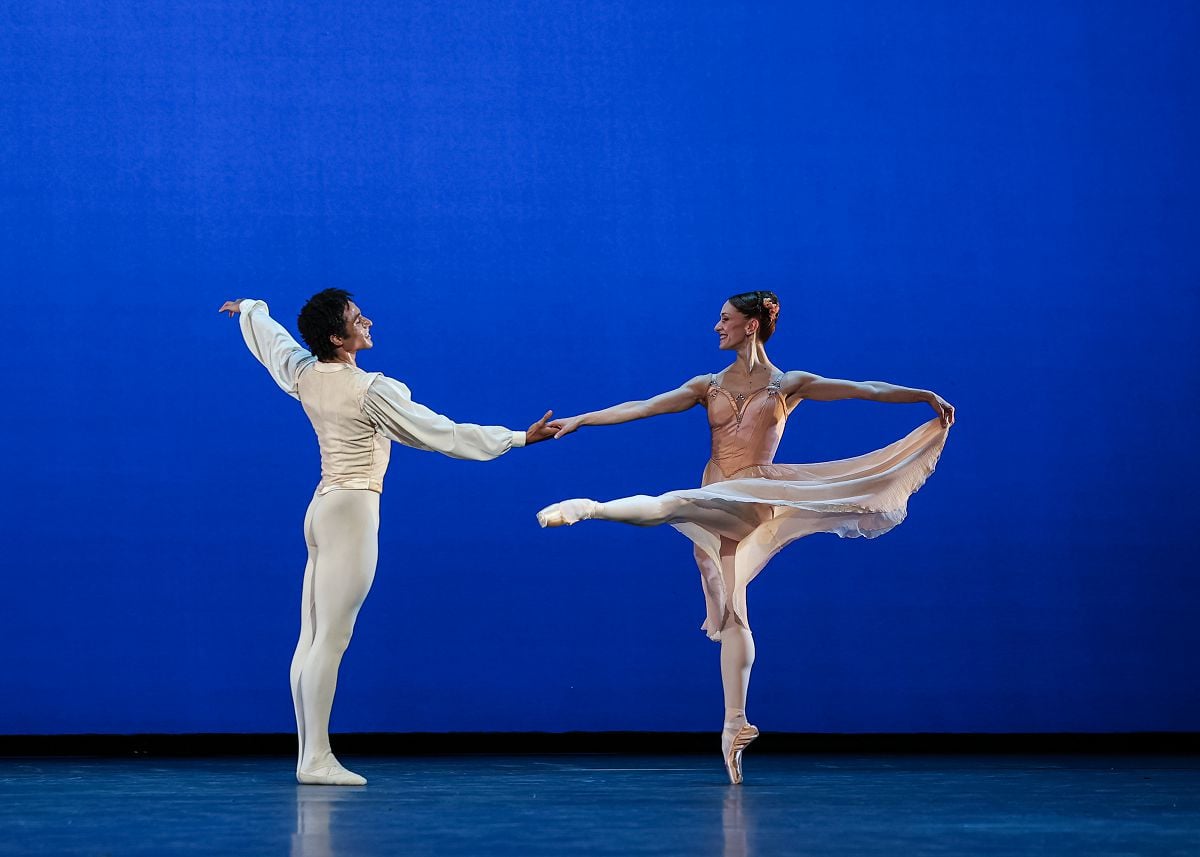
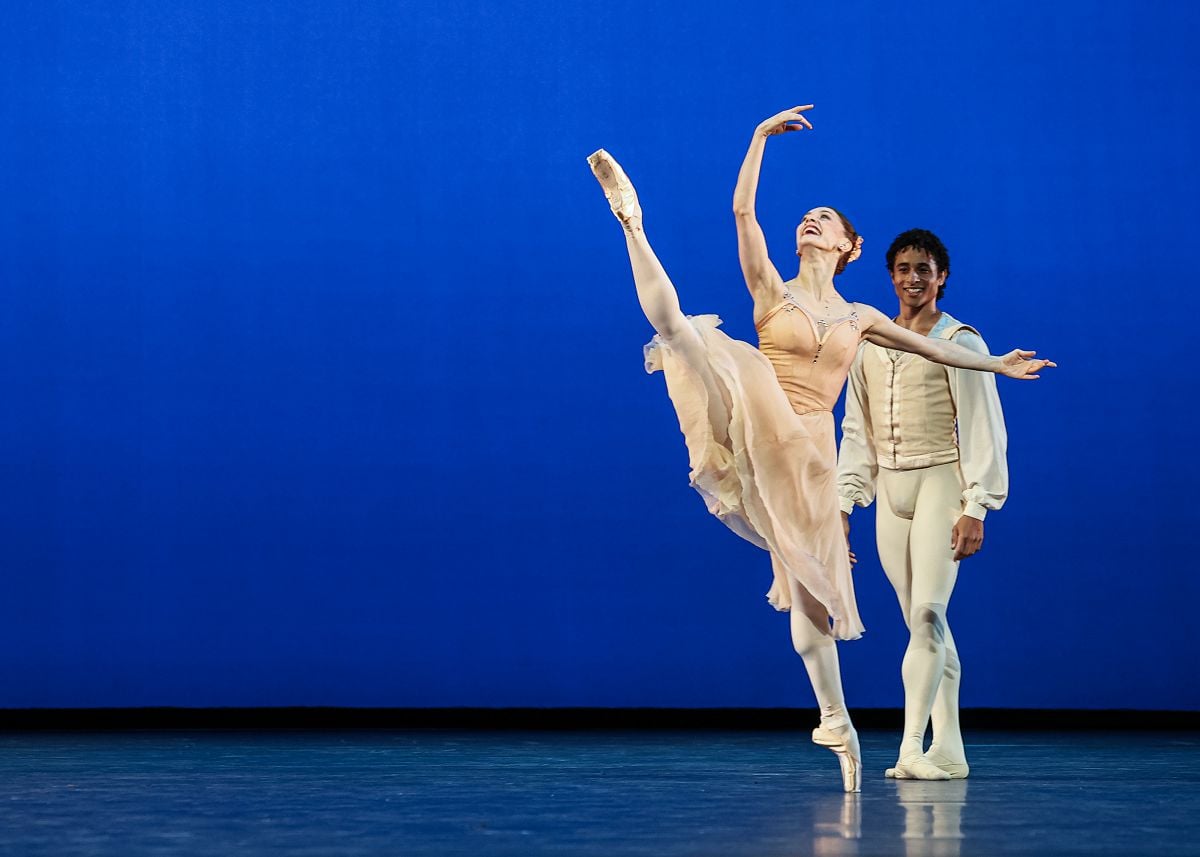

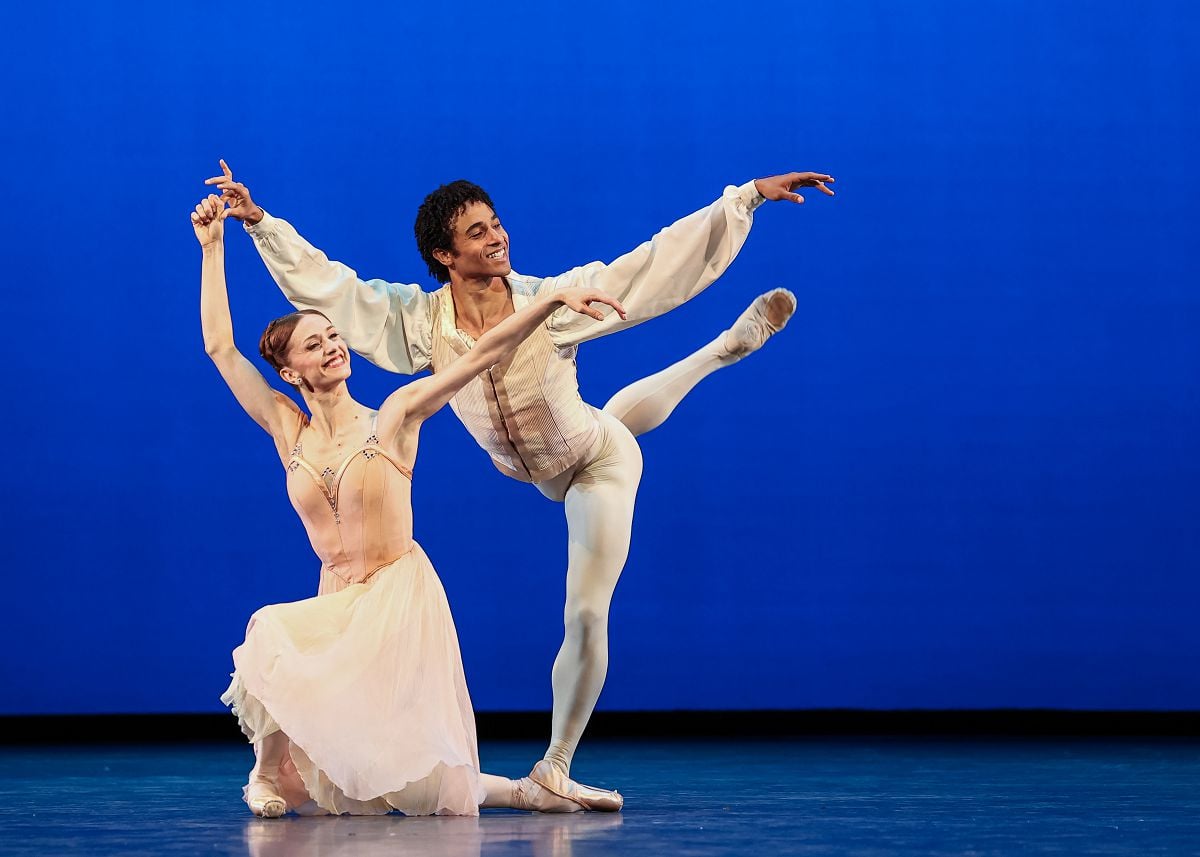
The final divertissement was Balanchine’s Tchaikovsky Pas de Deux performed by Nuñez and the latest jewel in The Royal Ballet’s crown, Patricio Revé. And Revé is a jewel; he has a bijoux quality – the power of his smile alone illuminates Nuñez. Their respective solos were equal parts masterclass in control and exuberance. Their pas de deux was adept and confident – they already look as if they’ve been dancing together for years. However, as technically strong as the dancing was, its quality was ineffably more Imperial than Balanchine.
The evening culminated in a performance of Frederick Ashton‘s Marguerite and Armand. A drama of an ageing courtesan and her young lover, it is often a farewell piece for retiring dancers.


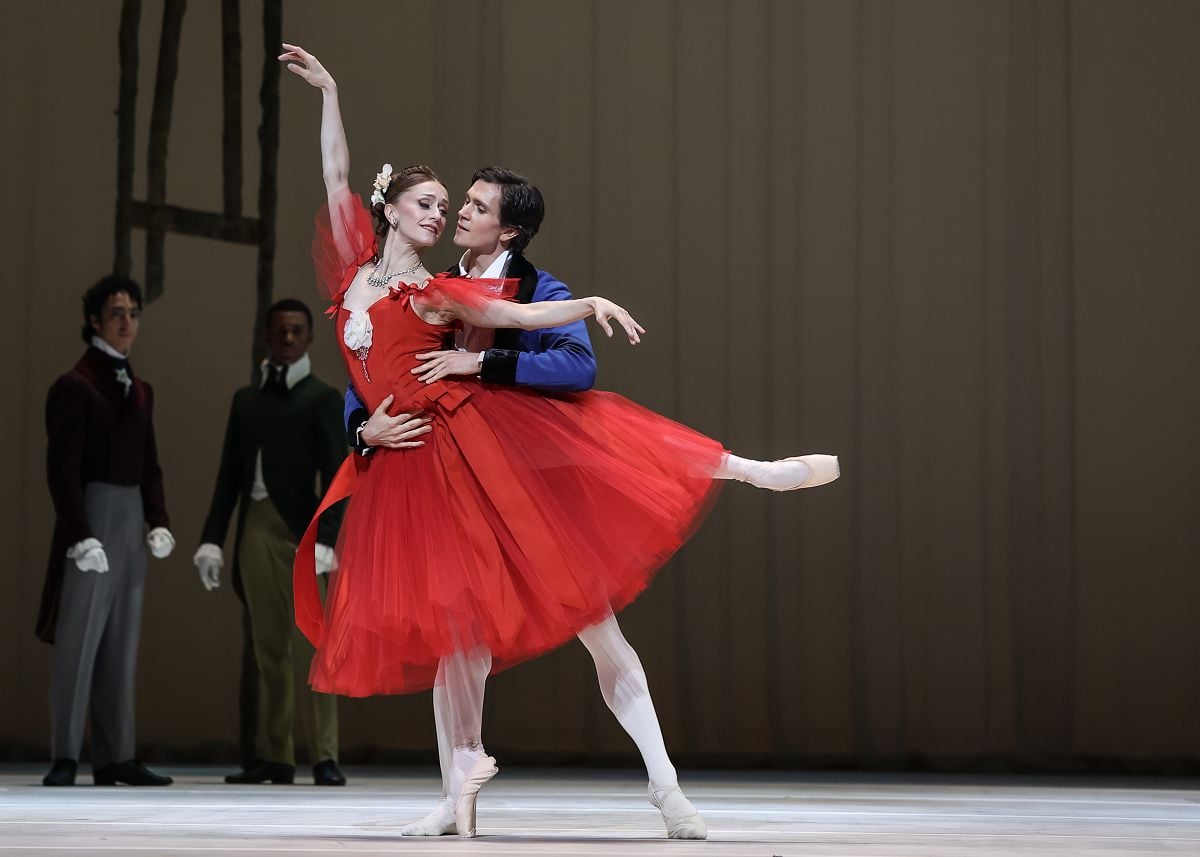
Nuñez danced the role back in 2018 opposite Vadim Muntagirov, but for this revival, she chose William Bracewell as her Armand. Bracewell, a rare dancer who matches technical precision with a rich depth of interiority, is an intriguing departure from conventional casting. Originated by Rudolf Nureyev, the role is usually played by more technically brash dancers with a slight enfant terrible quality.
On paper, this slightly unconventional casting makes sense. Marguerite and Armand is a ballet which enables the pair to relive the highlights of their partnership so far, a midpoint between the giddy devotion of Romeo and Juliet and the mournful coldness of Giselle. Unfortunately, Marguerite and Armand didn’t land in the same way as either of those ballets, but the problem does not lie with Nuñez or Bracewell; it lies with Frederick Ashton.


Whilst it would be imprudent to suggest that Ashton is not capable of great emotion within his ballets, his balletic legacy is not that of emotional heft – his most enduring ballets are the plotless, the frothy, and the lighthearted. Enigma Variations, La Fille Mal Gardée, and The Dream rightfully have their places in The Royal Ballet canon, but Ondine hasn’t been revived in nearly twenty years. Eight years have elapsed since Marguerite and Armand was last revived, but this performance failed to provide a compelling case that it’s been missed.
Marguerite and Armand is awkward, and occasionally quite ugly, unaided by some of the more Ashtonian indulgences – awkward hops and frenzied, unrhythmic footwork. It’s at its best when it’s at its most classical, and though there were some really strong dramatic moments – the sheer violence of Bracewell throwing money at Nuñez, and her strange, doll-like hobble after his rejection – it’s little more than a shade of their more substantial partnerings. I know that Marguerite and Armand premiered before Romeo and Juliet, but it seemed cruel to make Bracewell charge about the stage in a cape.


The entire cast gave it their absolute best. Christopher Saunders brought a suitable menace to the role of Armand’s Father, and Aiden O’Brien was fantastic as the smarmy Duke. As a Cecil Beaton devotee, I thought the portraits that were projected at the start of the ballet were incredibly convincing replicas.
In the final portrait of Marguerite and Armand, Nuñez’s resemblance to Margot Fonteyn was almost uncanny. However, don’t be mistaken – there is no place for the Royal Ballet’s Prima Ballerina Assoluta here. It is Nuñez’s night and her night alone.

Lily Hyde is a cultural and dance writer based in London. Her writing has appeared in The Fence and The Creative Independent, and she runs the cultural newsletter, Falling Upwards. She is currently writing her first novel.