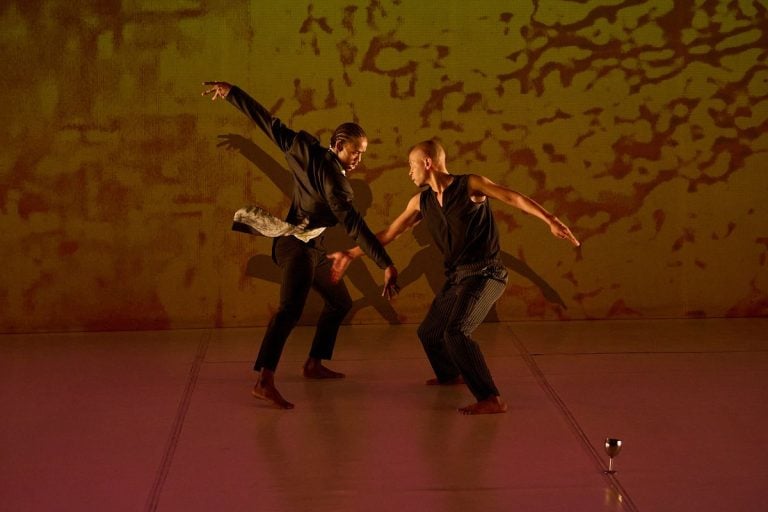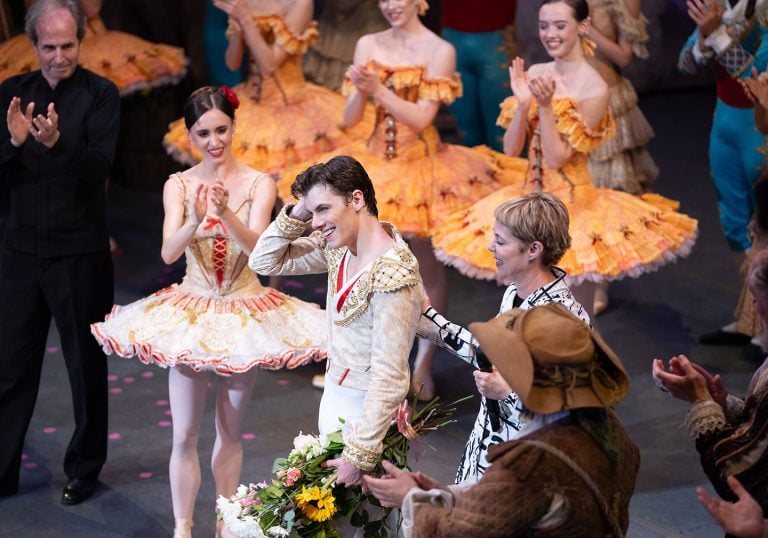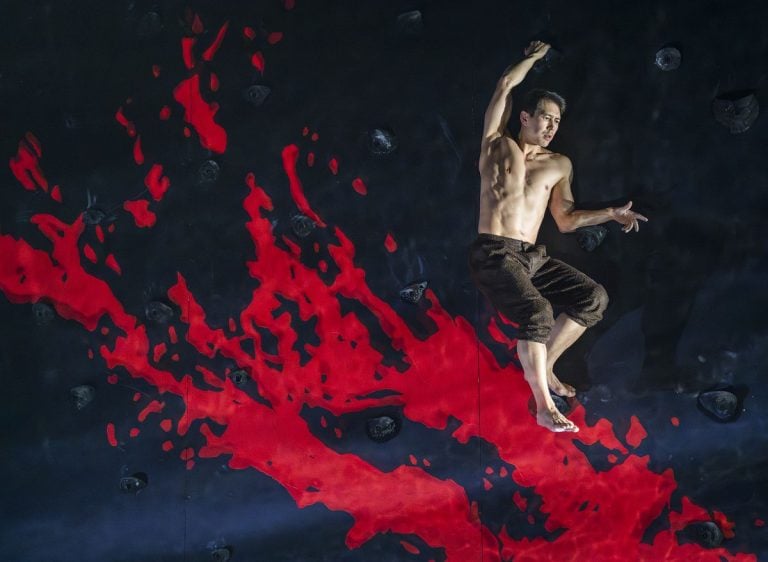
Misty Copeland and Stevie Wonder receive the Peabody Medal for Outstanding Contributions to Music and Dance
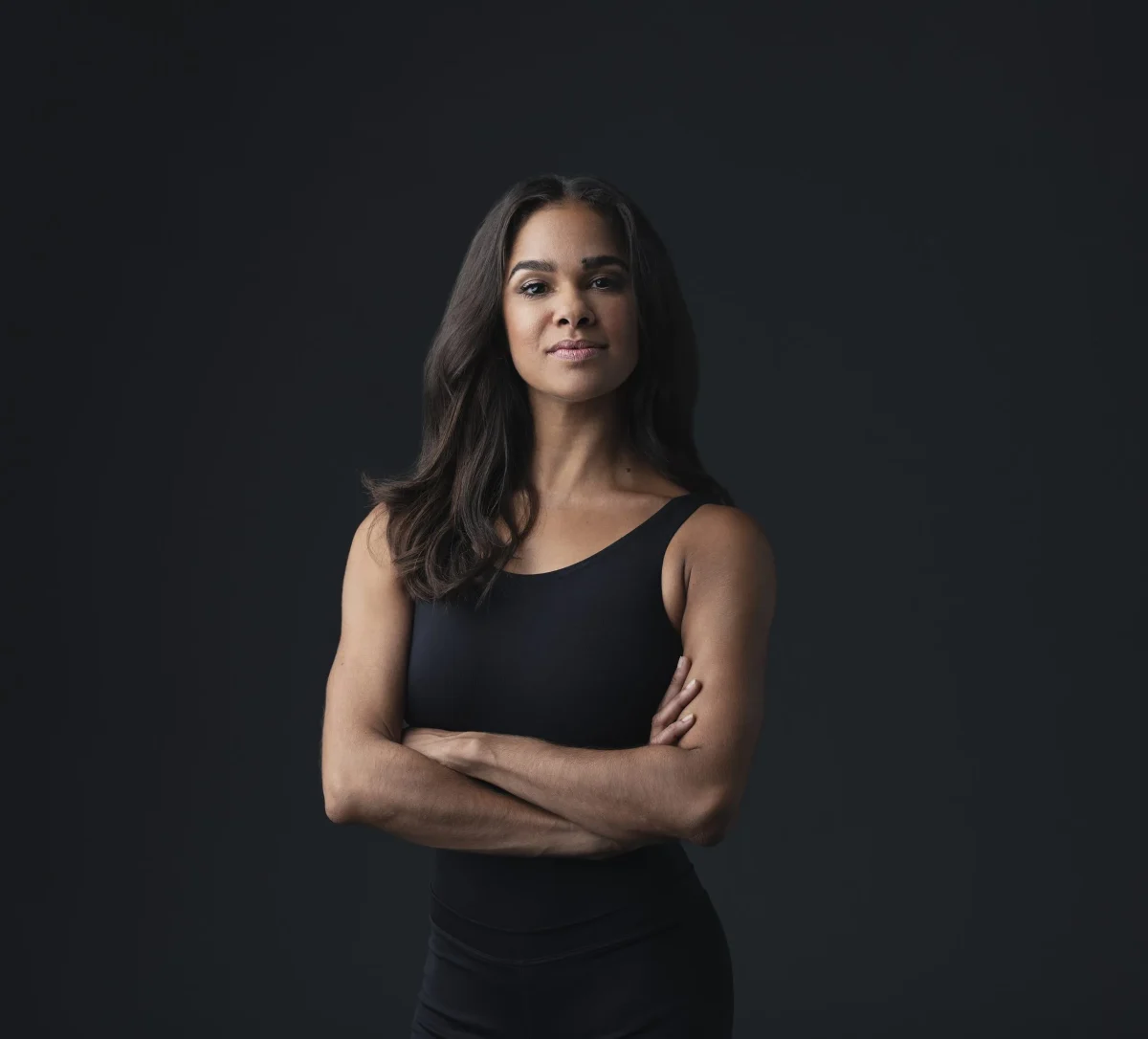
Stevie Wonder and Misty Copeland will deliver addresses for the Peabody Conservatory‘s 2024 Graduation ceremonies on Wednesday 22 May and receive the George Peabody Medal for Outstanding Contributions to Music and Dance in America.
Copeland, the first African American woman to become a principal dancer in the American Ballet Theatre‘s 75-year history, will address undergraduates at the morning ceremony; Wonder, one of the bestselling music artists of all time, will speak at the afternoon ceremony for graduate students.
Both will receive the George Peabody Medal for Outstanding Contributions to Music and Dance in America, the highest honour bestowed by the Peabody Institute, presented annually since 1980. In addition, Johns Hopkins University will present an honorary doctorate to Stevie Wonder at its Universitywide Commencement ceremony on Thursday 23 May.
Peabody Dean Fred Bronstein said,
Stevie Wonder and Misty Copeland have dedicated their lives to making art and to lifting up others through music and dance, inspiring audiences and setting powerful examples for generations of younger performers. I cannot imagine two more fitting speakers to send our graduating student artists out into the world to make their own impact.
Misty Copeland
Misty Copeland has broken new ground throughout her career, as the first African American woman to be promoted to principal dancer at the American Ballet Theatre, and as an inspiration to many through her remarkable talent as well as her courage in breaking barriers — making her the perfect choice as the first dancer to receive the Peabody Medal. She is that rare artist whose name transcends their discipline. By excelling as a Black woman in ballet, she has led change in the art form, and inspired countless younger dancers, performers, athletes, and audience members — in the process, elevating the power and relevance of dance as a medium for expression.
Born in Kansas City, Missouri, and raised in San Pedro, California, Misty Copeland began her ballet studies at the late age of 13. After studying at the San Francisco Ballet School and American Ballet Theatre’s Summer Intensive, she joined American Ballet Theatre as a member of the corps de ballet in 2001, and in 2007 became the company’s second African American female soloist and the first in two decades. In 2015, Copeland was the first African American woman to ever be promoted to principal dancer with the company. Performing a variety of classical and contemporary roles, one of her most important was the title role in Firebird, created on her in 2012 with new choreography by sought-after choreographer Alexei Ratmansky. She also made history as the first Black woman to perform the lead role of Odette/Odile in ABT’s Swan Lake during the company’s inaugural tour to Australia. In 2022, she launched The Misty Copeland Foundation, a nonprofit focused on advancing diversity, equity, and inclusion in ballet and pursuing social justice through arts activism, with an after-school program called BE BOLD that aims to make introductory ballet accessible and affordable. She is the author of the New York Times bestselling memoir, Life in Motion, and a picture book titled Firebird. She has been honoured with the Leonore Annenberg Fellowship in the Arts, Time Magazine’s 100 Most Influential People, Glamour’s Women of the Year, Black Girls Rock! Awards, and honorary doctorates from the University of Hartford and New York University, among other awards.
Stevie Wonder
By any measure, Stevie Wonder has been one of the most influential artists of his time, a remarkable artistic personality born of Motown but destined to exceed what even that juggernaut has meant to the world of music. At the same time, he has been a leading voice in important social and civic causes, connecting his art with social justice to create a legacy of activism closely intertwined with his truly outsized impact in music.
xxxxxxxxxxxxxx
A child prodigy who reached No. 1 on the charts when he was 13 years old, singer, songwriter, multi-instrumentalist, and record producer Stevie Wonder has won 25 Grammy Awards and the Grammy Lifetime Achievement Award, as well as a Presidential Medal of Freedom, the Kennedy Center Honors, and countless other honors. His long list of hit singles includes more than 30 U.S. top-ten hits and stretches from “Superstition” to “For Once in My Life” to “I Just Called to Say I Love You;” his star-powered collaborations from “Ebony and Ivory” (with Paul McCartney) to the AIDS charity single “That’s What Friends are For” (with Dionne Warwick, Elton John, and Gladys Knight). Released in 1976, his Songs in the Key of Life was the first album by an American artist to debut at No. 1 on the Billboard charts. Synthesizing elements of pop, R&B, soul, jazz, funk, and gospel into his own signature and ever-evolving style, he was a pioneer in the use of electronic instruments and technologies that changed the sound of popular music. Wonder accepted his 1985 Academy Award for best original song in the name of Nelson Mandela, and his lyrics, appearances, and activism helped to advance civil rights in America and racial justice around the world; the song “Happy Birthday” propelled his successful campaigning to establish Martin Luther King Jr.’s birthday as a national holiday. He has also been a longtime advocate for improving services for the blind and those with disabilities and was named a United Nations Messenger of Peace in 2009.
Copeland and Wonder join a roster of previous George Peabody Medal winners that includes Terence Blanchard, Herbie Hancock, Renée Fleming, Tori Amos, Leon Fleisher, Yo-Yo Ma, Jessye Norman, Pete Seeger, Quincy Jones, Wynton Marsalis, Marilyn Horne, André Watts, Ella Fitzgerald, and Leonard Bernstein. Copeland will be the first dancer to receive the George Peabody Medal; the Peabody Institute’s long history of dance training at the Preparatory level was extended to include a Bachelor of Fine Arts in Dance in 2018, an interdisciplinary and innovation-driven program that prepares students to lead as dancers, choreographers, and citizen artists.
Peabody Institute of the Johns Hopkins University
The Peabody Institute of the Johns Hopkins University advances a dynamic, 21st-century model of the performing arts, building on its rich history of innovation and leadership as the first conservatory in the United States. Comprising both a Conservatory for undergraduate and graduate studies and the Preparatory, Baltimore’s largest community performing arts school, Peabody empowers musicians and dancers from diverse backgrounds to create and perform at the highest level.
Courses of study range from classical and jazz performance, ballet, and modern dance to cutting-edge programs in acoustics, recording arts and sciences, and music for new media, taught alongside the Conservatory’s signature Breakthrough Curriculum, a career development framework that prepares citizen-artists to help shape the future of the field and serve their communities.
A division of Johns Hopkins, one of the world’s preeminent research universities and medical institutions, Peabody provides opportunities for interdisciplinary studies through its dual degree program and important initiatives in both arts in healthcare and clinical care for performing artists. A leading voice at the intersection of art and education, Peabody is also a convener of critical discourse, providing platforms for a broad range of artistic perspectives to engage with current issues and critical ideas in the cultural sector. To learn more about the Peabody Institute, visit peabody.jhu.edu.

Graham Spicer, aka ‘Gramilano’, is a writer, director and photographer based in Milan. He was a regular columnist for Opera Now magazine and wrote for the BBC until transferring to Italy. His articles have appeared in various publications from Woman’s Weekly to Gay Times, and he wrote the Danza in Italia column for Dancing Times magazine. Graham was the historical advisor on Codice Carla, the 2023 documentary on Italian ballerina Carla Fracci.
Graham also works as a dance photographer, and his photos have appeared in many books, theatre programmes, and magazines, including Dancing Times, Dance Spirit and Ballet2000, as well as all the major Italian newspapers.
He is a member of the Dance Section of The Critics’ Circle.