[Review] London’s Flamenco Festival 2024 – Week 1

Graham Watts sees three performances at London’s Flamenco Festival 2024 with Rocío Molina, Alfonso Losa & Patricia Guerrero, and Eva Yerbabuena
| Title | Al Fondo Riela (Lo Otro del Uno) Alter Ego Yerbagüena – Oscuro Brilliante (bright dark) |
| Company | Flamenco Festival |
| Venue | Sadler’s Wells, London |
| Date | 4, 6, 7 June 2024 |
| Reviewer | Graham Watts |
Another day, another Olé! And given that these scintillating performances were led by three of the world’s greatest flamenco bailaoras those regular shouts of encouragement from the audience also included the occasional “guapa”!
The Flamenco Festival – masterminded by artistic director, Miguel Marin – has been a significant highlight in the London dance calendar for over 20 years, interrupted only by the pandemic (as was everything else). It has left it’s mark on most of us, but not yet everyone: “I see they’ve got that flamingo over there”, said a regular at the pub across the road from Sadler’s Wells!
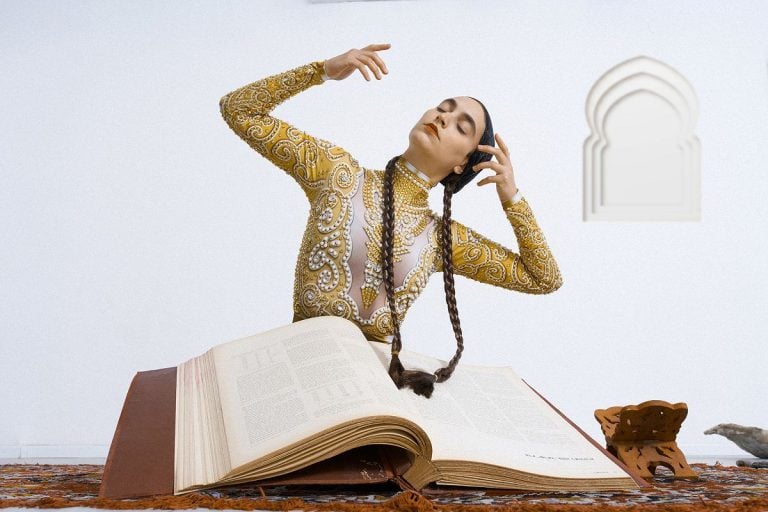
While Marin has left the flamingos to roost, he regularly attracts the very best from the precious artform of flamenco. The first four days of this year’s Festival were a cavalcade of excellence, opening with another episode from Rocío Molina‘s groundbreaking modernisation of flamenco, albeit mixed with an unbridled respect for tradition, in Al Fondo Riela (Lo Otro del Uno); and after a day’s interruption to dance-led flamenco in a magnificent concert by the leading guitarist, Vincente Amigo (Memoria de los Sentidos), Patricia Guerrero performed alongside Alfonso Losa in an impressive new work, Alter Ego, which has been developed from studio improvisations during artistic residencies in Madrid and Málaga; and then onto the legendary bailaora Eva Yerbabuena, headlining Yerbagüena, her nineteenth theatrical show.
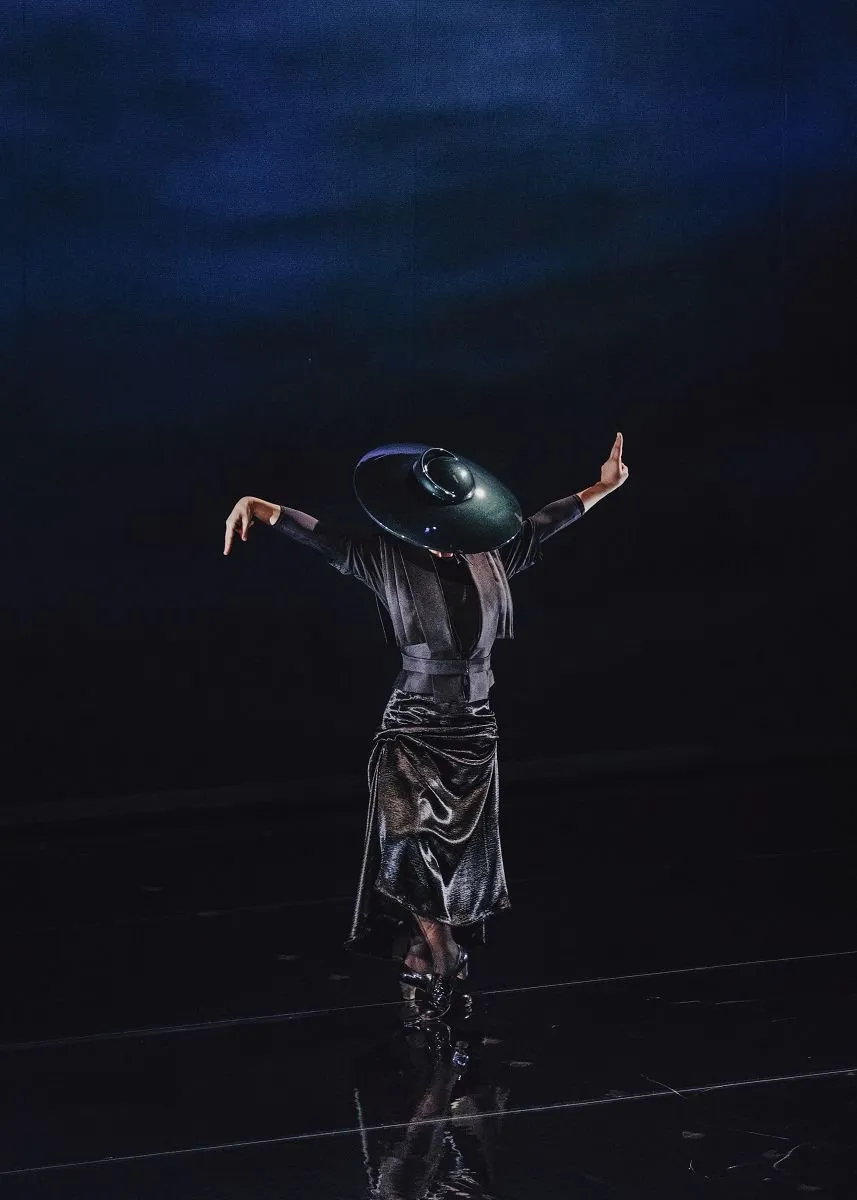


Al Fondo Riela (Lo Otro de Uno) means Shimmering in the Background (The Other of One) and is the second part of Molina’s intended Trilogía sobre la guitarra (Trilogy about the guitar), following on from Inicio (Uno). Both of these first two parts received their world premieres at Sevilla’s 21st Bienal de Flamenco, in Autumn 2020. Whereas Inicio (Uno) was a dialogue between Molina and Rafael Riqueni, one of the great virtuoso guitarists of the age, Al Fondo Riela (Lo Otro de Uno) ups the ante by doubling up on the guitar. Óscar Lago and Fran Vinuesa have replaced the original Bienal pair of Eduardo Trassierra and Yerai Cortés, who are also the composers, providing a series of flamenco dialogues with Molina whilst also performing their own solos and duets to give the bailaora time to change her outlandish outfits. The final part of the trilogy will mix guitar and dance with vocals, thus completing the traditional cocktail of flamenco arts.
Molina has chosen a dark setting and a reflective stage floor for this work, suggesting the atmosphere of a cavernous underground pool of black water where crystalline shards of light flit across inky surfaces. Her initial movement – in silence – concentrated on just twisting and stretching wrists and hands without any footwork, embodying the compas (rhythm) by slapping her body. Later, in her conversations with the two guitarists, Molina developed controlled footwork and repetitive but gentle body spins, leading to faster, locomotive feet and deep backbends.
Her costumes are extraordinary, including a large-rimmed, shiny black hat that covered her face, and, in the final section, a whole-body, tunic-and-trousers suit complete with matching gloves, shoes and full-face mask, a bit like spiderman but incongruously floral in an orange-and-black pattern. As the show reached its climax, Molina peeled off the gloves and mask. These contemporary costume designs (by Julia Valencia) came either side of a more traditional and funereal bata de cola (the flamenco dress with a long train) which – unusually – had a patch of material cut from under her arms. Also incongruous were the knee-length grey socks worn under the dress although I was advised that this was the traditional gitano (gypsy) form of dress back in the day.
Molina is one of those extremely rare artists, in any genre, that has the capability to be compelling in whatever she does, a capacity that enables her time and again to step outside the box and enter into artistic relationships that inspire her to push against convention, challenging both herself and her audience. Al Fondo Riela (Lo Otro de Uno) successfully stretches these boundaries yet again.


Coincidentally, as at the 21st Bienal de Flamenco, Molina was followed by Patricia Guerrero, another outstanding bailaora who – at 34 – is fast developing into one of flamenco’s elite performers (having already achieved two Giradillos, the Bienal awards). Here, in Alter Ego, she both competed and coordinated with Alfonso Losa in an arresting journey that also included the impressive vocals of Sandra Carrasco and Manuel ‘Niño de Gines’ together with the guitarist, Francisco Vinuesa.
The show opened in silence with the five performers prowling a bare stage equipped with just four chairs, positioned as if in the quartiles of a square rather than the traditional line facing the audience. Each performer took it in turns to sit, either facing, or facing away from, the audience. Losa was the first to dance, reacting to an impassioned and harmonious Soleá de Triana sung by ‘Niño de Gines’, moving at first with a deliberate and controlled caution, gradually increasing the veracity with fast, repeated diagonal turns, moving as if his body has become a dynamic human corkscrew. Guerrero followed, matching Losa’s exciting energy but in a very different way, less expansive with controlled fast zapateado (footwork) but with almost imperceptible movement between each tap. The world record for percussive foot taps is over 1,000 per minute. I don’t know how close Guerrero gets to that speed, but it seemed an Olympian achievement to me.
An Alter Ego is a person’s secondary or alternative personality and the title suggests that Losa and Guerrero are the other sides to each other. This is also borne out by the schools that their flamenco styles represent: Losa being the leading exponent of the Amor de Dios schooling of Madrid, contrasted with the Andalucian roots in Guerrero’s shaping of flamenco (Guerrero has recently become the director of the Ballet Flamenco de Andalucía, the company in which she danced before embarking on a solo career). Their respective solos in Alter Ego are an impressive score draw but it is when they come together in synthesised duets, partnering in a way rarely seen in flamenco, that their two-in-one power becomes utterly compelling.
It would be wrong, however, to suggest that Alter Ego is just about the dance since the vocal accompaniment is equally extraordinary. My rudimentary Spanish picked out frequent references to love (amor) and the heart (el corazón), which made the overarching passion of the work abundantly clear. Ángeles Toledano and Ismael ‘El Bola’ sang when this show achieved the rare distinction of winning both the audience and critics’ awards at last year’s Festival de Jerez. I have no comparison but both ‘Niño de Gines’ and Sandra Carrasco were superb at Sadler’s Wells. Carrasco has a particularly rich vocal range and is able to mix a velvety and sensitive lyricism with the deep passion and intensity of traditional flamenco song. Although she developed her voice through flamenco, Carrasco has crossed over into other genres, including tango, bossa nova and pop.

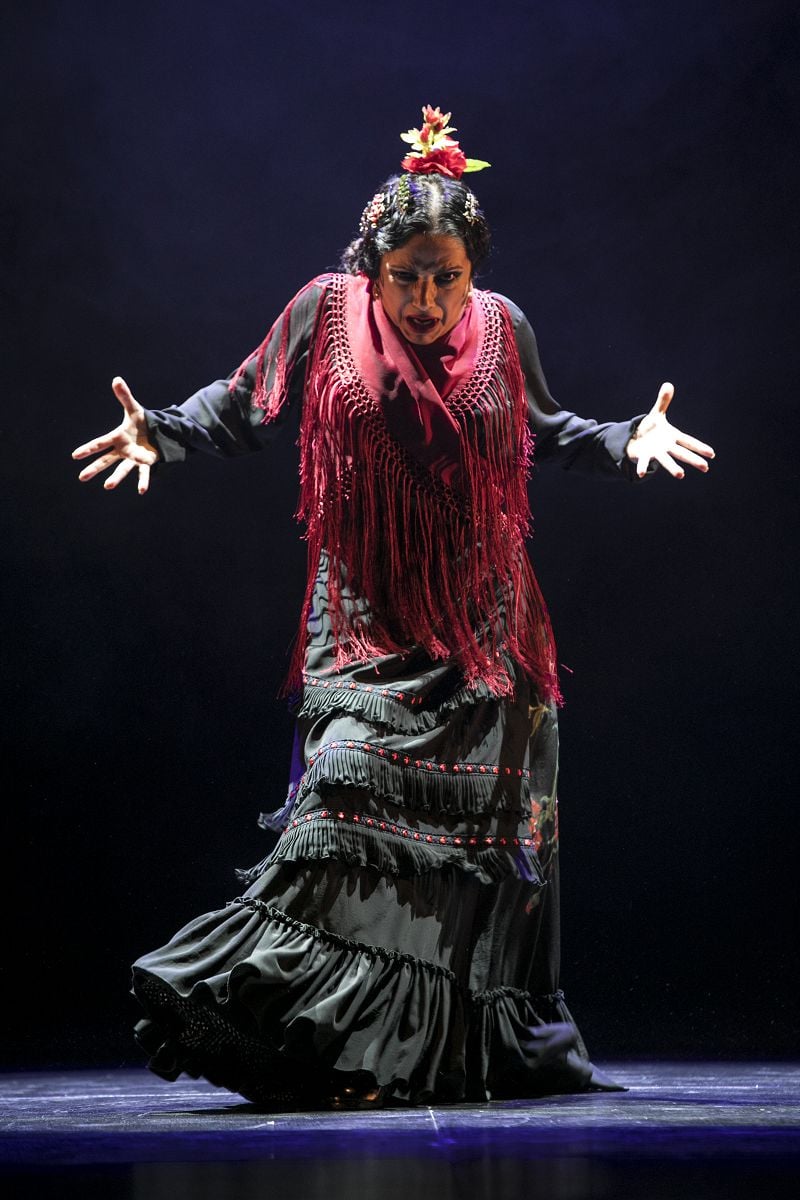
Eva Yerbabuena took centre stage the following night in a show with a title that seems almost autobiographical, Yerbagüena, sub-titled Oscuro Brilliante (Bright Dark). The show is a reflection on the last two decades of her extraordinary career during which she has consistently worked with her husband (and musical director), the guitarist, Paco Jarana.
In Yerbagüena, the star bailaora is a lone woman amongst an entourage of men that comprised her husband, four singers, a percussionist and a dancer. Its an unusual mix and the singers – a cross between an ageing flamenco boy band and the three tenors (plus one) – were a kind of vocal relay team, one voice in the spotlight handing over to the next in a cascade of emotional singing. The quartet comprised Segundo Falcon, Antonio “El Turry” and Miguel Ortega while ‘Niño de Gines’ returned for double duty.
At 53, Yerbabuena is a dancer of immense vitality, tempered by more than 30 years of professional experience. She showed great skill in her simultaneous manipulation of both the mantón (long-fringed large shawl) and bata de cola, consistently kicking the long train of her reflective dark (blue/green?) dress away from her feet while swirling the shawl around her body like a matador’s cape; always finishing sequences in attractive positions with the train elegantly draped around her unseen feet.
However, despite this versatility and her undiminished skills, I found this to be the weakest of these three opening shows, both in terms of structure and choreography. While there was a memorable image of the skirt-wearing male dancer, Christian Lozano, dragging Yerbabuena across the floor as if a drowned woman just rescued from the sea, repetitively hoisted up to a seated position before collapsing again, he hardly appeared again. It seemed but a rather fleeting cameo.
Each of these three shows followed precisely the same formula, being approximately 70 minutes with no interval: flamenco producers feel that an interval interrupts el duende – the spirit – of the performance, which must be allowed to build to its natural crescendo. It’s a principle that clearly works and, on each night, we all went home (or to the pub) well before 9pm, fully satisfied by little more than an hour of dance, and thoroughly uplifted by that undisturbed spirit of flamenco.

Graham Watts is a freelance writer and dance critic. He writes for The Spectator, Tanz, Shinshokan Dance Magazine (Japan), Ballet Magazine (Romania), BachTrack and the Hong Kong International Arts Festival and has previously written for the Sunday Express, Dancing Times, Dance Europe, DanceTabs, London Dance, the Edinburgh International Festival and Pointe magazine (USA). He has also written the biography of Daria Klimentová (The Agony and the Ecstasy) and contributed chapters about the work of Akram Khan to the Oxford Handbook of Contemporary Ballet and on Shobana Jeyasingh for the third edition of Routledge’s Fifty Contemporary Choreographers.
He is Chairman of the Dance Section of The Critics’ Circle and of the UK National Dance Awards and regularly lectures on dance writing and criticism at The Royal Academy of Dance, The Place and (until the war) for Balletristic in Kyiv. He was a nominee for the Dance Writing Award in the 2018 One Dance UK Awards and was appointed OBE in 2008.