
Review: William Bracewell gives a Shakespearean performance in his debut in Mayerling with The Royal Ballet

Lily Hyde sees William Bracewell’s debut in Mayerling – one of The Royal Ballet’s most intelligent dancers, a singular performer who evades comparison.
| Title | Mayerling |
| Company | The Royal Ballet |
| Venue | Royal Ballet and Opera, London |
| Date | 2 April 2026 (eve) |
| Reviewer | Lily Hyde |
In 1954, when reviewing John Cranko’s newest ballet, The Lady and the Fool, the dance writer Clive Barnes made the distinction between two of its dancers, Kenneth MacMillan and Johaar Mosaval:
MacMillan is essentially an intelligent dancer, while Mosaval is an instinctive one…With MacMillan one thinks, “That’s clever!”, with Mosaval, “That’s right!”
If we are to apply Barnes’s method of categorisation, it is easy to conclude that William Bracewell is one of the company’s most intelligent dancers.
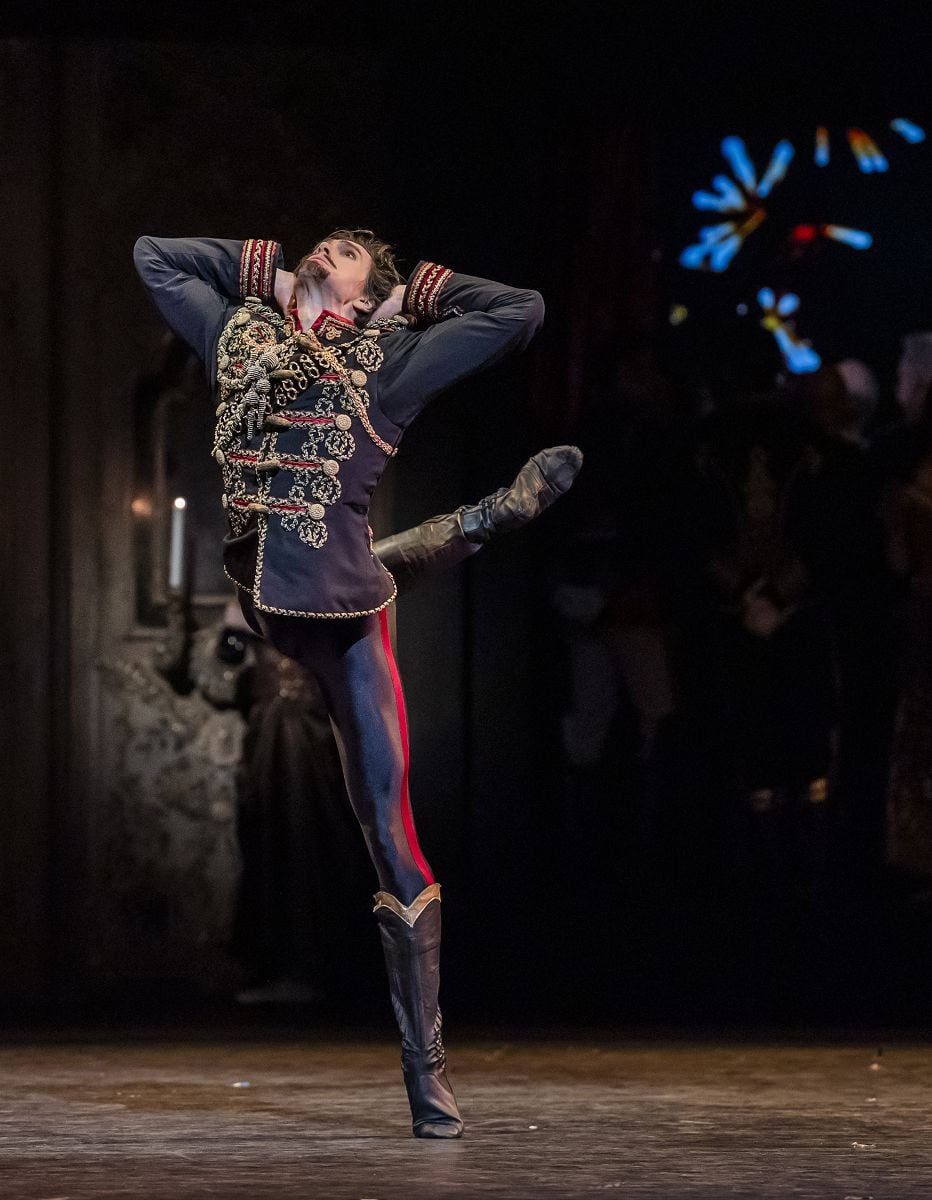
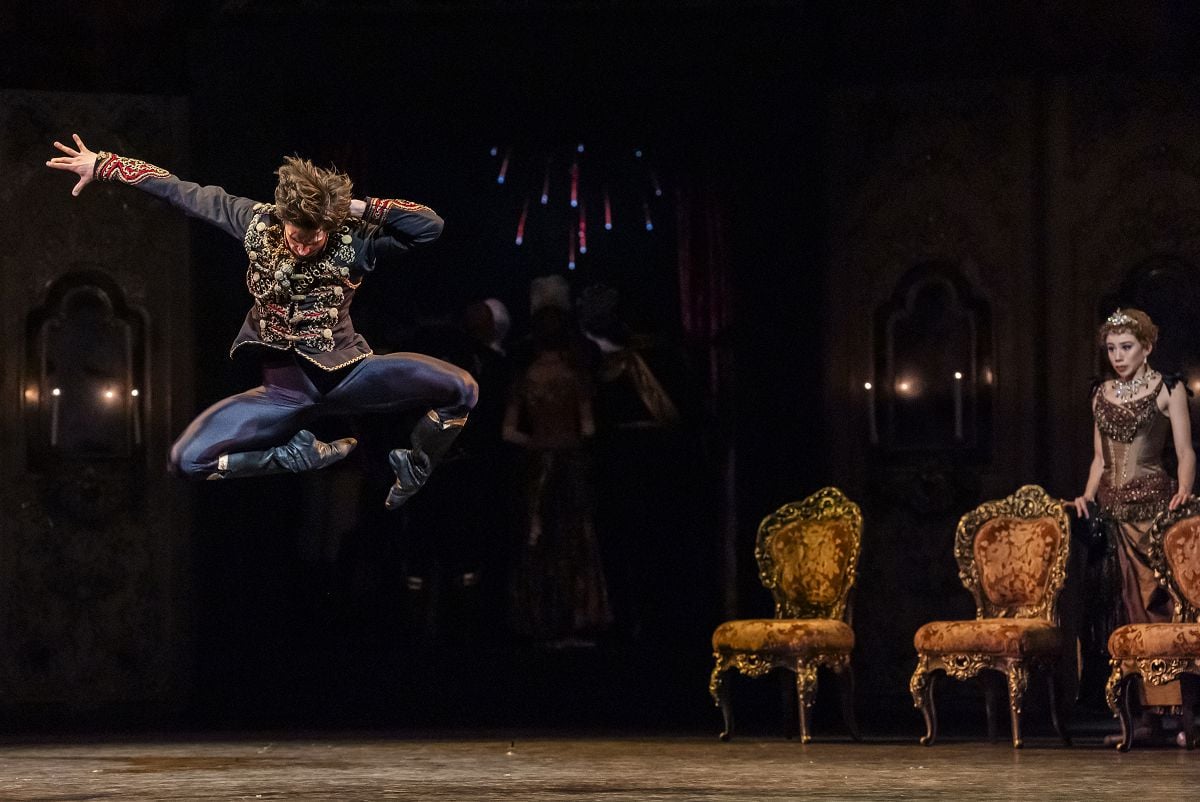
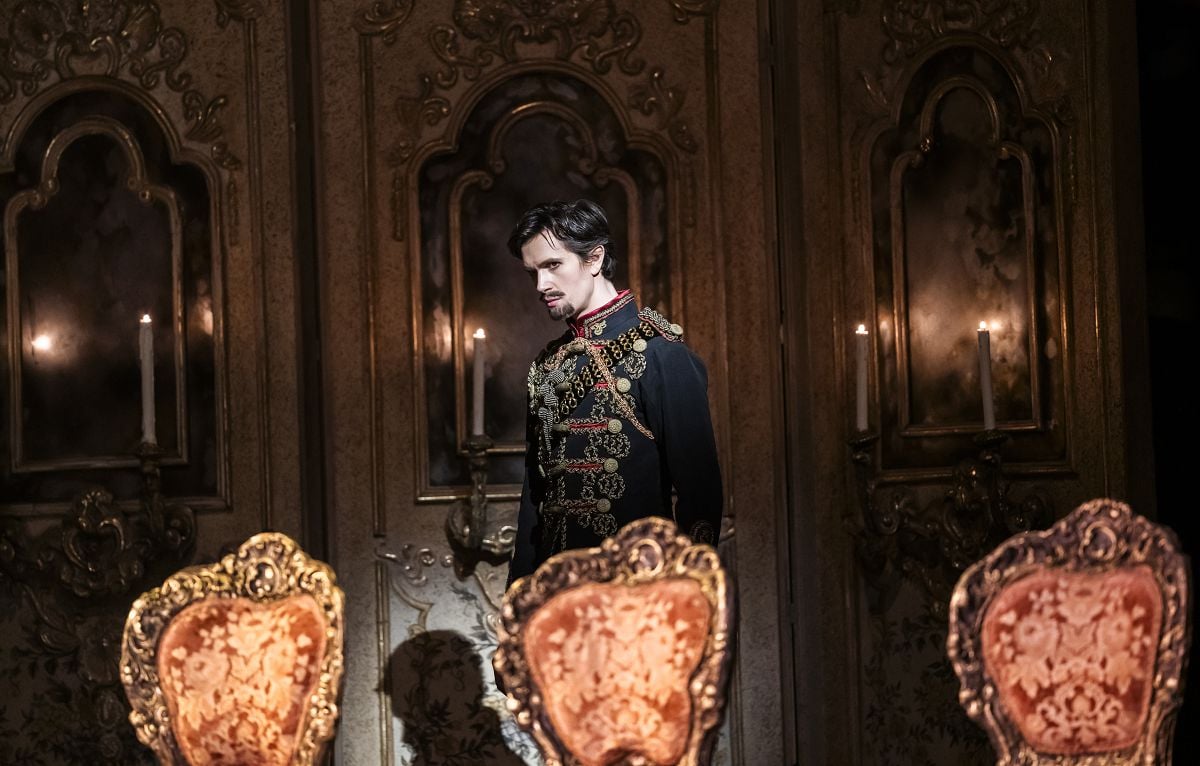
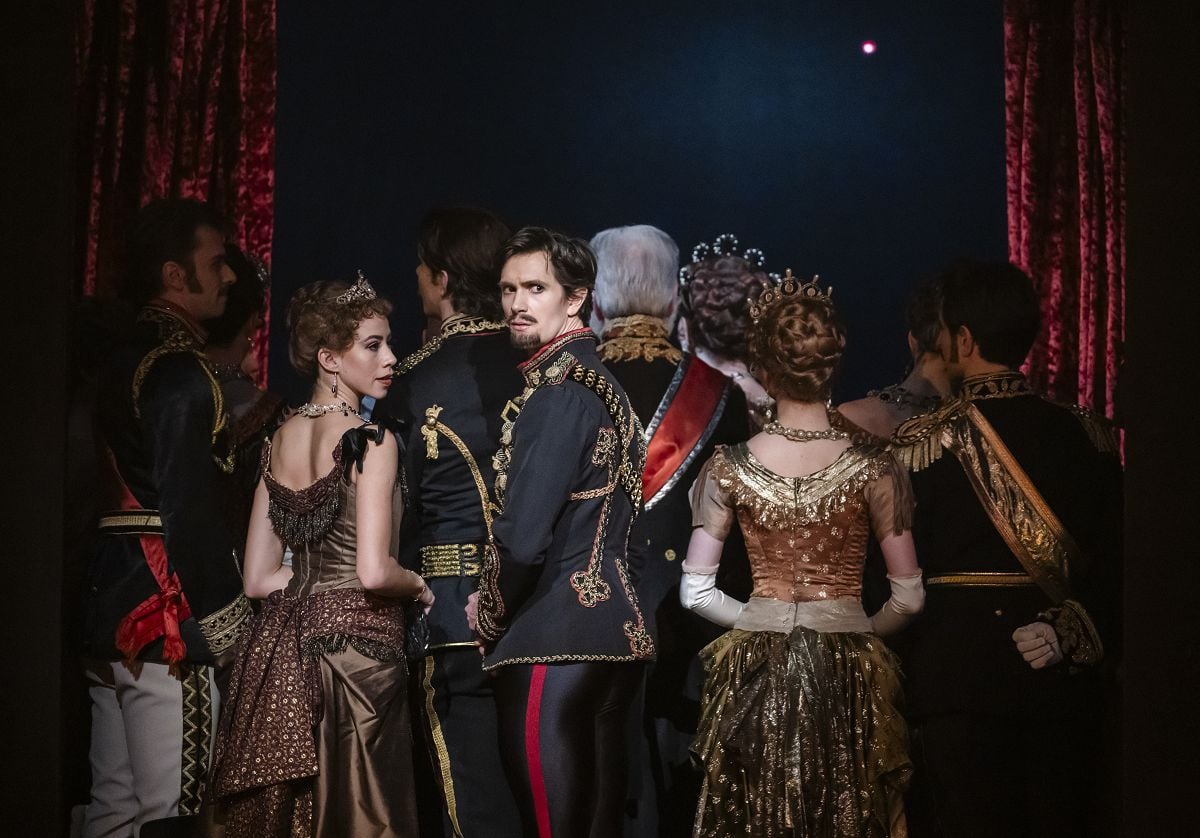
Mayerling is not a ballet for the faint of heart. Based on the life of Austro-Hungarian Crown Prince Rudolf, the ballet depicts the descent of an unstable and dangerous man, fuelled by drugs, drink, and disease, culminating in the murder-suicide of him and his seventeen-year-old mistress, Baroness Mary Vetsera.
Bracewell’s Rudolf is a feral animal trapped in an enclosure it knows it cannot escape. Hemmed in by the Viennese Imperial Court, brought to life by Nicholas Georgiadis’s elaborately staid production design and set to John Lanchery’s arrangement of sinister and sombre music by Liszt, Bracewell matches technical excellence – swooping arabesques and frenetic turns – with an unrelenting savagery. He is unrecognisable, and yet, his performance is a wonderful summation of his career thus far.
Since his award-winning turn as Louis XIV in The King Dances in 2015, Bracewell has established himself as a regal presence, delivering memorable turns as a disconsolate Siegfried in Swan Lake and a conceited Albrecht in Giselle. He has also matured into a great Shakespearean dancer, bringing a rare depth of interiority to roles such as Romeo, Oberon, and Hamlet. Though Crown Prince Rudolf is not from Shakespeare, he feels Shakespearean in scale – he is to male ballet dancers what Hamlet is to actors.
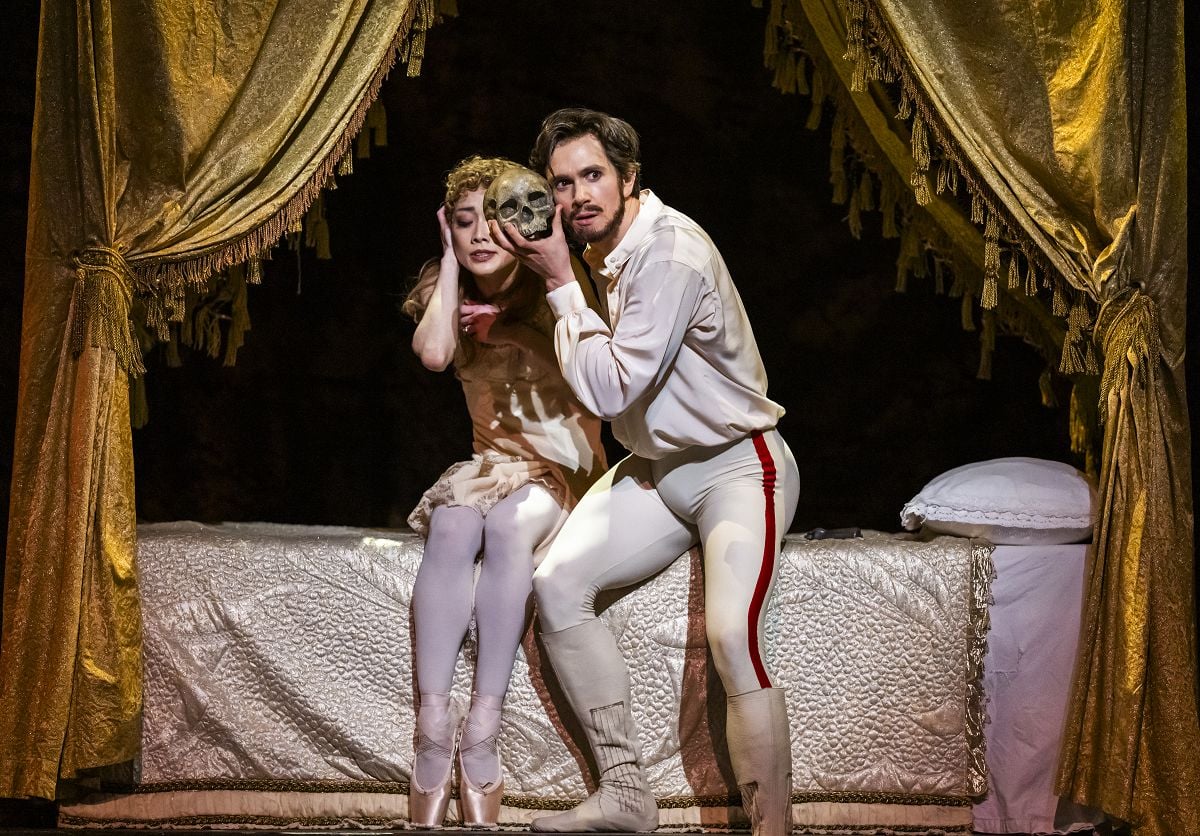
Bracewell marks Rudolf’s descent through the quality of his dancing. He starts the ballet rigid with fury, his reptilian eyes empty. His initial dances at his undesired wedding are stiff and controlled, but when he goes to his mother’s bedroom in need of comfort, he brings a fluidity that becomes increasingly unhinged until he is all but flinging himself across the stage. Bracewell is a singular dancer who evades comparison, but his Rudolf felt like a performance given by Laurence Olivier.
Within the ballet itself, Rudolf’s descent is explored through his relationships with the women in his life, and it is a woman, former Royal Ballet Principal and Artistic Supervisor for the MacMillan Estate, Laura Morera, who has helmed this revival, and yet, Mayerling is a ballet profoundly at odds with women.
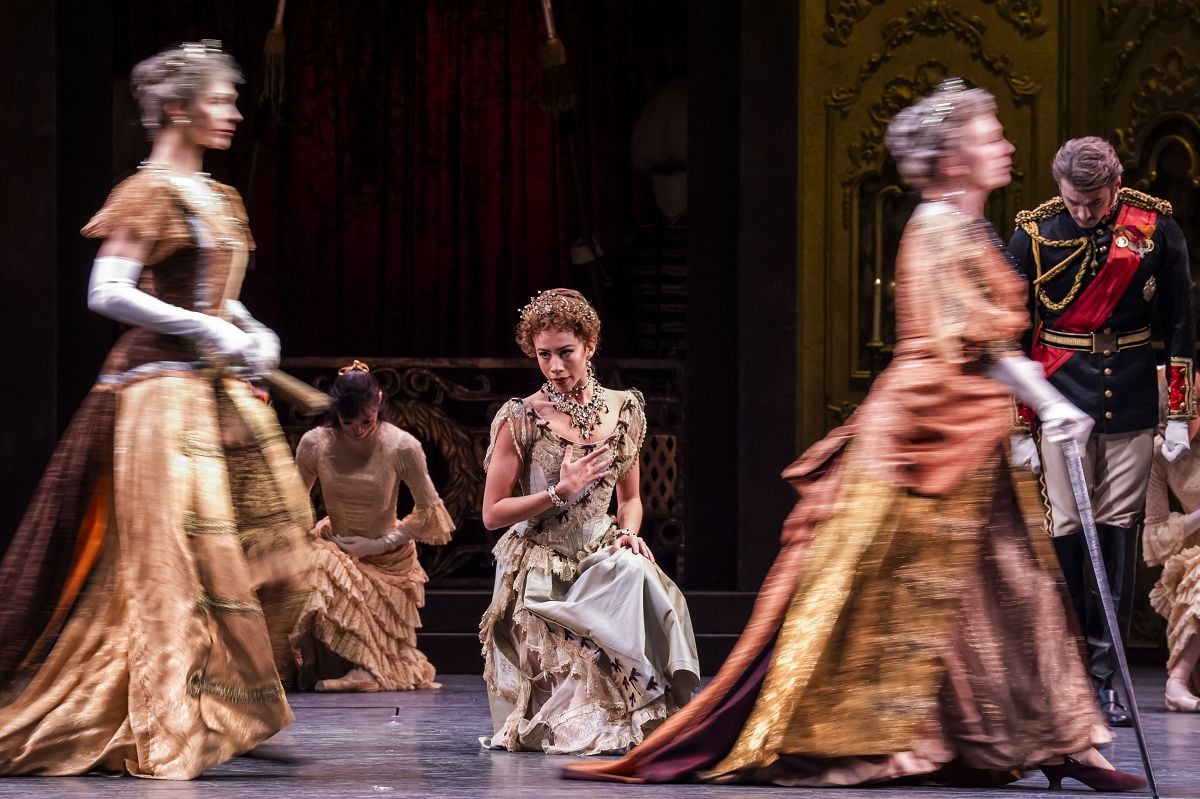
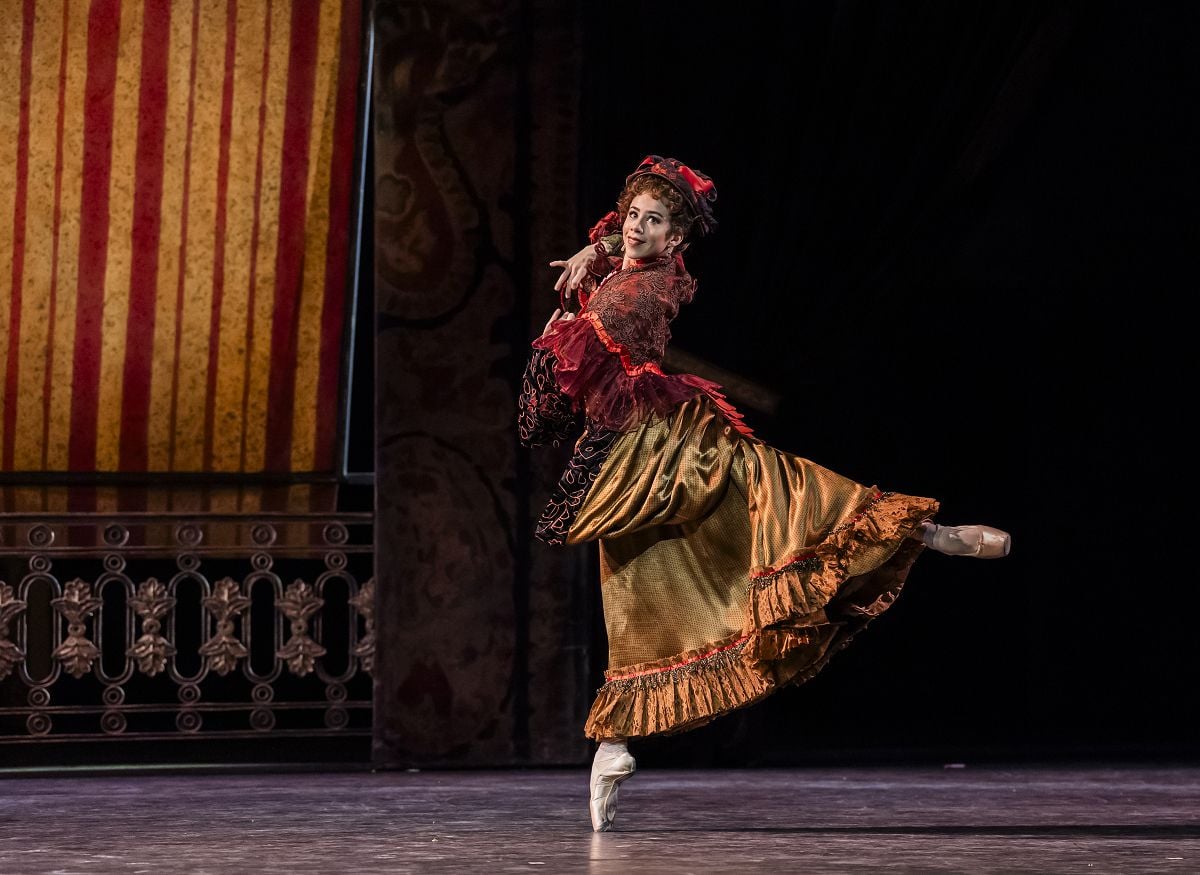
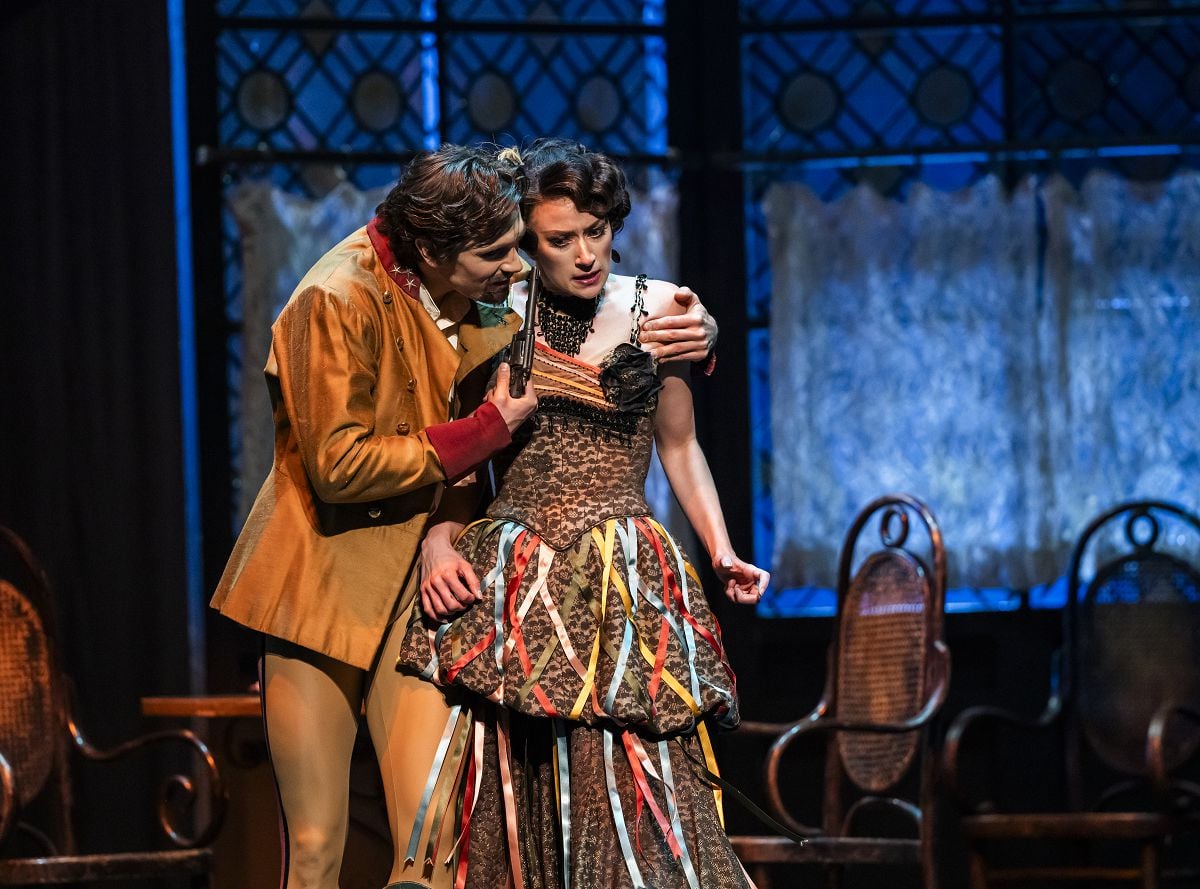
Despite being a night of multiple debuts, the supporting female performances were accomplished and measured. Sae Maeda gave Princess Stephanie an unhappiness equal to Rudolf’s, her terror of realising what she had married giving way to a rigid disgust. Lara Turk as Empress Elisabeth was formidable and careless, too busy with her lover and ladies-in-waiting to be bothered by her son’s unravelling. Hannah Grennell shone as the fantastically haughty Mitzi Caspar, and Leticia Dias played Marie Larisch, Rudolf’s former mistress, as someone in over her head; she could control Mary easily but had to plaster a smile on her face when Rudolf threw her to the floor.
Indeed, it was most noticeable in Dias’s performance just how awkward some of the women’s choreography is; often jerky, the forward bourrée en courus at odds with the bustles of their House of Worth-inspired gowns, occasionally giving their movements a strange, waddle-like quality.
Fumi Kaneko as Mary Vetsera was the technically strongest dancer, bringing ebullient battements and an exquisitely controlled fluidity that Bracewell wrested from her. Kaneko and Bracewell’s partnership is long-established, but never have they been as entwined or enthralled by each other as they are in Mayerling (their slightly timid Romeo and Juliet in 2021 feels very far away). However, as definite as Bracewell’s Rudolf was, Kaneko’s Vetsera was strangely mercurial.
Even with her giddy bourrées and dreamy sighs, she wasn’t entirely convincing as a teenager, and though there were brief glimpses of uncertainty – a grim expression before Larisch presented her to Rudolf, her hands quaking as she held his gun – Kaneko’s Vetsera never settled, all at once mother, daughter, lover, sitting on Rudolf’s lap one moment, and letting him lick a little too close to her breast the next. In many ways, she was more unsettling to watch.
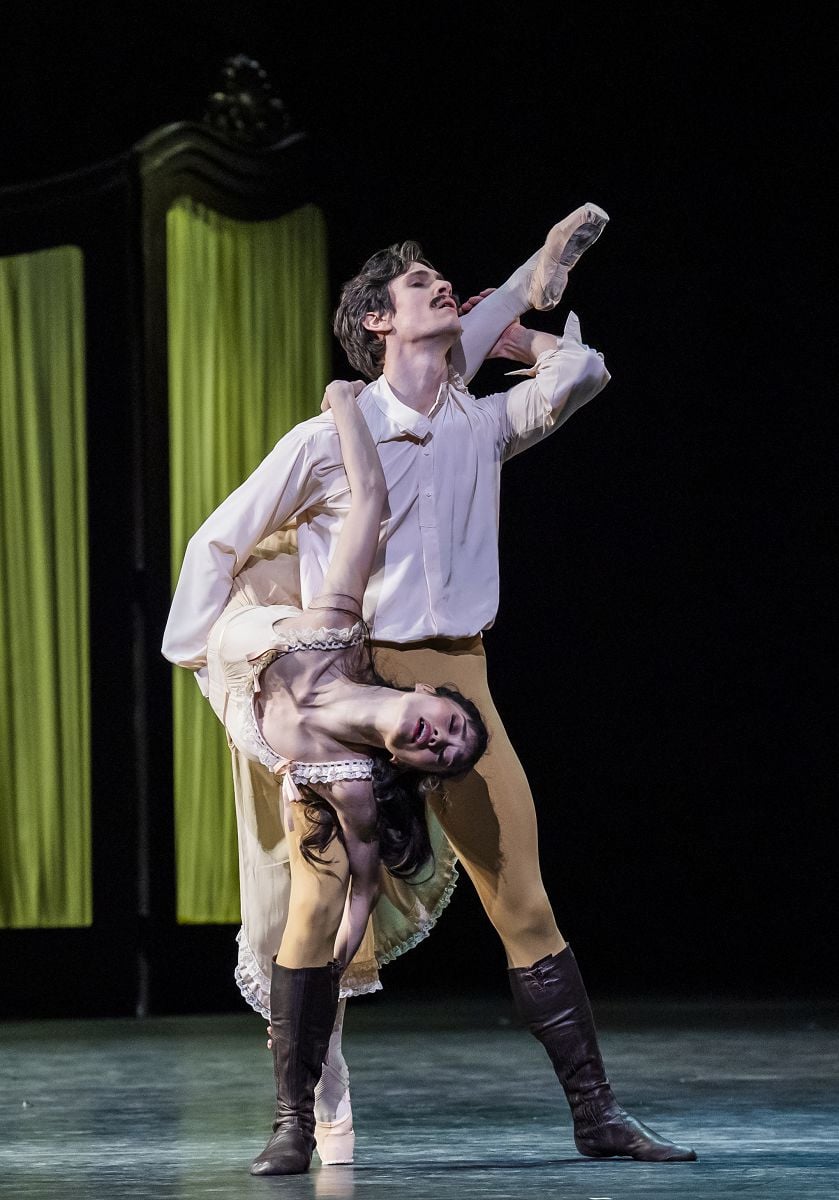
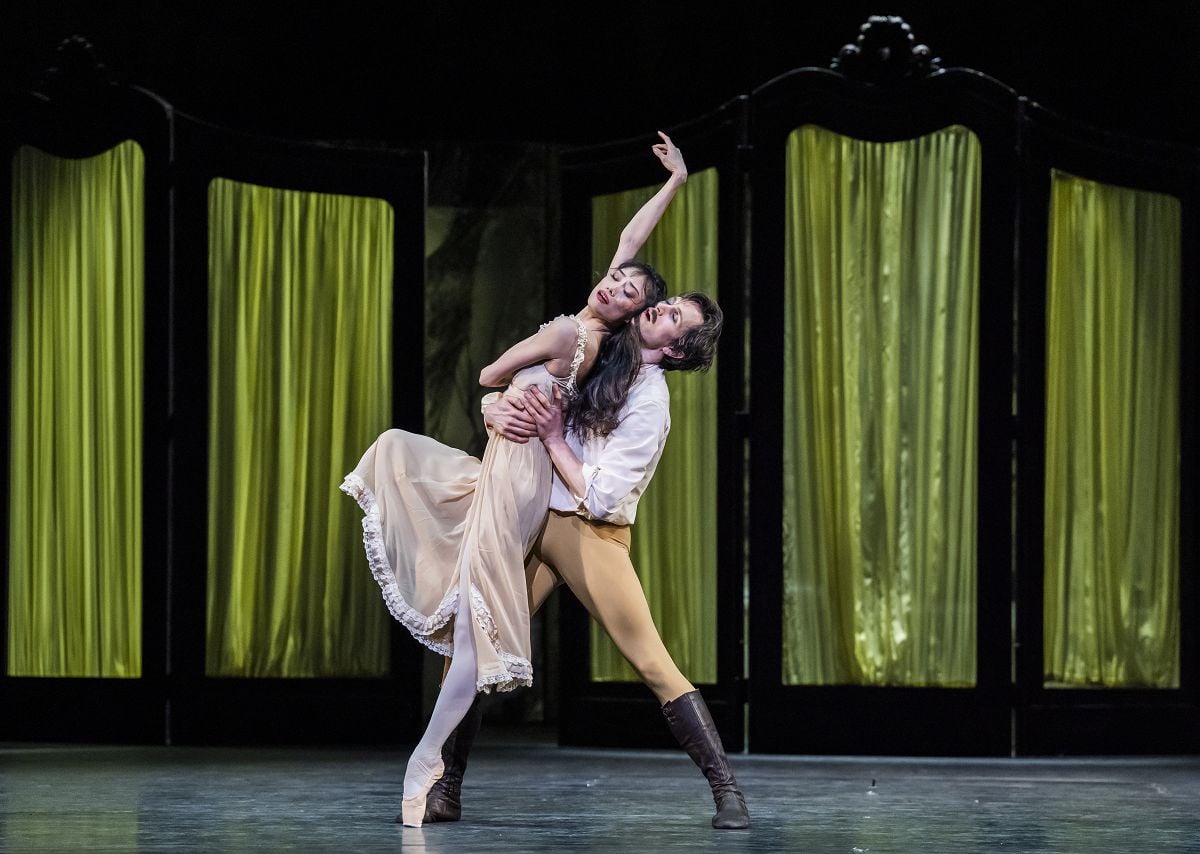
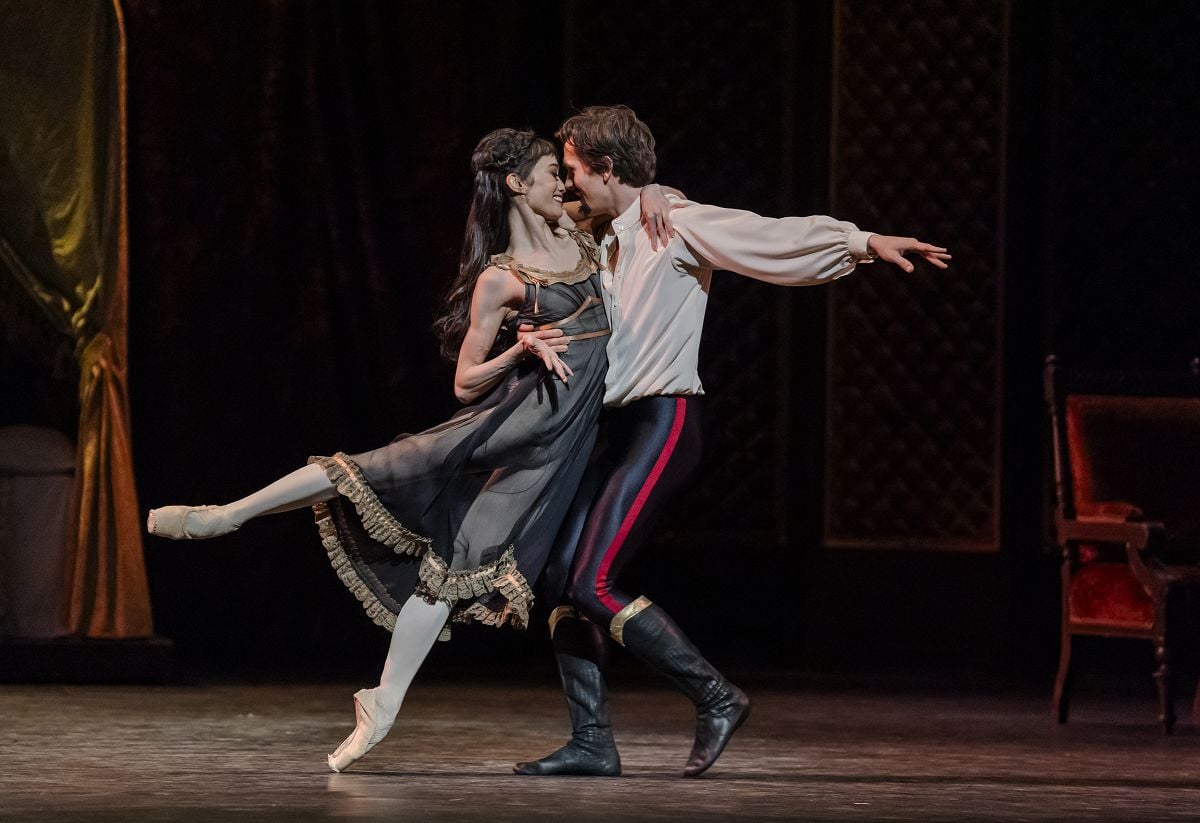
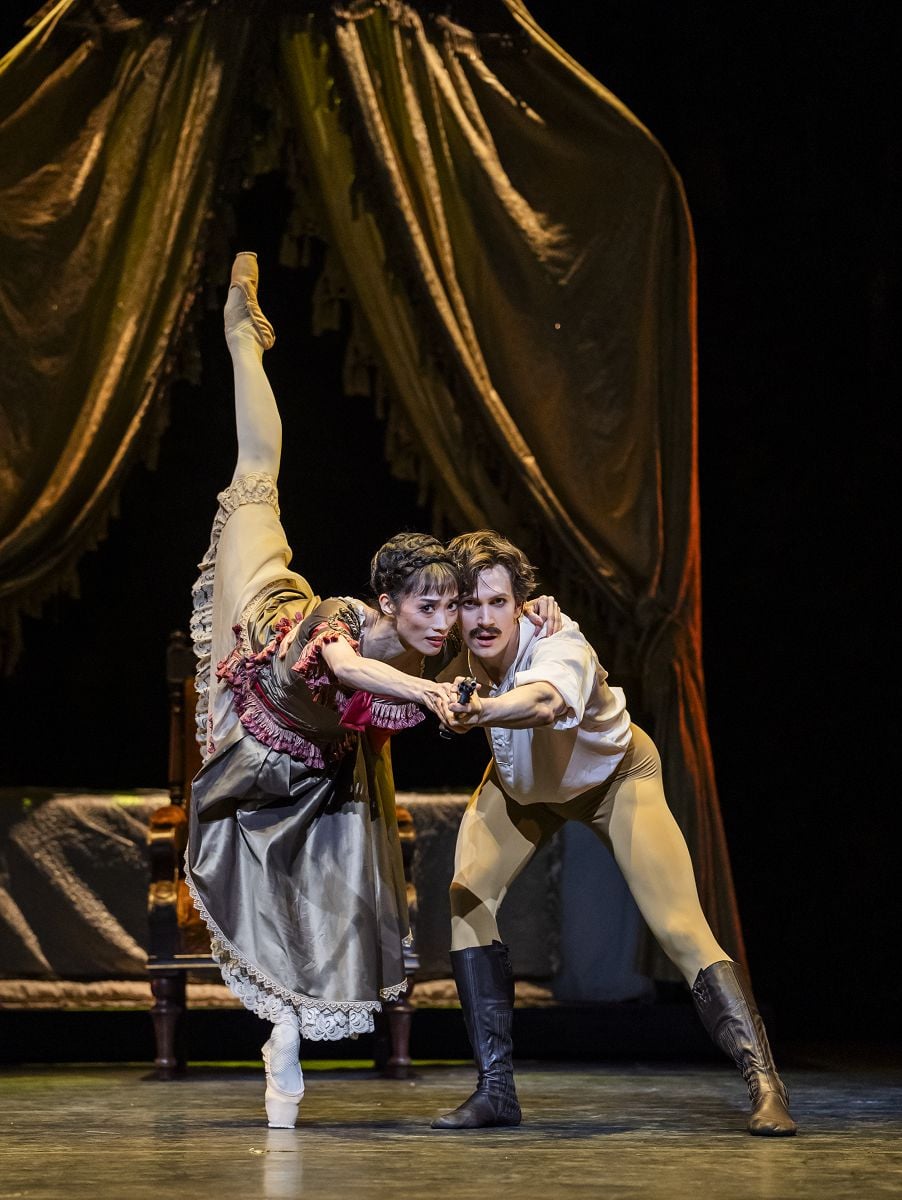
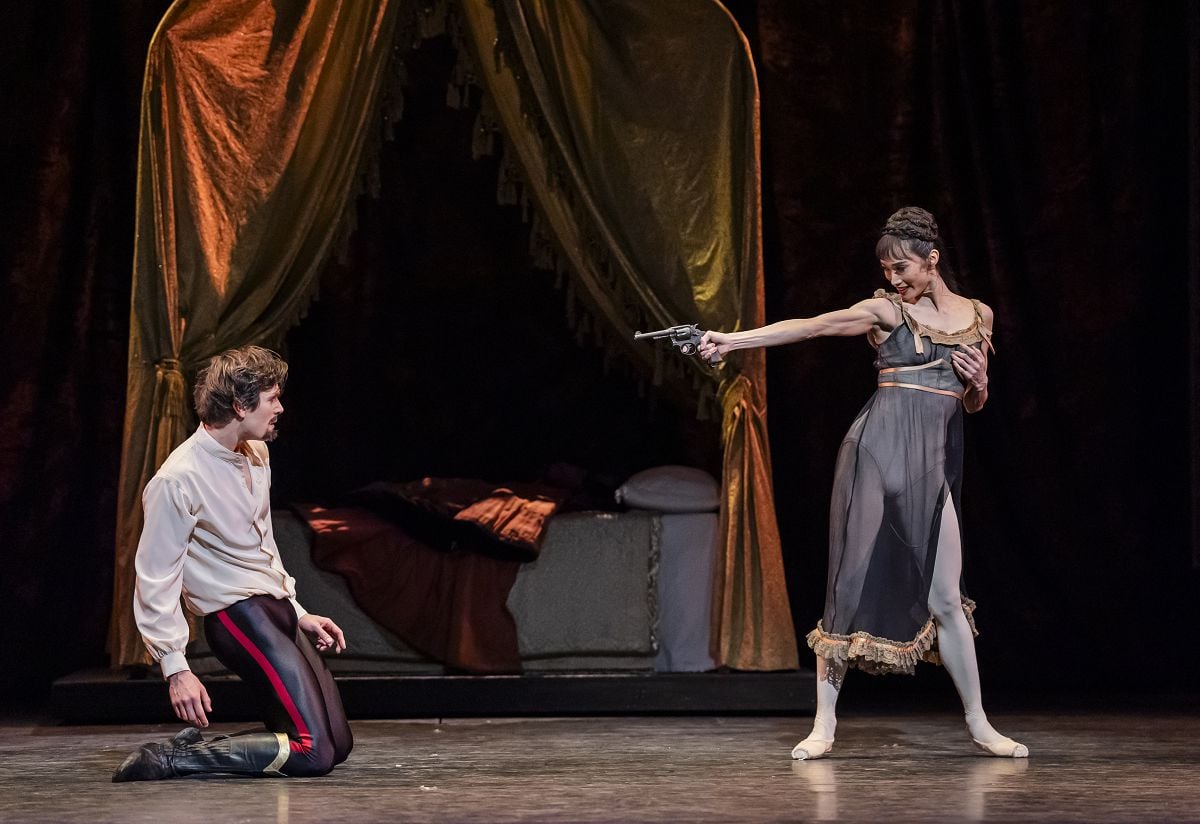
With this revival, it feels impossible to separate intention from context. MacMillan’s protagonists, much like him, feel a distance from the world they inhabit. It is perhaps easier to believe that Rudolf and Mary felt this distance, decided to end their lives, and that Mary willingly reached for the gun. Rudolf shot Mary and gently laid her upon a bed, placing a rose in her hands as if she were a princess in a fairytale, before shooting himself. If they are not tragic lovers with a penchant for the morbid, asking what they are instead leaves room for a far more uncomfortable answer.
Bracewell’s Rudolf is a foetid, wretched thing. He is a man with no redeeming features, and even towards the ballet’s end, as madness fully possesses him, his eyes manically wide and skin ashen with terror, it is hard to feel sympathy for him. Kaneko’s Mary appears to delight in his depravity, but does she really? The final pas de deux, dizzying, bracing, and danced with savage perfection to Martin Georgiev’s extravagant conducting, had an unsettling weight behind it as their deaths loomed ever closer.
One can’t help but compare it to MacMillan’s Romeo and Juliet. We know Romeo and Juliet must die, but we still hope they will find a way to live. With Mary and Rudolf, no such hope exists. Nevertheless, the ballets’ endings are the same. To quote MacMillan’s original Romeo, Christopher Gable, “Nothing’s been achieved, nothing’s better, and they’re not united. They’re just dead. Just two dead things.”
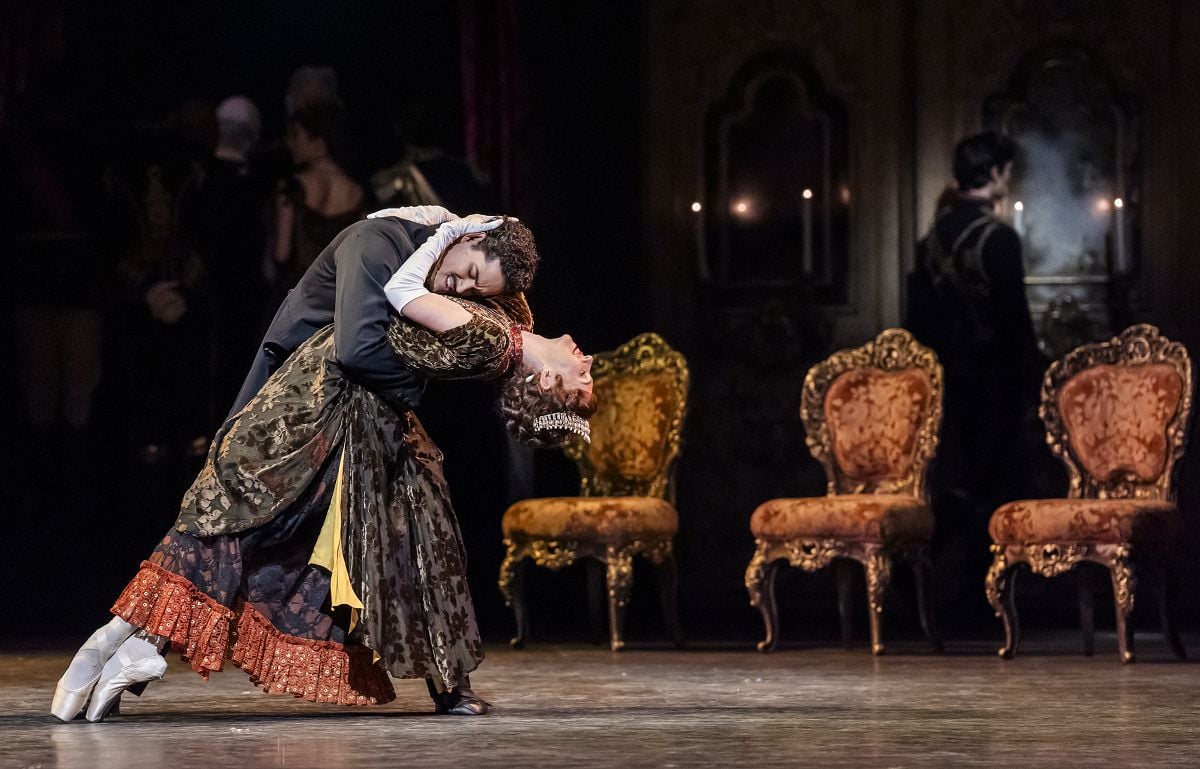
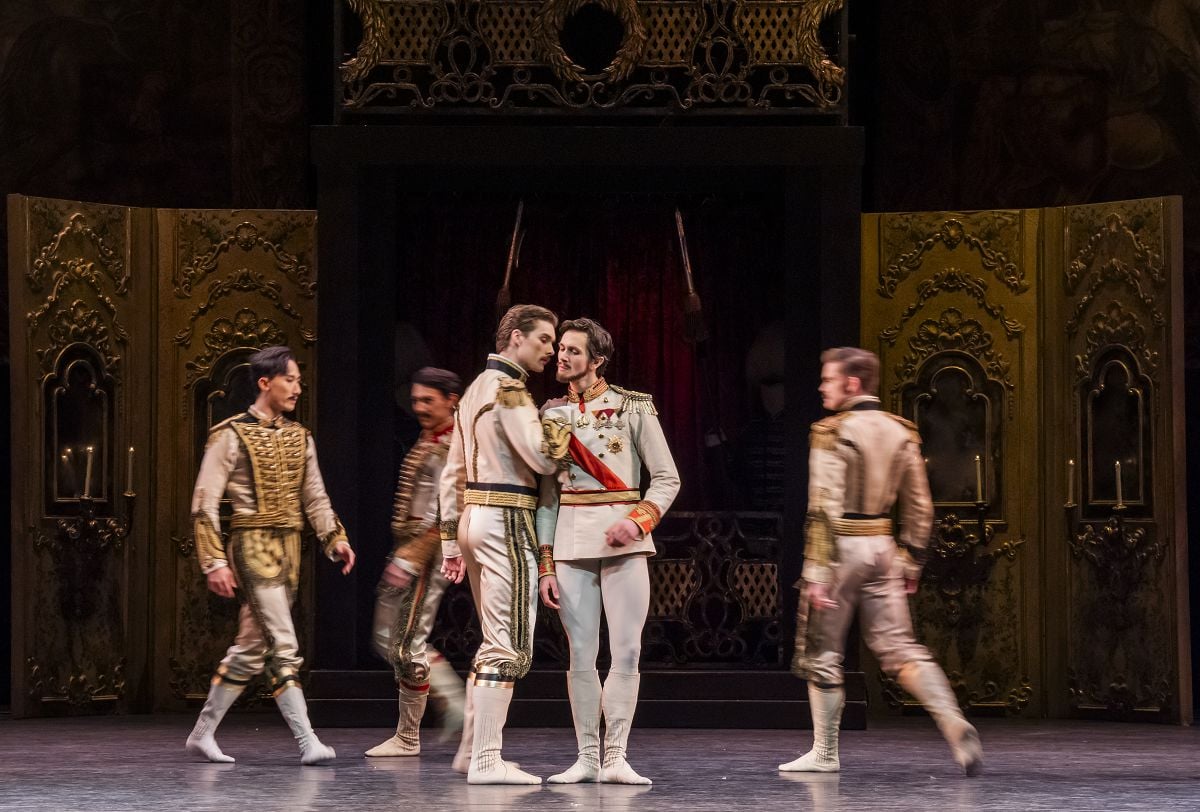
Mayerling has always been an extreme ballet, with extreme audience reactions. It has been noted that this run has had comparatively low ticket sales, with a variety of possible contributing factors – rising ticket prices, odd timing (is Mayerling really an Easter ballet?), vague marketing (the poster used on public transport communicated little about the ballet), and a continually diminishing cultural awareness of the Mayerling incident. However, I do not think, as has been suggested, that low ticket sales (which have improved since Monday’s press night) indicate that Mayerling is on its way out. If anything, this nearly fifty-year-old ballet has never been more relevant.
In a post-Epstein world, it is common knowledge that powerful men, from politicians to princes, take pleasure in using teenage girls as their playthings, with little thought for the consequences. Regardless of the faults of the women in Mayerling – Elisabeth’s coldness, Mitzi and Marie’s manipulations, Stephanie’s naïveté, and Mary’s madness – this is a ballet about the power of men, the structures they have created to maintain that power, and their complicity in these structures, even when they are actively harmful.
Bratfisch (a splendid Joshua Junker) might look equally repulsed and devastated as Mary is all but thrown into an unmarked grave by her uncles, but he is still the one who brought her there. Those who bear witness to Rudolf’s increasing mania either do so with resignation, like Valentino Zucchetti‘s weary Prince Philipp, or delight in goading him further, like the gurning quartet of Hungarian Officers (Luca Acri, Lukas B. Brændsrød, Joonhyuk Jun, and Harrison Lee).
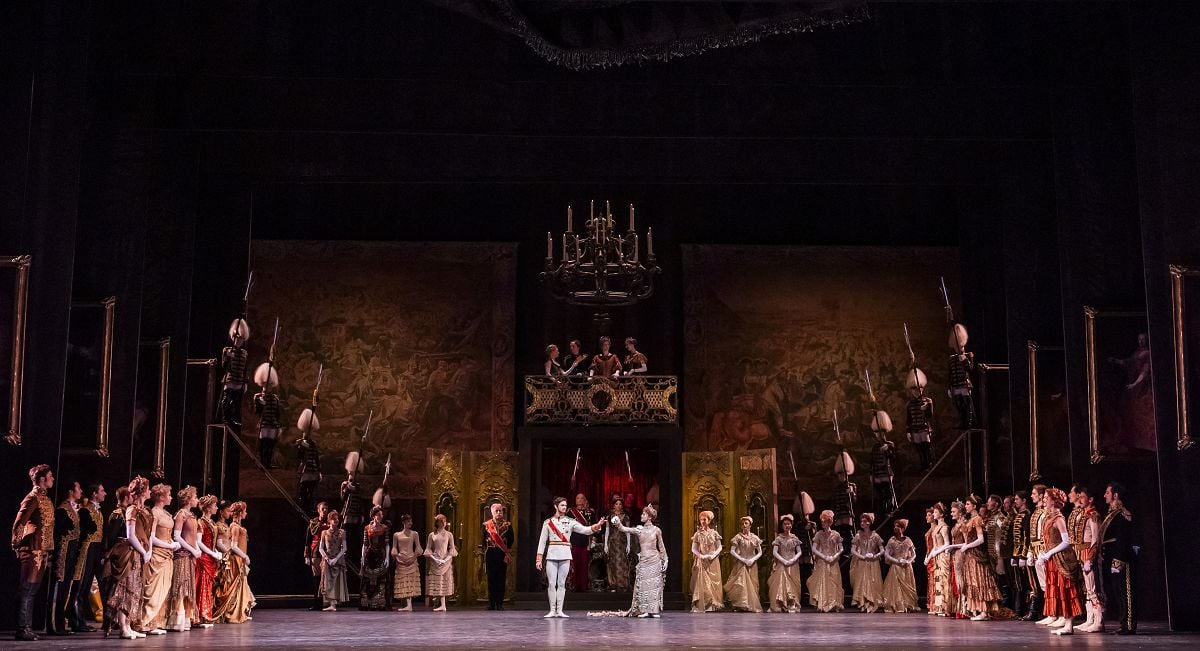
Authority is absent, and power ephemeral. Indeed, one of the ballet’s most poignant moments was the interlude in which Thomas Whitehead’s frail Emperor Franz Joseph looked at the portraits of his ancestors, searching for some kind of meaning, and seemingly finding none.
Rudolf might exist on the fringes of that power, perpetuated and observed by faceless men (in this ballet, literal dummies in military dress), but his power is never once challenged.
Mayerling is a tragic ballet, without resolution or the promise of change, and that, unfortunately, seems more pertinent than ever. Long may it reign.
This run of Mayerling continues until the end of May 2026

Lily Hyde is a cultural and dance writer based in London. Her writing has appeared in The Fence and The Creative Independent, and she runs the cultural newsletter, Falling Upwards. She is currently writing her first novel.



Empress Elizabeth was danced by Christen McNally a very intelligent dancer also,the scene with her rejection of her son was heart breaking for Rudolph and the audience. Fumi Kaneko was miraculous as Mary Vetsera especially the final pdd . I agree with your view of Bracewells portrayal of the crown prince in this extraordinary ballet.
I am sad to have missed this – it sounds gripping and unsettling, as it should