Review: Circa’s Duck Pond – the place in which The Ugly Duckling and Swan Lake collide
Graham Watts sees Circa’s Duck Pond – “although balancing was largely the name of the game, ironically the balance between circus and theatre needed a little more refinement”.
| Title | Duck Pond |
| Company | Circa |
| Venue | Royal Festival Hall, London |
| Date | 19 December 2024 |
| Reviewer | Graham Watts |
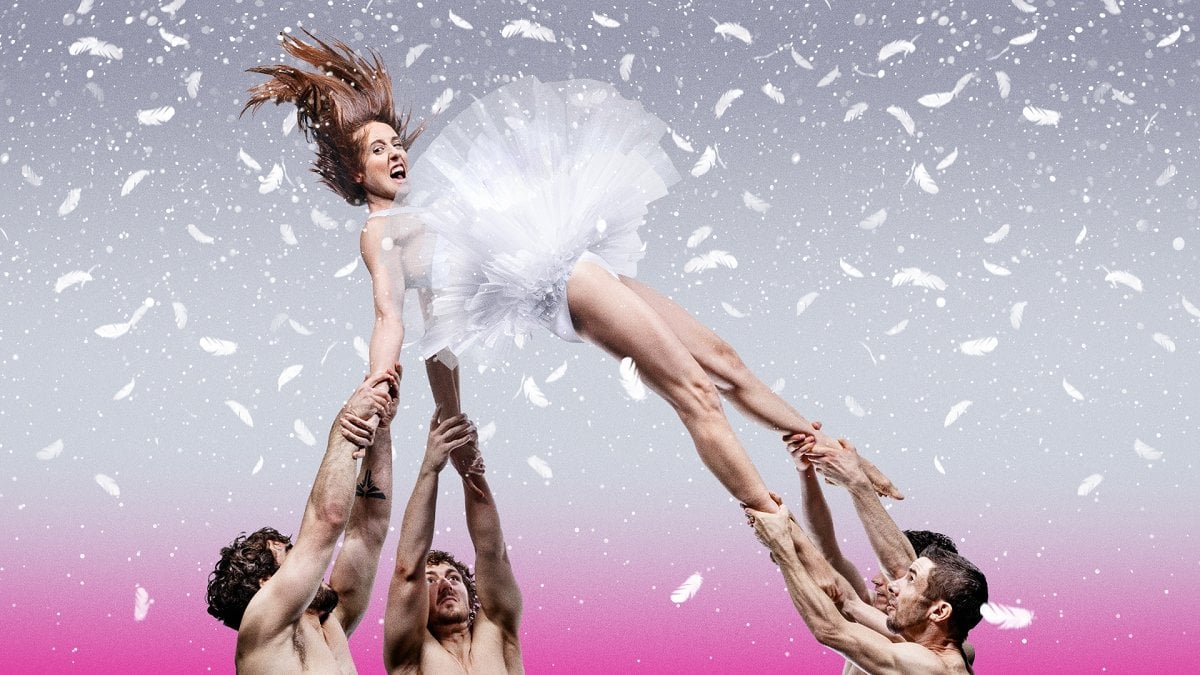
Duck Pond is a place in which The Ugly Duckling and Swan Lake collide, and all within a domineering envelope of circus skills. The latter are impressive, especially in the supreme hand-to-hand acrobatics demonstrated by the 17 extraordinary gymnasts of Circa, this excellent Australian contemporary circus company; although – in truth – the intense concentration on these elite skills tended to obscure any intricate details of the intended narrative journey, which I came to understand only through reading the brief synopsis.
A prince (Zachery Stephens*) wearing a crown that resembled the golden coronet handed out at a McDonald’s children’s party, is helped by a cupid to fall for the ugly duckling (Sophie Seccombe), who is on the way towards transforming into the white swan. Of course, the black swan (Asha Colless) intervenes by seducing the prince in an incongruous incident replete with erotic sadomasochism when she walks over his near-naked body in red stilettos! In a twist of female empowerment that transcends both fables, the two swans fall in love and walk off together into the sunset, leaving behind a confused and humiliated prince.
[*A cautionary note is required insofar as none of the performers are identified in the programme against specific roles and so my credits in this paragraph are largely a matter of informed guesswork].

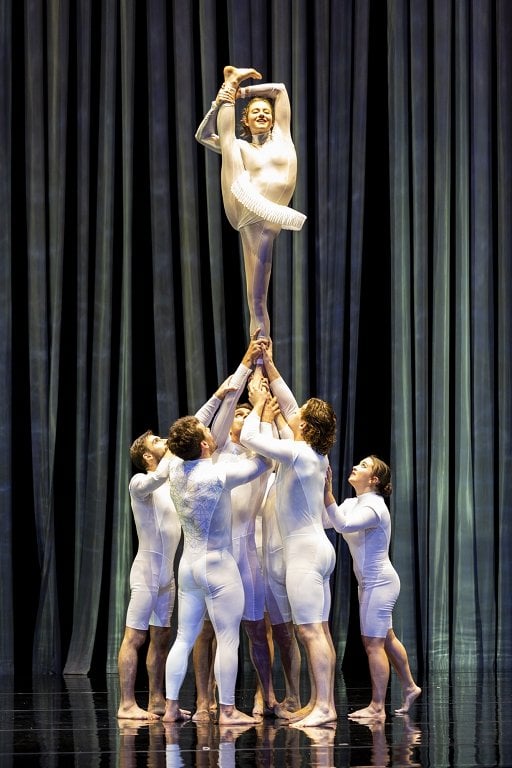
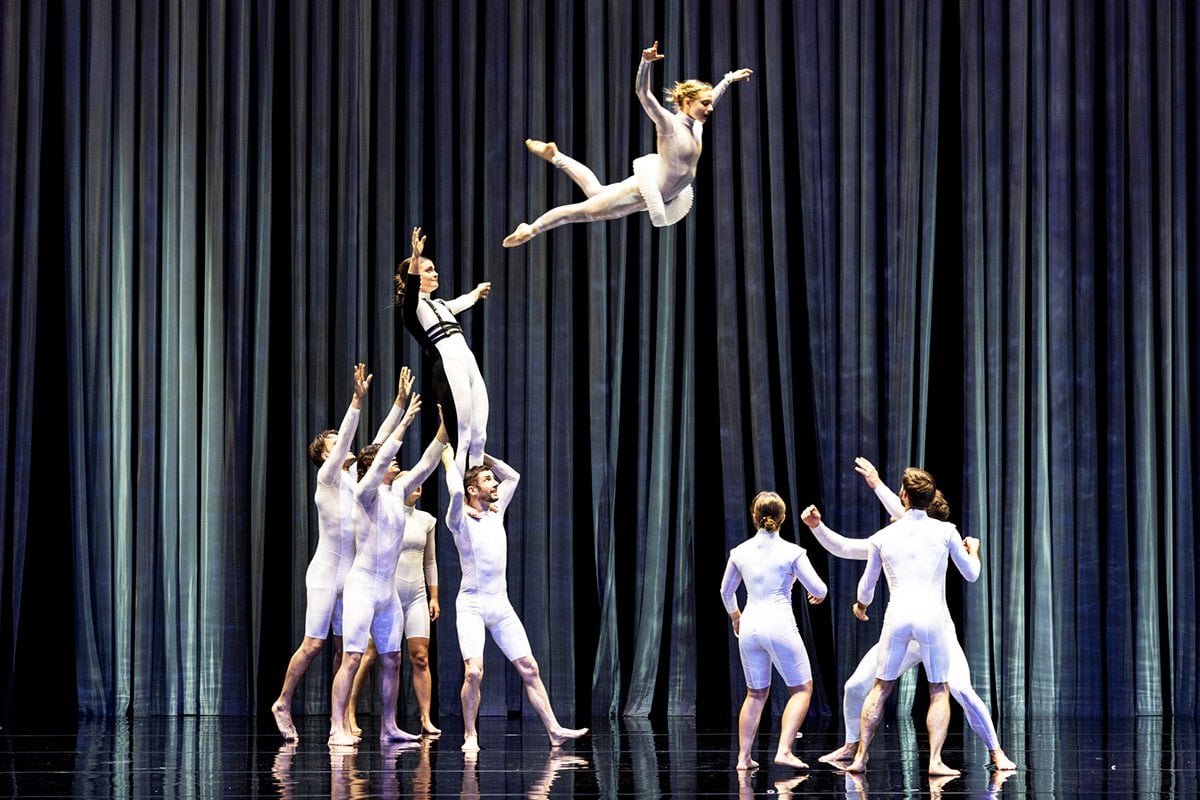
The above narrative chugs along as periodic interruptions to the circus skills, which are dominated by those hand-to-hand acrobatics, often involving the construction of castells (human towers) culminating in two side-by-side castells, both four humans high. The strength, agility and balancing of the acrobats were often breathtaking with the flyers (often this was Seccombe) gracefully arcing through the air at significant height to be caught (plucked from the air would be a more apt description) with an insouciant regard for any obvious effort.
It seemed that every conceivable balancing skill was employed at height, including one arm pressed handstands. Whilst the flyers and gymnasts gain all the plaudits none of this would have been possible without the strength of the porters, and 22-year-old American strongman, Asom Hayman-Jones was mightily impressive at the base of those human towers. The mutual trust between the performers must be of the highest order (there is clearly no room for a weak link).
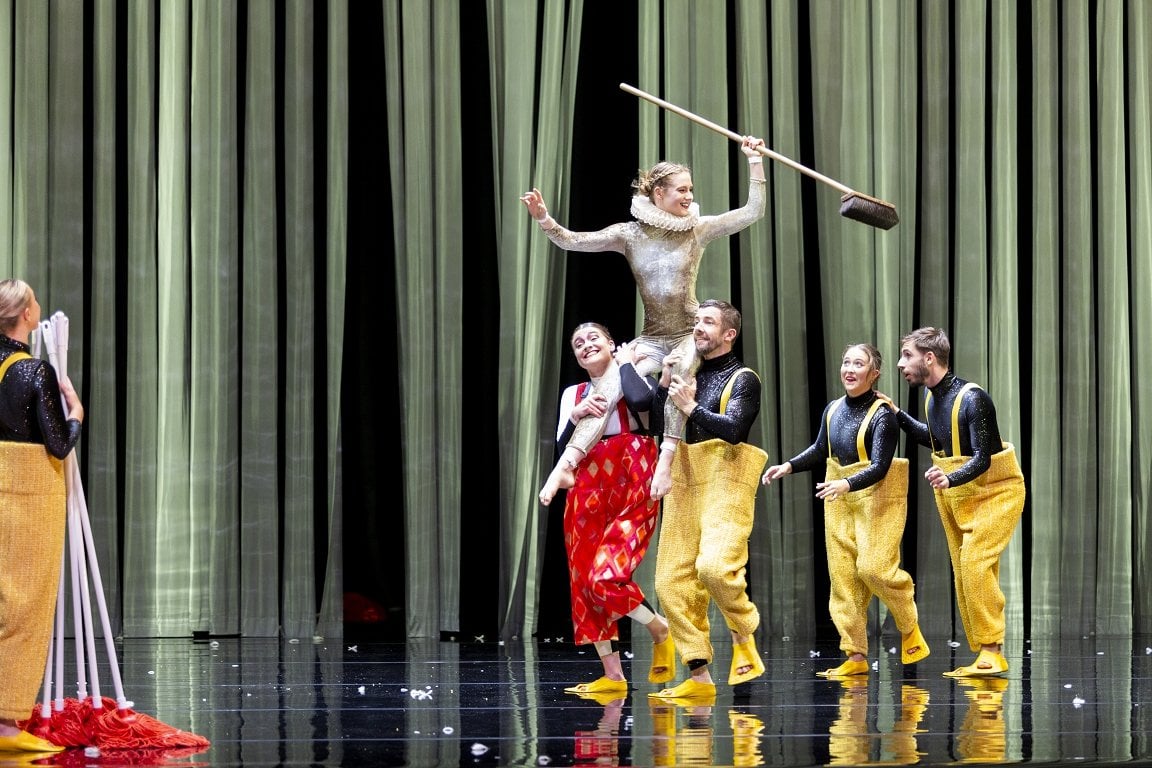
I enjoyed the spectacle of a duck army coming to console the ugly duckling after her brief fling with the prince ends in ignominy. Their costumes of yellow slipper-flippers to represent the duck’s webbed feet and structured yellow clown pants held up by braces were splendid as were all of Libby McDonnell’s costume designs. The transition of the ugly duckling (dirty grey-brown colourway) to the resplendent white ruff and circular tutu of the white swan was excellent. Designing costumes that look great and also enable the agility and security of elite circus skills must be a rare skill set. The mops brought on by the duck army to clear up debris on the stage became horizontal poles for more acrobatic tricks.
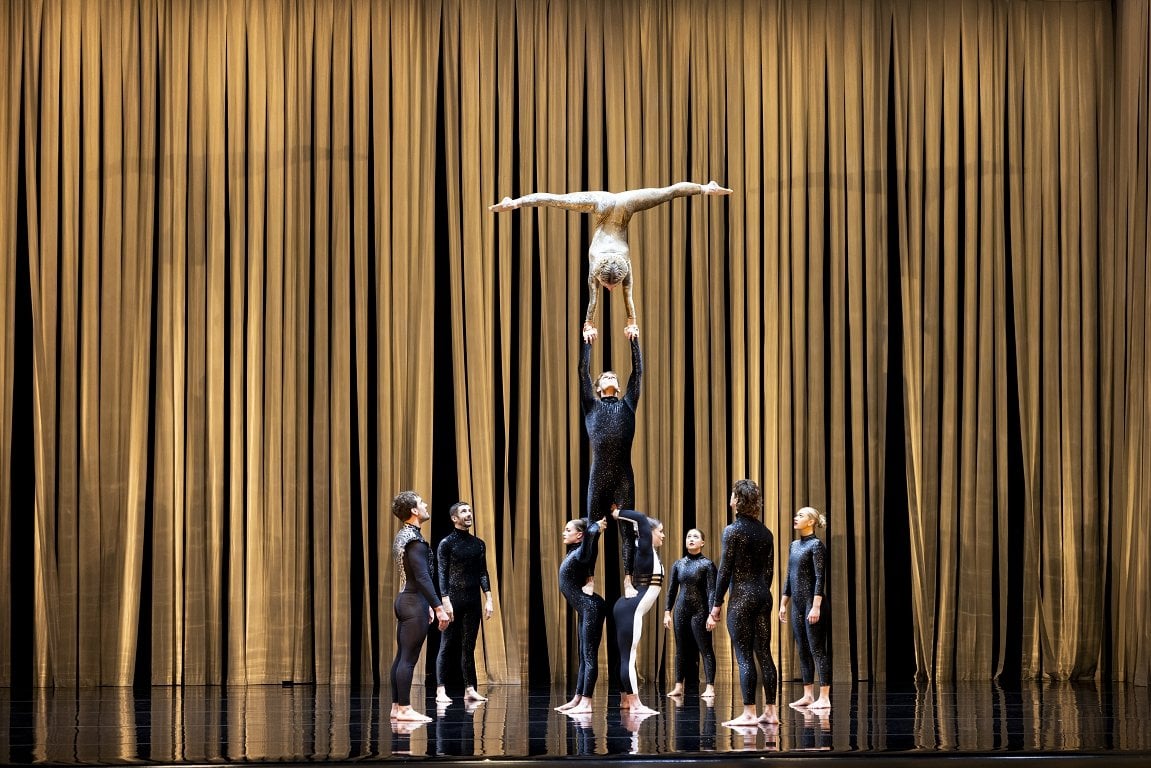
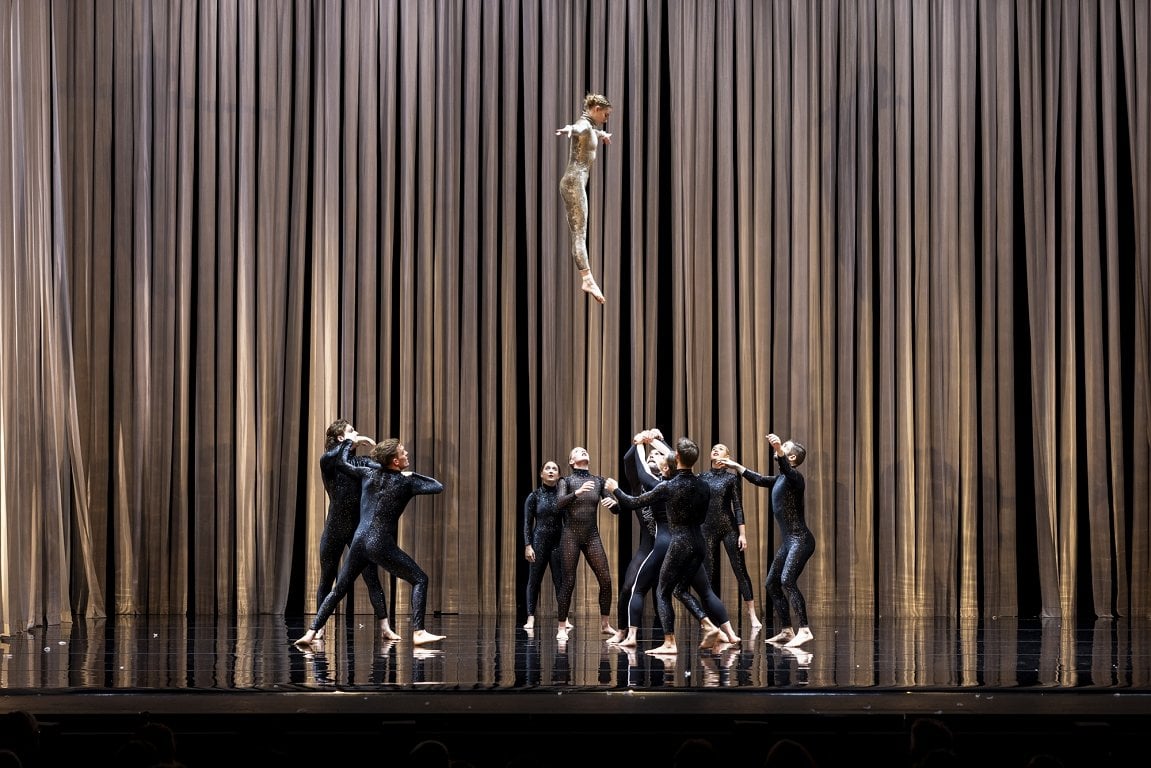
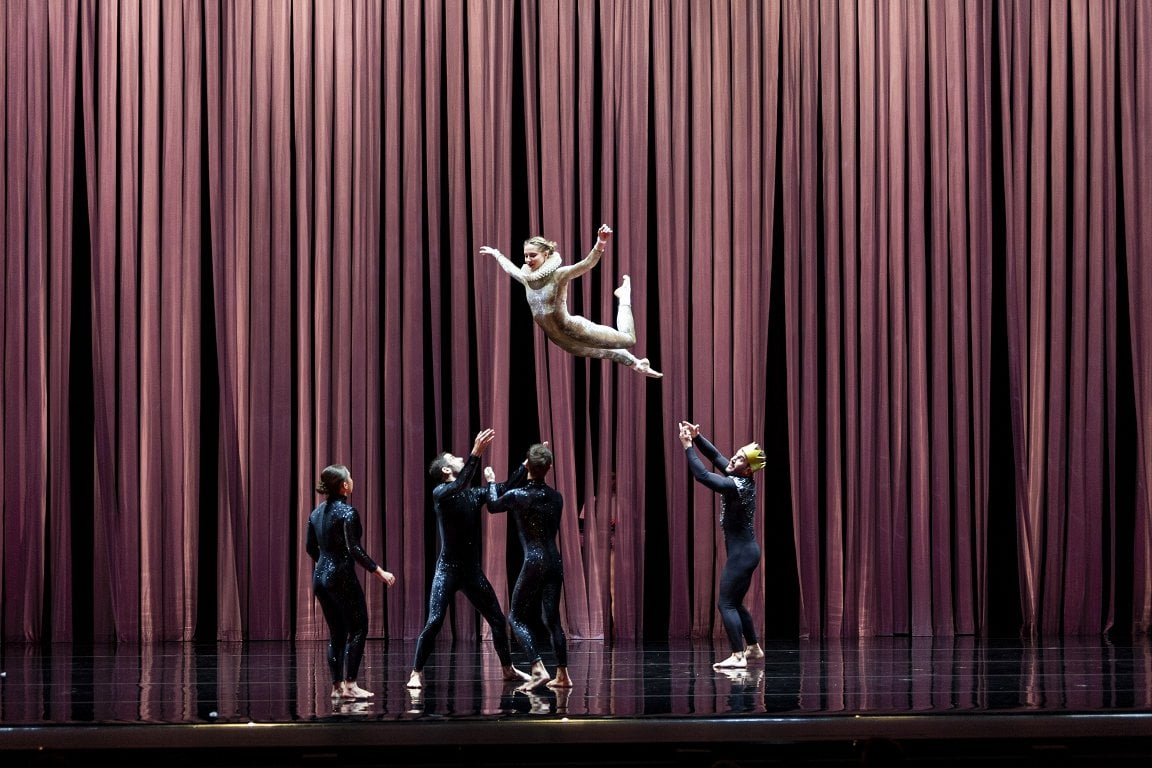
Aerial skills were also much in evidence, whether tied up at various heights in the silks, twirling and flaring on the Corde lisse (a vertical rope) or spinning on rings. When the show apparently “ended” with “Odette” and “Odile” walking romantically into the upstage void it merely introduced an epilogue – although credited as Act 3 – in which various circus skills not employed in the main text were brought to bear as add-ons, including, for example, a brief turn (or, to be strictly accurate, many turns) on the Cyr wheel. Chelsea Hall gave an impressive display of keeping several hula hoops in motion with imperceptible control across all parts of her body. The incongruous erotic overtone was extended by strange – and overtly sexual – poses of various performers inside moveable platforms, reminiscent of windows in the red-light district of Amsterdam. It was an episode that seemed to have crept in from another work!
Having just witnessed the white swan and the black swan fall in love, this epilogue brought us back to reality through the projection of a film depicting a brutal fight between real swans. Was this a portend that not all would end happily for the ugly duckling turned white swan and her new mate?
The recorded music possessed ghostly echoes of Tchaikovsky in a bespoke, largely percussive but unobtrusive score by Jethro Woodward.
Kudos must go to Yaron Lifschitz and his creative team at Circa both for this intriguing mash-up of Swan Lake and The Ugly Duckling and for introducing a love affair for the white and black swans, both of which are innovations that I’m not aware of being used before. It’s 20 years since Circa began in its current iteration and it has clearly evolved a niche at the cutting edge of proscenium-based circus theatre. In the case of Duck Pond, although balancing was largely the name of the game, ironically the balance between circus and theatre needed a little more refinement.

Graham Watts is a freelance writer and dance critic. He writes for The Spectator, Tanz, Shinshokan Dance Magazine (Japan), Ballet Magazine (Romania), BachTrack and the Hong Kong International Arts Festival and has previously written for the Sunday Express, Dancing Times, Dance Europe, DanceTabs, London Dance, the Edinburgh International Festival and Pointe magazine (USA). He has also written the biography of Daria Klimentová (The Agony and the Ecstasy) and contributed chapters about the work of Akram Khan to the Oxford Handbook of Contemporary Ballet and on Shobana Jeyasingh for the third edition of Routledge’s Fifty Contemporary Choreographers.
He is Chairman of the Dance Section of The Critics’ Circle and of the UK National Dance Awards and regularly lectures on dance writing and criticism at The Royal Academy of Dance, The Place and (until the war) for Balletristic in Kyiv. He was a nominee for the Dance Writing Award in the 2018 One Dance UK Awards and was appointed OBE in 2008.