Review: The Royal Ballet’s Cinderella – A Magical Evening

Kathrina Farrugia-Kriel sees The Royal Ballet’s Cinderella in London – If there is one thing you do this Christmastime, catch a performance of this version of Cinderella (also in cinemas worldwide).
| Title | Cinderella |
| Company | The Royal Ballet |
| Venue | The Royal Opera House, London |
| Date | 3 December 2024 |
| Reviewer | Kathrina Farrugia-Kriel |
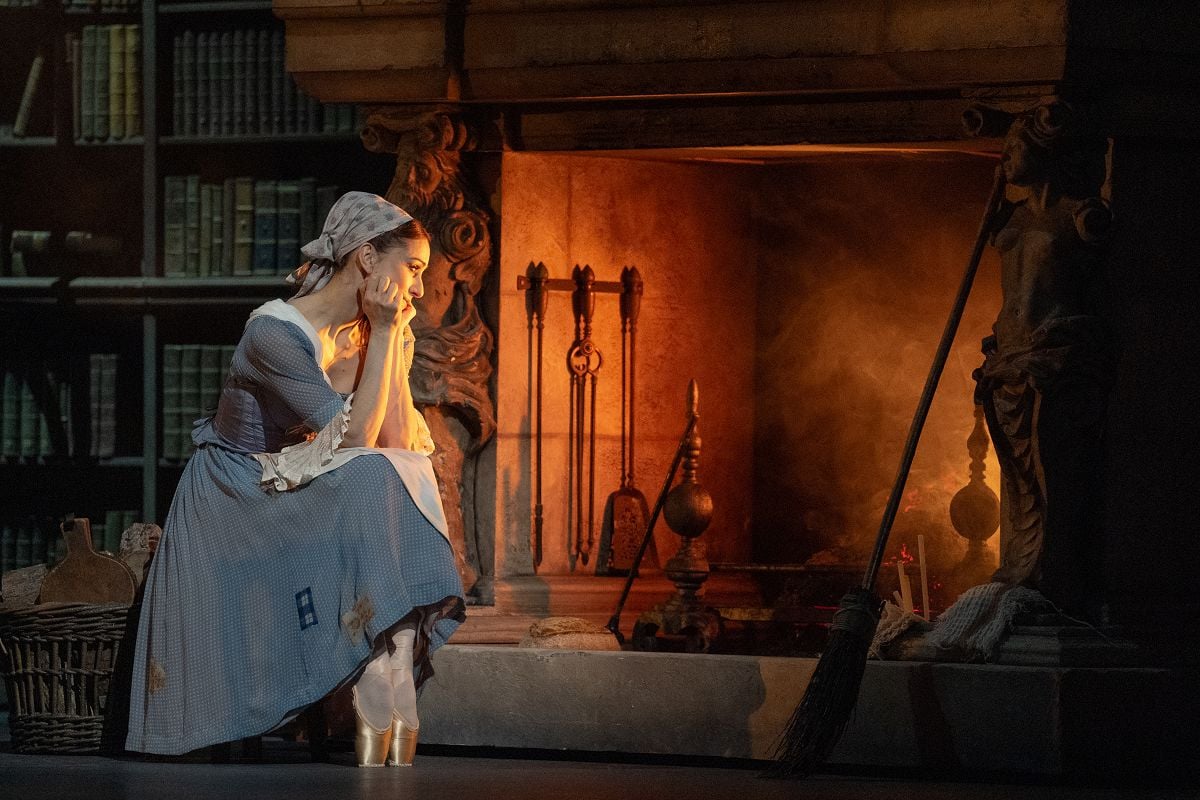
Most of us end up watching a version of The Nutcracker at Christmastime. But the idea of watching a production of Cinderella could be more ‘panto’ than any other festive production. This week The Royal Ballet saw the return of their revamped Cinderella – Sir Frederick Ashton‘s 1965 choreography (carefully guarded by Wendy Ellis Somes, and the myriad of Royal Ballet staff who coached the work to its excellence), with recently redesigned work. The programme notes offer a comprehensive insight into the new heavily inspired floral designs, based on the staples of English cottage gardens. Incidentally, there are some great articles in this programme booklet – contributions which really enlightened and supported the evening’s performance. I particularly enjoyed reading Nicola Darwood and Alexis Weedon, professors at the University of Bedfordshire, on their insight into reimaging the fairy tale of Cinderella.
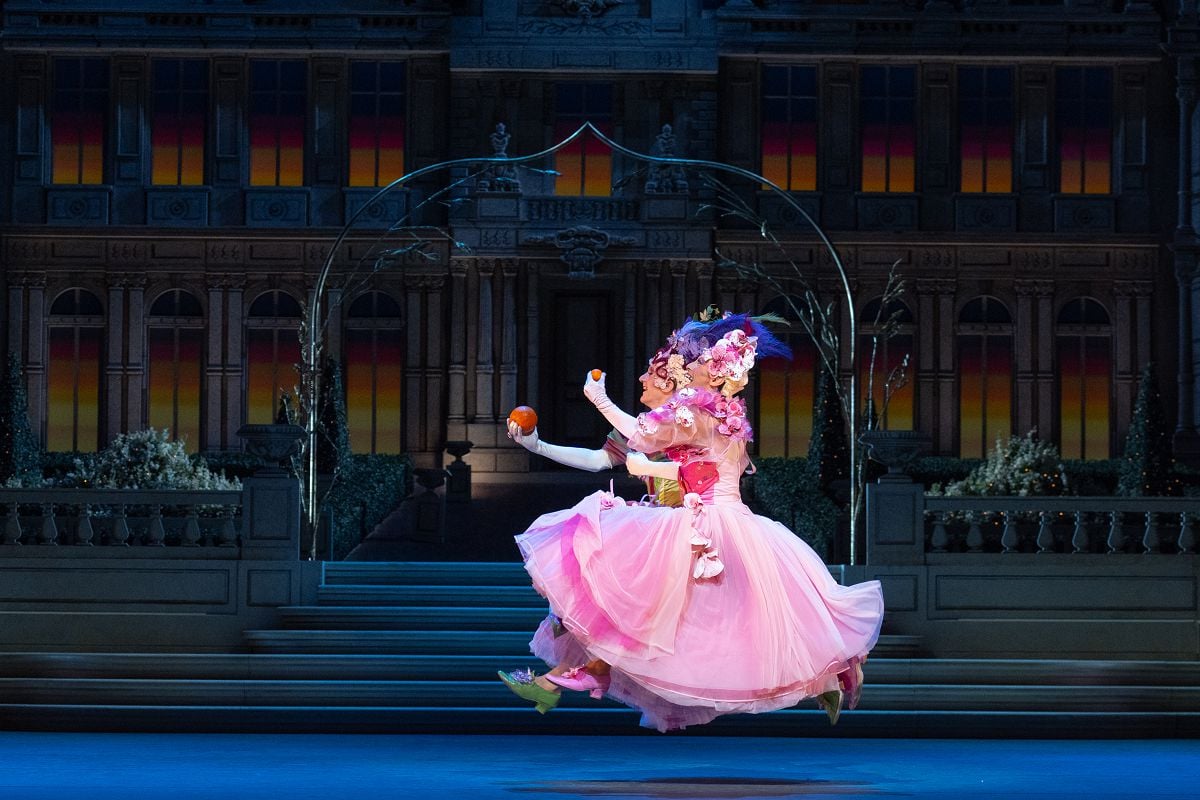
Under the baton of Jonathan Lo, the orchestra’s first notes indicated this was going to be an unforgettable evening. The Prokofiev score was sublimely executed, the opening phrases reminding us of the most recognisable phrases that summarise the ballet. The short overture (which is really a blessing as we just needed to get on with the three-act-long ballet) led into the two sisters’ fun and frolics ahead of their dress fittings, dancing class and preparations for the society ball. Gary Avis and Luca Acri were a fine pair of panto dames as ‘The Step Sisters’ (the ‘ugly’ has been dropped, a great decision on behalf of the production team to steer away from this word given the importance of allyship for drag, trans and gender-fluid characters in contemporary times). Avis and Acri’s rhymical phrasing in the opening moments was truly inspiring – there is fun part where they sow, pull the thread, cut the thread with their teeth and then spit the thread out.
These ‘women’ really are the stars of Act 1 and carry the narrative in this opening act more so than the uncomplicated, nostalgic but sublime ‘Cinderella’. What struck me was the breadth of movement material in the first Act – Avis and Acri dance several steps from social dances, including wings, high kicks and the Charleston steps, through to nineteenth-century dancing masters’ quadrille steps. What we see is a mélange of storytelling through different periods and movements (and I haven’t even spoken about ballet steps thus far). Ashton’s choreography cleverly brings these diverse elements into the narrative. In typical Ashton style, there is a multitude of props – scarves, hats, costume changes, brooms, candlestick and holder (the list goes on). But if Ashton made a dance, he also made the prop the essential feature in his dances.


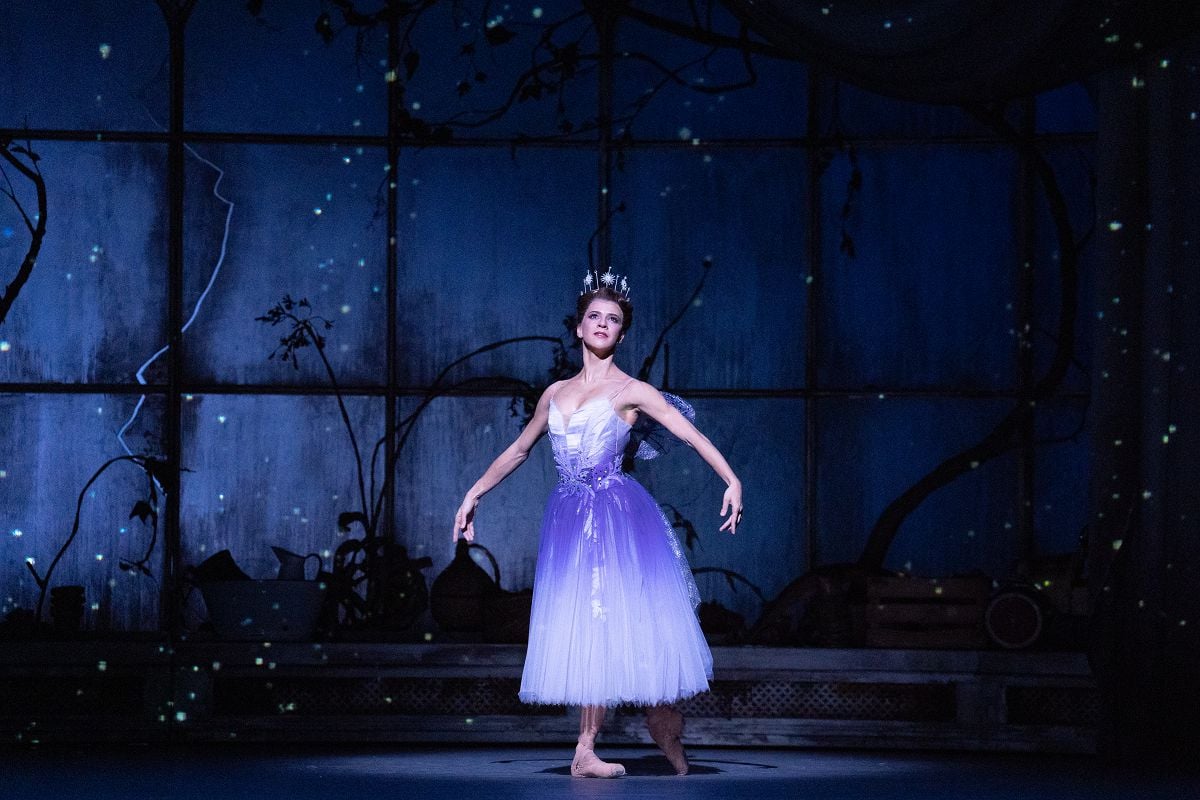
Marianela Nuñez, as the elysian ‘Cinderella’, charmingly narrates her docile but undervalued nature; her father, Bennet Gartside, is a very marginal character with minor moments in Ashton’s plot. The arrival of the majestic, but incredibly lithe, Fairy Godmother (danced by Mayara Magri) shifts the storyline into the transformation of more props (pumpkin, wands, an even the whole scenic change with the roof of the house lifting off into the sky) and the next part of the adapted tale. The four fairies – Spring (Isabella Gasparini), Summer (Mariko M. Sasaki), Autumn (Meaghan Grace Hinkis), and Winter (Claire Calvert) – added much interest to the range of choreography and qualities which each dancer brought to the plot. It was lovely to see Calvert back on stage, her grounded, yet commanding presence which complemented the range of diverse qualities that the other fairies bring.
On the other hand, the presence of the children (as buttercups, and other seasonal flowers) was slightly disappointing. I won’t dwell of this too much, but simple walks were unrehearsed, and worst of all, standing like a little buttercup may be sweet for some, but it’s pointless to stand like a yellow wallflower. Back to the positive. The simple, yet epic, stage transformation towards the end of Act 1 is a reminder that this is no other than The Royal Opera House itself – everything is possible. I love this technical feat, and all the theatrical overlays such as the projections and visual design. Best of all, the mice-drawn carriage racing off at the closing of Act 1 offered an effervescent taste of what was to come.




The ball scene continued this tale of intense musicality. The corps the ballet is at its finest, and the young men were as charming and articulate in their movements as their female counterparts. The articulation of their feet in the group section was just as intensely coached as their upper body and the counterpoint in their épaulement. Again, the attention to detail in the restaging has been truly spectacular. However, the stars of Act 2 were not the ‘Stars’ (forgive the pun, but for me the ‘stars’ are choreographic fillers) but rather the outstanding couple Nuñez and Reece Clarke (who replaced Vadim Muntagirov). What a pairing this was! A thoroughly calm and regal command, together with great chemistry, marks out their first encounter and the subsequent duets in Act 2. There really aren’t enough words to describe the sheer perfection of these two artists; they hit their lines with such ease as they shift through the shapes, dynamics and qualities in Ashton’s choreography. The entire build-up to these moments (with no theatricalities, just the epic moments from the Prokofiev score) makes it an even more magical and musical spectacle.
Act 3 is the shortest of the acts, and I wonder whether there is a solution to reduce this ballet into a two-act version. The answer to this would be shaving off material here and there, removing some of the extra thematic developments, including the two ‘Suitors’ (skilfully danced, with comic timing, by Lukas Bjørneboe Brændsrød and Joshua Junker). Do we really need more comic laughs? The two Step Sisters sustain the comedy through Act 2 and into the final act, by which point their movements become more grotesque than comic (Avis trying to force his foot in a diminutive, sparkly pointe shoe is a poignant moment). By the end of the ballet, the comedy is a little drawn out; I was relieved it was over, particularly as the characters become more grotesque in their shenanigans during the final act. As the ballet transitions into its final scene, the narrative returns back to the true reason for the fairy tale – the Prince finds his Cinderella, their union sealed through a shower of golden confetti. At curtain call, there were several floral bouquets laid at the feet of the stellar cast, gestures which remind us that this is a truly special ballet, lovingly staged through the attention to the quality in the movement, as well as costuming, lighting, and prop and stage design. It a beautiful ballet which orchestrally hits the right musical notes and corporeally manifests an intense musicality. A monumental effort in preserving a much-cherished Ashton ballet, as well as giving the ballet new life in the 21st century.
If there is one thing you do this Christmastime, let it be a visit to the Royal Opera House to catch a performance of this version of Cinderella – a truly magical evening that won’t disappoint!