Review: Rudolf Nureyev’s The Nutcracker at La Scala – outstanding five-star dancing

Graham Spicer sees Rudolf Nureyev’s The Nutcracker at La Scala – some odd dramatic choices but the company has never looked so good.
| Title | The Nutcracker |
| Company | La Scala Ballet |
| Venue | Teatro alla Scala |
| Date | 20 December 2024 |
| Reviewer | Graham Spicer |
Rudolf Nureyev’s Nutcracker is a conundrum with delightful sections that illuminate the drama, attempts to enrich the story that fail, and some peculiar additions that are puzzling and pointless.
Although the programme says that the choreography is by Nureyev, it is after Marius Petipa and Lev Ivanov, and also the 1934 version by Vassily Vainonen for the Kirov Ballet that Nureyev grew up with and danced in. The quirky final pose at the end of the adagio of the pas de deux, which has Clara laying on the Prince’s 90-degree leg held in an arabesque – though more of an ecarté – is from Vainonen, and there is a photo of Nureyev in that position with Nina Vyroubova from 1961.




Much is always said about the choreography being ‘Freudian’. Well, er, yes. Here Drosselmeyer becomes Clara’s Prince, though why with all the handsome ballet-trained guests at her parents’ party to inspire her romantic (indeed erotic) dreams, an irascible old man with an eyepatch and a limp becomes her Prince would have Freud rubbing his hands with curious glee.
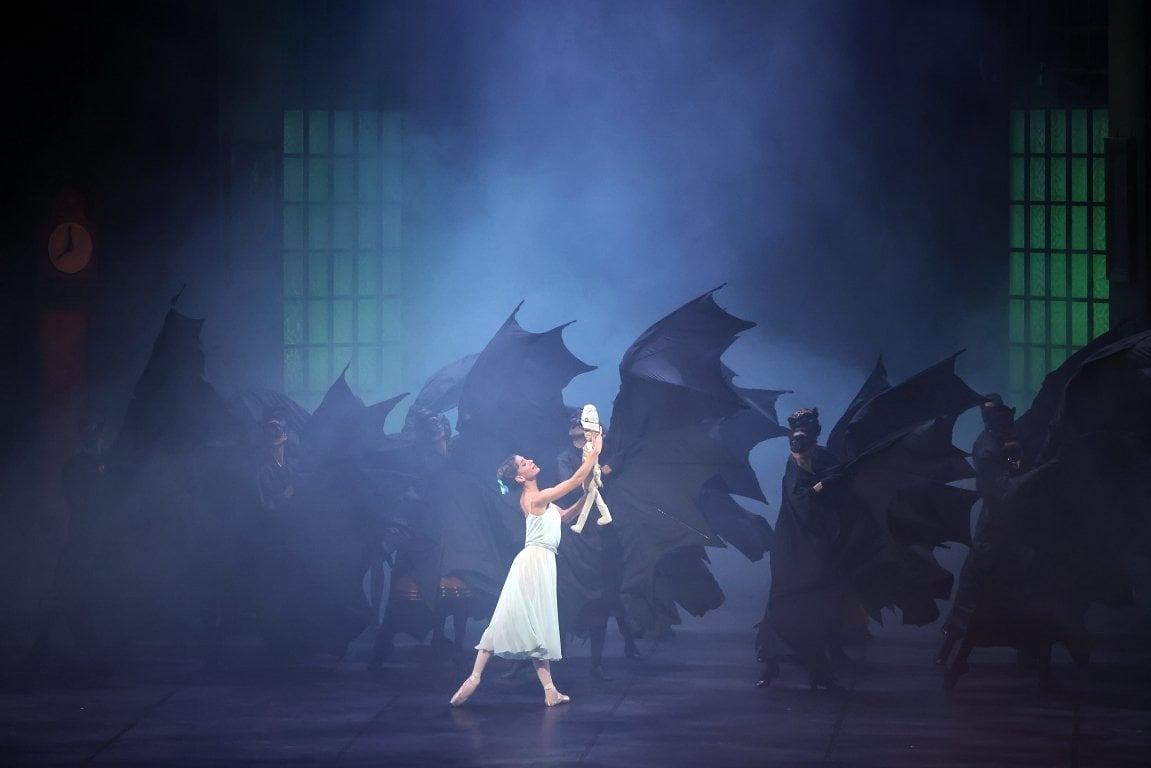
The doubling up of roles is extensive and a fine idea, though if the transformation of the guests and relatives into characters in Clara’s dream – and nightmare – cannot be discerned then the idea is worthless. After the presage of Clara’s dream in Drosselmeyer’s ‘Punch and Judy’ show during the party he presents the three Stahlbaum children – Clara, Fritz and Luisa – dressed as toys and each has a variation. Fritz is a soldier, Clara is a doll, and Luisa a Tartar warrior. Afterwards, children at the party pull at Fritz’s gun and mask and he is almost revealed as he runs offstage (to change?) so if you blink, you’ll miss it. Clara too is unmasked onstage, but unless you peek between the children’s legs and see her tug off her costume, you wouldn’t know that it was her. So why not let us see the transformation? Later there are menacing bats in Clara’s dream, played by the party guests, but they could be the snowflakes as far as the audience is concerned, yet two years ago when the ballet was reintroduced into the repertoire, we saw the guests quite clearly removing their domino masks. In Clara’s dream (not set in the Kingdom of Sweets), her siblings lead the Spanish dance, her grandparents appear in the Arabian dance, and her parents lead the Russian dance, but again, unless you have a sharp eye and are sitting in the front rows, you wouldn’t know.
Other odd dramatic choices are the Russians bowing to each other and comically hitting their heads together and looking dazed before their music begins. Ridiculous Russians? What does it mean? Too much vodka? And the Arabian couple rob from the ‘grandparents’, stealing a little bag of coins – an in-joke about the pasha in Le Corsaire? Who knows? At least the re-stagers, hopefully.
When Luisa shows her sister her pretty rag doll, Clara clutches tightly her plain-looking nutcracker, which she clearly prefers. Later, when she is attacked by the mice, she throws rag dolls to distract them (though the mice prefer the nutcracker doll too). It’s a good idea, but unfortunately, the scene goes on and on, without development. The same is true of the party guests as bats, with Clara passing among them terrified. There is no dramatic progression and, bizarrely, when the ‘Prince’s theme’ takes over from the mouse battle music, she just continues to be trapped among them – at the Mariinsky, the bats are dispersed as soon as the Prince and his theme arrive.
In the ballet’s closing bars, Clara, with her nutcracker doll, peeks out of the house questioningly while Drosselmeyer lingers at the edge of the stage in his long cloak, like the stereotypical dirty old man in a mac outside the school gates. Very odd dramatic choices indeed.
Nicholas Georgiadis’ original dark designs from 1968, full of Victorian gloom, need reworking. The costumes are delightful, but the scenery creaks. The transformation scene is devoid of magic, as the tree zigzags upwards and wiggles from side to side on wires as it grows. The children playing the soldiers march onstage with a strong light behind them, and a turret can just about be made out, but as there was no miniature toy version of a fortress in the house beforehand, it makes little sense. The pot-bellied, moth-eaten mice are cute (firing sweets to keep them at bay from a canon is a nice touch), and the team of horses ridden by soldiers is delightful, but the battle scene is wearisome.


The snowflakes scene works well, and is set in the garden that can be glimpsed outside the windows during the party, with a line of statues from a stately home in the background. Modern lighting means that the snow is dazzlingly white and illuminates the theatre, which looks new and refreshing.
So stop with the whining and on to the good, of which there was lots.
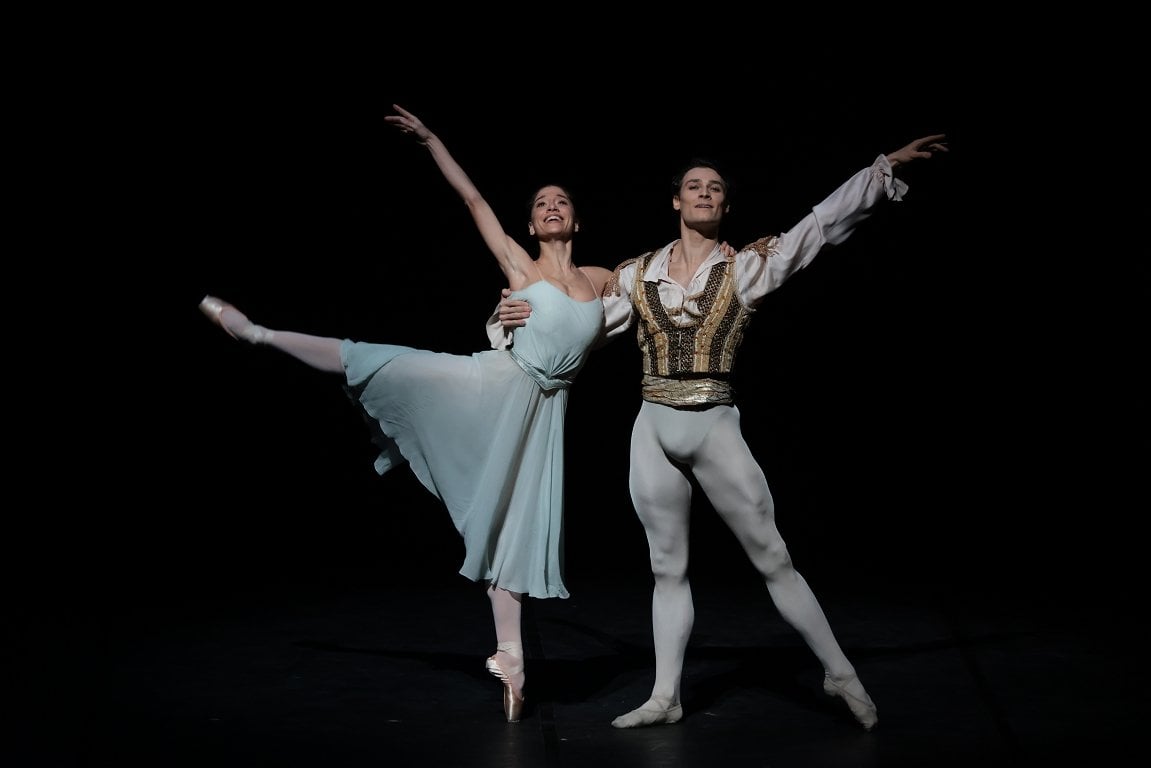
Although Nureyev is always accused of packing in too many steps, and needlessly complicating the life of the dancers with countless changes of direction and eccentric variations of standard positions, when his choreography is danced by the likes of Alice Mariani (Clara) and Hugo Marchand (The Prince) it is a joy to see the idiosyncrasies make sense. Mariani is a delightful, fresh young Clara without cutesiness, has a smile that rivals the whiteness of the snow, and dominates the choreography with apparent ease. Marchand’s regal elegance is well noted. It is a quality that makes many dancers seem aloof, but his Prince is full of warmth as well as graceful dexterity. The two gave the impression of having danced together for a lifetime.




This is the best I have ever seen the corps de ballet. The snowflakes were crisp and clean in creating Nureyev’s challenging configurations, and Maria Celeste Losa was floaty in her jetés as one of the leading ‘flakes’. The Waltz of the Flowers, in a grand ballroom with chandeliers, is a triumph of choreographic design, beautifully executed. And not to forget the march of the 24 well-schooled children in the party scene. No skipping in circles here – Nureyev gives them intricate weaving patterns and partnering. A special mention to Serena Sarnataro and Matteo Gavazzi as the grandparents who tread just the right side of the fine line of being shaky but believable rather than wobbly and ridiculous.
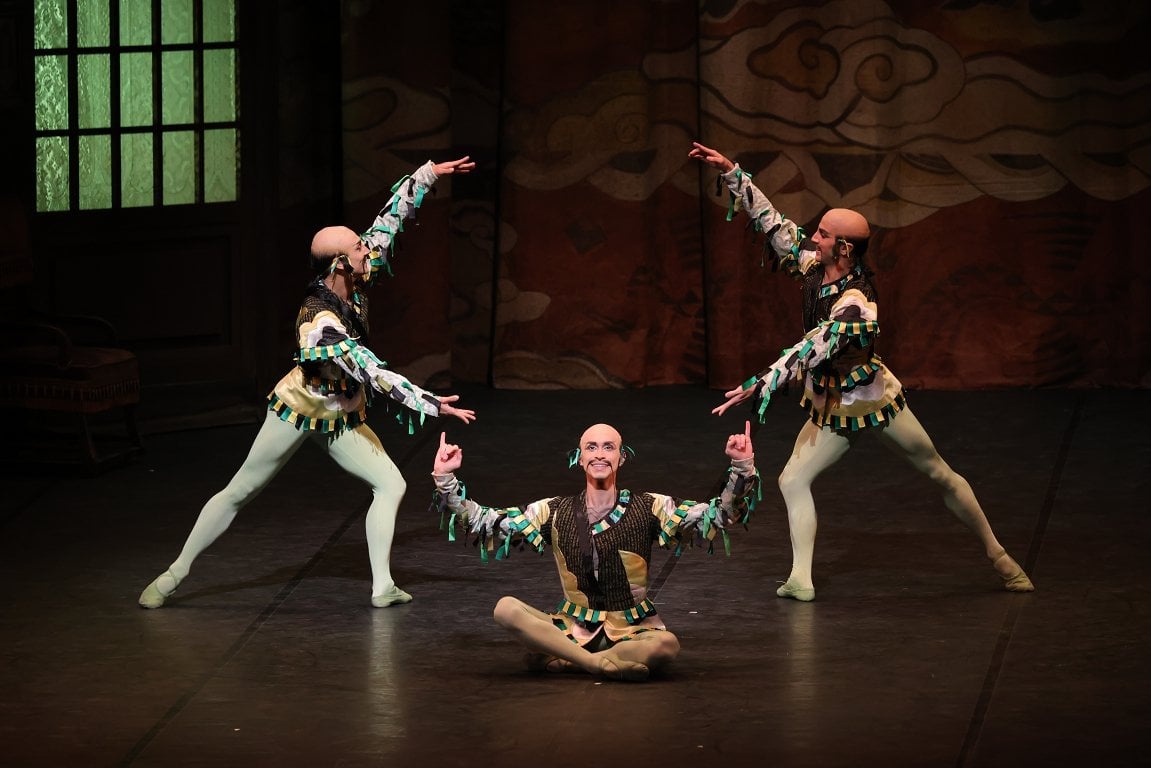
The Chinese dance – with pointy fingers – was excitingly danced by Domenico Di Cristo, Christian Fagetti and Rinaldo Venuti, and Linda Giubelli and Mattia Semperboni were believable as Luisa and Fritz and dynamic in the Spanish dance.
Another highlight was the Pastoral pas de trois, set to the music of the Dance of the Mirlitons and here given a Winter Palace (or possibly Versailles) makeover with white wigs and costumes out of a Boucher painting. The excellent Nicola Del Freo gave the Prince a run for his money (it’s a role he will play in later performances) with some fleet footwork and was joined by Vittoria Valerio and Agnese Di Clemente, both in sparkling form.
However, this version of the ballet is dominated by the presence of Clara and the Prince/Drosselmeyer, and Mariani and Marchand sent electricity around the auditorium at every appearance, culminating in their thrilling pas de deux.
This is a four-star review – three-star for the production and five-star for the outstanding dancing.