Review: Acosta Danza’s A Decade in Motion – an incredible coterie of dancers
Lily Hyde sees Acosta Danza celebrating A Decade in Motion – the incredible dancers deserve a better programme in which to display their talents.
| Title | A Decade in Motion |
| Company | Acosta Danza |
| Venue | Sadler’s Wells, London |
| Date | 23 September 2025 |
| Reviewer | Lily Hyde |
In the ten years since its founding, Carlos Acosta‘s Havana-based company, Acosta Danza, has developed an incredible coterie of dancers, and this celebratory programme at Sadler’s Wells seems to highlight the dancers’ skill, rather than those of the choreographers whose works they perform.
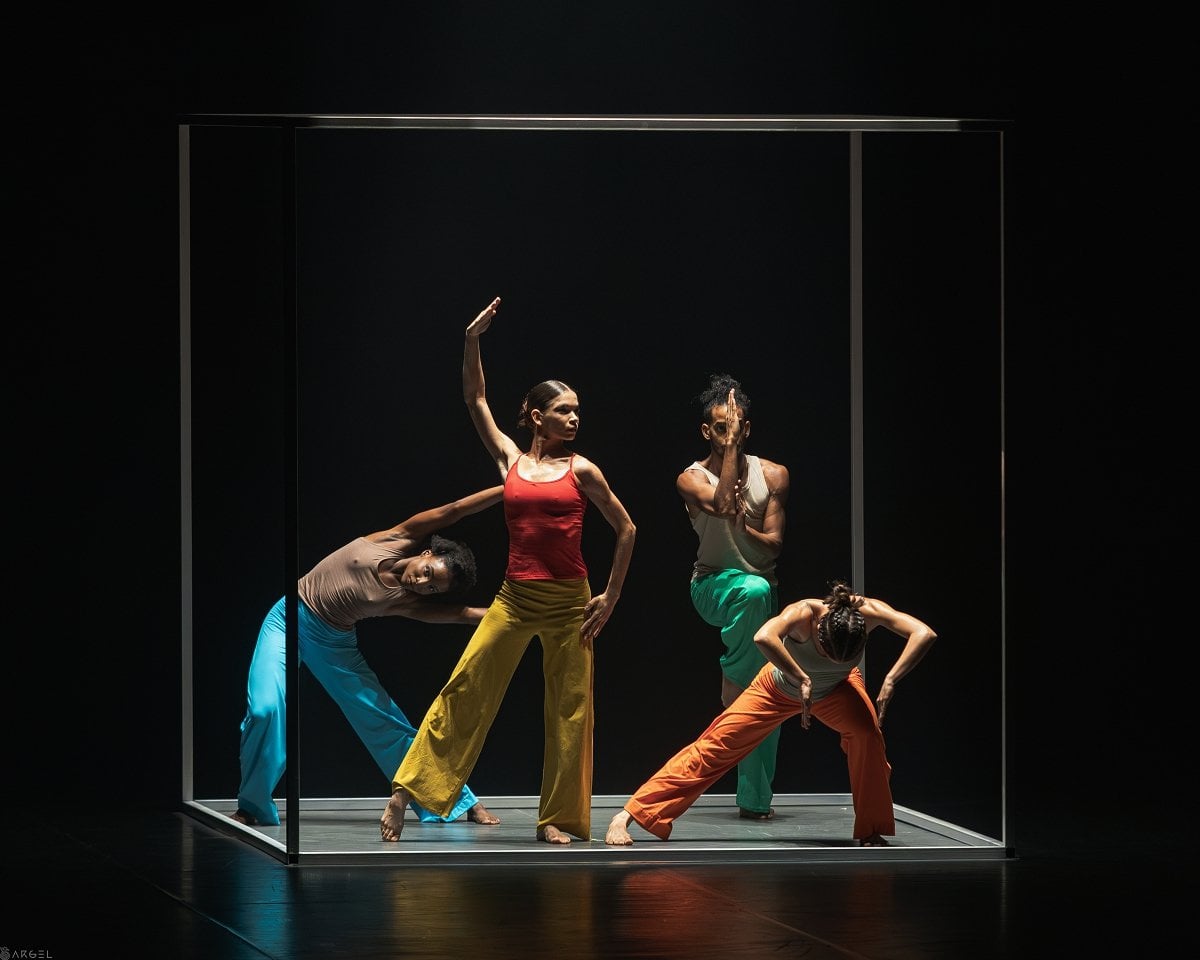
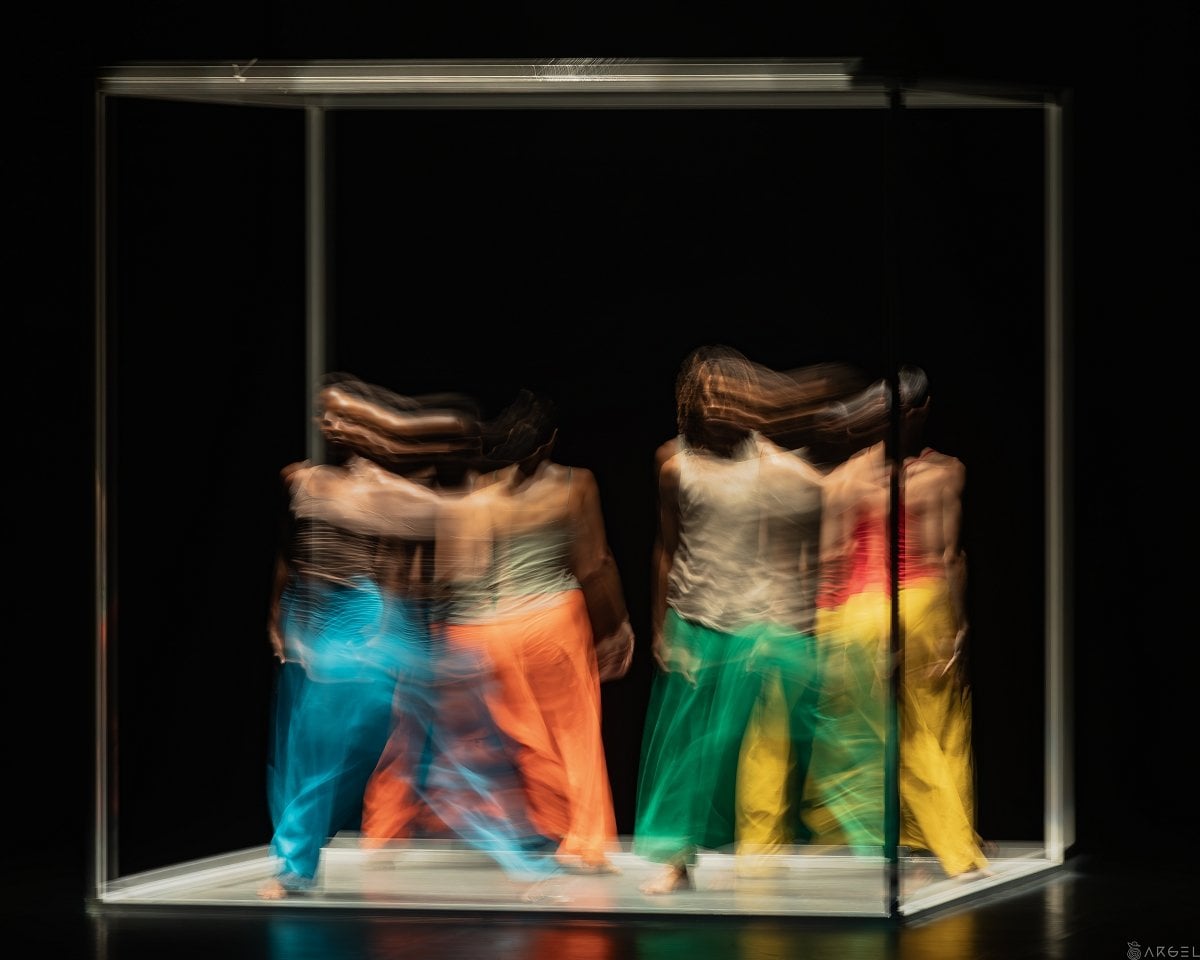
The programme starts strongly with George Céspedes’s La Ecuación. First performed in 2014, it’s a taut and dynamic piece that showcases the technical excellence of the four dancers. Taking place within the skeleton of a large cube, the dancers must break free from the confines of their setting and each other, and, as X Alfonso’s pulsating music intensifies, suppleness gives way to sharpness. It’s a masterclass in precision and control, with standout performances by Cynthia Laffertté and Amisaday Naara.
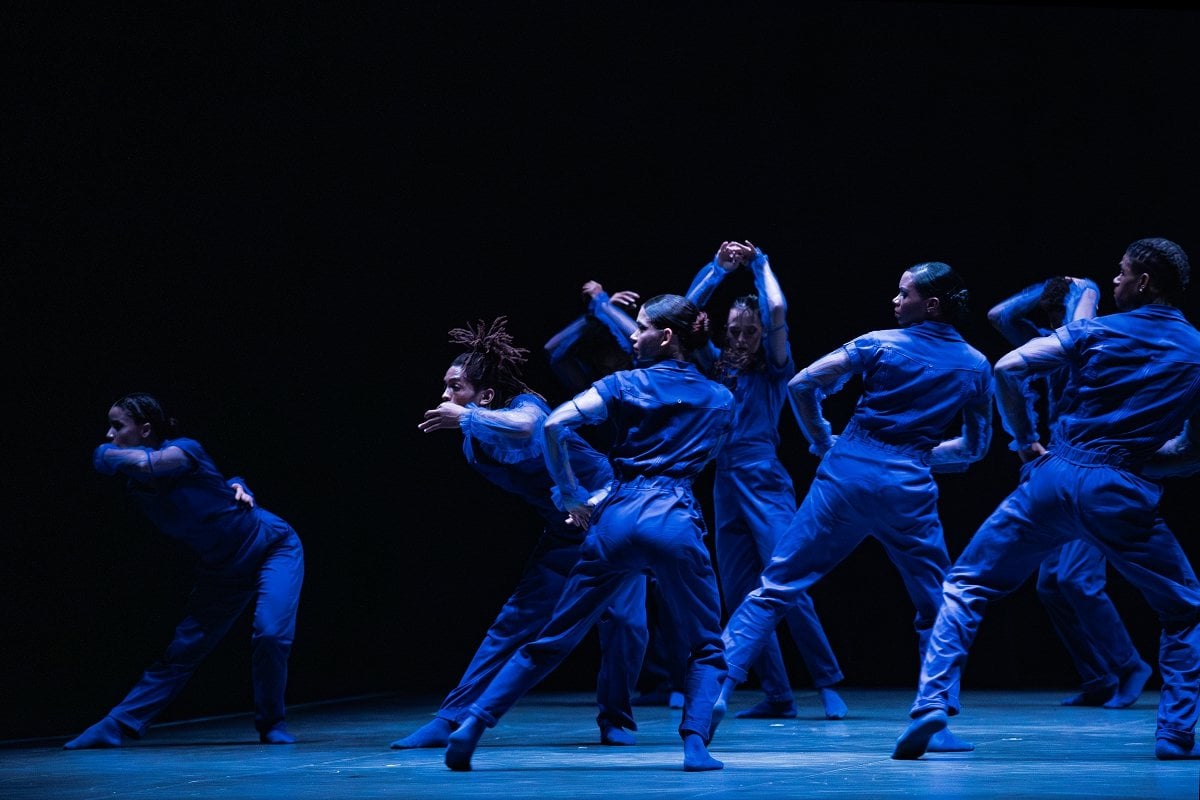
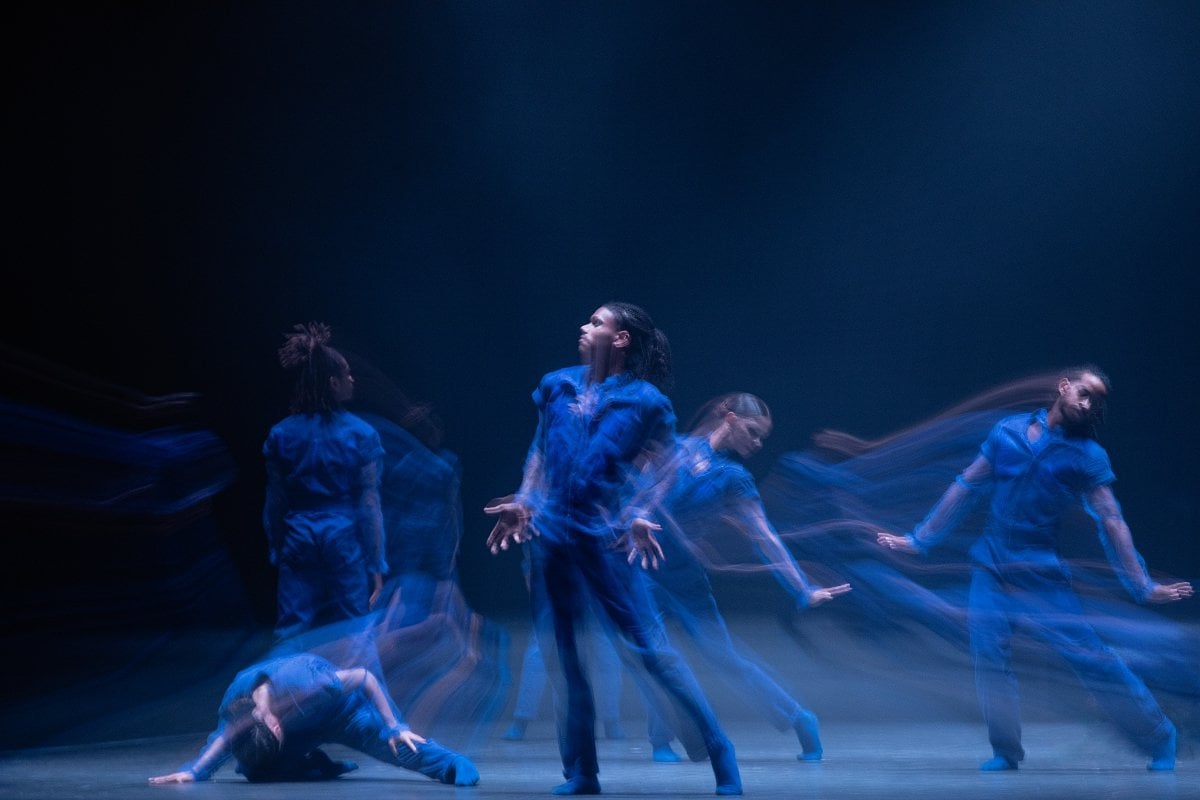
98 Días, a new piece by Javier De Frutos, is inspired by the poet Federico García Lorca’s extended stay in Cuba; a week-long visit turned into 98 days – the happiest of García Lorca’s life. Fairly loose in its adaptation, ten dancers take to the stage in uniform blue jumpsuits to dance to a blend of Estrella Morente’s music and García Lorca’s poetry. The poetry inspires a fierce synchronicity within the dancers, while still maintaining an individualism and expression one would never see in a traditional corps de ballet; it’s incredibly exciting to watch.
The piece occasionally falters. The glitches in the recording of García Lorca’s poem Son de Negros en Cuba quickly lost their novelty and dragged the pace. Pace is an issue – despite establishing a clear sense of progression by counting the days, the piece fails to meaningfully convey a sense of peril or sadness as it approaches day 98. The ending feels abrupt and rushed, but maybe all unwilling goodbyes are.
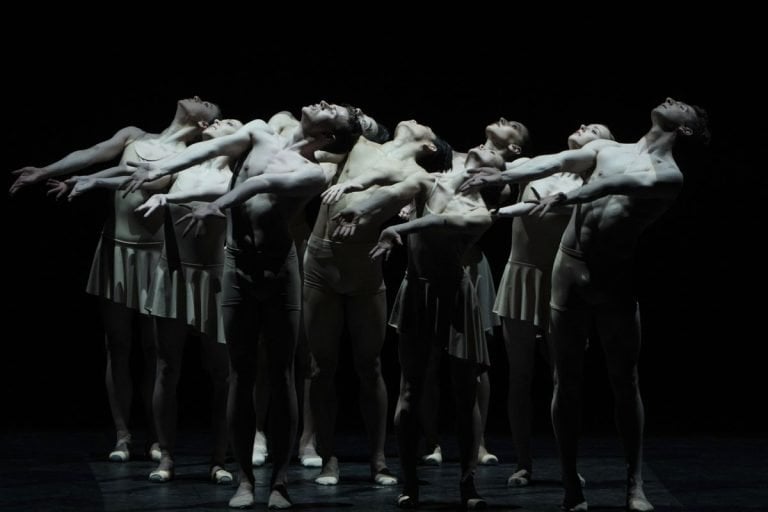
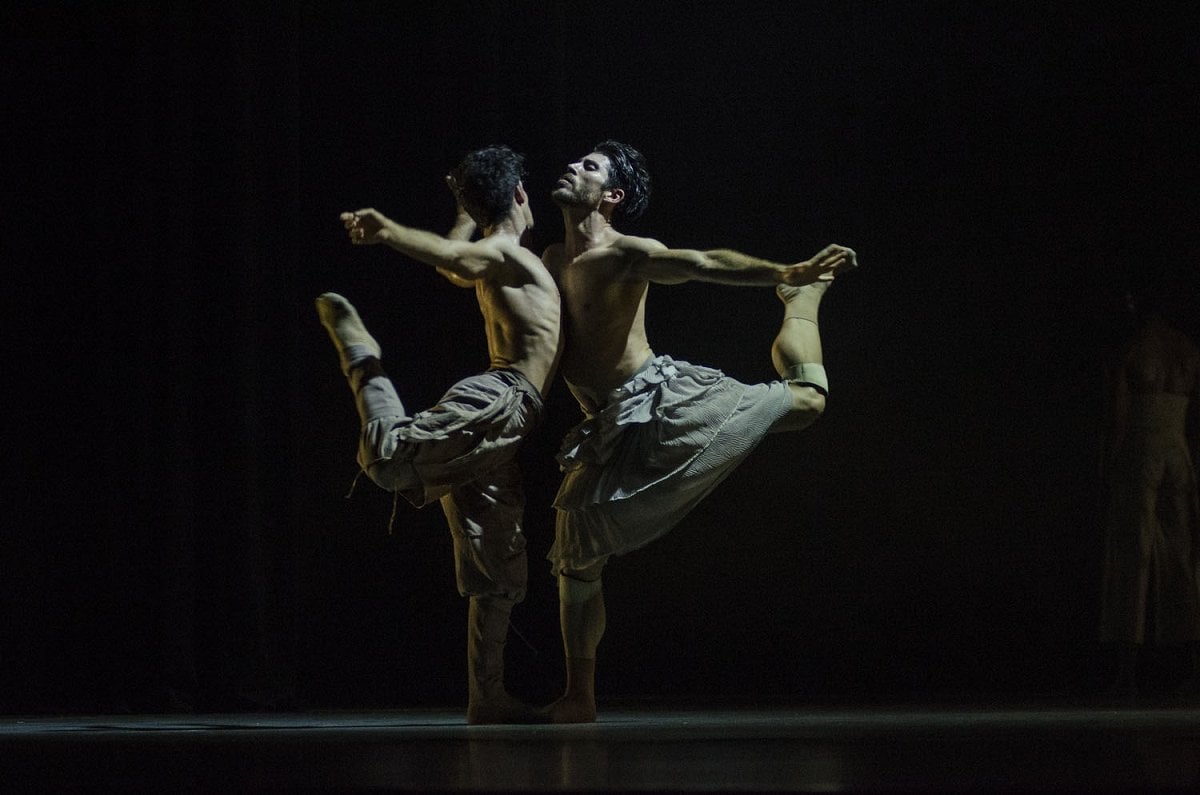
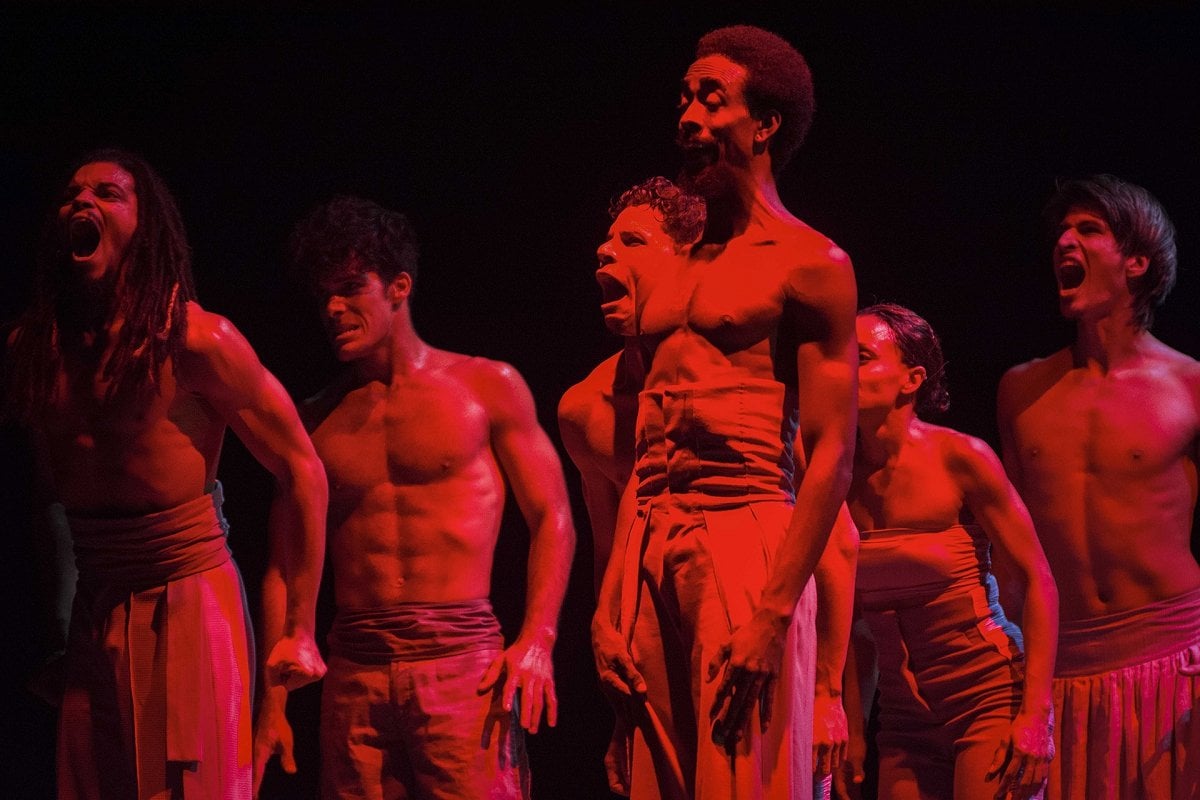
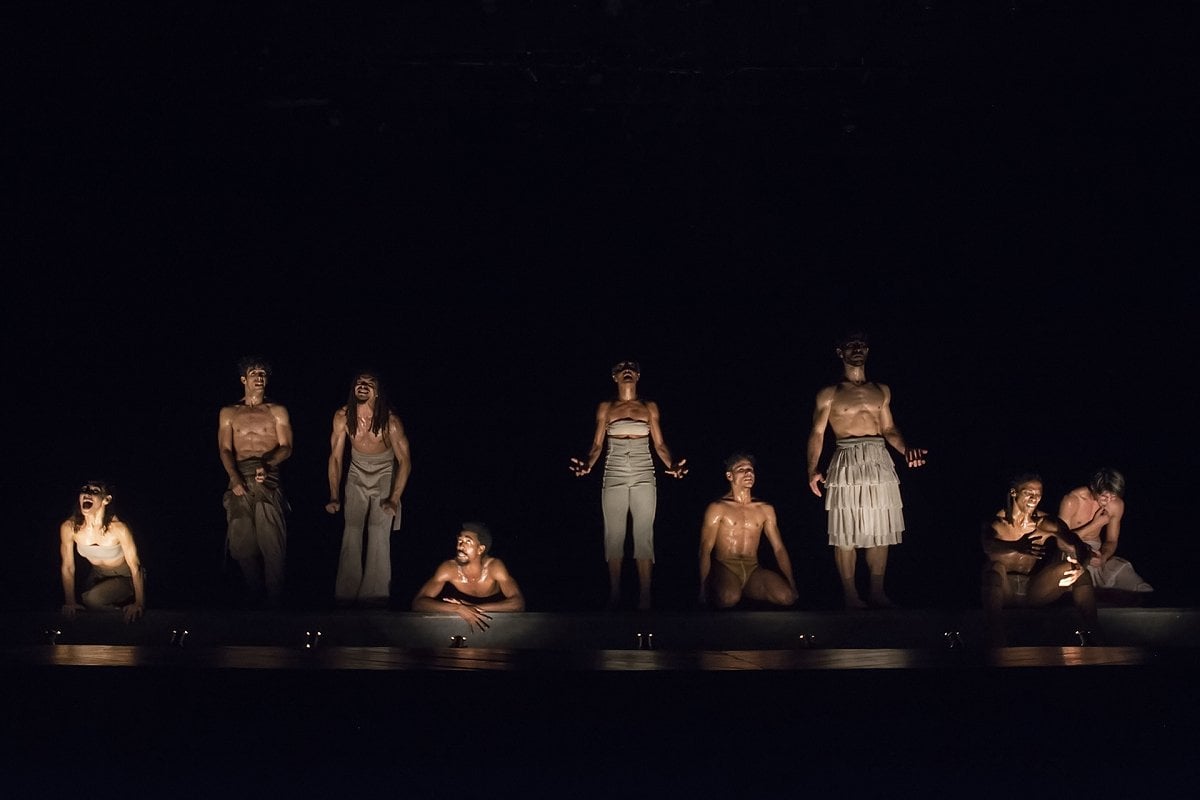
Goyo Montero’s Llamada also premiered. Starting with the dancers writhing and undulating on the floor, is this from mania, ecstasy, or both? They clutch their throats, make loose signs of the cross, and seek absolution. Montero says that the piece explores ‘questions to do with gender’, but apart from some of the male dancers wearing deconstructed tutus, the exploration feels rather shallow. It’s a far more effective exploration of herd mentality, and the dancers are at their best as a collective that taunts and ostracises those who deviate, and must repress their own desires to assimilate, expertly conveyed by Alexander Arias.
The harsh red lighting amplifies the aggressive atmosphere, in which dancers run and silently scream as they are thrown into the air. Athletic and primal, it’s a little on the nose, and at times seems to pride itself on being revolutionary when, in fact, it says very little. The most meaningful moment is when the dancers reach an accord and break off into languid pas de deux, rocking to the music of Rosalia. Some souls remain lost, and perhaps it would have been more effective to have them wander the stage alone, rather than have the entire company give into hysteria, with movements that wouldn’t look out of place in The Rite of Spring’s sacrificial dance. As the dancers descend into madness, with manic spins and silent wails, it’s riveting to watch, just don’t expect subtlety.
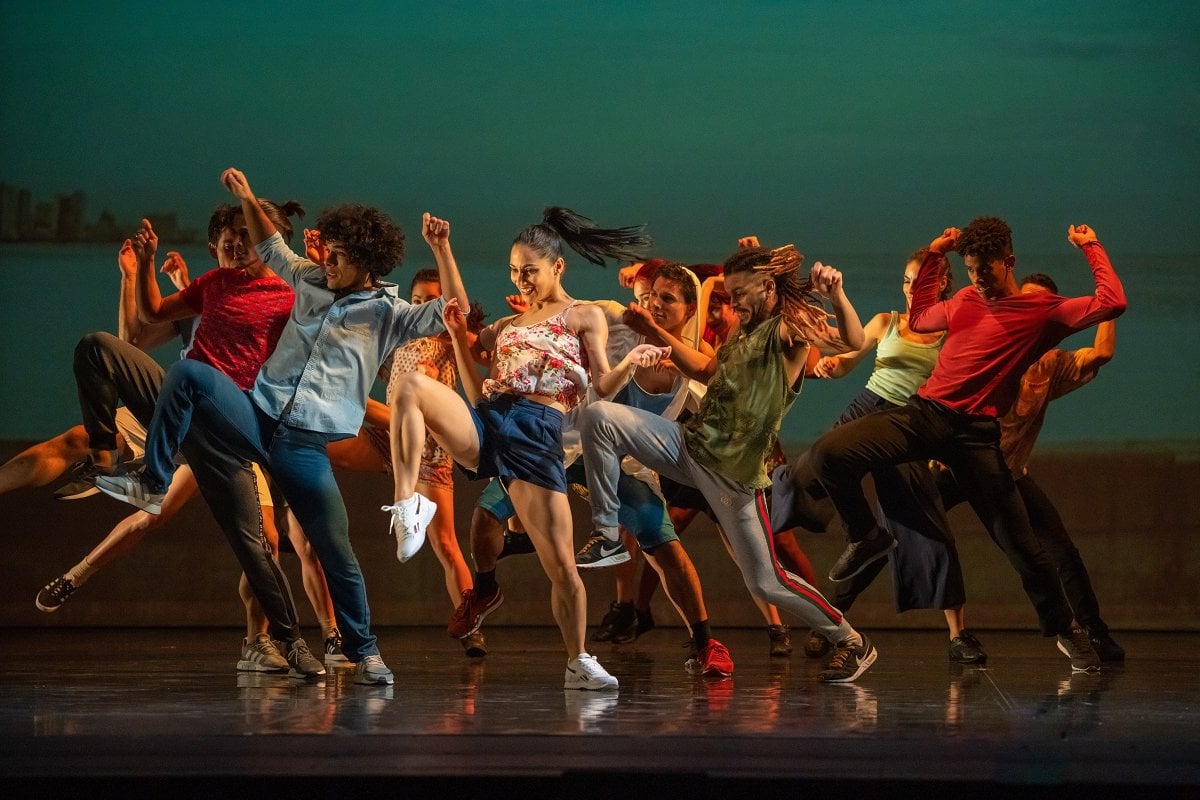
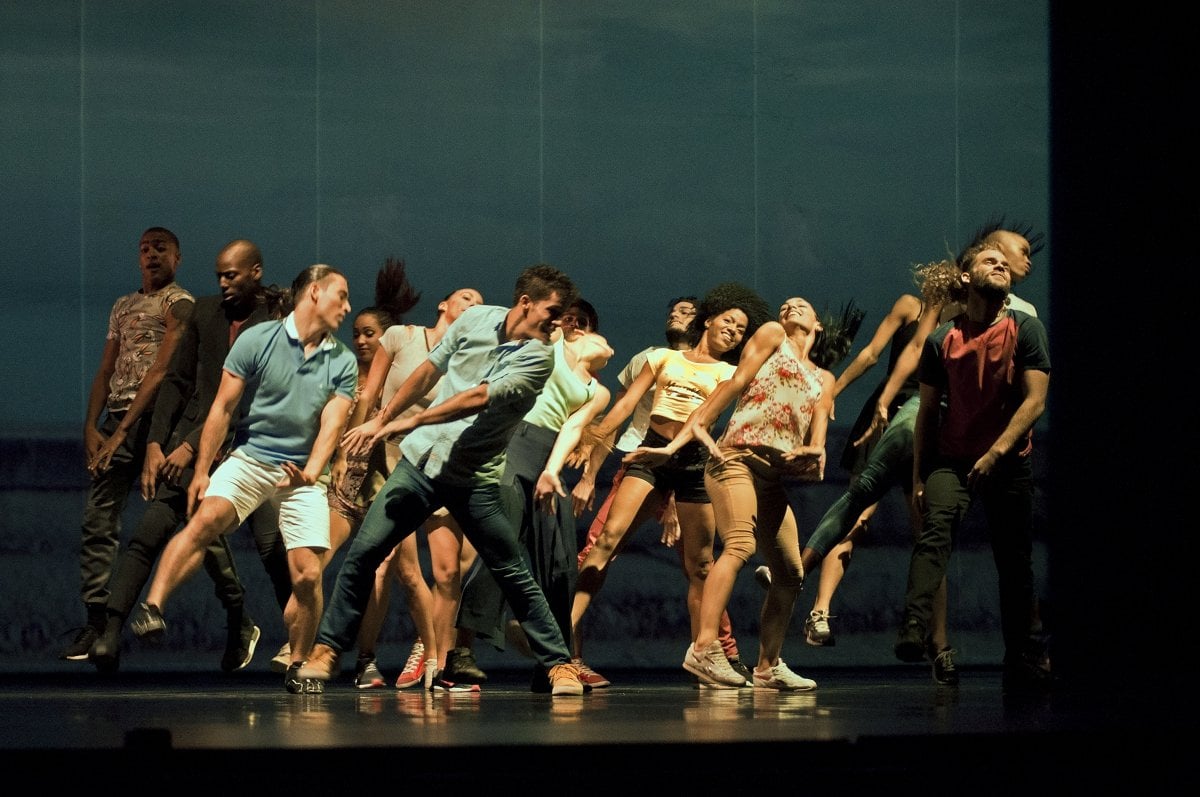
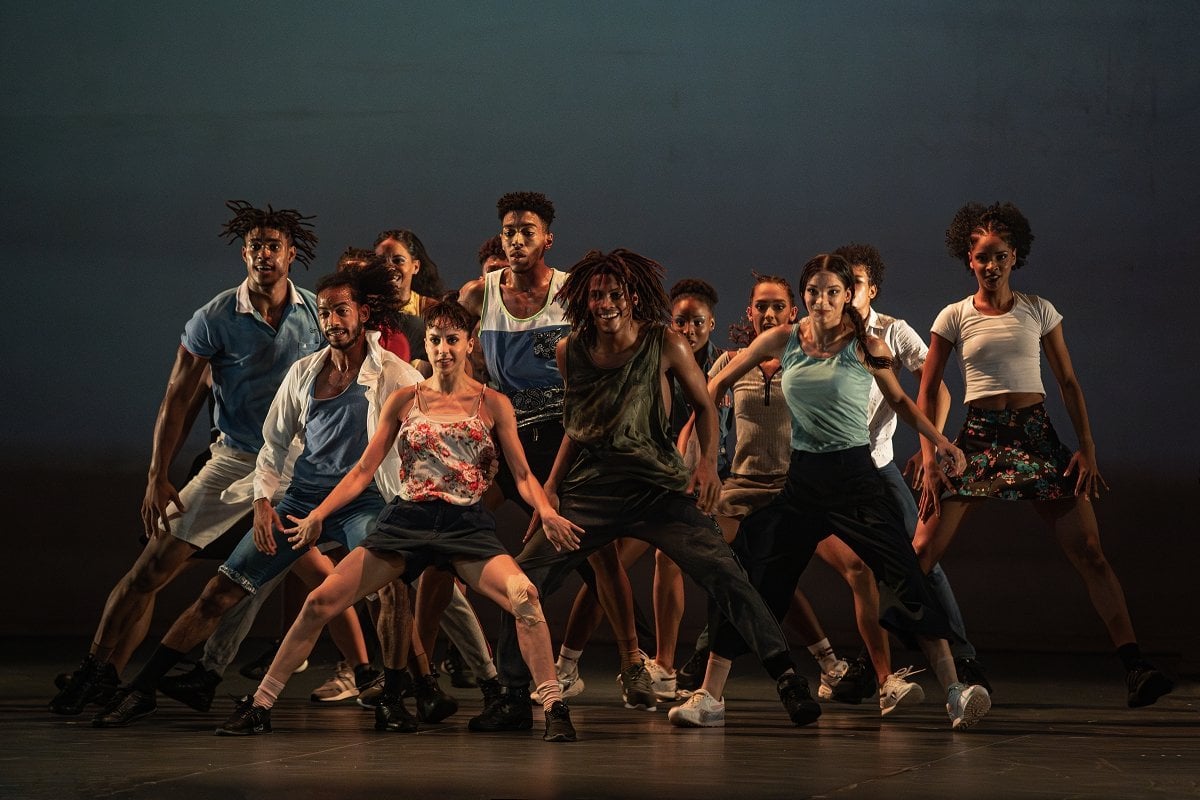
The final piece, Alexis Fernández’s De Punta a Cabo, is the weakest of the programme. An exploration of the contemporary Cuban personality, featuring a range of dance styles from classical ballet to salsa, it tries to do too many things, without succeeding at any of them. It’s a piece that feels unconsidered and fails to develop a sense of meaningful cohesion between its elements.
The background projection of the Malecón doesn’t quite work and is occasionally distracting, and despite featuring every member of the company, the piece fails to create a sense of scale. There is too much of a focus on creating a casual atmosphere, but with so few moments of group harmony, the action on stage looks sloppy and unrefined. Pointe shoes are donned at random, and though the dancers have incredible balletic abilities, Fernández doesn’t create a world in which it makes sense to showcase this or, indeed, have women dancing classical ballet being partnered by men wearing denim shorts.
It feels more like a freestyle dance battle than it does a choreographed piece. There is no sense of progression or arc – the projections that take us from day to night to dawn, but the dance neither develops nor changes, and the ending, in which dancers remove their outer garments and huddle together in a tangled mass, feels unearned.
If the exuberant curtain call was anything to go by, it is clear that Acosta Danza has cultivated a company of incredible dancers. They deserve a better programme in which to display their talents.

Lily Hyde is a cultural and dance writer based in London. Her writing has appeared in The Fence and The Creative Independent, and she runs the cultural newsletter, Falling Upwards. She is currently writing her first novel.