Review: The Royal Ballet revives Glen Tetley’s Pierrot Lunaire
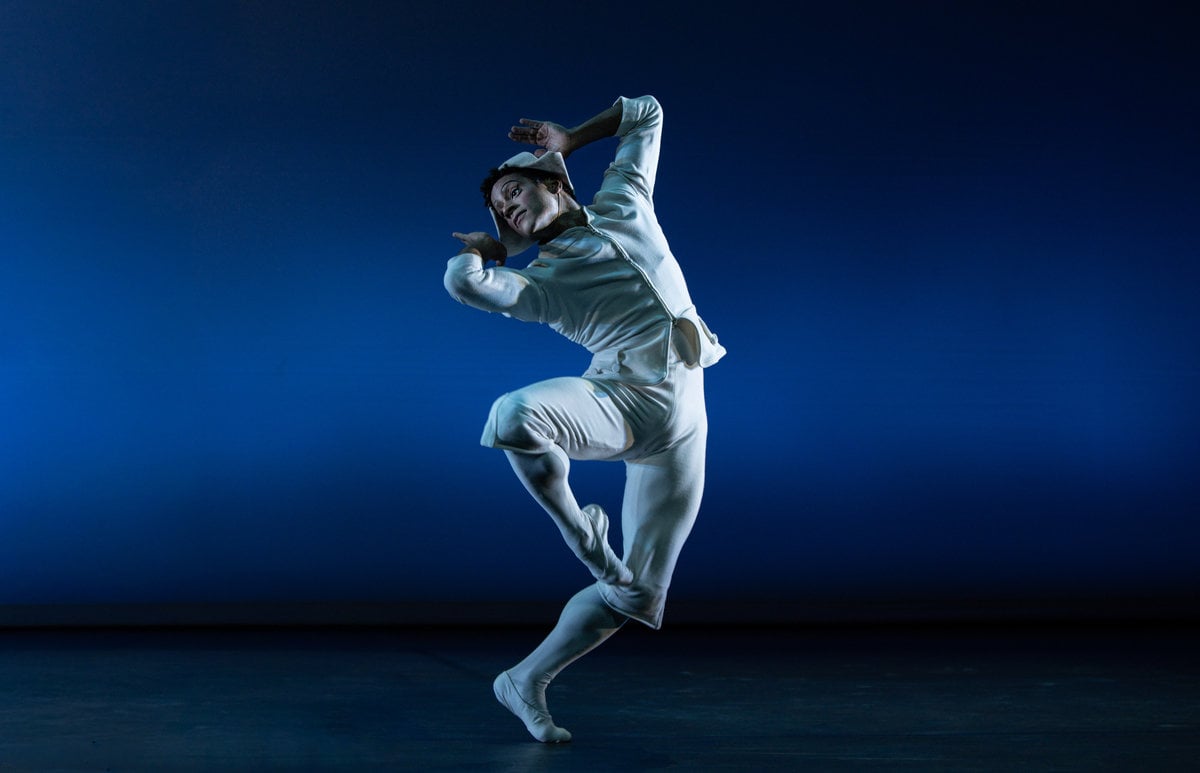
Graham Watts sees Marcelino Sambé, Mayara Magri and Matthew Ball in Pierrot Lunaire, celebrating Glen Tetley’s centenary.
| Title | Pierrot Lunaire |
| Company | The Royal Ballet |
| Venue | Linbury Theatre, The Royal Opera and Ballet, London |
| Date | 10 February 2026 |
| Reviewer | Graham Watts |
What do you get with a mix of commedia dell’arte, modern dance, classical ballet, 19th-century Belgian poetry, expressionist atonal music of the early twentieth century, all stirred with a twist of the parallel bars discipline in Olympic gymnastics?
Add these ingredients together and the only answer will be Glen Tetley‘s Pierrot Lunaire, the breakthrough work that became Tetley’s enduring legacy, created in the debut year of his own company, in 1962. It represents his distinctive style, fusing classical ballet and modern dance techniques, built upon Tetley’s experience of working with Hanna Holm, Martha Graham and Antony Tudor.
Tetley’s journey into choreography was unusual, coming via the US Navy and medical training. Reflecting this broad experience of life outside dance, Tetley’s choreography encompassed a diverse range of concepts and imagery, although he invariably cut through such initial narrative ideas to focus on the movement content that they inspired and this methodology is never more evident than in this flagship work.
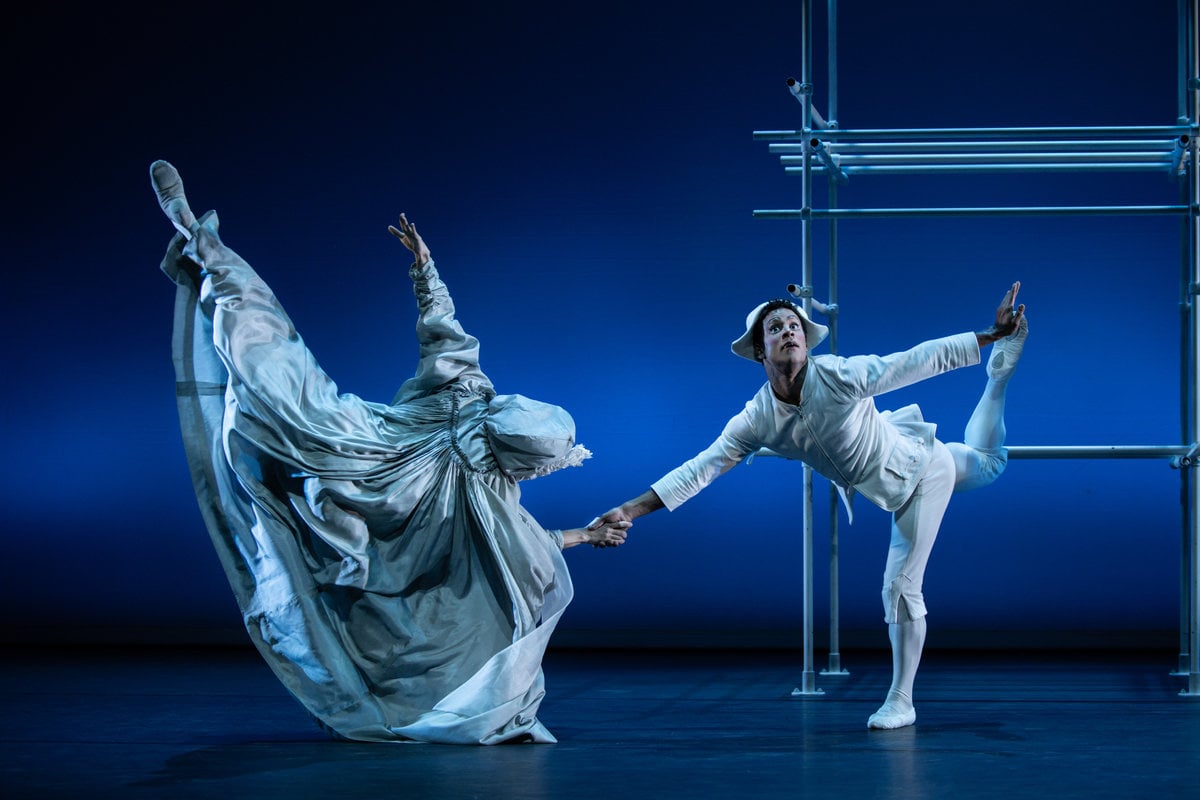
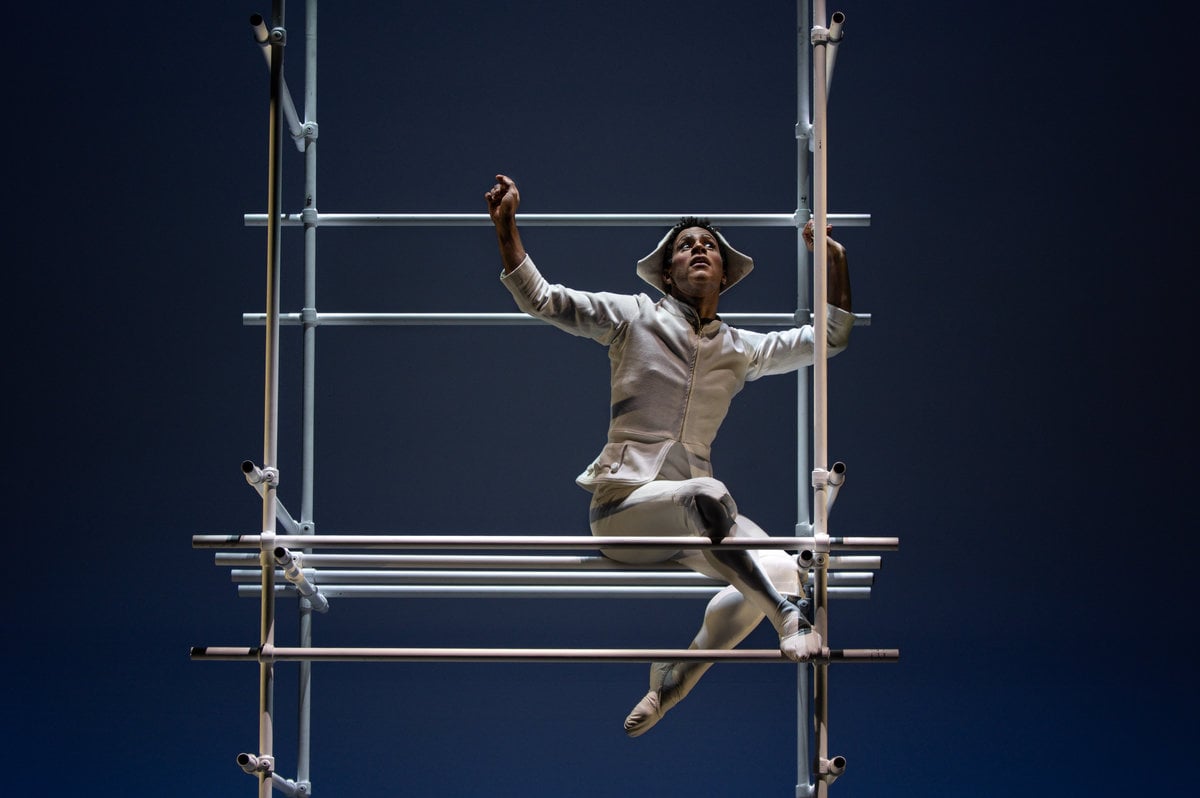
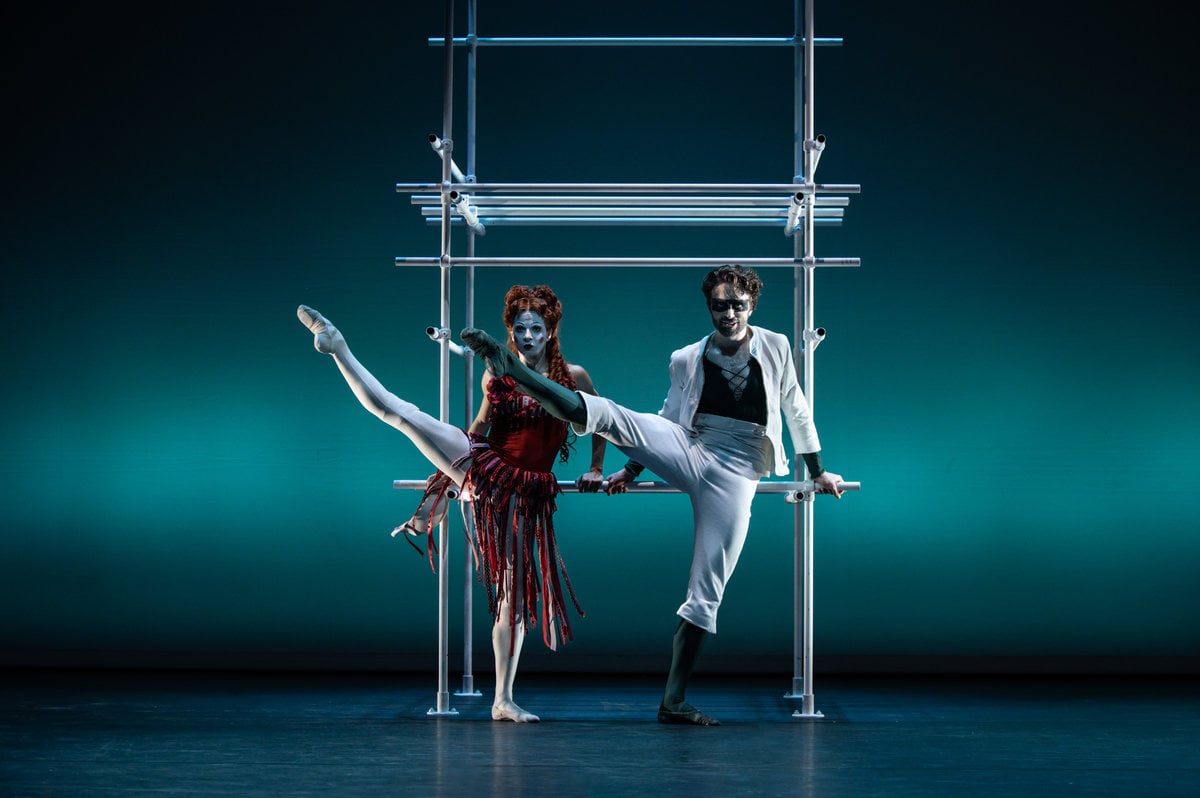
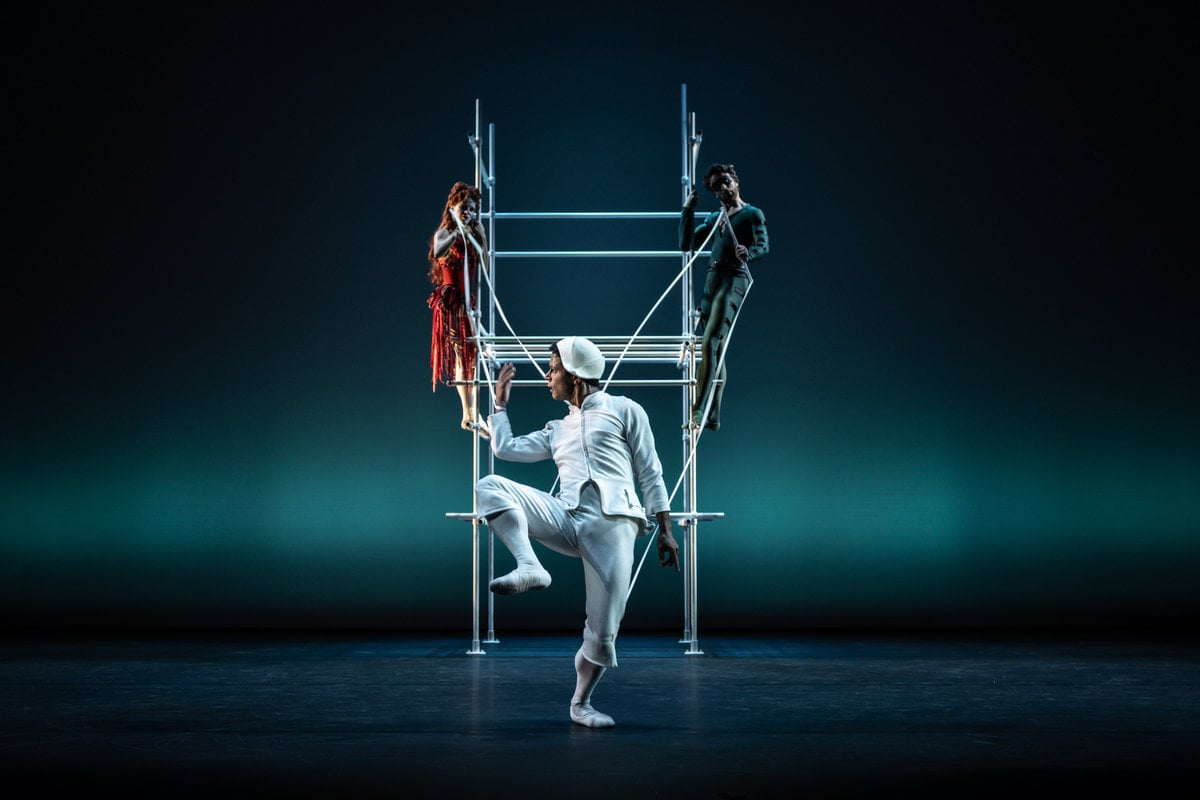
Tetley drew upon Arnold Schoenberg’s eponymous score (1912) with lyrics drawn from Albert Giraud’s Rondels bergamasques (1884), which was based in turn on three commedia dell’arte characters. Tetley did not follow the detailed content of Giraud’s 21 identically structured poems, instead using them thematically to describe the highs and lows in the interactions between Pierrot, Columbine and Brighella, all played out in and around Rouben Ter-Arutunian’s memorable tower of scaffolding poles.
One major reason for the ballet’s enduring appeal is that opening money shot of Pierrot rocking on the top level of the scaffold suspended by his upper arms wrapped around the metal pole, staring wondrously at the moon.
It’s more than 20 years since The Royal Ballet last performed Pierrot Lunaire, then on the main stage and when Tetley was still alive. He died in 2007 and this brief season of performances in the Linbury Theatre celebrates the centenary of his birth.
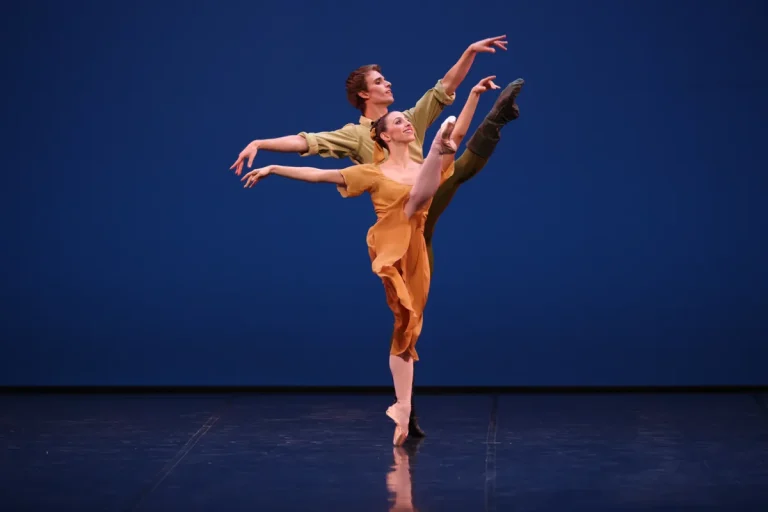
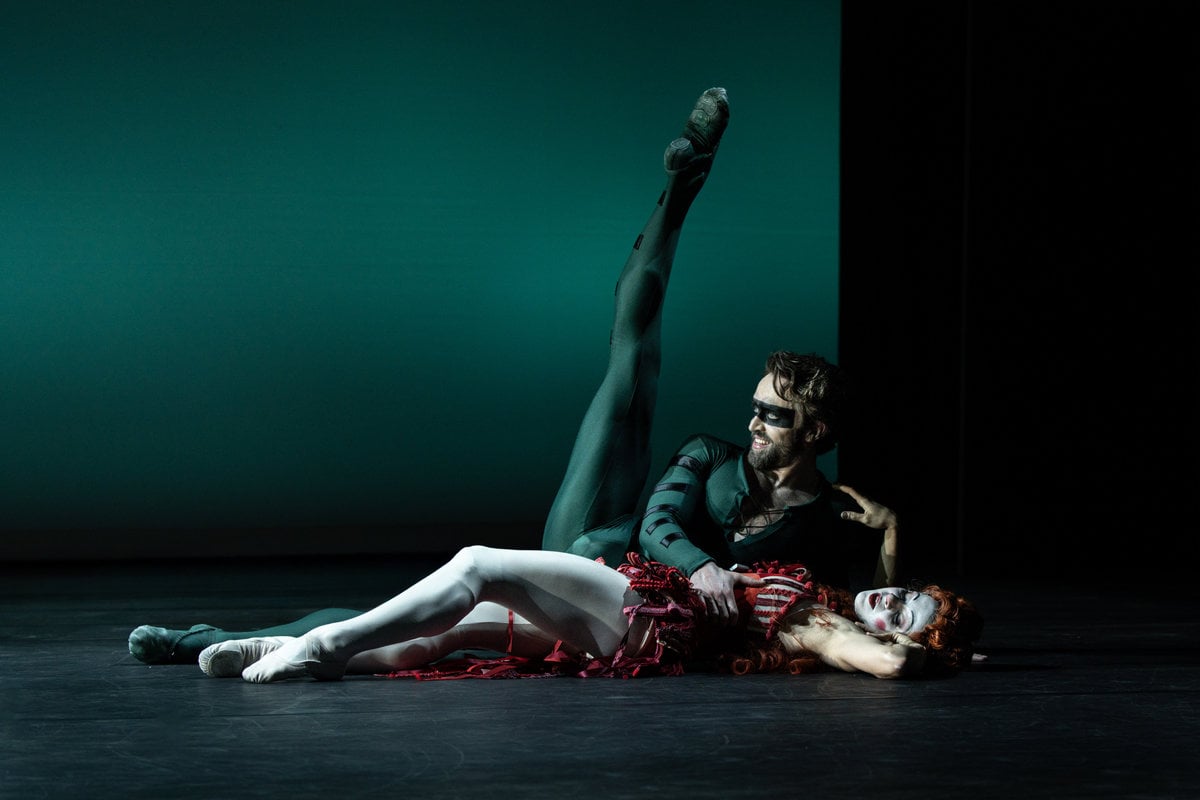
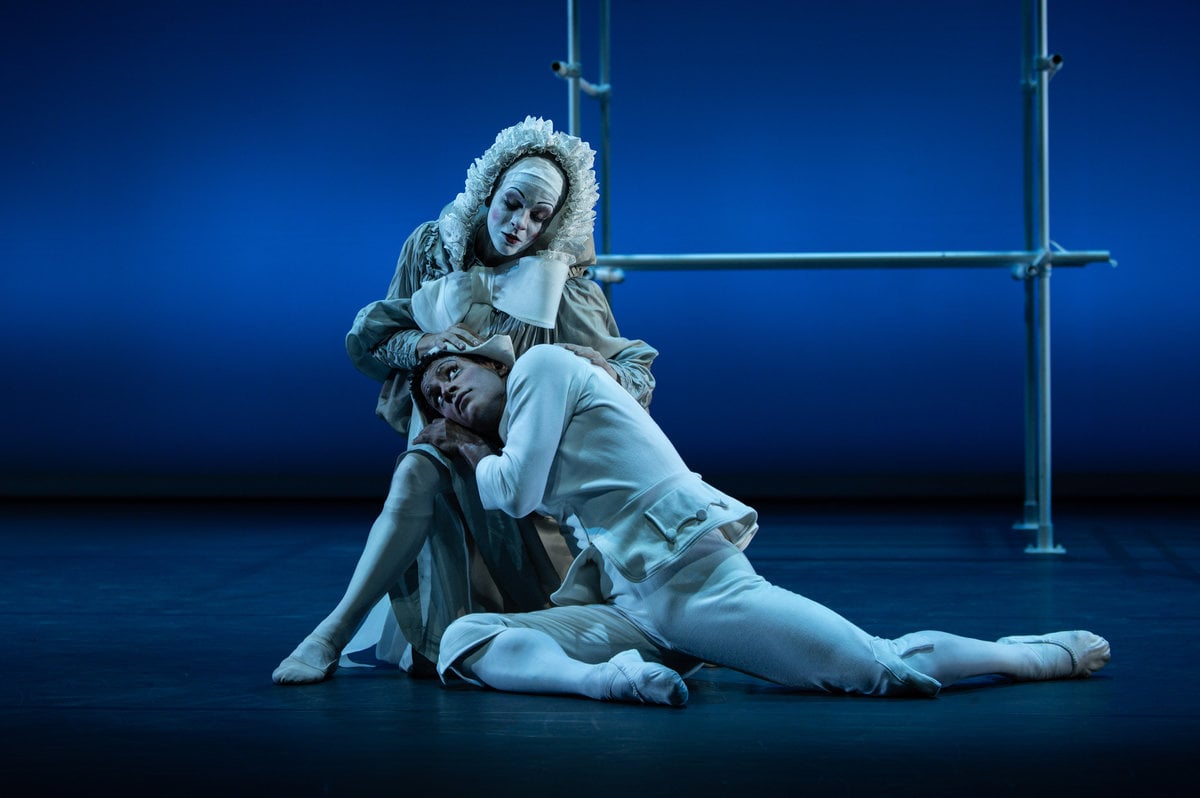
The opening cast brought together Marcelino Sambé, expressing the wonder and hurt of the innocent Pierrot with exceptional purpose, significant virtuosity and gymnastic ability. Mayara Magri excelled with the two tantalising sides of the alluring Columbine, firstly grabbing Pierrot’s lusty attention by flitting across the stage in her hooped underskirt and then returning with more obvious seductive intentions, as indicated by the fieriness of her slashed red costume; and Matthew Ball was an imposing Brighella, a macho man of experience contrasted with the artless Pierrot. There was a seamless interaction between these three outstanding artists.
Ball brought a sinister bravado to Brighella, bouncing into Pierrot’s nighttime sojourn as a masked and caped intruder, wielding a childish wooden dagger. He bullied and belittled Pierrot, play-stabbing him through the crevice between arm and chest, invoking the most dramatic choreographed death scene in ballet, perhaps only rivalled by Mercutio’s dying antics in Kenneth MacMillan’s Romeo and Juliet, a role also strongly associated with Sambé!
It is 21 years since I last saw this work, with strong memories of Ivan Putrov in the title role, and since there is no dancer left at The Royal Ballet with direct experience of performing the work, one must give credit to Christopher Bruce, who danced the role to great acclaim at Rambert Dance Company and was able to carry the torch of Tetley’s movement and intent directly from the late choreographer himself.
The work depends hugely on the delivery of Schoenberg’s music, and in this regard the rousing performance of soprano Alexandra Lowe was a significant highlight, singing with impressive confidence across an immense vocal range to express all the many emotional nuances in the music and poetry. Her expressive performance was so dramatic that, even situated below the front of the stage, it was difficult to transfer one’s gaze from her to the action above! The small concert orchestra was conducted by Yi Wei.
Pierrot Lunaire is just 45 minutes long and I did wonder why it had not been considered appropriate to add a second work, such as Voluntaries (just 33 minutes’ long) to make a more substantial programme. I’m sure that there were technical or commercial reasons for this, but it did seem like only half an evening albeit a strong case of ‘never mind the width, feel the quality’!


Graham Watts is a freelance writer and dance critic. He writes for The Spectator, Tanz, Shinshokan Dance Magazine (Japan), Ballet Magazine (Romania), BachTrack and the Hong Kong International Arts Festival and has previously written for the Sunday Express, Dancing Times, Dance Europe, DanceTabs, London Dance, the Edinburgh International Festival and Pointe magazine (USA). He has also written the biography of Daria Klimentová (The Agony and the Ecstasy) and contributed chapters about the work of Akram Khan to the Oxford Handbook of Contemporary Ballet and on Shobana Jeyasingh for the third edition of Routledge’s Fifty Contemporary Choreographers.
He is Chairman of the Dance Section of The Critics’ Circle and of the UK National Dance Awards and regularly lectures on dance writing and criticism at The Royal Academy of Dance, The Place and (until the war) for Balletristic in Kyiv. He was a nominee for the Dance Writing Award in the 2018 One Dance UK Awards and was appointed OBE in 2008.