
Review: Northern Ballet’s Three Short Ballets at The Royal Opera House
Graham Watts sees Three Short Ballets presented by Northern Ballet – an evening showcasing the growing strength of the Northern powerhouse for dance.
| Title | Three Short Ballets |
| Company | Northern Ballet |
| Venue | Linbury Theatre, The Royal Opera House, London |
| Date | 28 January 2025 |
| Reviewer | Graham Watts |
The gradual transformation of Northern Ballet under the artistic leadership of Federico Bonelli continues apace with this programme, entitled Three Short Ballets. Three Diverse Ballets would have been a better moniker since the triple bill showed a breadth that would have been unrecognisable in the past when Northern Ballet Theatre (its former name) had an output almost exclusively devoted to full-length homegrown narrative ballets. Also, to be brutal, at 45 minutes, the concluding part of the programme wasn’t quite short enough.
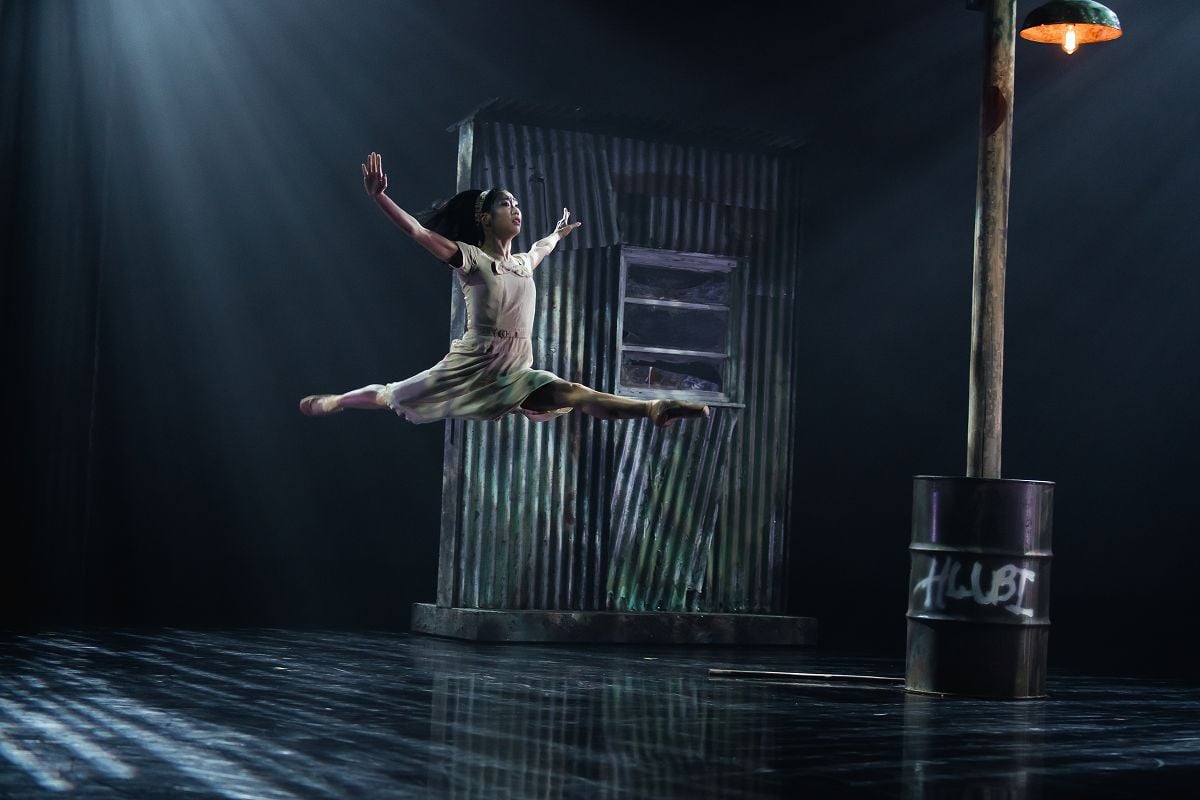
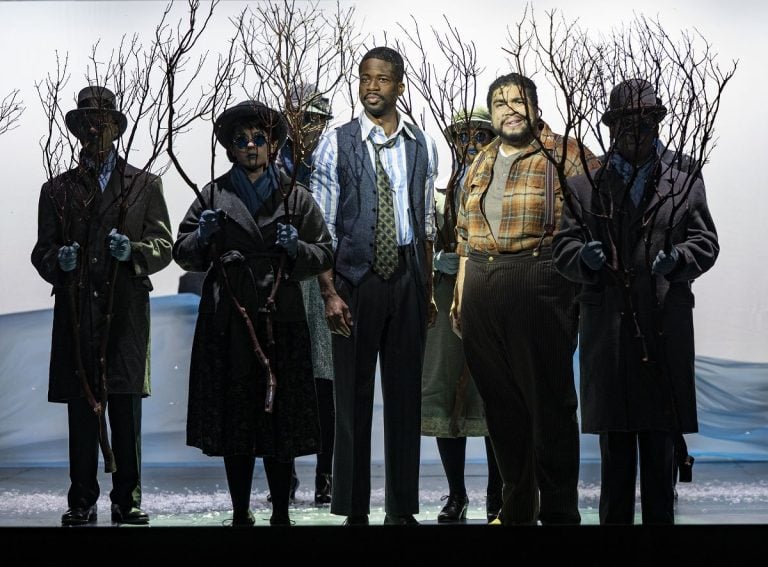
Mthuthuzeli November’s Fools was nonetheless the most intriguing piece on the programme. I doubt that ballet needs another riff on Romeo and Juliet but here it was, although the sultry township setting was more suggestive of the West Side Story angle of feuding gangs, and the violent denouement has the ‘Romeo’ character brutally murdered by his ‘Tybalt’ counterpart (a suitably scary performance by Antoni Cañellas Artigues, whose performance was stuck on full-throttle anger).
The programme told me that November based his narrative on a novel entitled Hill of Fools, which when googled was revealed to be the only novel by the Xhosa writer R. L. Peteni (1915-2000). It was argued by Christopher Booker that there are only seven basic narrative plots in the whole of fiction and the idea of forbidden love between individuals on opposite sides of a feud (whether of families or gangs) must have been one of the most well-trodden of those seven since Shakespeare first put quill to parchment. In Peteni’s treatment, read Thembu and Hlubi (they are ancient Xhosa tribes from southern Africa) in place of Montagues/Jets and Capulets/Sharks.
Thus far in his brief career, November doesn’t do duds and, in spite of the ubiquitous familiarity with his plot, there is much to commend in Fools. His choreography is fresh, vibrant and highly descriptive with two expressively sweet pas de deux of secret love for Harris Beattie (named only as the Thembu Lead) and Sarah Chun (his Hlubi ‘Juliet’). Chun also has a delightful, albeit anguished solo.
November’s own set design – created in association with Steve Wilkins – is simple but so extremely effective that one could imagine the heat bouncing off the simulated corrugated iron panels, representing the township’s shacks and bar. Similarly, Yann Seabra’s costume designs enhanced this atmospheric. November doesn’t do things by halves, and he also co-composed the music (alongside Alex Wilson).
Where it needs some more attention, I feel, is in the dreary build-up to the final fight with stick-wielding Thembus and Hlubis running hither and thither without much outcome or intent. Groups ran on from stage left and exited stage right (or vice versa) in an interminable round-robin of indeterminate manhunts. When the stick fighting did come, it was highly staged and mercifully brief although the stabbing of the Thembu ‘Romeo’ (Beattie) by the Hlubi ‘Tybalt’ (Artigues) was an uncomfortable episode of sustained brutality, leading to a poignant end for the two lovers.


The programme had begun with a rare glimpse of Rudi Van Dantzig’s Four Last Songs, created in 1977 (the year after Peteni’s novel) to the eponymous and melancholic music of Richard Strauss, performed in a recording by the Austrian soprano, Gundula Janowitz, with the Berlin Philharmonic, conducted by Herbert von Karajan. There is no acceptable substitute for live music, but the sound quality of the recording was excellent.
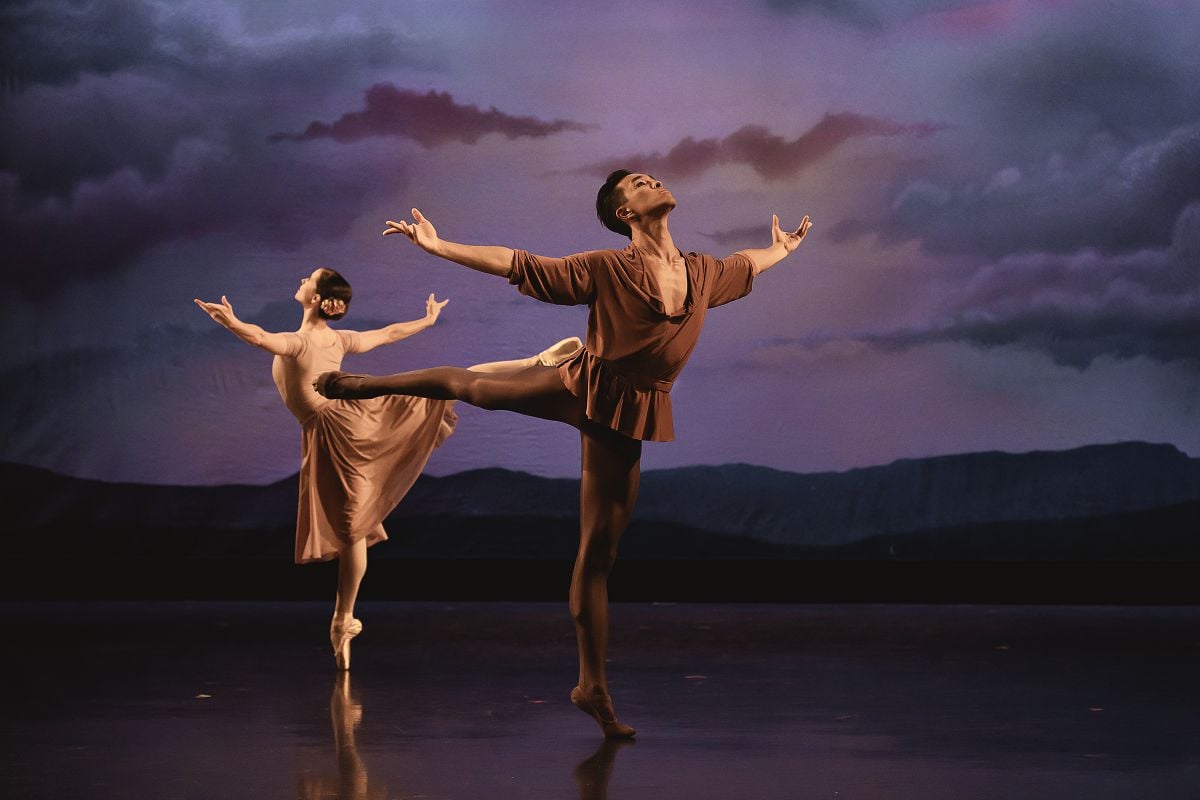
Van Dantzig’s choreography is punctuated by four couples in separate pas de deux, each essaying a choreographic response to the melancholy in the music. The four pairs wore pastel-coloured outfits in different shades (designed by Toer Van Schayk): the women in flowing, full skirts over same-colour leotards; and the men in tunics with little frills dropping from the waist, which somehow brought me in mind of Robin Hood’s merry men (it is, after all, just past Pantomime season). The four duets were studiously – and, in places, beautifully – danced and around the couples a single male soloist (named as an Angel and performed by Bruno Serraclara) weaved and watched.
Beattie and Chun had a busy evening taking the first and third pas de deux (respectively with Saeka Shirai and Jonathan Hanks) and tribute is also due to Dominique Larose and George Liang for the second duet, and to Amber Lewis with Jackson Dwyer for the excellent final pas de deux. The landscape in the backdrop was a disappointment with creases much in evidence in the fabric.




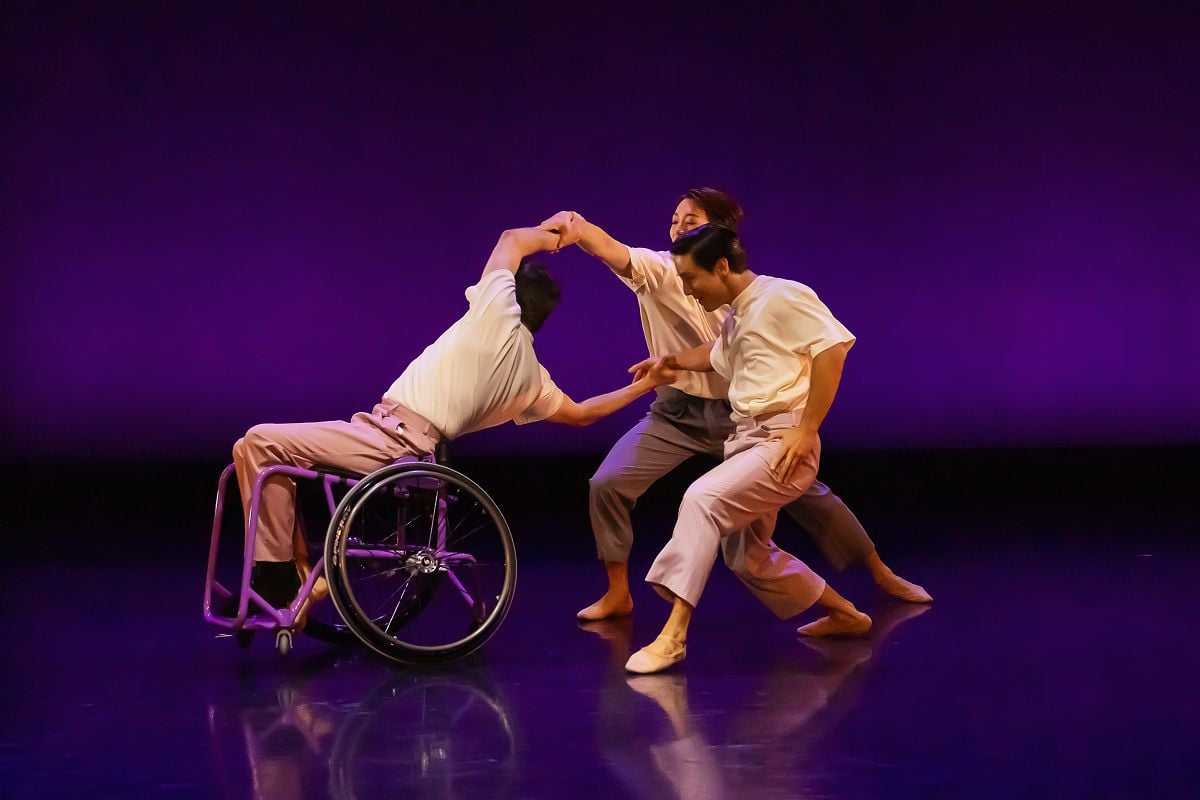
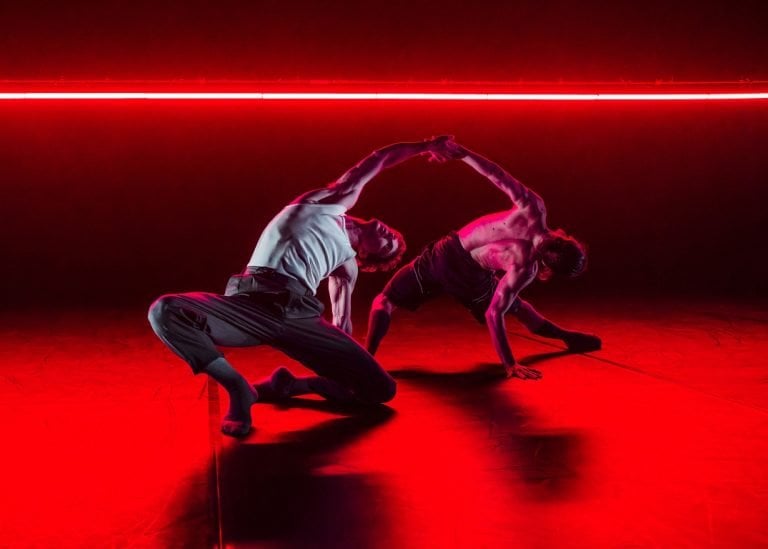
These two works were separated by 5 minutes of frothy fun, typical of the quirky output from Bonelli’s former Royal Ballet colleague, Kristen McNally; named Victory Dance after the music by the Ezra Collective, to which it was performed. Joe Powell-Main performed much of the piece in a wheelchair, dancing in a mutually supportive trio with Archie Sherman and Yu Wakizuka. It was an effective amuse-bouche separating the melancholy and drama of the two longer, surrounding works and an impressive exercise in equity that challenged perceptions of dancers’ abilities.
It would be hard to conceive of three more diverse pieces and the breadth of this programme showcased the growing strength of this Northern powerhouse for dance.




Graham Watts is a freelance writer and dance critic. He writes for The Spectator, Tanz, Shinshokan Dance Magazine (Japan), Ballet Magazine (Romania), BachTrack and the Hong Kong International Arts Festival and has previously written for the Sunday Express, Dancing Times, Dance Europe, DanceTabs, London Dance, the Edinburgh International Festival and Pointe magazine (USA). He has also written the biography of Daria Klimentová (The Agony and the Ecstasy) and contributed chapters about the work of Akram Khan to the Oxford Handbook of Contemporary Ballet and on Shobana Jeyasingh for the third edition of Routledge’s Fifty Contemporary Choreographers.
He is Chairman of the Dance Section of The Critics’ Circle and of the UK National Dance Awards and regularly lectures on dance writing and criticism at The Royal Academy of Dance, The Place and (until the war) for Balletristic in Kyiv. He was a nominee for the Dance Writing Award in the 2018 One Dance UK Awards and was appointed OBE in 2008.



I too saw this programme, on Thurs night (after travelling from Cardiff). We have loved Northern Ballet from the days of Chris Gable, when we lived in London, so were wondering about changes from the last AD.
This was a brilliant programme and well balanced. It was interesting how “Four Last Songs,” although seeming dated choreographically, was still prowerful – no wrinkled backcloth on Thurs! But beautifully danced.
“Victory Dance” was fun. I felt the wheelchair dancer was better than many I have seen. The audience loved it.
“Fools” was moving and the drama ramped up with breath-taking fight scenes, on the small stage of the Linbury. Loved the use of the basoras (floor brushes) to ramp up the drama, I used to use to sweep up in the house with a basora, when we lived in W Africa.
We loved the whole varied evening and hope Bonelli will keep up this standard. NB had always produced story ballets but seeing the non-narrative dances too was great. Just such a pity that NB aren’t coming to Cardiff anymore. We could do with classical/modern ballet of such a high standard here.