Review: Alice Marini and Roberto Bolle in a new Carmen in ‘Kratz / Preljocaj / De Bana’, La Scala’s contemporary triple bill
Graham Spicer sees works by Philippe Kratz, Angelin Preljocaj, and Patrick de Bana in an uneven triple bill.
| Title | Philippe Kratz – Solitude Sometimes Angelin Preljocaj – Annonciation Patrick de Bana – Carmen |
| Company | La Scala Ballet |
| Venue | Teatro della Scala, Milan |
| Date | 7 March 2025 |
| Reviewer | Graham Spicer |
Well, this was certainly a mixed, mixed-bill. It was a contemporary programme, including a new piece by Patrick De Bana and a recent creation for La Scala by Philippe Kratz, but for ‘star ratings’ I would give 5-stars to Kratz’s Solitude Sometimes, but 3-stars to De Bana’s Carmen and only 3-stars for Angelin Preljocaj’s Annonciation (and no, it’s not my ‘the Emperor has no clothes’ moment, but just a subjective opinion).
The new piece was Carmen. Who needs another Carmen? But it continues to attract choreographers. Last year, London saw Johan Inger’s version with the English National Ballet and Carlos Acosta presented an adaption for Acosta Danza of the production he created for The Royal Ballet in 2015. La Scala’s 2025 version comes after that of Italy’s second company, the Rome Opera Ballet, by Jiří Bubeníček in 2019 which was revived in the capital just a few weeks ago, and Roland Petit’s version has long been in La Scala’s repertoire. Also, back in 1975, Maya Plisetskaya danced Alberto Alonso’s Carmen Suite at La Scala in the percussive musical adaption of Bizet’s score by her husband, Rodion Shchedrin.


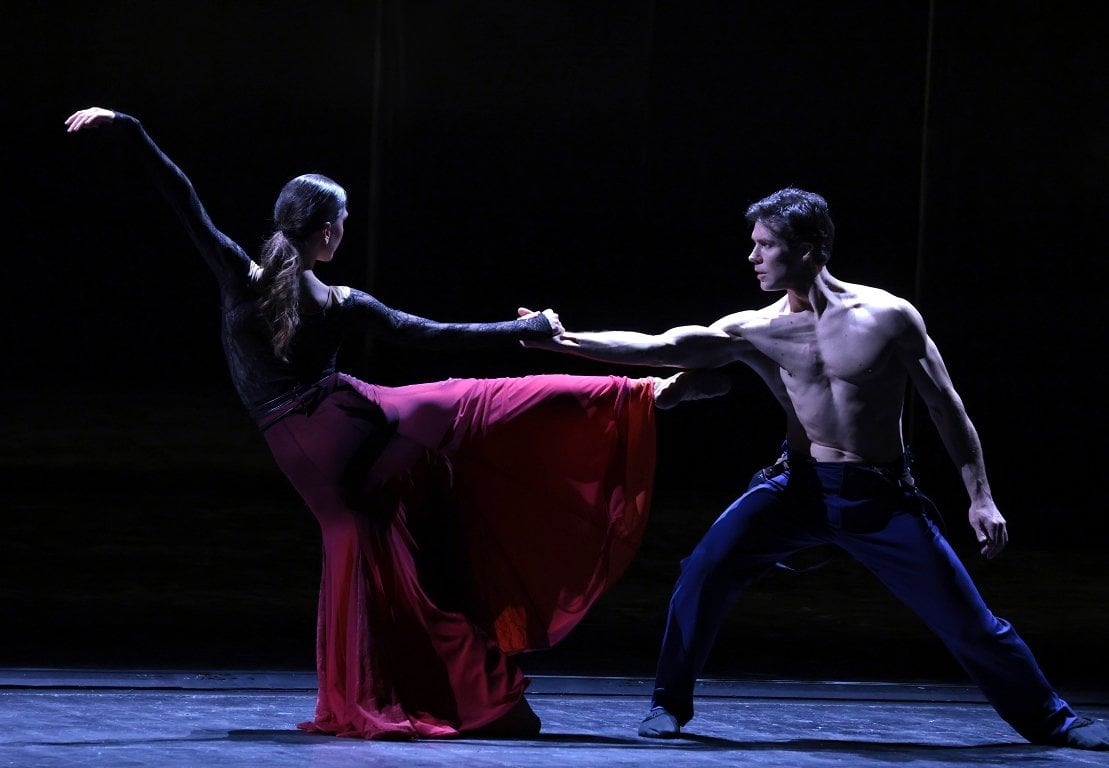
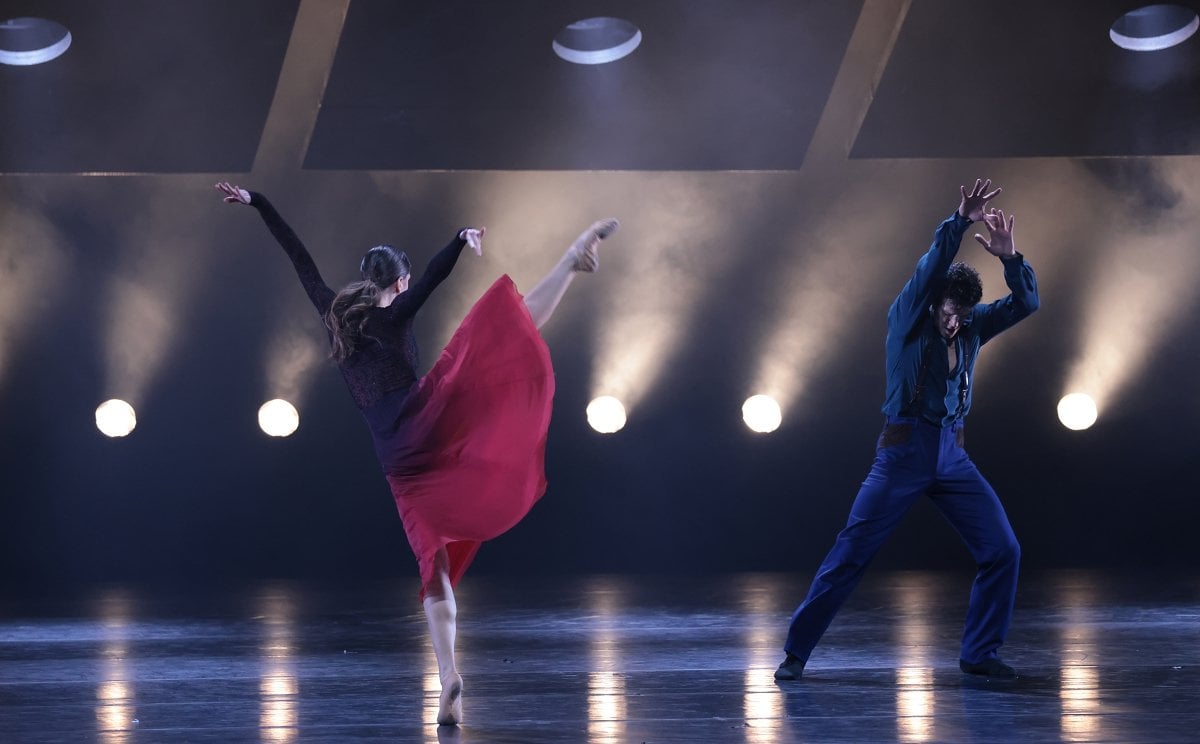
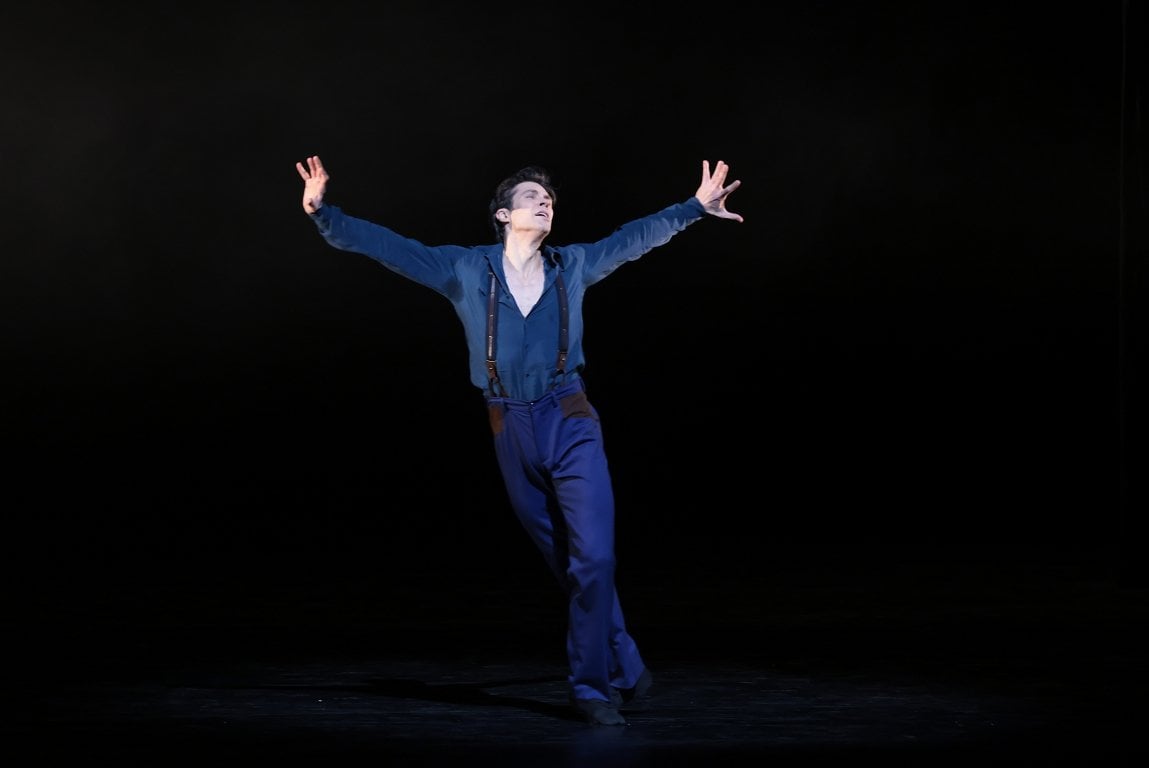
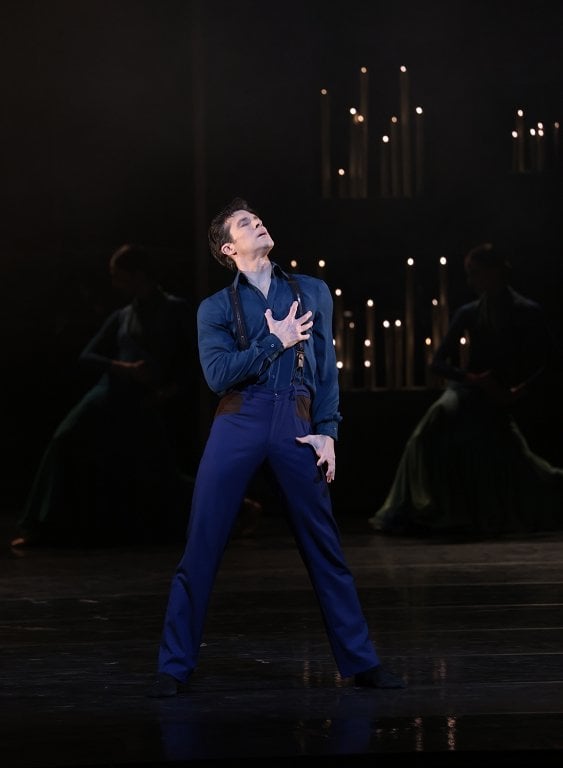
It is Shchedrin’s quirky score that de Bana uses, together with two raw flamenco songs which open the piece and break up Shchedrin’s piece at the midpoint. De Bana’s is a pleasant retelling, with a trimmed-down storyline that sees two bare-chested dancers playing Death and the Bull crawling menacingly around the sidelines (played intensely by Edoardo Caporaletti and Andrea Crescenzi) and it is the Bull that symbolically finishes off Carmen in the closing scene. The story is easily told in an hour – Don José is infatuated by Carmen yet pulled by his feelings for Michaela (a character from the opera rather than Prosper Mérimée’s novella), and tormented by Carmen’s relationship with the Toreador, which leads to Carmen’s death. Seeing this on the eve of International Women’s Day with abundant articles and TV coverage on femicide – and seeing Don José rip off the lower part of Carmen’s dress in the final section – was certainly affecting.
There are some colourful, swishy costumes by Stephanie Bäuerle. Carmen’s red and black-shaded dress was particularly attractive, though some of the costumes were strangely flat, like Don José’s soldiers’ uniforms – they looked like bellhops from the ‘30s.
The flashy set has six stage-length distressed metal panels that twist and move up and down, with thirty holes which show off synchronised lighting like a Saturday Night Fever dance floor in black and white. It is very clever, and towards the end white petals of jasmine flowers fell from the holes that, at the climax, turned red. There was also a strobe effect from behind the holes, and bright white light from between the slats when the panels rotated. And smoke… inevitably. There was no water on stage, true, but there were hundreds of candles on curtain up, so the ‘fire’ box was ticked too. Wonderful for fans of theatre tech, but it didn’t know when to stop and, especially towards the end, blasted the audience with effects. Ricardo Sánchez Cuerda created the impressive set and Ivan Vinogradov, the magnificent lighting.

As for the choreography, it is simple but vanilla. Roberto Bolle’s Don José – his last role at La Scala before, incredibly, he turns 50 on March 26th – does a lot of turns, a few jumps and lots of grabbing at his head and body as he watches Carmen flirting with the Torero, and, of course, he partners Carmen. It’s very minimal. Carmen is played by Alice Mariani who is believably seductive, has a sexy walk, and is given more detailed movement – carried off superbly, as always. The choreographic vocabulary for the corps is limited, and for much of the time at the beginning they look like a chorus from a musical post-West Side Story. Marco Agostino as the Torero has some of the more interesting choreography with arrogant little turns with his feet proving that less is more. Maria Celeste Losa as Michaela was pliable and pitiable. This was Manuel Legris‘ last programme as he has now left Milan after his contract terminated at the end of February. I wonder if the piece will ever be seen again.

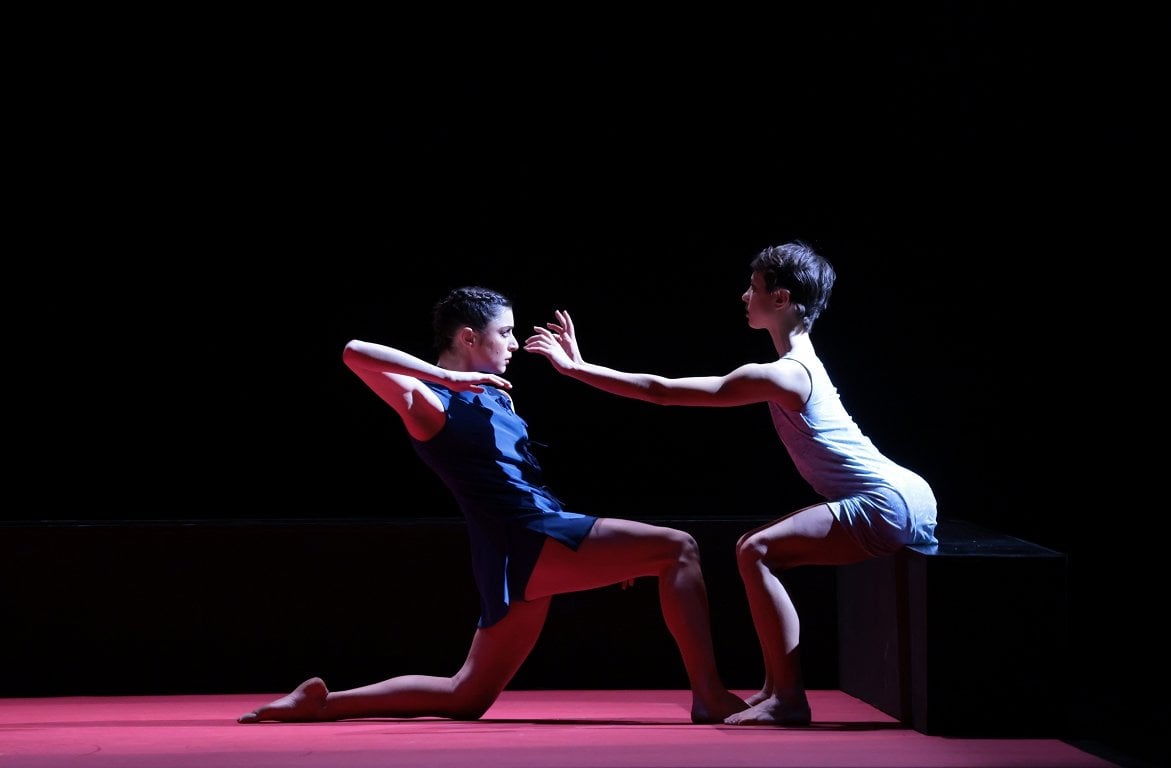

Preljocaj’s greatly respected and appreciated Annonciation has been presented across the globe since its creation in 1995. I have never liked it particularly. Two dancers portray Maria (Agnese Di Clemente) and the Angel (Caterina Bianchi) with a mix of motherly and homosexual overtones. If Archangel Gabriel had been played by man in this ballet, a whole different story would have been evoked and the virgin birth put in doubt.
Preljocaj uses poses and expressions taken from famous paintings with fear, doubt, and happiness as some of the varying reactions to the Annunciation. Di Clemente and Bianchi are gracefully in sync, or respond as a consequence of the movements of the other, which gives a mystic quality, enhanced by Jacques Châtelet’s dramatic lighting. The juxtaposition of Stéphane Roy’s electroacoustic music with Vivaldi’s Magnificat feels overused, though in the 1990s it probably seemed innovative. I long to see Annonciation in a more intimate setting rather than with a vast orchestra pit cutting me off physically and psychologically, which may convince me of its worth.

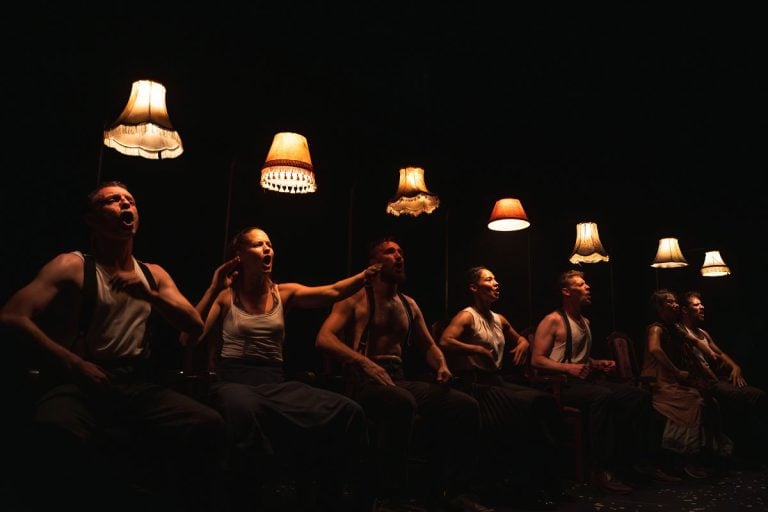
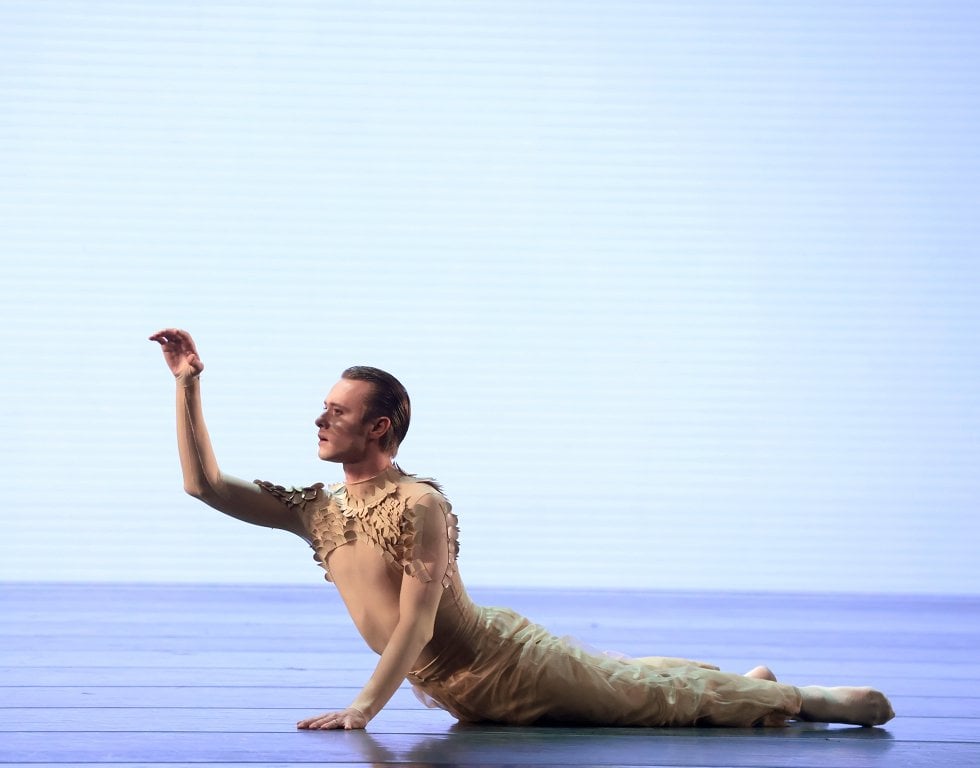
However, my 5-star ‘star’ of the evening was Kratz’s Solitude Sometimes with winning music by Thom Yorke and Radiohead. It is a mesmerising piece, created for La Scala in 2023. I liked it then; I loved it now.
Spectacular lighting with projections by Carlo Cerri and OOOPStudio backlit the 14 dancers in silhouette or bathed them in golden light as they moved (often shuffled) in and out of the darkness (often backwards). The projections are in black-and-white with the occasional chromatic aberration during glitch and transition effects. Quite a long section has the dancers making small sideways movements with their feet, with the consequent ripple running up through to their hips. It is so simple, yet here it is certainly not vanilla, and recalls some of Jerome Robbins’ work. It is an ensemble piece though the excellent Navrin Turnbull stood out with a powerful yet fluid quality to his dancing, and Nicoletta Manni and Timofej Andrijashenko were notable in their duet.
Kratz uses groups inventively, with fascinating and contrasting patterns but always pulling focus at the right moments. The ‘story’ is taken from Egyptian mythology, and the cycle of day and night with sun god Rha’s journey through the realms of the living and the underworld. But you don’t need to know that – it is very much a starting point for Kratz’s creativity, and gives sense to Francesco Casarotto’s costume design and some of the poses.
I dearly hope that the piece will travel outside Milan – it should be seen.
Philippe Kratz – Solitude Sometimes



Patrick de Bana – Carmen






Graham Spicer, aka ‘Gramilano’, is a writer, director and photographer based in Milan. He was a regular columnist for Opera Now magazine and wrote for the BBC until transferring to Italy. His articles have appeared in various publications from Woman’s Weekly to Gay Times, and he wrote the Danza in Italia column for Dancing Times magazine. Graham was the historical advisor on Codice Carla, the 2023 documentary on Italian ballerina Carla Fracci.
Graham also works as a dance photographer, and his photos have appeared in many books, theatre programmes, and magazines, including Dancing Times, Dance Spirit and Ballet2000, as well as all the major Italian newspapers.
He is a member of the Dance Section of The Critics’ Circle.