Review: Aakash Odedra is captivating in Songs of the Bulbul combining strength with grace

Graham Watts sees Aakash Odedra Company in Songs of the Bulbul, a sublime performance that received a rapturous, spontaneous standing ovation.
| Title | Songs of the Bulbul |
| Company | Aakash Odedra Company |
| Venue | Sadler’s Wells East, London |
| Date | 917 July 2025 |
| Reviewer | Graham Watts |
It is easy to see why Aakash Odedra won twice at this year’s UK National Dance Awards, winning outright the Outstanding Male Modern Performance Award (for an earlier show, Mehek) and sharing the Best Male Dancer Award with hip-hop star, Tommy Franzén. In his latest solo show, Songs of the Bulbul, Odedra completely captivated his audience by dominating the large stage in the cavernous space of Sadler’s Wells East.
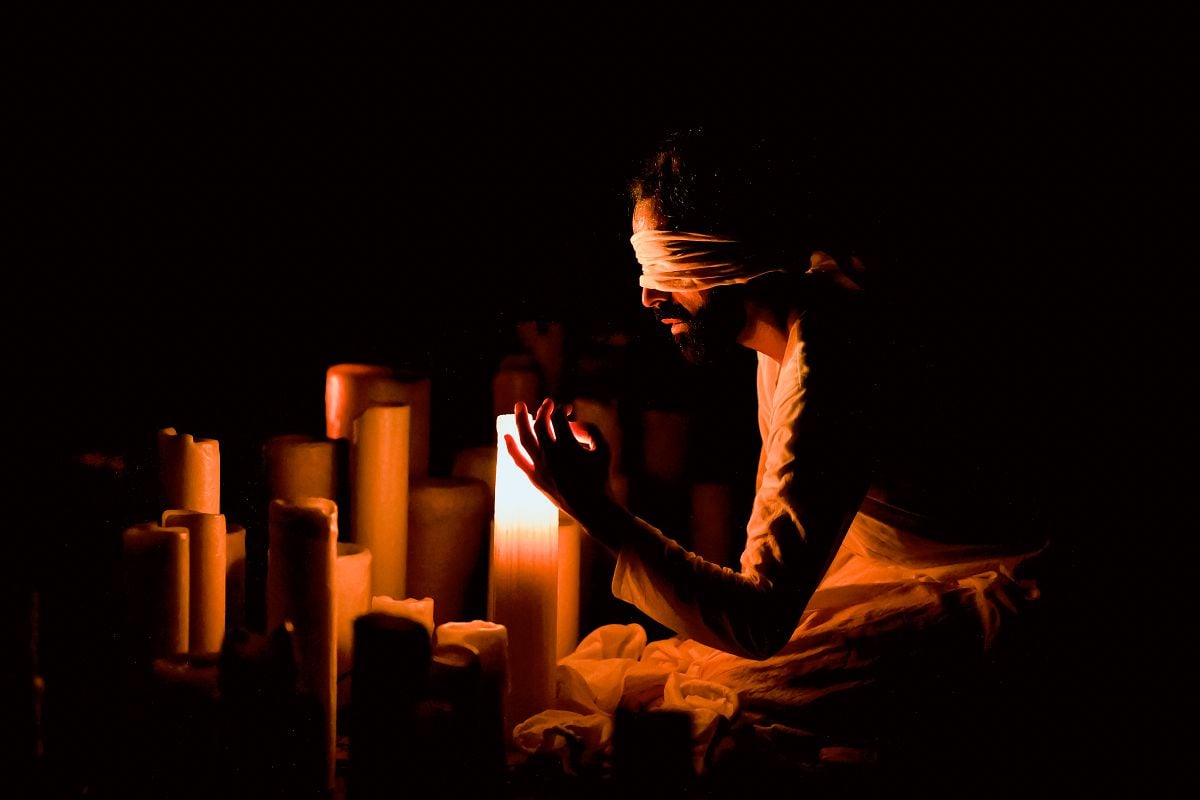
Bulbul is the Persian word for nightingale and this work, choreographed for Odedra by Rani Khanam, tells the bittersweet story of a captive nightingale through its birdsong, at first illustrative of its deep despair but becoming more sweetly lyrical as it nears the end of its life. Inspired by an ancient Sufi myth, the poor creature is blinded before death so that it loses the physical sense of captivity, an assault that is starkly illustrated by Odedra’s mime.
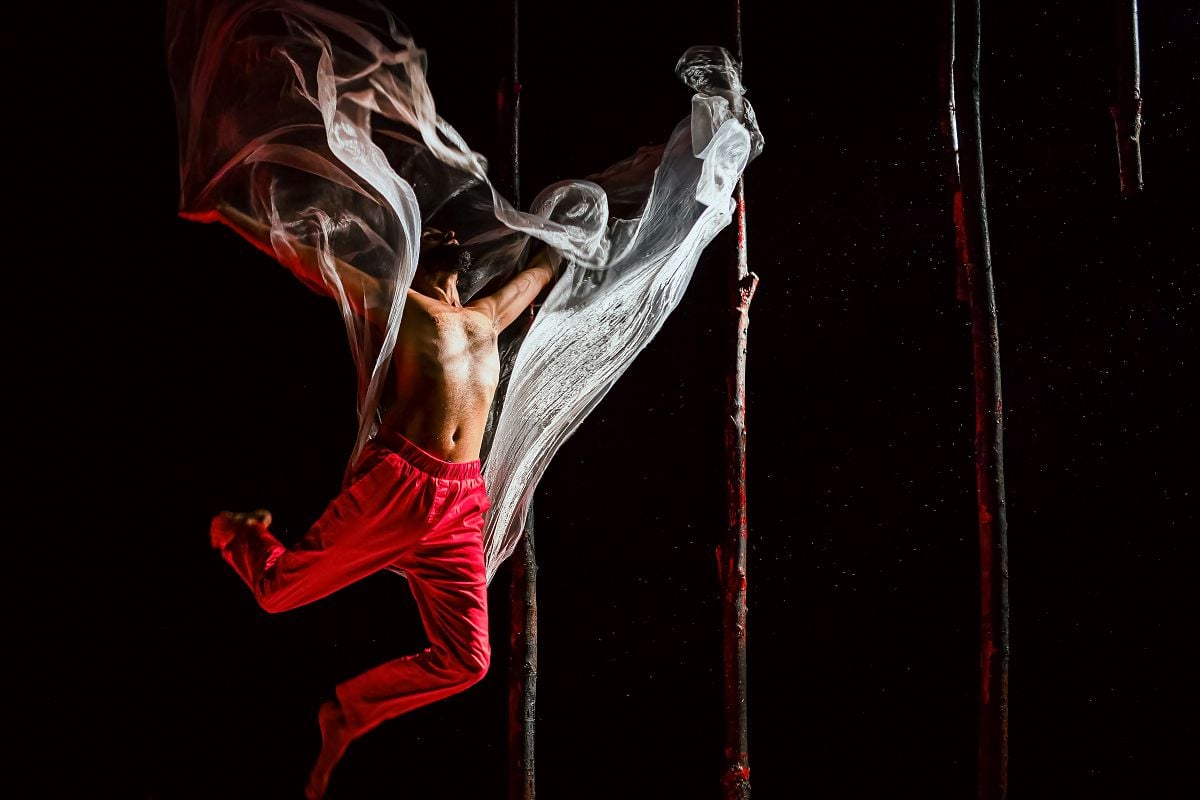
Although it’s the songs of the bulbul that inspired the work, Odedra also masterfully captures the lightness and fluidity of avian movement in everything that he does. The gentle, spiritual sensitivity of his dancing often provoked the image of a dying swan. Odedra traversed the stage with such spriteliness that he achieved a magical alchemy of making his corporeal presence seem entirely ethereal. His elite bharatanatyam and kathak techniques, after years of intense training with world famous gurus, have been so finely honed that Odedra’s arms seemed as delicate as reeds floating in the wind. He spun with such speed and elegance and combined strength with such grace that one supposes not one other man in one hundred million men can dance in any similar way.
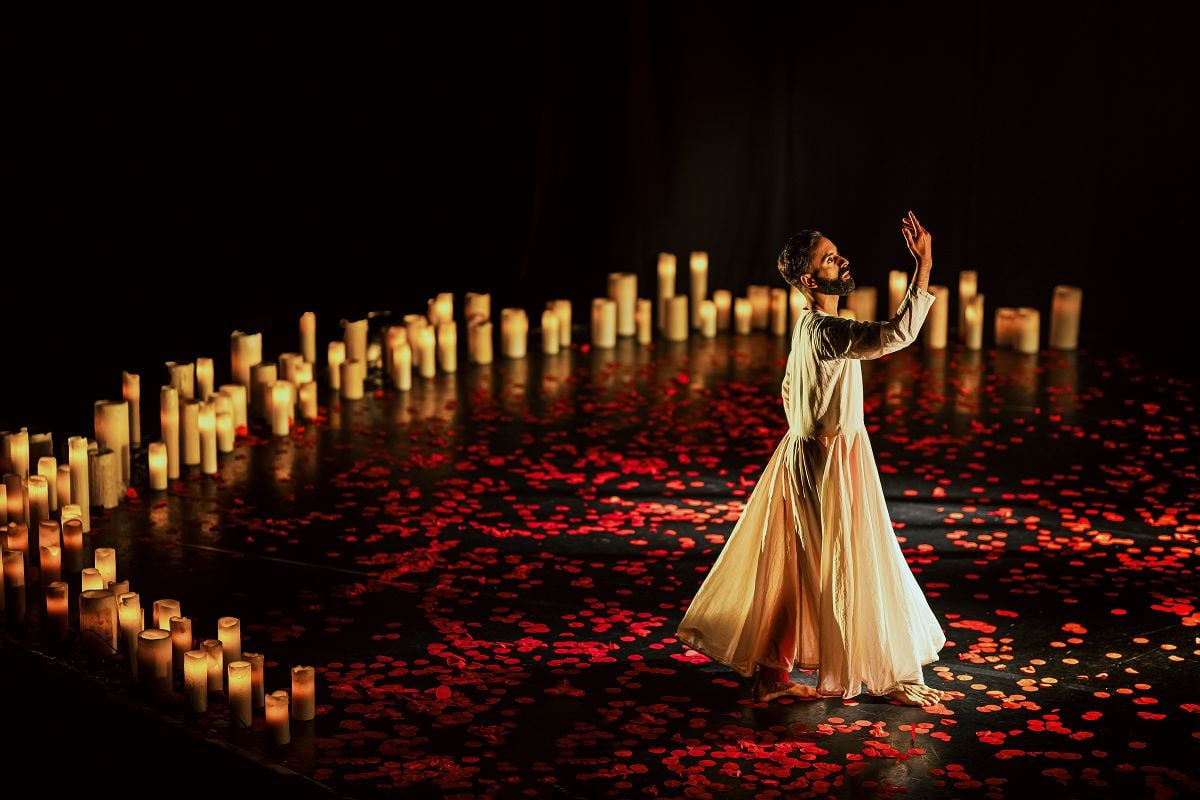
The beauty of Odedra’s smooth movement is enhanced by the long, flowing, white tunic – designed by Kanika Thakur – worn over tapered white trousers that enhanced and intensified the simple aesthetic by swirling around Odedra’s kinaesthetic space. I once had the privilege of seeing a mesmeric performance by Whirling Dervishes – interestingly, a particular Sufi sect – but no-one whirls quite like this man!
The consistent brilliance of Odedra’s dancing was intensified by the combination of Emanuele Salamanca’s emphatic set design and the delicacy of Fabiana Piccioli’s exquisite lighting. On the right of the stage was a curved line of around one hundred (electronic) candles of varying sizes: often only one was lit, sometimes none; and in one memorable sequence Odedra’s magical performance extended to some faux conjuring as he pointed to groups of candles, which apparently lit upon his command. Red petals regularly fell from the flies, floating through the air and providing a rich carpet for Odedra’s sublime performance.


A production inspired by the songs of a nightingale must be judged on the quality of its music and Rushil Ranjan’s sumptuous, recorded score was another significant element of the show’s consistent appeal. I found it to be cinematic in the music’s impressive, plush panorama, as performed by the Manchester Camerata, conducted by Melvin Tay. Additional evocative instrumentation came via Janan Sathiendran’s tabla and Praveen Prathapan’s bansuri. Odedra and Ranjan also contributed some choral vocals. The recorded music was mixed and mastered by Andrea Gobbi at Gloworm Studios. I have often complained at the sound amplification at both Sadler’s Wells and this sister theatre on the Olympic Park, but I’m pleased to report that on this occasion the aural quality matched the perfection of the production.
The Sufi poetry that inspired the work (by the way Piccioli’s talents also extended to the dramaturgy) was helpfully explained at the outset and was spoken in the indigenous language at certain reference points during the performance by Sarthak Kalyani and Abi Sampa.
It is a year since Songs of the Bulbul first hit the Edinburgh Festival and it has been well worth the long wait for this London premiere. It is rare to see such a fully integrated multi-disciplinary creative success, all of which seems to have constructed the perfect cage in which Odedra’s bulbul takes flight in his arresting performance of anguish and delight, ending – appropriately – with the dying of the light. Odedra’s curtain call was greeted with a rapturous, spontaneous standing ovation, a universal thunderclap to compliment the lightning with which we had all been so completely electrified.


Graham Watts is a freelance writer and dance critic. He writes for The Spectator, Tanz, Shinshokan Dance Magazine (Japan), Ballet Magazine (Romania), BachTrack and the Hong Kong International Arts Festival and has previously written for the Sunday Express, Dancing Times, Dance Europe, DanceTabs, London Dance, the Edinburgh International Festival and Pointe magazine (USA). He has also written the biography of Daria Klimentová (The Agony and the Ecstasy) and contributed chapters about the work of Akram Khan to the Oxford Handbook of Contemporary Ballet and on Shobana Jeyasingh for the third edition of Routledge’s Fifty Contemporary Choreographers.
He is Chairman of the Dance Section of The Critics’ Circle and of the UK National Dance Awards and regularly lectures on dance writing and criticism at The Royal Academy of Dance, The Place and (until the war) for Balletristic in Kyiv. He was a nominee for the Dance Writing Award in the 2018 One Dance UK Awards and was appointed OBE in 2008.